
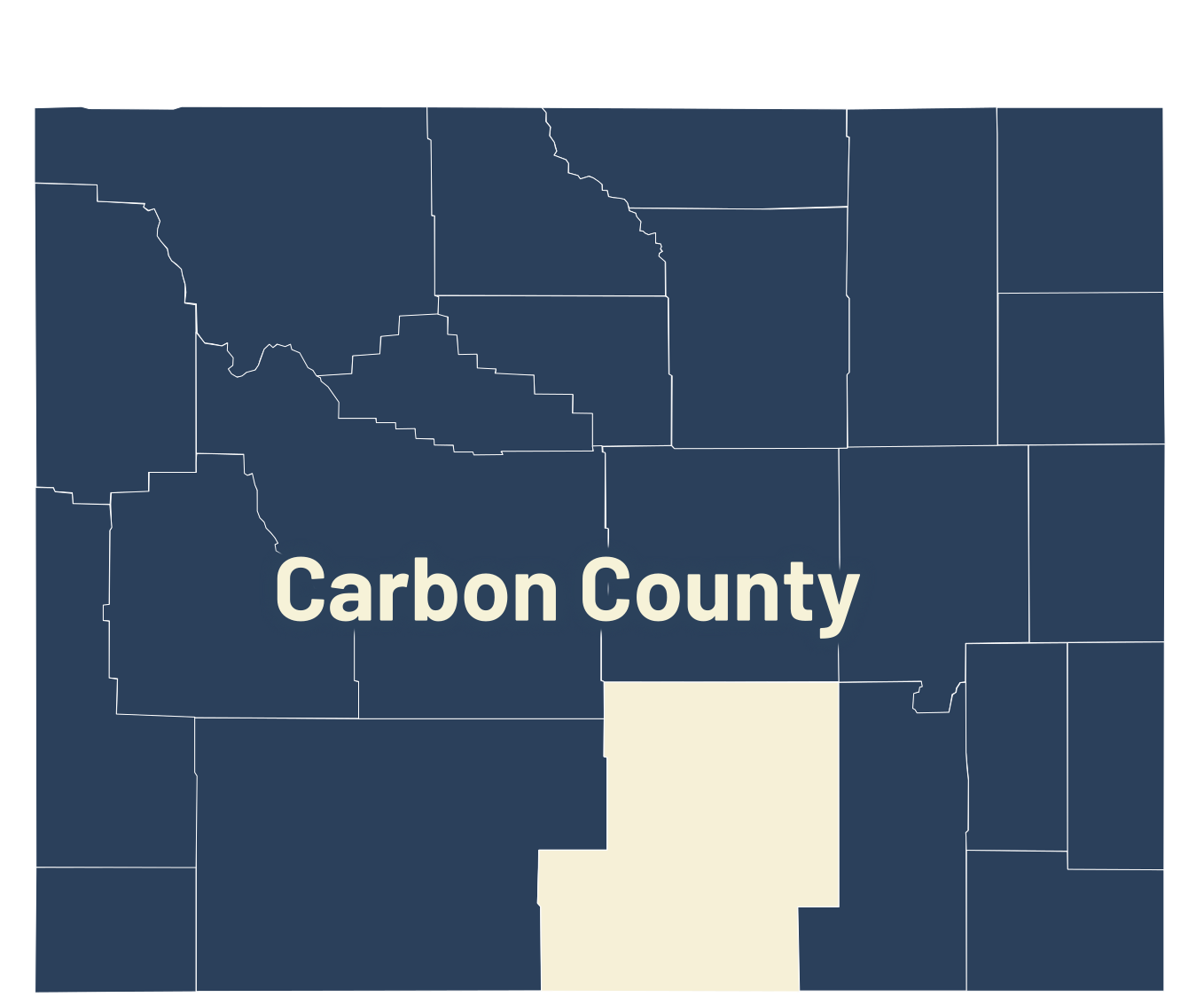

When Aspen Alley Ranch owner Dennis Faerber heard the Battle Lake Ranch property in Carbon County was going to be available for sale, his first instinct was to buy it.
When he realized the price tag was out of his reach, his second instinct was to find someone else to buy it before a real estate developer did.
“A mutual friend had told me about Aspen Alley, and we bought it sight unseen in the winter before it even went on the market,” Faerber told Cowboy State Daily. “And he knew I was looking for some additional property, so he called me and said that the Battle Lake property was going to be available for sale.”
As the conversation continued, Faerber and his friend became increasingly concerned about the fate of Battle Lake, which sits at the headwaters feeding the entire Little Snake River Valley.
“We were both extremely concerned that a developer would buy it, subdivide it and ruin the natural beauty of the entire valley,” Faerber said. “I couldn’t afford to buy it myself, so I engaged the Forest Service first.”
When that effort stalled, Fearber reached out to Larry Hicks, manager of the Little Snake River Conservation District.
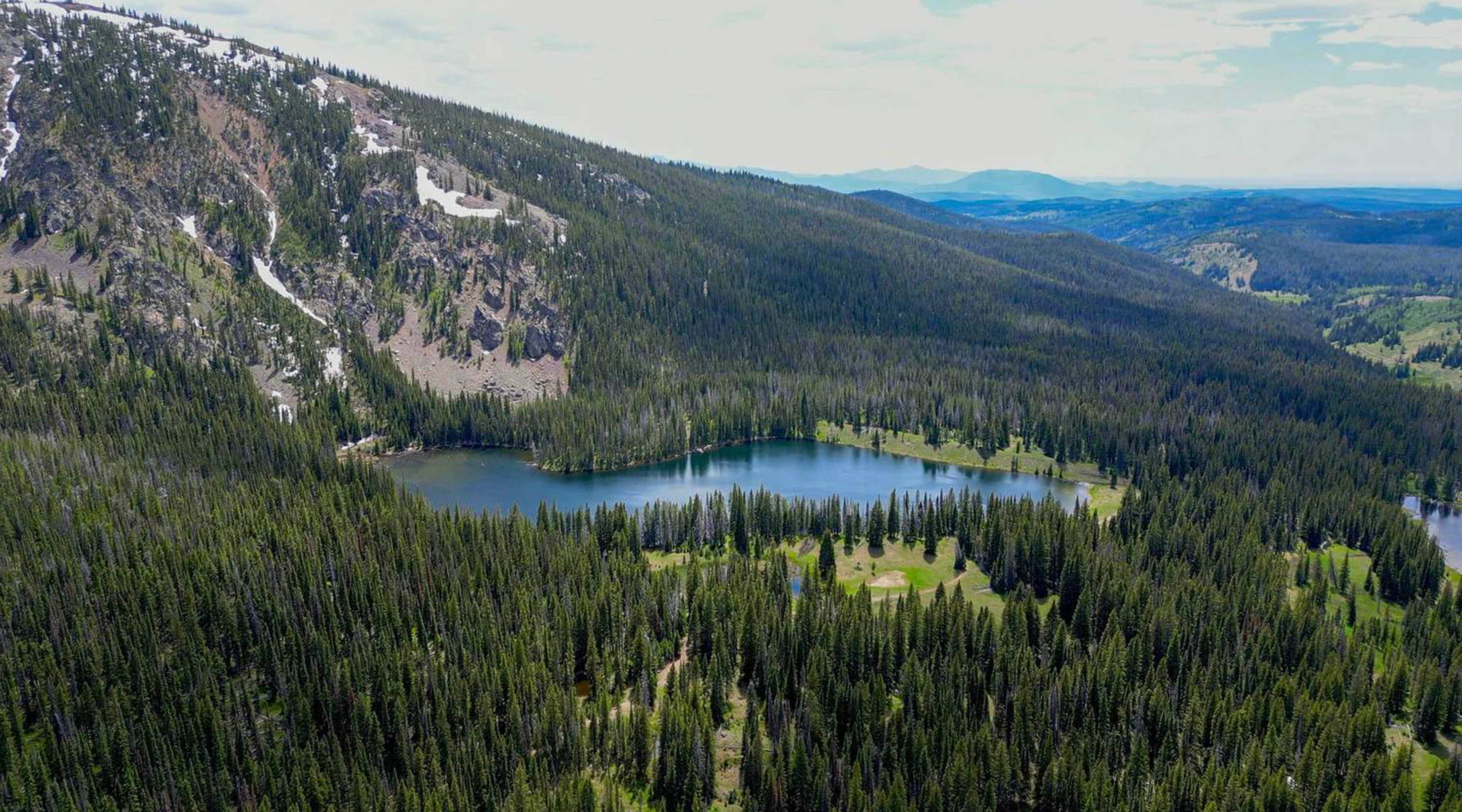
Although Battle Lake technically lies outside the district’s boundary lines, the natural alpine lake is the source of all of its municipal and irrigation water. That reality prompted the district to step in, ultimately purchasing two parcels totaling 720 acres, which include the 22-acre lake.
“We were contacted by a number of other landowners in the area that this property had become available for sale,” Hicks told Cowboy State Daily. “And we also became aware that there was an out-of-state real estate developer who was looking at the property.”

Ticking Clock For The Valley
The realization that the lake could become a luxury mountain subdivision prompted immediate soul-searching over the watershed's future.
With just 60 days to intervene and outbid other takers, the situation felt like an emergency for the future of the valley’s agricultural communities who rely on water from Battle Lake.
“My board, we tried to work with the state of Wyoming,” Hicks said. “We approached a couple of other entities about acquiring the property.”
But the bureaucratic wheels couldn’t turn quickly enough for the fast-moving private market.
“Everybody was interested in acquiring it for conservation purposes,” Hicks said. “They just didn’t have the wherewithal or the means to act within the short timeframe it would take to secure the property before it was purchased for subdivision.”
With the clock ticking, the Little Snake River Conservation District had to scrape together $3 million in two months for its winning bid.
“It was a little bit of a financial strain, but we were able to pull it together and make it happen,” Hicks said. “We worked with a bunch of our conservation partners and pulled some money out of our reserves, and then we worked with other entities to purchase the property with the easements on it. We’re still finalizing all of that.”
More Water For The West
The newly acquired 720 acres will do much more than preserve water for Little Snake River Valley. The district has already partnered with surrounding landowners to submit a 1,100-acre contiguous block to the Wyoming Water Commission.
The goal is a major infrastructure project to deepen the capacity of Battle Lake, which was formed by a moraine dam.
“We can probably increase the elevation by somewhere between 5 to 8 feet,” Hicks said. “And that water would become active later in the year, particularly in years like this, when both the fish and the irrigators could use more water. We would release that in late summer.”
Perched high on the Continental Divide, Battle Lake is filled entirely with alpine snowmelt. It releases that water down through Battle Creek, which ultimately joins the Little Snake River.
That flows into the Yampa and Green rivers before emptying into the Colorado River system to feed Lake Powell.
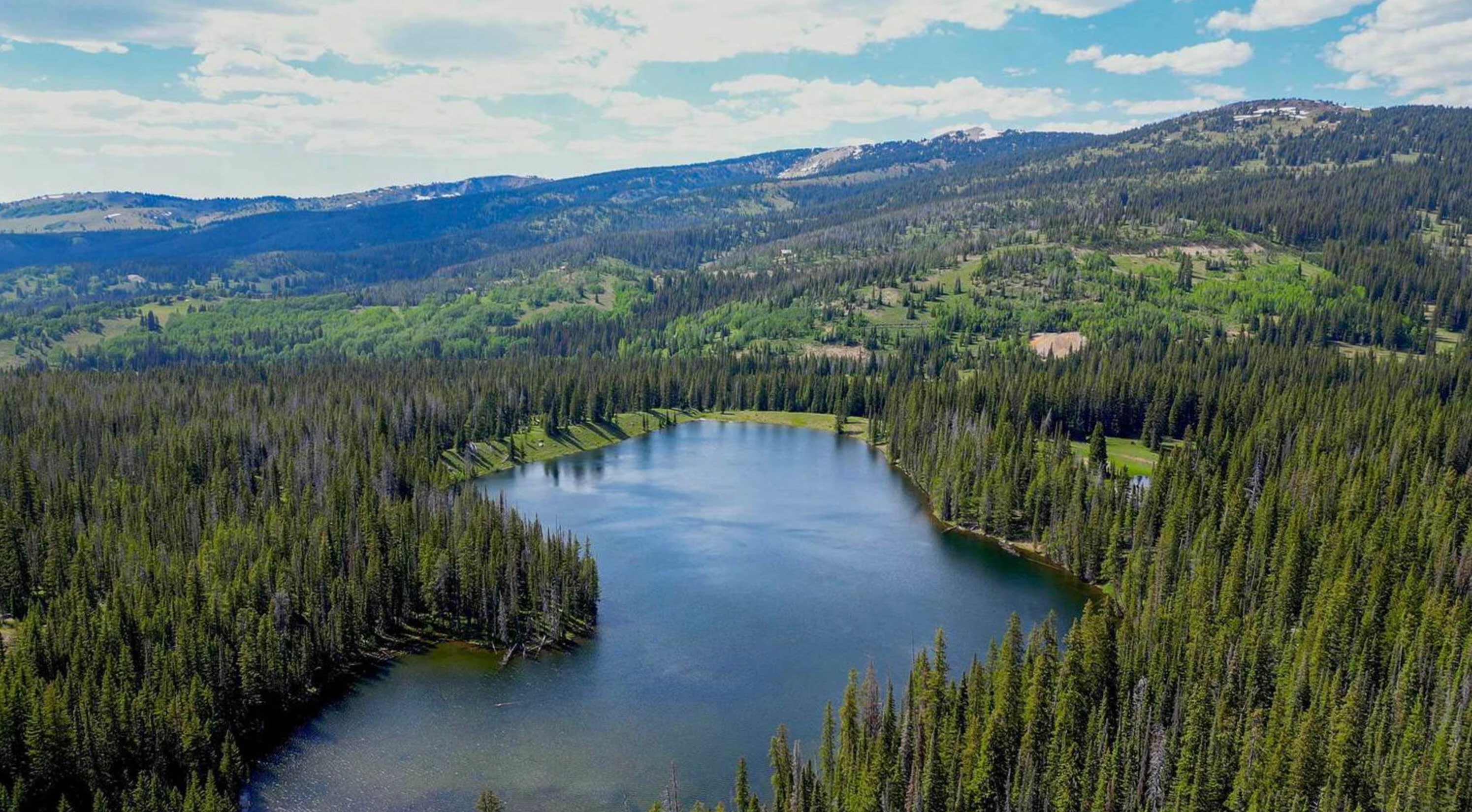
This hydrological chain makes Battle Lake a critical water source for an increasingly parched western United States. Enhancing its capacity is seen as key to securing more future water for the arid West.
“We’ve received almost a million-dollar funding from the Wyoming Water Development Commission to manage that property for enhanced water yield,” Hicks said. “The Legislature has appropriated some money to the University of Wyoming to work with the Upper Colorado River Commission and a private sector entity to quantify how much water we could increase off that site.”
Multiple state agencies are working on the project.
The Wyoming State Forestry Division is creating a management plan that will both reduce wildfire fuels and maximize water yield through better timber management.
The Wyoming Water Development Commission is concurrently looking at raising the outlet of the lake, to store even more water for late season use by downstream irrigators and fisheries.
“This has provided a lot of conservation opportunities,” Hicks said. “But it’s also part of the headwaters of the Continental Divide and the Colorado River system. We felt this was a tremendous opportunity that didn’t need to be lost, whether it was us or somebody else to acquire that property and manage it for all those other tangible benefits it provides.”
Restoring A Historic Playground
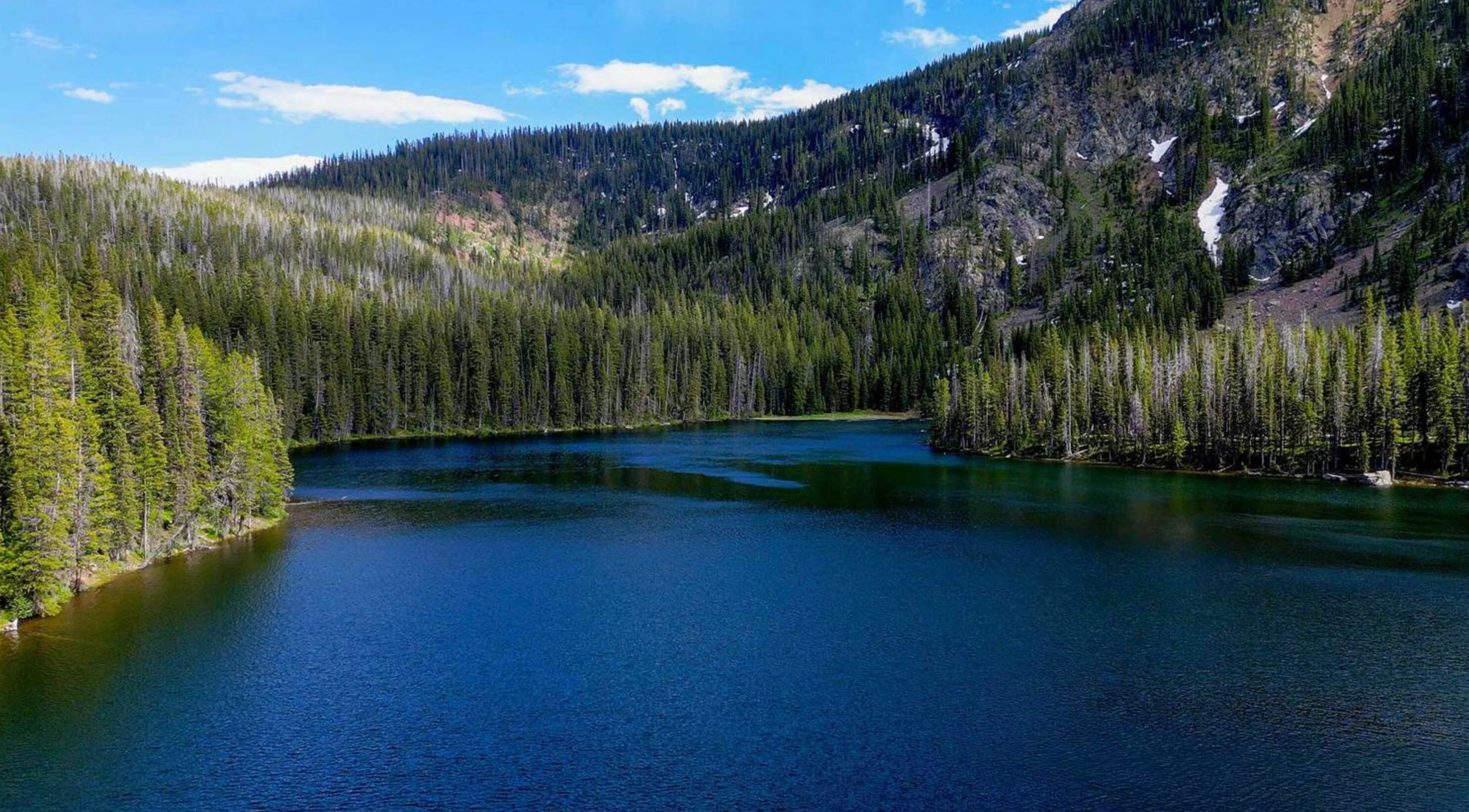
A secondary benefit of the purchase — one that Hicks said has generated widespread local excitement — is the return of more public recreation.
Decades ago, Battle Lake was a popular destination for families to go fishing, swimming and boating.
“Historically and culturally, this valley, and I think a lot of the folks in the Platte Valley and the Encampent region, it was a recreational destination to go up and fish,” Hicks said. “So we’ve gotten a lot of positive feedback about restoring that opportunity once we get our recreation plan put together.”
Because the district is a small conservation agency without the staff to manage a public park, it'll partner with Wyoming State Parks and Cultural Resources to see what’s possible for a long-term usage plan.
Future features could include hiking trails, cross-country skiing, and snowmobile routes.
“Obviously we want to maximize the ability for the public to utilize the property,” Hicks said. “But also protect the resource values at the same time.”
In the meantime, the district has established an immediate baseline policy. The area is open for walk-in, day-use-only hiking and fishing.
Hicks notes hunting access will likely become available down the line as the district coordinates with the Wyoming Game and Fish Department, but estimates that a permanent fully realized recreation plan is at least a year away.
Renée Jean can be reached at renee@cowboystatedaily.com.


