
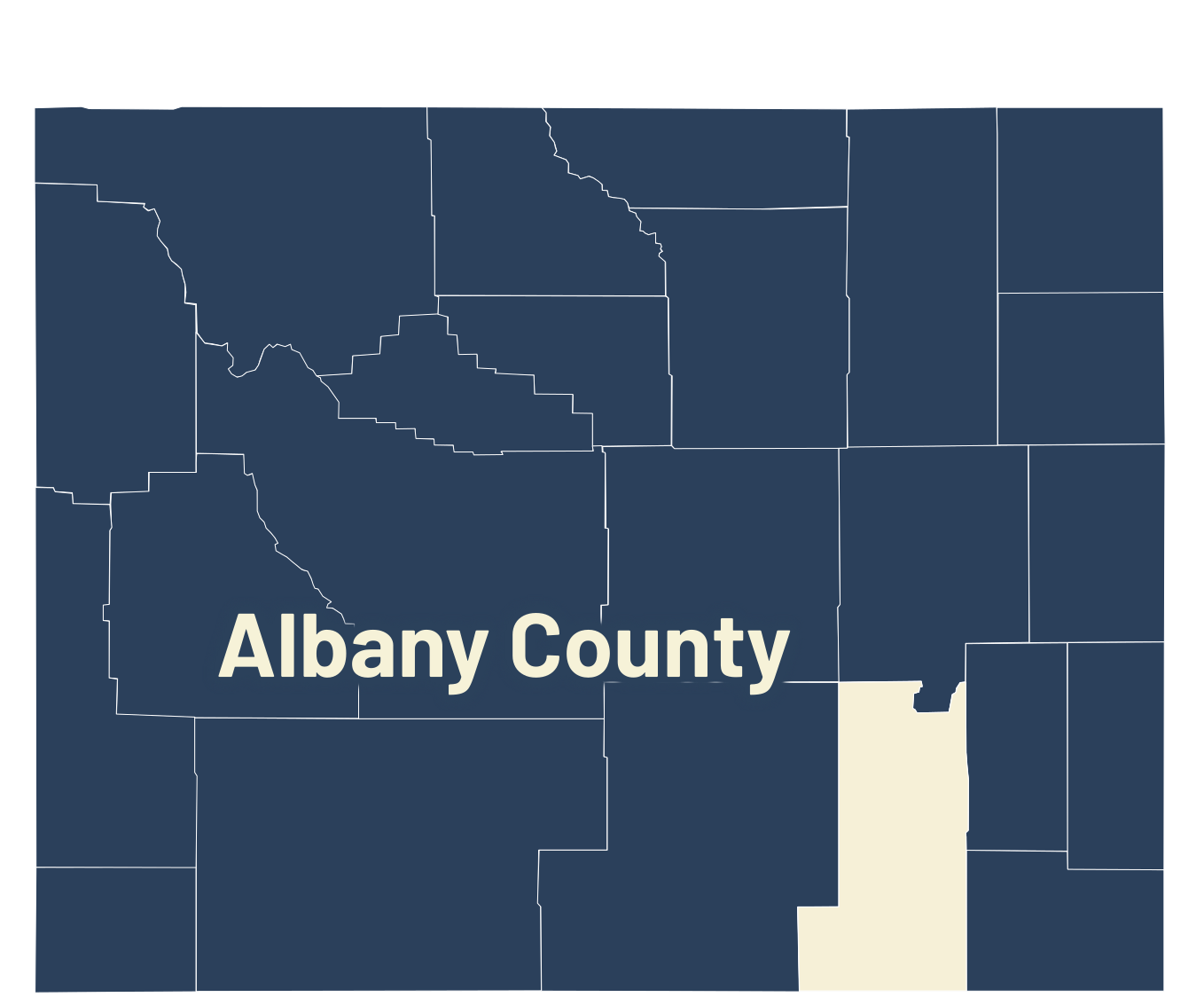
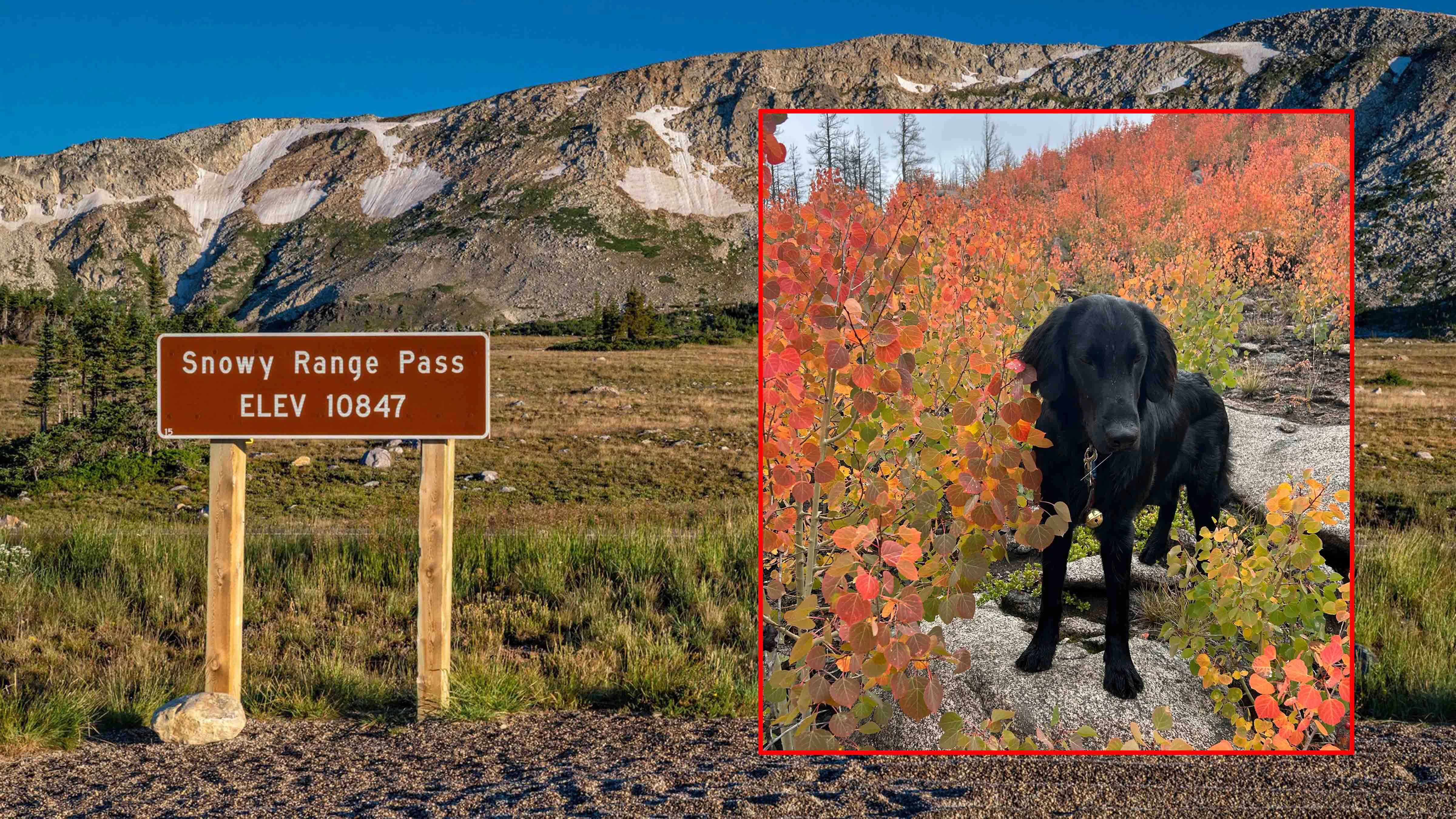
Cowboy State Daily meteorologist Don Day was enjoying a late summer weekend in the Snowy Range when he noticed the first signs of fall. Trees and shrubs in the mountains are already changing colors.
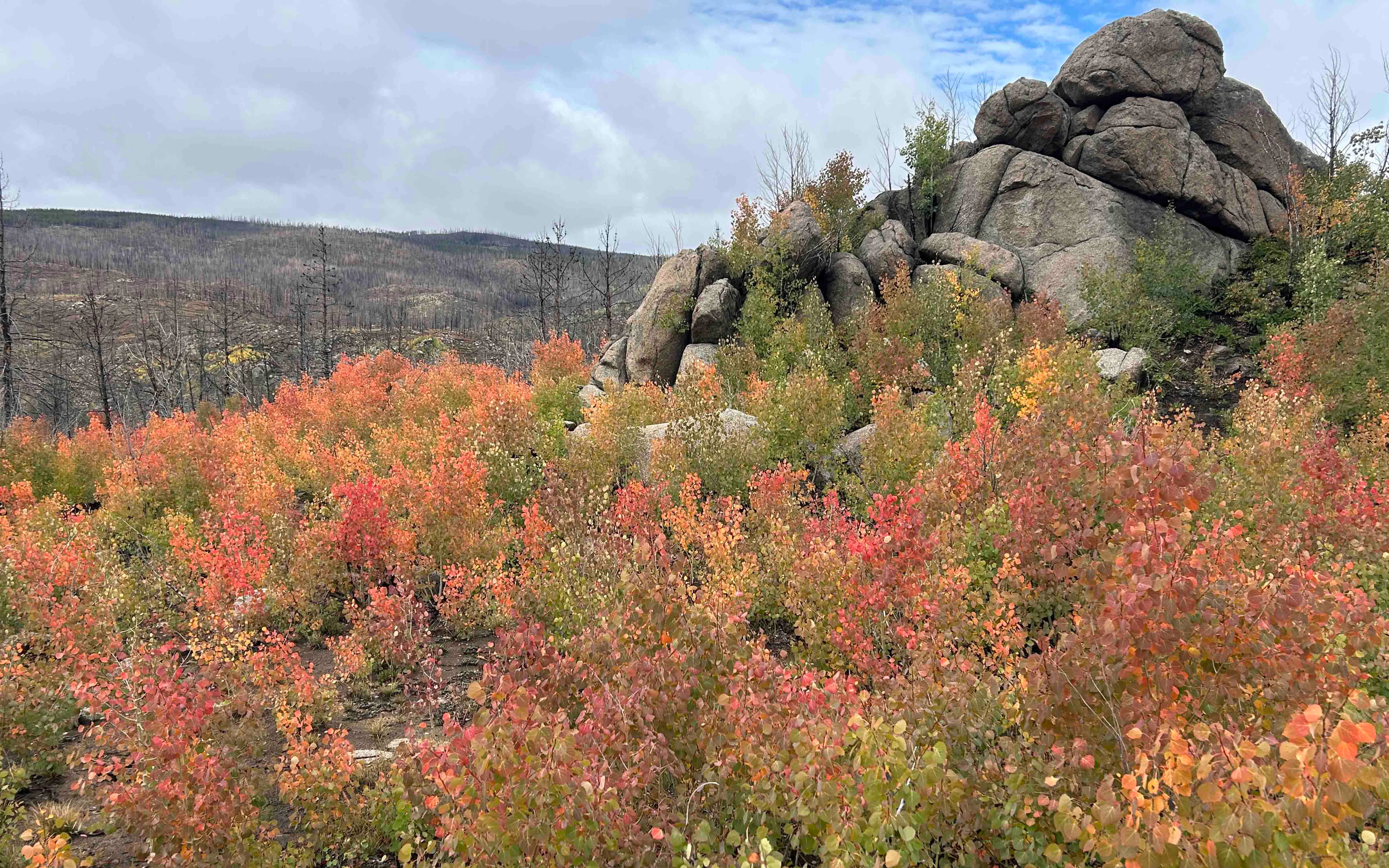
“There were some places along Highway 230 between Woods Landing and Fox Park where there's a lot of color,” he said. “There were patches of orange, red, and yellow next to patches that are still completely green. But if you go farther north, there's not nearly as much color in place. I didn’t see any color in the Vedauwoo area.”
These are the earliest signs of what’s shaping up to be a less-than-stellar year for fall colors, especially after the persistently dry winter, spring, and summer experienced across Wyoming.
If people want to get the fall color while it’s good, they might have to change their plans and get out earlier.
“I would plan to get up there sooner, and I would be ready to realize that it may not be near as stellar as a normal year,” said Shane Smith, former director of the Cheyenne Botanic Gardens. “I’d get up in the Snowies earlier, for sure.”
Earlier & Less Vibrant
In Wyoming, fall foliage follows a predictable pattern. Because fall colors peak at high elevations first, it makes sense to see the first colors of fall in the Snowy Range.
Smith wasn’t surprised that many people reported seeing flashes of gold and orange during Labor Day weekend. His concern was how quickly the transition could happen after “a tough year.”
“A lot of places in Wyoming have less-than-normal moisture or are experiencing drought,” he said. “Even the high country, which usually gets more moisture than lower altitudes, experienced less-than-normal moisture. Besides being hard on stream runoff, and all the implications there, it also triggers earlier coloration of the leaves.”
Changing color and dropping leaves is an aesthetically beautiful survival mechanism for deciduous trees. When stressed by drought or other conditions, trees tend to drop their leaves sooner and less spectacularly.
Smith said the transition into fall colors might not only happen earlier across Wyoming. It could also be “less vibrant” than in a normal year.
“Because of lower moisture, you might notice a little bit more brown coloration on the tips of the leaves,” he said. “They could change early, and there’ll definitely be an earlier drop.”
These are natural responses to less-than-ideal conditions. The splashes of color in the Snowy Range might be the first indications of what lies ahead.
Certain Spots
As Day was observing the color in the Snowy Range, he couldn’t help but notice some patterns. Certain areas were already more colorful than others.
“The areas that were changing the most were the west-facing mountain slopes with big granite outcroppings,” he said. “I assume that’s where it’s really rocky with less soil, but that’s out of my league.”
According to Smith, that tracks. Trees growing in those areas tend to transition and drop their leaves first, whatever the weather during the previous season.
“In the summertime, the sun is hanging out in the west a lot longer during the hottest part of the day,” he said. “That's going to exacerbate low soil moisture conditions, which is why those trees are going to go earlier than trees in the deeper canyons and on north-facing, wetter slopes.”
Day also observed a lot of color in the burn scars of the massive Mullen Fire.
In 2020, the Mullen Fire burned nearly 177,000 acres on the Medicine Bow-Routt National Forest. Since then, the incinerated forests have started to show small signs of recovery.
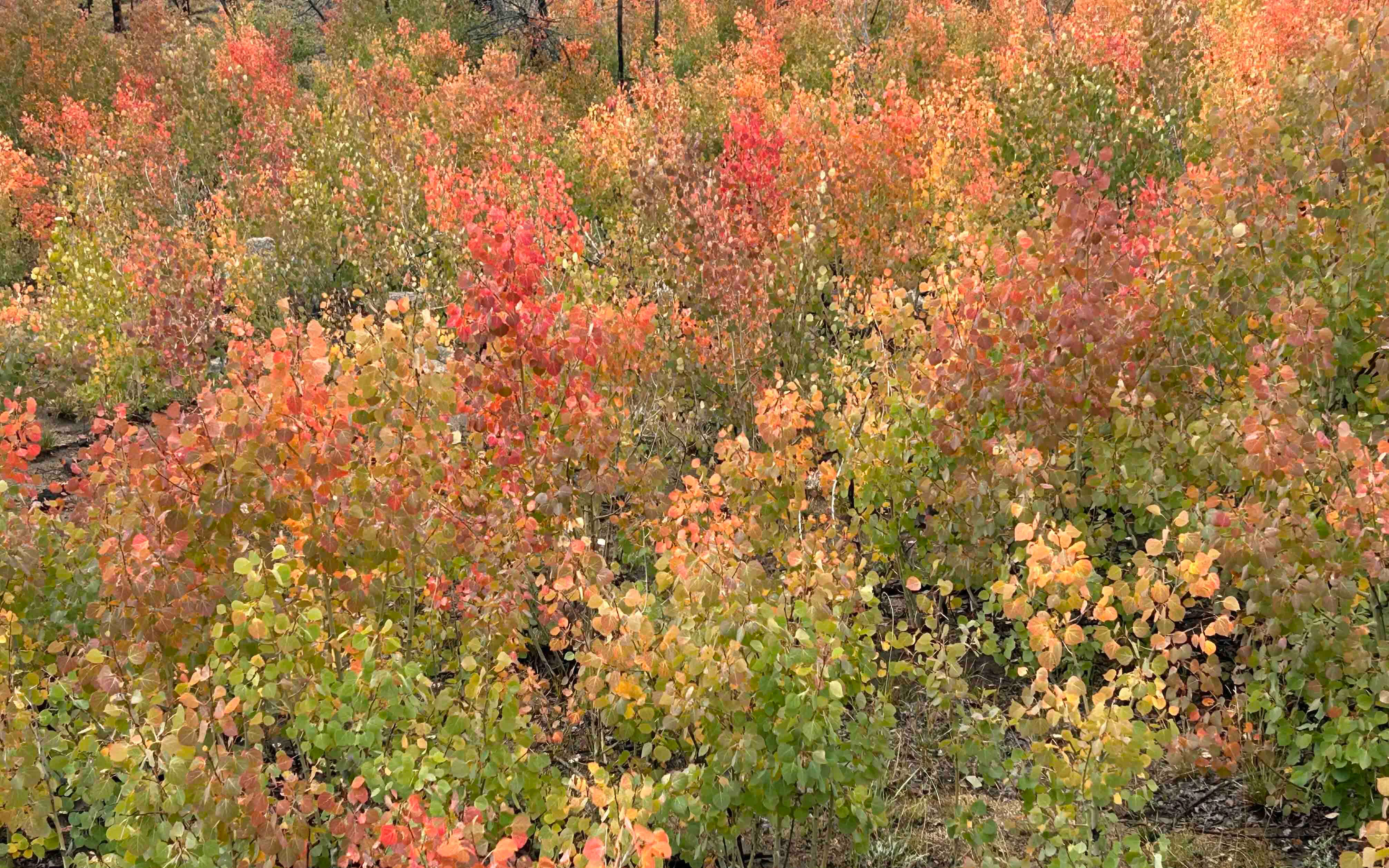
“A lot of aspens have come in up in the Snowies where the fire was, as all the biologists said they would,” Day said. “I’ve noticed the smaller trees that are 4 to 6 feet tall, as opposed to the more mature stands, are already turning.”
Smith said that also tracks. The smaller aspens are having a hard enough time as it is, and the lack of moisture in the Snowy Range isn’t helping.
“You've got a lot more sun hitting the soil in those areas, causing more evaporation,” he said. “Those poor little trees are going to be better off if they drop their leaves sooner rather than later. They’re feeling the drier situation, and there’s not much advantage to hanging in there longer. It’s just survival.”
The Situation (With No Color)
It’s not unusual for strands of trees and shrubs to be showing their fall colors in the Snowy Range in early September. The question is whether this marks the scheduled start of an abbreviated, less colorful year across Wyoming.
“I think there might be a little more equalization than normal,” Smith said. “The transition might be a little tighter, the higher elevations with the lower elevations, with the exception of the riparian lower drainages, across most of the state.”
The expected pattern of color transition will remain the same as always. Trees in the higher, drier elevations will transition first, and trees in low drainages with constant water will be the last.
While Wyoming was dry overall this year, some areas got more moisture than others. Those areas will benefit from brighter, longer-lasting colors.
“The riparian areas in lower drainages might be just as vibrant as any other year, but with a stark contrast on the hillsides,” Smith said. “The cottonwoods, willows, and dogwoods could be glowing long after the aspens are done.”
According to the website Explore Fall, the Snowy Range and other high-altitude areas, such as the Bighorns and most of western Wyoming, should reach high or peak color by Sept. 20.
Meanwhile, the Fall Photo Guide says the “statewide peak” will be reached, at least in the high elevations, by Sept. 16.
“I normally tell people the third weekend in September is when things are really kicking into gear,” Day said. “If we don't have a big storm to take the leaves off, the last 10 days of September and first week of October are when we’ve got the best color over the widest area.”
Smith encouraged fall foliage fans to check the many websites with fall color estimates for Wyoming, but they might be served better by what they hear and see for themselves.
Seeing color in the Snowy Range in early September isn’t unusual, but peak fall color could come and go quicker than anyone might expect.
“I'd look at a number of those maps for leaf-peeping, but I wouldn’t be waiting around, either,” he said. “We’re in a different situation this year, and I wouldn’t be surprised if all the color were a bit earlier.”
Andrew Rossi can be reached at arossi@cowboystatedaily.com.


