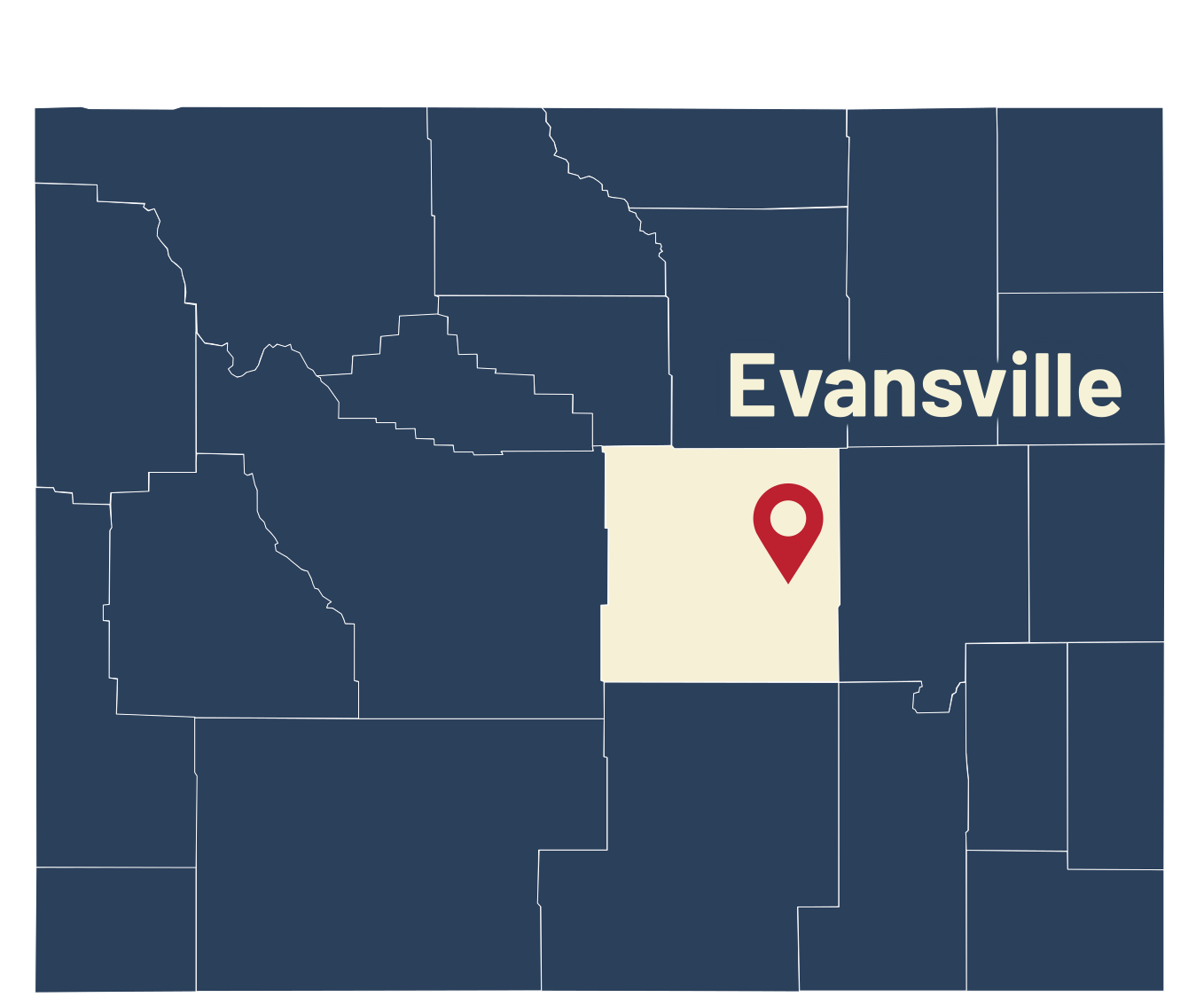
EVANSVILLE — At any given time, Mesa Power Solutions Director of Assembly Josh Wilson can hear six music tunes in the company’s new $70 million, 220,000-square-foot plant in Evansville.
That’s because each area along the company’s newest assembly line in Natrona County is blaring its station of choice, a modern-day equivalent of whistling while you work.
The sound of power tools creates an entirely separate rhythm of its own, a curtain of unceasing sound that seems to drown out music from far away. It also means things are moving along just as they should for one of Wyoming’s newly expanded manufacturers.
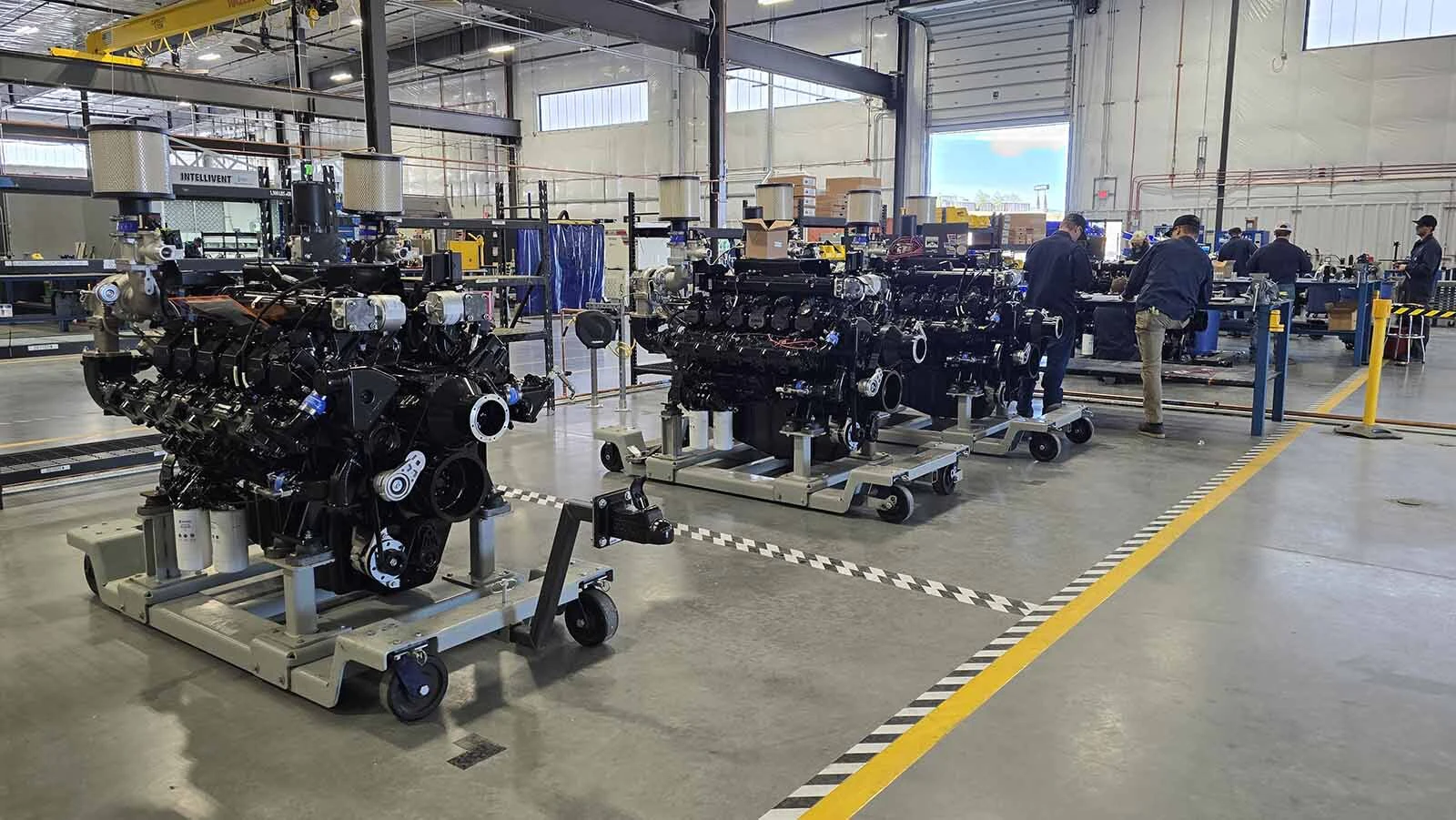
The lights are all green or white for now — no red or blue — which means every station is humming, just as it should, pumping out roughly two new standby power generators each hour.
When the second line comes on board, that output will double to four per hour.
“We build all of our cabinets offline,” Wilson said, gesturing toward two of the work stations. “Basically as these guys do all the smaller wiring, these guys are prepping the cabinet to be ready to be flown onto a generator.”
Flying refers to using a crane to position a heavy piece of equipment into place on the generator in progress.
“We’ll quality control it here at our final step, before it gets moved to the main line and flown onto a generator,” Wilson said. “You’ll see that theme as you get a tour throughout the plant.”
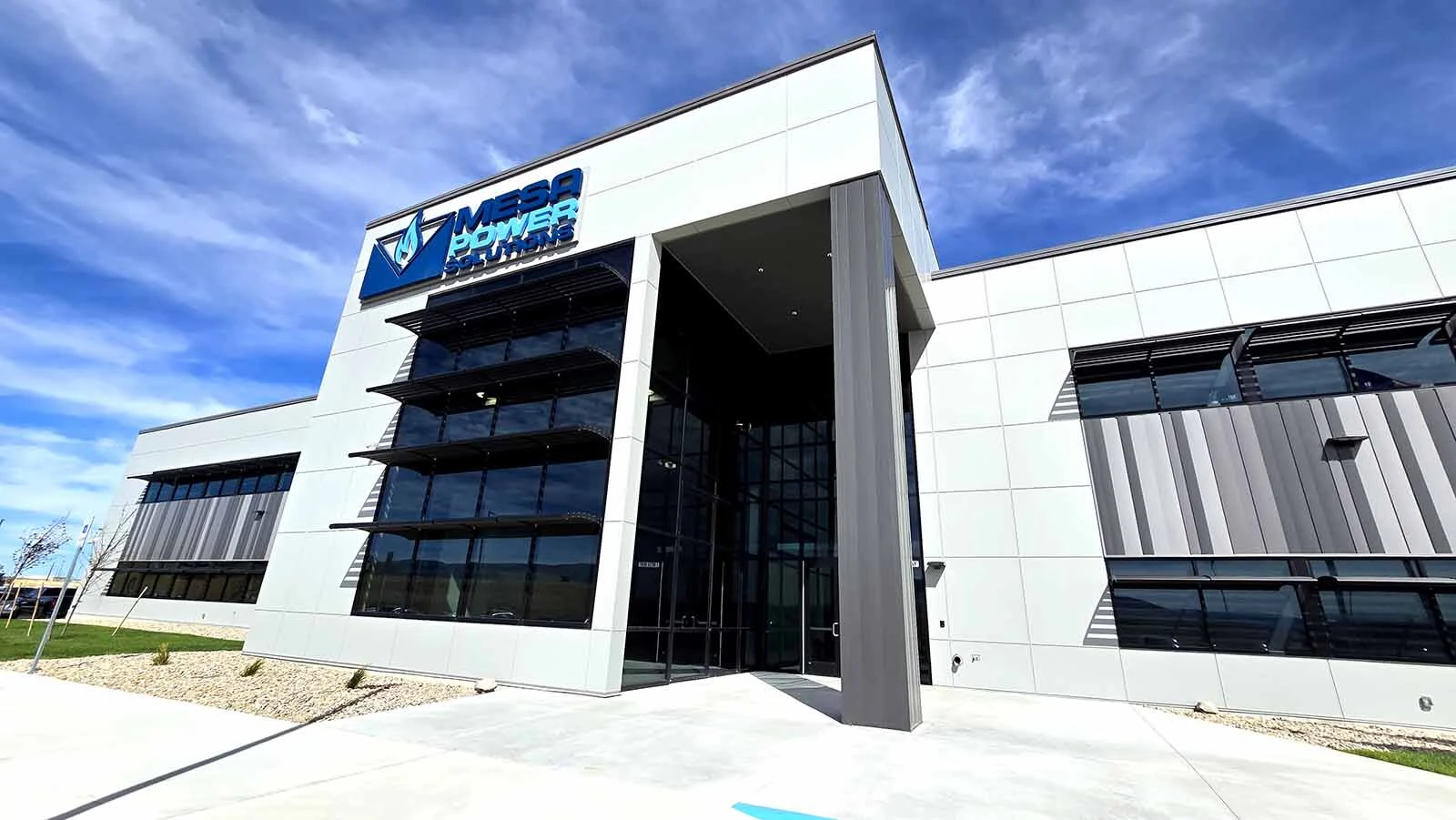
Mesa Power Solutions has built a new $70 million manufacturing plant in Evansville. The plant was necessary to ramp production to up to 6,000 power generators a year. (Renee Jean, Cowboy State Daily) 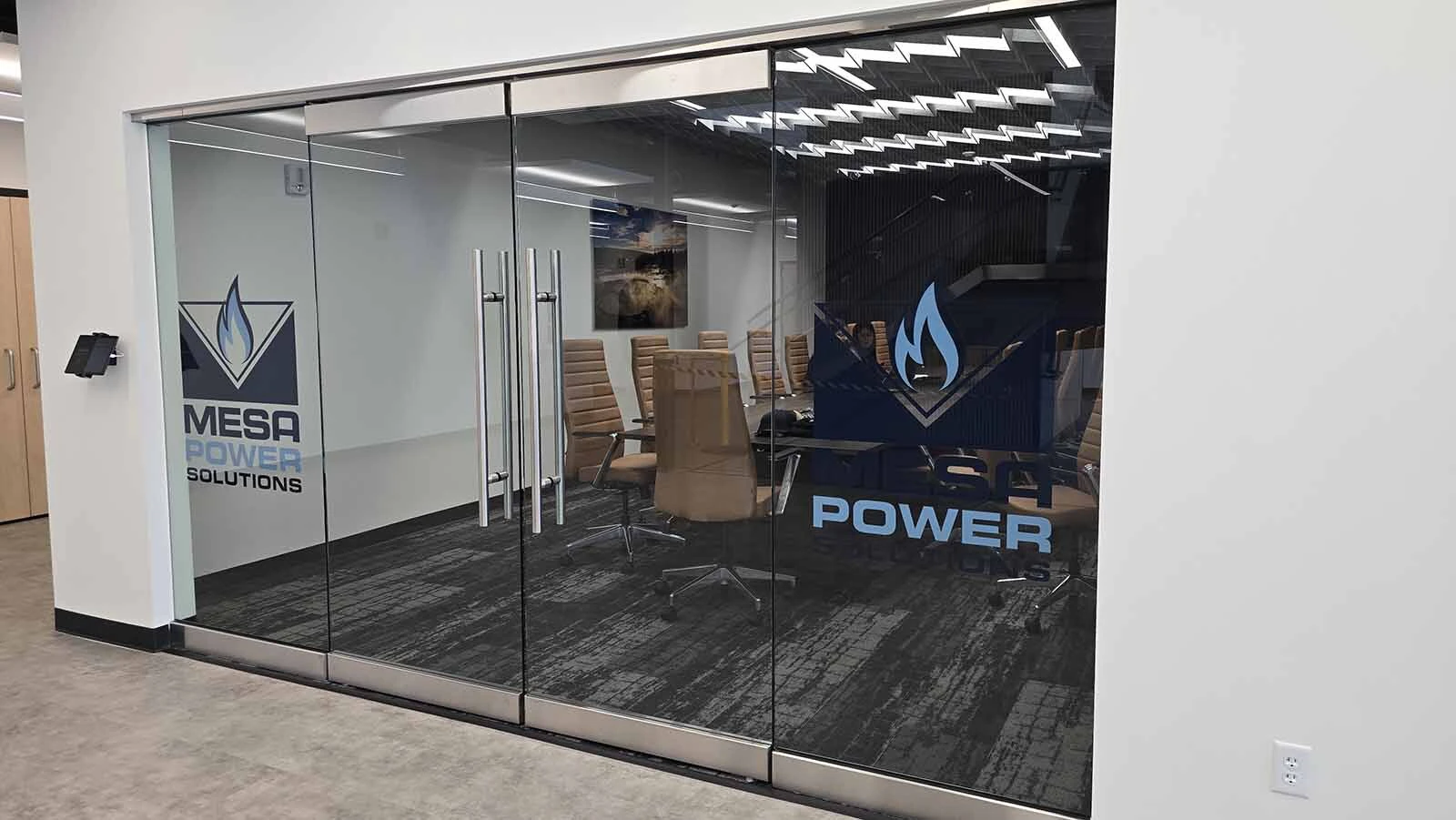
A conference room is available for traveling executives visiting from Mesa Power Solutions' Colorado headquarters. (Renee Jean, Cowboy State Daily) 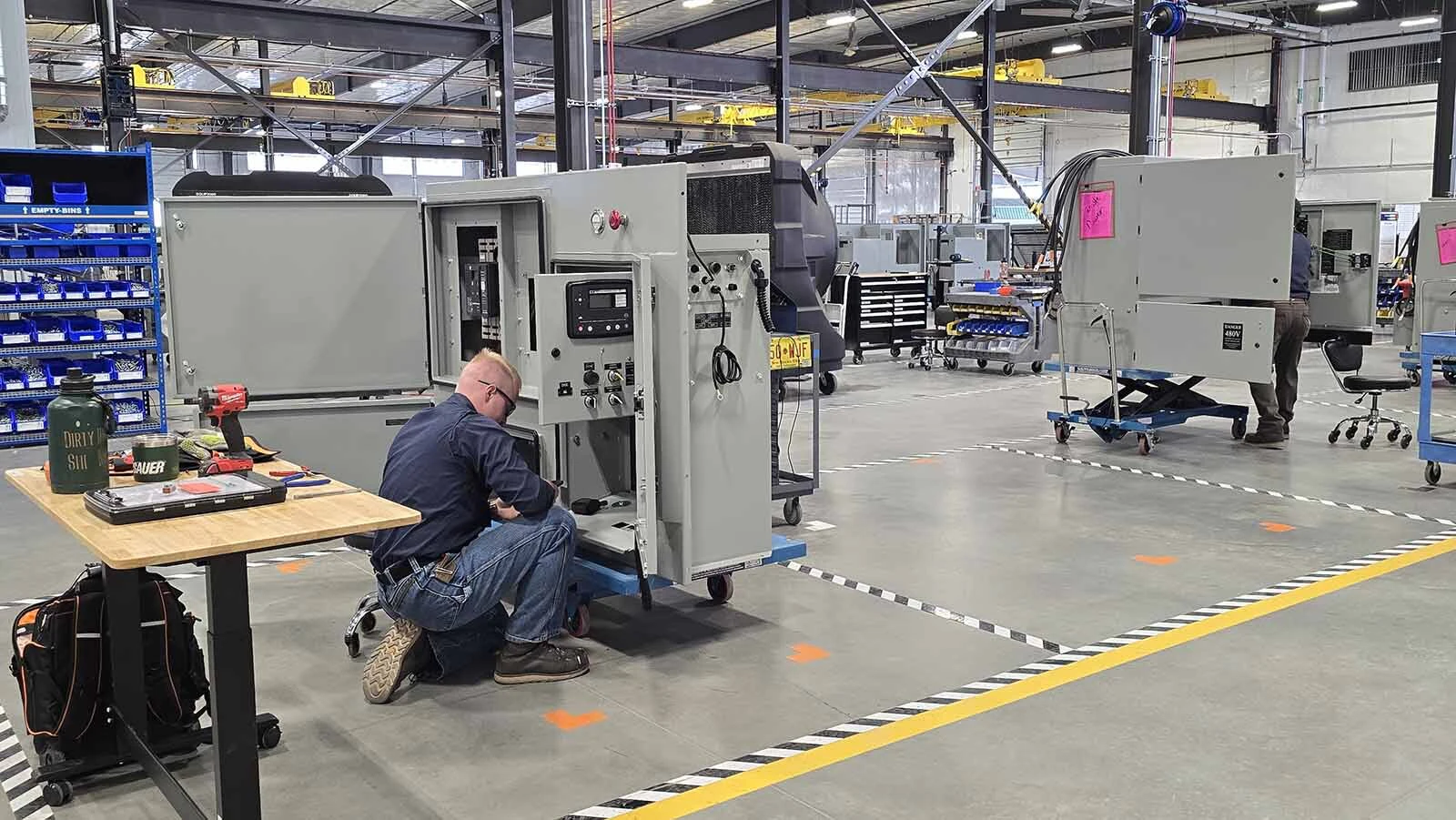
A Mesa Power Solutions employee works on a component for a standby power generator. (Renee Jean, Cowboy State Daily) 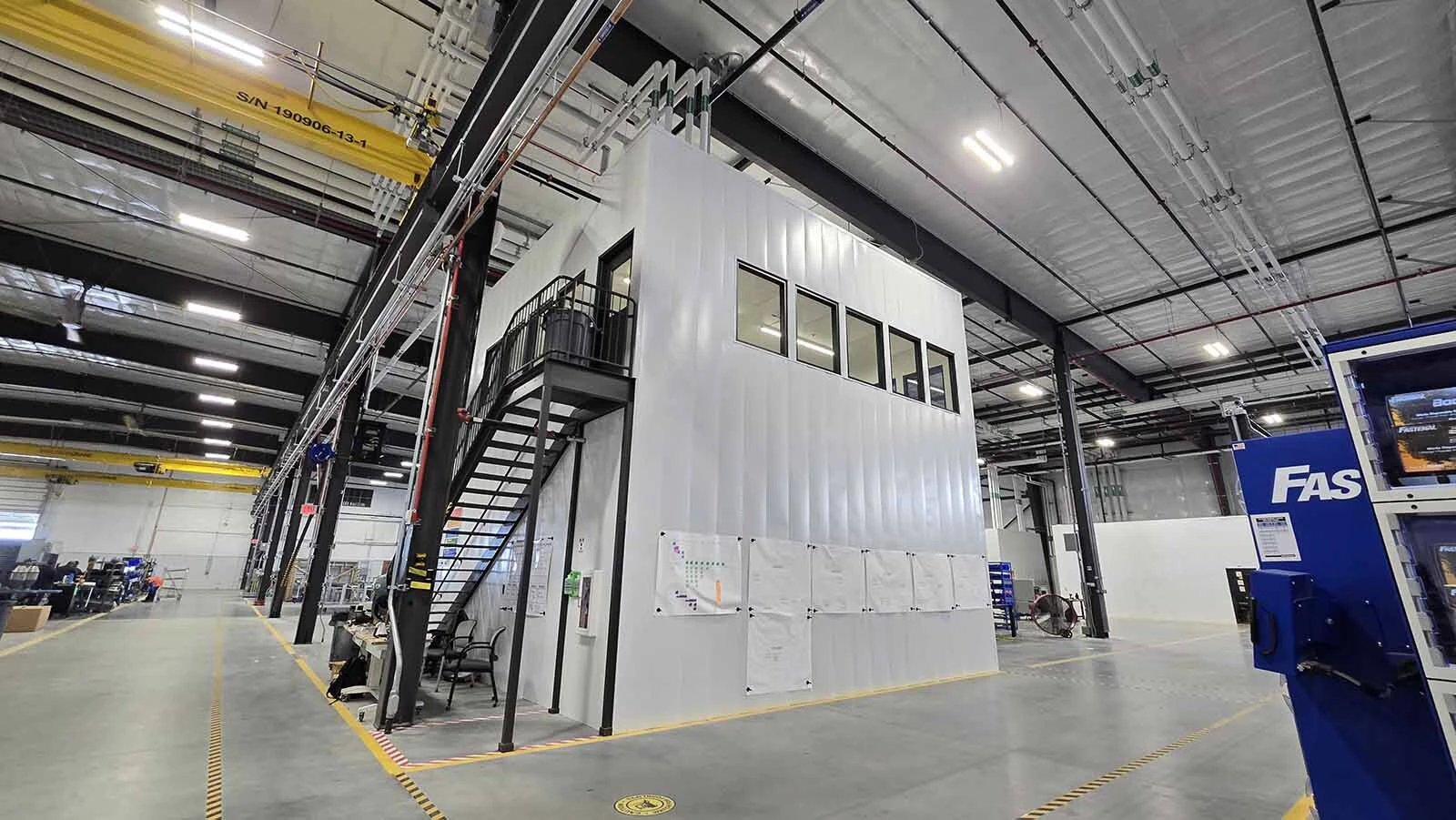
This station at Mesa Power Solutions is referred to as the Eagle's Nest. From it, the line manager can see at a glance how production is going on the floor. (Renee Jean, Cowboy State Daily) 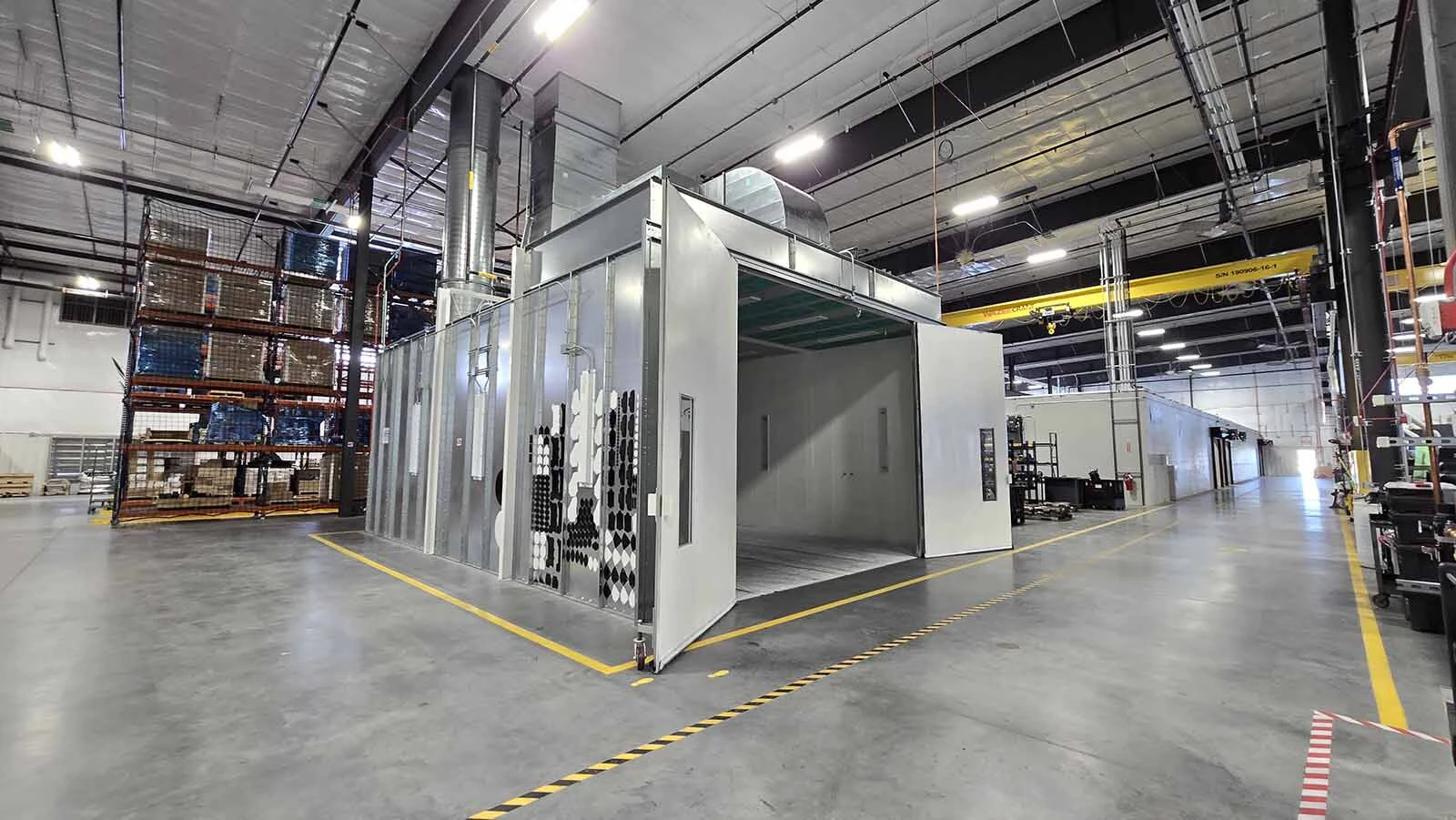
This paint booth is part of the refurbishment shop. Old engines are taken from power generators, taken apart and put back together, and repainted. (Renee Jean, Cowboy State Daily)
Two-Hour Segments At Once
Each of the plant’s six generator assembly stations is designed to have two hours of work each, for a total of 12 hours of human labor on each generator, all taking place concurrently. This segmented approach means each stage is finishing at roughly the same time and moving into position for its next step.
Workers are doing the same two-hour process each time, helping maintain speed and efficiency.
Parts and supplies have been strategically placed so that no one is walking too far to find anything.
“The farthest you should walk is about 15 to 20 feet to get what you need back to your station to do your work,” Wilson said. “Because if they’re having to walk across the building to get something they need, that’s just wasted time and that’s bad. We’re doing our best to limit the non-value-add time that they do, so they can spend their shifts actively building instead of looking for parts and bolts and stuff like that.”
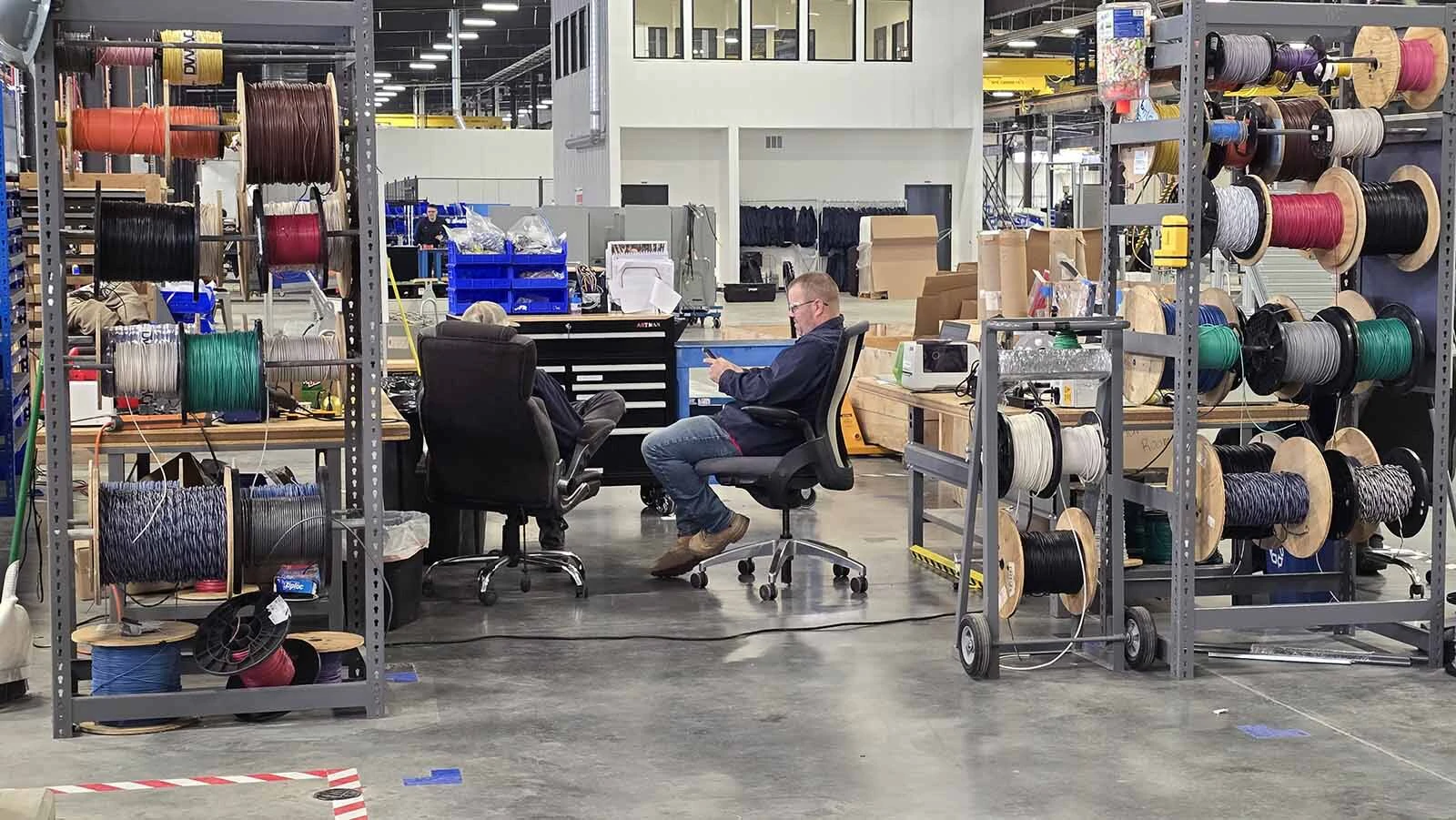
Other steps to keep things easy include color-coding wires, ensuring the right wire is going into the right place with a simple glance.
“August was our first month in this facility,” Wilson said. “We’ve made some pretty good improvements over the last four or five weeks as a team, figuring out parts flow and delivery of parts to the line.”
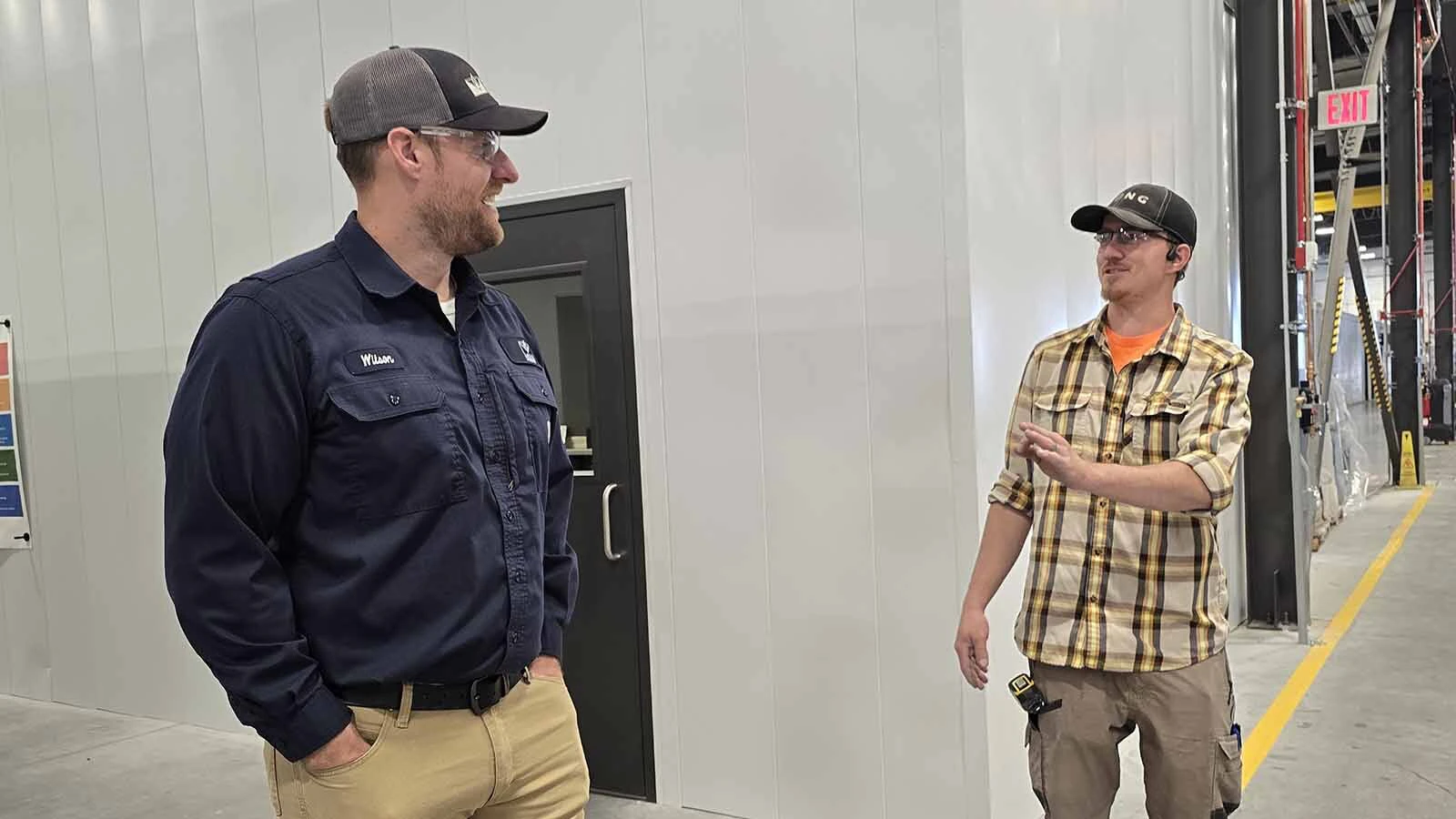
Mesa Power Solutions Director of Assembly Josh Wilson talks with an employee during a tour of the plant with Cowboy State Daily. (Renee Jean, Cowboy State Daily) 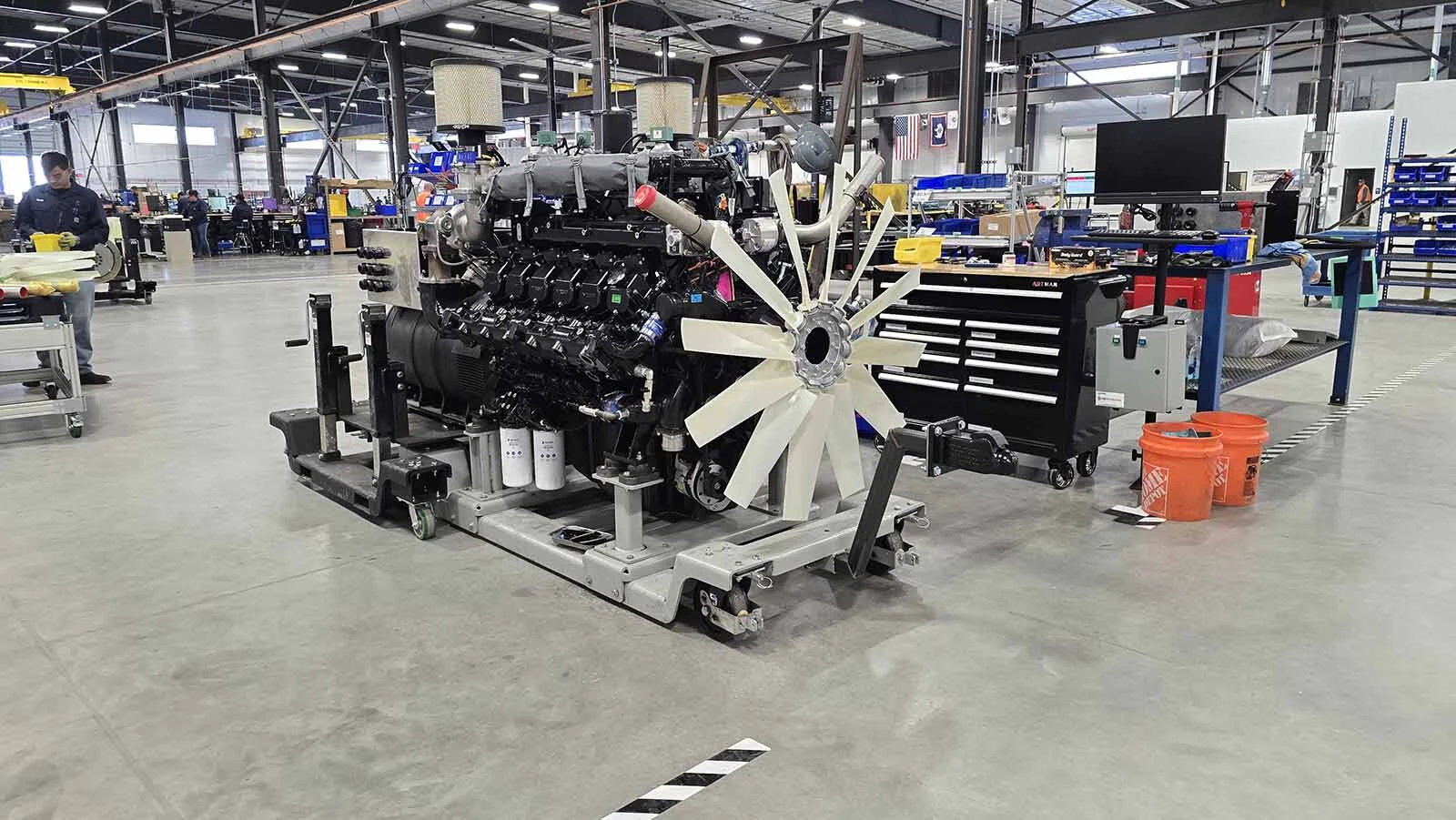
One of the beginning stages of Mesa Power Solutions' new assembly line at its $70 million plant in Natrona County. (Renee Jean, Cowboy State Daily) 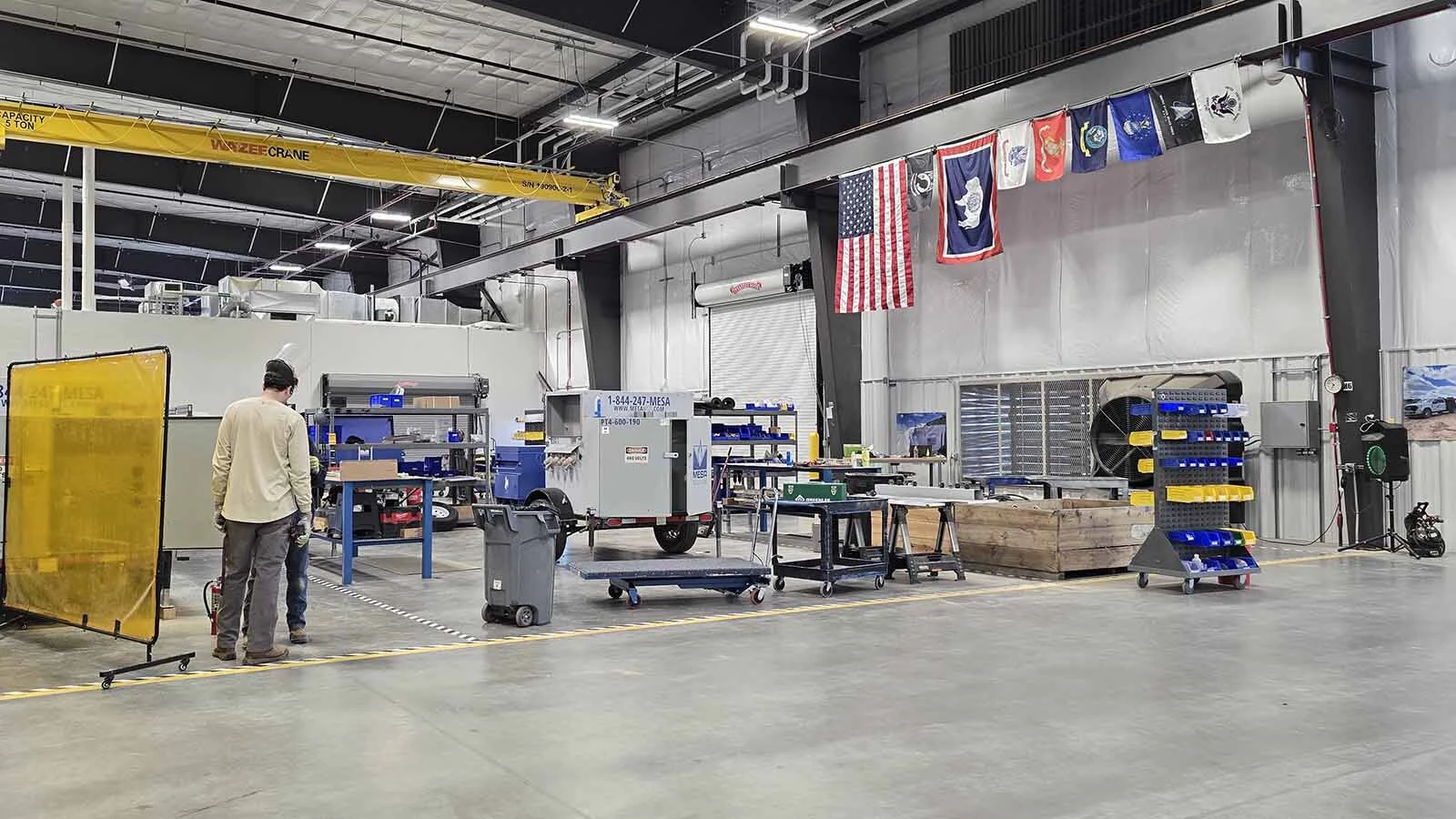
A number of military veteran flags hang in Mesa Power Solutions' new plant. About one-third of their workers are veterans. (Renee Jean, Cowboy State Daily) A Mesa Power Solutions employee works on a component for a standby power generator. (Renee Jean, Cowboy State Daily) 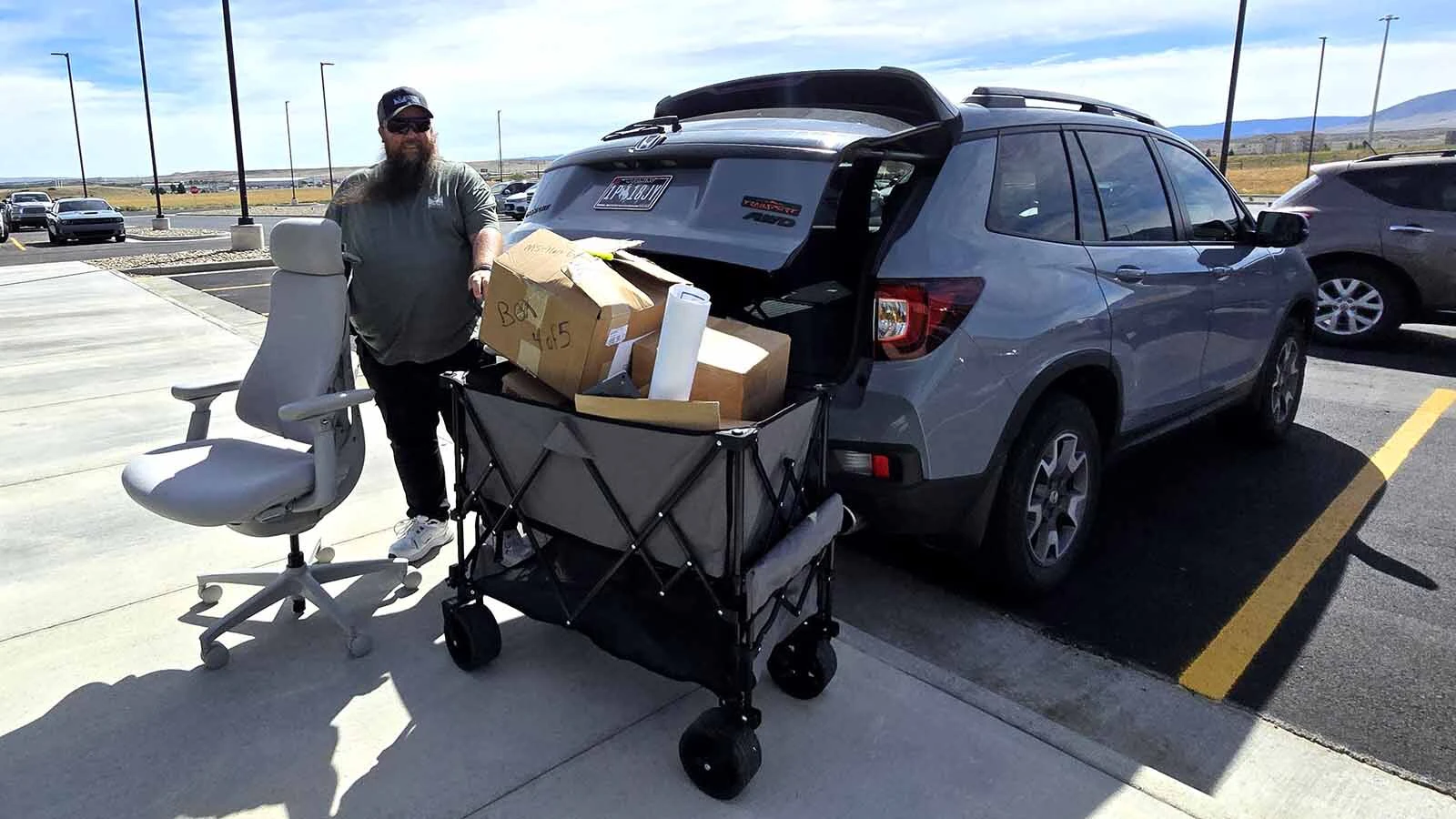
It's move-in day for Chris Moore at Mesa Power Solutions. Moore is part of the team tracking inventory, and said the new facility will make his life easier. (Renee Jean, Cowboy State Daily)
From Wyoming To National Player
Mesa Power started in Casper in 2014, primarily as a rental power provider for the oil and gas industry.
It was founded by a Casper-based group of military veterans with financial backing from BP capital, an energy hedge fund headed by the late oil legend T. Boone Pickens Jr.
Its founders include industry veterans in CEO Scott Gromer and COO Fred Fichtner.
It’s become a powerhouse since then, with 30 locations across the nation that serve customers in every oil basin.
The company moved its headquarters to Loveland, Colorado, in 2019/2020, partly due to hiring difficulties in Wyoming, Wilson said.
“It’s hard to hire 150 engineers in Casper,” he said. “We have about 65 to 70 engineers right now, so trying to grow that by another 100 to 200 people probably would have taken us five or six years. Moving to Loveland kind of opened up that white-collar hiring pool a little bit better.”
The company still has a deep taproot in Wyoming, though, Wilson added.
“We moved the headquarters down there, but we kept our operations here,” he said. “That’s very important to Scott and Fred, who are both long-term Wyoming state residents and raised their kids here. All their kids live here.”
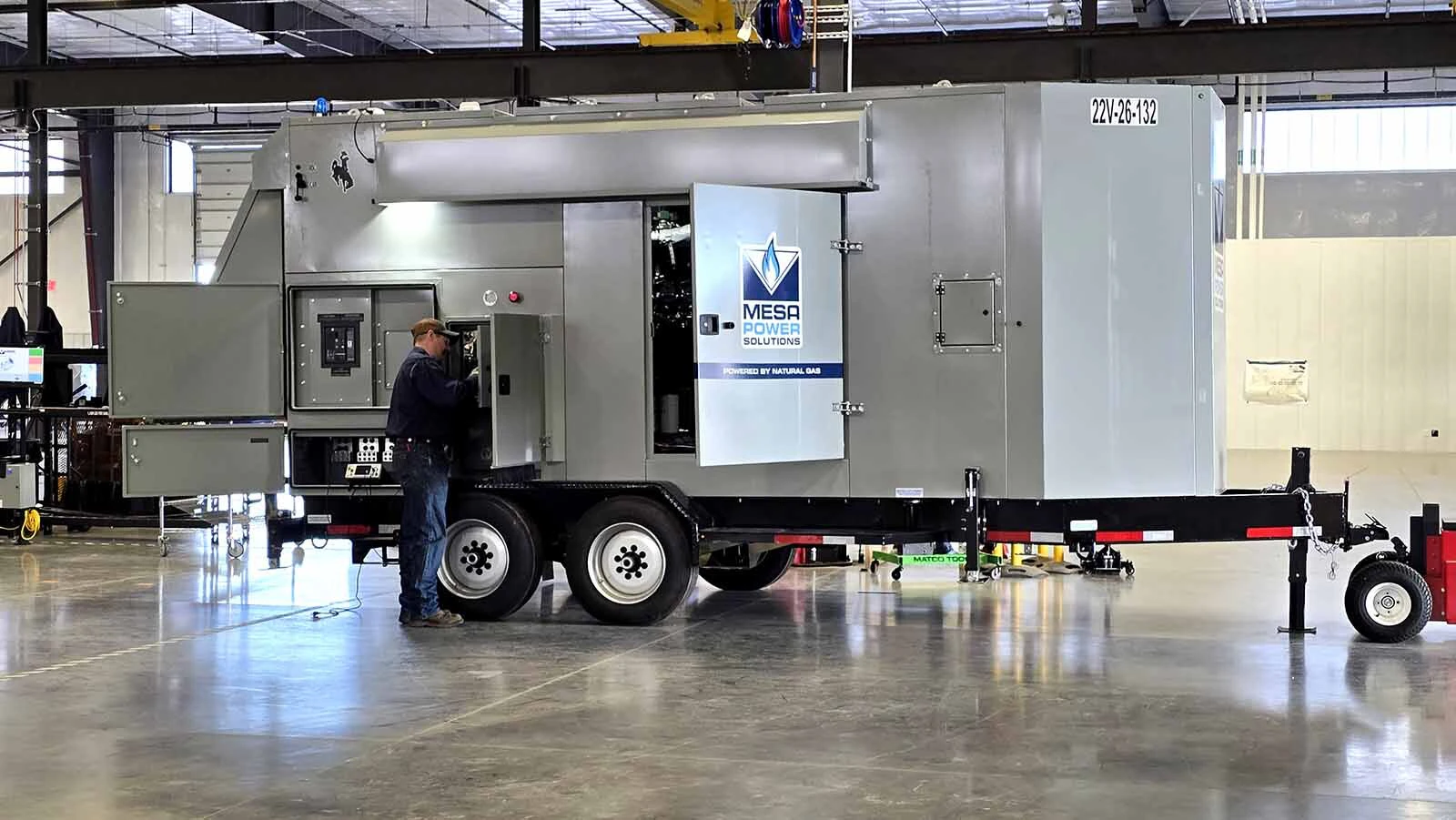
A standby power generator that's nearing completion at Mesa Power Solutions' new manufacturing facility. (Renee Jean, Cowboy State Daily) One of the beginning stages of Mesa Power Solutions' new assembly line at its $70 million plant in Natrona County. (Renee Jean, Cowboy State Daily) 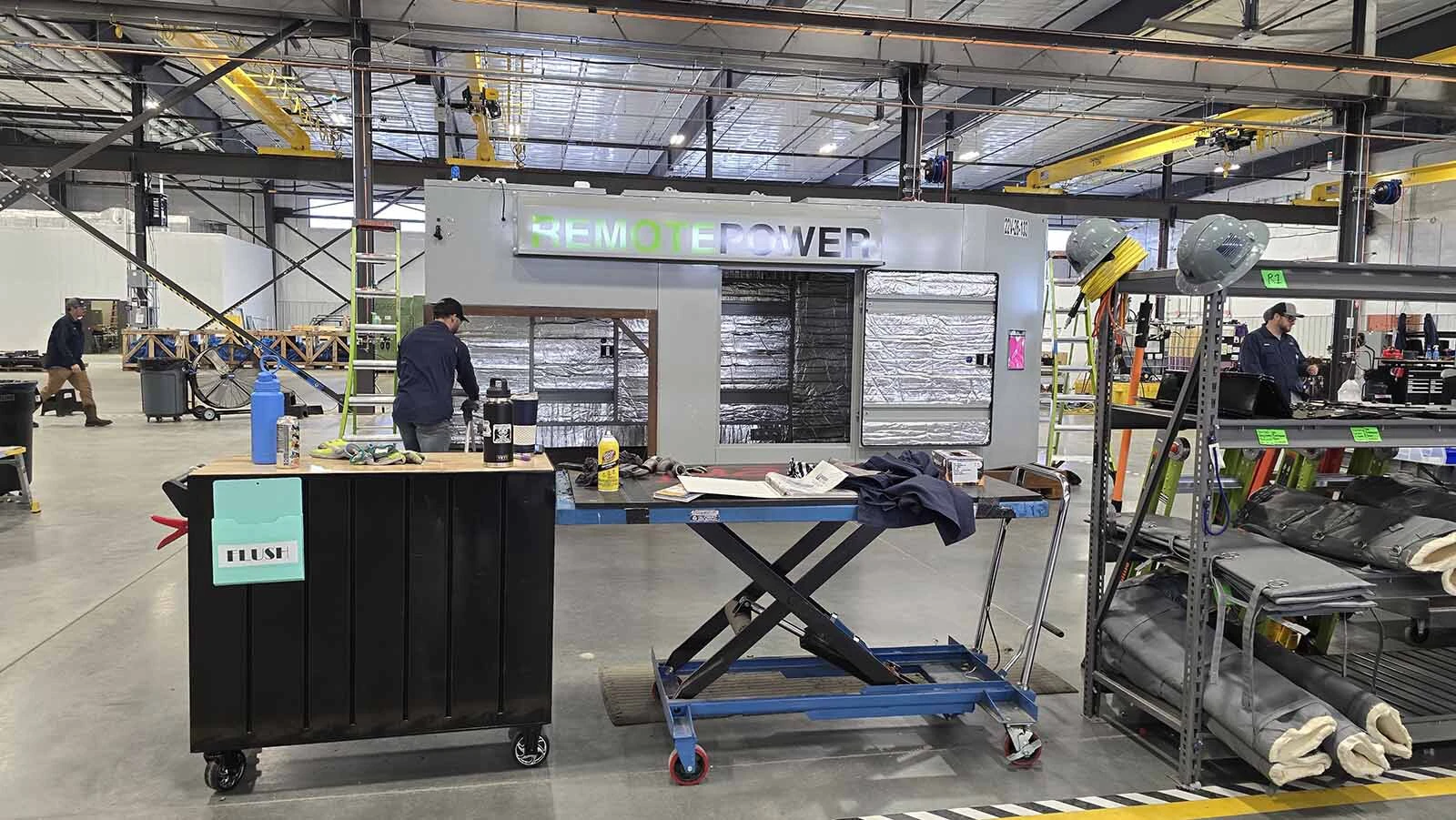
An employee works on a Mesa Power Solutions assembly line at its new $70 million plant in Evansville in Natrona County. (Renee Jean, Cowboy State Daily) 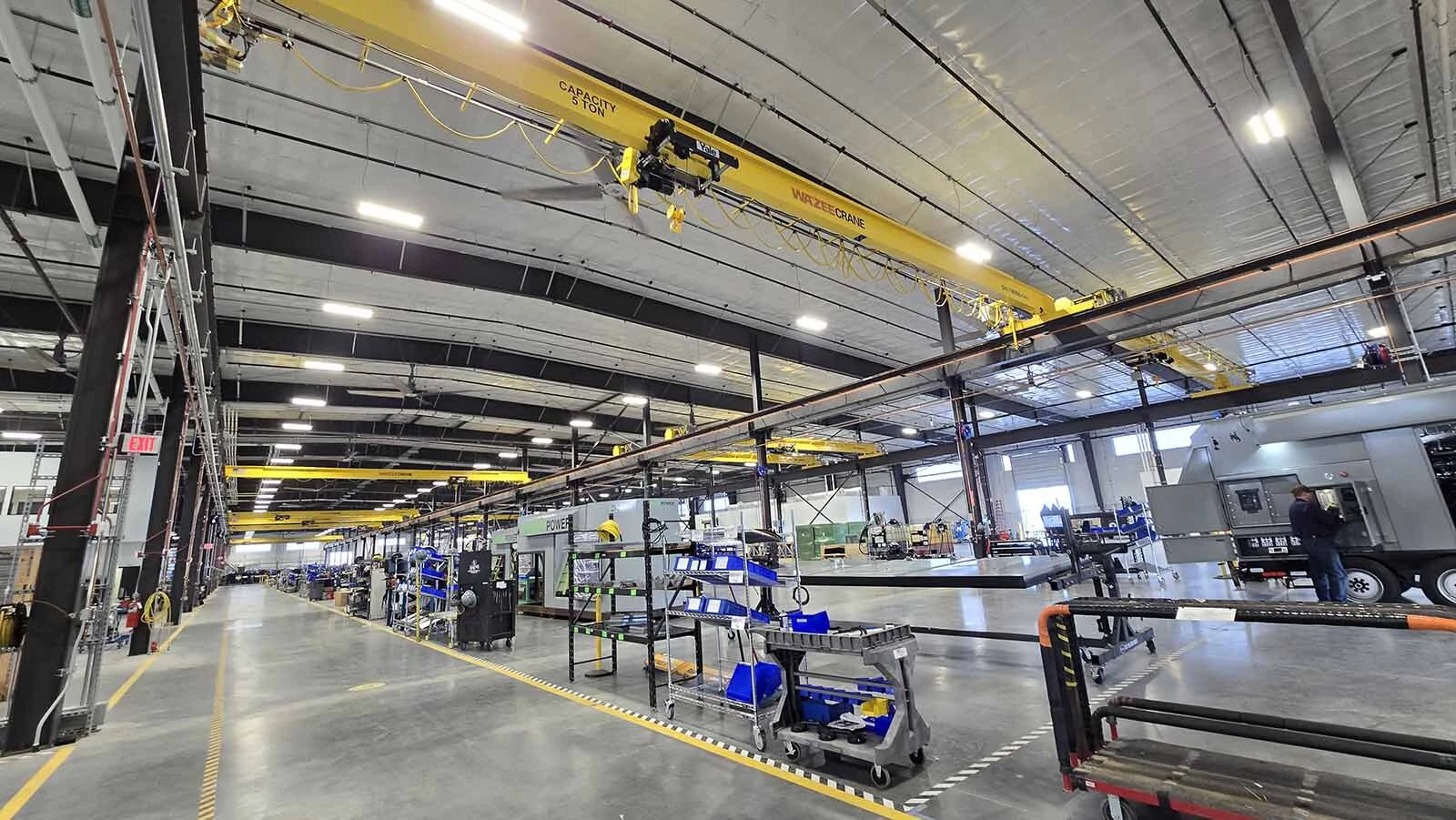
The overhead yellow beams are a crane system that allows large pieces to be "flown" over a power generator in progress. (Renee Jean, Cowboy State Daily) 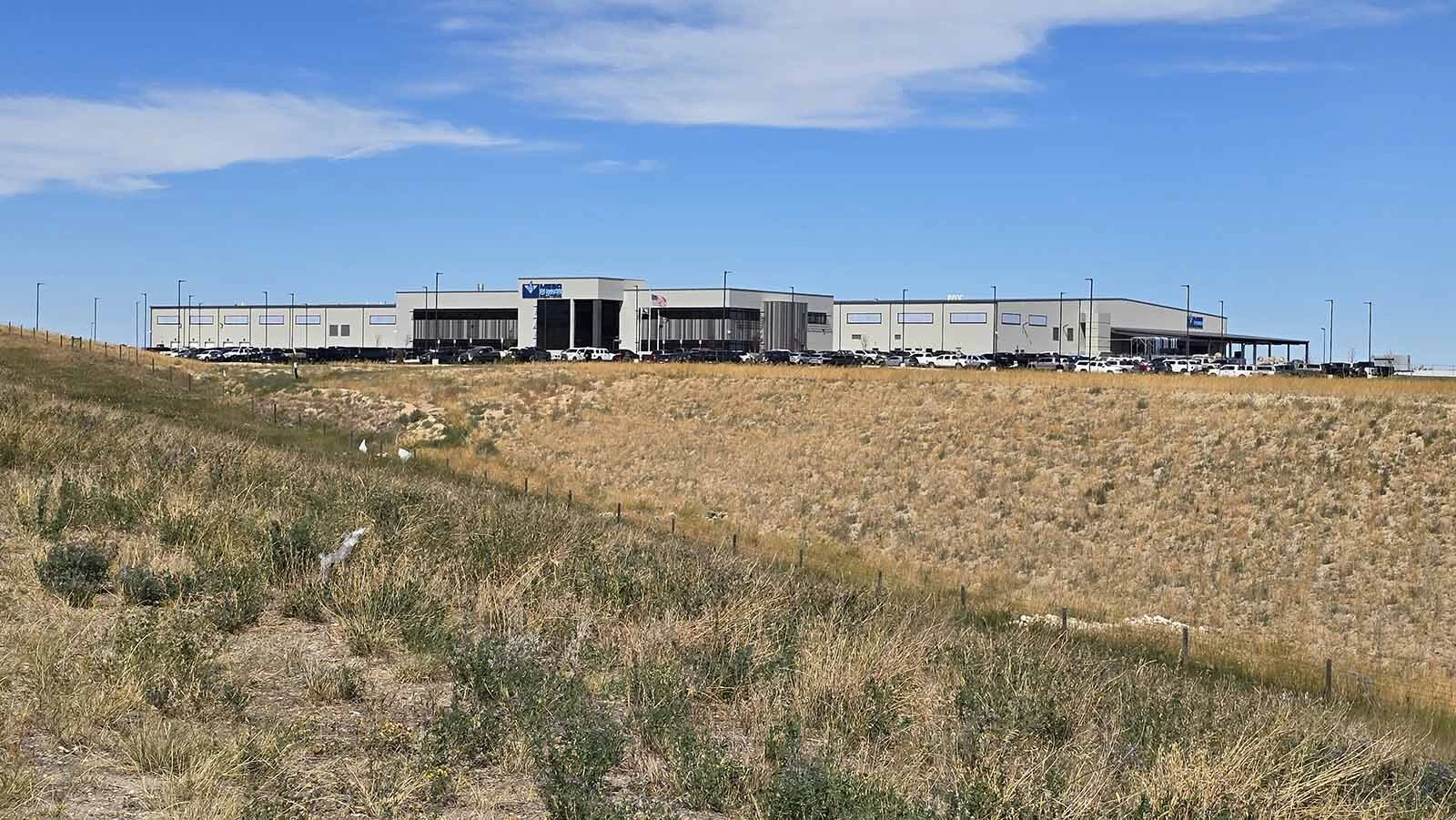
Mesa Power Solutions has built a new $70 million manufacturing plant in Evansville. The plant was necessary to ramp production to up to 6,000 power generators a year. (Renee Jean, Cowboy State Daily)
Advanced Standby Power
For the first 10 years of its lifespan, Mesa Power Solution’s main customer was the oil and gas industry. Power companies struggled to extend power to them on the prairie, so they had a demand for mobile power units that could be driven to a location on a reinforced trailer.
Mesa’s ramp-up today, though, is completely different.
“Our new markets are in the commercial industrial space — large climate-control facilities at like a grocery store or like a warehouse,” Wilson told Cowboy State Daily. “We’re doing a lot of standby applications like that.”
They’re also working with larger utility companies such as Xcel Energy or Black Hills Energy to help them build out microgrids that can more quickly boost power when demand is hot.
“You look at somewhere down in like Texas, where your normal peaking time of the day is 3 to 7 p.m., and it’s 120 degrees and everyone’s cranking their air conditioner and sometimes the grid can’t keep up,” Wilson said. “So what a lot of those utility companies have been doing is putting pads of generators that they call microgrids in those substations. During peaking hours, they’re able to turn those generators on to push more power so that everybody can use what they want.”
That helps take stress off the grid, ultimately improving reliability, Wilson said.
Demand for that kind of power right now is skyrocketing, Wilson added.
“We need to compute,” he said. “We all have social media. Over the last decade, just as technology has increased, and AI has come around, and everyone’s using it — the power is needed for all of that stuff.”
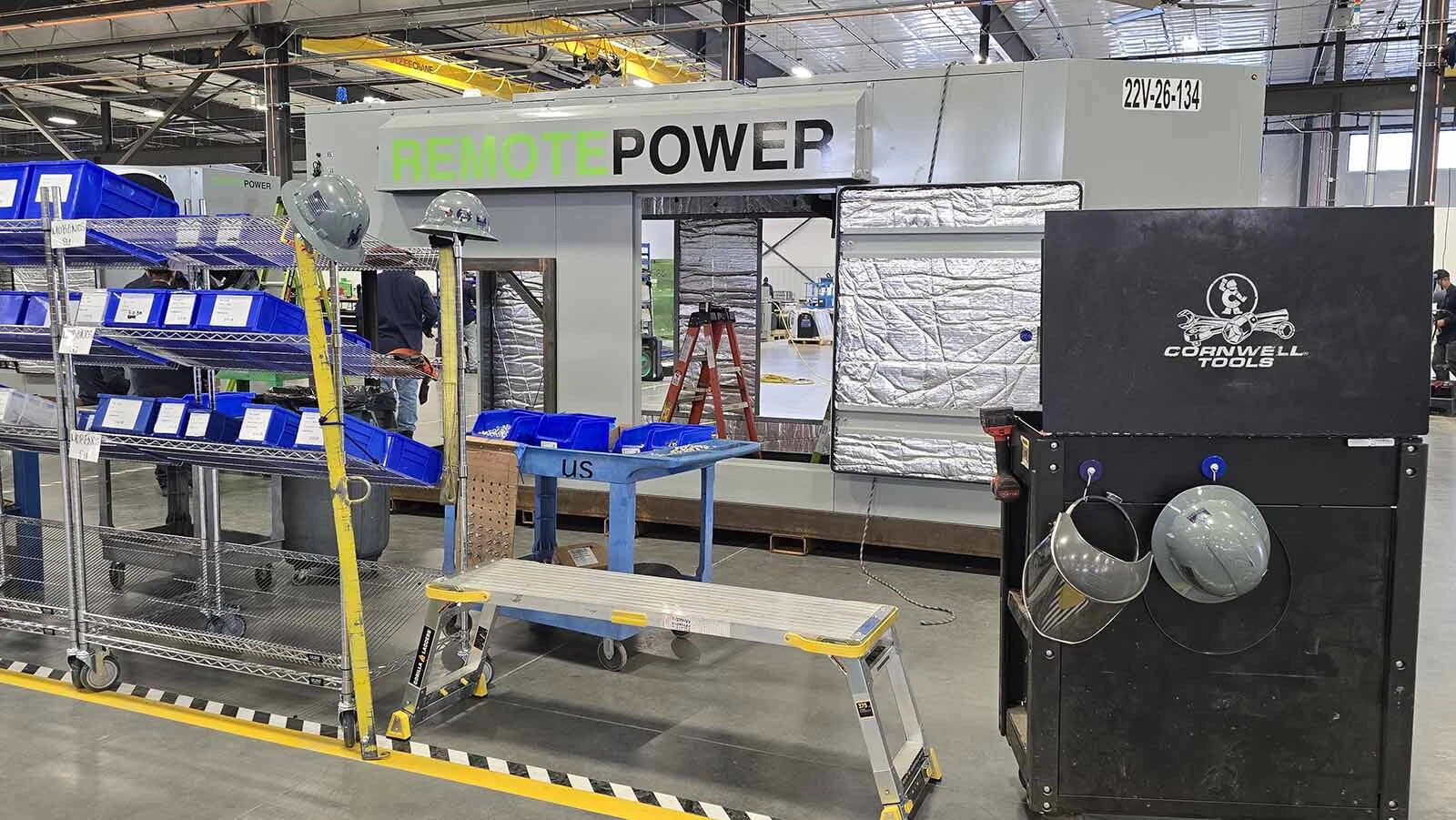
One of the assembly stages for Mesa Power Solutions' standby generators. (Renee Jean, Cowboy State Daily) 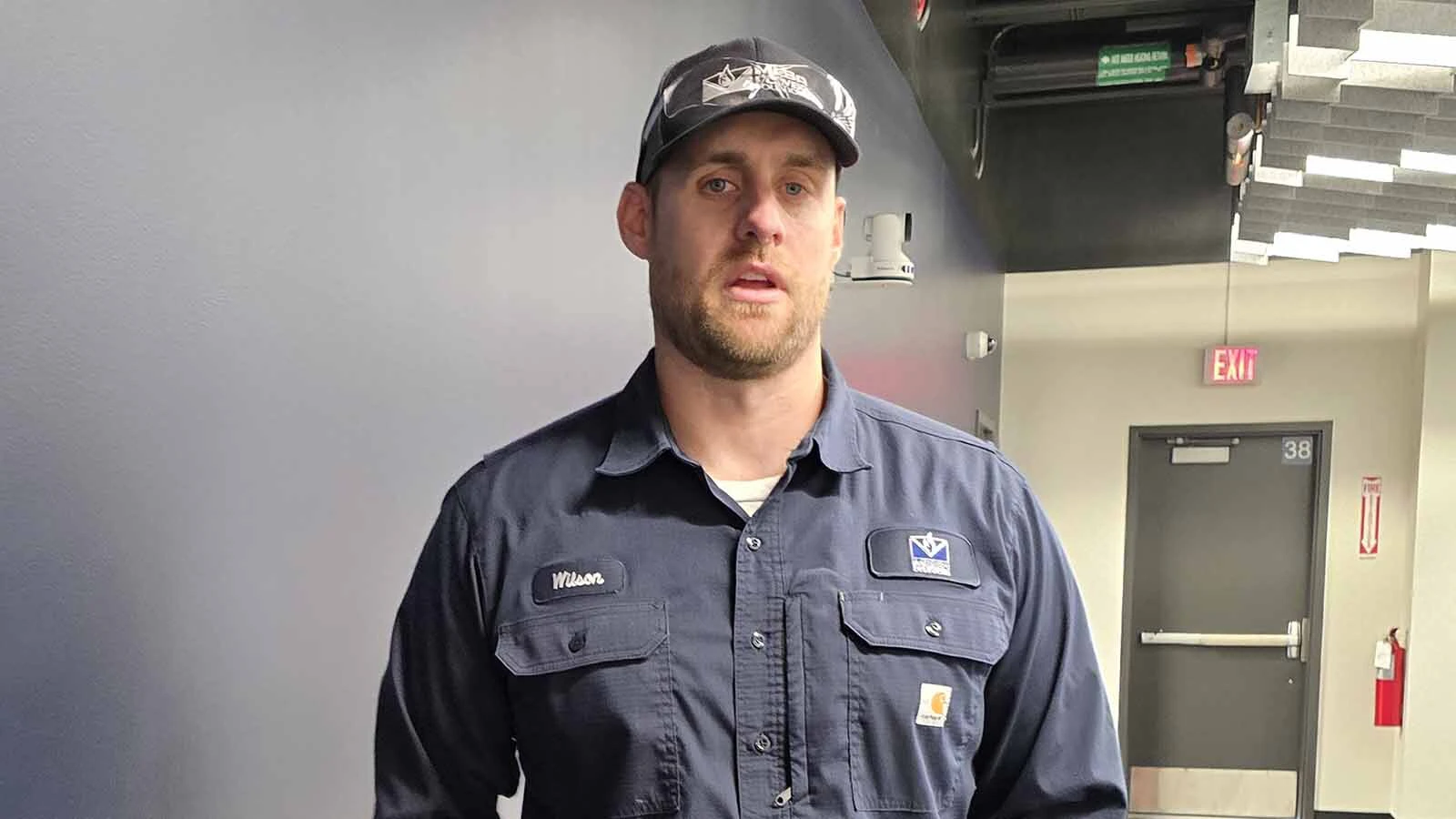
Mesa Power Solutions Director of Assembly Josh Wilson talks about his company's brand-new $70 million plant in Natrona County with Cowboy State Daily. (Renee Jean, Cowboy State Daily)
Not Just For Data Centers
More recently, Mesa Power has announced a partnership with Prometheus Hyperscale to help it build power for a 1.2-gigawatt data center in Natrona County.
But it’s not just data centers that are power hungry. It’s been a ripple effect across business sectors and industries.
Every business in every sector is running up more power, as they vie to take the most advantage of next-generation information.
A power outage for many means losing hundreds of thousands to millions of dollars in revenue per day, Wilson said. That’s made the standby power that Mesa Power can offer a bit like an insurance policy.
“Kind of like a schmuck insurance policy, you know?” he said with a chuckle. “It’s just, you don’t want to be caught without it. You’d rather have it and not need it, than need it and not have it.”
The demand explosion seemed to start taking off between 2022 and 2023, Wilson said.
“So we opened up a plant down in Texas and then we started building this facility,” he said. ““We’ve been planning this for about the last three years with the state of Wyoming, the town of Evansville and Casper Building Systems here in Casper. We’re looking to put out 2 to 3 gigawatts of power a year, which is equivalent to about 5,000 or 6,000 a year per facility.”
There’s easily enough demand for standby power generation to produce that many generators, Wilson said.
“We see enough demand to, I think our employee count in Casper since 2014 has gone from 20 to now we’re about to creep up to 450 to 500.”
One Big Plant
Mesa Power’s new facility allowed them to consolidate an operation that was spread across seven buildings into one, making itsassembly line process far more efficient.
“When you have to take seven or eight truckloads that you’ve already received once and you’re moving the product five, six times before it goes to its final location … you’re touching that part 10 to 15 times before,” Wilson said. “That’s a lot of overhead when you start building 5, 6,000 generators a year.”
The new, 220,000-square-foot building will accommodate two six-cell assembly lines for standby power generation, as well as a refurbishment center and a quality-control testing area.
Fully staffed, it will have between 500 to 600 employees. Eventually, once multiple shifts start, they will expand to about 1,000 employees working out of that building. They’ll have an addition 100 to 200 people working in other buildings they’ve kept, like the warehouse.
Working For Mesa
In the back of the plant the company flies a flag for every branch of the military, alongside American and Wyoming flags.
“We’re about 30% veteran employees,” Wilson said. “We are a very veteran-friendly organization and we do what we can to help that community out.”
The workers aren’t necessarily all mechanics and journeymen electricians.
“We hire for character,” Wilson said. “Everyone I hire isn’t a 20-year electrician. They’re not a 30-year mechanic. We hire humble, hungry and smart people who want to be part of something great.”
In-house training ensures everyone is aligned and doing the same things, to advance the line together.
The stations progress from easy to harder, with more skills required along the way. The progression ensures someone with more skill and experience is always looking over work from someone less experienced.
That helps spot any problems before a piece moves too far down the line.
Starting salaries range from $21 to $26 an hour, with a raise 90 days after an evaluation, and regular annual increases thereafter.
“Mesa pays for 100% of an employee’s benefit,” Wilson added. “So you go to another company and make $35 an hour, but you’re paying $1,000 a week to cover insurance. Mesa will cover everything for insurance on employees and their families, so the overall package, compensation ends up looking pretty good for the guys working out here.”
Automation Not A Replacement
Automation is being explored for moving the generator along the line, but won’t replace human labor at Mesa, Wilson said.
“We want to ease their job, so that things like building this enclosure, we could get it on a track system to where they’re not flying it with a crane and moving it back and forth by hand or with the forklift,” he said. “So we’re looking at automation on that second line to put in a track system that you basically would hook a bare trailer up to from station one, and the guys wouldn’t have to pull it by hand.”
The company isn’t exploring robotic arms to put generators together.
“But we will use AI and automation to increase our productivity and increase our quality,” he said. “This work is too fine-tuned for automation.”
Wilson said he’s seeing examples where companies that tried to replace people found out AI isn’t ready.
“You look at a lot of the larger manufacturing companies that have pushed, like GM for example, just put about $500 million into one plant to be fully robot AI, and now they’re backtracking to go back to people,” he said. “You look at Ford, who just force-retired or laid off a bunch of senior engineers five or six years ago. Now they’re asking all those guys to come back, because there’s just something about human interaction.”
Mesa has decided to use AI as a tool to set up its human workers for success, Wilson said.
“There’s never an intent to drive (people) out, because what would we be then, right?” He said. “Then you’re not really helping the community here. We’ll use automation as a tool to increase quality and productivity.”
Renée Jean can be reached at renee@cowboystatedaily.com.