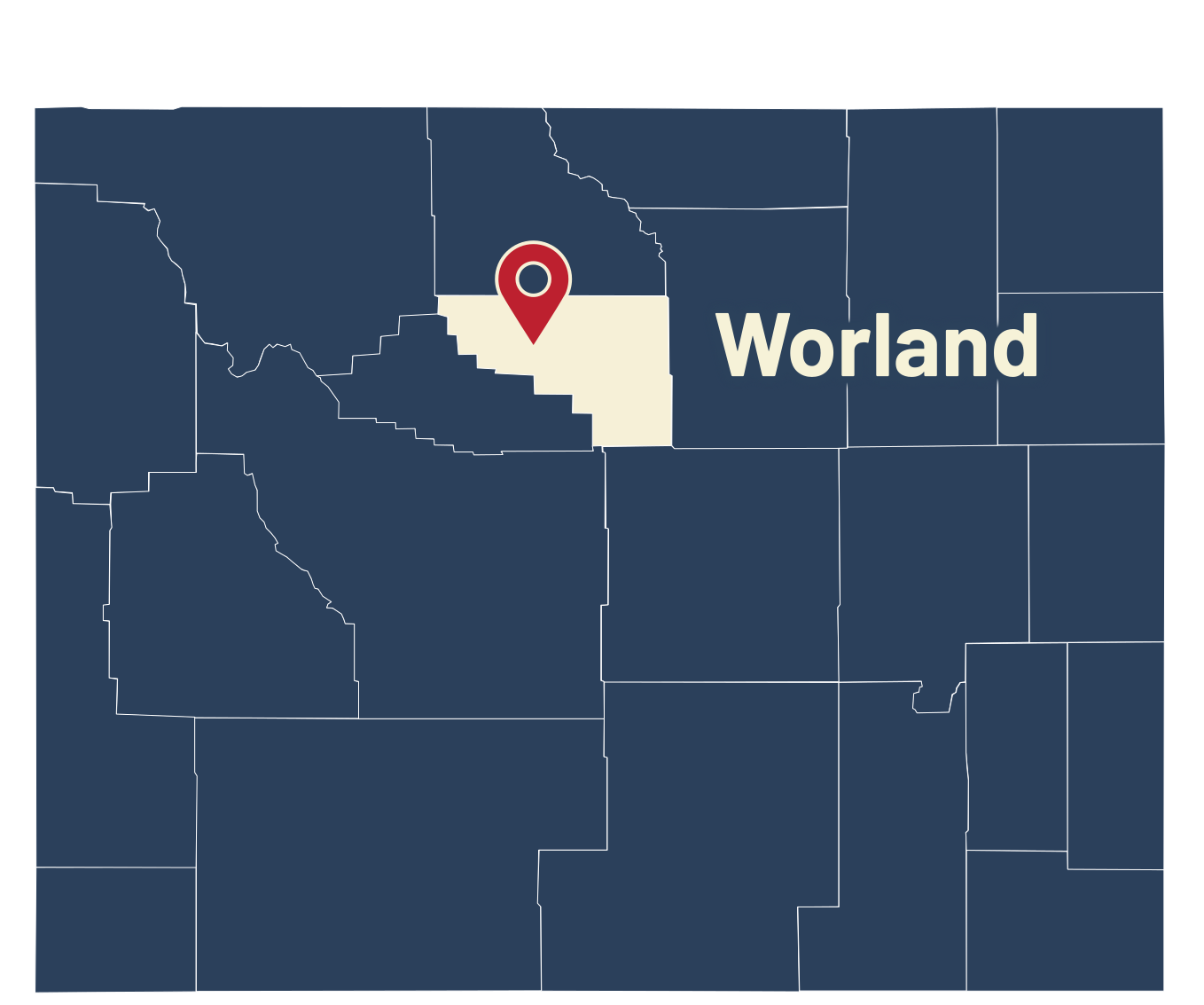
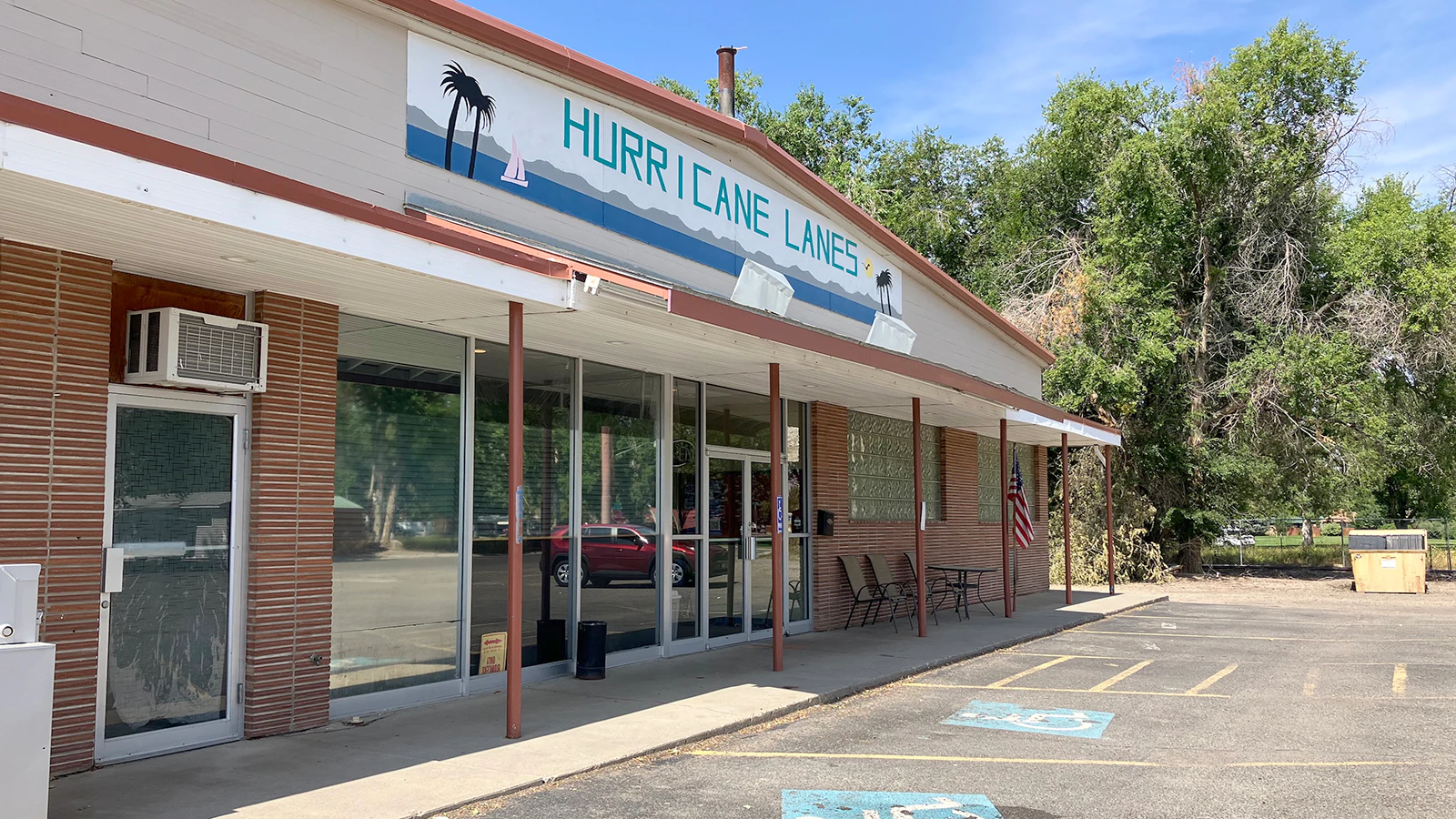
For most people, rolling a bowling ball down one of the 12 alleys at Worland’s Hurricane Lanes is just part of the game.
But for longtime bowler Jay Richard, when his ball hits the floor it can spin up memories of an adventure five years ago that will never be duplicated.
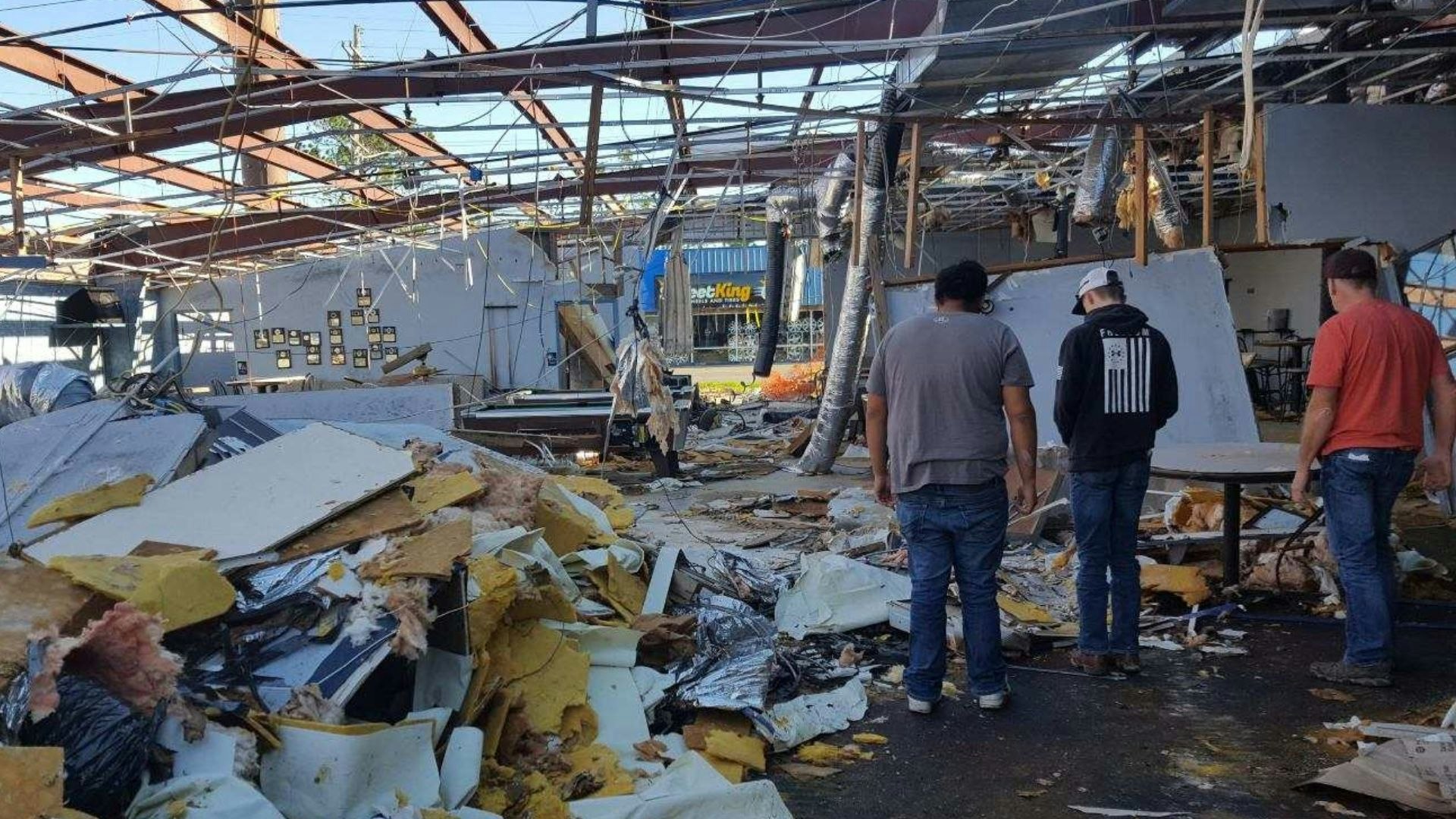
In late October 2021, he accompanied lane owner and friend John Noland to southern Louisiana to buy synthetic lanes from the remnants of a bowling facility that did not weather a hurricane.
It involved a five-day trip, the chaos of a disaster scene, and improvising ways to navigate unforeseen challenges to their mission focus of pulling up lane segments, putting them in a trailer, and bringing them back to Wyoming.
“Yeah, to have been invited to be part of it, what a cool experience,” Richard said. “There’s no way you could drive to Houma, Louisiana, leaving at 5:07 on a Wednesday night and be back on Monday morning with a bowling alley in the trailer.”
But that’s what he and Noland did — covering 1,700 miles each way.
Half a decade after that experience, both Noland and Richard look back with shared memories and different takeaways from those few days when electricity was out, looters were looking for opportunities, and 300-pound sections of synthetic bowling lanes were held in place by hundreds of screws that required removal one screw at a time.
Noland said the lanes that survived Hurricane Ida on Aug. 29, 2021, as it moved past Houma were an answer to a need at the Worland facility.
He had been looking for synthetic lanes for five years.
When his partner spotted them for sale, he recruited Richard to go along to pick them up.
“I had one son that was in criminal justice who was 21 when we went and I took my 14-year-old son and his buddy, and that’s all we had for our crew to haul all these heavy lane beds out,” Noland said. “The last day the federal police for FEMA were standing out there in armor, basically helmets and the whole works, holding off the Crips and Bloods, while we did it, so they wouldn’t steal my truck.”
They have no regrets about the experience. Noland said the synthetic coverings installed on the alleys in Hurricane Lanes will last another 60 years.
And Richard remembers the effort as another link in the chain of community that makes Worland a special place to live and work.
Special Skill
Noland said after they returned from Louisiana, he hired an older man who was an expert on synthetic lanes to help guide the installation process. The knowledge the man shared has paid Noland dividends in the years since.
Noland has been called on to install synthetic lanes at other alleys in Wyoming and beyond.
“The word kind of got out that I knew how to put in synthetic lanes,” he said. “I’ve put in about 64 lanes … I put 20 in down in Grand Junction last summer and a couple down in Eagle, Colorado, and Utah as well.”
He was in Evanston this summer helping a bowling center put in new lanes and qualify to be sanctioned by the national bowling organization.
As a young man, Noland helped refurbish wooden lanes on bowling alleys. He said the wooden versions required a lot of maintenance, so nearly all bowling centers are moving to synthetic lanes.
“I haven’t had to touch mine since I put them in,” he said. “You can do maintenance to them, but it’s maybe 1% of what it would be for wooden lanes. Once they came out with synthetics and kind of got them perfected, you would never go back to wooden lanes.”
Noland said he bought the business from his ex-father-in-law after he had managed it for him for a couple years. It was then that Noland changed the name of the business to Hurricane Lanes — having no clue how more that 20 years in the future it would become prophetic.
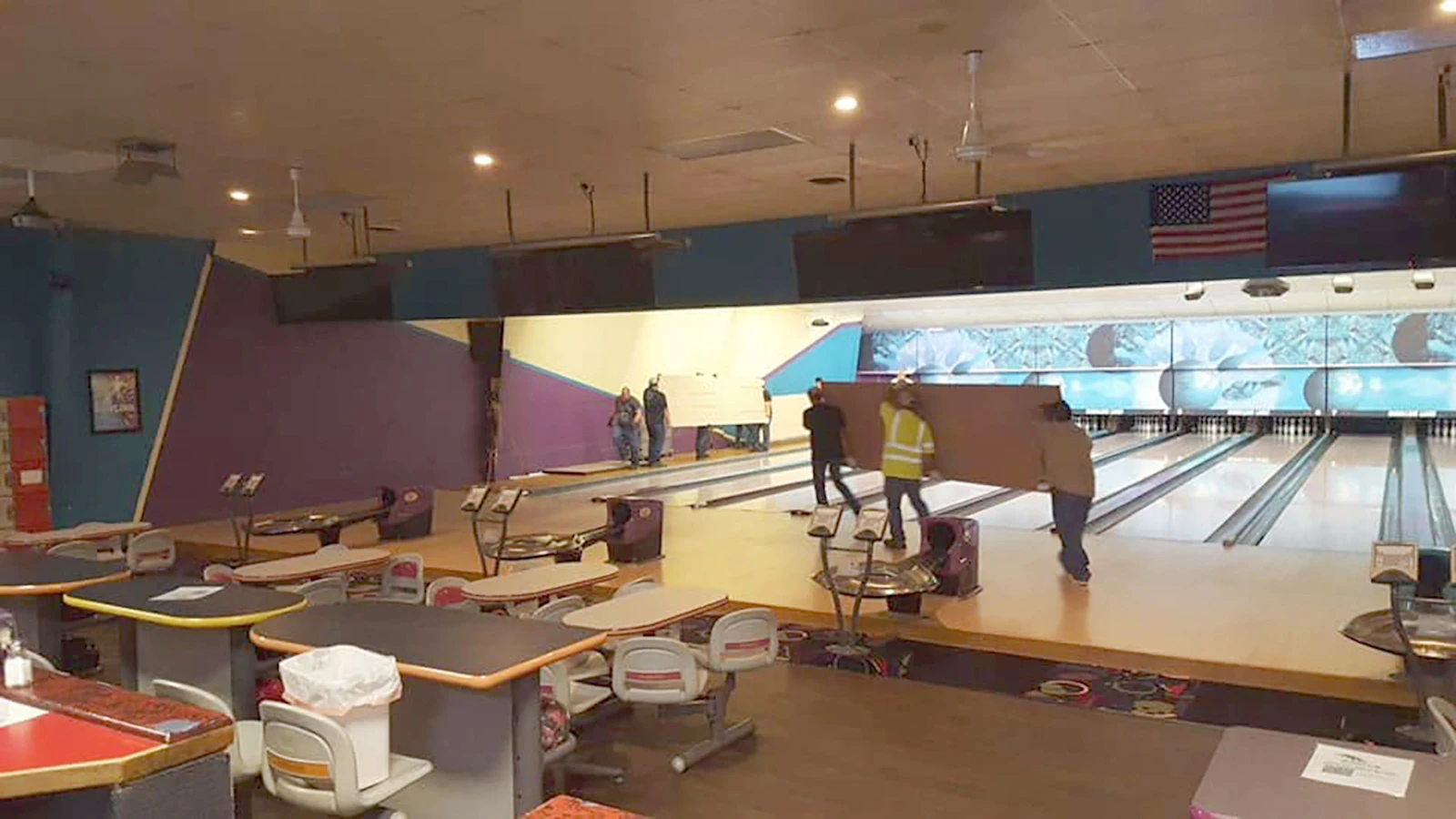
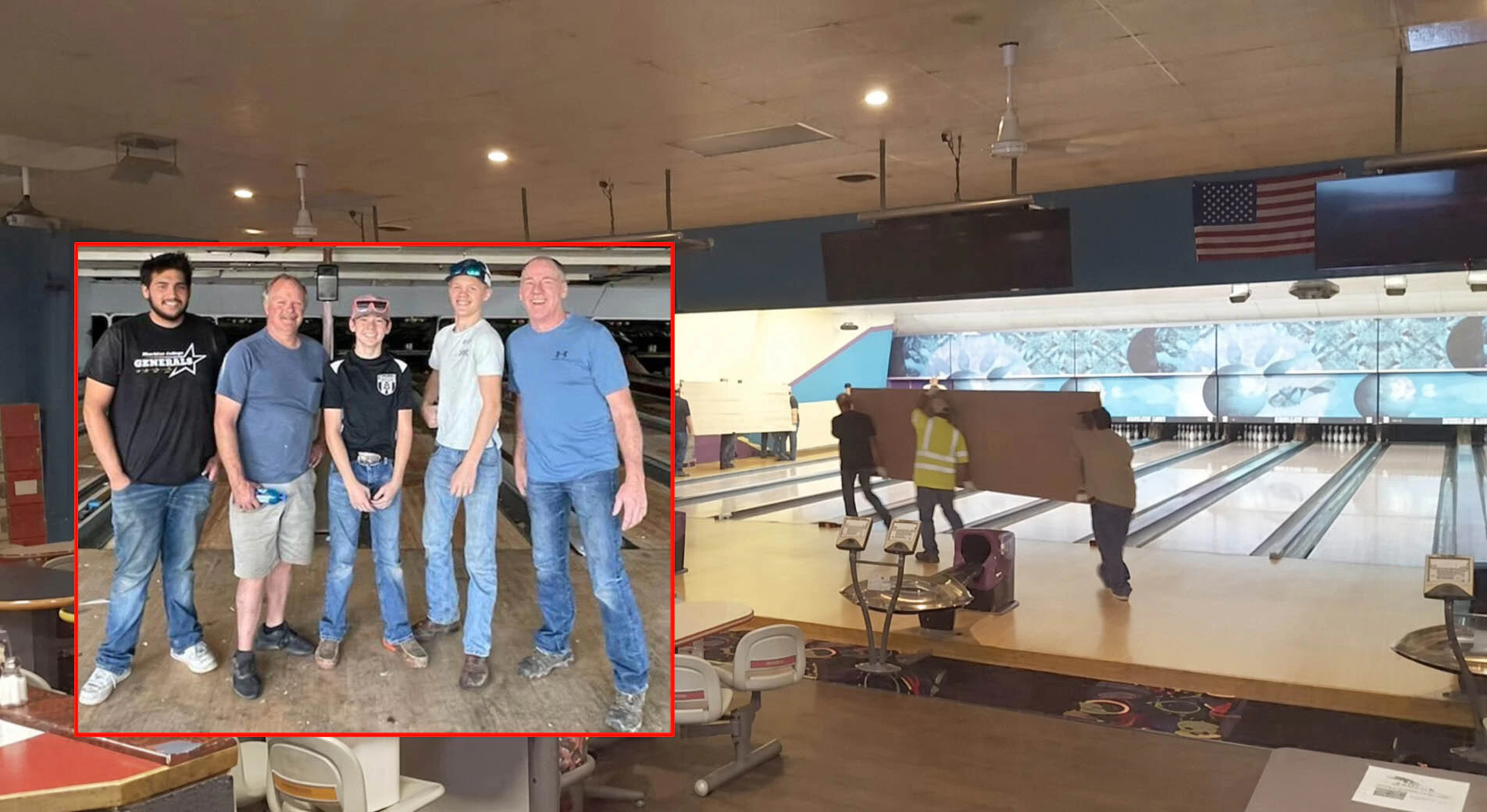
Worland friends of the bowling alley helped unload the lanes at Hurricane Lanes in 2021. (John Noland)
Long Memory
Richard said he remembers the 36-hour drive to Houma, and going past Nachitoches in northwestern Louisiana after about 24 hours in the truck. Nachitoches is where the 1989 movie “Steel Magnolias” was filmed. Seeing the city spurred him to send a message home.
“I remember texting my wife: ‘Next time I tell you I want to go on a great adventure, tell me I can’t go,’” he said. “But I’d never seen a cotton field before, so that was kind of cool.”
Richard said he enjoys bowling and being part of the local leagues. He still remembers walking into Houma’s Bowl South and knowing there had been pro bowlers, birthdays, and tournaments before the winds of destruction that brought its loss to the community.
“It was hard not to feel like a vulture swooping in on a carcass,” he said. “We tried to be respectful about it … and then the irony of it that it was a bowling alley taken out by a hurricane and the lanes came to Hurricane Lanes in Wyoming.”
Richard said he took his homemade cart to help haul the lane sections into the trailer. He recalls five sections per lane, each one extremely heavy. Getting the 123 or so pieces in the trailer after navigating wet insulation mixed with crumbled and collapsed walls and ceiling was not an easy feat.
His recollection is that there were more than 3,000 screws that they removed by first popping off a little plastic cap. It meant being on hands and knees or bent over for hours.
His job was to deal with the screws that were stripped or harder to remove.
“The hamstrings tightened up,” he said “I don’t think any of us could walk.”
Overall, the experience left him with positive memories.
When they returned to Worland with their prized floor, volunteers helped unload. And when it came time to install the floor and do some spruce up at the alley, the community showed up with willing hands.
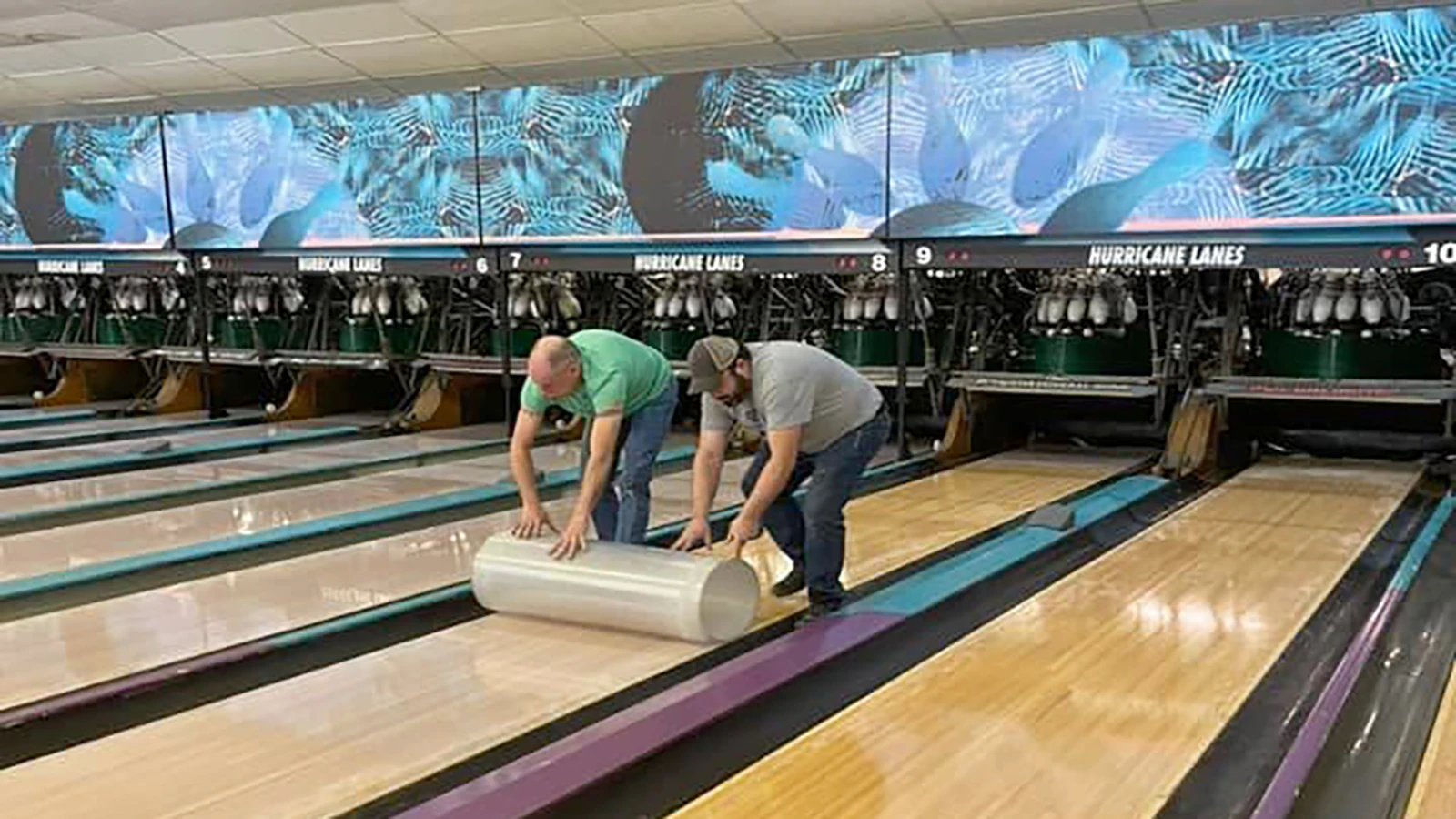
Community Help
An estimated 10-day job took half of that.
“I can’t remember exactly, but I took the week off and that following Saturday night we had a benefit tournament for a couple of infants that were born with problems,” Richard said. “So, in five days we did the whole job, it was done, most of the inside of the building was painted, cleaned up, lanes down, ready to work.”
Richard said he still has a sense of pride when he prepares to roll a ball down an alley, knowing which surfaces caused him the most headaches in the removal process. He commends Noland for the care and condition of the facility.
Richard understands the business has seen “good times and tough times.”
“We are blessed in this community to have it. It’s clean, it’s nice, it’s modern and it feels good when you walk in,” Richard said.
After the Labor Day holiday, Noland said the alley, which includes a bar and grill, is transitioning from its more limited summer hours to sanctioned bowling leagues and a “fun league” that allows eight pins down or more to count as a strike.
During league play, Noland said Worland bowlers tend to compete but its more about the the camaraderie than “blood bowling.”
Noland said running a bowling alley can be challenging economically with the age of his building and an economy where people have less money for entertainment has never translated to the bottom line.
“It definitely doesn’t sell us anything because it is named Hurricane Lanes,” he said. “I just was crazy and named it Hurricane Lanes back in 1997.”
But the bowling business owner who traveled 1,700 miles to pursue better lanes remains engaged in enhancing the sport in his community.
Noland recently completed schooling to be a bronze-level bowling coach. He is starting “skills camp” classes to help beginners and advanced bowlers better understand the game and help them hone and improve techniques.
“That kind of puts the fun back in the sport,” Noland said.
Richard said he still is in touch with a couple of the men he met at the alley in Louisiana who assisted their 2021 mission. When he posts his own bowling score on social media or something related to activity at Hurricane Lanes he often gets a comment in return from them.
“One of them keeps threatening to come up and bowl on these lanes again,” he said. “If they came up here today, they’d be like long lost friends.”
Dale Killingbeck can be reached at dale@cowboystatedaily.com.