Despite a lot of talk about fiscal responsibility, lawmakers in Washington are continuing to run up the tab on America's already maxed-out credit card.
The U.S. annual deficit -- the difference between the revenue that the federal government collects and what it spends each year -- reached $1.8 trillion through the first 10 months of the current fiscal year. With two months still left to go, this year's deficit will exceed $2 trillion.
In non-pandemic years, the U.S. deficit has never surpassed $1.8 trillion in a single year.
Our economy is growing, unemployment remains low, and there is no national emergency forcing the government's hand. So, what gives? Why can't Washington get our fiscal house in order? As the president of the Committee for a Responsible Federal Budget put it, this is "not normal."
High borrowing costs, which are a result of our country's yawning national debt (the cumulative total of each year's deficit), are a major driver. The U.S. Treasury yield, which is the interest rate the government must pay on bonds issued for debt, hit a 19-year high this month, 5.34%.
In other words, as the national debt continues to climb, creditors are wary that the federal government will be able to repay its obligations and therefore demand a higher return. That means more revenue -- almost 20 cents of every tax dollar, higher than the previous record set in 1991 -- now goes to paying interest rather than investing in our country.
The real problem, however, is Washington's unbridled spending spree. Democrats insist on more federal programs, even as the price tag for existing entitlements continues to grow, and annual shortfalls continue to mount. Federal spending increased by 5% this year compared to last, while revenue only grew 3%.
Sadly, even conservatives have gone along with the ruse. The Big Beautiful Bill, Republicans' landmark reconciliation package last year, promised to cut a lot of government waste and kept taxes low, but it failed to get to the root of the federal growth. Without serious entitlement reform, tax cuts leave the budget hole even larger.
The nonpartisan Congressional Budget Office estimated that the Big Beautiful Bill would add $3.4 trillion to the national debt over 10 years, and as much as $4.5 trillion when factoring in interest payments.
Don't get me wrong, Republicans' tax cuts are a smart way to spur economic growth, which is one way to improve our country's finances. When the private sector can invest its money, rather than pay it to Uncle Sam, it creates jobs and economic activity -- which fill the public coffers. The government doesn't create jobs; businesses do. When companies and workers do well, so does the government.
But tax cuts must be offset by meaningful spending reductions. Addressing just one side of the ledger is like damming half a river; it doesn't fix deficits.
Getting our annual deficits in check doesn't mean looking back; it requires looking forward. It's a live decision, one that's happening at the same time the administration is asking Congress for a 19% increase in discretionary spending -- which would be the second-largest bump in at least six decades.
Lawmakers must look at our deficit-spending addiction holistically. To his credit, President Donald Trump's 2027 budget proposes cutting non-defense spending by 10%. However, those gains are more than negated in defense spending. That's a critical priority, but funding must be offset with significant spending reductions. That means programs that have long been a political third rail, including Social Security, Medicare and Medicaid.
While slashing entitlement historically has not been a winning recipe for getting reelected, voters understand what's at stake, and they want leaders who will make the right decisions.
Over eight in 10 Americans are more concerned about the national debt now compared to a few years ago, and 85% want Congress and the White House to do more to address it. The heightened awareness owes to voters' own understanding. Nine in 10 people realize that our country's debt problem is driving up costs of living and making personal borrowing more expensive.
Eliminating our country's annual deficits is achievable, and doing so will get our national debt on a path to be paid down. But it will take bold leaders who will set realistic goals and have the political courage to achieve them. That's a tall ask in Washington these days, but voters should demand it when they go to vote this fall.
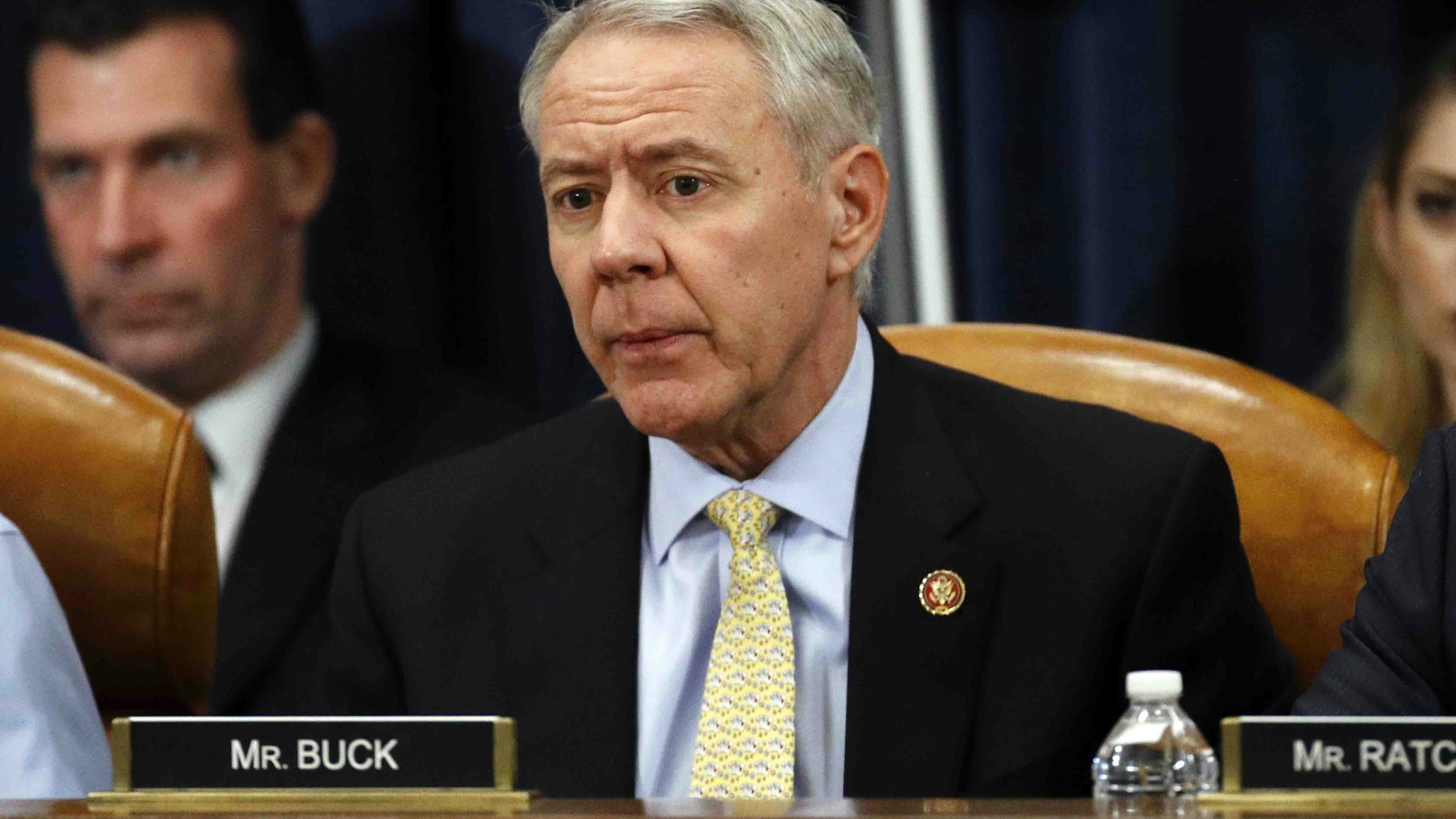
Ken Buck received his law degree at the University of Wyoming and served in the United States House of Representatives from 2015-2024 representing Colorado's 4th congressional district. He now serves as a Fellow with the Independent Center.