
Wyoming government-funded advertising forms a spectrum, from notices required by law to commercials geared toward influencing behavior.
Legislators’ opinions of those ads fall on a spectrum as well.
The Wyoming Department of Transportation distributes between $1 million and $1.5 million a year of public money – 91% federal – for driver-behavior and safety-related advertising. That includes billboards about seatbelts, commercials about distracted driving, and other ads about impaired driving.
The Wyoming Department of Health last spends between $2 and $3 million per year on advertising, mostly through federal funds connected with specific grant programs, WDH chief policy communications officer Monique McBride said in a Tuesday email.
Government agencies throughout Wyoming are required to buy notices and advertising. For example, executive boards must alert the public of meetings; the Secretary of State’s Office must announce ballot initiatives.
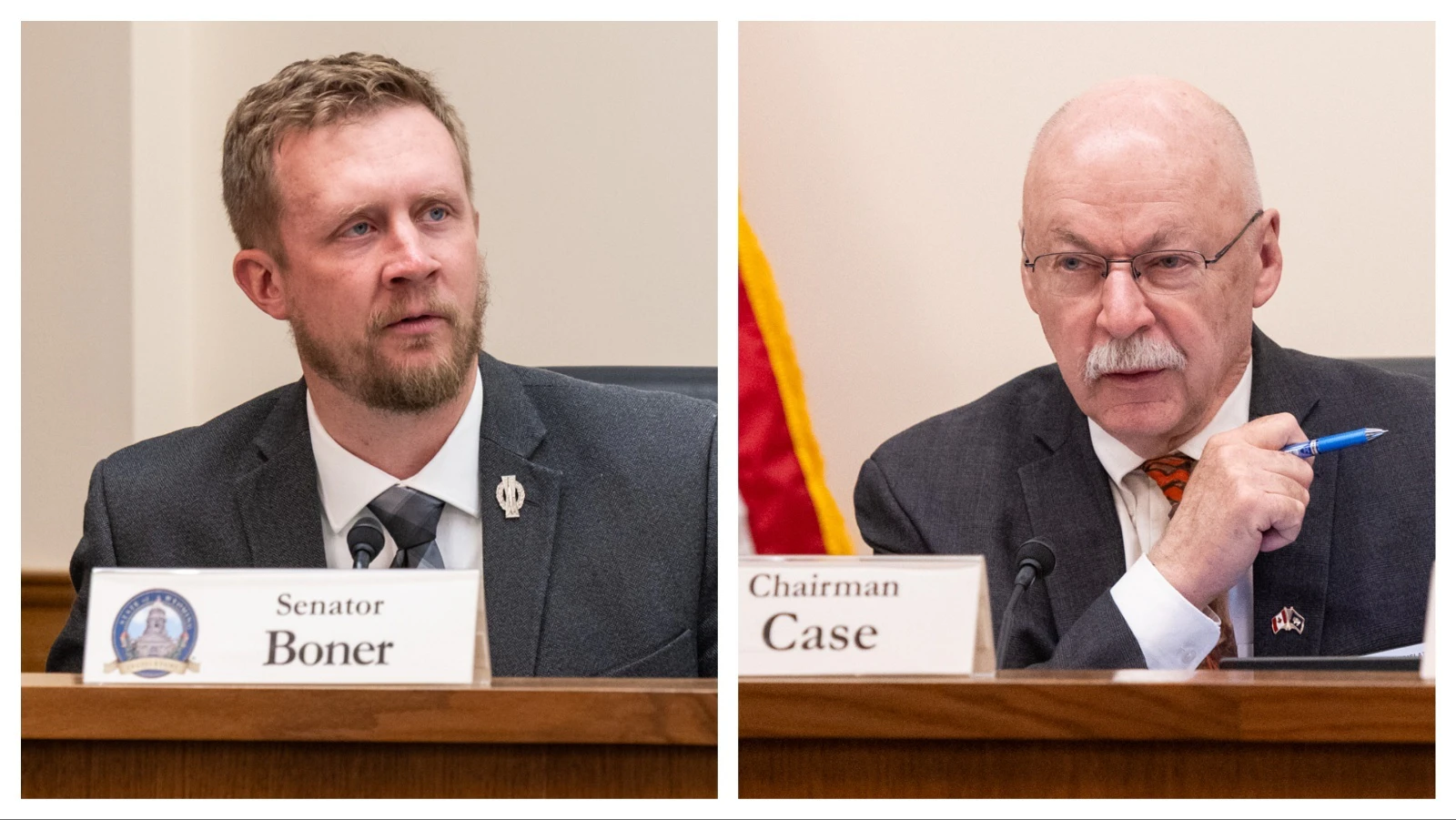
Sen. Brian Boner, R-Douglas, told Cowboy State Daily he’s in favor of government advertising that is simply informative but opposes promotion campaigns that try to sway opinion.
“I can see the need for providing input to the public, making sure they have the opportunity to be aware of something an agency may be doing,” said Boner in a Tuesday phone interview. “I’m far more skeptical of an advertising campaign meant to promote a government program or something like that … those dollars can usually be better spent on the actual services themselves.”
Boner said he’s sought to pursue an efficiency study of the Wyoming Department of Transportation (WYDOT), which routinely raises alarms that it is running out of money.
If the Legislature has an appetite, said Boner, he’d like to revive that effort by offering WYDOT more money, but hinging that on a thorough efficiency study.
Wrong Guy To Ask
Sen. Cale Case, R-Lander, said he’s the wrong guy to ask about government advertising. He said he sees where the Wyoming Department of Health and the public health structures in general have probably helped humanity over the past century by beefing up awareness campaigns.
He referenced the Wyoming Game and Fish department’s advertising toward bear safety. And he said government advertising certainly falls on a continuum of different needs.
But Case still hates commercials.
“I don’t like public-service advertising that interrupts a radio show,” he said. “I find it super annoying: paid for by the council for blah-blah-blah. Can’t stand them. They don’t tell me anything I don’t already know.”
Case said the Wyoming Office of Tourism in particular, which has advertising Wyoming’s benefits to tourists as a big part of its overall purpose, could reroute some ads funding into mitigating the impacts that tourists have.
Reflecting on a recent, glaring ad that accosted his senses at a gas station pump screen, Case said, “I’m not the right guy to ask.”
Promoting This State
Sen. Taft Love, R-Cheyenne, said he believes the Wyoming Office of Tourism advertising has a key purpose. He pointed to its return on investment.
The Wyoming Tourism Board, which oversees the office, told the governor in its 2025 agency budget pitch that its promotional “That’s WY” campaign continues to be effective at getting its message across, performing better than 75% of all other destination marketing campaigns. The office’s efforts yielded a $290 return on investment in 2024 and $12 tax intake for every $1 spent, the pitch says. It adds that those returns add up to $1.44 billion in spending to Wyoming’s economy.
Love said he’s in favor of that kind of advertising, to market Wyoming to outsiders, and WYDOT’s public safety marketing.
He wasn’t as keen on WDH’s general promotion of vaccines, such as its “Thank a Vaccine” ad series.
“I don’t know that we should – other than offering the information that, ‘hey this is available’ – I don’t know that we should be helping people make decisions like that,” he said. “I do think we should advertise that these are available, and these are options you have as a citizen.”
“But taking a stand one way or another, for government, I think we need to let the people make up their own minds on that stuff,” said Love.
Nope, Do More
Sen. Mike Gierau, D-Jackson, said Wyoming’s government should do more advertising, especially to tout the programs it already offers.
“In my view, we as government do a very poor job of telling people what services we do provide people,” said Gierau. “I get calls all the time from people who ask for services that I just assume are widely known.”
He said he’s inclined to give the agencies latitude.
“It’s not advertising – I don’t regard it as advertising just to keep themselves in a job,” he said. “When the Legislature funds a program, and we have a program available, we need to let people know the program is available.”
He also said he supports the pro-vaccine ad campaigns WDH has bought in the past, and said people can still discuss vaccines with their doctors.
“I like it when I get told those are available,” he said.
WYDOT
WYDOT public relations manager Doug McGee said in a Tuesday phone interview with Cowboy State Daily that the agency’s $1-1.5 million ads allotment is largely for “driver behavior messaging,”
The money comes from the National Highway Traffic Safety Administration (NHTSA), with a 9.5% match of state money, said McGee. He said the money is doled out via grant to other entities such as the Governor’s Council on Impaired Driving, the Wyoming Highway Patrol (which is under WYDOT’s umbrella), the Wyoming Seatbelt Coalition, and Cheyenne Regional Medical Center.
“And to my knowledge, every state in the union gets those funds, the point being, nationwide, there’s a need to improve driving behavior,” said McGee.
Some ads urge work-zone safety, school-bus safety, bicycle safety, and so on.
“The goal of course is to improve behaviors,” said McGee. “I do hope these issues are as important to the public as they are to us here. Certainly everyone is upset with things, when a crash or something occurs. You can’t help but wonder what could have been different.”
Department Of Health
McBride sent a breakdown that shows the Wyoming Department of Health used $1.86 million in federal funds for advertising in the state’s fiscal year 2025 and $1.58 million in 2026, $294,961 in state money 2025 and $100,675 in 2026, and $833,232 in “other funds” in 2025, and $630,049 in 2026.
McBride said some targeted campaigns include promoting:
- 988 Suicide and Crisis Lifeline outreach
- Fentanyl and stimulant public education
- Tobacco public education
- Maternal and child health public education - safe sleep, infant home visiting, lead poisoning, back-to-school vaccinations
Update: This story has been altered slightly to remove a Wyoming Office of Tourism figure that, while taken and attributed correctly from the agency’s own budget, is mathematically dubious.
Clair McFarland can be reached at clair@cowboystatedaily.com.


