
Who gets to decide what happens on an empty lot in Evanston is at the center of a growing debate over property rights, city ordinances and a steel shipping container one homeowner says was simply a practical solution to a storage problem.
Steve Evans owns a home in Evanston and the empty lot next door. He said he eventually plans to buy a second home and place it on the vacant property.
In the meantime, however, Evans and his family have accumulated tools, appliances and other belongings that needed somewhere to go. His home doesn't have a garage.
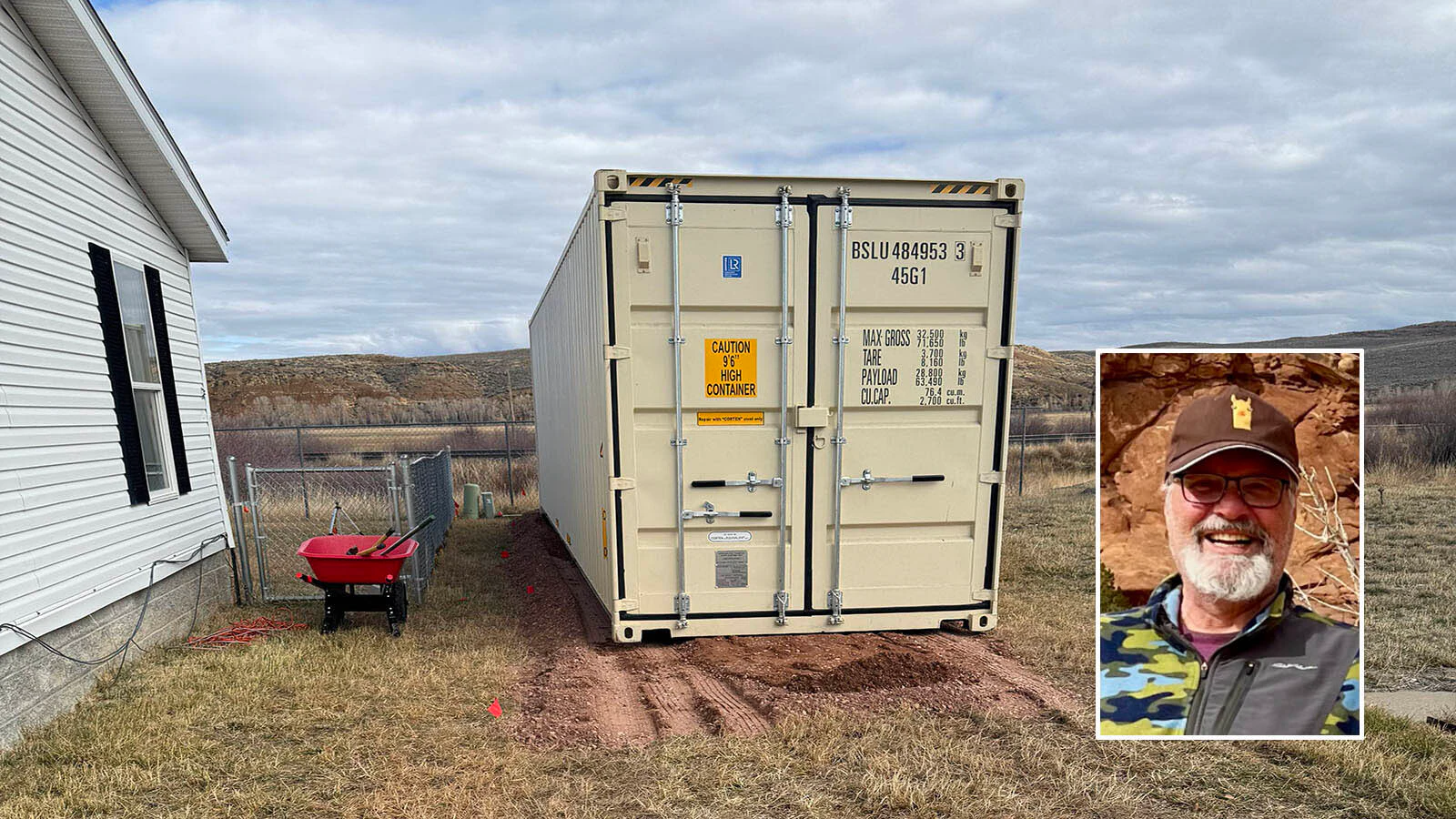
So, Evans paid $3,500 for a Connex — a rugged steel shipping container — and placed it on the empty lot for storage.
The container sat there for more than a year.
Then city officials, while notifying another nearby homeowner that a storage unit on his empty lot had to be removed, noticed Evans' Connex. The city subsequently sent Evans a letter demanding he remove it under Evanston's planning and zoning ordinances.
Evans said he was dumbfounded.
“This is absolutely brand new,” he told Cowboy State Daily of the shipping container he owns. “We leveled off the area where we wanted it. It looks great. It’s behind the house.”
He said he contacted the city believing there had to be some way to work out an arrangement that would allow him to keep the storage structure where it was.
But, Evans said, city officials didn't budge.
“We’re trying to be good neighbors,” he said. “We understand there are laws and regulations. But we don’t understand this ordinance.
“It’s our house. It’s our lot. I don’t see why we can’t do it.”
The Ordinance Goes Back Decades
The ordinance isn't new, according to Evanston Planning Commission Chair Maryl Thompson.
Shipping containers and storage sheds are considered accessory under Evanston planning and zoning ordinances, said DuWayne Jacobsen, the city’s senior planner. Any accessory on a lot must be tied to the principal use of that lot. If the lot is empty, there is nothing to tie an accessory to, Jacobsen said.
“An accessory building has to be accessory to something,” he said.
Jacobsen said his office has requested the removal of three or four storage structures from empty lots this summer.
The ordinance is intended, at least in part, to prevent vacant lots from gradually evolving into uses that don't comply with the zoning of the surrounding neighborhood, Jacobsen said.
For example, he said, a lot containing nothing but a detached garage could potentially be sold separately and used for a commercial purpose in the middle of a residential neighborhood.
‘Which Is The Detriment To The City?’
Evans' frustration only grew when he compared his Connex with other properties he sees around Evanston.
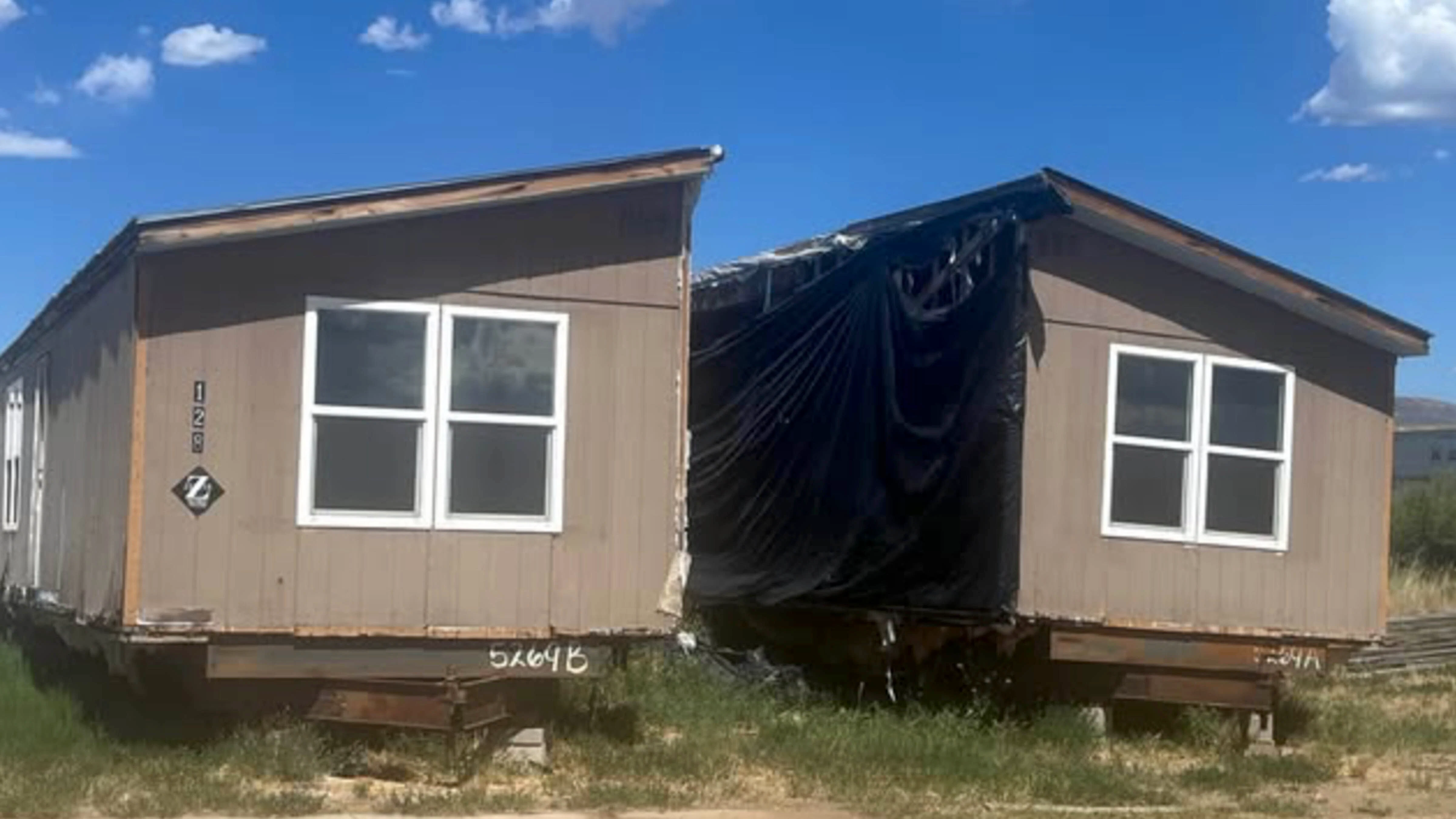
He recently photographed a double-wide trailer sitting on a city-owned lot, still separated into two pieces.
“These open sides of trashy trailers have been there for years,” Evans wrote in a social media post. “To anyone currently in city government, or running for office, can you please explain this to me? Which is the detriment to the city?”
Evans told Cowboy State Daily that when he took the photograph, three raccoons jumped out of the trailer.
“It’s just vermin,” he said. “That’s allowed by the city, but our beautiful Connex is not?”
Jacobsen said the city has standards for residential neighborhoods and encouraged residents with concerns about a particular property to contact his office, attend a planning commission meeting or request to be placed on a public meeting agenda.
“There are some structures that might be abandoned or structurally unsafe, and our building official can address that,” he said.
Jacobsen said he had not received complaints about the properties Evans referenced.
Combining The Lots?
Evans said he also explored another option: Eliminating the lot line and combining his home lot with the adjacent vacant lot.
That is a relatively simple process, Thompson said.
If the lots were combined, the Connex could potentially be considered an accessory structure to Evans' home.
But that wouldn't necessarily solve the problem.
Evanston's ordinance also imposes material requirements on accessory buildings larger than 120 square feet. The siding and roofing of those structures must match or complement the primary building on the property.
The requirement is intended to help ensure residential neighborhoods remain visually appealing and well-maintained.
That can make using a shipping container expensive, Jacobsen acknowledged.
“A lot of times, once you side something with materials and roof to match the house, the cost can be just as much as building a shed from scratch,” he said.
For Evans, that meant adding siding and roofing to a $3,500 Connex — or essentially building another structure around it — which didn't make financial sense.
Jacobsen said he understands why homeowners are attracted to shipping containers as a storage option.
“They’re fairly inexpensive,” he said. “I can see the attraction to that.”
Evanston amended its ordinance in the early 2000s to require larger accessory buildings to use materials that match or complement the primary structure. The change came after large metal buildings began appearing in residential neighborhoods.
“We had a number of neighborhoods saying they’re looking too industrial,” Jacobsen said.
Moving Out, Moving On
Ultimately, Evans decided against combining his two lots and modifying the shipping container.
He paid another $3,500 — the same amount he spent on the Connex — to have it moved from his Evanston property to a friend's ranch near the ghost town of Almy, about three miles northwest of Evanston.
That means retrieving stored equipment is no longer as simple as walking out the back door.
“When we need our snowblower, we have to drive to Almy to pick it up,” Evans said. “It’s absolutely ridiculous.”
The experience has soured Evans on more than just Evanston's ordinance.
He said he and his family have decided to leave Wyoming.
“We’re moving,” he told Cowboy State Daily. “We’re not even considering any home in Wyoming.”
Instead, the family is looking toward Utah's Cache Valley, where Evans said he has been told he would be able to keep a Connex on an empty lot adjacent to his home.
“The whole experience is so negative,” he said. “It doesn’t accomplish any goal I can see, other than harassment.
“We’re ready to look anywhere that’s welcoming. Evanston is not welcoming.”
Evans said the decision is particularly frustrating because he planned to eventually build or place another home on the empty lot.
“As far as we’re concerned, Evanston is kind of kicking themselves in the foot,” he said. “They would have had tax revenue on a home we were going to build on that empty lot.”
For now, the lot sits empty.
Kate Meadows can be reached at kate@cowboystatedaily.com.


