
After the sudden departure of its last director, Angi Bruce, earlier this month, the Wyoming Game and Fish Department will probably remain somewhat in limbo until at least March under the direction of an interim leadership team.
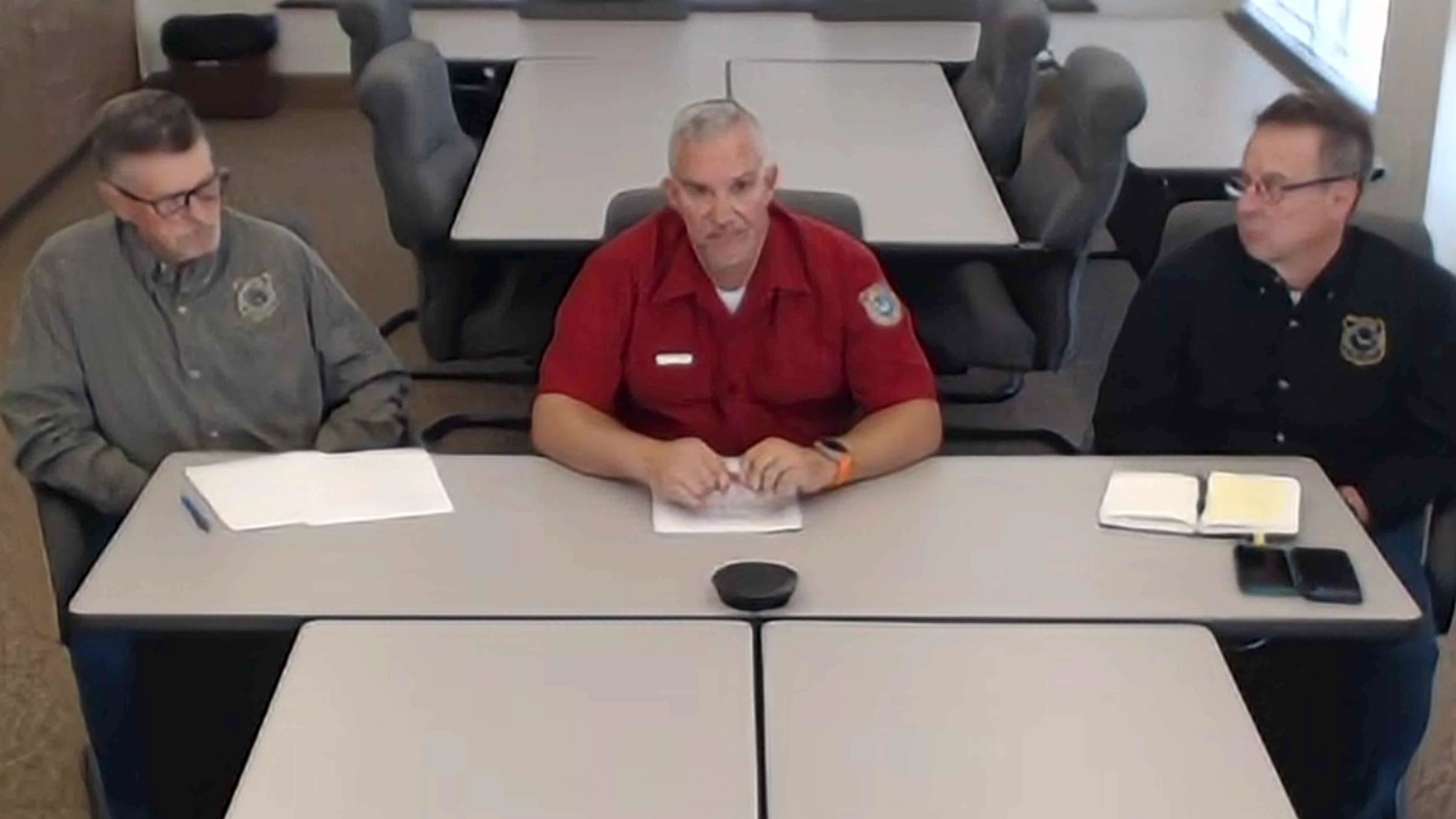
That was one takeaway message from a virtual press conference hosted Monday by interim director Eric Wiltanger, along with deputy director Jeff Davis and interim deputy director Dan Smith.
The biggest question for many Wyomingites is what caused Bruce to suddenly depart on Aug. 6. Wiltanger opened by making it clear the press conference wouldn’t cover that.
“I’d like you all to know that I will not be addressing the transition that occurred a few weeks ago or events around it,” Wiltanger said, speaking to reporters via Zoom at an invitation-only conference from the department’s Cheyenne headquarters.
“I would say that in Angi’s time here at Game and Fish she played a significant role in great things for Wyoming’s wildlife.”
Gov. Mark Gordon, who appointed Bruce in 2024, announced Aug. 7 that Bruce would join his staff in a newly created director of special policy initiatives position.
Timeline for Permanent Leadership
The department, the Game and Fish Commission, and Wyoming’s next governor will follow protocol in selecting the next permanent department director, Wiltanger said.
It’s a near-certainty that governor will be Eric Barlow, who won the Aug. 18 Republican gubernatorial primary.
The Game and Fish Commission has direct authority over the department and is in charge of recommending three candidates for permanent director to the governor after the Nov. 3 general election.
The governor will have until March to appoint the director, Wiltanger said.
What About Morale?
There have been widespread rumblings that discontent among Game and Fish staff might have contributed to Bruce’s departure.
When asked whether the interim leadership team would consider an employee satisfaction survey, Wiltanger and the others said they prefer personal conversations to gauge employee morale.
Wiltanger added that he expects to assume responsibility for any perceived mistakes the department makes.
“When we misstep or if we step in a hole, those (complaints or reports) need to come to me, and I've got to hear about them because it's my responsibility to address those appropriately,” he said.
Business As Usual
The interim leadership team said it will focus on continuing the department’s mission of conserving healthy wildlife habitat and populations.
To that end, there will be continued support for projects initiated or prioritized during Bruce’s tenure. Those include conserving the Sublette pronghorn migration corridor, upgrading the Speas Fish Hatchery in Casper, and working toward completion of the Kemmerer wildlife crossing project.
Game and Fish is set up to be as autonomous and self-funded as possible.
The last across-the-board increase for the department’s operational budget was in 2008, Wiltlanger said.
Game and Fish plans to discuss funding options with the Legislature’s Travel, Recreation, Wildlife, and Cultural Resources Committee, Wiltanger said.
The committee is scheduled to meet Sept. 8-9 in Jackson.
One item of discussion might be ways to shift the funding burden away from hunters and anglers and toward wildlife tourism, the interim leadership team said.
Still Gung-Ho to Delist Grizzlies
Bruce and her predecessor, Brian Nesvik, were openly vocal in their support for delisting Wyoming’s grizzly bears from federal Endangered Species Act protections.
Game and Fish is still committed to that, Wiltanger and Smith said.
“We’re going to be engaged in those conversations” about delisting, Wiltanger said.
“At least in the Greater Yellowstone Ecosystem, grizzlies are recovered,” Smith said.
Thousands of grizzlies once roamed across most of the American West. By the 1970s, they’d been reduced to roughly 130 bears in a small pocket of habitat in and near Yellowstone National Park.
They were placed under federal protection in 1975 and have continued to expand their numbers and habitat since.
At least 1,000 grizzlies are thought to be in the Greater Yellowstone area of Wyoming, Montana, and Idaho, and another 1,000 or so in Montana’s Northern Continental Divide ecosystem.
Game and Fish has stated the intent to open a hunting season for grizzlies if they’re delisted.
Mark Heinz can be reached at mark@cowboystatedaily.com.


