Imagine a crowded mid-century ballroom, air thick with cigarette smoke and whiskey flowing nonstop from bottles to cocktail glasses.
International music icon Louis Armstrong has the stage tonight, blowing a blistering jazz solo to an appreciative crowd of 350 who have come from 36 states to hear him play.
You might think this is a scene from a legendary 1950s jazz club in Chicago, Detroit or New York City — but you’d be wrong.
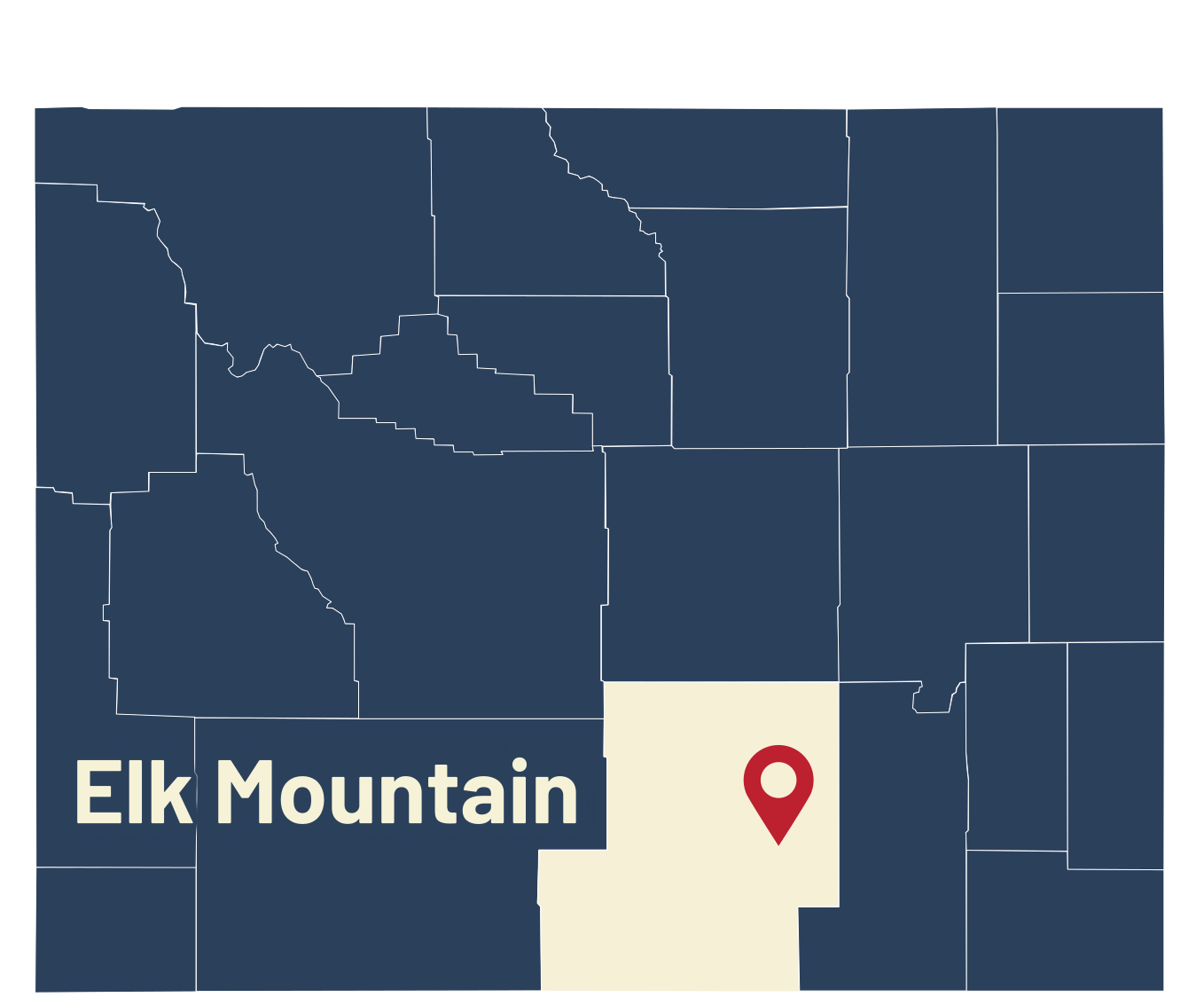
It is set in the high country of Wyoming, in the tiny town of Elk Mountain.
Drive into the town today, and you’ll find a charming community where the town’s elevation has always dwarfed its population by nearly 7,000 since it was formed in 1909. There’s no sign this was ever one of the biggest party spots in Wyoming.
Go back just a few decades, though, and there was an international music icon playing just about every Saturday night at a venue called the Garden Spot Pavilion.
More than 50 name-brand musicians, including Armstrong, Lawrence Welk, Tommy Dorsey, Jim Reeves, Hank Thompson and more, were on a regular rotation to play in Elk Mountain to raucous, alcohol-fueled crowds until 3 or 4 a.m.
Then they came back on Sunday, after the rodeo, to do it all again.
“We used to catch them between Salt Lake and Denver,” the late Robert Warburton explains in a series of oral history tapes with historian Nancy Anderson kept at the Hanna Basin Museum.
“It was the perfect place for them to stop in,” he added, because it was just about halfway in between.
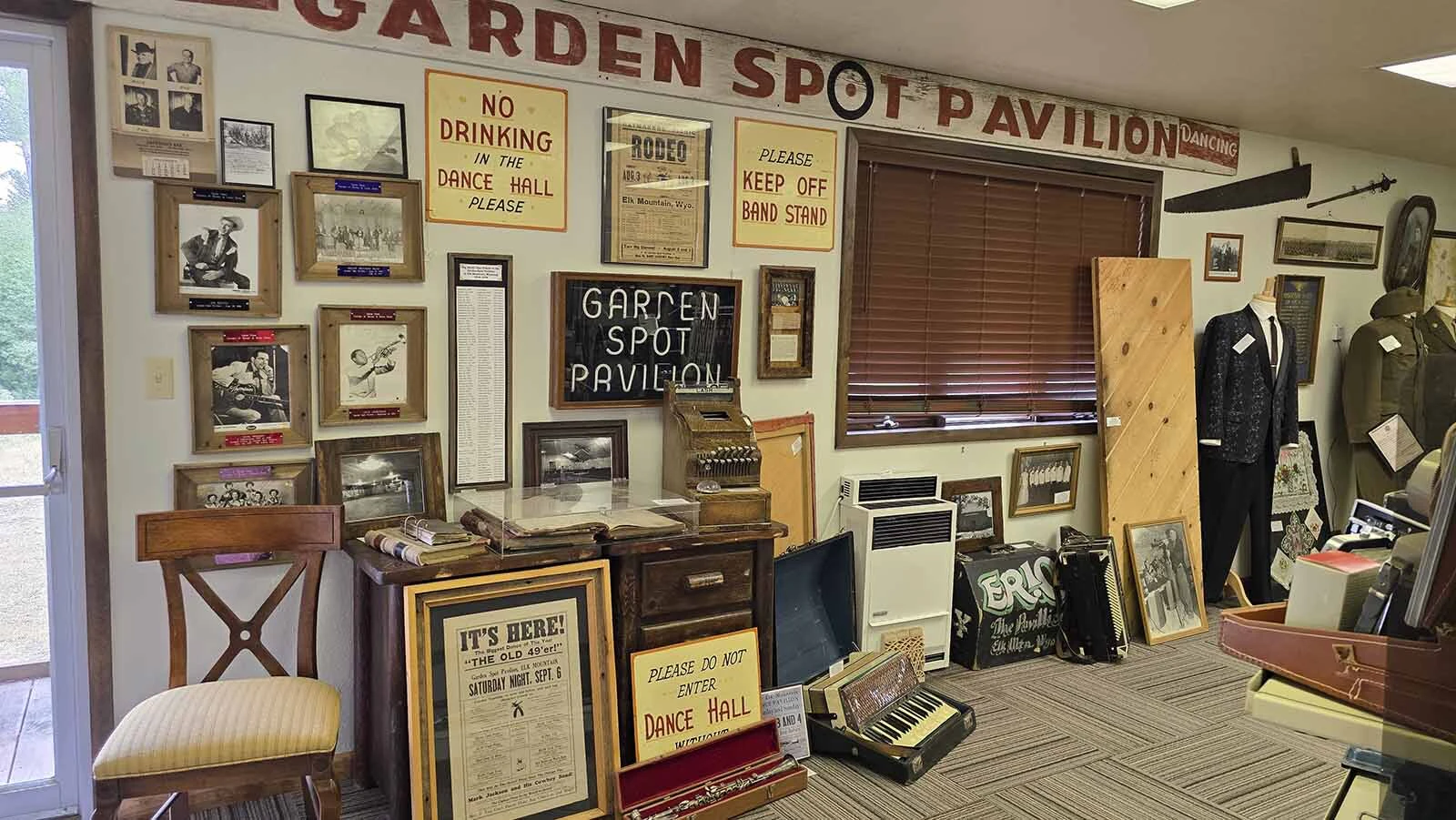
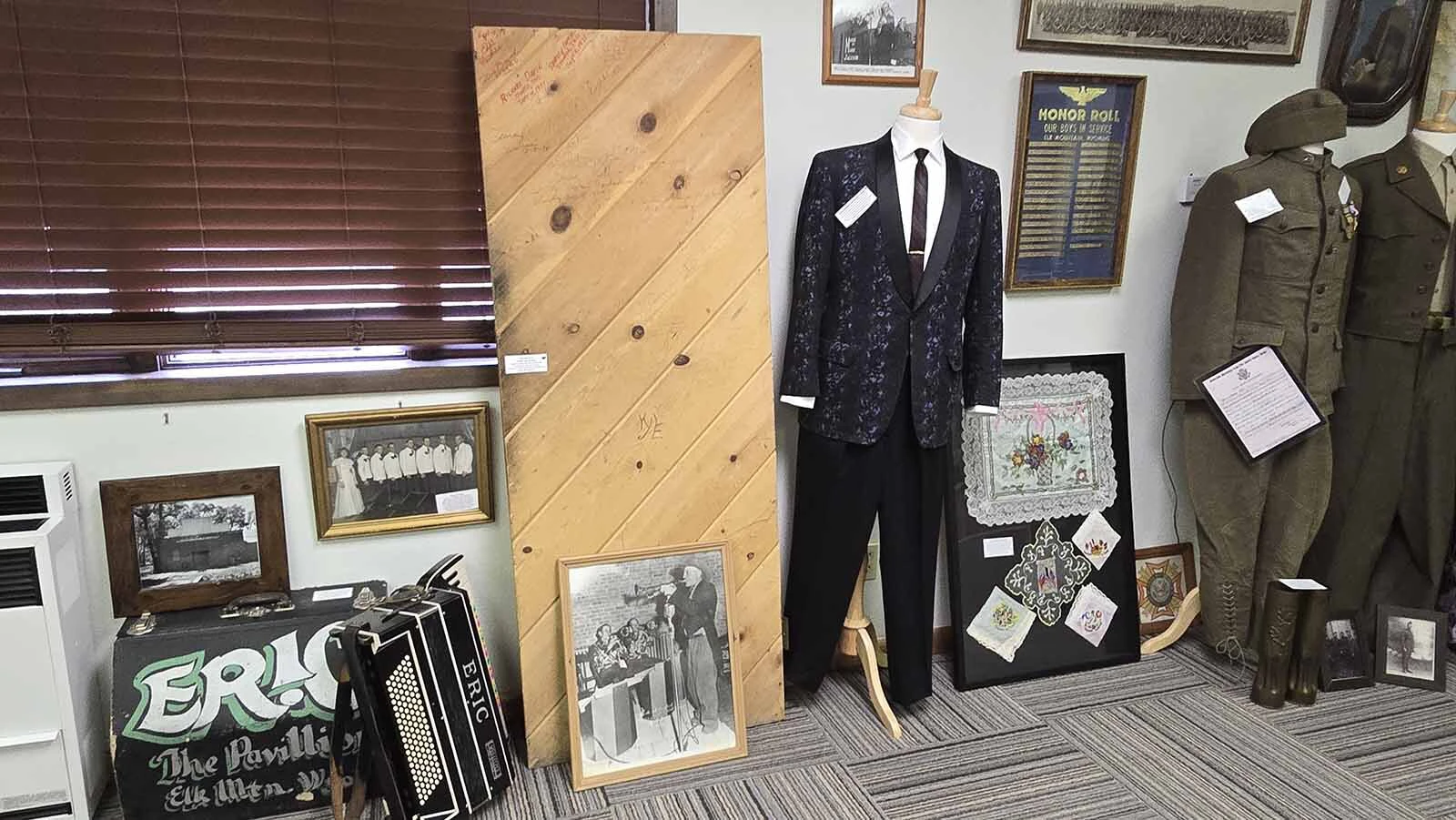
The museum in Elk Mountain has an extensive exhibit on the Garden Spot pavilion. (Renee Jean, Cowboy State Daily) 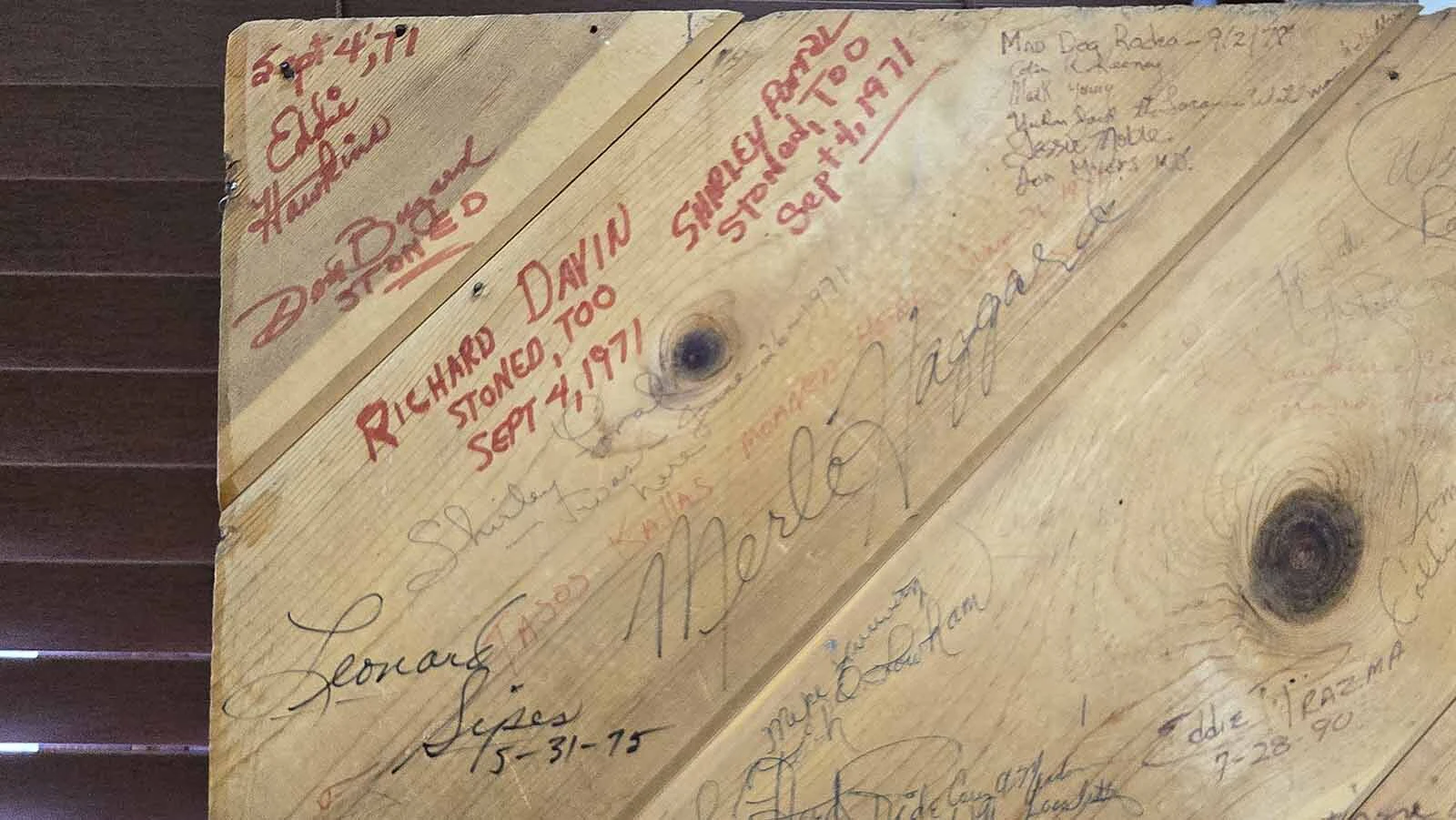
Close up of Garden Spot Pavilion door, showing signatures of many musicians, including one that says Merle Haggard. (Renee Jean, Cowboy State Daily) 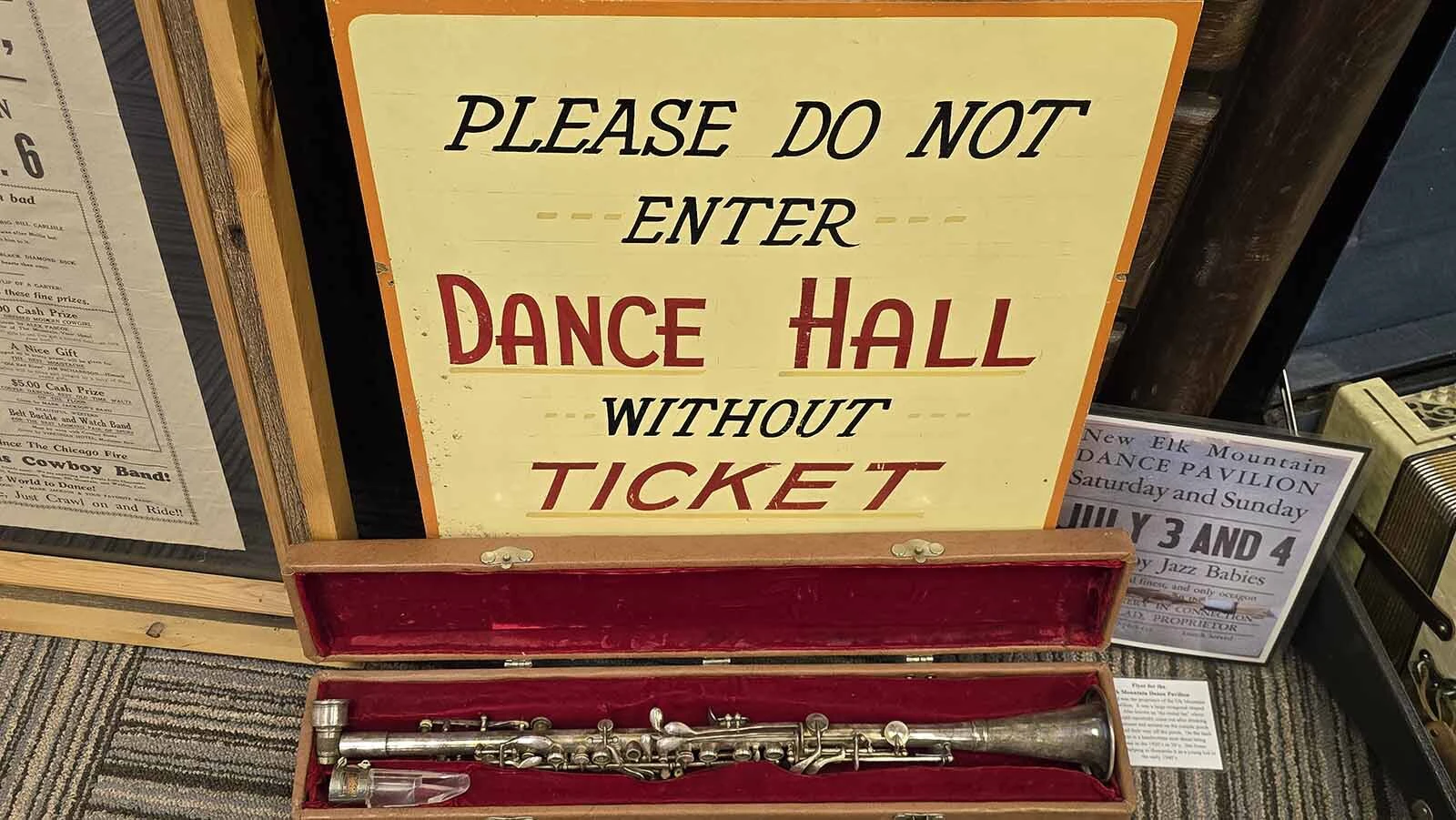
One of the signs that was hung at the Garden Spot Pavilion in Elk Mountain, and an instrument from the time period, displayed in the museum at Elk Mountain. (Renee Jean, Cowboy State Daily) 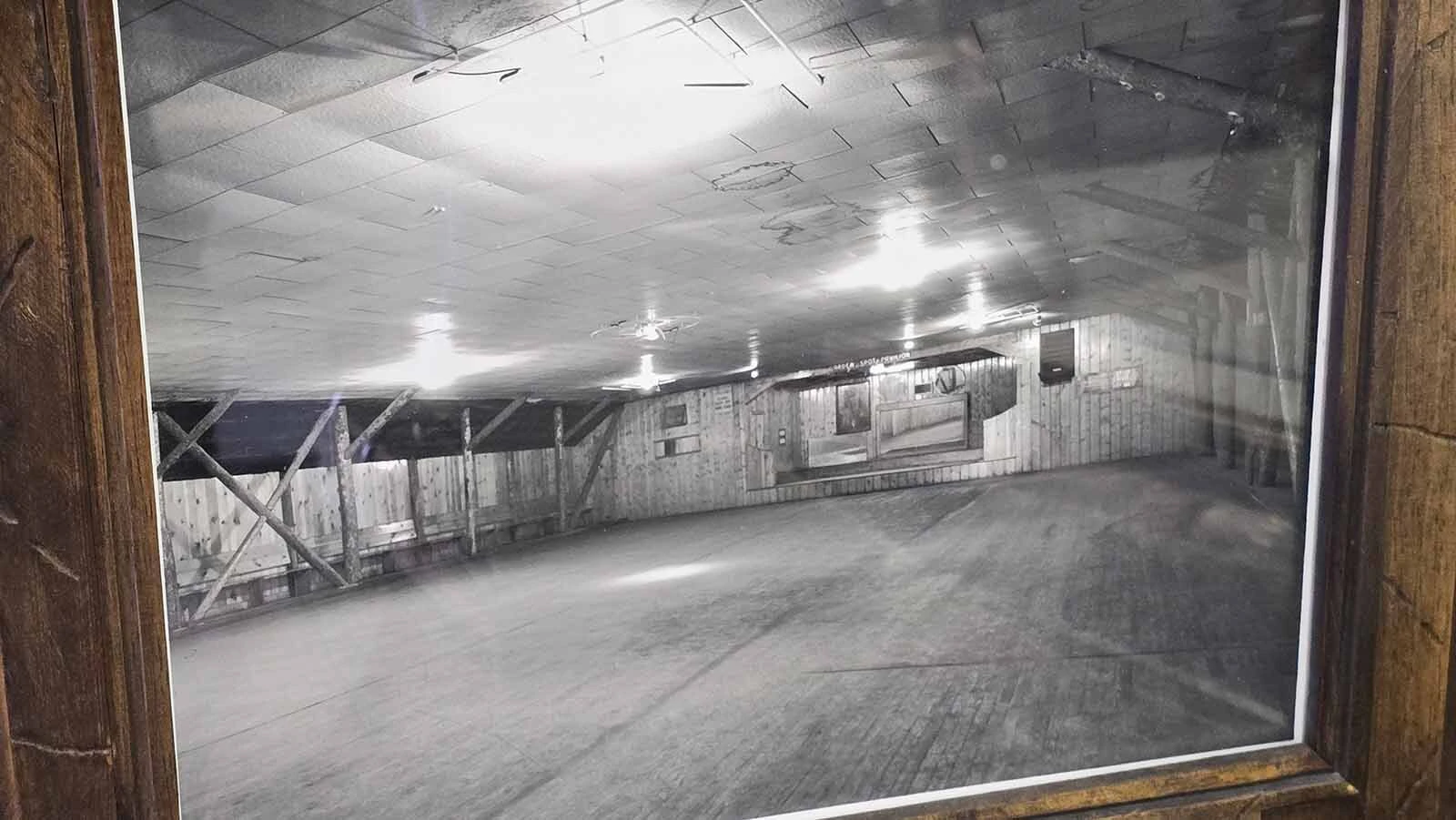
A photo of the interior of the Garden Spot Pavilion in Elk Mountain. Now imagine it with 350 dancers and musicians up on the stage at the far end. That was the scene during the big band era in the high country town, which attracted world famous artists to perform every weekend. (Renee Jean, Cowboy State Daily)
All Walks Came To Dance
Warburton, who was a Hanna resident and owned several businesses in the Hanna and Elk Mountain area, describes a wild party scene at the Garden Spot, one where the exuberant crowd, often pre-fortified with whiskey, outnumbered the six law enforcement officers on the scene by roughly 60 to one.
The crowd looked a lot like glorious democracy in action. It was a place where sheep men mixed with cattlemen, miners with ranch kids, businessmen with tie hacks. All kinds of Americans, wearing their best clothes and a smile, were ready to dance holes into their shoes until the break of day.
They paid $2 per head for “gents” and $1 for “ladies,” coming back weekend after weekend to this party spot that attracted some of the best names in the music business.
Today, Elk Mountain old-timers still tell tales about the Garden Spot. Chief among them is the legend of the bouncy floor, which made it so a person didn’t have to know how to dance at all. They could just hop on and let the floor direct their feet.
Long rumored to have old railroad car box springs under it, the pine floor pulsed under the weight of two-steps, waltzes and endless sets of polkas, keeping perfect time for everyone.
“If you can’t dance, just jump on and ride!” the saying went.
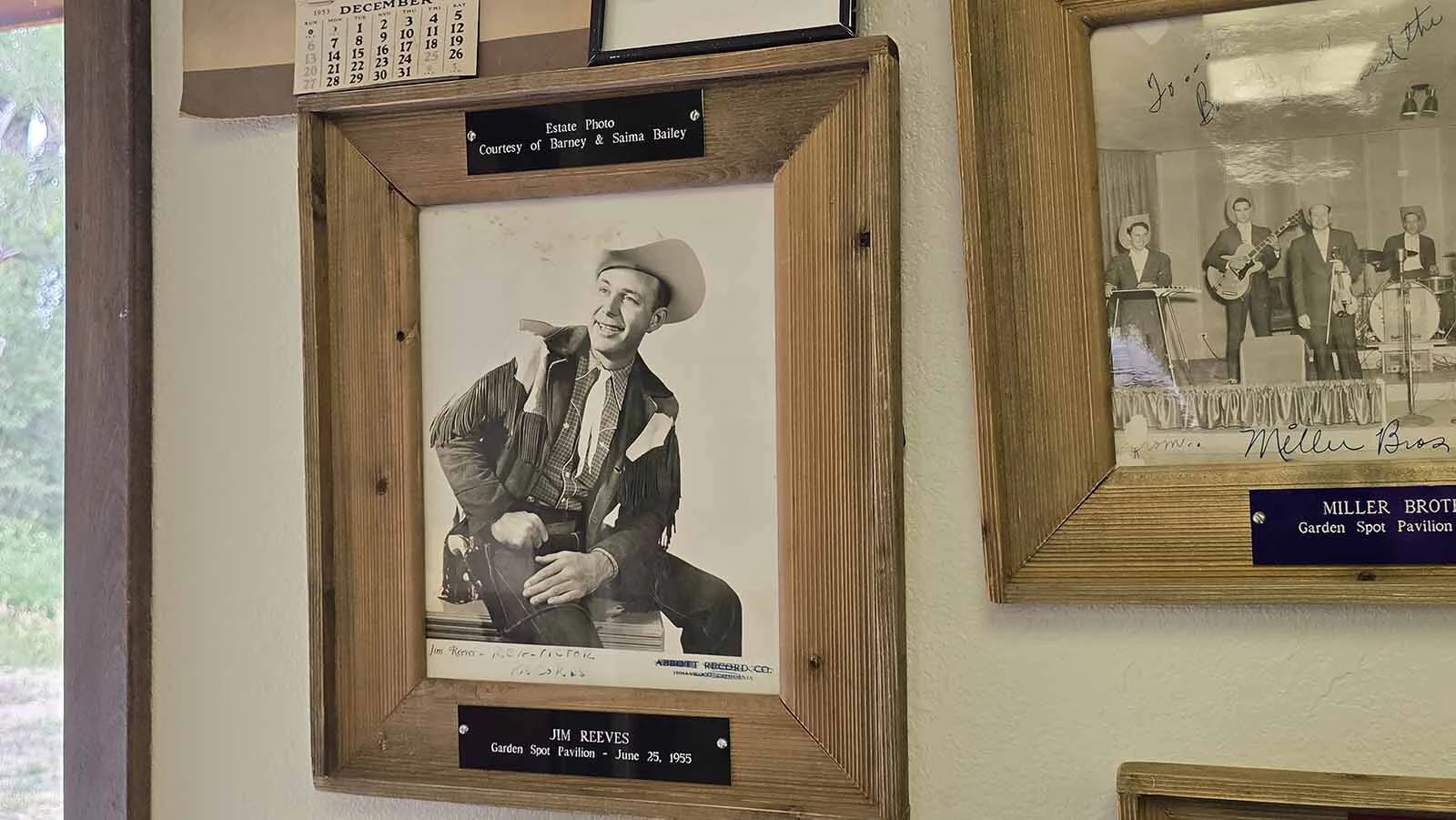
Jim Reeves is among famous musicians who once played at the Garden Spot Pavilion in Elk Mountain. It’s displayed in the museum in Elk Mountain. (Renee Jean, Cowboy State Daily) 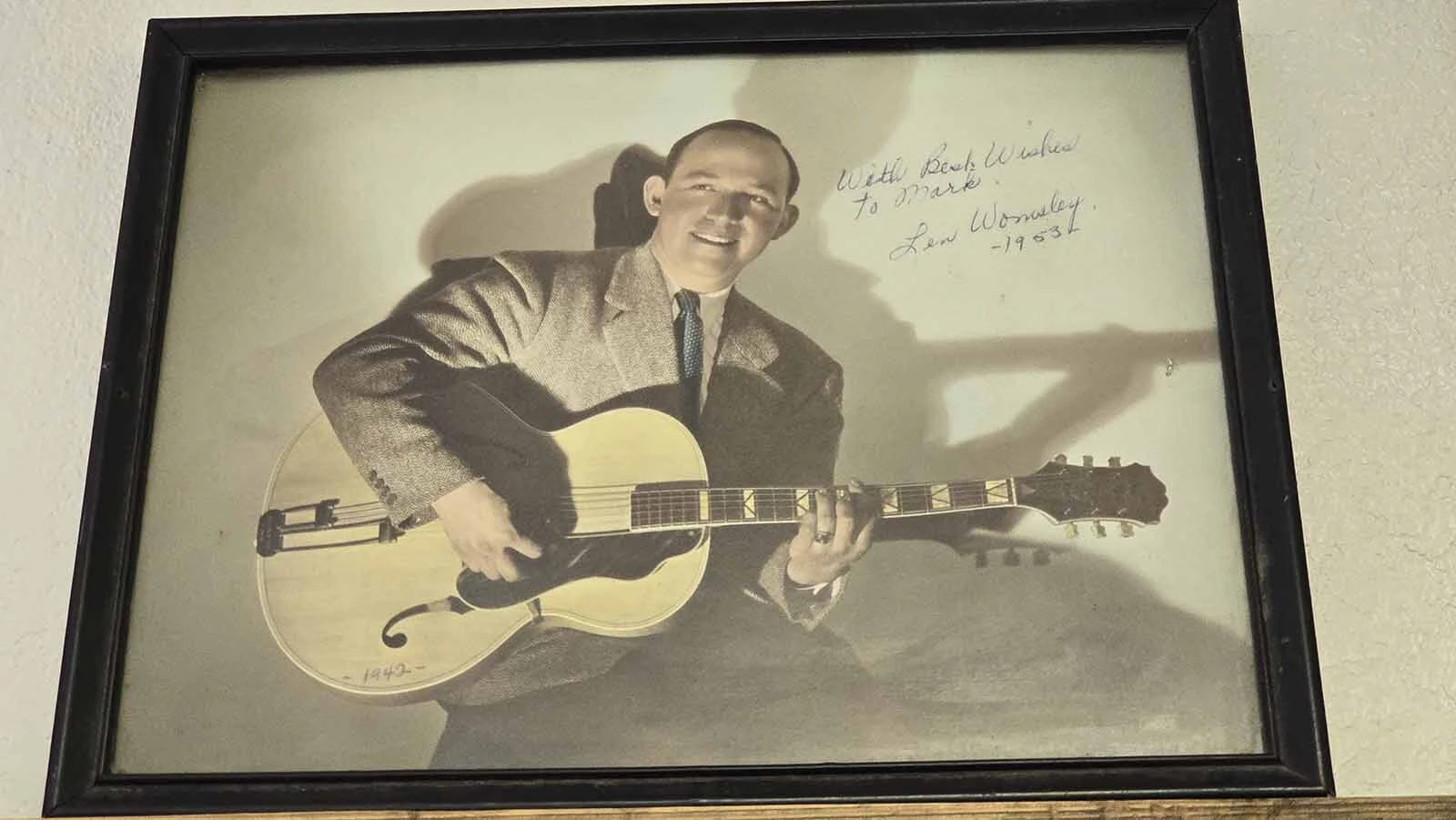
This photograph of Lew Womsley was signed to the eventual owner of the Garden Spot Pavilion, Mark Jackson. It’s displayed in the museum in Elk Mountain. (Renee Jean, Cowboy State Daily) 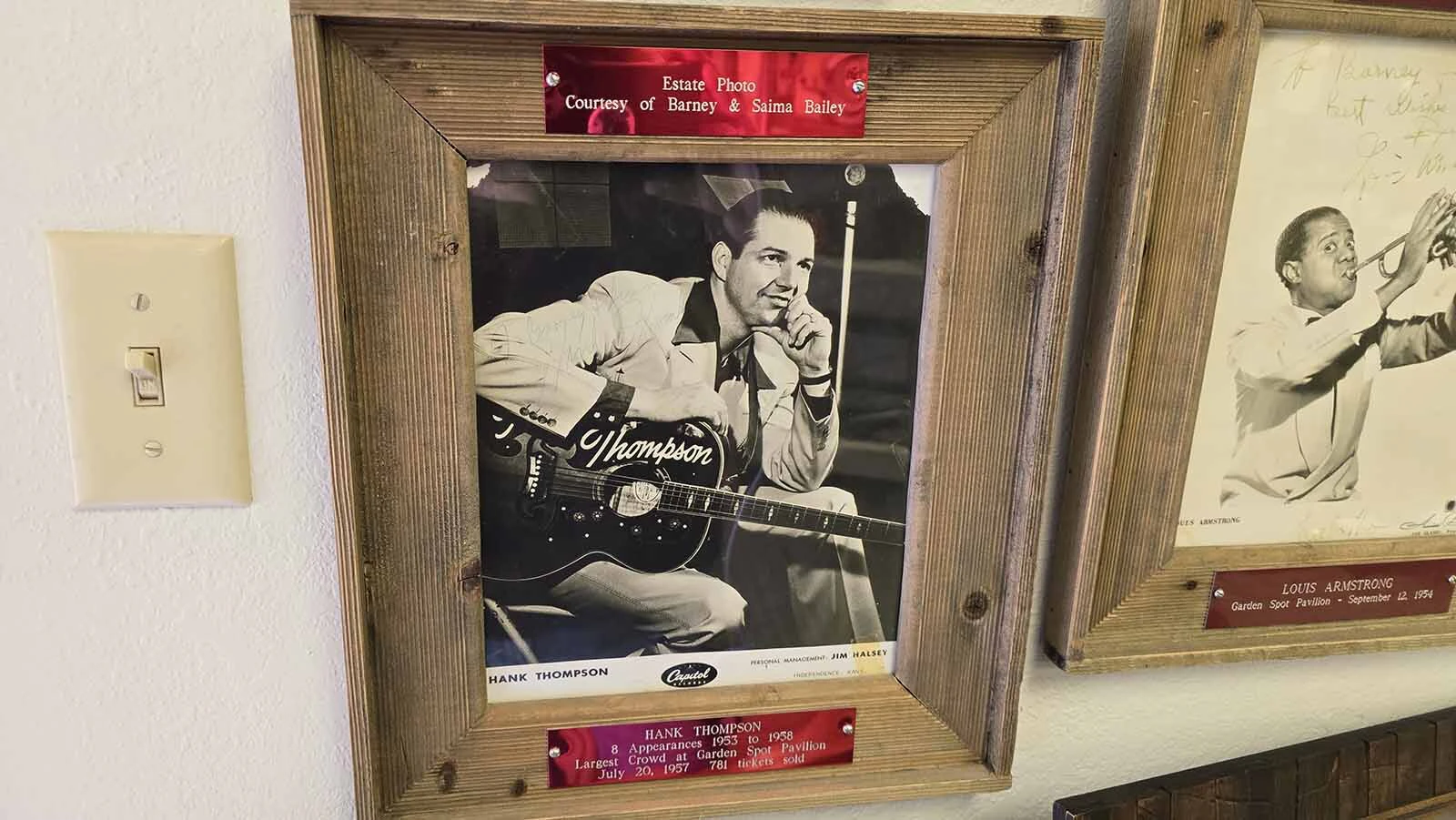
Hank Thompson was among musicians who once played at the Garden Spot Pavilion in Elk Mountain. (Renee Jean, Cowboy State Daily) 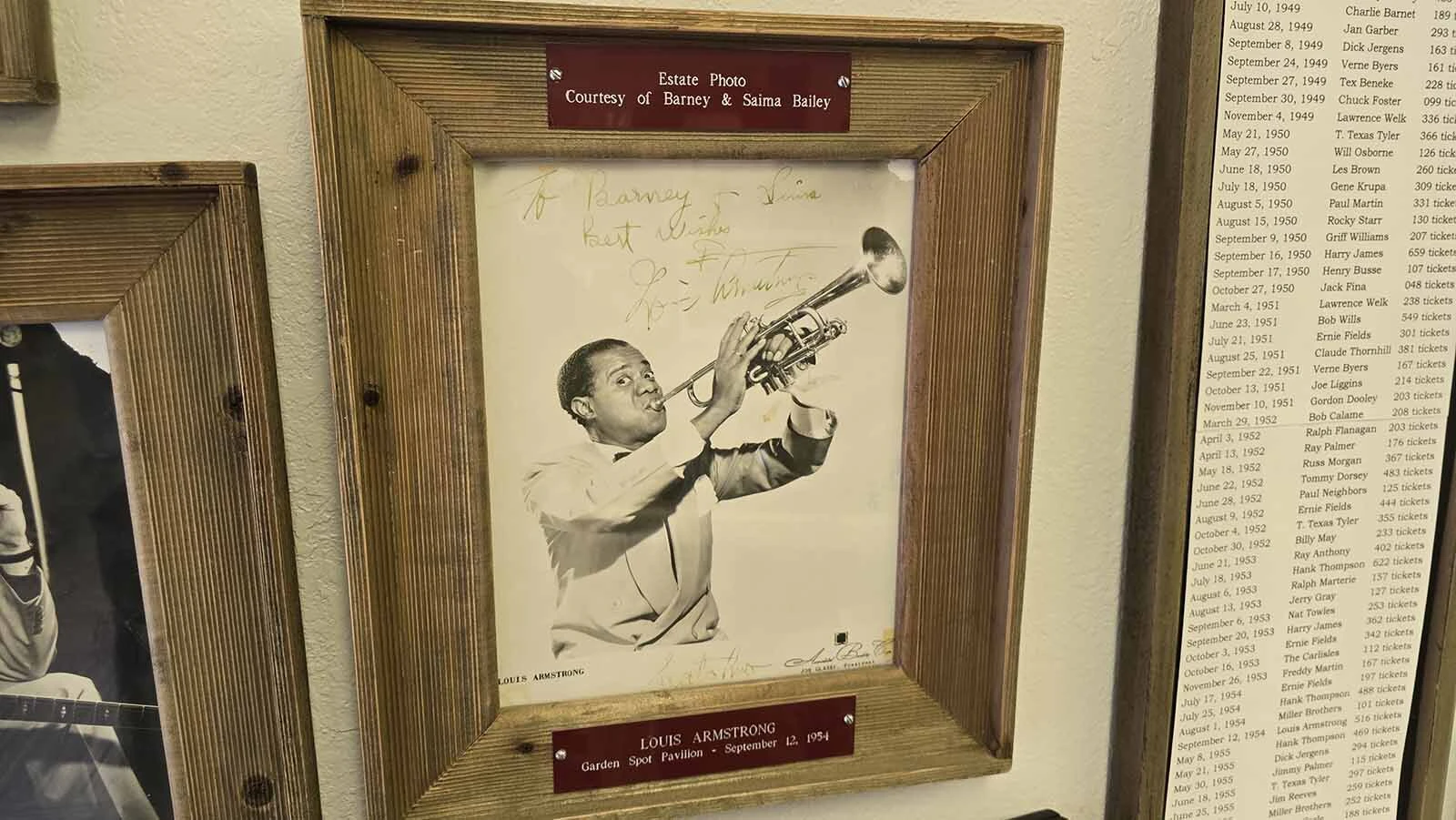
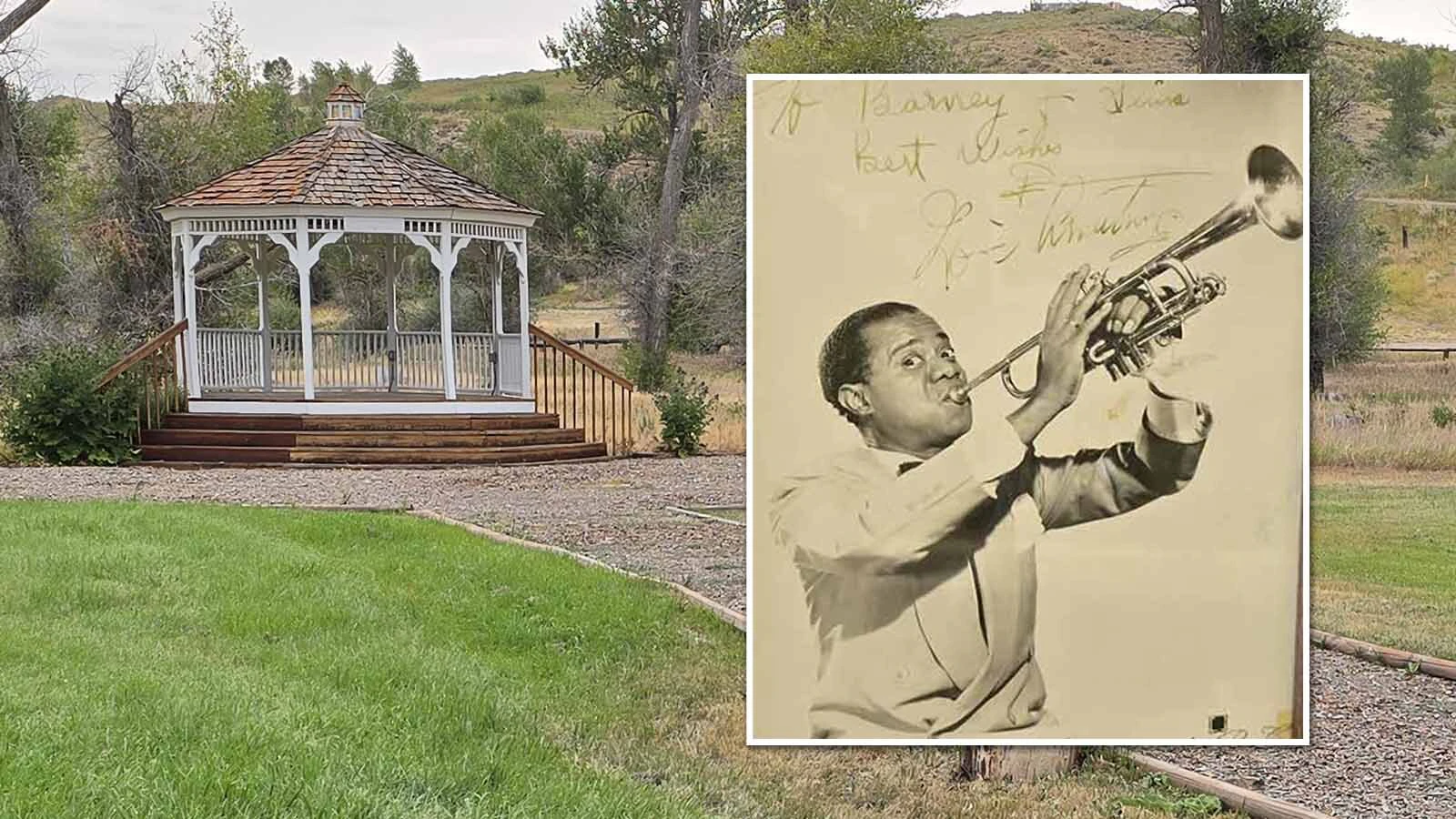
Louis Armstrong was among the famous musicians who played at the Garden Spot Pavilion in Elk Mountain. (Renee Jean, Cowboy State Daily) 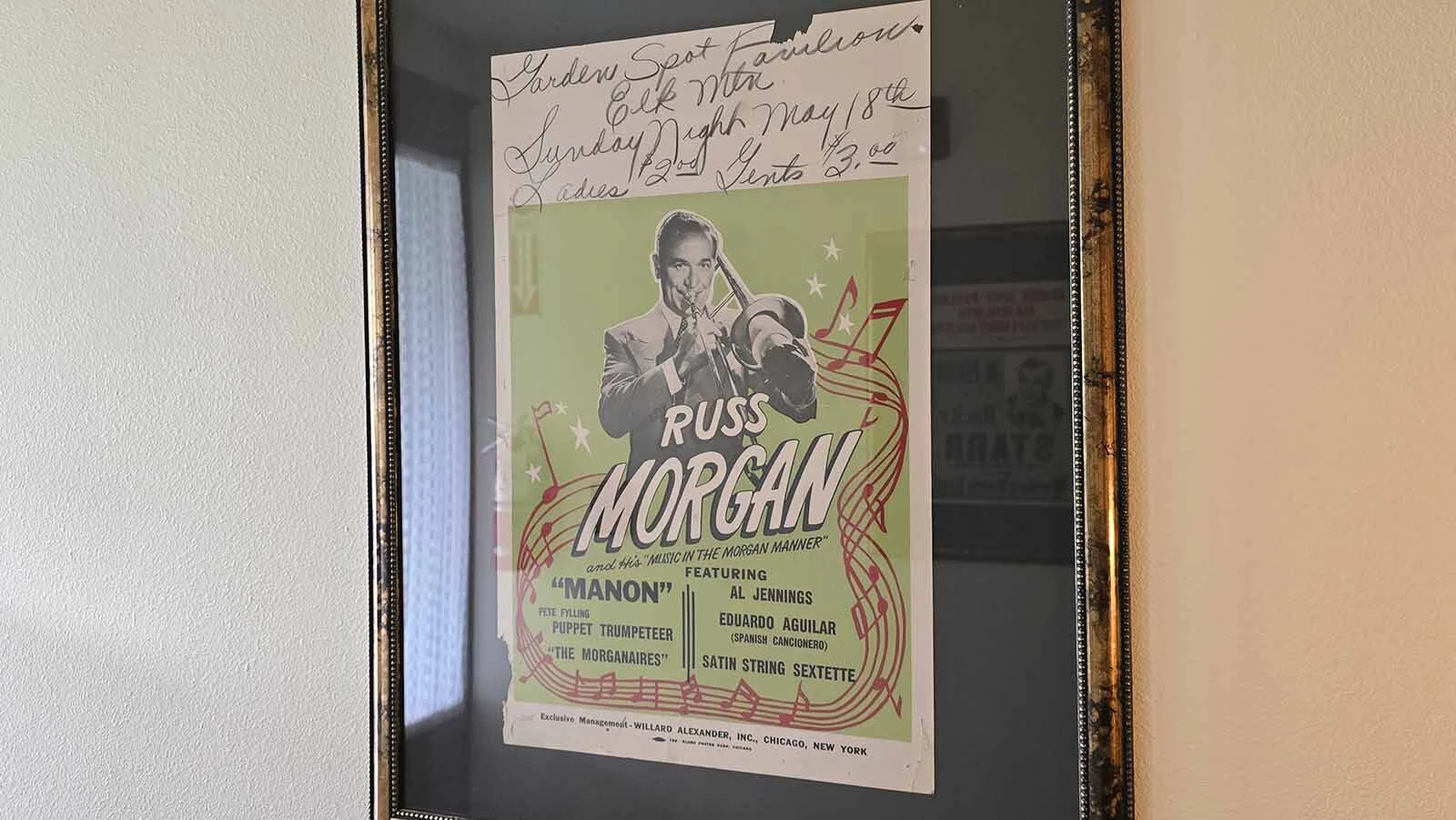
Elk Mountain was once a multi-state entertainment mecca, where world-famous musicians played to raucous crowds on a legendary bouncing floor at a place called Garden Spot Pavilion. This poster, hanging up in the Elk Mountain Hotel, is one of the musicians who played there during the big band era. (Renee Jean, Cowboy State Daily)
Where Even The Deaf Could Dance
The legendary floor communicated rhythm so well, even the deaf could use it to dance. Elk Mountain old-timers recall a young local man who was completely deaf, but never missed a weekend dance because of that floor.
He would stand at the edge of the ballroom and wait. The minute the crowd started moving, the floor would begin its rhythmic oscillation.
That was all he needed to step out and ask a local lady to dance with him. He would spin her around the room, keeping perfect time with the band, purely through the soles of his shoes — like magic.
In later times, the truth about the bouncy floor was revealed.
It wasn’t railroad box car springs at all.
That was discovered in the early 2000s, when the building, deemed unsafe and impossible to save, was demolished.
The legendary bounce turned out to be a happy accident. The green pine logs Elk Mountain Hotel owner John Evans used to build the floor cured and shrank inside their concrete moorings over time, creating a perfectly flexible springboard for dancing. It had just enough give to act as a kind of wooden trampoline, one that somehow absorbed the weight of hundreds of stomping boots without ever snapping.
When The Whiskey Flows, Fistfights Follow
Stories are also told about the lengths people would take to get to the dances in Elk Mountain — riding in an old tractor in winter, for example, with no cab, when nothing else would start.
A dance took place every Saturday night, and Sunday night as well, after the rodeo.
“Sometimes I’d go to bed on Saturday morning and not go to bed until Monday,” Warburton recalled.
It wasn’t all peaceful dancing though, Warburton added. Where so much whiskey flows, fistfights are bound to become routine. Most of the time, the brawlers were simply separated or, if they refused to settle down, thrown out.
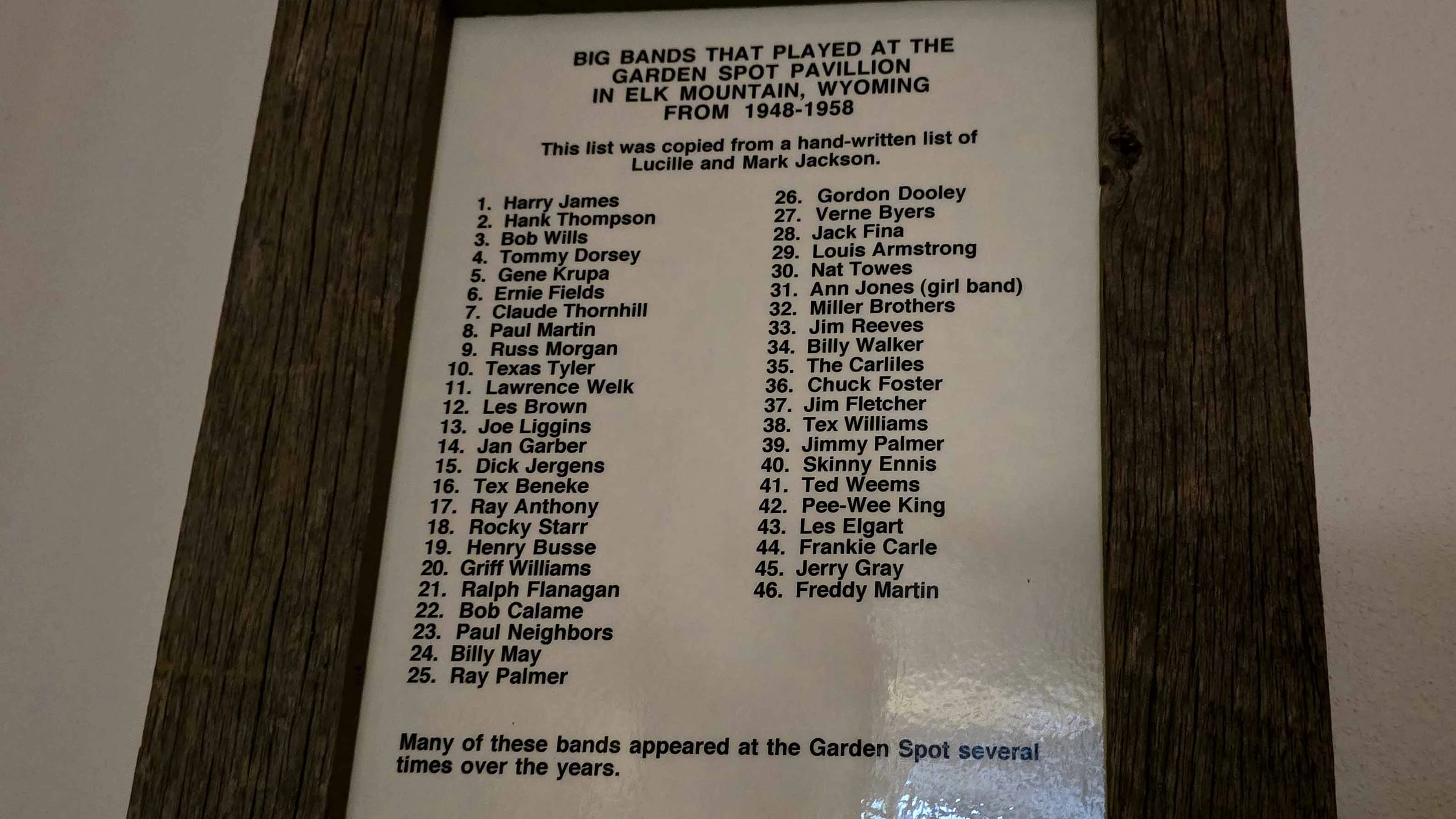
A list of musicians who once made Elk Mountain a regular stop on their travels between Salt Lake City and Denver. (Renee Jean, Cowboy State Daily) 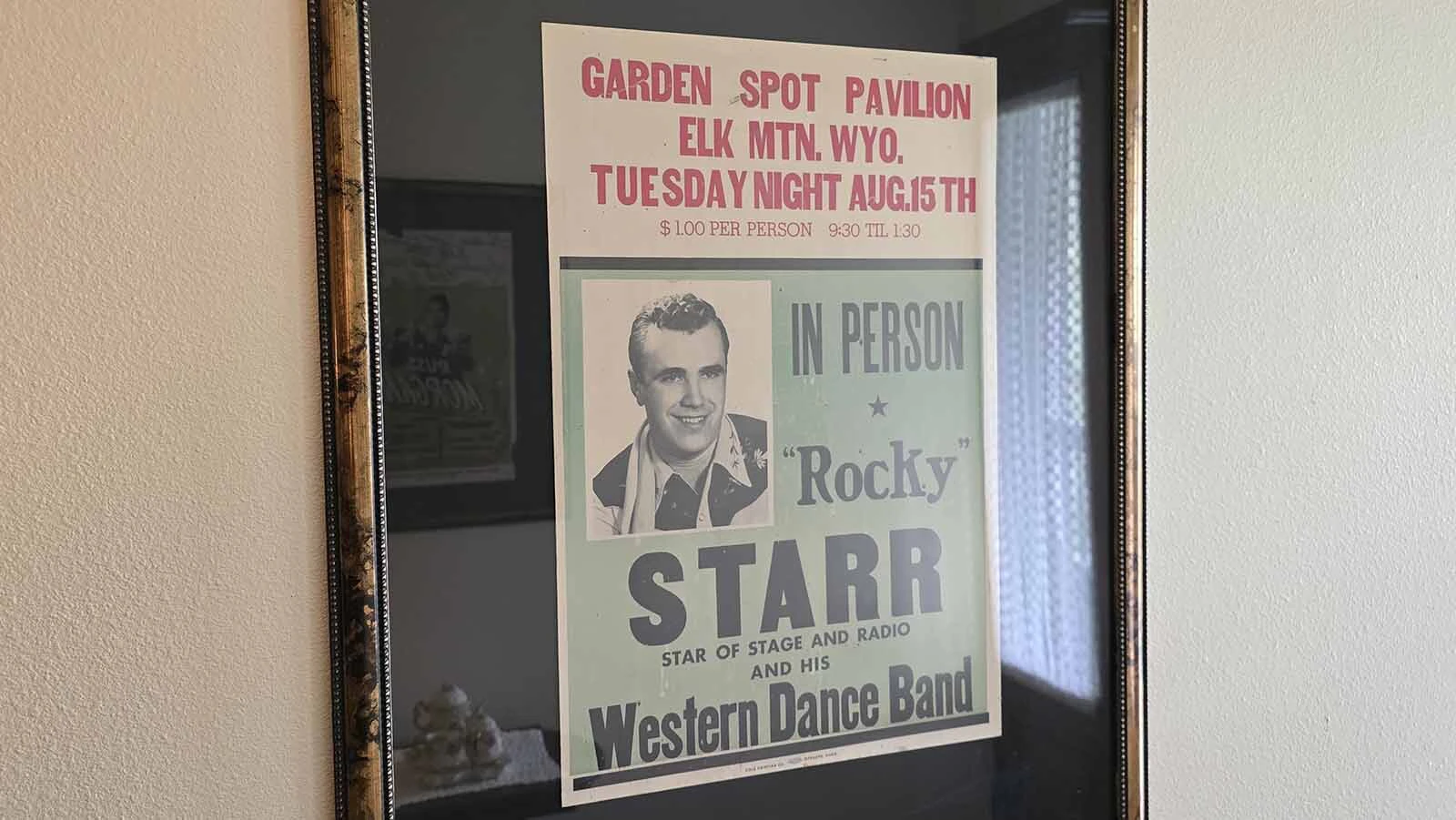
Elk Mountain was once a multi-state entertainment mecca, where world-famous musicians played to raucous crowds on a legendary bouncing floor at a place called Garden Spot Pavilion. This poster, hanging up in the Elk Mountain Hotel, is one of the musicians who played there during the big band era. (Renee Jean, Cowboy State Daily) 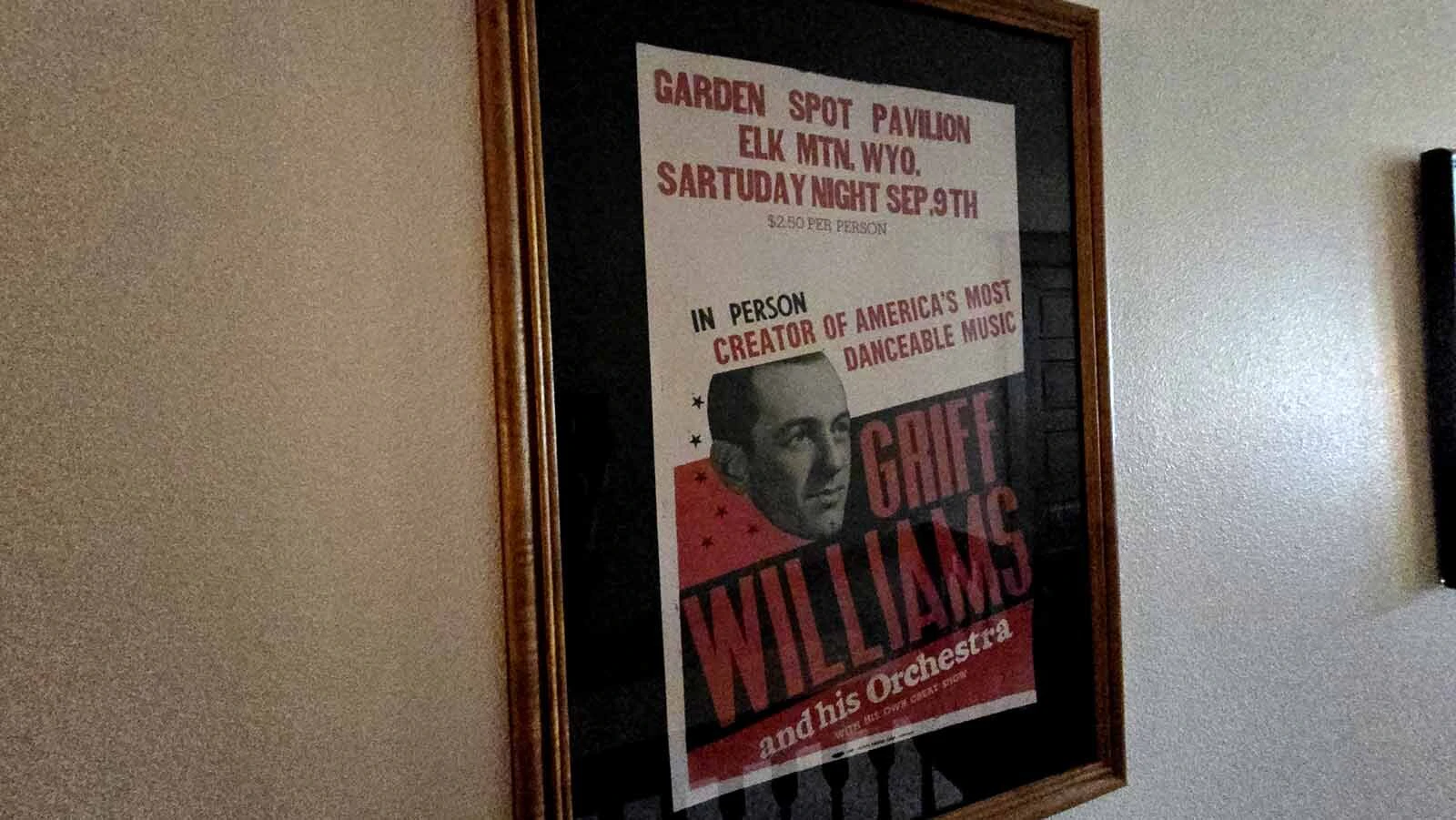
Elk Mountain was once a multi-state entertainment mecca, where world-famous musicians played to raucous crowds on a legendary bouncing floor at a place called Garden Spot Pavilion. This poster, hanging up in the Elk Mountain Hotel, is one of the musicians who played there during the big band era. (Renee Jean, Cowboy State Daily) 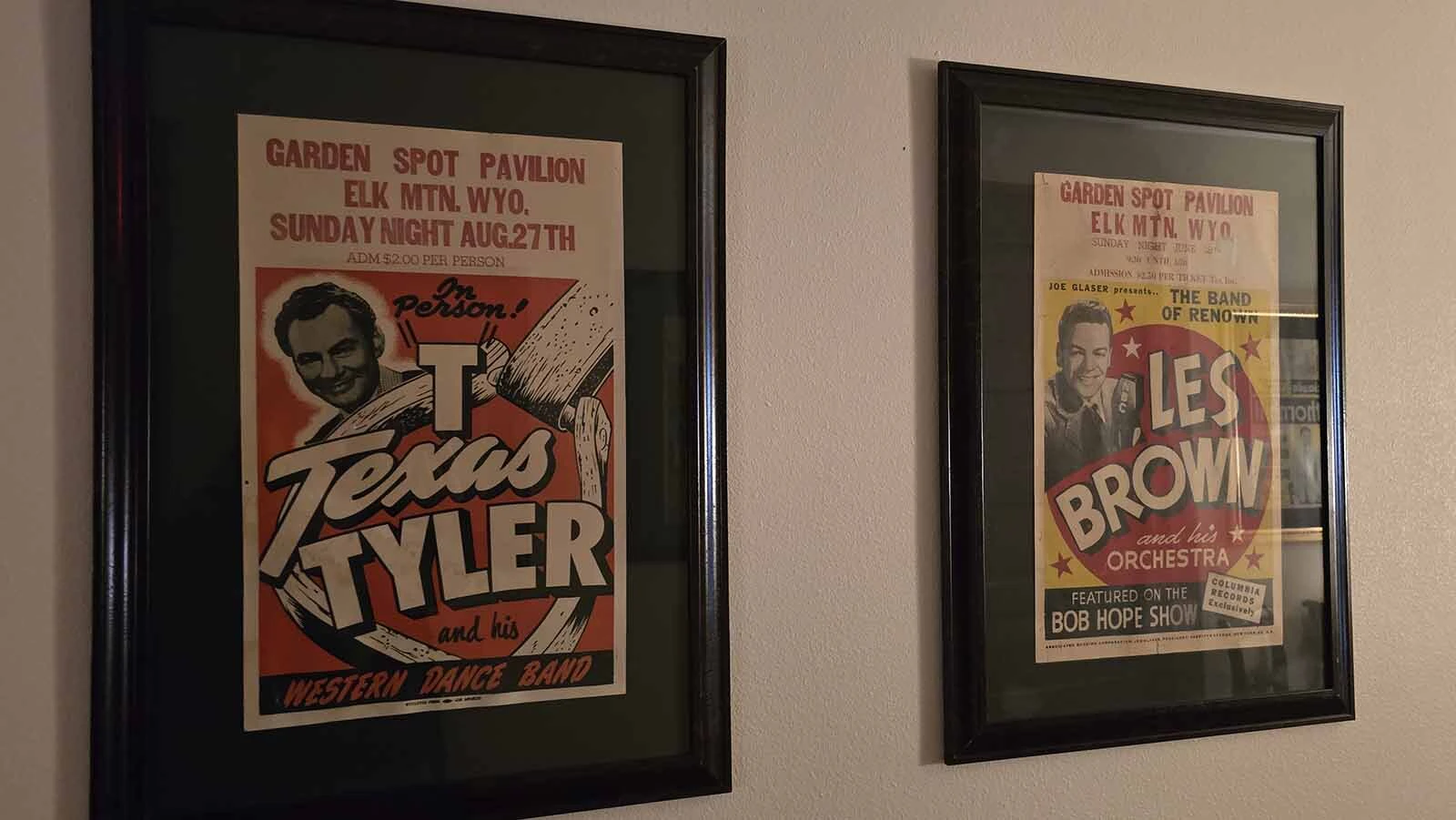
Elk Mountain was once a multi-state entertainment mecca, where world-famous musicians played to raucous crowds on a legendary bouncing floor at a place called Garden Spot Pavilion. These posters, hanging up in the Elk Mountain Hotel, are among the musicians who played there during the big band era. (Renee Jean, Cowboy State Daily) 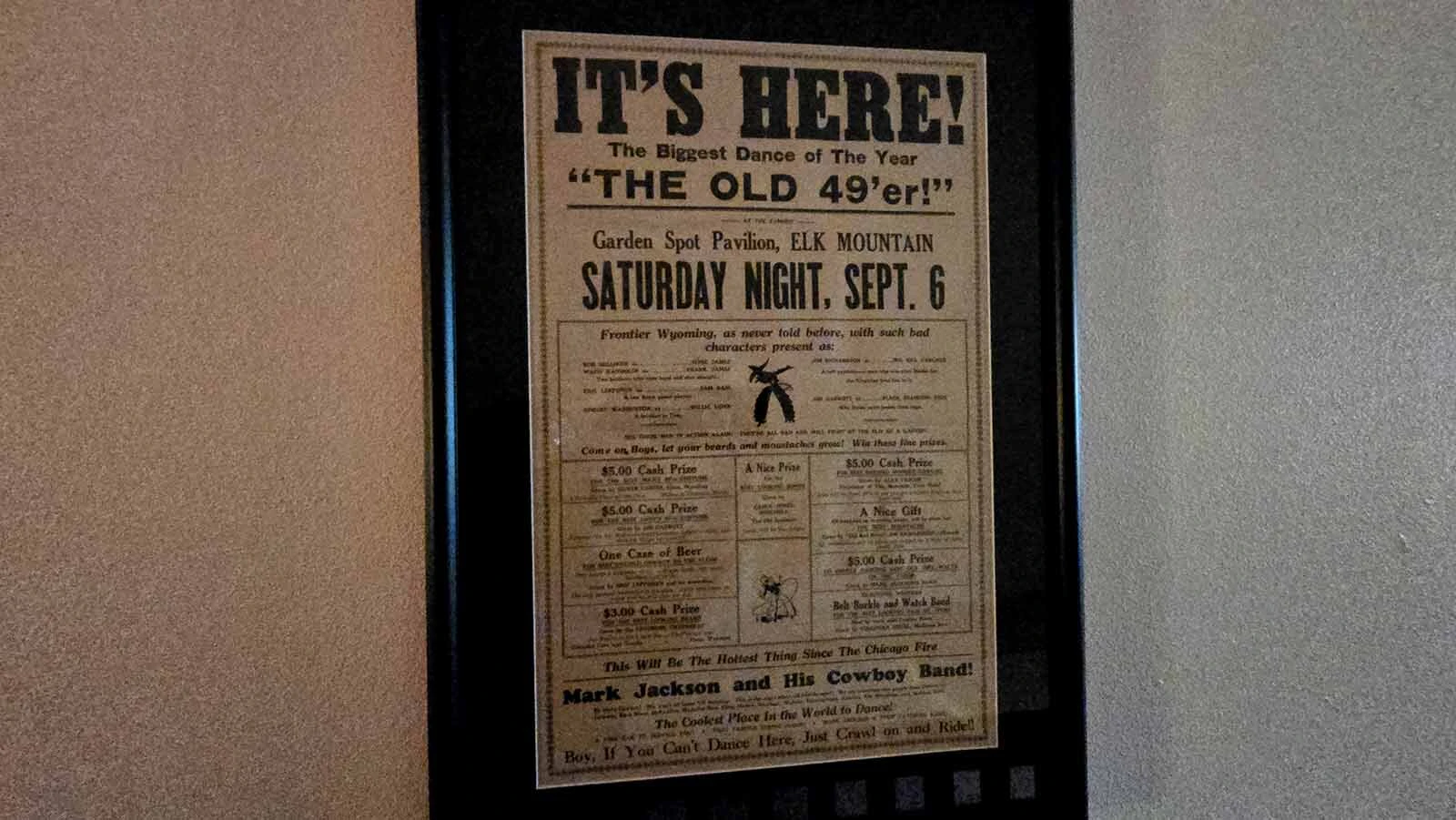
An advertisement for the Garden Spot Pavilion, which was once a multi-state entertainment mecca in Elk Mountain, where world-famous musicians played to raucous crowds on its legendary bouncing floor. (Renee Jean, Cowboy State Daily) 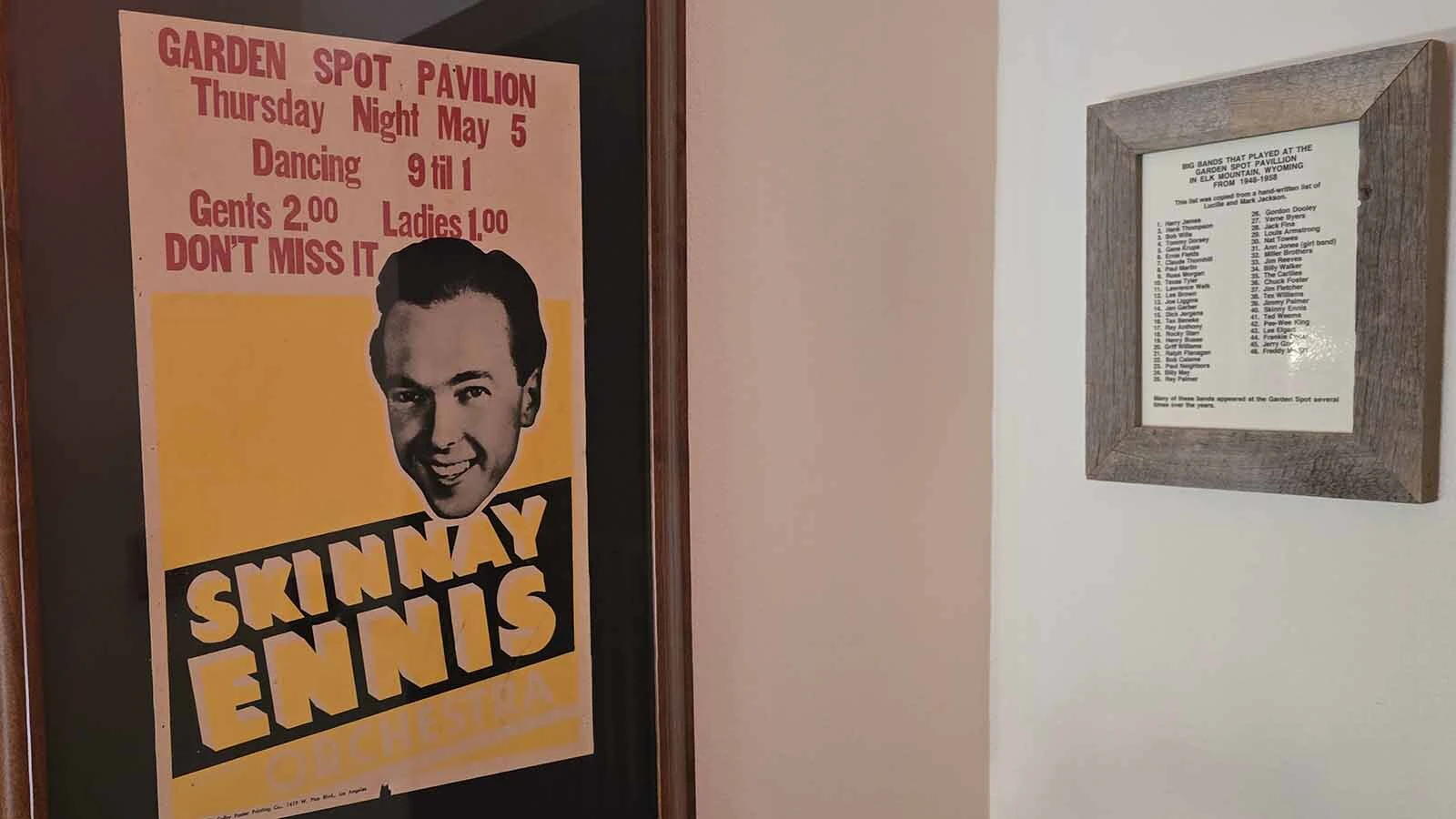
(Renee Jean, Cowboy State Daily) 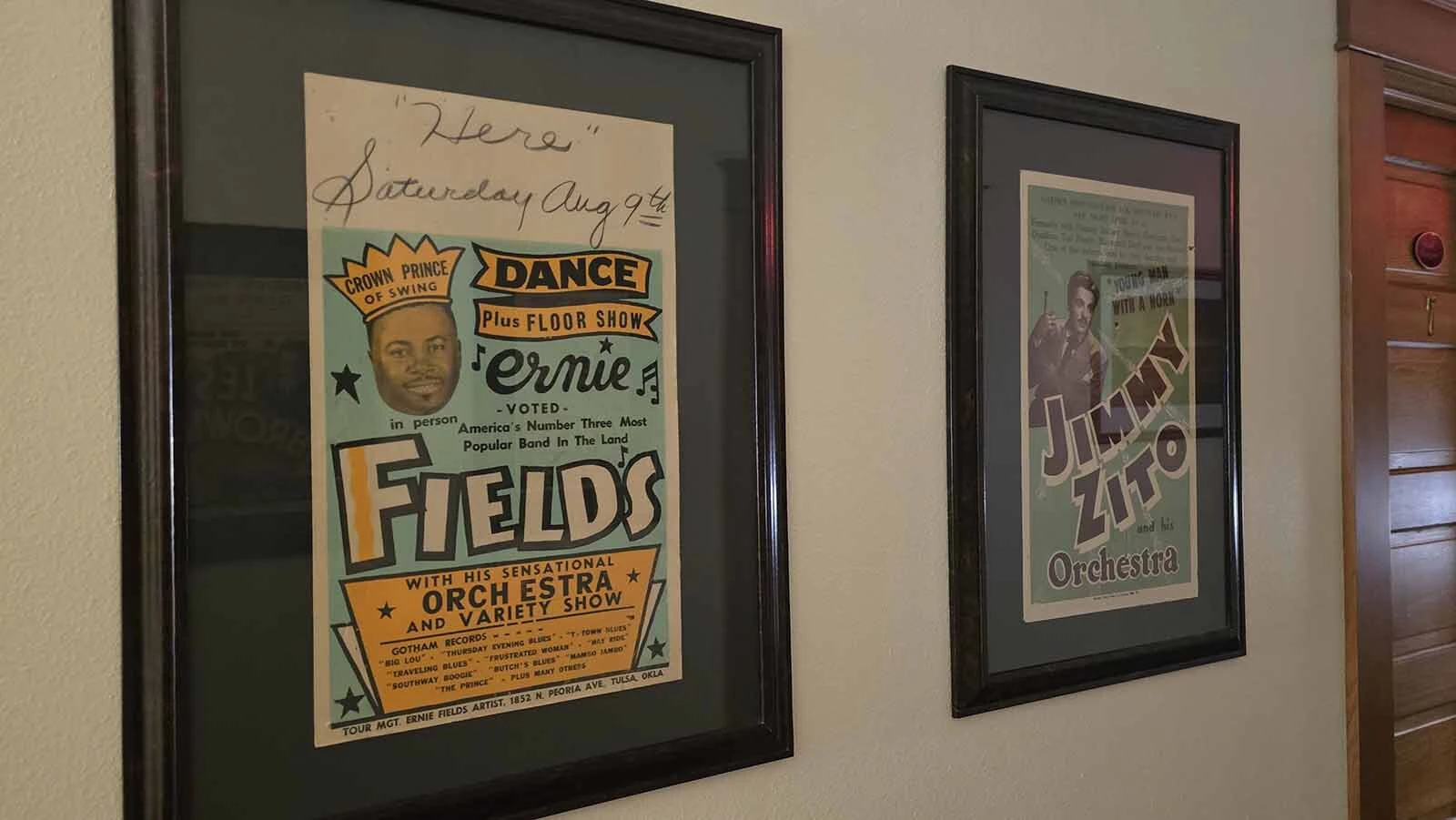
Elk Mountain was once a multi-state entertainment mecca, where world-famous musicians played to raucous crowds on a legendary bouncing floor at a place called Garden Spot Pavilion. These posters, hanging up in the Elk Mountain Hotel, are among the musicians who played there during the big band era. (Renee Jean, Cowboy State Daily) 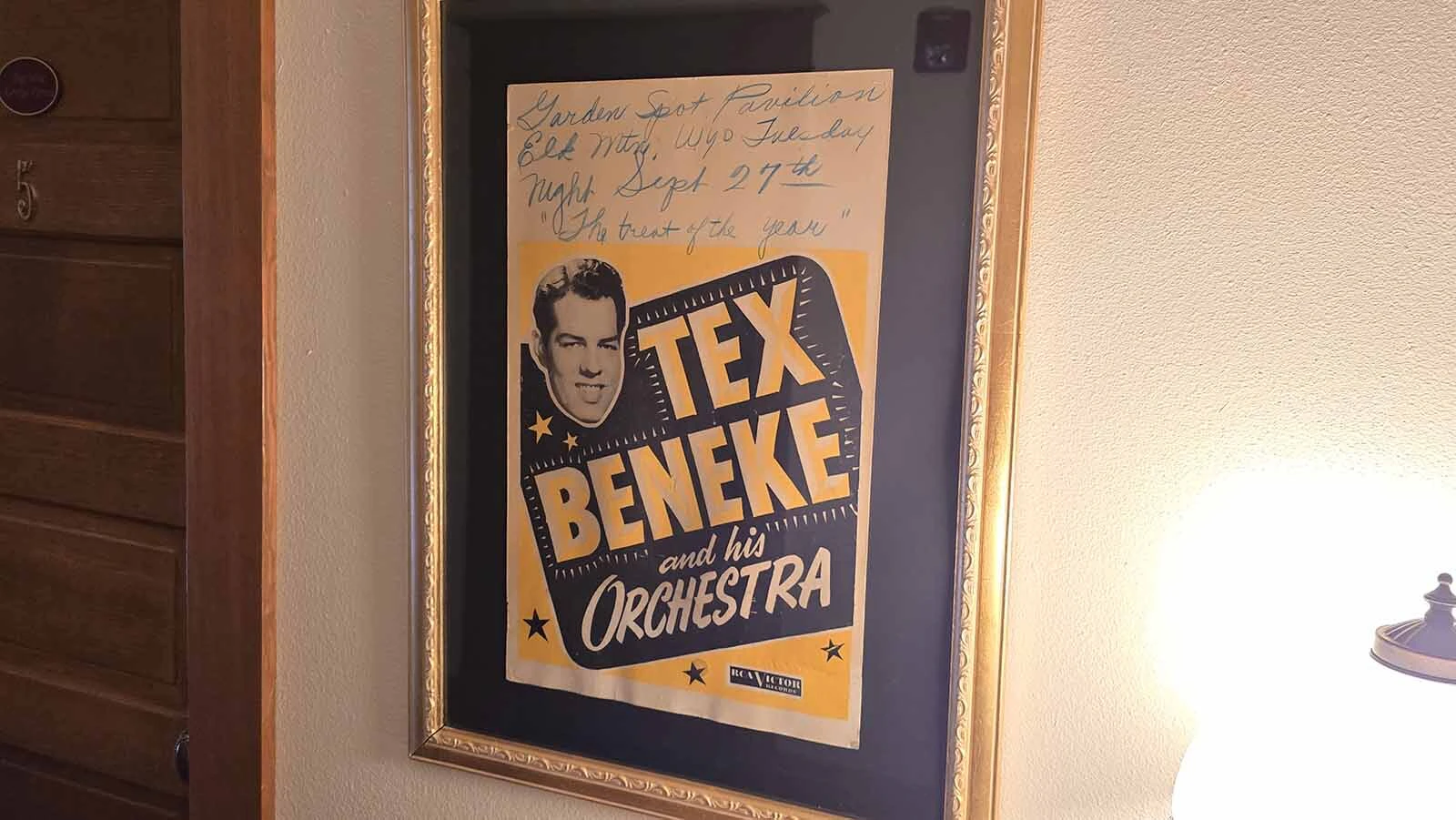
Elk Mountain was once a multi-state entertainment mecca, where world-famous musicians played to raucous crowds on a legendary bouncing floor at a place called Garden Spot Pavilion. This poster, hanging up in the Elk Mountain Hotel, is one of the musicians who played there during the big band era. (Renee Jean, Cowboy State Daily) 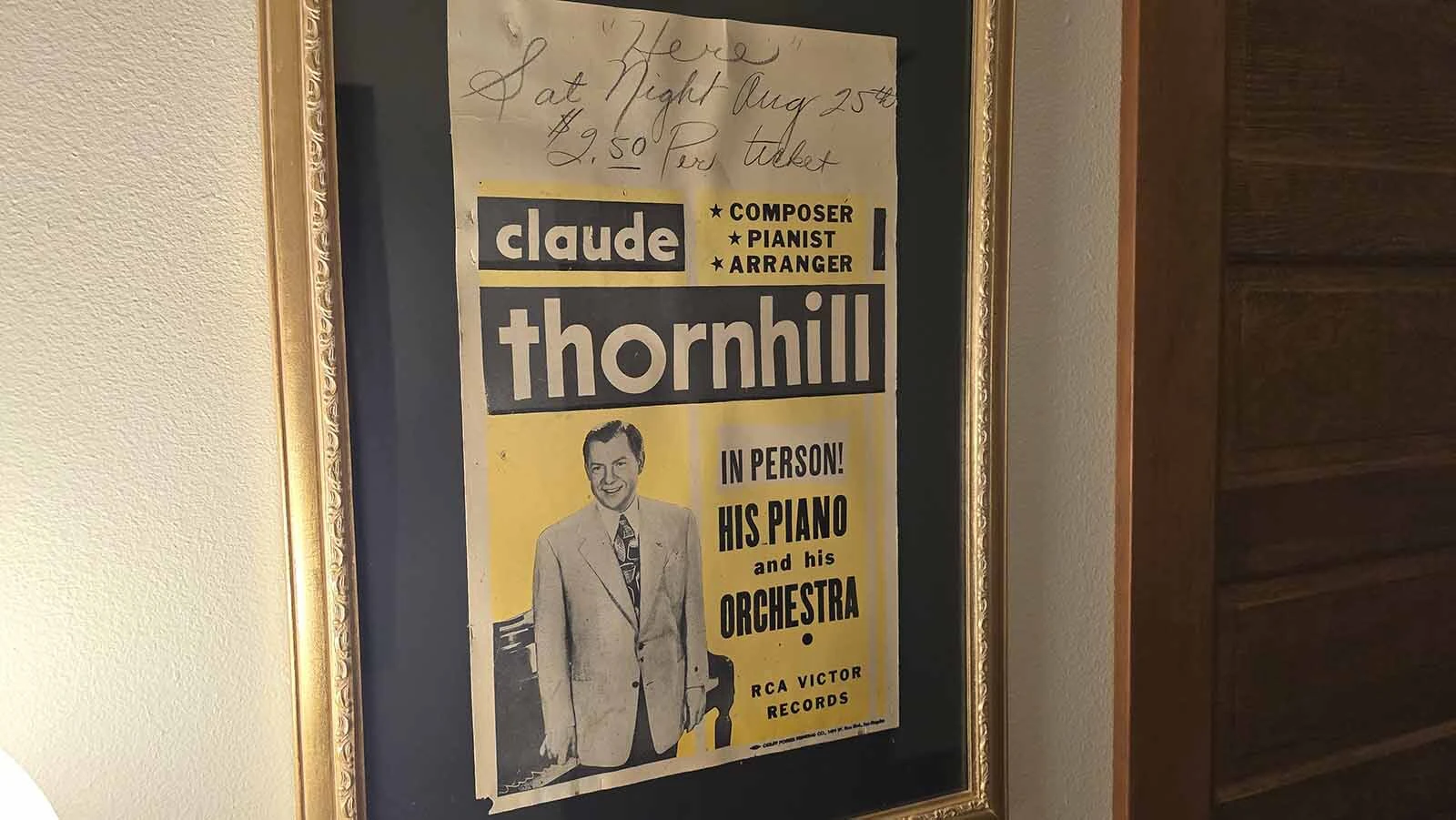
Elk Mountain was once a multi-state entertainment mecca, where world-famous musicians played to raucous crowds on a legendary bouncing floor at a place called Garden Spot Pavilion. This poster, hanging up in the Elk Mountain Hotel, is one of the musicians who played there during the big band era. (Renee Jean, Cowboy State Daily)
Tragedy Strikes
But on the night of May 18, 1946, the brawling led to tragedy. A massive wave of fistfights broke out across the dance floor and didn't stop when law enforcement deputies attempted to wade into the melee and break up the fight.
The deputies were knocked to the ground, overpowered by the sheer volume of the brawling, and the crowd threatened to turn on them.
Deputy Sheriff Claude Simmons of Hanna drew his service pistol, intending to fire a warning shot into the air, to startle the room into submission. But, as he raised his weapon, someone grabbed his arm from behind, attempting to push the gun upward.
The gun grip struck someone in the head and it accidentally discharged, instantly killing an innocent bystander.
The victim, 40-year-old John Milliken Jr., was a well-liked Hanna resident who had come to the Garden Spot with his wife to enjoy the music.
A coroner’s jury eventually ruled Milliken’s death an accident, and exonerated the deputy within a week. But anger among local residents ran so hot that Simmons had already packed up and left town, terrified of a mob seeking retribution for an innocent man’s life.
Times Change
Eventually, the relentless tempo of the Garden Spot Pavilion slowed, fading away with the Big Band era.
Interstate highways changed how touring musicians traveled as well, and the Pavilion was no longer deemed a convenient pit stop between Denver and Salt Lake City.
Today, if you walk the streets of Elk Mountain on a Saturday night, all is quiet. There’s no parade of cars from 36 different states driving to the Garden Spot to hear internationally famous musicians play.
The Pavilion is gone, now an empty field near the Elk Mountain Hotel. A gazebo is nearby, serving as a platform for occasional outdoor music performances, and will soon be the site for a festival of invited Wyoming musicians.
What remains of the Big Band era are museum exhibits and photographs, as well as the quiet posters on the wall at the Elk Mountain Hotel. Many are signed by the performers who once made the community a regular stop in their international musical travels.
But old-timers still remember is how a bouncy dance floor brought so many people together, teaching everyone — even a deaf young man — how to dance in Wyoming’s high country.
Renée Jean can be reached at renee@cowboystatedaily.com.