
When Nick Vuko was sidelined by a football injury in the fall of 1965, the University of Wyoming tailback he didn’t let that dampen his school spirit.
Within a year, he was back on the field.
As the Cowboys’ first male cheerleader.
Vuko, then a senior, and junior David Kolesky, led the fans in cheers, chants and the school fight song. The 1966 WYO yearbook said that the football team was cheered on by the Wyoming “pepsters and yell kings who ripped ’em up and teared ’em up.”
“We weren't cheerleaders, you might say,” Vuko told Cowboy State Daily. “We were stroking the fire. Just trying to keep everybody fired up on the team.”
They were known as "yell kings" and kept the school spirits high in any way they could. It helped that nearly everyone at the University of Wyoming knew who they were, and they weren't afraid to make a spectacle of themselves.
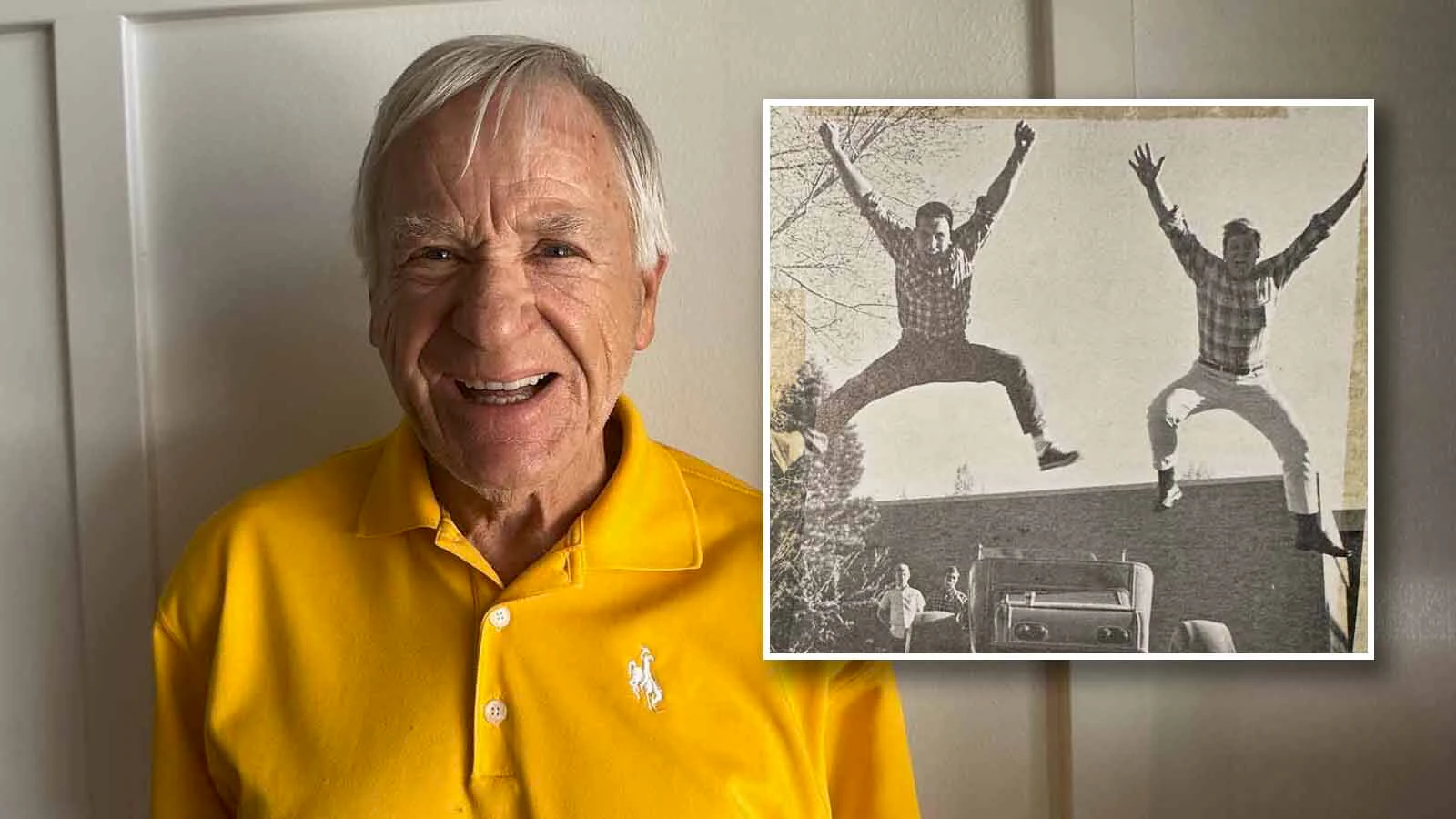
Kolesky said that when they were asked to jump as high as they could for a publicity stunt for the school paper, The Branding Iron, they used Vuko’s 1923 Model T Ford street rod as a launch pad.
“They didn't give us any clothing to wear, so I borrowed a letter jacket from a guy that was on the basketball team,” Kolesky said. “We were lucky to get that.”
It was this ability to improvise that got Kolesky on the field with Vuko. According to Vuko, Kolesky would also make up chants on the spot such as “Elevator, Elevator! We got the shaft!”
“He was really nuts, and we had a lot of fun in those days,” Vuko said.

Cowboy Joe was a Shetland pony and shared the field in 1965 with male cheerleaders David Kolesky and Nick Vuko during the football season. Above, a photo of Cowboy Joe in 1960. 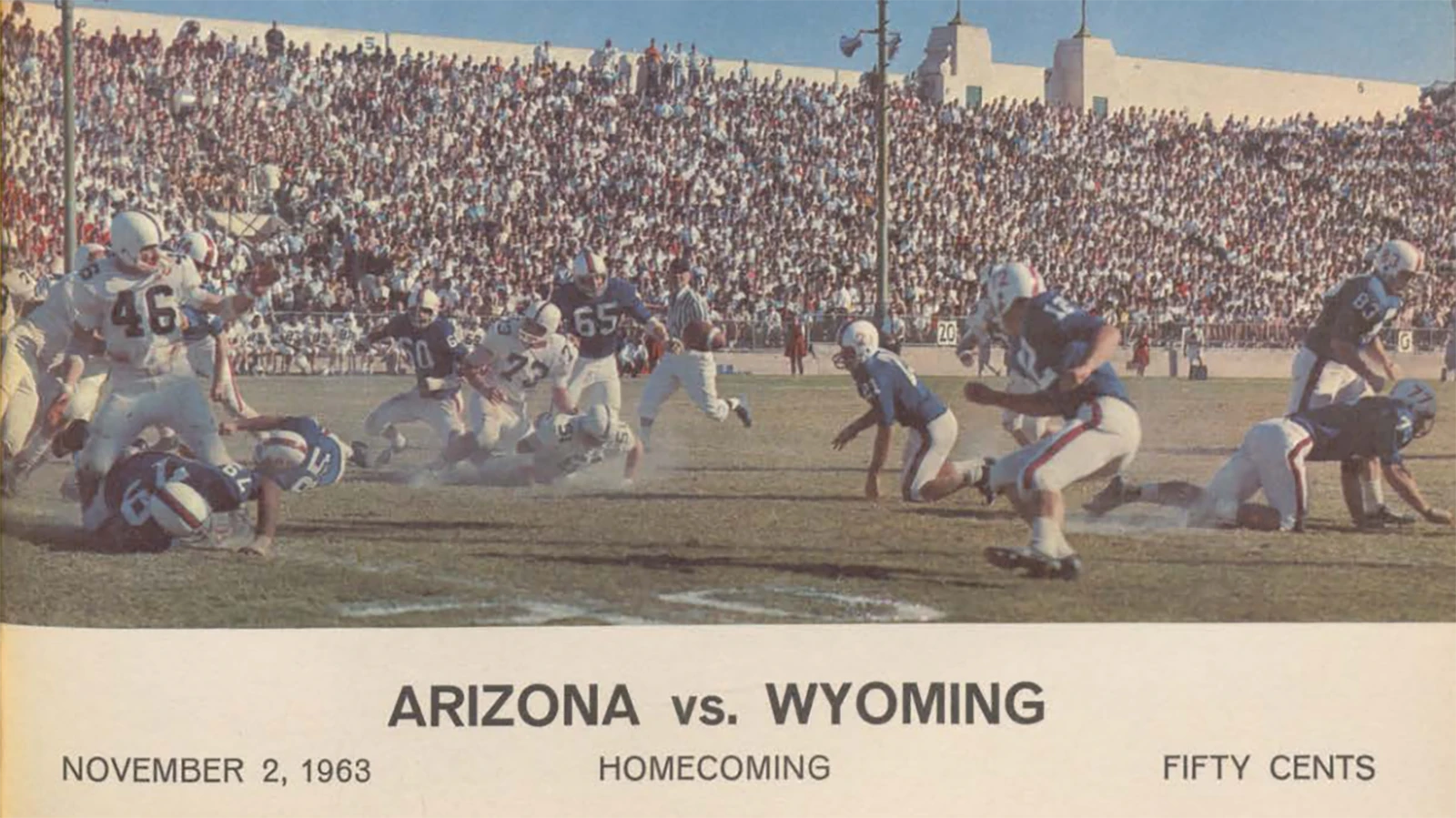
In his sophomore year, Nick Vuko played against Arizona as a Tailback, Number 23. The next year, he was unable to play because of a shoulder injury and by his senior year, Vuko was back on the field again — as a cheerleader. 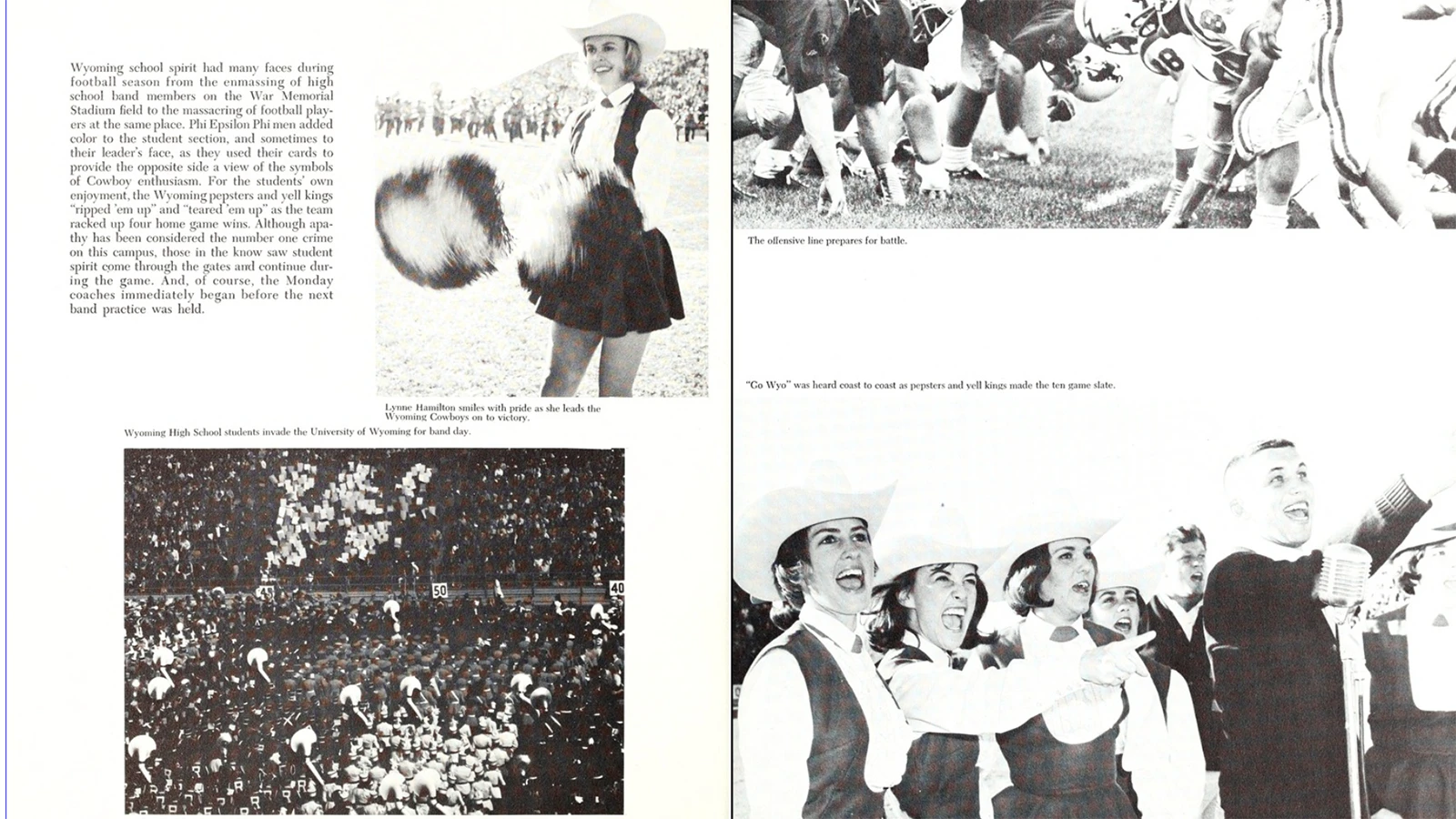
Wyoming won 38–14 against Texas Western on Oct. 16, 1965 before 16,742 fans. David Kolesky and Nick Vuko were there to cheer on the team to victory with chants like "Elevator, elevator! Give them the shaft!" (1966 WYO Yearbook)
The First Cheerleaders
Although cheerleading was dominated by women in 1965, it wasn’t always that way. In 1898, John Campbell cheered the University of Minnesota football team to victory after a losing streak had demoralized the team.
According to the school's archives, medical student Johnny Campbell and five other men were appointed as “yell leaders” who led cheers and “pepped” up the home crowd. The school chant “Rah! Rah! Rah! Ski-U-Mah! Hurrah! Minnesota! Hurrah!” helped boost morale and the Gophers rolled to a 17-6 victory over the Wildcats.
And cheerleading was officially born.
The Nation magazine wrote in 1911 that being a cheerleader was a prestigious honor for male students.
"The reputation of having been a valiant 'cheer-leader' is one of the most valuable things a boy can take away from college," The Nation wrote. "It ranks hardly second to that of having been a quarterback."
Notable cheerleaders included former presidents. Franklin Roosevelt led cheers at Harvard, Dwight Eisenhower at West Point, Ronald Reagan at Eureka College in Illinois and George W. Bush at Yale.
In 1923, the University of Minnesota allowed women to officially join the cheer team for the first time in the nation and tumbling and acrobatic routines were added.
Cheerleading remained a male-dominated activity until World War II, when teams filled their ranks with females when so many college-aged men were sent to fight overseas, according to the International Cheer Union.
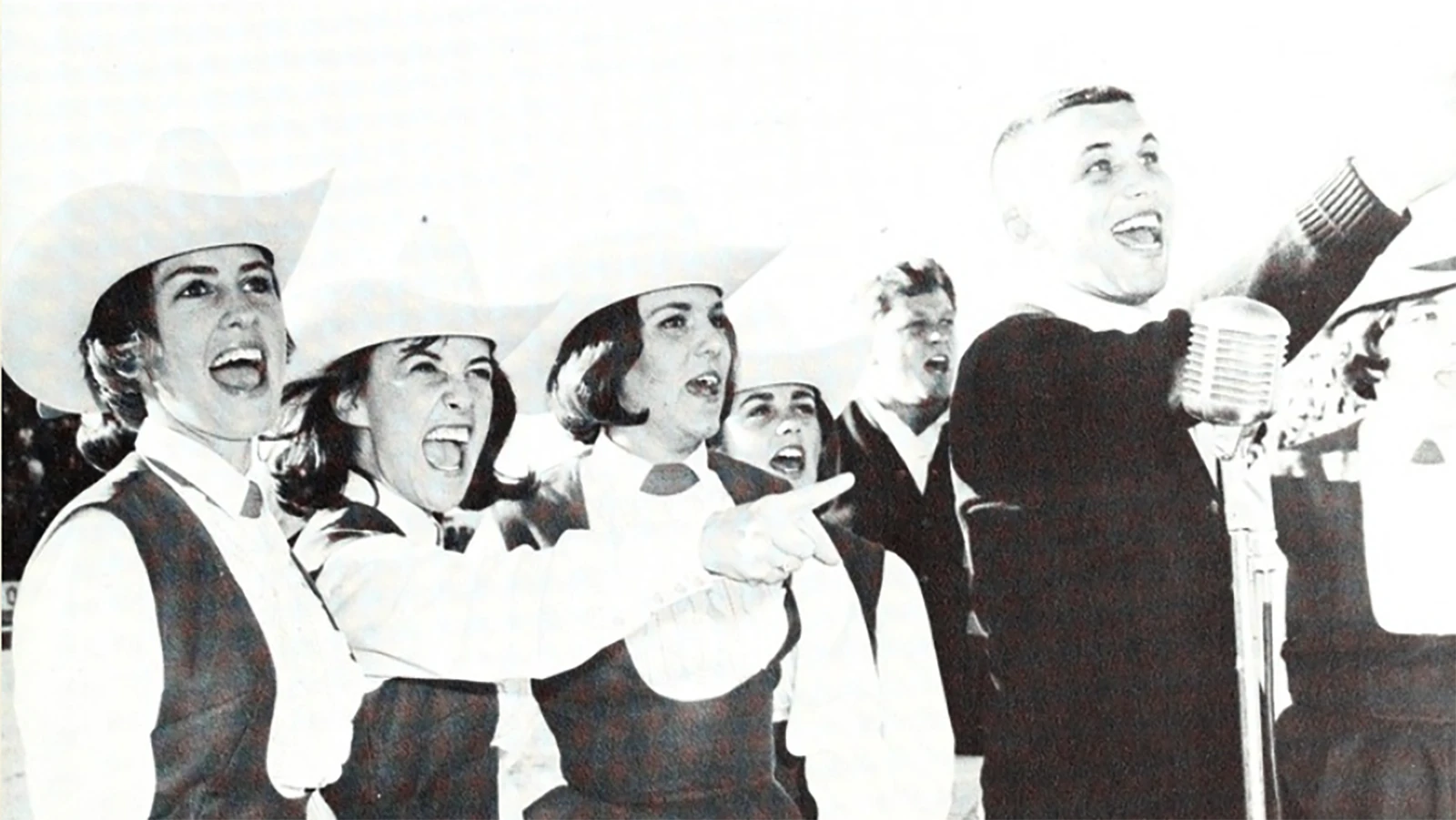
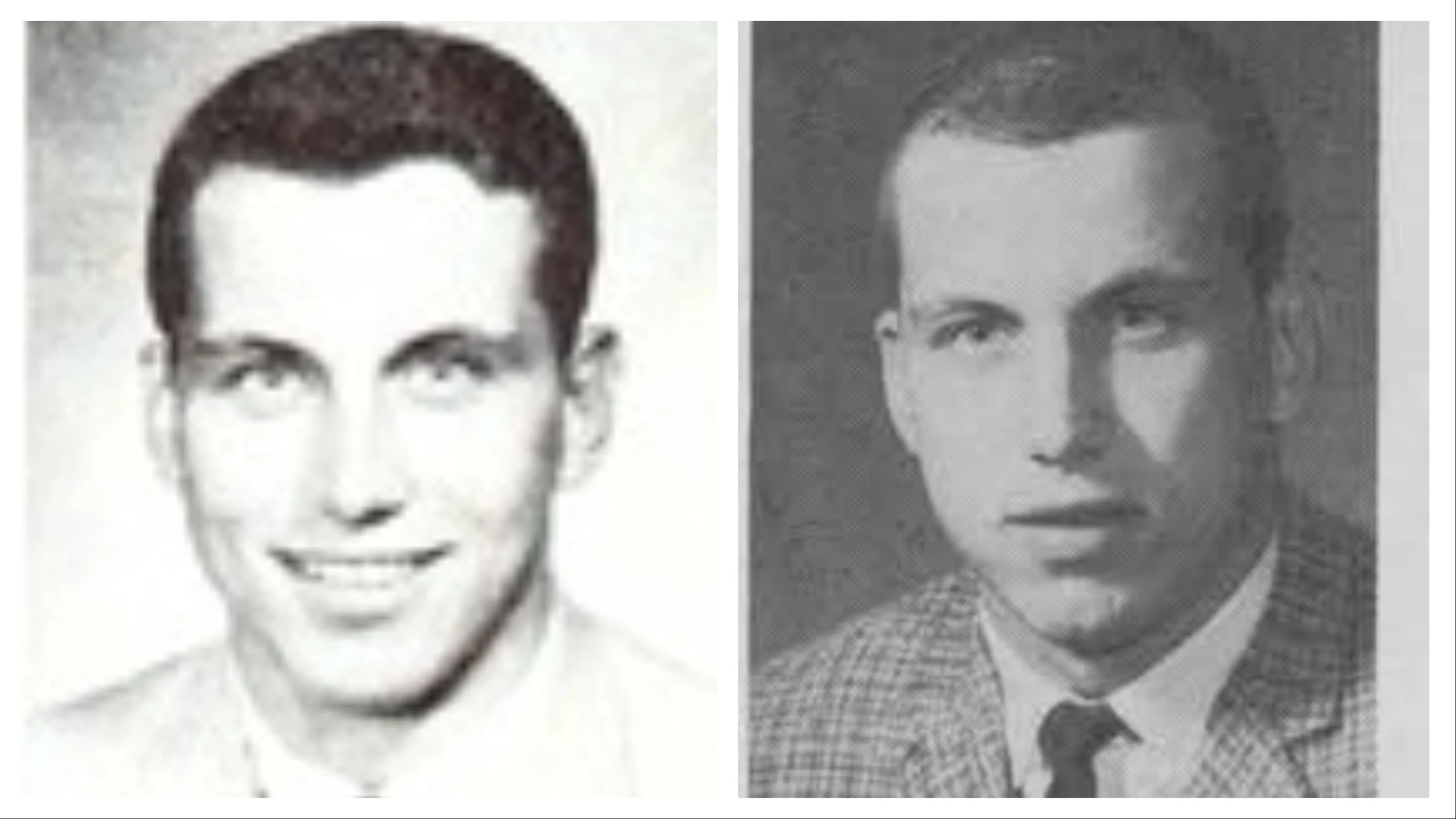
David Kolesky (back) and Nick Vuka (right) were recruited as male cheerleaders, known as "yell kings," to lead cheers, fight songs and chants. (1966 WYO Yearbook) 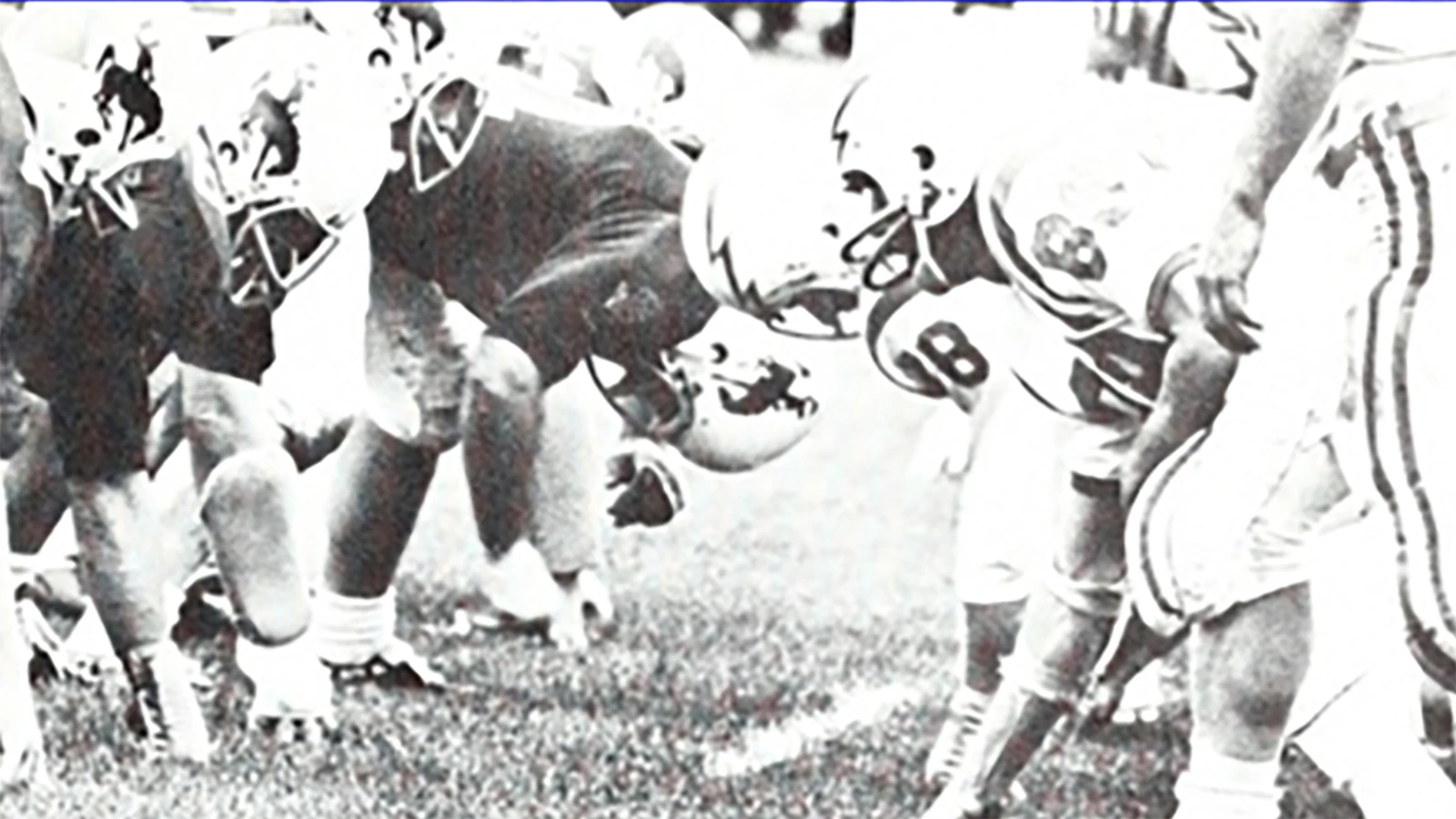
Wyoming won 38–14 against Texas Western on Oct. 16, 1965 before 16,742 fans. David Kolesky and Nick Vuko were there to cheer on the team to victory with chants like "Elevator, elevator! Give them the shaft!" (1966 WYO Yearbook) 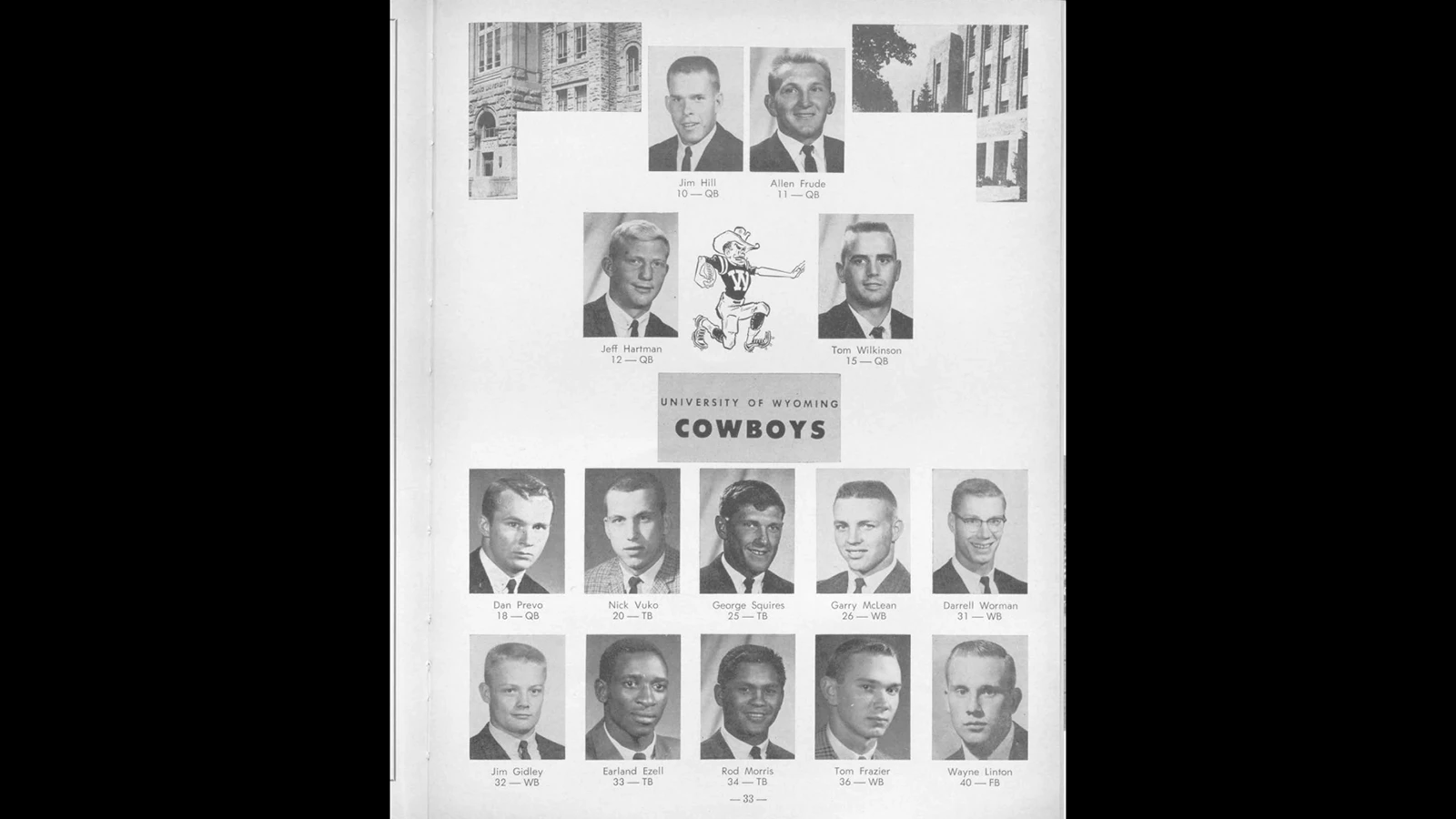
In his sophomore year, Nick Vuko played against Arizona as a Tailback, Number 23. The next year, he was unable to play because of a shoulder injury and by his senior year, Vuko was back on the field again — as a cheerleader.
Sidelined
Vuko said it had never occurred to him to become a yell king. His cheerleading career only occurred because of a combination of being underweight and an inter-squad scrimmage.
Vuko was listed as 6 feet, 182 pounds and said he had failed to gain the 10 pounds his coach had asked him to put on.
When he faced Rick Desmarais, a fullback, he knew it would be a tough match but he went in hard regardless.
“I came flying up to tackle him and put my head down to hit him, and just when I left my feet, he took a step and went the other way and caught my whole arm,” Vuko said. “It just ripped it.”
Vuko said his body went one way and his shoulder the other.
“It was tough. I was never in the stands, never in my life, since fifth grade,” Vuko said. “Every time I went to a football game, I was playing it.”
Most of Vuko’s friends were from the football team. He said they were the first to suggest him becoming a cheerleader to ‘fire it up.’
Vuko, a native of Gary, Indiana, knew just the person to cheer with him and during a study session at the Union he recruited Kolesky, who had come to Wyoming from Bethlehem, Pennsylvania, via Northwest College in Powell, to be the second "yell king."
“He was crazier than a hoot owl,” Vuko said. “We decided to do it together and have fun.”
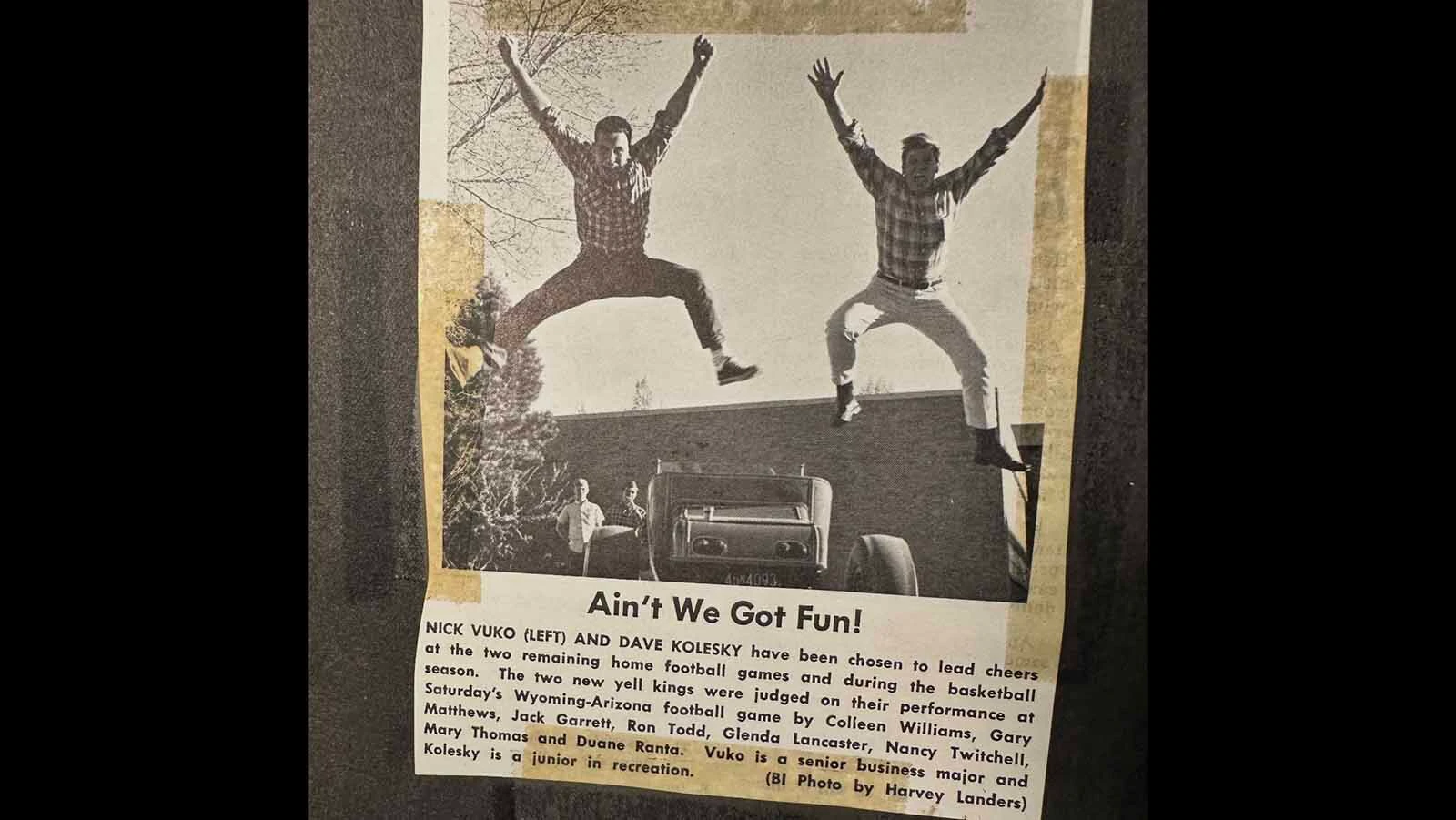
To celebrate being selected as the University of Wyoming's first male cheerleaders, known as "yell kings", David Kolesky and Nick Vuko jumped off Vuko's 1923 Model T street rod. (The Branding Iron) 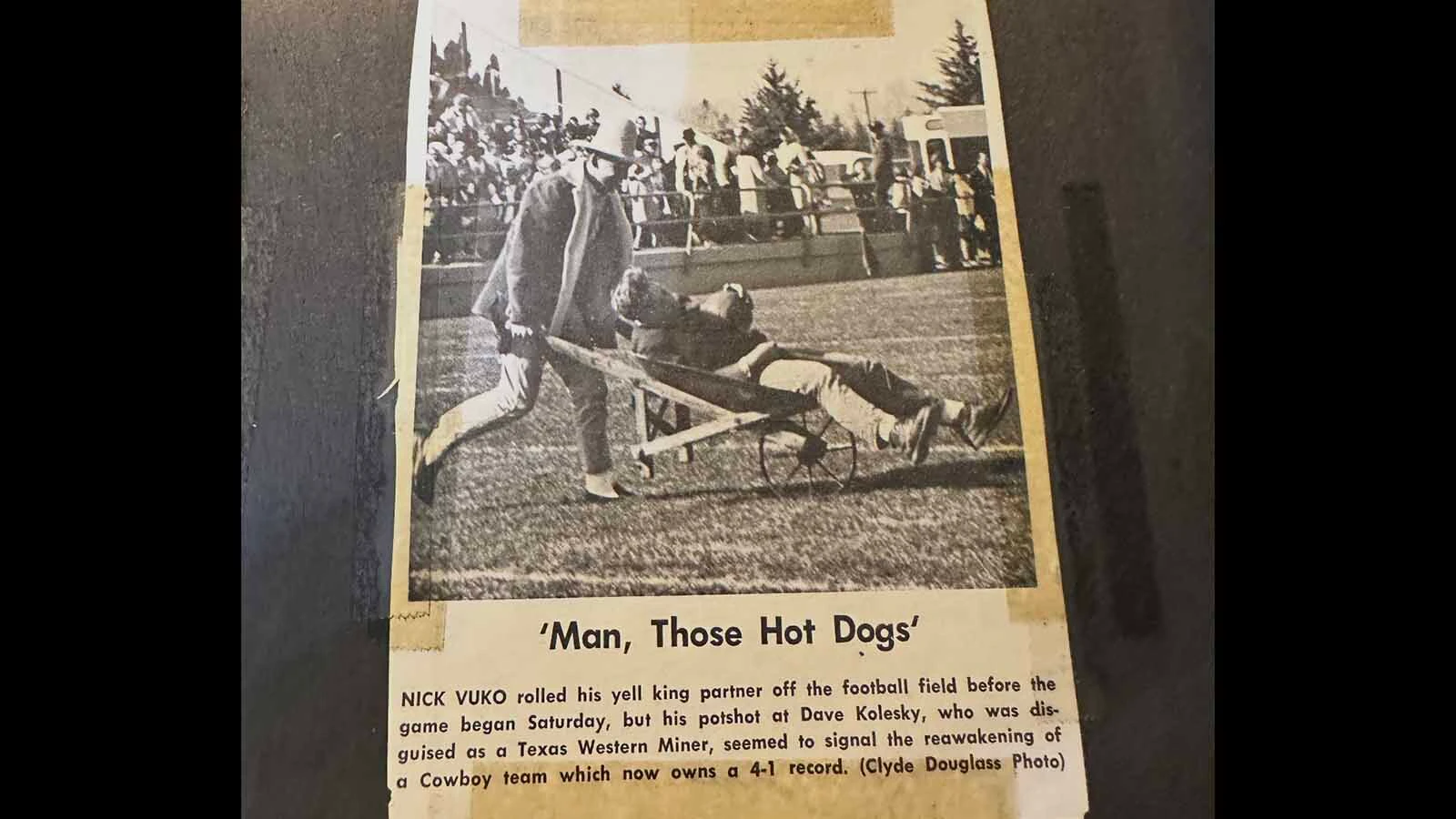
To win the honor of being a male cheerleader, known as a "yell king", for the University of Wyoming, David Kolesky and Nick Vuko had to audition during a game. At the home game versus Texas Western on Oct. 16, 1965, Kolesky came up with a skit to mock their opponents the Miners. (October 1965 Branding Iron)
Yell Kings
After getting permission from the activities director, the two students had to be voted to the squad. They auditioned at the Wyoming-Arizona game and got the job as Wyoming’s first male cheerleaders.
For their next game, the new yell kings performed a skit, mocking their opponents, Texas Western. It was Oct. 16, 1965, when Vuko donned a big white cowboy hat and Kolesky came on the field disguised as a Texas Western Miner. Most of their skit has been forgotten but it was a success.
The Branding Iron announced their performance cheering on the team “reawakened the Cowboy team” and Wyoming won 38–14 before nearly 17,000 fans.
“We did a lot of dumb things,” Vuko said. “It was funny.”
One of Kolesky’s favorite memories was to yell up at Chuck, the band leader, to play the fight song.
Although not officially the song until 2003, the 1912 song “Ragtime Cowboy Joe had already been played on the field for years.
“He's a high-falootin', rootin, tootin', son of a gun from ol' Wyoming, Ragtime Cowboy,” the song would ring out. “Talk about your Cowboy, Ragtime Cowboy Joe."
In 1965, the Pistol Pete mascot had not yet made its appearance. Instead, Cowboy Joe trotted around the field to celebrate each victory.
After Cowboy touchdowns, his student handlers took him on a celebratory lap while the yell kings helped fire up the crowd. It was the last year the original Cowboy Joe performed before he was replaced by Cowboy Joe II.
Vietnam
Wyoming played USC at the Los Angeles Memorial Coliseum on Nov. 27, 1965. The 1966 WYO yearbook records that game as the Cowboys' season finale.
“We finished with our last game at the Coliseum against University of Southern California, and they whooped Wyoming 56 to 6,” Kolesky said. “That was the end of our cheerleading because we didn't do it for basketball.”
Kolesky wasn’t doing well in his classes and the dean asked him to go away and go grow up. It was the era of Vietnam and Kolesky’s number had been pulled.
“I got drafted, and then they didn't want me in the Army,” Kolesky said. “When I was walking to the Student Union one day, there was a Peace Corps office there, so I took their test.”
The Peace Corps wanted Kolesky, so he served in St. Lucia and Barbados. After “growing up”, Kolesky returned to Wyoming and graduated with the class of 1970.
Meanwhile, Vuko had a year to go in engineering when his own number was called for Vietnam. He joined the Navy and, after getting out, went to University of Colorado to finish his engineering.
Vuko is president of Walker Tire Co. in Lincoln, Nebraska. Kolesky worked in the food and beverage industry in Alaska for much of his career and now lives in Sandy, Utah.
Vuko looked back at his cheerleading days as some of the most fun he's had, thanks to Kolesky and his antics.
“The people in the stands were involved in the games and we all knew each other," Vuka said. “It was a great college experience for me.”
The two students had left such an impression that by March 1969, the Branding Iron reported that ASUW had passed a bill requiring a minimum of two male cheerleaders on the UW team to continue the tradition started by Vuko and Kolesky.
Jackie Dorothy can be reached at jackie@cowboystatedaily.com.


