
The name of Ephraim Ashburn has not come down through history like that of another Battle of Platte Bridge Station casualty — Lt. Caspar Collins.
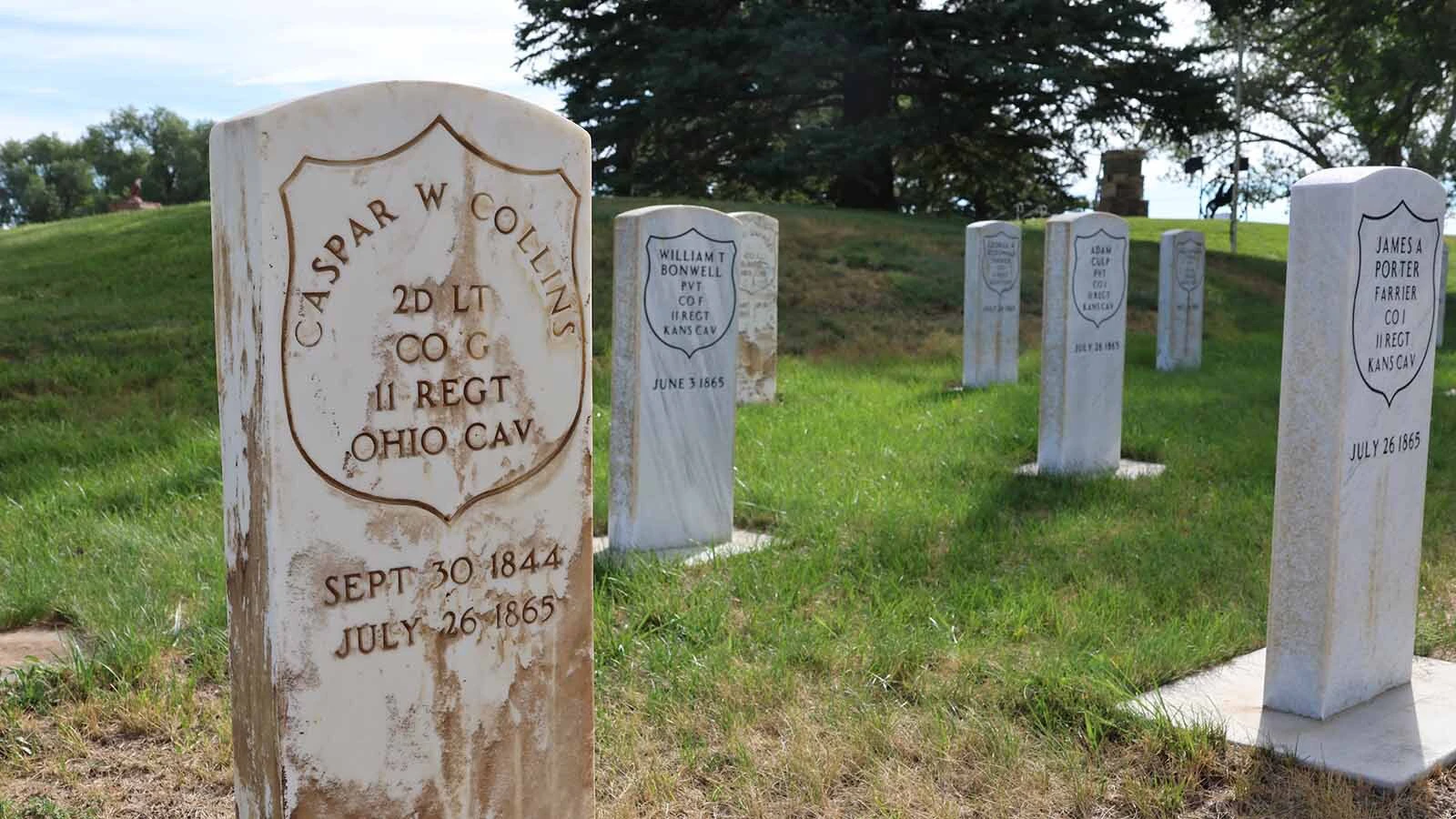
Collins has a fort, city, and museum named after him. But now both men have their names honored at Fort Caspar Museum in a commemorative cemetery.
The final resting place of 61 soldiers who gave their lives while serving at Platte Bridge Station, which became Fort Caspar from 1862 to 1867, remain mostly unknown.
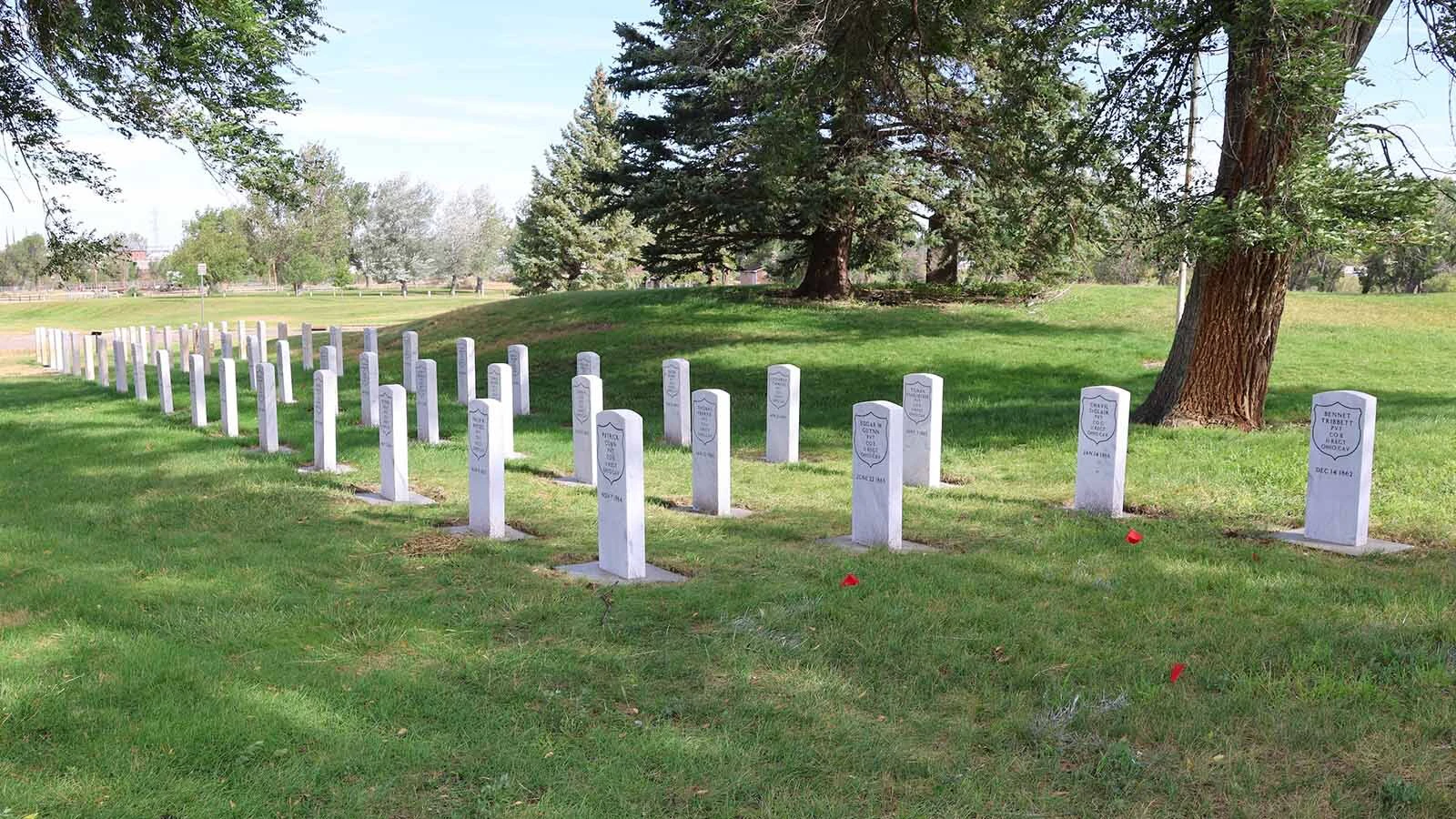
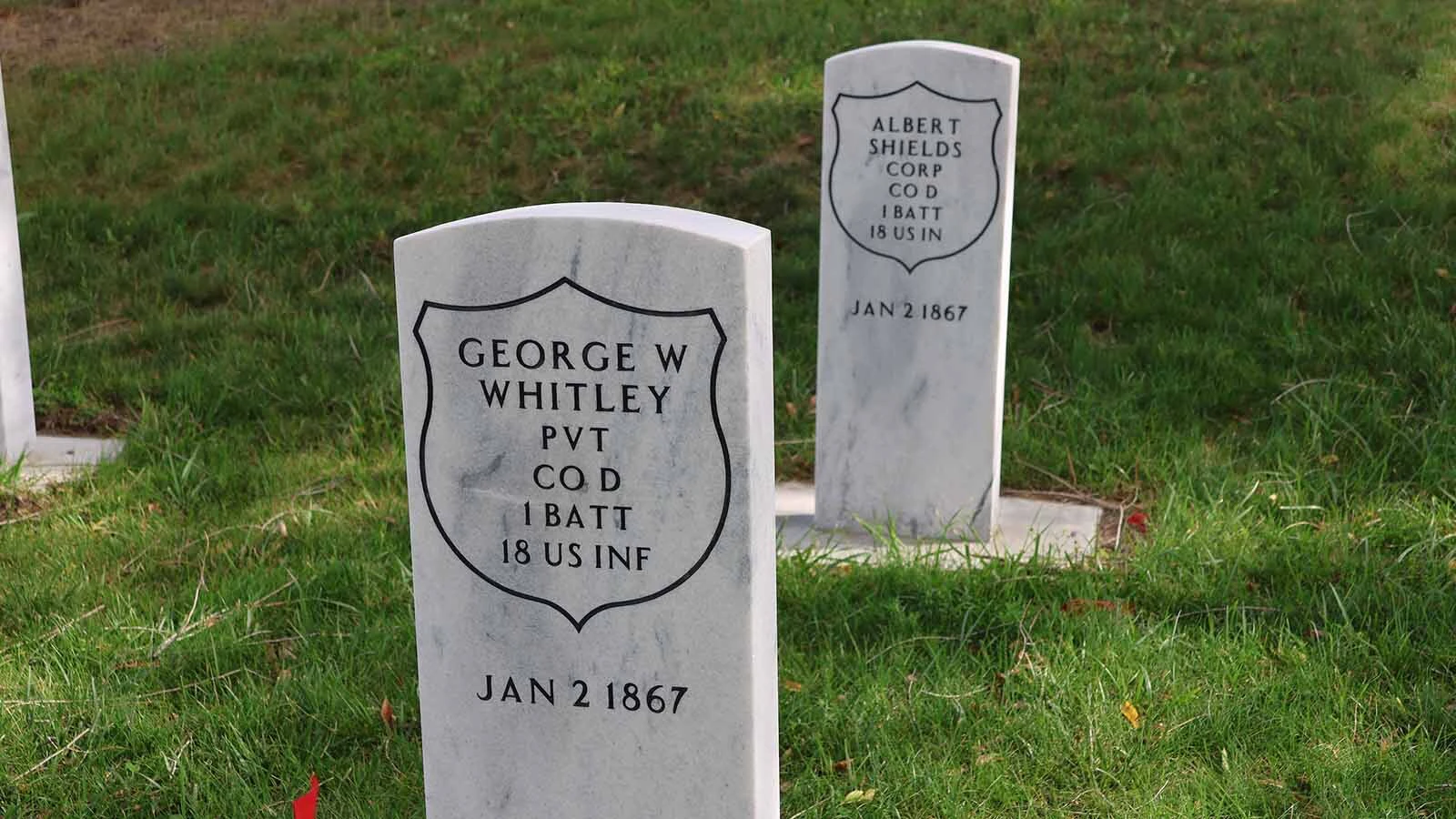
But a four-year project by Casper historian Johanna Wickman to determine a complete list of those killed in action or from disease while serving in what is now central Wyoming and providing each a commemorative marble headstone at Fort Caspar is nearing the finish line.
Wickman’s “Lest We Forget” volunteer effort began in July 2022 after being spurred on by the 11 headstones placed on the grounds in 1970 by former museum director Bill Judge.
Those tombstones recognized 11 fallen soldiers from the 11th Ohio Cavalry as well as Collins, who died in the Battle of Platte Bridge and for whom the military post and later the present-day city was named.
“We kind of think what (Judge) was doing was 11 soldiers from the 11th Ohio as kind of symbolic sort of thing,” Wickman said.
A member of the Fort Caspar Museum Association board in 2022, Wickman said she knew the casualty list exceeded those 11 graves.
Her research showed that the first headstone installed in 1970 was for David Umphlet, who served in the 11th Ohio Cavalry and died on March 22, 1866. It was installed because his family obtained a headstone from the Veterans Administration and wanted it placed at Fort Caspar.
Wickman found Judge had applications to the VA for more headstones that were never approved.
“It could be he was trying to get more and just stopped at 11,” she said.
Her initial research dug into all the various state and national military units sent to the region while Platte Bridge Station troops operated to protect telegraph lines connecting the coasts as well as settlers heading west on the Oregon, California and Mormon trails.
In addition to the 11th Ohio Cavalry, Wickman found soldiers representing the 11th Kansas Cavalry, Sixth West Virginia Cavalry, Sixth Michigan Cavalry, Seventh Iowa Cavalry and U.S. Army infantry soldiers from the Sixth and 18th U.S. Infantry all had boots on the ground in the five-year period on which she was focusing.
More Headstones
Wickman said she approached former Fort Caspar Museum Director Rick Young about getting more headstones for the other soldiers. He gave her the green light to raise funds for the headstones.
“I thought I was looking at maybe another 15 or 20 headstones,” she said.
Instead, four years and thousands of hours later she has the total number needed at 61, 50 more than the original 11 set in place by Judge. When Wickman started the project there was no casualty list for those who served in the region during that era.
She has now created one.
Among them was Ashburn, a member of the Sixth West Virginia Cavalry and who as a Union soldier was captured April 8, 1964, in Winchester, Virginia, and sent to the infamous Confederate prison at Andersonville, Georgia. Records show Ashburn was released in a prisoner swap in December 1864.
In a letter home written on July 1, 1865, as his unit arrived in Leavenworth, Kansas, he spoke of a riverboat trip where the ship got caught on a snag and horses were tossed off. He also mentioned a train accident that killed four or five soldiers and wounded others.
“We will not stay here long, we are going out on the plans to fight the Indians this side of California,” he wrote.
Most Civil War enlistments were for three years or for the duration of the war, Wickman said. But men like Ashburn, though the war ended, still found themselves subject to the whims of the government and subject to court martial, losing a pension or worse if they tried to go home.
Scurvy Death
“Why did Ephraim Ashburn die out here in December 1865?" Wickman said. “(He) should have been home … it became a situation where the government was like, ‘Well, we still need you,’ so (they’re) out here and they really didn’t have a choice about it.”
Instead of dying in battle, Ashburn, like many in the severe winter of 1865 when 66 developed scurvy, and died of the disease. Scurvy is caused by a lack of Vitamin C in the diet and typically leads to gum disease and death from bleeding or infection.
“There were a lot of guys who were sick with scurvy, struggling to get supplied and that kind of thing,” she said.
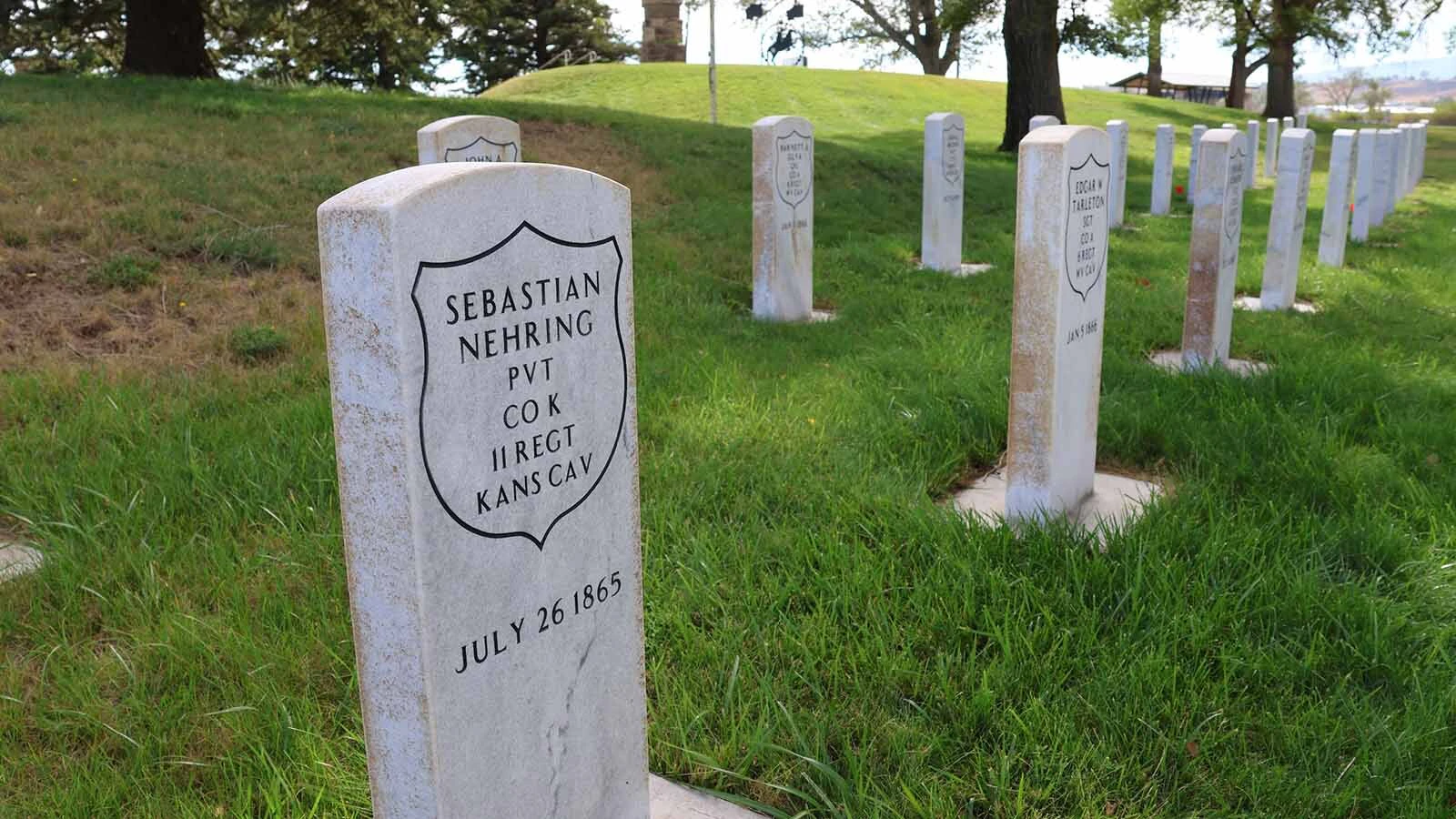
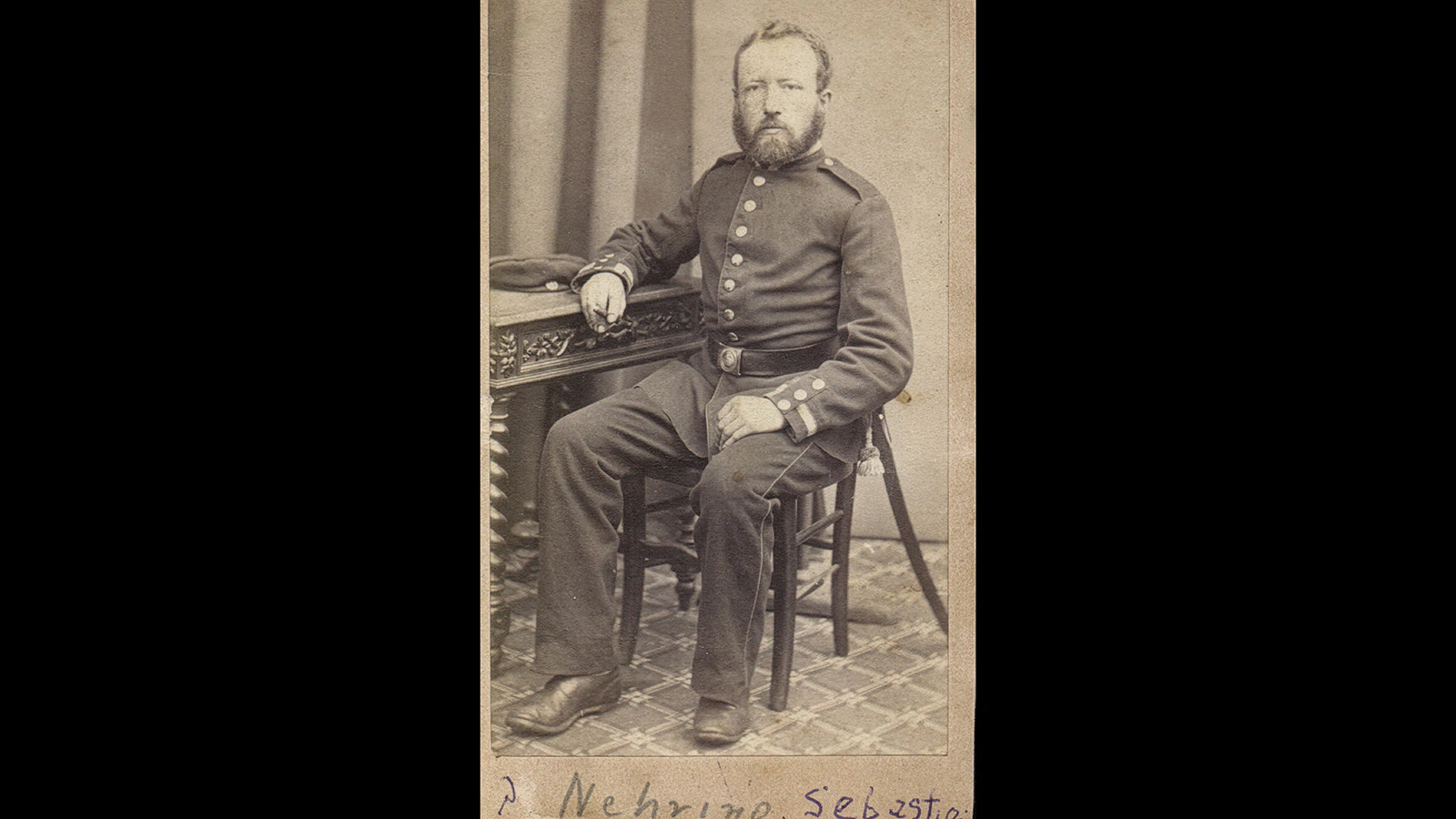
Another name on a headstone is Sebastian Nehring, who was in the 11th Kansas Cavalry and died on July 26, 1865, at the Battle of Platte Bridge Station with Caspar Collins and others.
Wickman said Nehring was a German immigrant and in his 40s, much older than most troops. He had served in the Prussian Army and after immigrating to Kansas and struggling to provide for his family on a farm, so he joined the army.
“When Caspar Collins gave the order to retreat and they are calling ‘retreat’ from the bridge for the guys to come back … he didn’t hear it,” Wickman said. “I think because his primary language is German, it didn’t register. And so one of his dear friends, Henry Grimm, who is also 11th Kansas and also from Germany, hollered at him in German and when Henry did that he was hit in the back with three arrows.”
Somehow Grimm survived the arrows. But Grimm family members told Wickman the story he passed down was that his friend Nehring was hung up trying to do something with his horse and because of that delay was killed.
Wickman said her research showed some of the fatalities involved former Confederate soldiers who were in prison camps in the north and given the opportunity to swear an oath of allegiance and join a U.S. Army unit being sent to the West.
Confederate Soldiers
She also found a couple of former Confederate soldiers who died in the region but who gave fake names, enlisted in the U.S. Army infantry and once on site started planning mutinies.
“They were actually executed,” she said. “So those guys did not get a headstone.”
Most of the 50 additional headstones have been installed this summer by Casper Monument. The remaining will go in soon. Funds have been raised through a couple of foundations as well as individual donations at the museum.
Wickman said a ceremony is planned for June 19, 2027, to honor all 61 men and will include a full military honors service and folded flag presentations for any descendants at the ceremony.
In May, the museum association received a grant from the Natrona County Recreation Joint Powers Board to fund outdoor color signs that will be placed on the museum ground. They will provide visitor information on the various units that served the Platte Bridge Station and beyond.
Book Planned
The grant is also providing funds for a book Wickman is writing that will provide a short biography on all of the soldiers on the headstones. She hopes to connect with other descendants to learn more about their story before the ceremony next year and include the information in the book.
Wickman said her efforts to uncover the names involved searches through regimental records to find out where the soldiers were, who died at what location, when they died and any other additional information.
Inconsistency with how soldiers' names were spelled and conflicting death dates meant digging deeper to uncover the truth. Names on the headstones will reflect the spelling the men had on regimental records.
The fact that many of the soldiers were immigrants made the research more difficult because they might have joined the military shortly after arriving on American shores without any family ties or previous home address or location.
Among the soldiers who are getting headstones is one who died in the Red Buttes fight July 26, 1965, the same day as the Battle of Platte Bridge.
Wickman said when commemorative headstones were placed on state land outside of Casper for those involved in the Red Buttes battle in 1920, Edwin Summers was left out. He will get a headstone at the fort.
The Red Buttes cemetery is not accessible to the public and is on state land, Wickman said.
“They didn’t want to put the headstones where the battle happened, and so they deliberately put it out in the middle of nowhere,” she said. “Which is unfortunate because it is still in the middle of nowhere.”
A list of the casualty list can be found at the Fort Casper Museum Association's website fortcaspar.org/cemetery.
The headstone project also involves a walkway to the commemorative cemetery. Bricks are available to purchase and help cover costs of that project.
Wickman said her reward for the project has been making connections with a few of the soldiers’ descendants and witnessing their appreciation for the headstones and effort to remember those who served the region.
“If we don’t honor these guys from the Civil War era, what does that mean for our World War II vets 75 years from now or our Global War on Terror vets 150 years from now?” Wickman said. “Will they get neglected, or will people say the same thing? I think it’s reassuring for them, too.”
Dale Killingbeck can be reached at dale@cowboystatedaily.com.


