
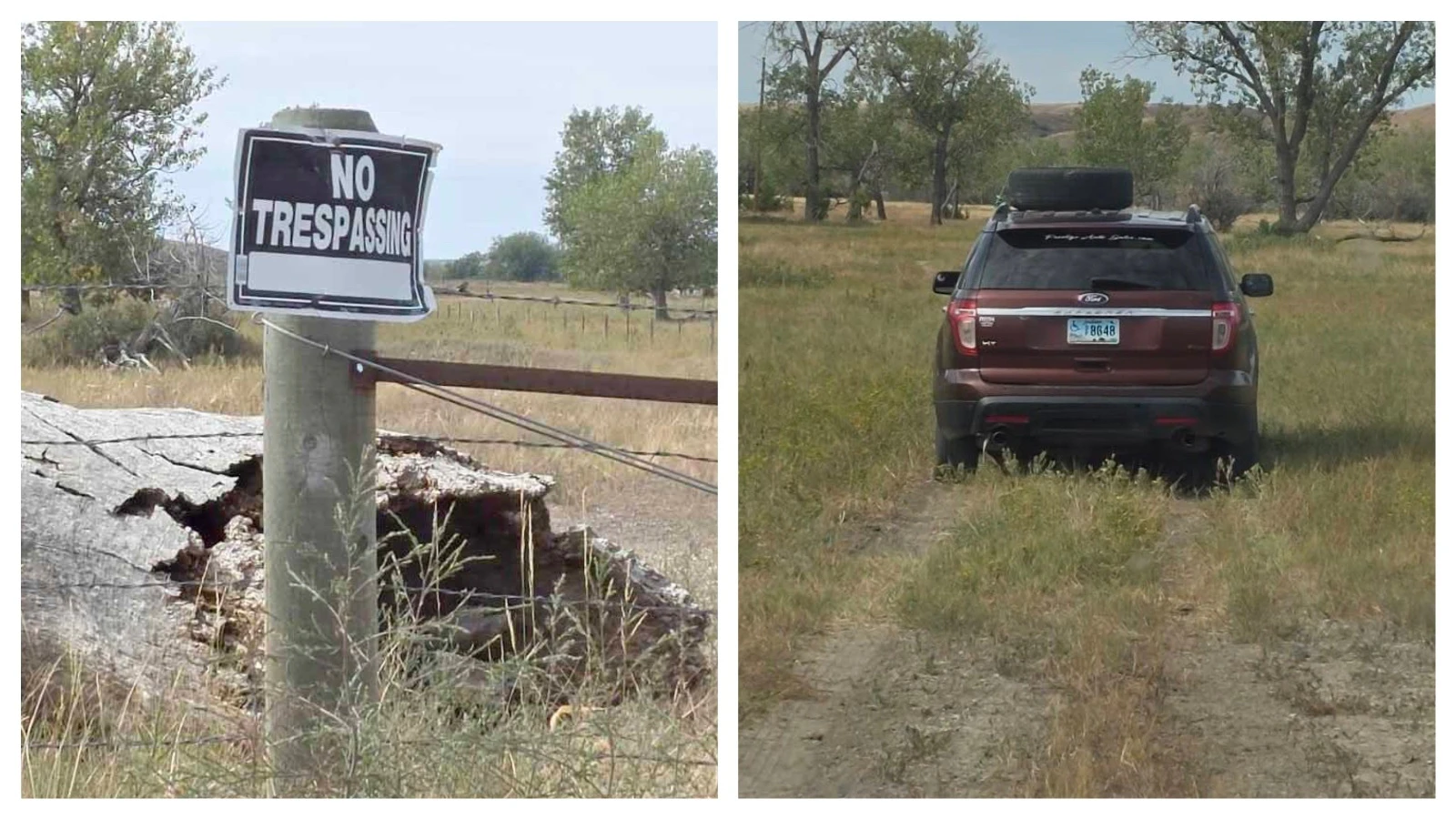
The cows were getting out.
Rancher Ashley Evans knew something was wrong when neighbors on two sides of her ranch southwest of Wheatland started calling to tell her that gates were open and her calves were wandering.
She was certain she had closed them.
Then she found the culprit.
A big rig she had never seen was stuck in the mud on her property.
The driver, she learned, had an explanation.
Google Maps had told him a road was there.
And, as luck would have it, the route through Evans’ pasture was about 12 miles shorter than the route he had been traveling.
Evans has heard variations of that excuse before.
The problem, she said, is that the “road” is actually a two-track running through the middle of private property.
She sometimes wants to ask trespassers a simple question:
What public road have you been on in the last four decades that required you to open a gate?
Instead, she recalled saying something like, “Well, hell, bud, take ’er on through, I guess. But next time, shut the damn gate.”
For Wyoming ranchers, the difference between a road and a two-track, or between public and private land, isn't merely a matter of semantics.
A gate left open can mean cattle scattered across miles of country.
A hunter crossing a property line can create a confrontation.
And a vehicle that takes a shortcut across private ground can turn a quiet afternoon into a recovery operation.
Increasingly, some Wyoming landowners say, they're encountering people who seem to believe that if they have a good enough reason for being somewhere, they have a right to be there.
They don't.
Wyoming law generally makes it criminal trespass to enter or remain on another person's land knowing you aren't authorized to do so, or after being told to leave.
And when it comes to hunting, fishing, trapping or collecting antlers, state law specifically prohibits entering, traveling through or returning across private property without permission.
But knowing where that line is can be harder than it sounds.
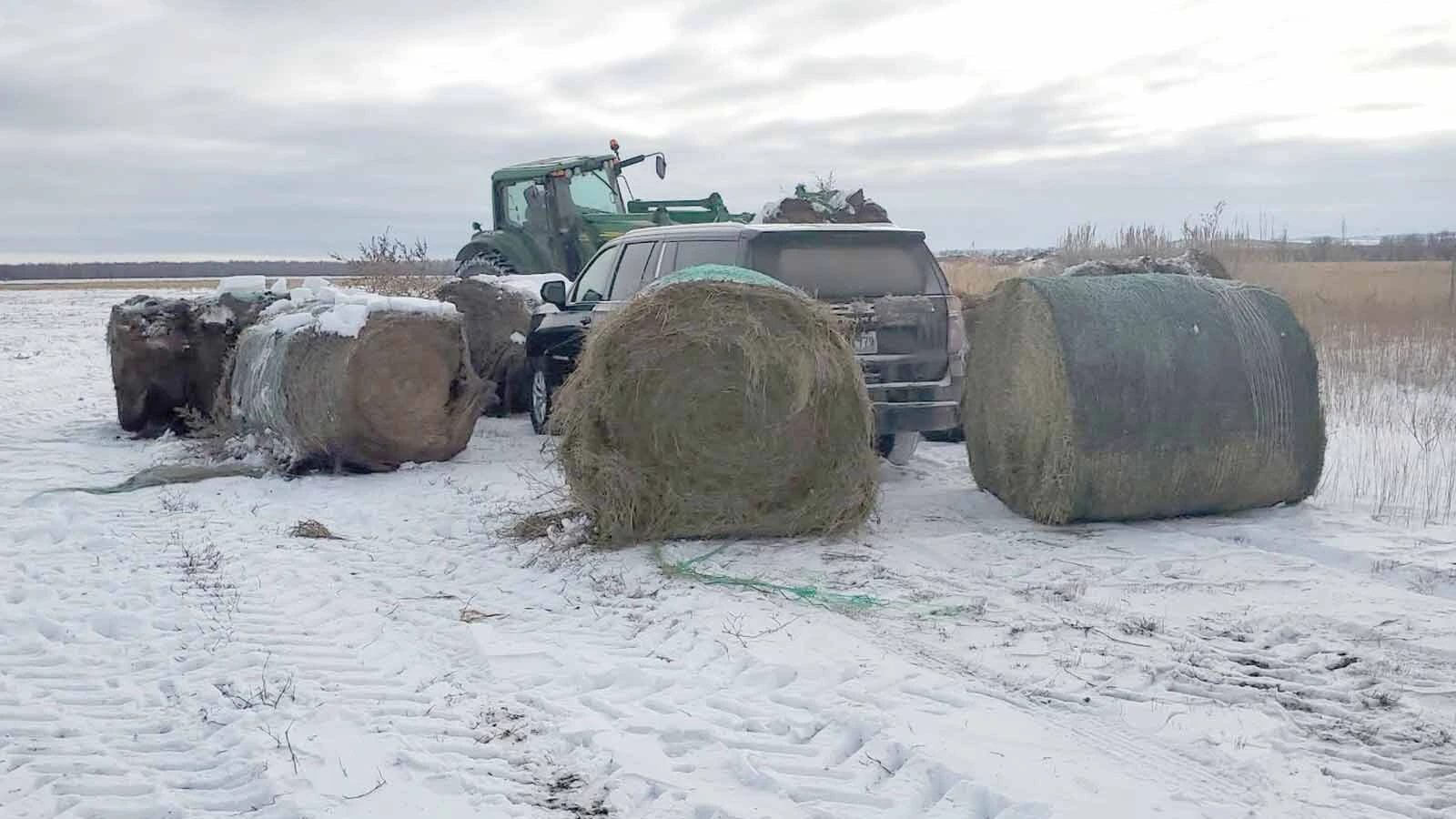
Montana rancher Shawn Bilquist took matters into his own hands when he found a truck he didn't recognize parked on his property: He surrounded the truck with hay bales and left if up to the owner to figure out how to get out. (Shawn Bilquist) 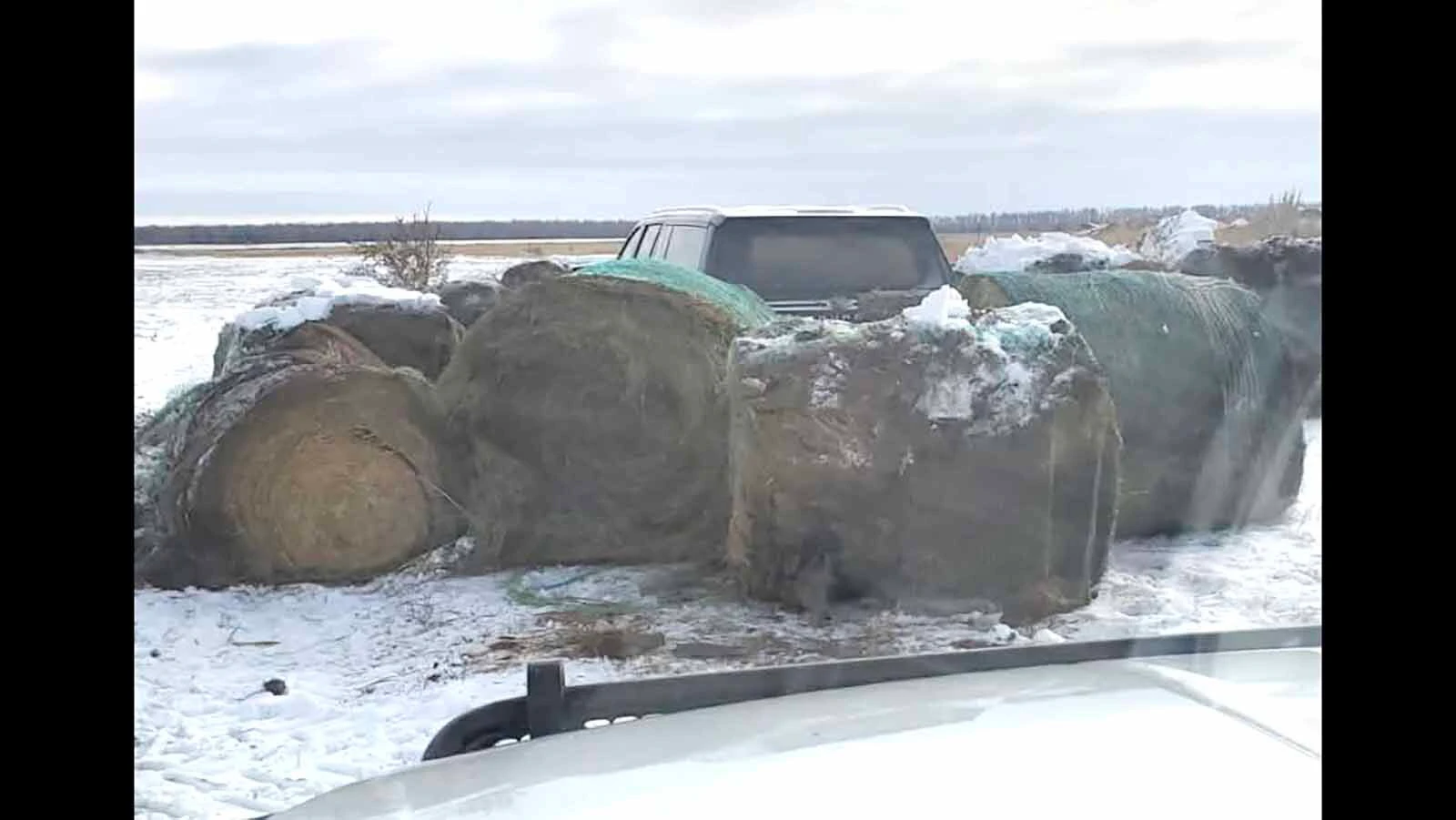
Montana rancher Shawn Bilquist took matters into his own hands when he found a truck he didn't recognize parked on his property: He surrounded the truck with hay bales and left if up to the owner to figure out how to get out. (Shawn Bilquist)
‘It’s Getting Worse And Worse’
Shane Farella, who ranches about 60,000 acres near Newcastle, estimates he encounters 15 to 20 trespassers a year.
His family has been on the property since 1874 and today operates a cow-calf operation on a mixture of private land and public lease ground.
Farella said many of the trespassers arrive on ATVs or e-bikes, and hunting season is particularly busy.
Some are hunting the property line, he said. Others might be looking for game after having little luck on public ground or as the season winds down.
“They’re either hunting the line or they think they’re not going to get caught,” Farella told Cowboy State Daily.
The growing divide over public and private land worries him.
“I think you’re going to see it get worse and worse,” he said.
And sometimes, the problem isn't that people don't have the technology to figure out where they are.
It's that they don't use it.
“You’ve got to run digital onX and pay attention,” Farella said.
onX is a digital mapping and GPS platform designed for outdoor recreation, best known for showing private and public land boundaries.
'Open Gate Is Not An Invitation'
Carrie Schell, a South Dakota rancher, puts the rule even more simply:
“An open gate is not an invitation.”
That is a lesson she recently found herself explaining after spotting a vehicle driving across her ranch north of Rapid City.
Schell and her husband, Kyle, were heading into town when they noticed the vehicle.
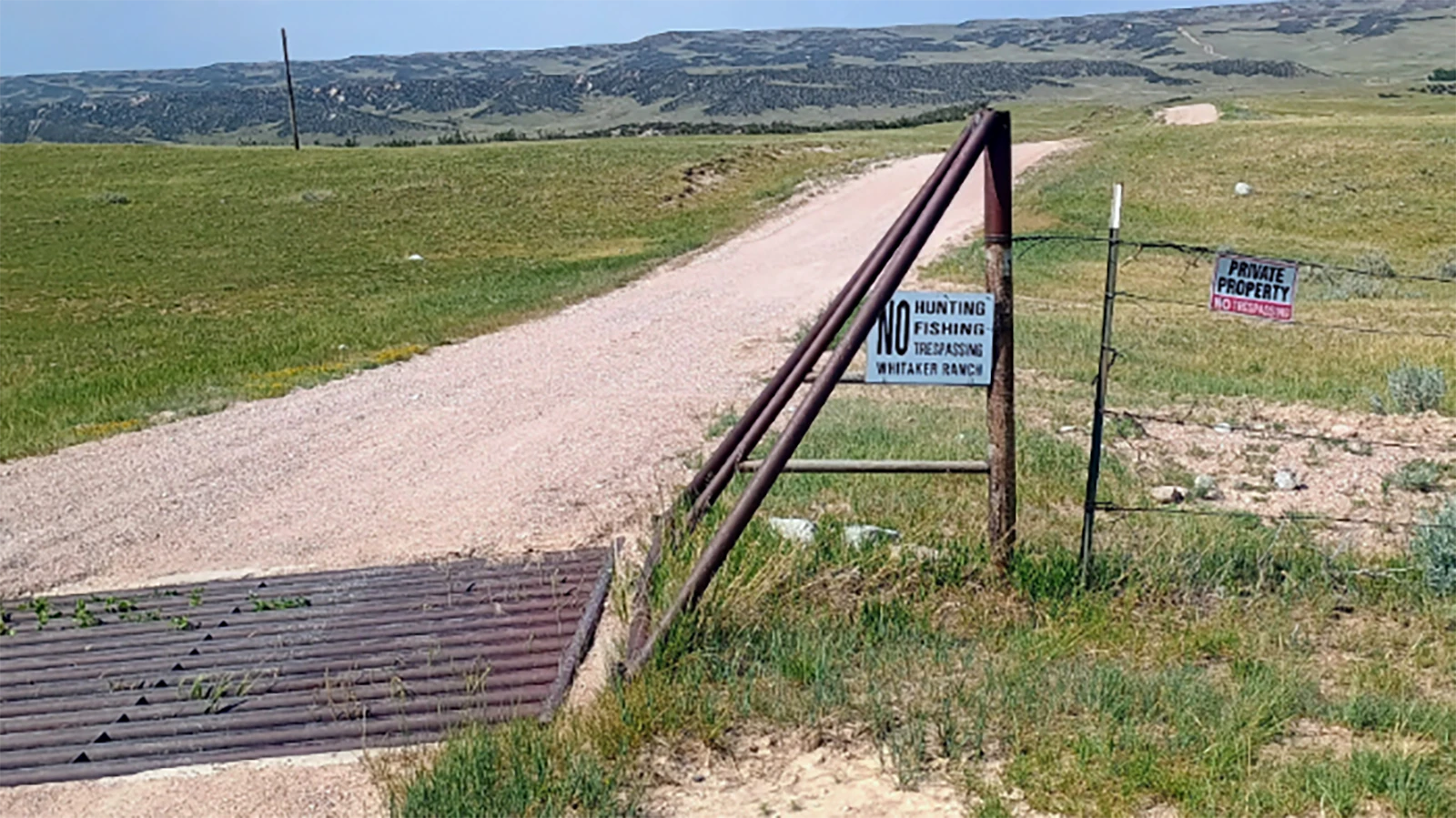
When they stopped the driver, his explanation was that the gates were open and there were no signs.
Schell wasn't buying it.
Her ranch borders Interstate 90, and the gates along the I-90 corridor are required to remain closed, she said. Her cattle were in the pasture, and the pasture was closed.
“Casually driving through private pastureland is not exactly what we would consider a scenic Sunday drive,” Schell said.
She later shared the encounter on social media.
Evans, who knows the territory well, shared her own Google Maps story with Schell.
And soon the comments section began filling with other ranchers' tales of people who apparently believed they had discovered a new category of public road: Wherever they happened to find themselves driving.
Excuses, excuses
“You hear the dumbest excuses in the world,” Farella said.
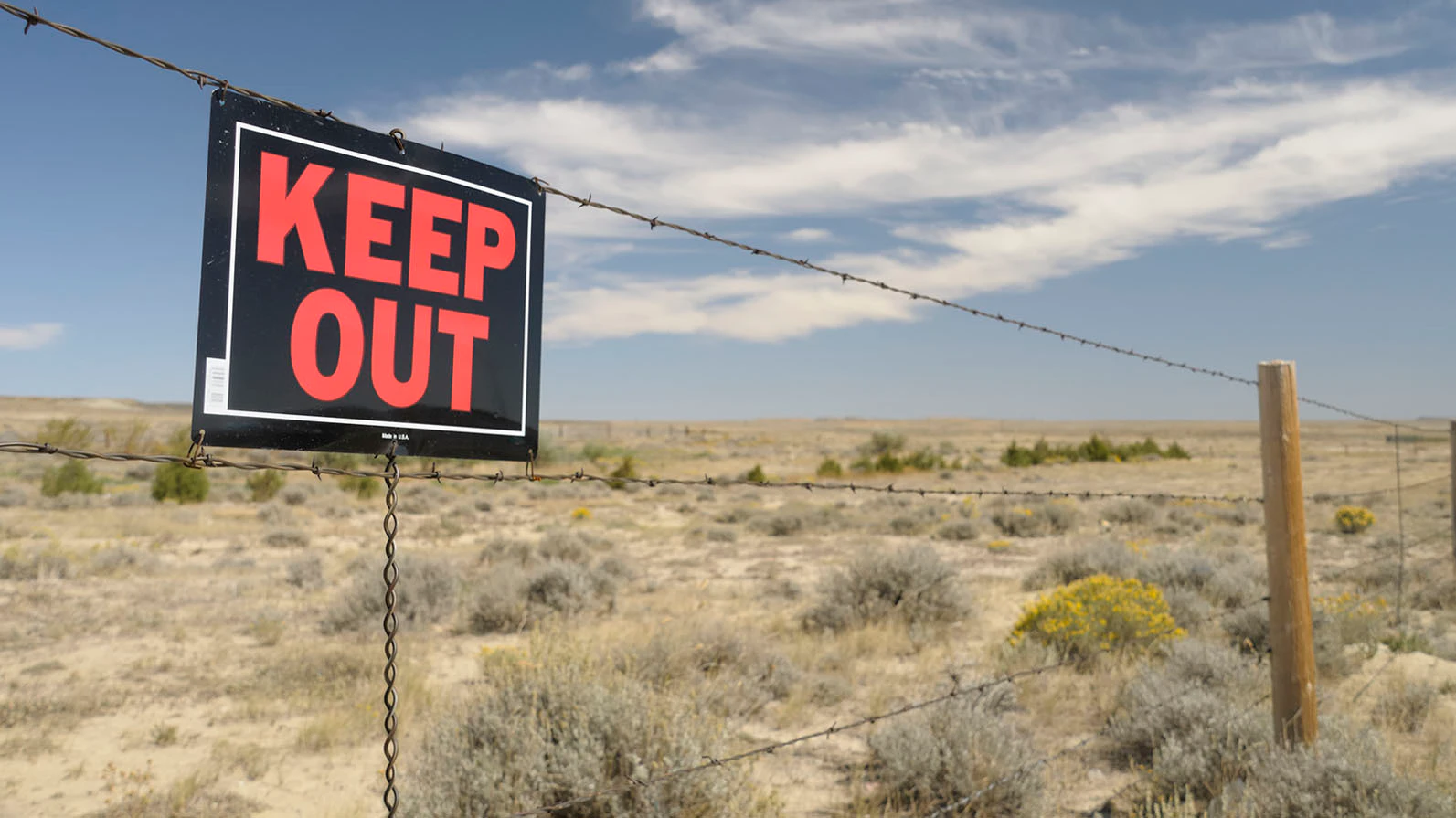
One of the most common: “We didn’t see any signs.”
Farella said he has heard it enough times to know what often comes next.
“They miss signs. They go around gates. They don’t close gates,” he said.
Sometimes technology gets the blame.
Evans said she has encountered truckers, tourists and others who wind up on private property because a mapping application has directed them onto what appears to be a road.
Wyoming presents another challenge: Cell service can be spotty enough that a person who realizes they've made a wrong turn might not be able to immediately pull up another map or call for help.
“Truthfully, I’m all for bringing back paper maps and a shotgun-seat navigator,” Evans told Cowboy State Daily.
Even mapping companies caution users not to treat digital maps as the final word on property boundaries.
On X, for example, tells users they are responsible for confirming information and visually verifying boundaries, roads and trails. Its terms also state that its maps are not legal surveys and that users should consult official records when a definitive description of real property is needed.
The company also tells users never to cross onto private property without express permission.
For hunters in Wyoming, the responsibility is especially clear.
The Wyoming Game and Fish Department tells hunters they must have landowner permission to hunt private property, and public land also must be legally accessible. Crossing private property to reach public or state land requires permission from the landowner.
In other words, a map can help you figure out where you are.
It doesn't give you permission to be there.
What Happens When Caught?
Farella said he is more forgiving than some landowners.
His response depends partly on the trespasser's age and, perhaps more importantly, attitude.
If someone genuinely doesn't understand how to read a digital map, Farella said he will take the time to explain where they can and cannot go.
He recently encountered two young men who had shot a bull elk and were driving across his property to retrieve it.
Landowners generally have discretion regarding whether someone can enter their property to retrieve a harvested animal, Farella said.
He usually lets them retrieve it.
“I usually don’t deny people of retrieving their animal,” he said, “because it’s just a waste. It doesn’t do me any good to leave a rotting carcass out there.”
But there is a practical lesson for hunters, too.
If you're going to hunt close to a property line, know where that line is.
And know what your bullet is capable of doing. If you shoot an animal near a property line, Farella said it’s crucial to have an accurate shot, so the animal drops rather than wanders.
Farella also has a couple of retired men who voluntarily patrol his property because they enjoy it.
That extra set of eyes can be valuable in a place where thousands of acres can be difficult for a small law-enforcement staff to monitor.
“Our law enforcement is so limited,” Schell said. “Their hands are so busy dealing with major crimes.”
Ranchers Get Creative
Not every landowner handles a trespasser with a lecture.
Montana landowner Shawn Bilquist told Cowboy State Daily that he once discovered an unattended truck with out-of-state plates parked near his hay yard.
The owner apparently decided to hunt without asking permission.
Bilquist decided the hunter could stay right where he was.
He surrounded the truck with hay bales.
The truck owner was “extremely upset,” Bilquist said.
Bilquist wasn't particularly sympathetic. The hunter was on private land.
“He actually wanted to fight,” Bilquist said.
Eventually, the hunter began moving the hay bales by hand. Then he used his truck to move more of them and make his escape.
It was, in its own way, a fairly elaborate way to learn about property boundaries.
Parking On A Cattle Guard
Schell's social media post generated hundreds of reactions, many from people with their own stories.
One commenter described a friend who caught two children repeatedly trespassing on ATVs.
The friend took their keys and told them to bring their father to the sheriff's office to get them back.
According to Backman, the sheriff was happy to hold the keys.
The children and their father showed up the next day. They retrieved the keys and, Backman said, they were never seen again.
Another Montana rancher, who asked not to be named, described a different approach.
She parked on a cattle guard and waited for a trespasser to ask to leave.
“It was pretty entertaining watching him walk around his Subaru for a few minutes trying to figure a way out of the situation,” she said.
Locking In Seismic Crew
Then there was Joe Dauterman, who recalled an incident north of Glendive, Montana, in the 1980s involving a seismic crew.
The crew had left a gate open.
Horses got out.
So the ranchers locked the entire seismic crew in the pasture until the horses were rounded up.
“After that they made sure to close the gates as they went through,” Dauterman recalled.
And perhaps that is the real dividing line between an honest mistake and what landowners increasingly describe as entitlement.
Everyone makes a wrong turn.
Everyone can misunderstand a map.
A gate can be easy to miss.
But once someone is told, “This is private property,” the next decision is pretty simple.
You leave.
When It Gets Serious
Debbie Andreas, a Montana rancher, told Cowboy State Daily she has had many experiences with people trespassing. Once, a semi rolled through her property in the dead of night.
A couple weeks later, she said her husband was standing at the front door of their house with a loaded rifle as a convicted felon stomped onto their front yard. The man tried to steal a truck and stole an ATV, Andreas said.
Andreas said her nephew tried to fend off the guy and was run over. He was hospitalized for months and on life support for weeks, she said.
“This is truly the most heart-wrenching scenario of a trespasser,” Andreas said. “It changed how we live, along with all our neighbors.”
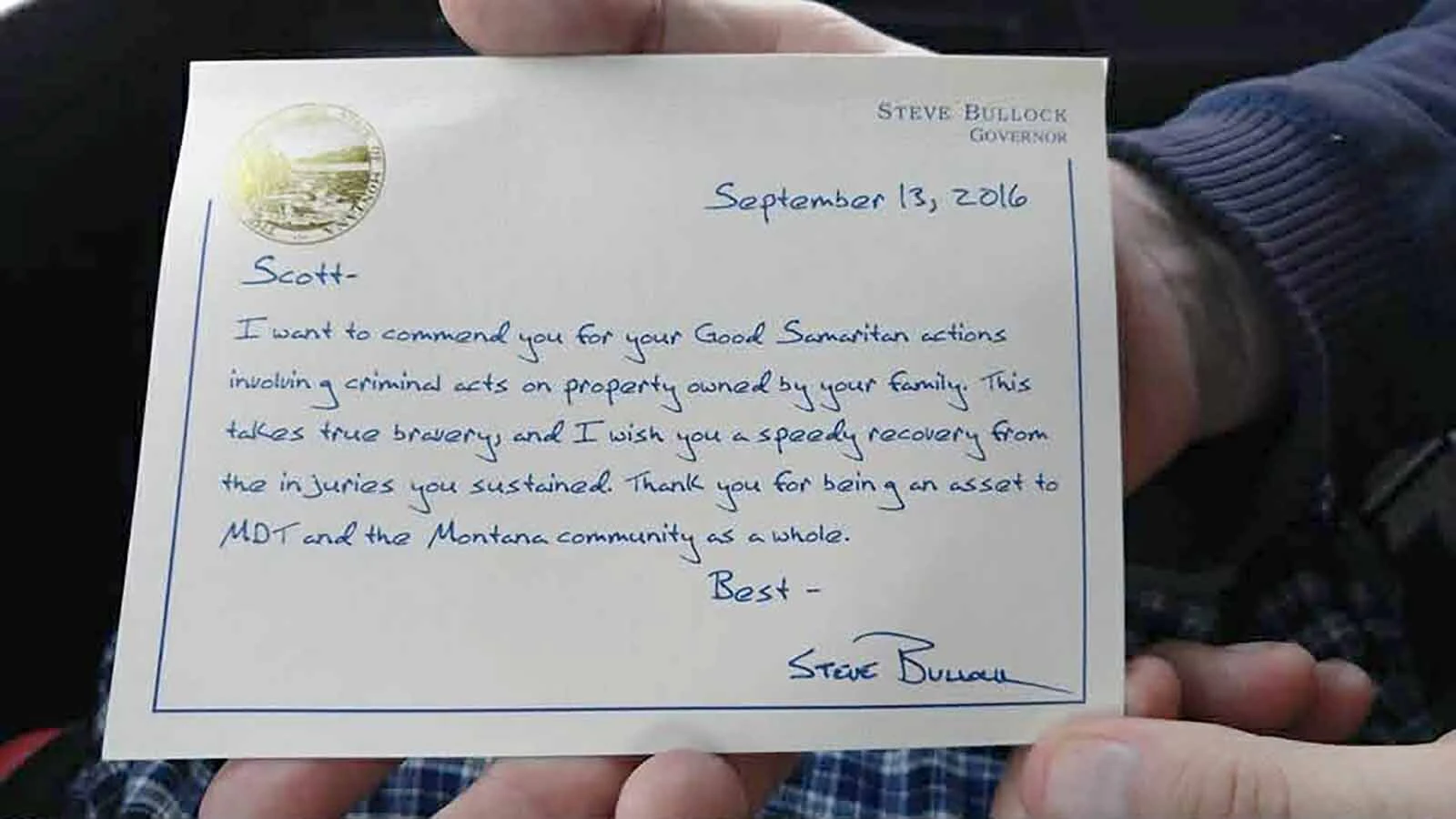
Andreas’ nephew received a handwritten letter from Montana Gov. Steve Bullock commending his bravery.
“I want to commend you for your Good Samaritan actions involving criminal acts on property owned by your family,” the note reads. “This takes true bravery, and I wish you a speedy recovery from the injuries you sustained.”
‘Private Property Is Private Property’
Forella said he doesn't expect every trespasser to be malicious.
Some genuinely don't know where they are.
Others might be confused by mapping technology or unfamiliar with Wyoming's checkerboard of public and private ground.
But landowners shouldn't have to repeatedly explain that private property is, in fact, private, they say.
“Private property is private property,” Schell said.
For ranchers, respecting that boundary isn't simply about protecting a legal right.
It's about protecting livestock, fences, crops, equipment and the daily operation of a working ranch.
Wyoming Game and Fish describes permission to access private land as a privilege and reminds recreationists to respect landowners and minimize the evidence of their presence.
The problem comes when someone decides that permission is unnecessary because the shortcut is convenient, the elk is worth it, the map says it's a road, or the gate happened to be open.
For Evans, perhaps the most memorable trespassers are the ones who arrive with an elaborate explanation for why they are somewhere they clearly shouldn't be.
She can understand a mistake.
What she doesn't understand is the assumption that a mistake somehow becomes permission.
And if that mistake happens to involve a gate, a pasture and a herd of calves?
Well, there's a pretty good chance someone is going to notice.
Kate Meadows can be reached at kate@cowboystatedaily.com.


