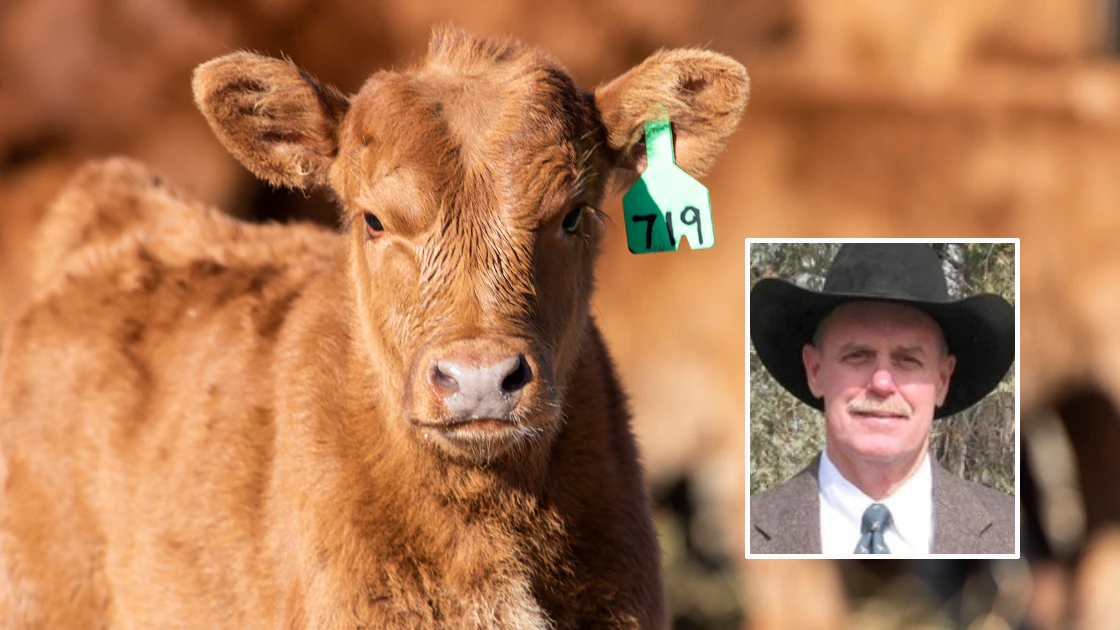
Wyoming ranchers must accept that electronic ear tags for cattle are here to stay, Wyoming Livestock Board Director Steve True told lawmakers Tuesday.
A hoped-for executive order from President Donald Trump rescinding the electronic tag requirement “didn’t happen,” he said.
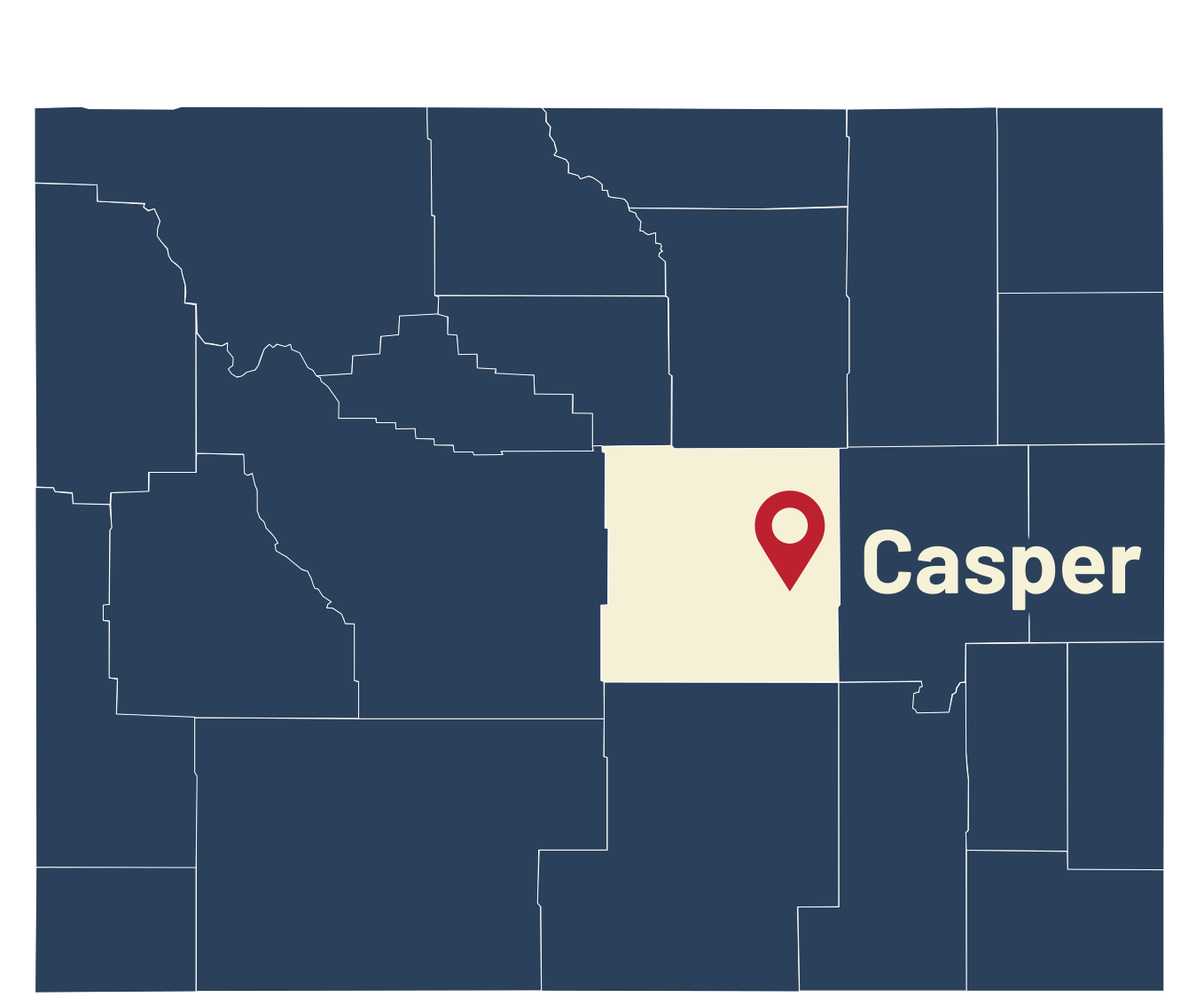
The requirement for certain cattle to have electronic tags before they cross state lines out of Wyoming is still in place, True told legislators in Casper.
He spoke before the Legislature’s Joint Agriculture, State and Public Lands, and Water Resources Committee. The committee took no action on the matter.
The electronic ID tag requirement for interstate cattle transport was finalized by the U.S. Department of Agriculture on Nov. 4, 2024, the day before Trump was elected to his second term.
Trump Rumor Squelched
In recent years, there’s been pushback against the transition from metal ear tags for cattle to electronic ID tags, which can be instantly read with a scanner.
Some ranchers argue electronic tags are too expensive, at about $3 each. Metal ear tags cost 10 to 15 cents apiece.
Others worry data collected through the tags could lead to government intrusion.
There’s no indication the electronic ID tag (EID) rule will change, True said.
“I do want to nip one story in the bud that I’ve heard quite a bit, that President Trump was writing some executive orders that would repeal the EID rule,” he said. "Didn’t happen.
“So, you all can let that go, if you’re thinking that happened. Because it didn’t, and it’s probably not gonna, with the screwworm problem we’ve got going on.”
At least five cases of New World screwworm infections were confirmed earlier this year in domestic animals in Texas and New Mexico.
There are concern that infestations could spread to other states, including Wyoming.
And hunters worry that screwworm infestations could jump to deer and other wildlife.
Rule Requirements
Electronic ID tags are required for several classes of cattle before they can be transported out of Wyoming, True said.
Some of those include breeding cattle, sexually intact cattle 18 months or older, exhibition cattle and dairy cattle.
It’s hoped that electronic tags can streamline the detection, tracking and containment of livestock diseases, such as brucellosis.
A tag signifies, for instance, that an animal has been vaccinated against brucellosis.
Wyoming got clearance from the USDA to carve out an exception, allowing ranchers to use metal ear tags to certify vaccination for brucellosis.
Ranchers can use either new yellow ear tags or leftover orange vaccination certification tags, True said.
Yellow tags can be purchased from manufacturers. The orange tags should be available until supplies run out, as production ceased after Nov. 4, 2024, he said.
However, those metal tags are good only within Wyoming state lines. Electronic tags will still be mandatory for animals within the required categories that cross state lines, he said.
Still Seems Unfair
Marta Mossburg of Riverton told Cowboy State Daily she’s opposed to mandating electronic cattle tags.
She is a research fellow at the Mountain States Policy Center and in November 2024 published a guest column in Cowboy State Daily expressing her hope that then-President-elect Trump would scrap the electronic ID requirement.
Among other things, she expressed concern over government intrusion.
“With the heightened surveillance of tags will come the ability for the federal government to expand its reach into ranchers’ operations,” Mossburg wrote. "Knowing exactly how many cattle ranchers own means the ability to tax cows based on their greenhouse gas emissions, as has been enacted in Denmark, to start in 2030. It could also mean forced slaughter if, for example, the USDA decided that the number of head in a particular operation was adversely impacting federal lands or violating climate policy.”
On Tuesday, she said electronic ear tags would be expensive and unnecessary for small ranches in Wyoming.
Larger ranches might find electronic tags more efficient than old-style metal tags, Mossburg said, but they should have the option of using them voluntarily, not through a government mandate,.
Mark Heinz can be reached at mark@cowboystatedaily.com.