
As Wyoming legislators continue debating whether ambulance service should be considered an essential government function, some rural communities aren't waiting for their answer.
Across the state, local officials are experimenting with various solutions to keep ambulances on the road as volunteer numbers shrink, operating costs climb while revenues shrink, and the demands of serving huge rural areas with sparse populations.
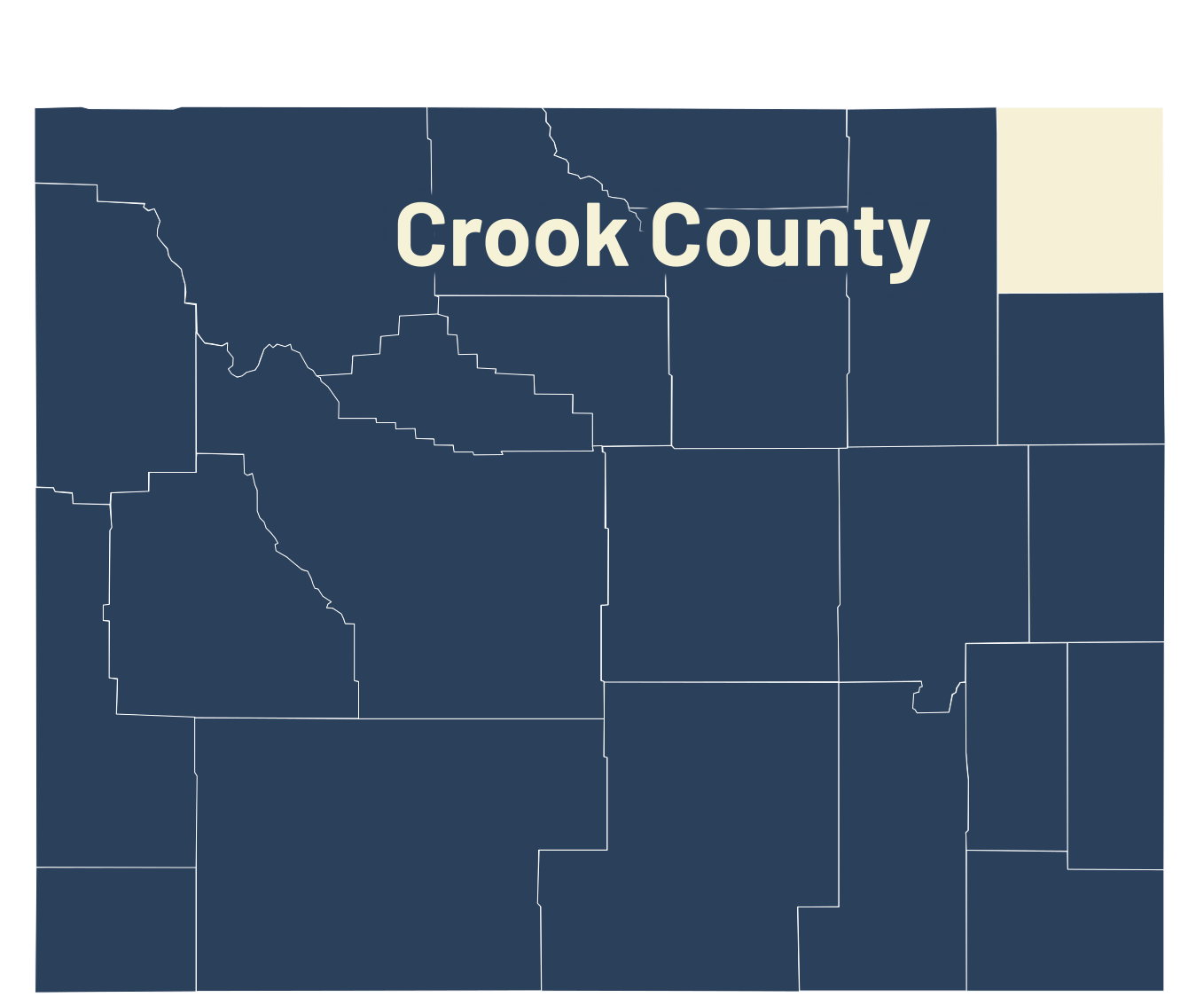
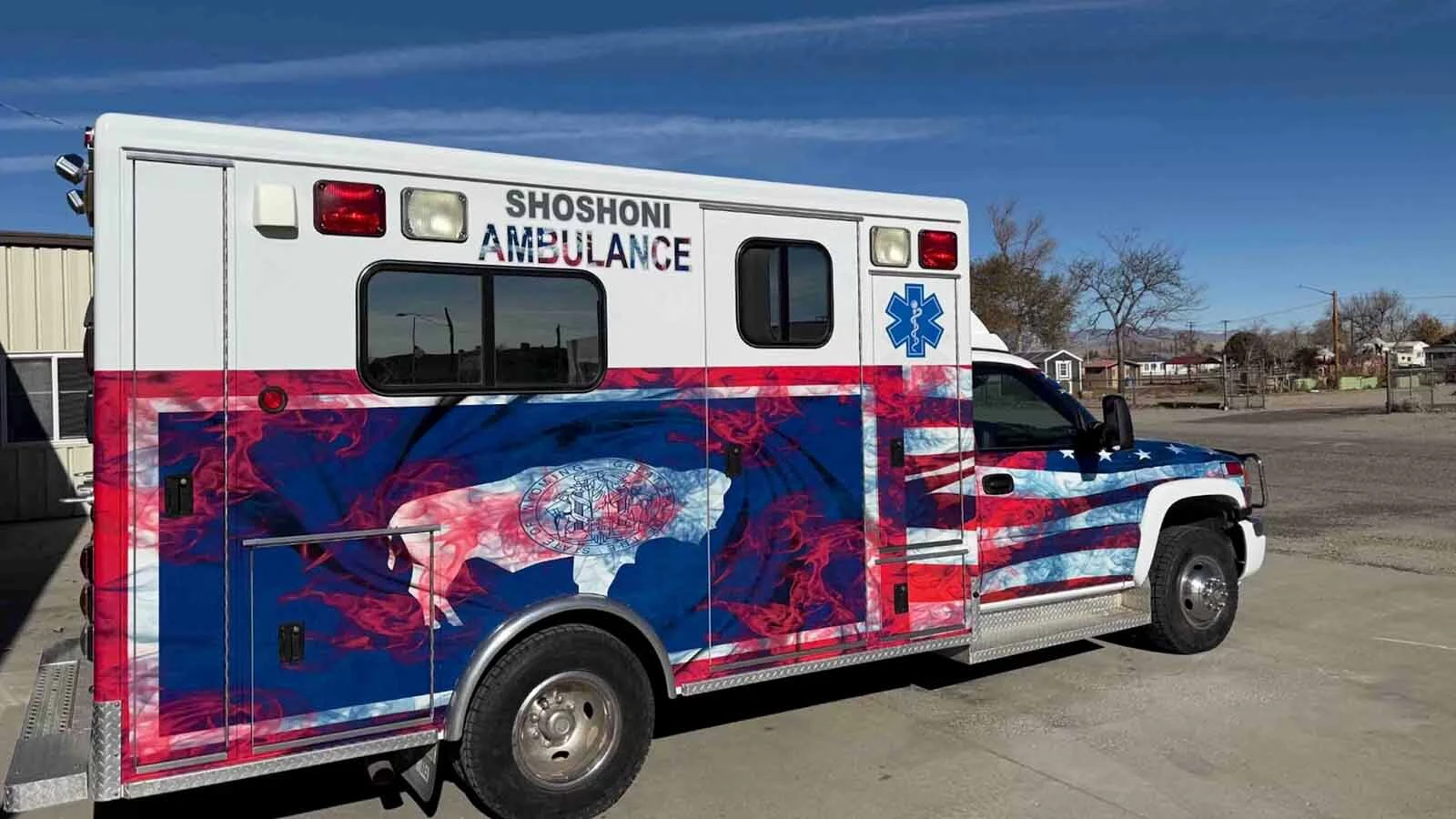
Crook County is moving toward creating a countywide EMS district funded by a local tax, while Lincoln County recently rejected a similar approach. In Fremont County, the town of Shoshoni has taken a different path altogether, staffing its ambulance with police officers trained as emergency medical technicians.
Together, the efforts illustrate a growing reality across Wyoming that without EMS designated as an essential service, communities are increasingly being forced to solve the problem on their own.
Crook County’s Approach
In May, Crook County commissioners passed a resolution to officially form an EMS district. Forming a district is a necessary step in asking county voters to pay for EMS services through a mill levy tax.
The district was made possible by legislation passed in 2023 that allows counties to create taxing districts specifically for EMS, a response to the growing statewide funding shortfall facing rural ambulance providers.
Crook County Commissioner Fred Devish said creating the district is only the beginning.
The EMS district is now applying for a portion of money available for a limited time through the Rural Health Transformation Program.
The Wyoming Health Department was given $205 million in federal money to administer to hospitals, emergency responders and other health care services that fall under the state’s rural health system.
Applications opened July 1 and close Aug. 3.
Commissioners will next appoint a countywide EMS board made up of business-minded residents familiar with emergency services and grant writing.
That board will determine how ambulance service should be staffed throughout the county and how it should be funded through a combination of grants and, potentially, a voter-approved mill levy.
"It's absolutely up to the voters to fund such a board," Devish told Cowboy State Daily. "It's a tax. Everybody hates taxes. But how does anything get done without people paying for services?"
Voters likely won’t see a mill levy for EMS on the ballot until 2027, he said.
"There are too many moving parts to nail it down quickly," Devish said.
Each community has different staffing levels, different training capabilities and different needs, he added.
"It's just kind of trying to put something together that fits everybody in the county and that's fair to everybody," he said. "It's a hard thing to do."
The Challenges Keep Mounting
The pressures facing Crook County are playing out across rural Wyoming.
Volunteerism — once the backbone of rural ambulance service — has steadily declined, according to the Wyoming Department of Health.
"In the real world, it's kind of tough to have your people leave work every time there's an ambulance call," Devish said. "It's a big chunk out of your life. You're committed."
In years past, he said employers often allowed workers who were EMTs to leave their jobs whenever an emergency call came in. That has become increasingly difficult.
In Moorcroft, one of Ambulance Director Brad McKee’s biggest challenges is maintaining enough licensed volunteers to handle about 150 calls a year, Cowboy State Daily previously reported. As an incentive, those who volunteer are paid $50 per call.
Geography only compounds the problem.
"It's a long way from someplace in Crook County to an ambulance sometimes," Devish said.
The challenge is hardly unique to Crook County.
Campbell County Health EMS responds to roughly 10,000 calls each year across more than 10,000 square miles, the Gillette News Record has reported.
In June, it took about 30 minutes for ambulances to reach a fatal crash on U.S. Highway 20/26 northwest of Casper. The crash involved eight vehicles and 17 people.
Equipment costs continue climbing as well.
Jason Perry of Hulett recently told Crook County commissioners that the community's newest ambulance is a 2011 model. Replacing it would likely cost between $200,000 and $500,000.
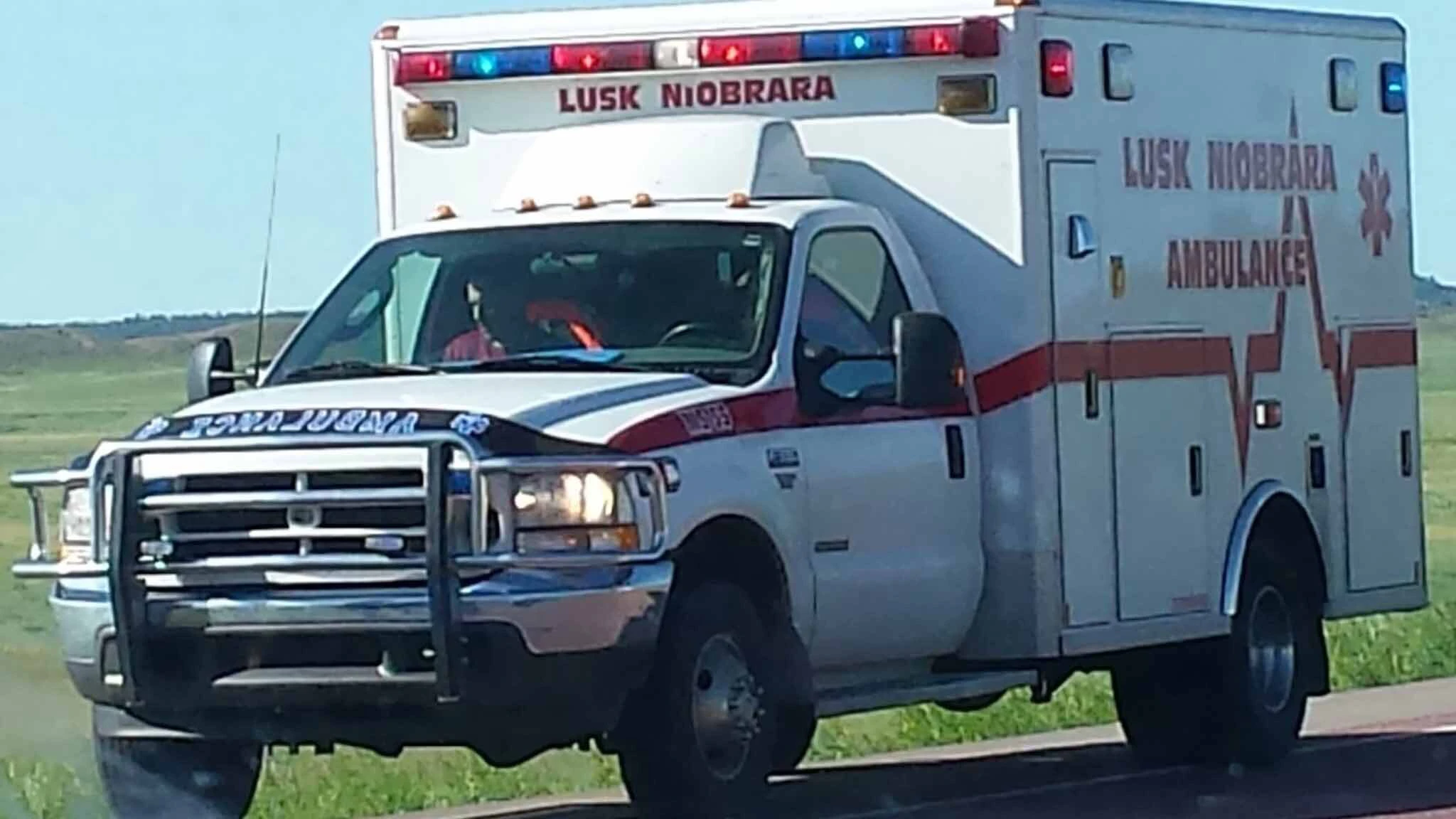
In Niobrara County, Wyoming’s least populated, replacing old equipment came to a head a few years ago when Lusk was down to one fully functioning ambulance to cover a huge geographical area.
Its emergency request to the State Loan and Investment Board at that time for money to get another ambulance was denied because Lusk’s situation didn’t qualify as an emergency.
One Community, One Solution
For years, EMS advocates have urged Wyoming lawmakers to designate ambulance as an essential service, which would require government entities to ensure emergency medical care is available and provide a more stable funding structure.
In 2021, Gov. Mark Gordon's Health Care Task Force created an EMS subcommittee to study the growing challenges facing Wyoming's emergency medical system and recommend long-term improvements.
While that debate continues in Cheyenne, local communities are moving ahead with their own ideas.
In Fremont County, Shoshoni has become the first Wyoming town to staff its ambulance service through its police department.
After Cody Regional Health donated an ambulance, the Shoshoni Police Department used remaining COVID-19 relief money to equip the vehicle with basic medical equipment.
Beginning in November 2025, every new Shoshoni police officer receives EMT training. Officers earn their regular police salary plus an additional $50 for every ambulance call they respond to.
Not Every Community Wants New Taxes
In Lincoln County, longtime resident Greg Erickson has watched Star Valley's EMS system evolve over decades.
He remembers when ambulance service in Alpine, Thayne and Afton depended almost entirely on volunteers.
"The valley was pretty well covered," Erickson said. "There wasn't a huge need, but when the need arose, people would leave their jobs and go down to the garage where the ambulance was parked and make the calls."
As the population grew, however, volunteers became harder to find.
Still, Lincoln County commissioners recently declined to create an EMS district similar to the one Crook County is pursuing.
"The reason for it was public outcry for another tax," Erickson said. "Putting it on the backs of the taxpayers in the county just doesn't float well."
Instead, Star Valley Health now operates the area's ambulance service.
Erickson said he believes the system has grown beyond what the valley requires.
"They built a Rolls-Royce EMS system," he said. "There is neither the revenue nor the necessity for those services."
Even so, he acknowledges there is no universal answer for rural Wyoming.
"What's right for Jackson isn't right for Star Valley," Erickson said.
He applauds communities like Shoshoni for finding creative ways to meet local needs.
No One-Size-Fits-All Answer
The differing approaches in Crook County, Shoshoni and Star Valley reflect what many EMS officials across the state say they increasingly believe: Wyoming's rural ambulance challenges are too diverse for a single statewide solution.
Some communities may ultimately support local tax districts. Others may rely on hospitals, municipalities or other partnerships.
Until lawmakers settle the broader question of whether EMS is an essential service, many rural communities are continuing to look for solutions that fit their own geography, population and resources.
Kate Meadows can be reached at kate@cowboystatedaily.com.


