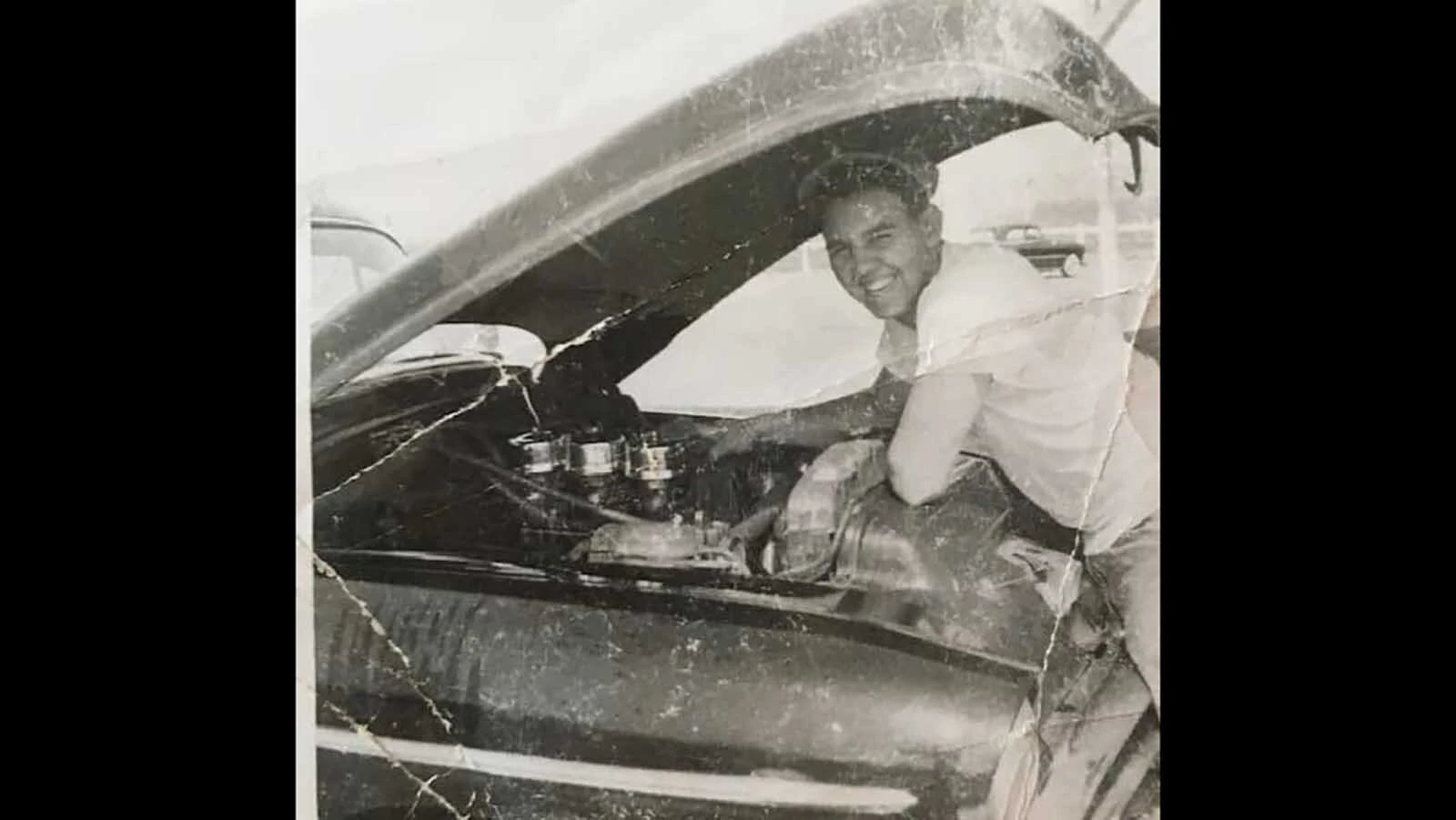
On a cold winter’s night in the 1950s, a young Marine named Wayne Schell found himself in a desperate scramble under the hood of his 1950 Oldsmobile on a lonely stretch of Route 66.
A tiny pinhole had developed in the radiator, and Schell was trying to figure out how to fix it so he could get home — without forking over his hard-earned money for a motel room.
“When you’re a young Marine, you can’t really afford a motel or anything,” Schell said with a chuckle. “You drive nonstop.”
The Marine riding with him to share expenses came up with a bright idea. Or so it seemed at 1 a.m.
“Well, maybe I can put this pencil tip in it to block it,” Schell recalled him saying.
But the radiator was so rotten, the pencil just busted open an even larger hole.
The road trip home was over. At least for that night.
Schell and his riding buddy had no choice but to rent a motel room for the night, one of the only times he would ever stay in a motel room along Route 66 back when it was an actual American highway.
Schell, who is 90 — almost as old as the 100-year-old highway itself — recalls sharing the motel room with a significantly chastened pal.
“I wasn’t mad at him,” Schell said in a soft voice, memories crowding in. “He tried to help me, and it just didn’t work out.”
No Guarantee For Out-Of-Towners
The next morning, the two Marines found a radiator shop to fix the problem.
“He wouldn’t guarantee the work because we were out of town,” Schell said. “And he charged me like $20.”
It was half a week’s pay for the average male worker at the time. A small fortune — especially for work that had no guarantee.
“But I ended up using it for three more years,” Schell added. “So it worked. I got through. I made it home.”
The memory is just one in a million that Schell has of driving America’s Mother Road, Route 66, a name synonymous with America and legendary road trips.
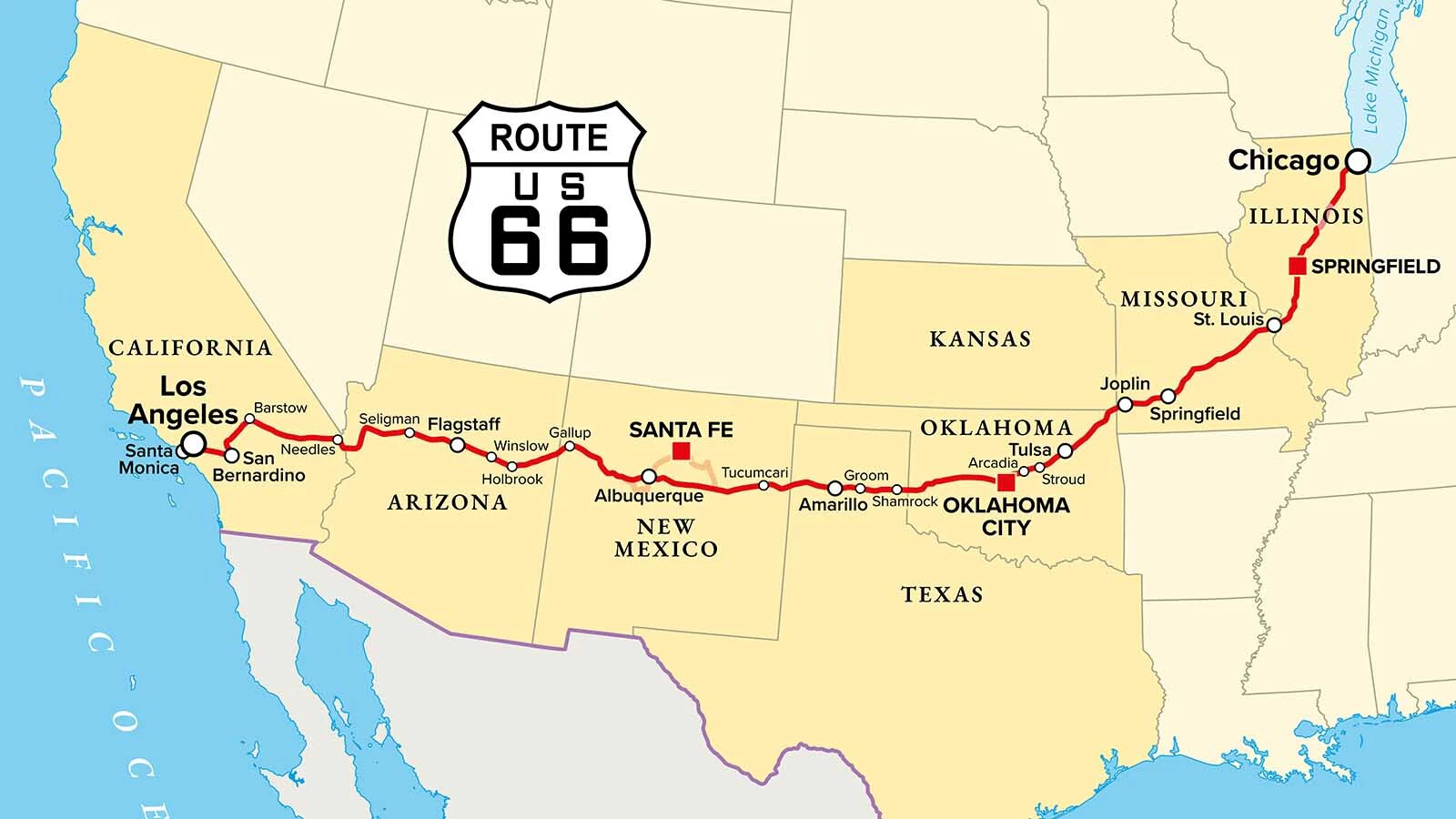
Schell, who joined the Marine Corps in 1956, is among the dwindling number of Americans alive today who has driven the entirety of Route 66 from Navy Pier in Chicago to Santa Monica Pier in California, a roughly 2,400-mile trip.
He didn’t just drive it once, either. It was a regular trip home for the young Marine.
“I lived in Illinois, about 100 miles southwest of Chicago,” he said. “I went to bootcamp in California, and then got stationed at 29 Palms in California.”
He made the drive home as often as he could in a 1950 Olds with a 1956 Olds engine and three Stormberg 97 two-barrel carburetors, usually in one long 40- to 45-hour sleepless trip.
The thing he likes to remind people who have never driven the route when it was an actual highway is that there was no such thing as a freeway then.
“Route 66 went through every little town along the way,” he said. “You had to stop at stoplights and stop signs. There was traffic, which wasn’t bad then.”
Some towns had posted limits of 30 mph, too, and friendly police to remind those who weren’t paying attention to their speed.
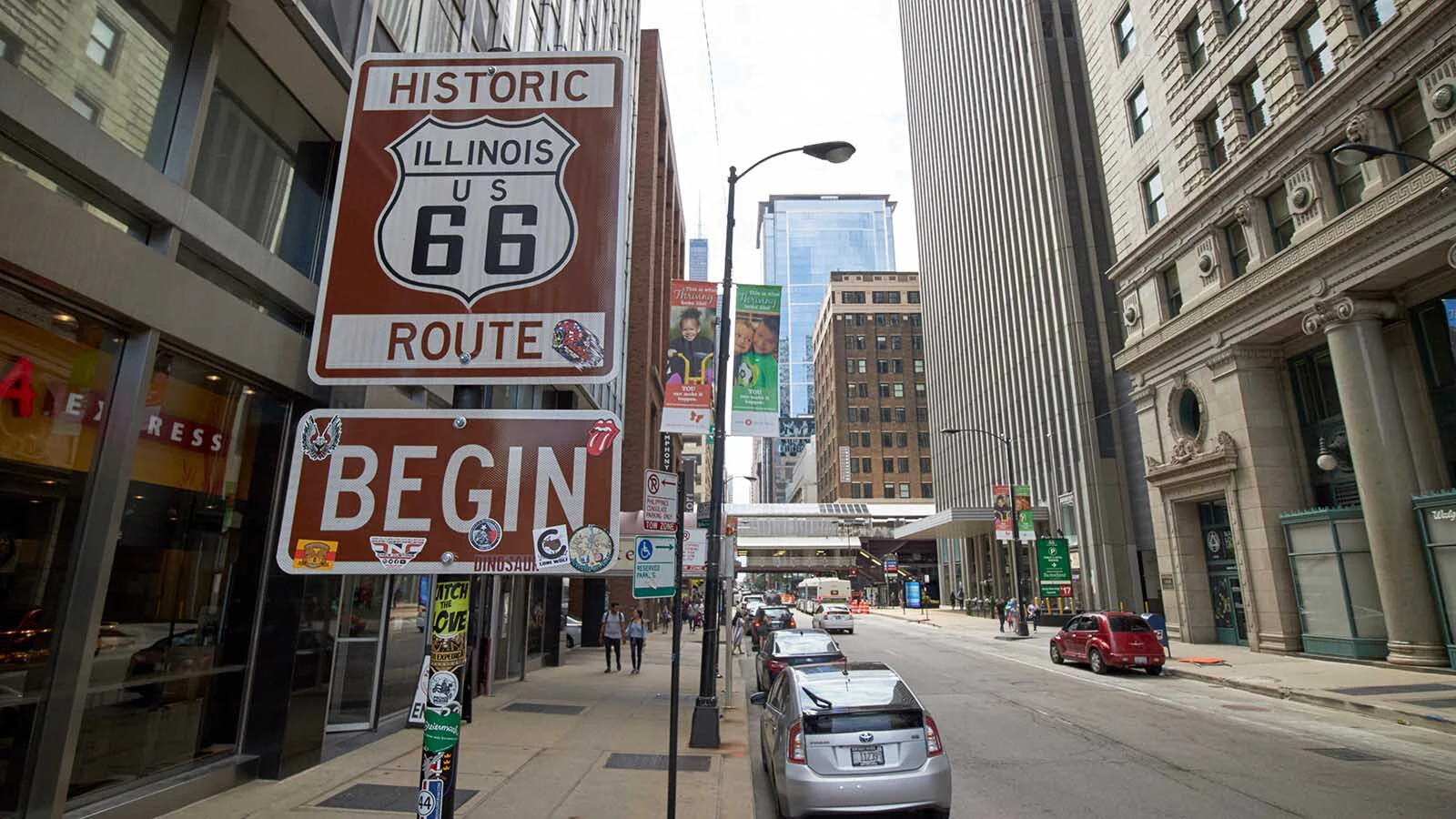
The Road That Refuses To Die
U.S. Route 66 doesn’t officially exist anymore. The federal government decertified it in 1985, a year after the last interstate highway bypass was completed in Williams, Arizona, wiping it off the map as a U.S. highway — at least on paper.
But that didn’t kill the route. The Mother Road lives on in the heart and the imagination, which has made it feel more alive than ever.
“It’s a road for God’s sake,” Route 66 historian Jim Hinckley of Arizona told Cowboy State Daily. “But it literally has an international fan club. There are Route 66 associations in Japan, Germany, the Czech Republic, the Netherlands, Italy — and they organize events and publish books.”
A 2018 Route 66 Festival in Europe where Hinckley was invited to speak brought more than 20,000 people from 10 countries to celebrate America and its legendary Route 66.
“It has evolved to represent the quintessential American experience,” Hinckley said. “It truly is the entire American story made manifest. It’s in any chapter of our history — even our prehistory. You have villages in New Mexico along Route 66, like Laguna Pueblo, and the chapel there was built in 1699. The village is 100 years older than that.”
Portions of Route 66 were laid on top of the Santa Fe Trail and the Beale Wagon Road, Hinckley added.
“The Beale Wagon Road was laid on top of a 1,000-year-old Native American trade route,” he said. “And then you have the world’s first electric vehicle museum being established on Route 66. So it’s the entire story of America, and the story of our immigrants is all peppered through Route 66.”
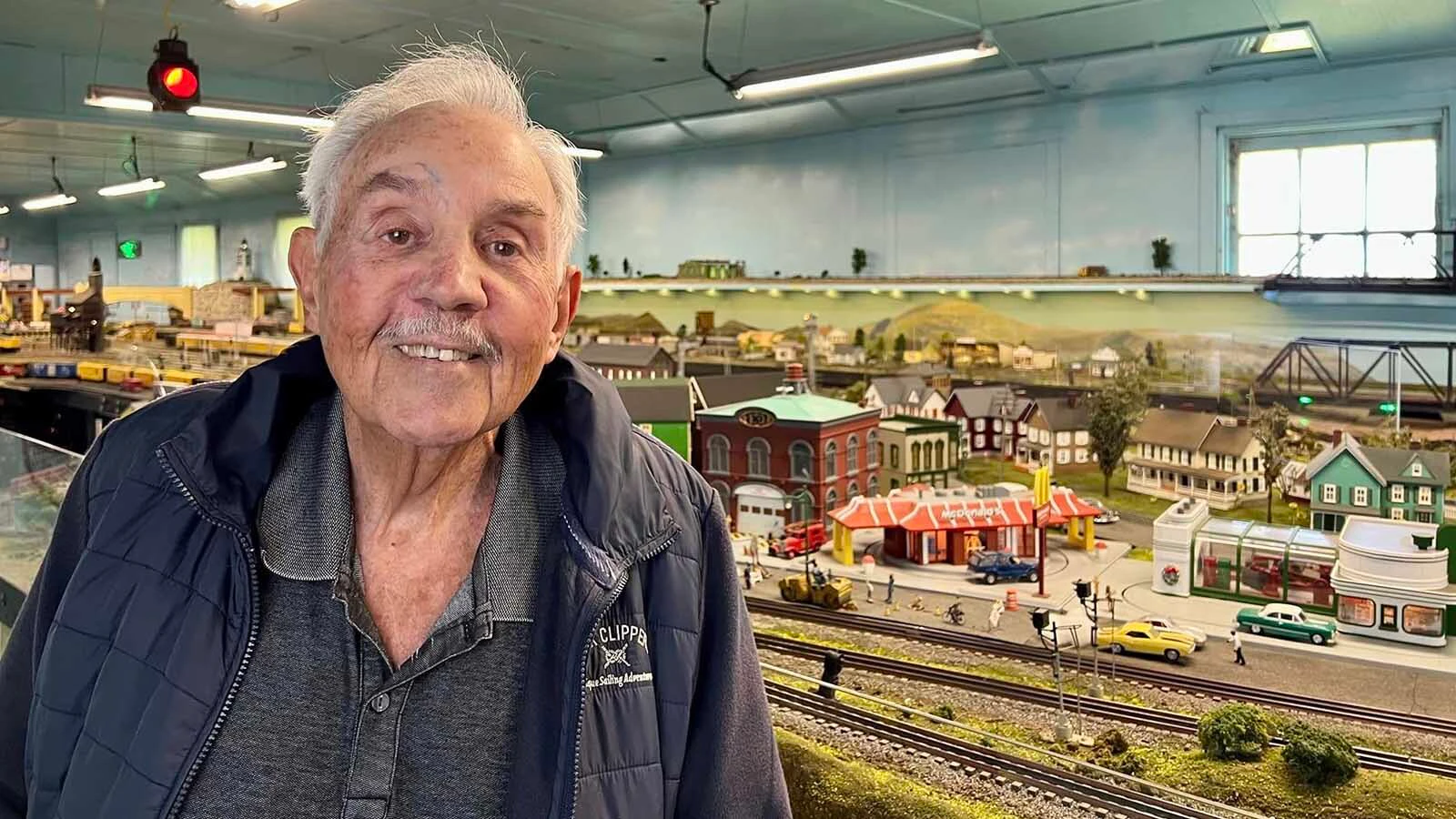
America’s Longest Small Town
Hinckley has been traveling Route 66 since 1959 and has been watching its transformation with fascination ever since, including how it’s become woven into the fabric of American legend.
The story that illustrates this best to him is the conversation he had with a gentleman who had grown up behind the Iron Curtain listening to Radio Free America.
“He knew that song about getting your kicks on Route 66,” Hinckley said. “He grew up watching bootleg copies of Easy Rider. And he said the American road trip, specifically Route 66, came to symbolize freedom for his generation, like the Statue of Liberty did for a previous generation.”
Americans, meanwhile, are finding ways to live out their dreams on Route 66 all up and down the route — freedom of another kind.
For example, in Stroud, Oklahoma, a young couple has restored the old Skyliner Motel. Elsewhere, retirees have brought back neon-lit motor courts. Multi-generation cafes, founded by penniless immigrants, have family members who are keeping the dream alive that their grandfathers began.
That’s made Route 66 into a kind of 2,400-mile, small-town neighborhood, Hinckley said.
“It’s America’s longest small town,” he said. “It’s evolved into this linear community.”
On any given night, you can find yourself at a place like the Roadrunner Lodge in Tucumcari, New Mexico, roasting marshmallows around a fire pit with a couple from Germany and a traveler from Scotland who is playing “The Star Spangled Banner” on bagpipes.
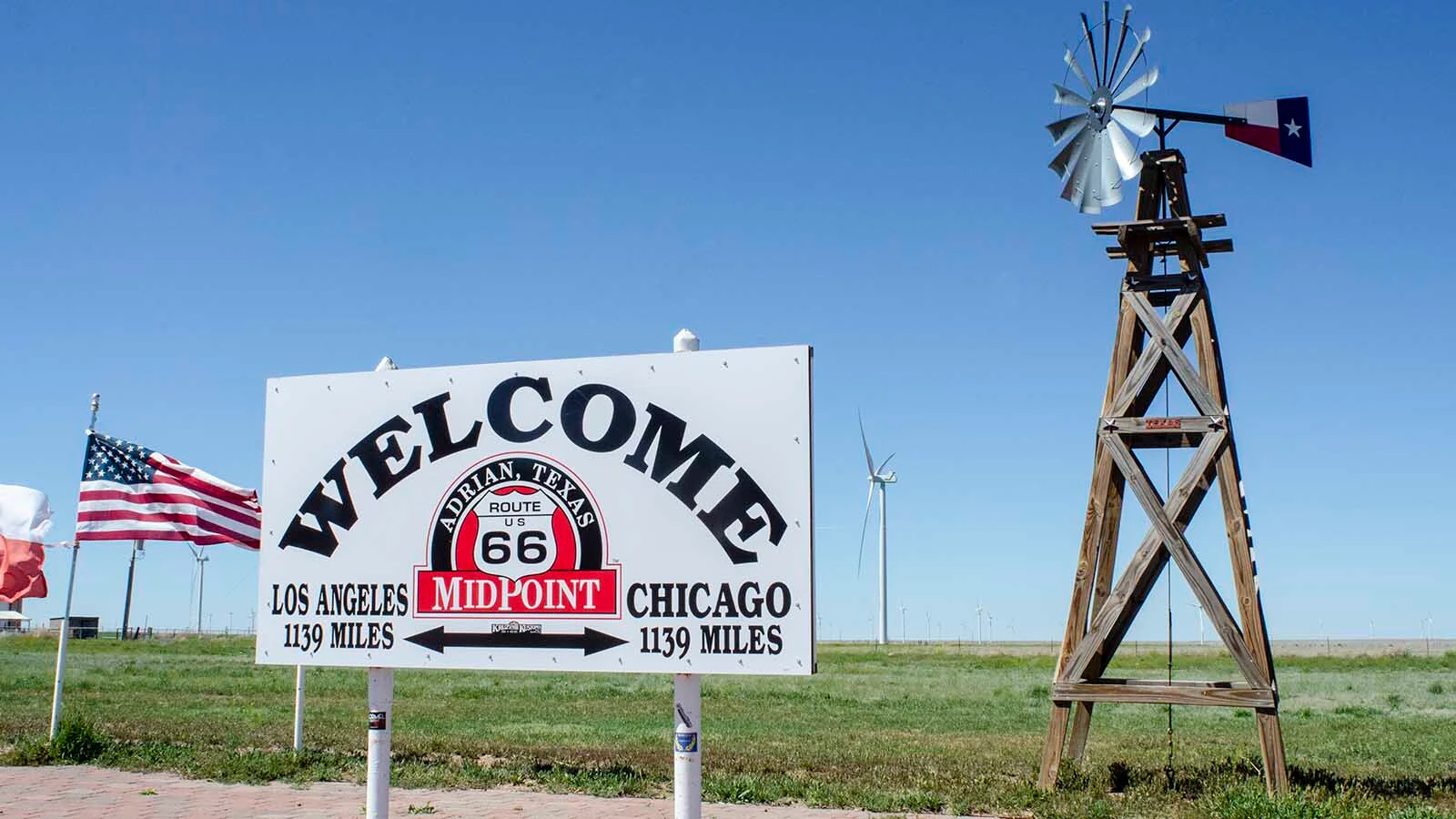
Hinckley once ran into a caravan of strangers who spontaneously decided to convoy together to the Midpoint Cafe in Adrian, Texas, for a slice of “ugly crust” pie, so named because the cafe’s legendary pastry chef, Joann Andrews, famously cared more about the rich flavor and flaky texture of her pies than making a perfect crimped edge.
Midpoint Cafe, meanwhile, gets its name because it is exactly 1,139 miles from Chicago and 1,139 miles from Santa Monica, which makes the cafe a must for the ultimate Route 66 experience.
“You find inspiration all along the route,” he said. “The magic is the people.”
How The Road Became A Legend
Route 66 wasn’t the first coast-to-coast highway, although it’s frequently portrayed that way. That honor actually belongs to the Lincoln Highway, which goes right through the middle of Wyoming.
“This is another challenge with Route 66,” Hinckley said. “As with Paul Bunyan and Babe the Blue Ox, it’s become such a legend that separating fact from fiction is a real challenge.”
From its earliest days, Route 66 benefitted from what Hinckley calls the best press and publicity any road has ever had.
“Cyrus Avery was a pioneer in a lot of these early highways,” Hinckley said. “And he and a bunch of visionaries got together and created the U.S. Highway 66 Association. The idea was to petition and lobby to have the road paved from end to end, and to promote the road — a kind of quasi Chamber of Commerce.”
The group hit the ground running with their publicity campaign — literally.
“There was a sports promoter trying to get backing for a transcontinental foot race,” Hinckley said. “So they jumped on board and said they’d sponsor it as long as he would agree to do it on Route 66.”
The purse for the 1928 race was $20,000, a phenomenal amount of money for the time. The average American family earned less than $1,500 per year. A purse of that size could purchase multiple homes outright.
Runners from all over the world, from amateur to professional, came to vie for this huge Route 66 purse.
“A 19-year-old Cherokee boy from Oklahoma entered the race,” Hinckley said. “Total amateur from some little farming community. By the time they got to the end of Oklahoma, he was leading the pack and he eventually won the race.”
It was a huge, international media frenzy.
There would be more smart media campaigns after that. The Highway 66 Association partnered with the Olympics, for example, to advertise Route 66 as the scenic way to get to the 1932 Olympics in Los Angeles.
“Then you had the ‘Grapes of Wrath,’ and you had the song, ‘Get Your Kicks on Route 66,’ which has turned into one of the most recorded songs in history,” Hinckley said. "The 'I Love Lucy'television show even got in on the act with a four-part episode of Desi and Lucy going on a Route 66 trip with the Mertzes to California.
Finally, in 1960, came the “Route 66” television series starring Martin Milner and George Maharis as two young men traveling across the country in a Chevrolet Corvette. A heady list of guest stars included Robert Redford, Lon Chaney Jr., Boris Karloff, Robert Duvall, Walter Matthau and William Shatner, among dozens of others.
The series ended in 1964 after 116 episodes and two Primetime Emmy Award nominations.
Route 66 itself ultimately became a victim of the interstate highway system — I-10, I-15, I-40, I-44 and I-55 — which rendered it obsolete and diverted traffic from its businesses.
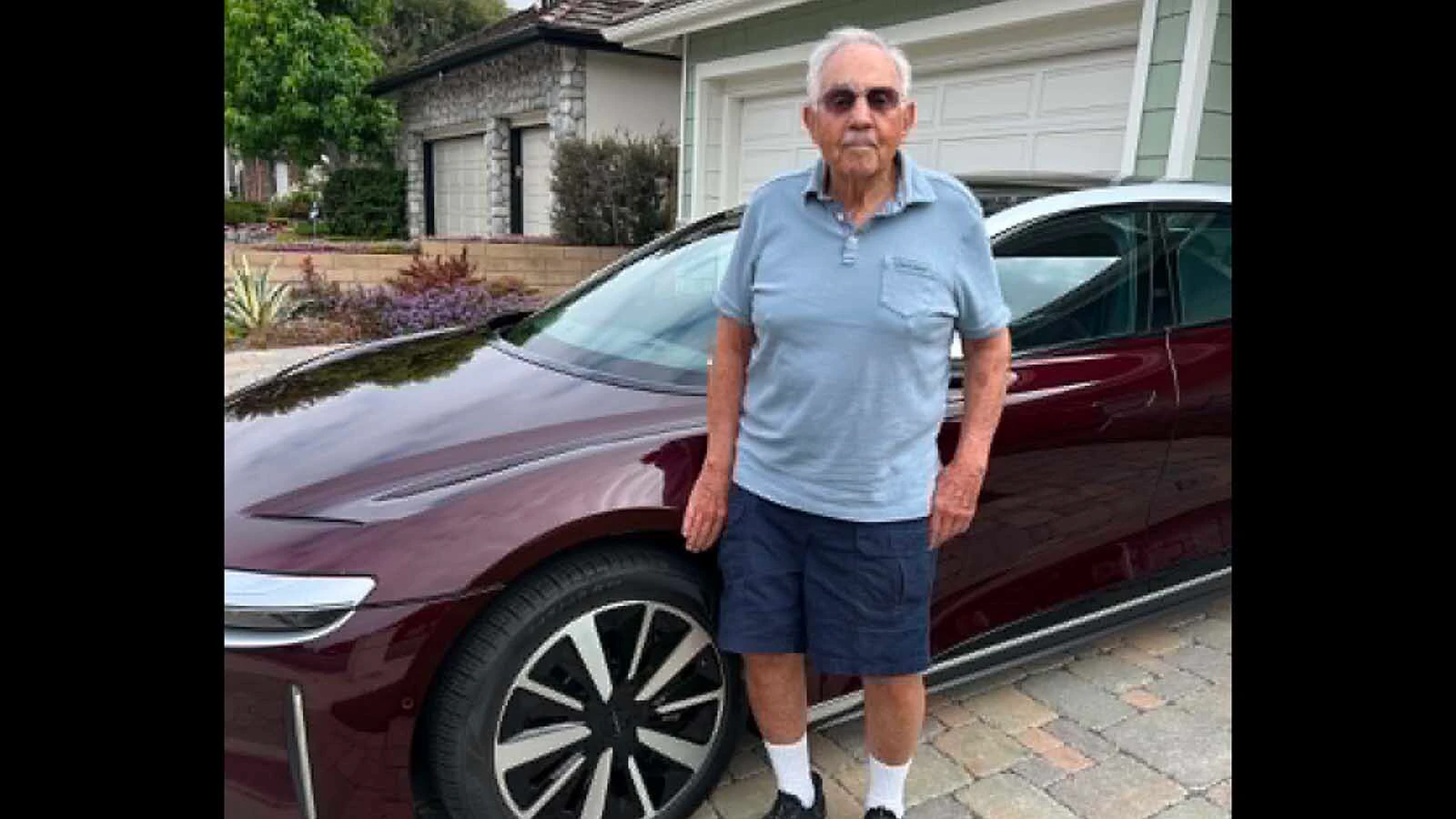
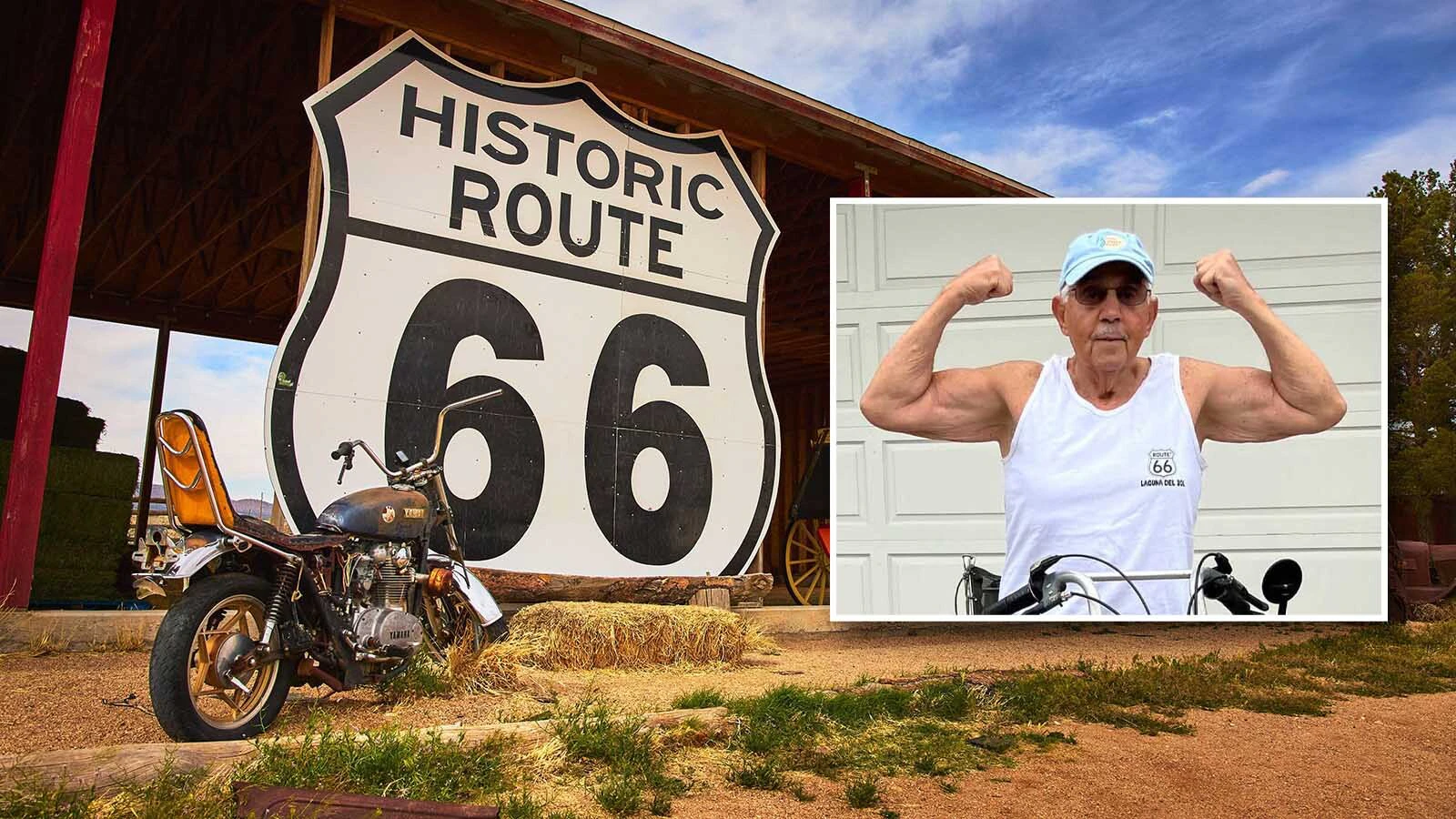
Historic U.S. Route 66 is more than an iconic American experience to Wayne Schell. He has an emotional connection to the legendary highway. (Wayne Schell) 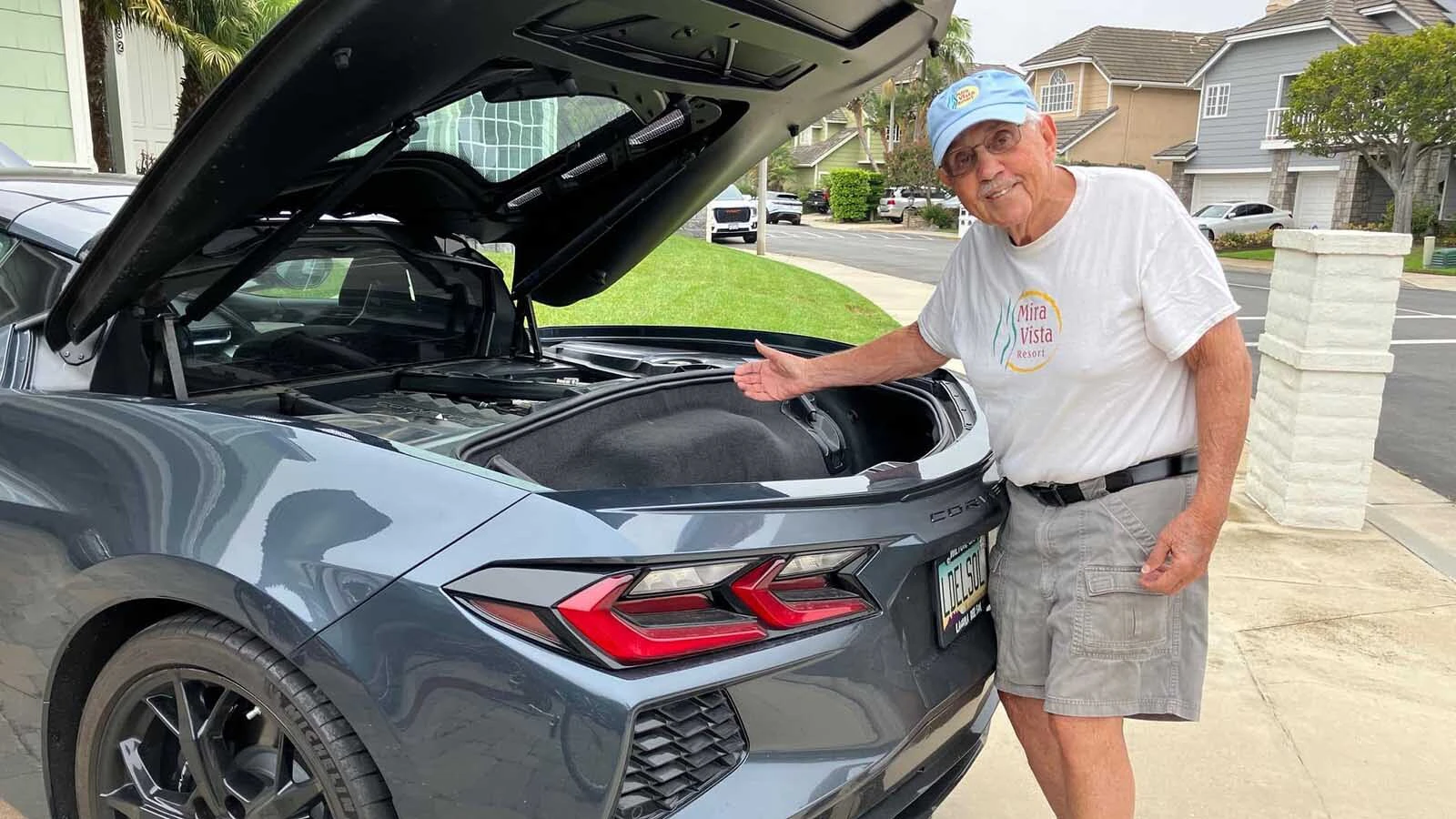
Historic U.S. Route 66 is more than an iconic American experience to Wayne Schell. He has an emotional connection to the legendary highway. (Wayne Schell)
Coffee And The World’s Hottest Chili
Schell might not have been a tourist when he was driving Route 66, but he made plenty of great memories along the way.
“My 1950s Oldsmobile was all fancied up,” he said with a chuckle. “You know, like a young kid does. I had been keeping this at my parents’ house in Illinois. So that first time, I flew back home on an airplane, but when I got off leave, I drove the Oldsmobile back to 29 Palms.”
The sights along the way were incredible to a “young kid” as Schell referred to himself.
“They used to have Tipis along Route 66 and the rattlesnakes,” he said. “I was seeing rattlesnakes and all kinds of things.”
There was no Cadillac Ranch yet, but there was a little diner on the west end of Albuquerque, where he stopped to have an innocent cup of life-saving coffee.
“There was an old Mexican fella eating a bowl of chili and I thought, ‘You know, that looks pretty good,’” Schell said. “So I ordered a bowl, and it was the hottest chili I’d ever eaten in my life. I had tears coming out of my eyes, and I never got sleepy anymore that night. That’s for sure.”
There was also a restaurant somewhere near Amarillo that offered a 32- or 36-ounce steak for free — if you could eat it all in one sitting.
“I think they still have that one today,” he said. “But I never tried it. I knew better. I wasn’t going to be able to eat that much.”
Schell still drives over portions of Route 66 to this day. Last year, he drove it to a family reunion in Illinois.
“I’ve got a new Corvette now, and I’m driving a Lucid all-electric car,” he said. “I’ve had it a couple of years and it has 86,000 miles on it. I like to drive.”
Schell usually works in a stop at a resort he owns near Tucson, Arizona, which takes him on a lot of backroads the rest of the way to Illinois.
“It’s really amazing,” he said. “You get to see all these little towns off the beaten path where Route 66 used to go. You can still do that on rural roads, and these are pretty nice roads.”
His favorite of these towns is one in the southwest corner of Kansas, which is full of old Victorian homes overlooking a river.
“It’s a beautiful city, and no one ever talks about it,” he said. “It’s one of the nicest cities in the country. So, you discover things, you know? It’s neat to be able to discover these hidden gems, tucked away, that nobody even knows about.”
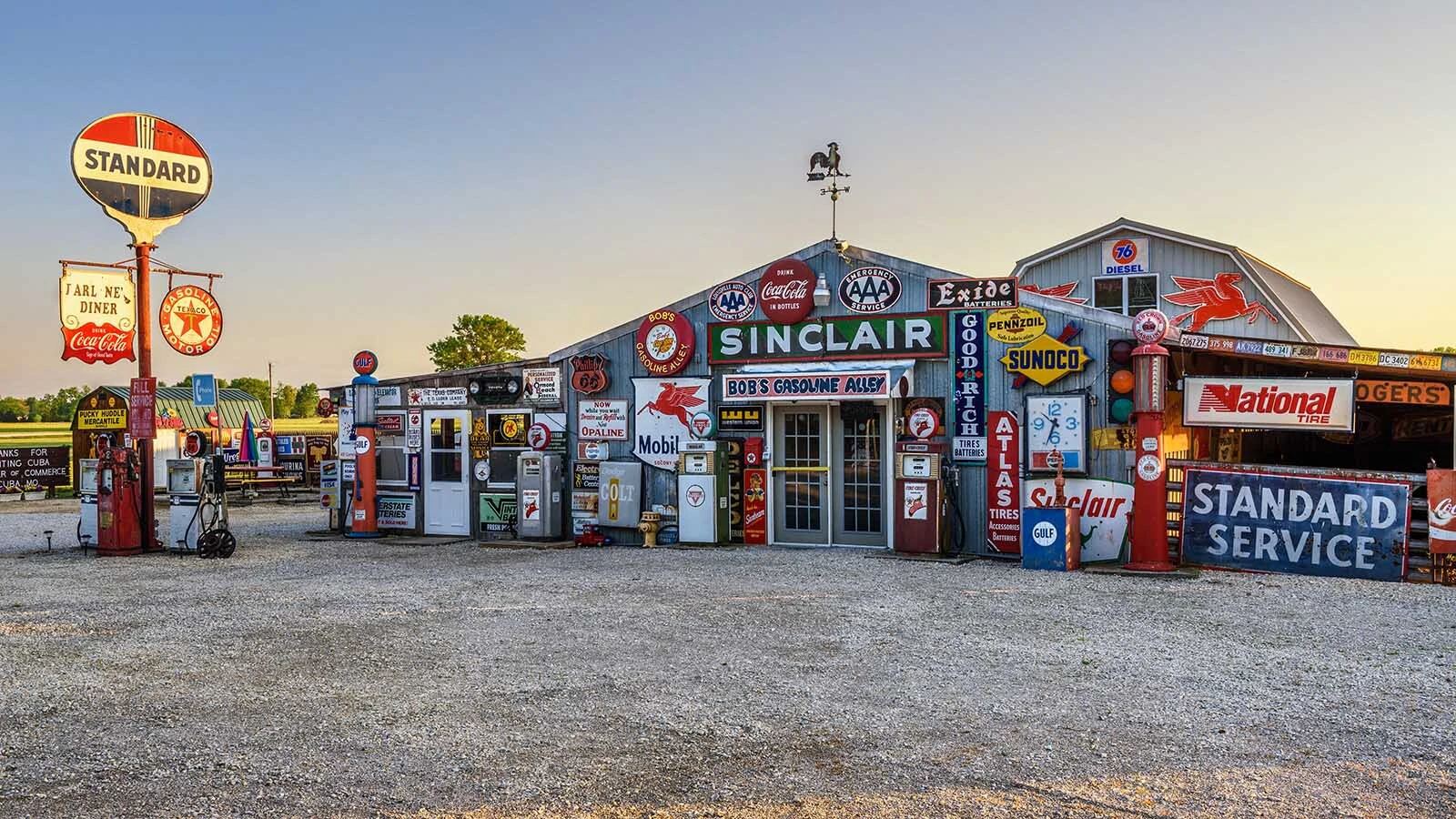
Bob's Gasoline Alley on Route 66 in Cuba, Missouri. (Nick Fox via Alamy) 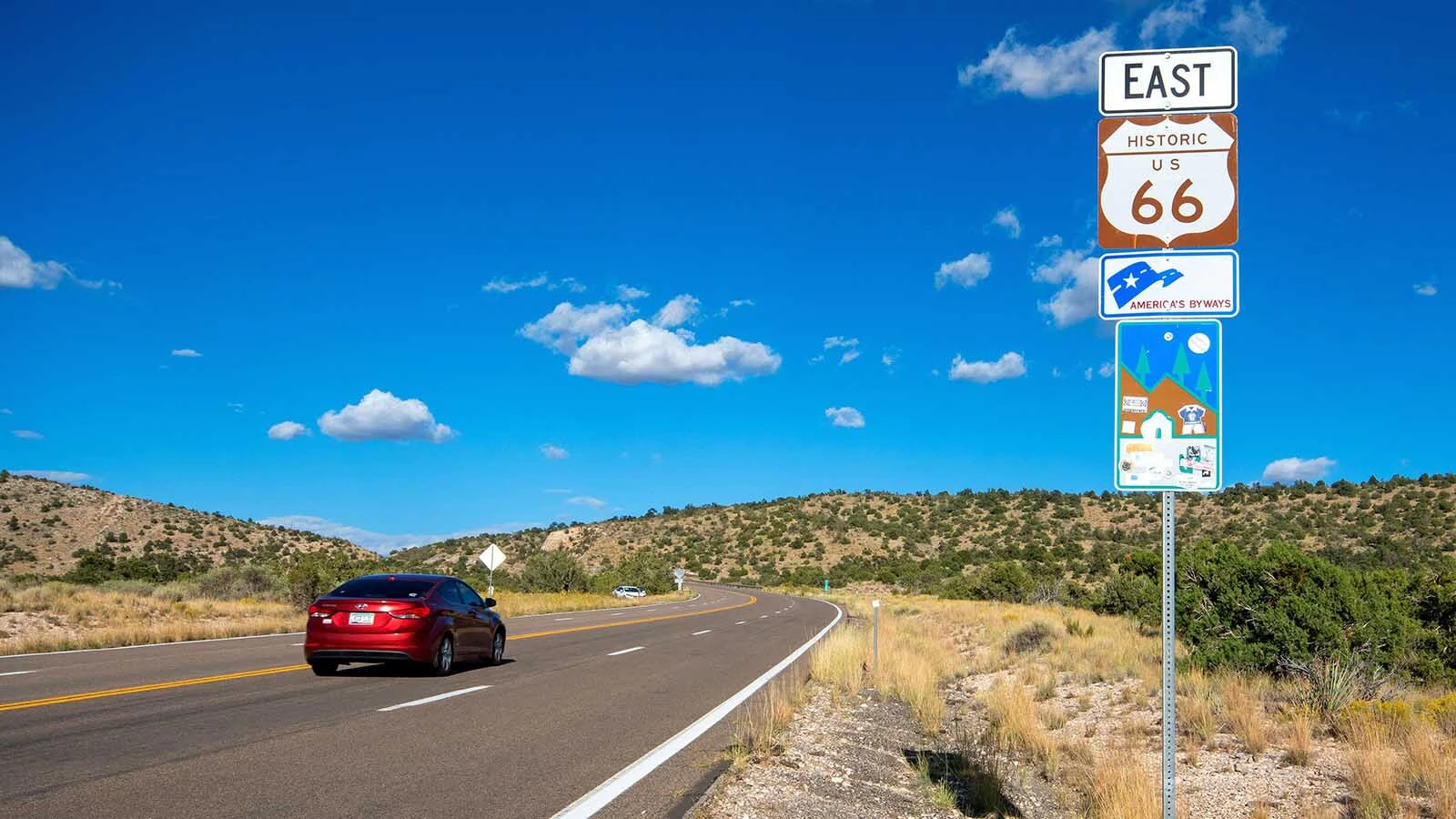
Route 66 as it runs through Arizona. (Mauro Toccaceli via Alamy) 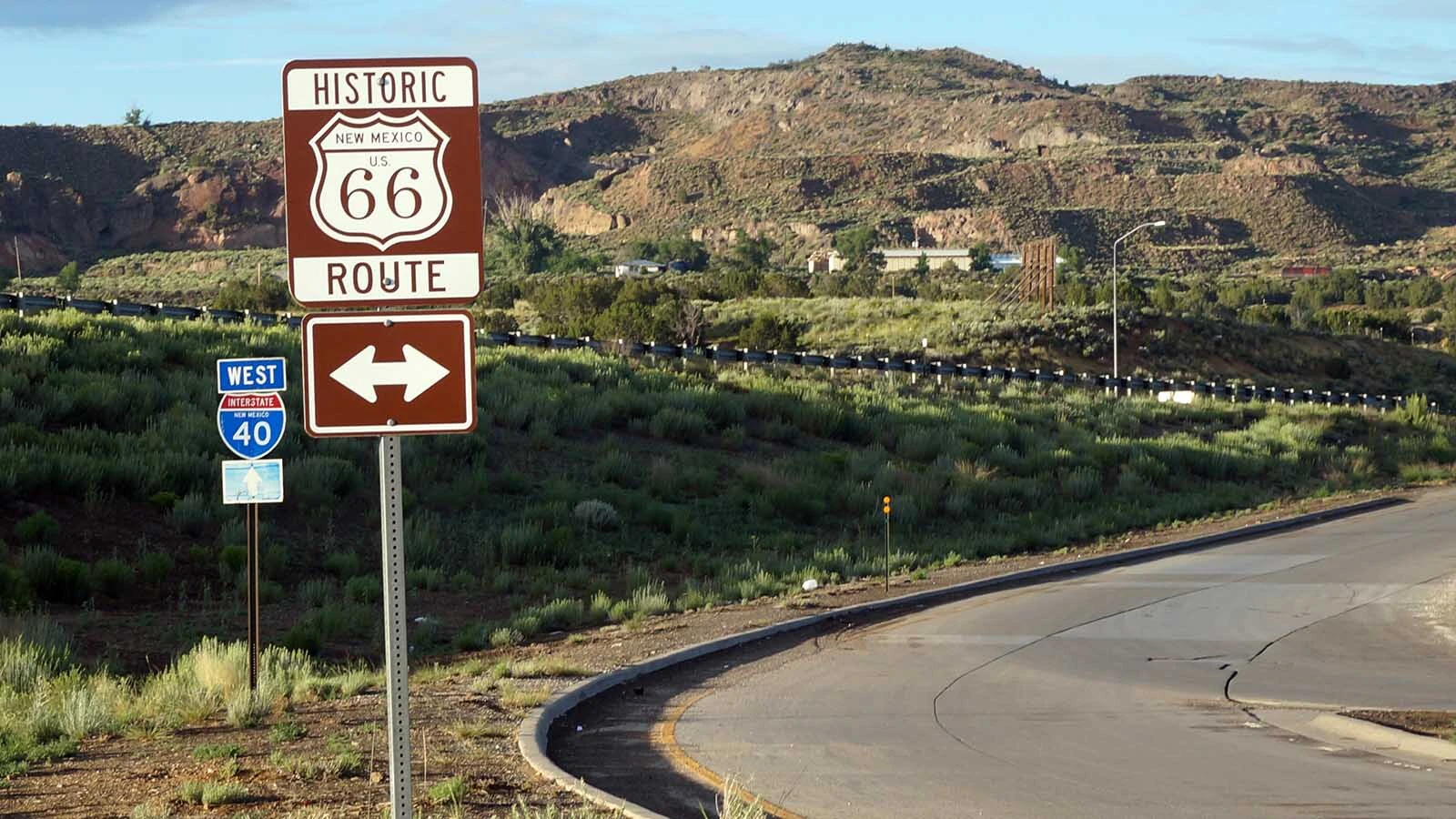
Historic U.S. Route 66 as it runs through New Mexico. (John Baker via Alamy) 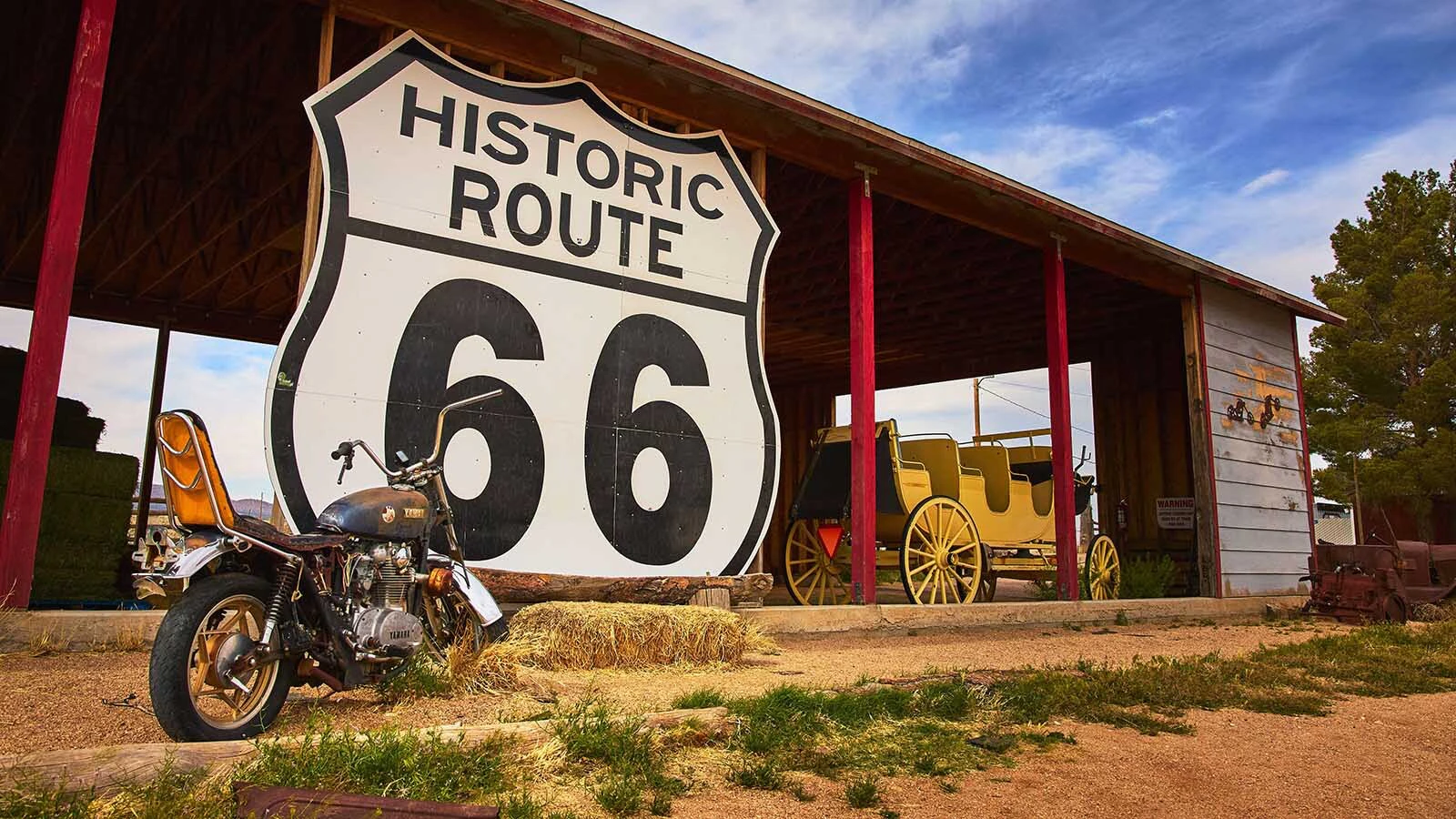
Route 66 as it runs through Arizona. (Nicholas Klein via Alamy)
Inspiring New Legends
The Route 66 shield is one of the most recognizable in the world, Hinckley said. He’s read claims from some experts that it’s even more recognizable than the Coca-Cola logo.
He believes it.
He’s seen the signs tacked onto barns in the remotest corners of Poland and Ukraine, as well as themed diners in Spain, not to mention bars and roadside cafes across America, both on and off of Route 66.
“Route 66 has always been the route of dreams,” Hinckley said. “And every day the road is inspiring people to do amazing things.”
Like the people trying to rollerblade the entire Route 66. Or the Irish ultra-cyclist riding his bike from Santa Monica Pier in California to Navy Pier in Chicago in 10 days — a world record, set just a few weeks ago.
“I met a World War II veteran and the short version of this is when he got out of the Navy in 1946 in Norfolk, Virginia, him and his wife, newly married, went to California and they drove Route 66 most of the trip,” he said. “They did it on a 1940 Harley in a sidecar, because that was all they could afford at the time.”
In the early 2000s, they decided to celebrate their wedding anniversary by recreating the trip.
“They restored a 1940 Harley Davidson sidecar and they lived in Florida, so their plan was to drive to Oklahoma and continue to California,” Hinckley said. “Well, she got sick and passed away before they could make the trip. And he was diagnosed with lung cancer.”
Doctors took out one lung and part of his other lung, but that didn’t mean the trip was off.
“He told the doctor, ‘I promised my wife I’m taking her to California,’” Hinckley said. “So he rigged up his side car with his oxygen tanks and equipment and he put his wife’s ashes in the side car and went from Sarasota, Florida to the Santa Monica Pier on a 1940 Harley Davidson in a sidecar.”
Where The Map Finally Ends
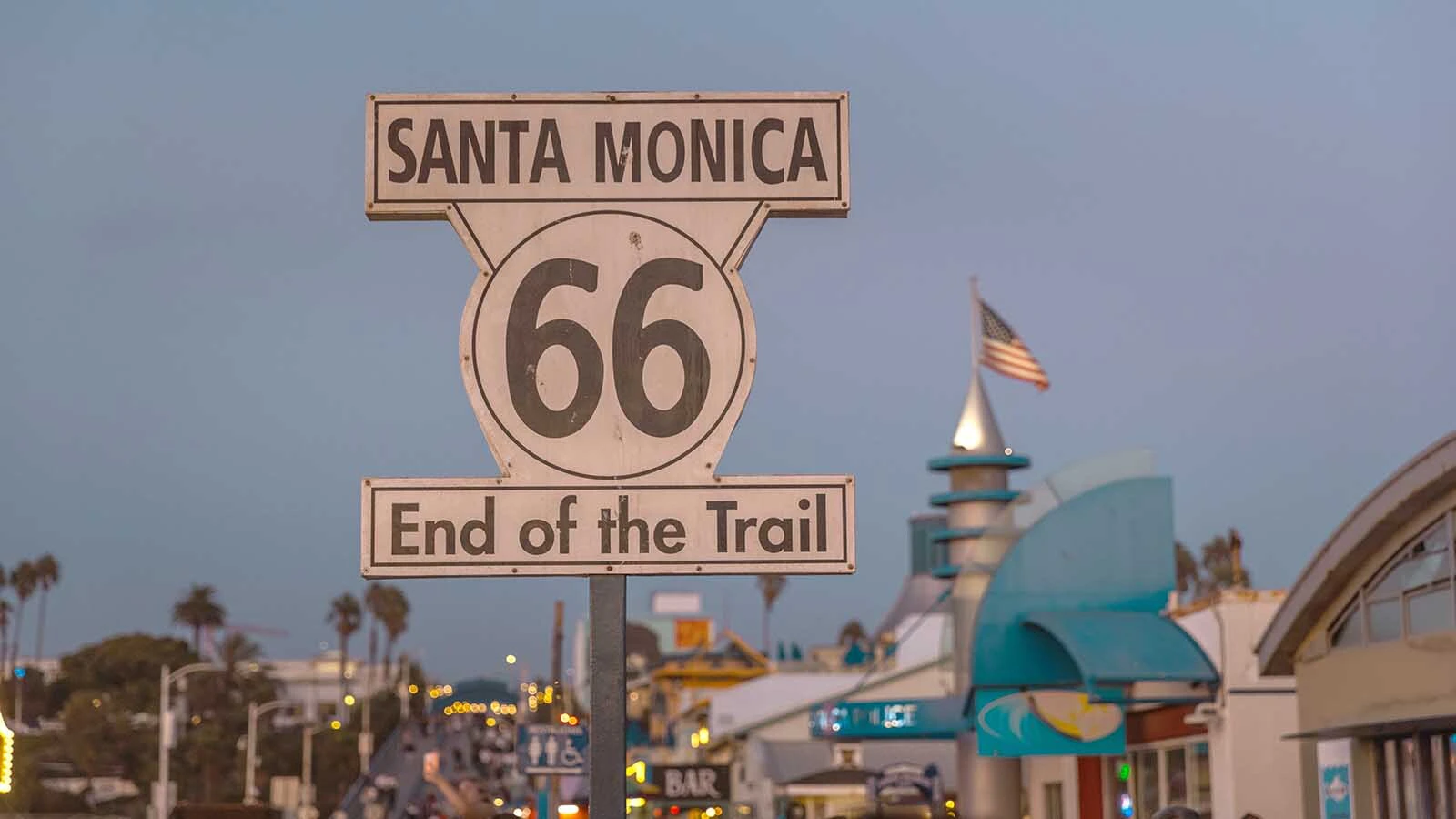
Walk the Santa Monica Pier today, and it’s a microcosm of Route 66 mythology, caught up in one single place.
Chinese protestors march the pier, pleading to be saved from the “evil CCP,” while evangelists try desperately to save the souls of the beaded and bangled tourists walking by. Some are wearing thong swimsuits and T-shirts and little else, while others are swathed in Puritan-style clothing, buttoned up to the neck.
At the end of the pier, a man in a somehow spotless white suit sings “What a Wonderful World” with such conviction it’s impossible not to believe it in that moment.
It is a wonderful world, even when it sometimes isn’t.
Somewhere along that same boardwalk is a shop that claims to be the official last stop for Route 66, selling souvenirs — affordable, if tiny, pieces of the road’s magic.
Technically, Hinckley said, that shop isn’t located at the actual end of Route 66. That’s at Olympic and Lincoln in Santa Monica.
But technicalities don’t overcome emotion in such a moment. Of course, the tourist who has arrived at the end of Route 66 is going to take a little stroll on the famous Santa Monica Pier that’s just two blocks away and find that last little Route 66 stop.
“When you look at it in the context of linear community, all of these places just become quirky neighborhoods in the (Route 66) community,” Hinckley said. “And that’s the other thing about Route 66. If you turn off the television, turn off the news and pick a 200- to 300-mile stretch of the road and just spend a week taking your time talking to people — listen, American diversity is on this road, just like what you saw on Santa Monica Pier.”
The official U.S. highway map says Route 66 is no more. But it’s a character in America’s story now.
It’s one part road, one part legend, and one part promise that somewhere out there, beyond the next town, there’s one more neon sign, one more pie counter, one more stranger with a story to tell — as long as you have a tank full of gas to take you there.
Contact Renee Jean at renee@cowboystatedaily.com
Renée Jean can be reached at renee@cowboystatedaily.com.