
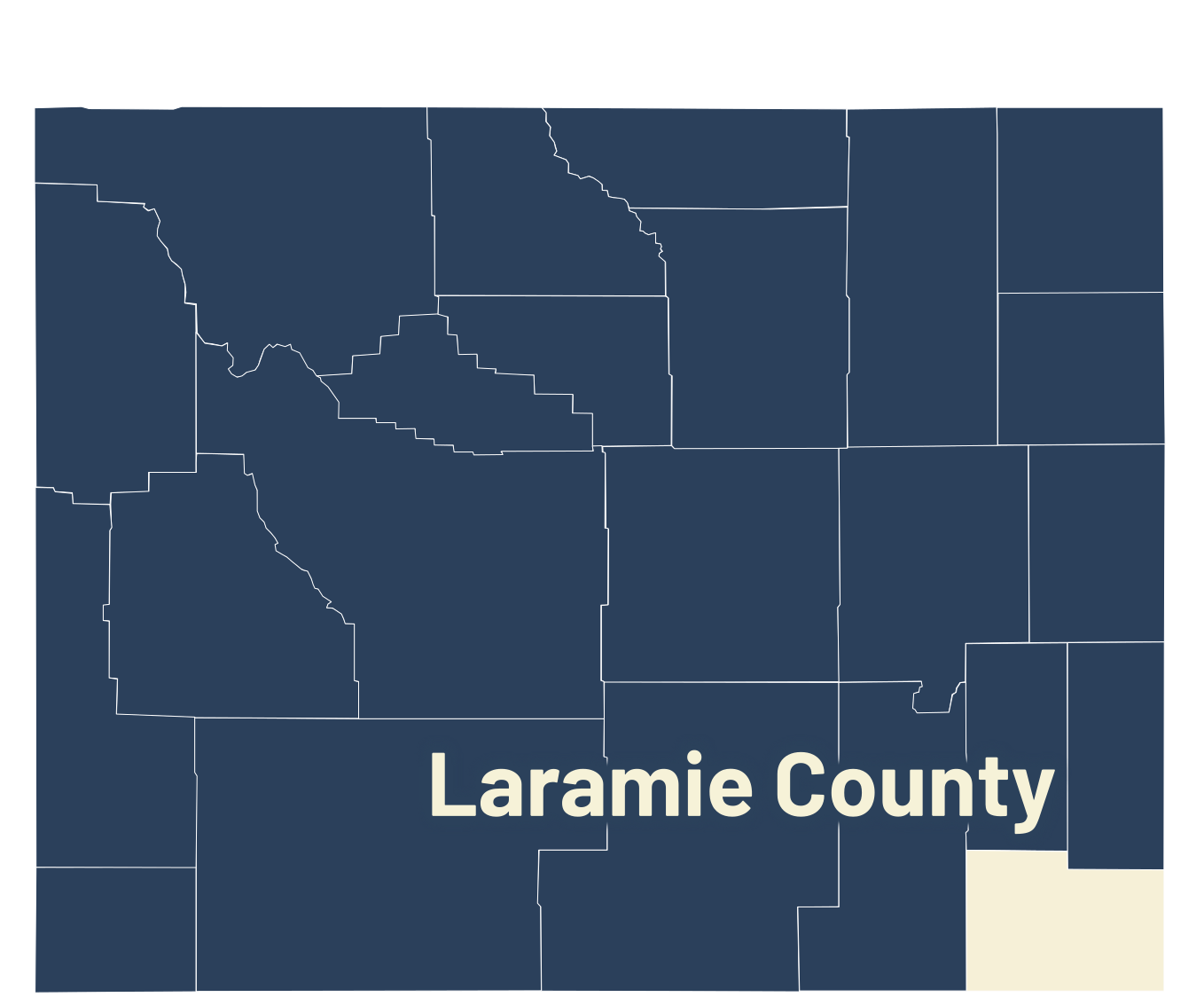
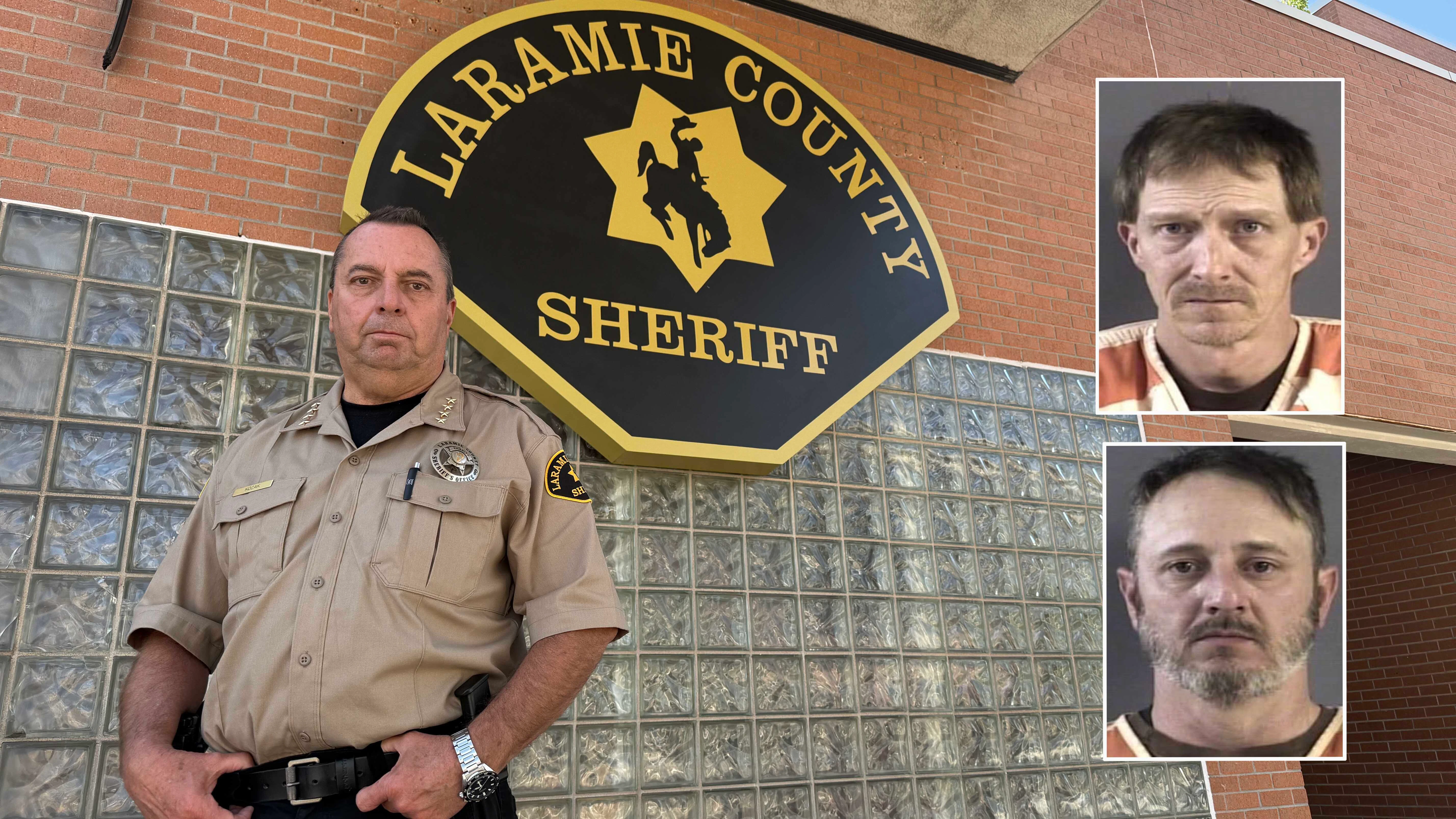
Laramie County Sheriff Brian Kozak says stopping human sex trafficking is a new agency priority because for too long Cheyenne has been a “safe haven” for this form of modern slavery.
An undercover operation in Cheyenne led by two detectives resulted in two arrests for soliciting acts of prostitution last weekend. Kozak said the effort is the first in many years for his office, but he promised there will be more.
“People come to Cheyenne to make those (prostitution) arrangements because everyone knew there was no enforcement,” Kozak told Cowboy State Daily.
“But it’s a hard thing to recover women in the trade. Because there’s so much pressure on them, whether it’s drug addiction or physical abuse. Actually the situation that they’re in, sometimes it’s better than their real home life.”
Kozak said that 10 years ago, when he was Cheyenne police chief, his department began undercover operations to arrest human traffickers when he noticed the online activity was extremely high in Cheyenne.
“I went to my sergeant who ran the undercover unit and told him I wanted them to all go to human trafficking training because I think we have a problem in Cheyenne,” the sheriff said.
Kozak said the sergeant didn’t believe him until he did some research and looked at Craigslist and some other sites.
“He said, ‘Oh my God, we do have a major spike here',” he recalled. “We started to make some great cases against traffickers, or what the industry might call a pimp.”
A Costly Operation
It takes lots of time and money for law enforcement to try to stop human sex trafficking, which is rarely prosecuted in Wyoming. Often the crimes are charged as sexual assault or child abuse.
In addition to overtime, the department had to buy cameras for undercover operations, have “buy money” available for stings, and create ads online.
“Then the investigations themselves can take us out of state as well,” Kozak said.
Successful results are difficult to gauge.
Kozak said his office was successful in helping some women leave the sex trade, but it didn’t happen until after investigations were completed and the women came to them.
“We have the resources to help them, we have housing, and that’s the goal for these operations,” he said.
He said the police stings ended when he left the Cheyenne Police Department because the next administration didn’t make human trafficking a priority.
“As sheriff, I’m bringing it back again,” Kozak said.
He said trafficking spikes during Cheyenne Frontier Days, which typically brings about 200,000 visitors for the 10-day event.
“During this first (sheriff’s) operation we focused on demand reduction, or what you would call ‘johns', because it’s easier than recovering men in the sex trade,” Kozak noted. “The detectives learned a lot and will change some things when they do that type of operation.”
But the focus will shift soon to trying to find women and young girls in the sex trade as well, Kozak said, by using "reverse stings.” Undercover officers will pose as men wanting to pay for sex acts.
“We’ve trained every single person in the sheriff’s office; all 240 including the civilian staff, have all been trained in human sex trafficking,” Kozak said. “I wanted them to know that was our goal, to reduce the problem here.”
All Personnel Trained
Instead of sending a few detectives to training sessions, Kozak said experts came to Cheyenne. One such session was Tuesday, where assessments were made about what went right and wrong during the first sting.
“What we’re planning to do is take the money we’ve received from Immigration and Customs Enforcement (ICE) and roll it back to pay for the human-trafficking enforcement,” he said.
The sheriff’s office under Kozak’s command signed controversial agreements with ICE last year to deputize local law-enforcement agencies to perform duties otherwise conducted by federal immigration agents. That included arresting and holding people in the county jail until they’re moved to a federal detention center.
In the future, undocumented immigrants arrested through agreements with ICE might be in jail in Cheyenne with sex traffickers who were captured by local law enforcement using funds from the federal agency.
The American Civil Liberties Union of Wyoming sued the Laramie County Sheriff’s Office in May, contending the agency didn’t follow Wyoming law when it signed the agreements.
The first two men the sheriff’s office arrested for alleged solicitation of an act of prostitution were David Drehbol and Christopher Miller, both of Cheyenne. The sheriff’s office identified Drehbol as a registered sex offender who was convicted in 2007 for unlawful sexual contact in Colorado.
The National Human Trafficking Hotline (NHTH) tracks sex cases in every state. The NHTH works closely with service providers, law enforcement, and other professionals in Wyoming to serve victims and survivors of trafficking, respond to trafficking cases, and share information and resources.
Since the organization’s inception in 2007, it has identified 148 cases of human trafficking. A total of 337 victims were identified.
Sex trafficking activity is difficult to track and prosecute. But Terri Markham, executive director of Uprising, a statewide anti-human trafficking group based in Sheridan, estimated Wyoming likely generates $12 million a year from pimp-controlled sex trafficking alone.
Cara Chambers,Wyoming Division of Victim Services director, told the Sheridan Press that Wyoming is susceptible to this type of organized crime. She said Wyoming’s rural population and vast land mass result in many places where traffickers can set up operations undetected.
A large interweb of interstate highways also connects people to some of the biggest hubs in the West.
“There’s a bit of a circuit that these traffickers will take their victims through to Las Vegas and up in California, and it goes through Wyoming,” Chambers said.
The Department of Homeland Security defines human trafficking as the use of force, fraud or coercion to obtain some type of labor or commercial sex act.
If you or someone you know is experiencing human trafficking, contact the national human trafficking hotline at 1-888-373-7888 or your local law enforcement office.
Kerry Drake can be reached at: Kerry@CowboyStateDaily.com


