GILLETTE — The only notion that high-school junior Caden Shear had of a pioneer-style wagon is what he’d seen playing “The Oregon Trail.”
Yes, the wildly popular 1974 computer game is still teaching kids about frontier life on Nintendo, Xbox and PlayStation consoles.
Today, it has a phone app called OG Trail and an update letting players use trading and crafting to upgrade their wagons, buy food and cure ailments.
But Shear’s classmate, Dyson Eixenberger, had no such concept.
“When our teacher said we were going to build a sheep wagon, I was confused,” said the Campbell County high school student. “I thought he might be talking about a trailer to put sheep in.”
Thousands Of Sheep Wagons
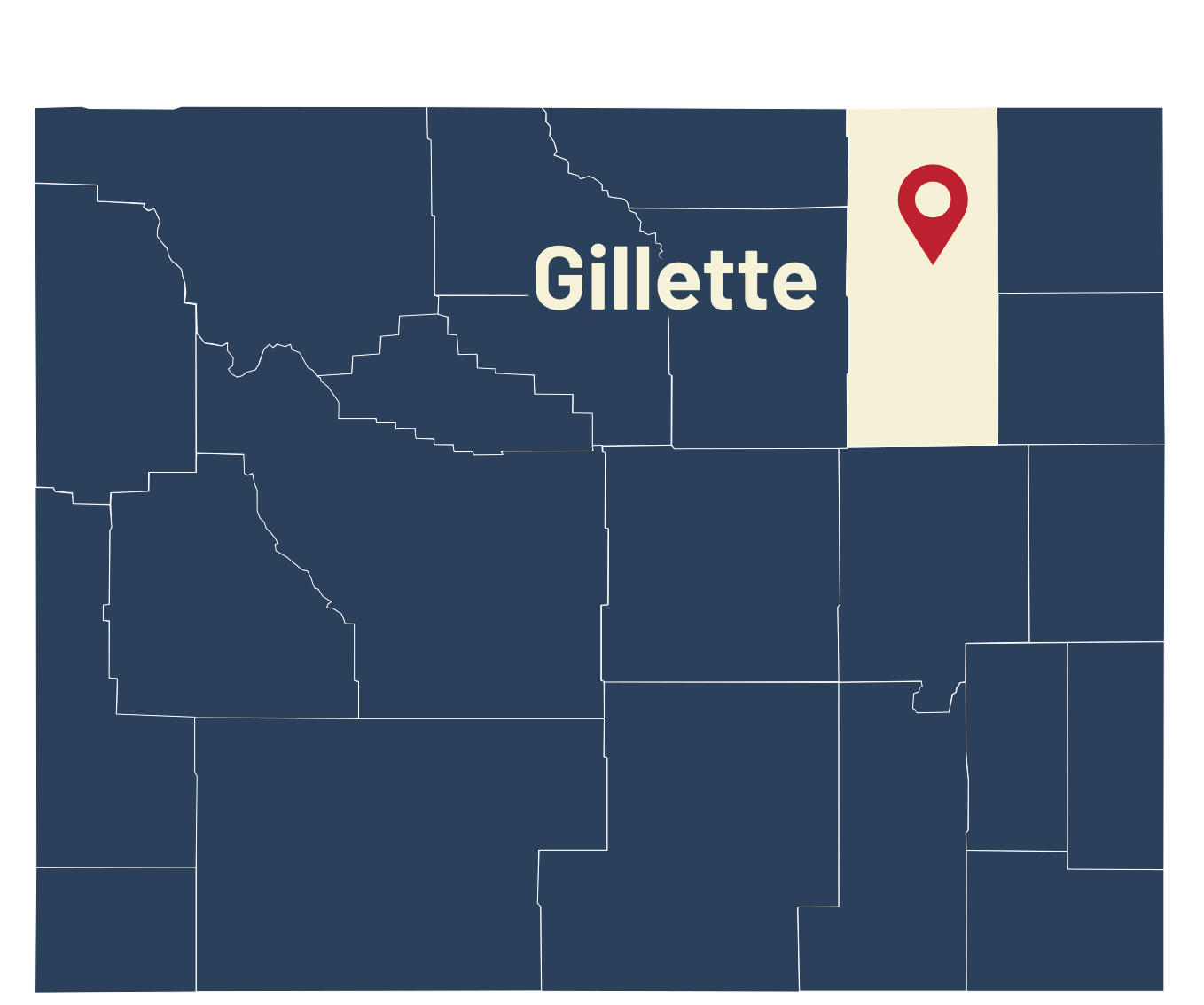
The idea to have construction fabrication classes at each of Gillette’s high schools build new sheep wagons was the brainchild of Jeff Wasserberger.
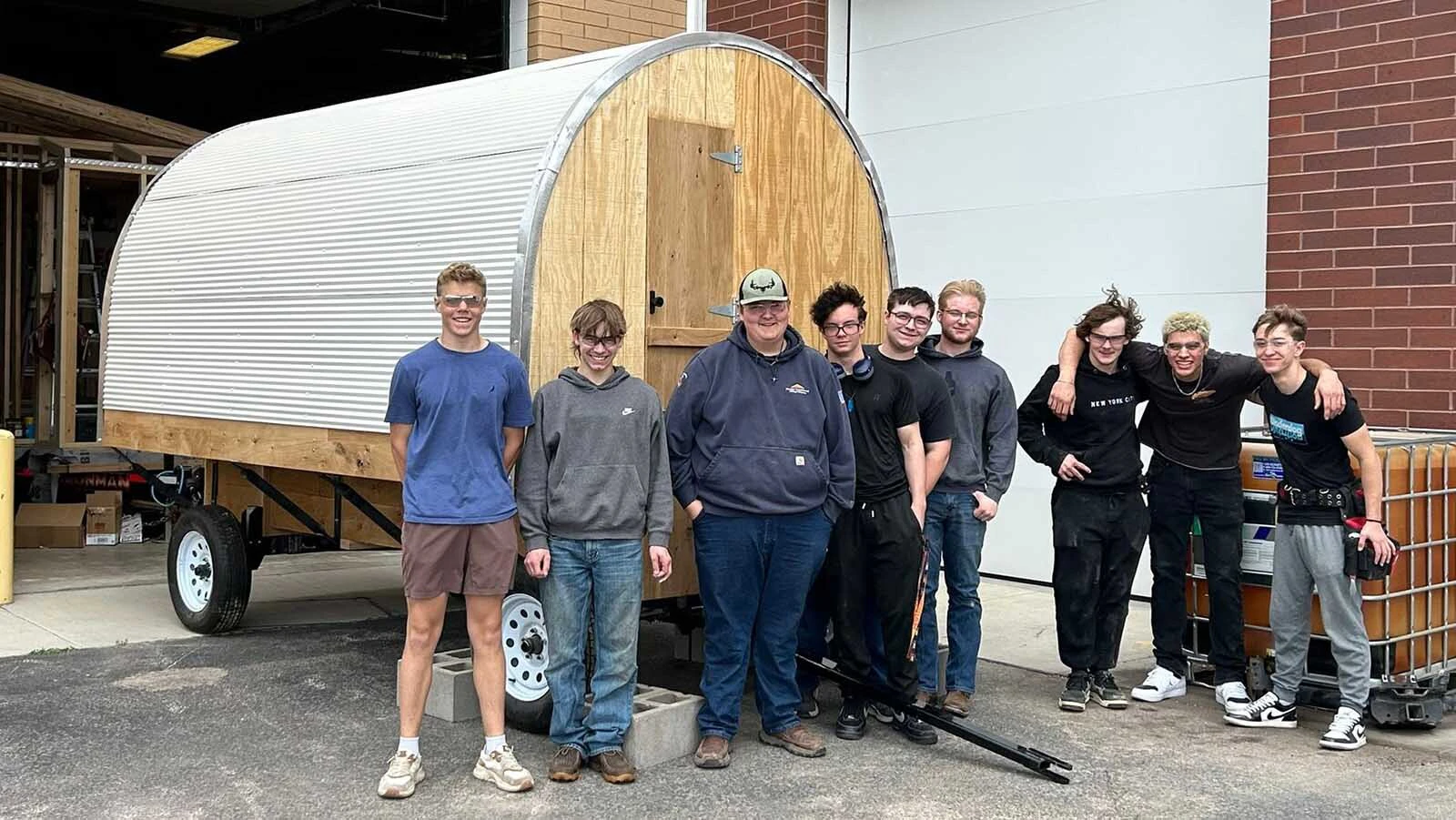
His Board of Cooperative Higher Education Services gathered the donated materials and tasked Thunder Basin High School teacher Nick Newman and Campbell County High teacher Pete Stocker with helping their students each put together sheep wagons much like the one invented by a Rawlins blacksmith in 1884.
The world’s first mobile home for sheepherders was 12 feet long and 6.5 feet high with a built-in stove, bed and cabinetry.
By 1910, Wyoming boasted more than 5 million sheep and was the second-largest wool-producing state in the nation after Texas.
Protection and care of the wooly critters required a herder for about every 3,000 ewes, meaning thousands of sheep wagons dotted the plains and peaks of Wyoming.
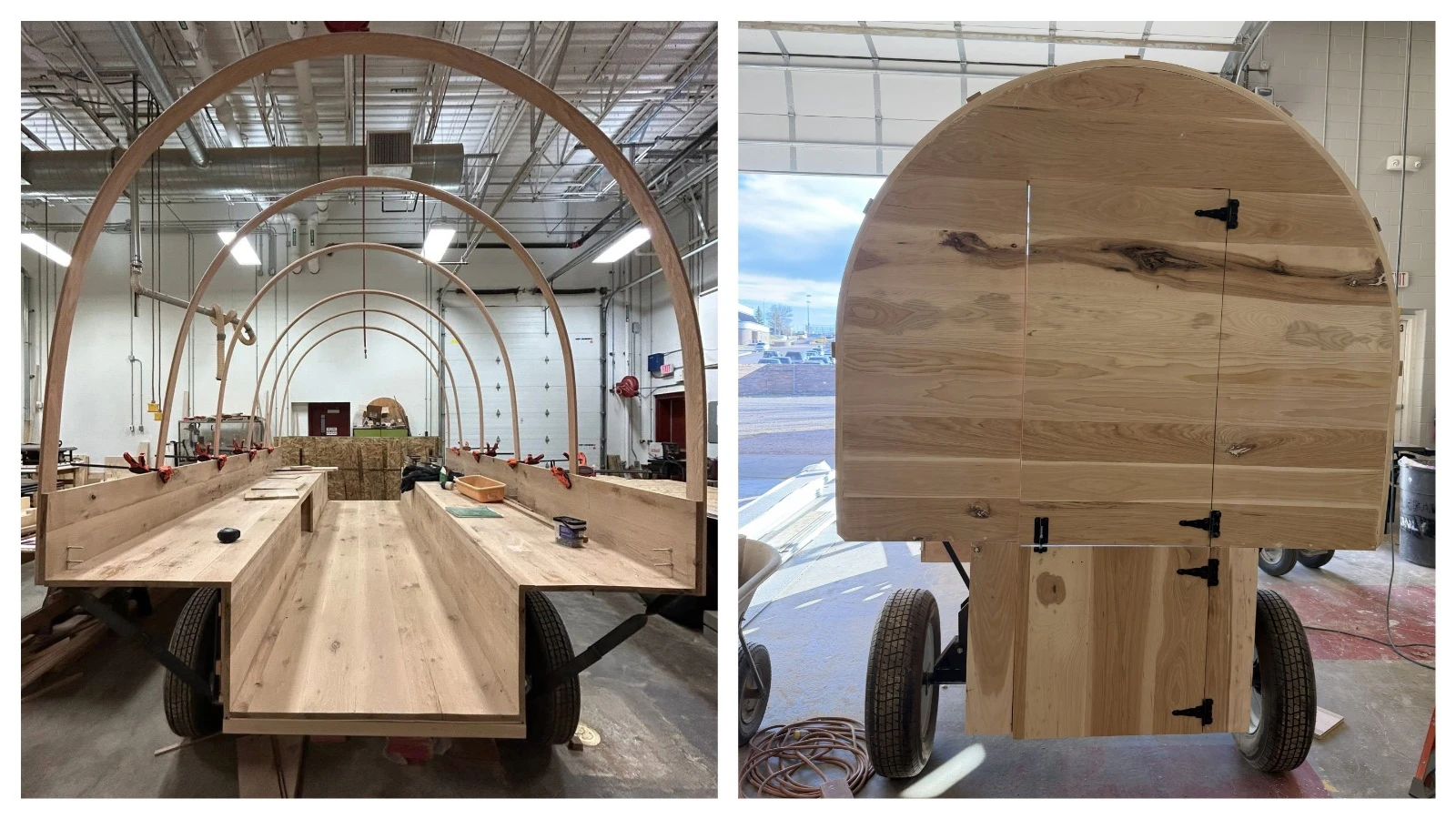
The closest most of the Gillette high-schoolers got to sheep wagons was playing the classic video game “The Oregon Trail.” Now they can travel the trail themselves in the period sheep wagons they spend two years building as class projects. (Courtesy Photo) 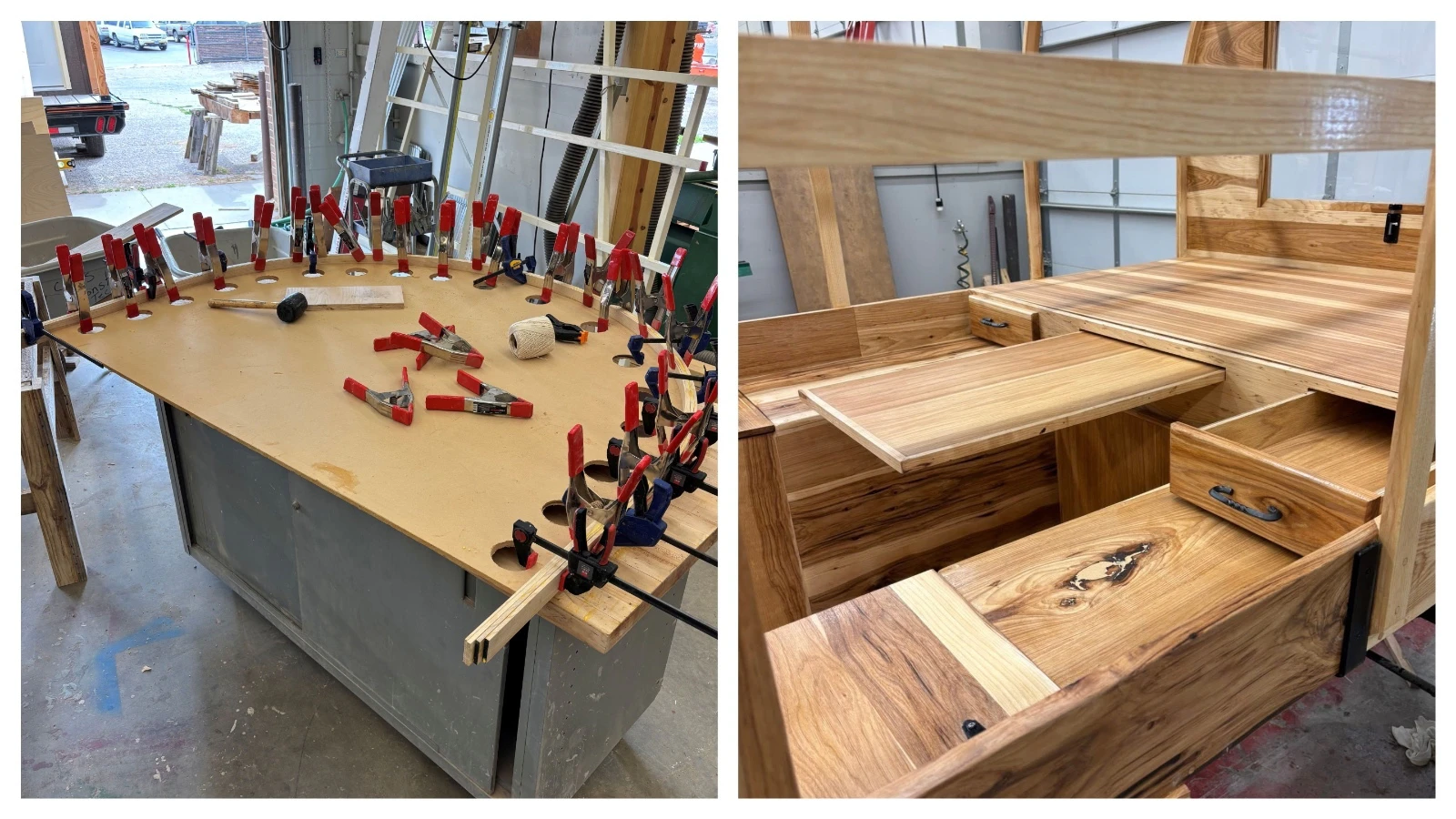
The closest most of the Gillette high-schoolers got to sheep wagons was playing the classic video game “The Oregon Trail.” Now they can travel the trail themselves in the period sheep wagons they spend two years building as class projects. (Courtesy Photo) 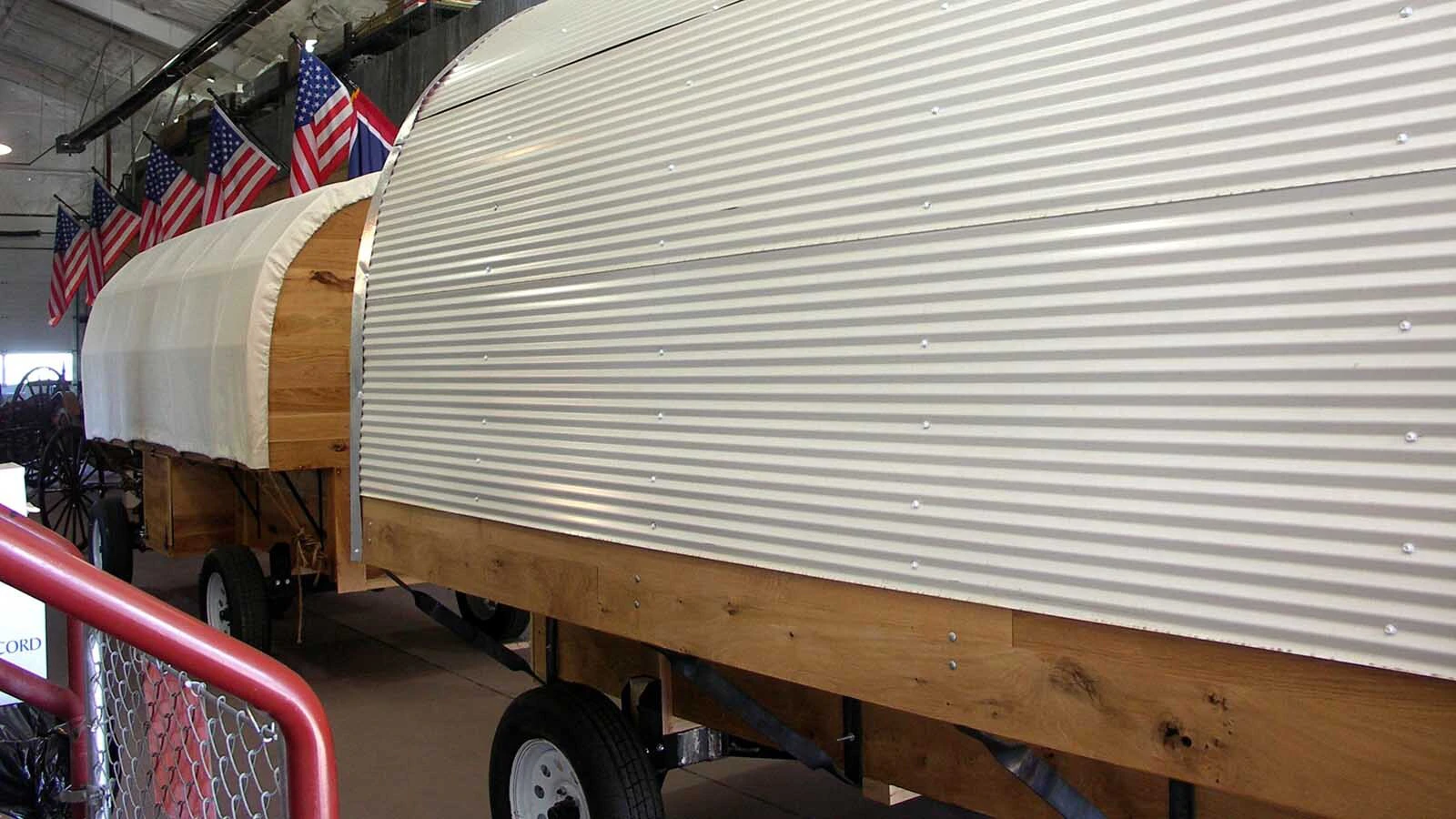
The closest most of the Gillette high-schoolers got to sheep wagons was playing the classic video game “The Oregon Trail.” Now they can travel the trail themselves in the period sheep wagons they spend two years building as class projects. (Courtesy Photo)
The Original Van-Lifers
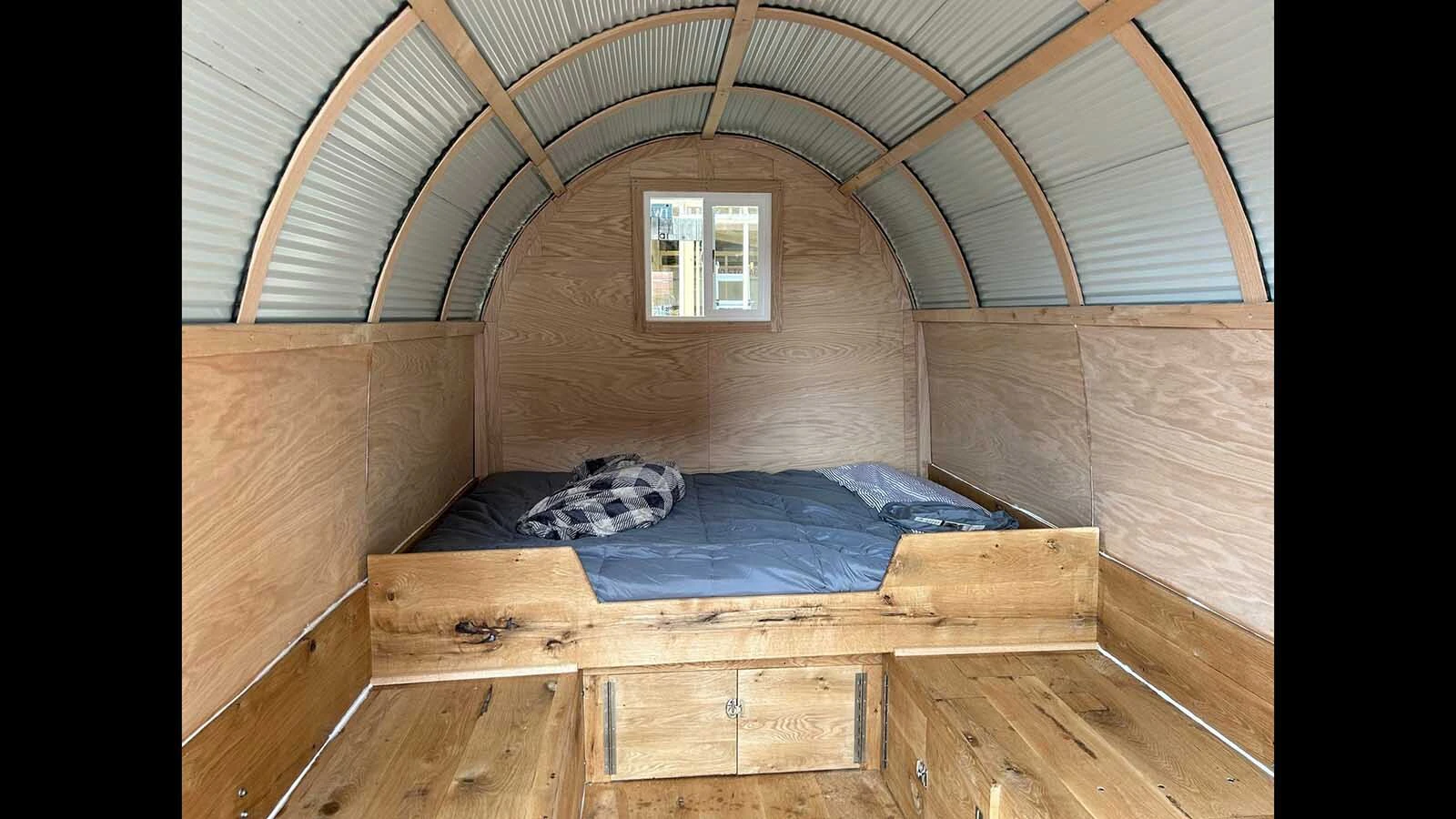
While Shear admitted that living for weeks at a time in a sheep wagon would be better than sleeping in a tent, it’s tight inside, he said.
He lamented that everything you needed either pulls out or is tucked under something else.
But sheep wagons aren’t that far removed from the modern van-life movement, where people pack their lives into mobile tiny homes on wheels.
“I didn’t expect it to be that hard of a build,” said Shear, who plans to become a civil engineer. “It was really time-consuming, but it was pretty fun building it.”
The finished wagons, which took two years to complete, were donated for fundraisers.
The Thunder Basin wagon went to the Gillette College Foundation, while the CCHS wagon donation hasn’t been finalized, but options include the local YES House or local SkillsUSA chapter.
That was a big ask for students accustomed to taking their finished projects home with them, Stocker said.
“Motivation was tough,” he said. “It was a long project, and as a society, we are instant-gratification people.”
Cutting It Close
Eixenberger admitted he wasn’t sure his team’s wagon would ever be finished.
“Cutting wood to make it look curved was pretty hard,” said the 16-year-old. “There were people in that class who didn’t know what they were doing, and we ended up redoing a lot of things.”
Shear also found it “weird” to put tin on a curved ceiling.
“I can do stuff creatively, but I always have a reference,” he said. “For a sheep wagon, there’s not even a (period) reference. But it was cool to build.”
In fact, sheep wagons were often built on the fly on the frontier out of whatever materials were on hand. That really threw the teens for a loop, said Newman.
The closest most of the Gillette high-schoolers got to sheep wagons was playing the classic video game “The Oregon Trail.” Now they can travel the trail themselves in the period sheep wagons they spend two years building as class projects. (Rockpile Museum via Facebook) 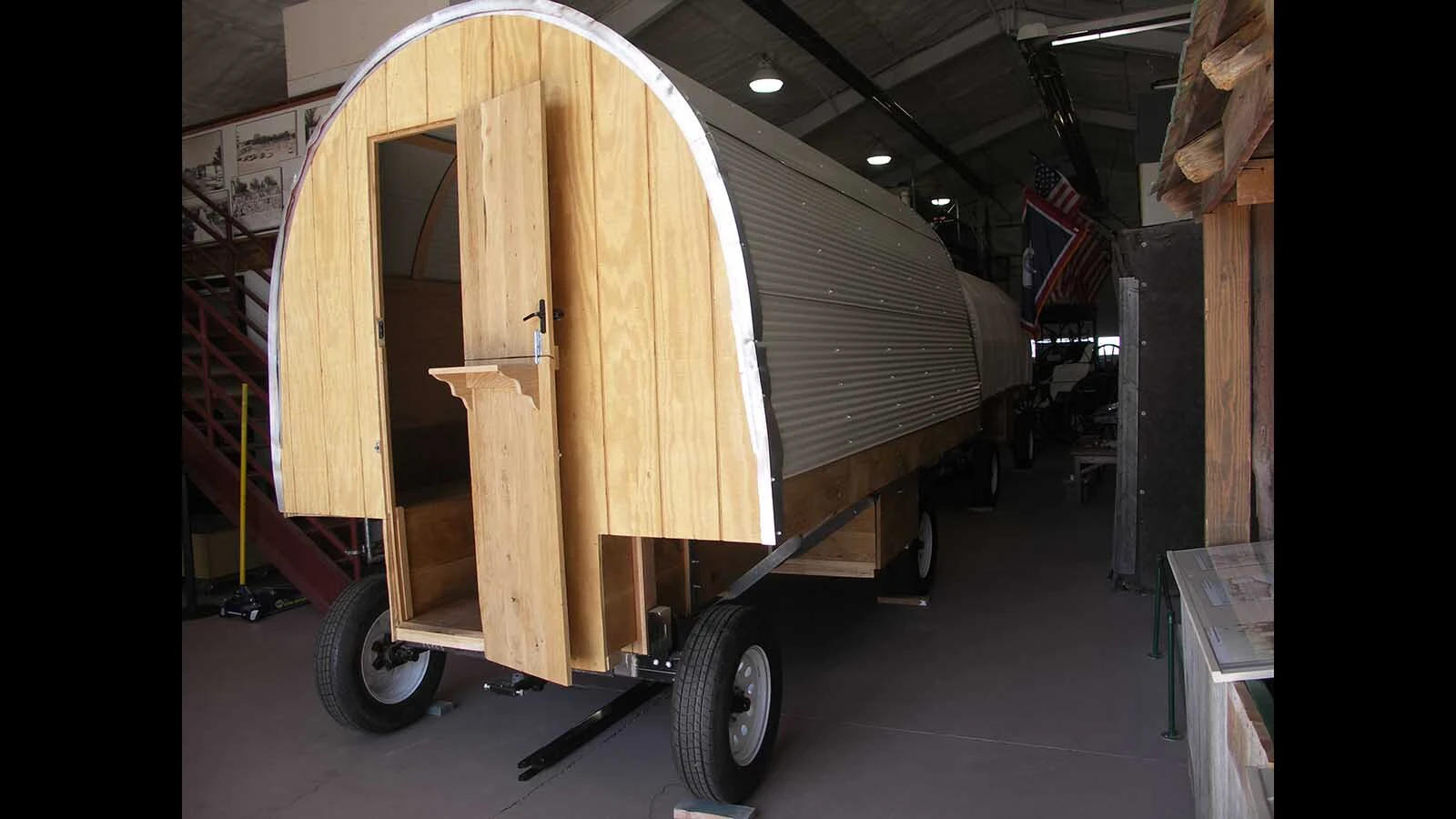
The closest most of the Gillette high-schoolers got to sheep wagons was playing the classic video game “The Oregon Trail.” Now they can travel the trail themselves in the period sheep wagons they spend two years building as class projects. (Courtesy Photo) 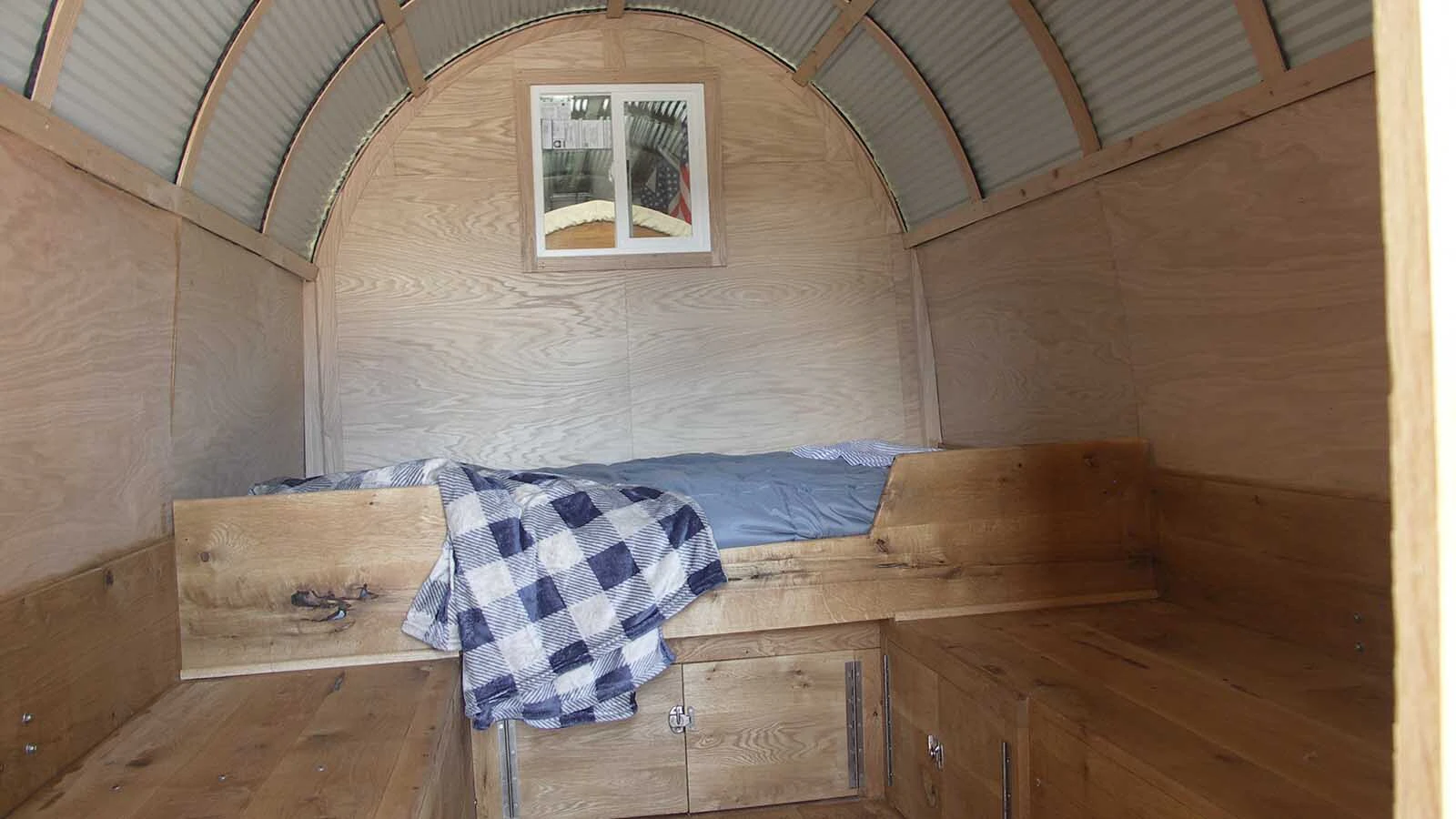
The closest most of the Gillette high-schoolers got to sheep wagons was playing the classic video game “The Oregon Trail.” Now they can travel the trail themselves in the period sheep wagons they spend two years building as class projects. (Courtesy Photo) 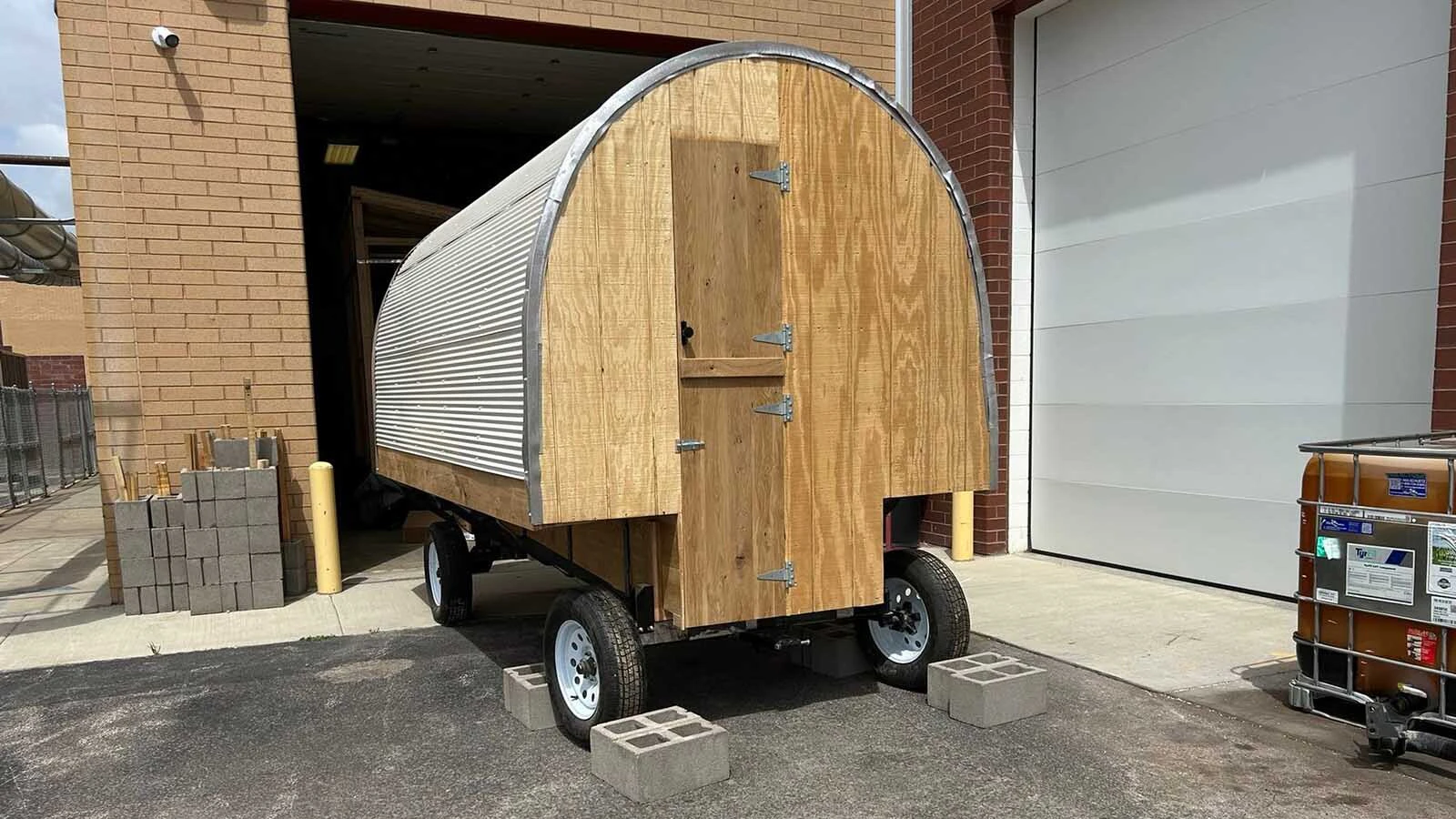
The closest most of the Gillette high-schoolers got to sheep wagons was playing the classic video game “The Oregon Trail.” Now they can travel the trail themselves in the period sheep wagons they spend two years building as class projects. (Rockpile Museum via Facebook)
Working Through Rivalry
Newman, 40, and Stocker, 37, both attended Casper College, have ranching roots and are wrestling coaches at their respective high schools.
Working together isn’t something that comes natural to the rival Gillette schools.
“There’s always some (rivalry), because he wears blue and I wear purple,” said Stocker.
The two visited each other’s shops over the past two years to compare progress and pick each other’s brains.
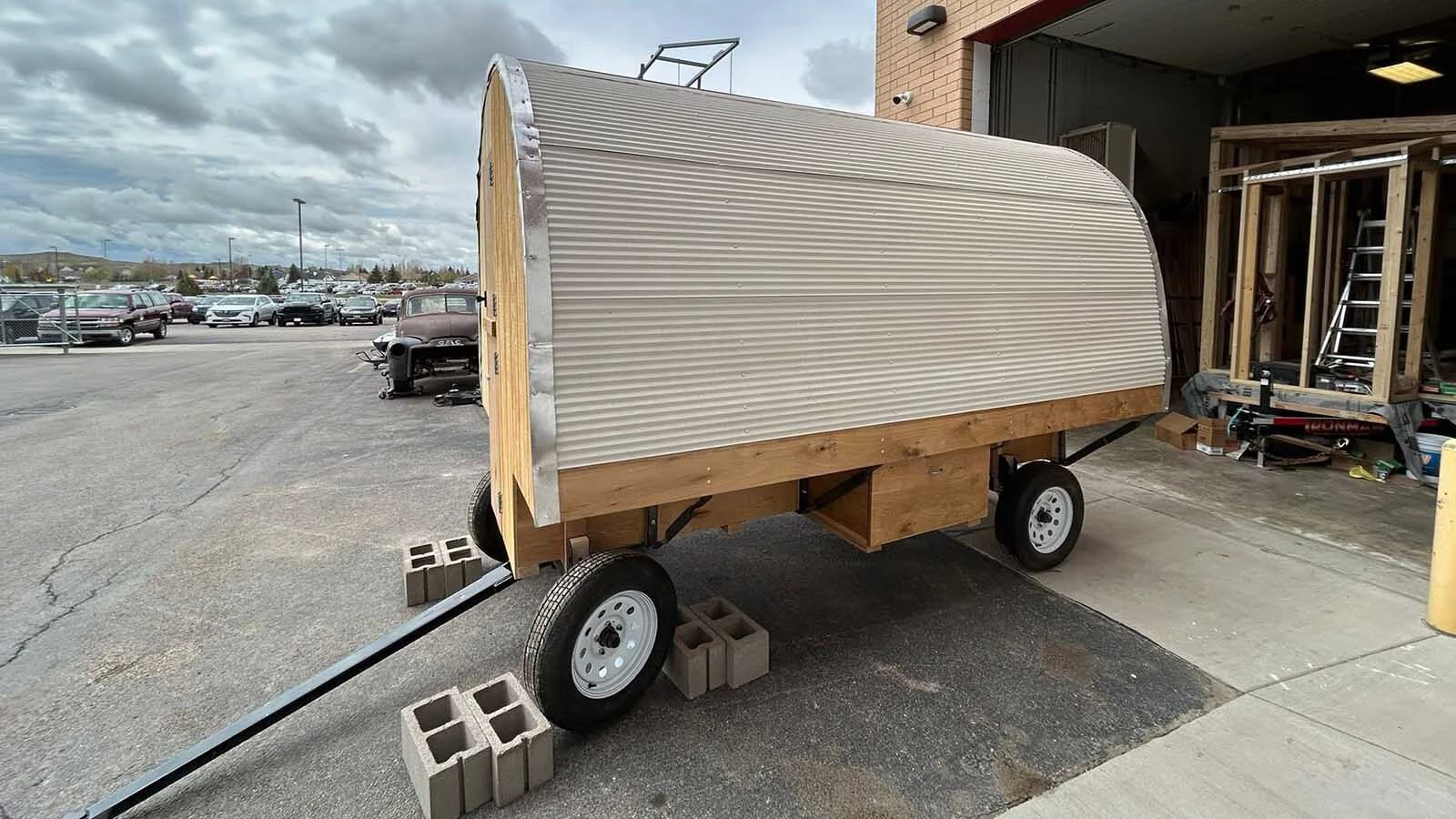
“Pete’s sheep wagon is a Cadillac,” said Newman, whose students fabricated their own bench brackets and welded an extended frame. “His is shiny. They did a good job over at Campbell County. We went for functionality. Ours is longer and wider.”
The Thunder Basin-made wagon features white oak and everything is tongue-and-groove. The CCHS wagon is smaller, featuring a canvas roof and beautiful hickory interior.
New Life As Airbnbs
Since herders began zooming out to the sheep via motorbikes or ATVs in the 1960s and ’70s, the antique wagons have been obsolete.
But a few fully restored “star-gazing one-bedroom sheep wagons” are advertised by Airbnb as a way of “glamping on a working ranch” or even as private guest quarters.
That could be the ultimate fate of the new wagons after they’re auctioned or raffled.
While had Stocker never built a sheep wagon, it was actually on Newman’s bucket list.
“I grew up working for the Nicolaysen outfit — a huge sheep producer near Casper,” he said. “The foreman, Kelly Glause, refurbishes sheep wagons and in our downtime, we helped him.”
Newman feels he was born a century too late.
“I’ve always ridden on the shirttails of the old-timer’s stories about moving herds and working on open range,” he said. “Today, ranches have portable corrals every quarter-mile and pickups and trailers make everything so easy.
“Just living off the land and being out there all the time? That was the deal, to me.”
Trying to explain that romance to today’s teenagers was tough, the teachers said, but worth it.