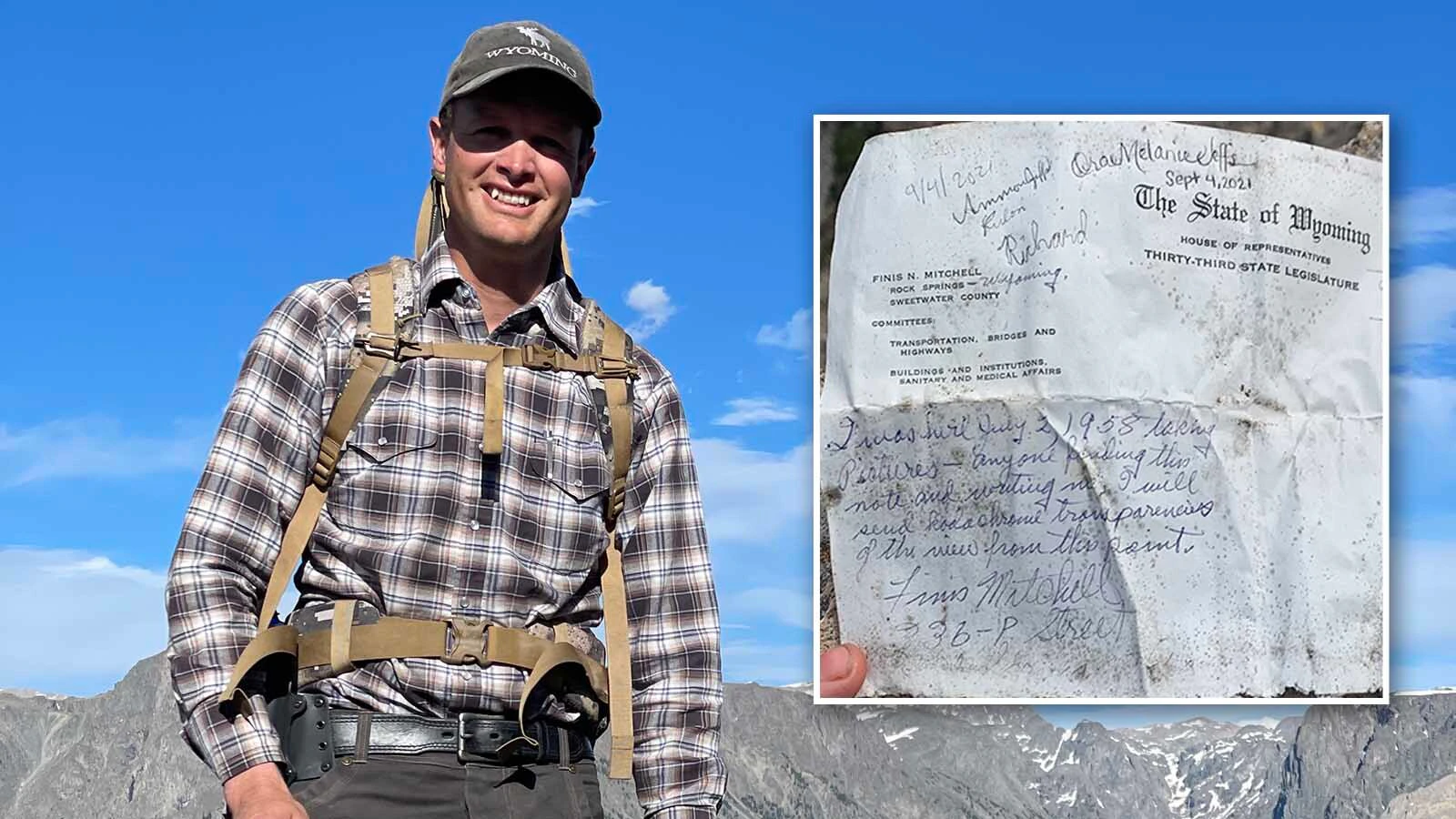
Renowned “Lord of The Winds” mountaineer Finis Mitchell died in 1995, but decades later people are still finding unexpected traces of the passionate Wyoming conservationist in the Wind River Range.
Mitchell was an early practitioner of “leave no trace behind,” a practice embraced by today’s outdoor world.
He did, however, leave some tiny treasures behind in the wild Wind River Range — treasures people are still finding to this day.
Those are his handwritten notes, scribbled in ink and stashed inside small plastic medicine tubes and anchored with impromptu piles of rocks so they don't blow away.
The notes invite people to contact Mitchell if they’d like some copies of Kodachrome transparencies he made of the view from that spot.
The notes reflect Mitchell’s generosity when it came to sharing his love of the Wind River Range.
By the time he died, Mitchell had taken close to 120,000 photos in the Wind River Range, using them often in free, educational slideshows where he promoted responsible management of the wilderness he so loved.
He was also known to give away many of his postcards to people he met who loved The Winds as he did.
He was really trying to sell the postcards, but he just couldn’t seem to help himself when it came to sharing his beloved Winds with others.

An Odd Pile Of Rocks
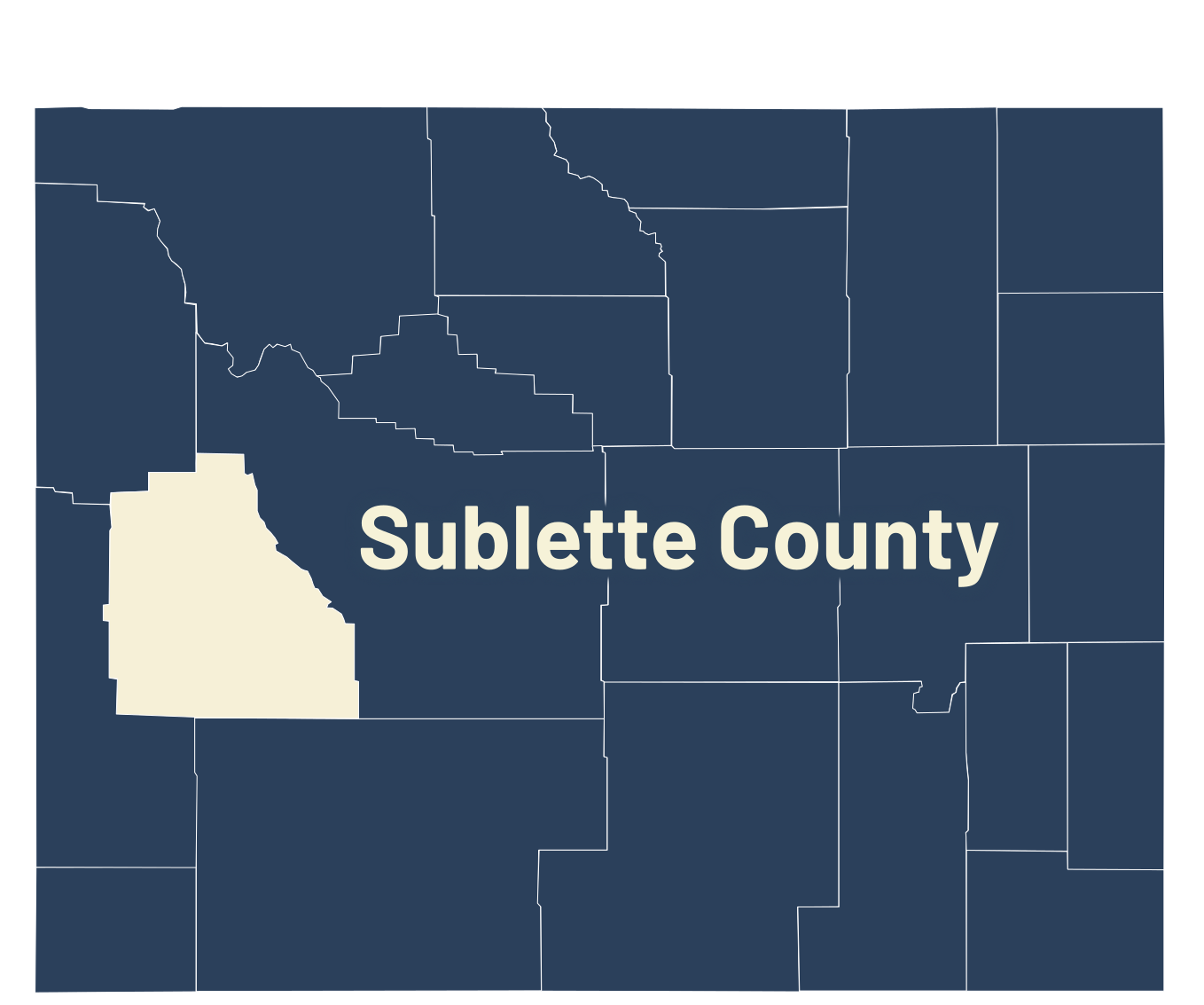
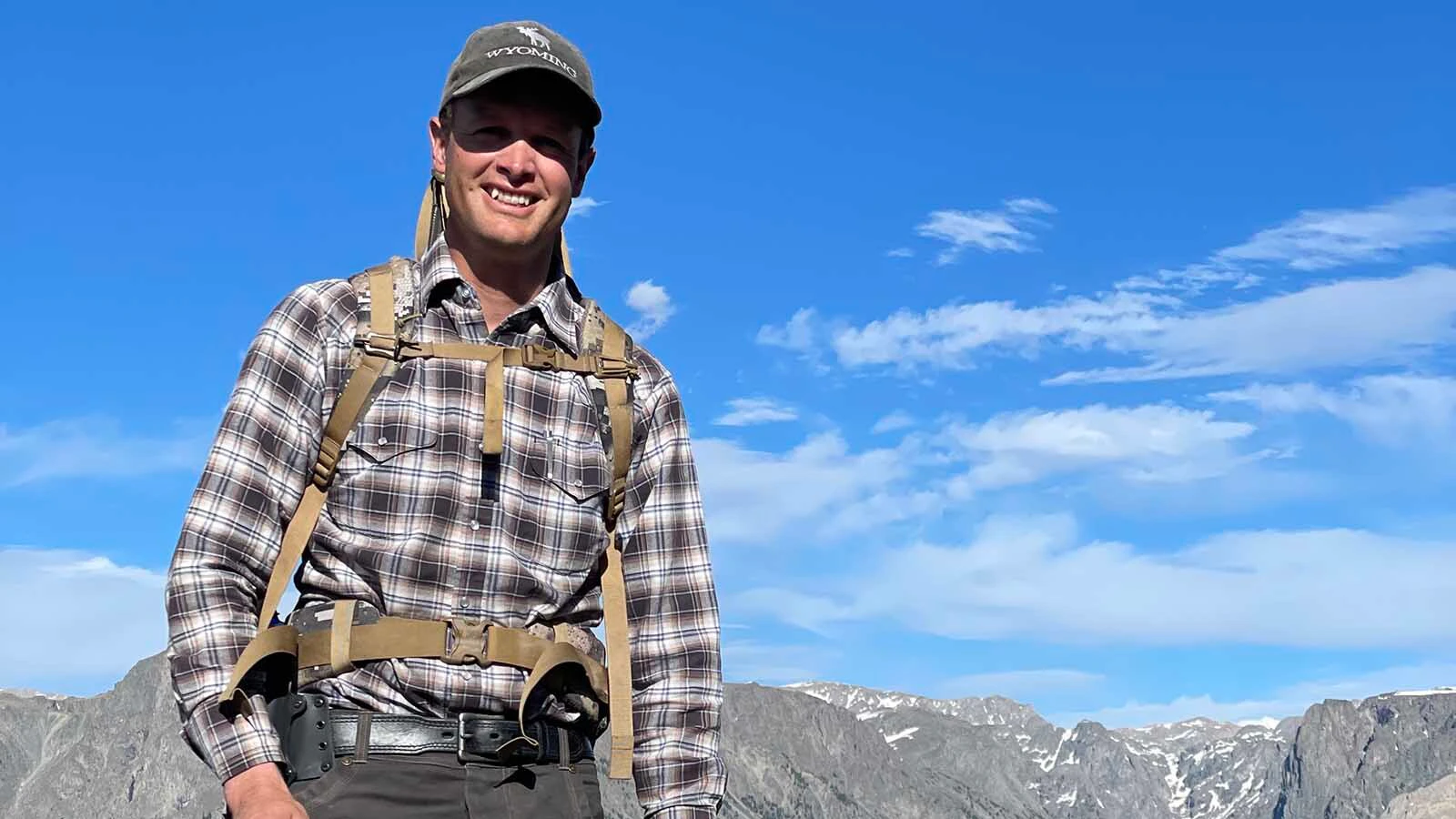
Tell Star Valley photographer Ammon Jeffs that he’s a trifle obsessed with the Wind River Range, and he wouldn’t disagree.
Jeffs is among the handful of hikers who can say they’ve found one of Mitchell’s elusive notes in The Winds.
Jeffs wasn’t out seeking history that day in 2021. He was hiking up Sheep's Mountain with one of his sisters to show her a gorgeous view.
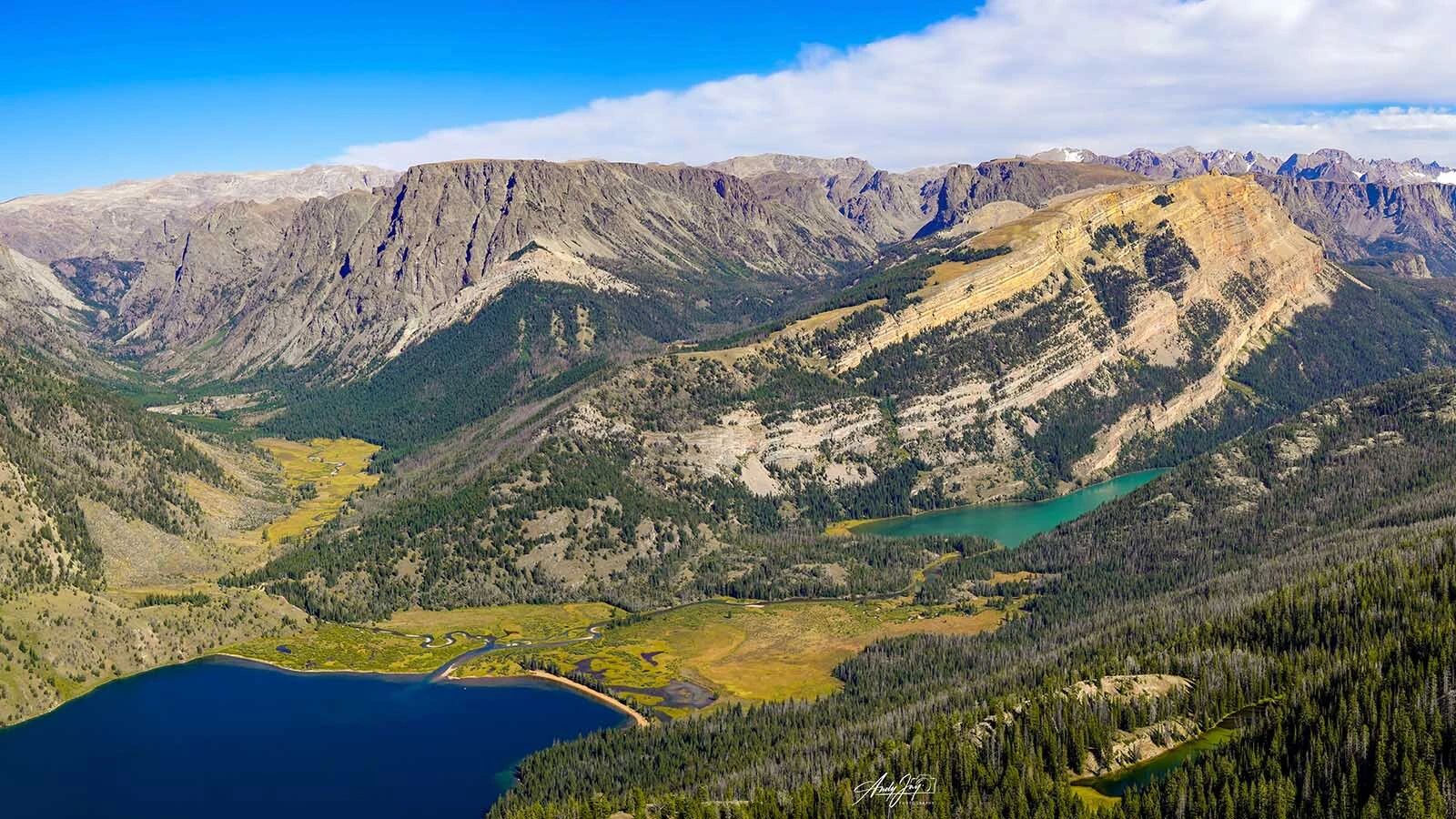
“If you climb up there, you have a pretty impressive view of the highest peaks on the Wind River Range that are southeast of it,” he told Cowboy State Daily. “You can see the Green River lakes, the Green River canyon, and you can see a bunch of glaciers up there by Gannett Peak.”
By then, Jeffs had been hiking in The Winds for a couple of years, inspired and guided by Mitchell’s book “Wind River Trails,” which he discovered while working in Pinedale in 2019.
“(That’s) still relevant today,” Jeffs said. “There are definitely things that have changed in the mountains since his time, but his guidebook’s still very relevant.”
Jeffs wasn’t using any particular trail that day on his hike up Sheep’s Mountain. He had left one sister fishing at a lake while he and the other sister made a beeline for the top of Sheep’s Mountain.
Once there, they paused to soak in the view.
That’s when Jeffs spotted a particularly odd pile of rocks. It didn’t look like a cairn, but he could tell it wasn’t natural either. So, he took a cautious look.
“There was this little medicine tube under there and I was like, ‘Well, this is weird,’” Jeffs said. “So, I opened it up, and it was something Finis Mitchell had put up there.”
Jeffs was blown away.
There he was standing in the footsteps of a man he considered a hero, and the man who had ultimately inspired his own footsteps, bringing him to this place in The Winds.
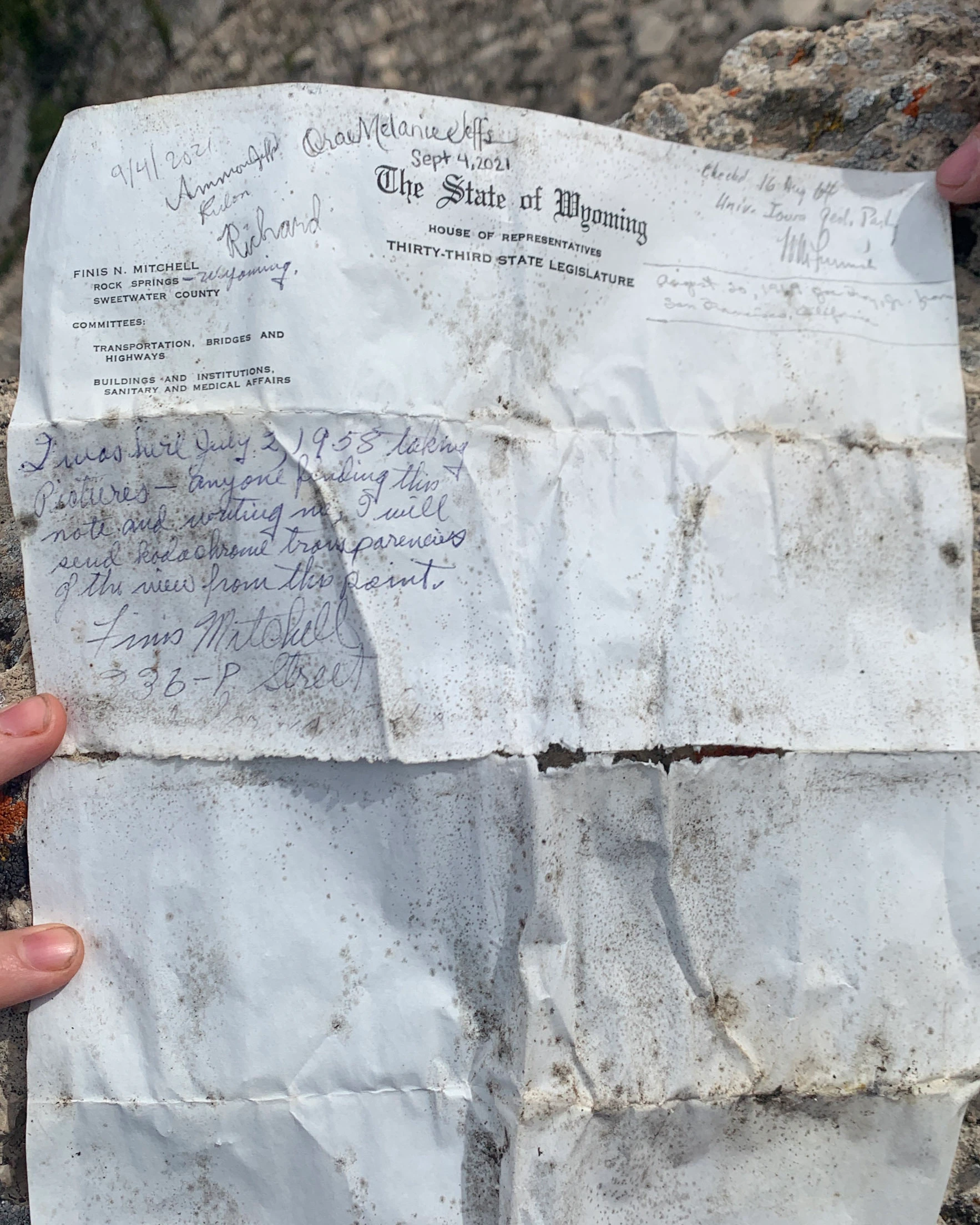
The handwritten note, scribbled on letterhead from when Mitchell was a state legislator, advised the finder that the mountaineer had Kodachrome transparencies to share with anyone finding his secret cache.
“I was here July 2, 1958, taking pictures — anyone finding this note and writing me, i will send Kodachrime transparencies of the view from this point,” the note reads.
It’s signed, “Finis Mitchell,” then gives an address.
Echoes Of History
One of the things that made Jeffs' find even more special is that only two other people before Jeffs had been lucky enough to find this note, based on the signatures on the letter.
One person had found and signed the letter in 1964. Another did the same in 1969.
The note was aging well, all things considered, though it did have some moisture damage, he said.
“The most surprising thing to me was how few people had found it up there,” Jeffs said. “Like, from the last signature, it was 1969, and we found that in 2021. So, like 50 years.”
It speaks to how rare this particular view is, and how few other hikers have been to and really taken in the entirety of the place.
Jeffs and his sister both added their own signatures to Mitchell's note. Then Jeffs reverently folded the worn and tattered paper up, slipped it back into its tube and replaced it under the stack of rocks.
“I suppose someday somebody will find it again,” Jeffs said. “Hopefully, they leave it, too. That’s a really cool thing to find up there in the mountains.”
From Fish Desert To Fishing Paradise
Mitchell was drawn to The Winds during the Great Depression after he was laid off from his railroad job.
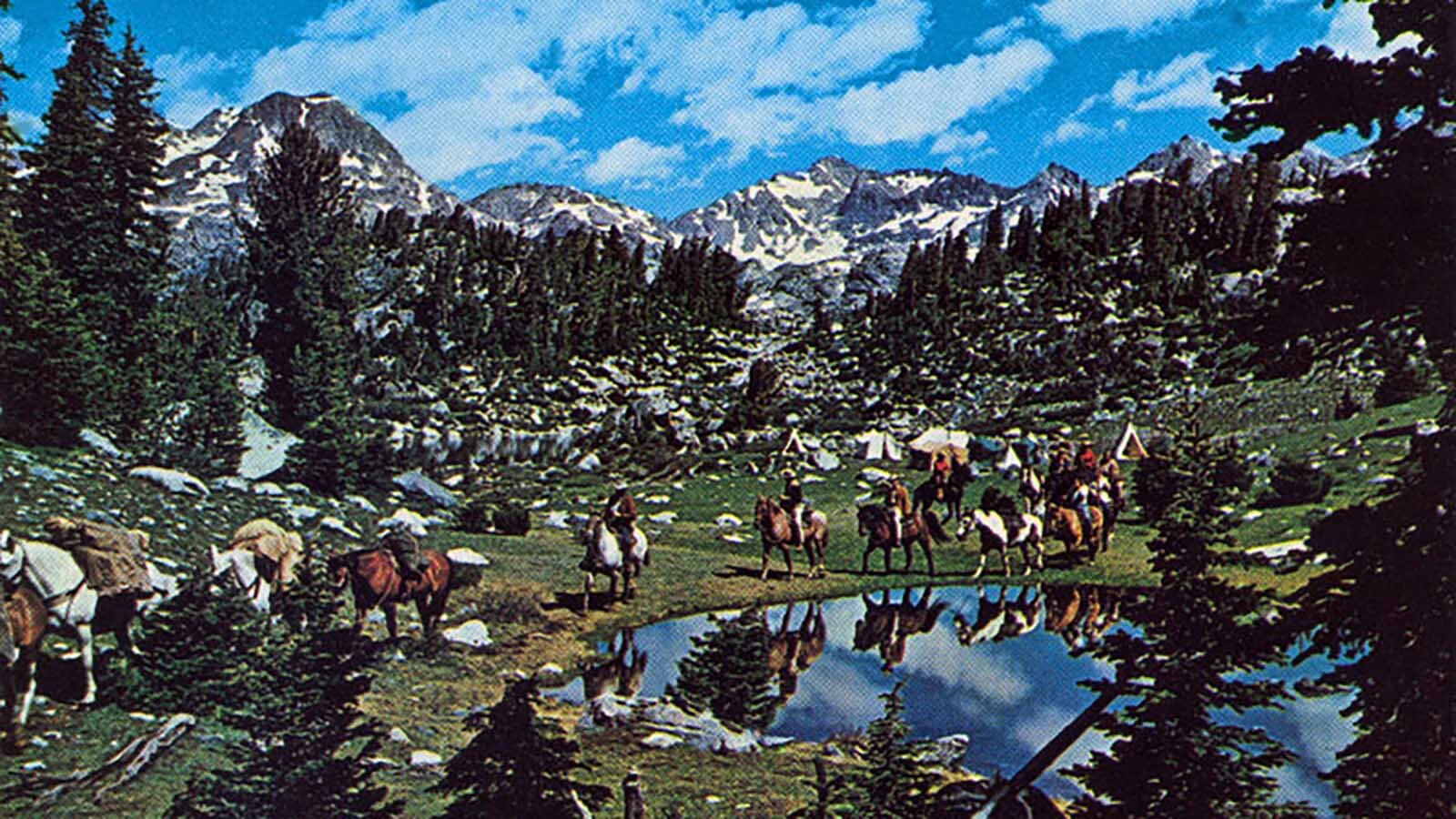
He was inspired to start a fishing camp with his wife Emma called Big Sandy Opening.
Fishing wasn’t all that good in the Wind River Range, though. Waterfalls prevented upstream fish migration, leaving most of the range’s glacially carved lakes barren.
Mitchell and his wife started their own unofficial stocking program, catching fish from one lake, loading them up into 1920s milk cans and packing them to another lake that didn’t have any fish yet.
Eventually, the Wyoming Game and Fish Department heard about what the couple was doing.
They got in touch with the Mitchells — not to chastise them, but to help them. They offered to bring free fish to the Mitchells, if they’d agree to pack them up to the lakes.
Mitchell spent the next seven years hauling 5-gallon milk cans filled with water and baby fish to lakes all over the Wind River, seeding hundreds of lakes with more than 2.5 million trout.
The milk cans were covered with burlap and the horses ensured plenty of sloshing around, which helped oxygenate the water and keep the small fry alive.
A Gentle Visionary
Rock Springs resident John Vase remembers Mitchell as a regular customer at the Outlaw Inn, where Vase worked at the time, and a gentle visionary who changed the Wind River Range for the better.
Mitchell always wore his trademark bib overalls to the Outlaw Inn, usually on restocking runs for his many postcards.
He’d buy a lunch while he was there and then scoot down the road to the next location.
“He was a remarkable man and a perfect gentleman,” Vase said. “And I remember getting postcards that he signed for me and stuff.”
He also remembers those metal milk cans and how Mitchell would pack them on horses for his trips into The Winds.
“Later on in life, when he couldn’t do that, he took a lot of pictures of the Wind River,” Vase said. “He even wrote a book, and he would bring his postcards down to the Outlaw Inn and into the restaurant.”
Love Letters In The Winds
Mitchell spent a lifetime opening up The Winds to others — stocking its lakes, photographing its peaks, mapping out its many trails.
But he also understood the value of discovery. Some things are meant to be stumbled upon by those who are willing to work for it.
Jeffs finds it fitting that Mitchell’s notes remain in The winds, an adult Easter egg of sorts, for the patient hiker who loves the Wind River Range enough to push beyond the trail, but will still take time to notice a small pile of strange rocks.
“I was pretty happy to find something he had left,” Jeffs said. “It made me feel a little more connected to what he’s done there, and more appreciative of his work.”
In another 50 years, Mitchell’s notes may no longer be legible.
For now, however, they are still hiding in a place named after the wind, his love letters from the past to future generations of Wind River enthusiasts, telling a transient human tale in a range large enough to swallow them all whole.
Contact Renee Jean at renee@cowboystatedaily.com
Renée Jean can be reached at renee@cowboystatedaily.com.