A federal agency that examined how the country’s energy system could evolve over the next quarter century is forecasting little to no growth for nuclear energy at a time when Wyoming and the federal government are banking on expanding the industry.
The U.S. Energy Information Administration on Wednesday released its Annual Energy Outlook 20, a sweeping look at how the country's energy system could evolve through 2050 under a wide range of assumptions about economic growth, fuel prices, technology costs and federal policy.
The agency's best read on the nuclear future is essentially a flat line, even as the Trump administration pushes to roughly quadruple U.S. reactor capacity by 2050.
The outlook runs domestic energy markets through scenarios that test everything from booming data center demand to suspended tailpipe rules to dramatically higher and lower oil and gas production. In nearly every one, nuclear barely budges.
Total U.S. nuclear generation hovers near 800 billion kilowatt-hours through 2050, and the technology's share of the overall electricity mix slips from 17% in 2025 to somewhere between 12% and 15% by midcentury, according to the report.
The only meaningful uptick comes in a scenario where natural gas prices climb high enough to make new reactors economical in the 2040s.
EIA said its projections for nuclear capacity stay flat across most of the cases it modeled, and it noted that the National Energy Modeling System used to produce the outlook is built around conventional large- and small-scale light water reactors. Newer designs — including most small modular reactors, microreactors and fusion concepts — fall outside what the model is set up to evaluate.
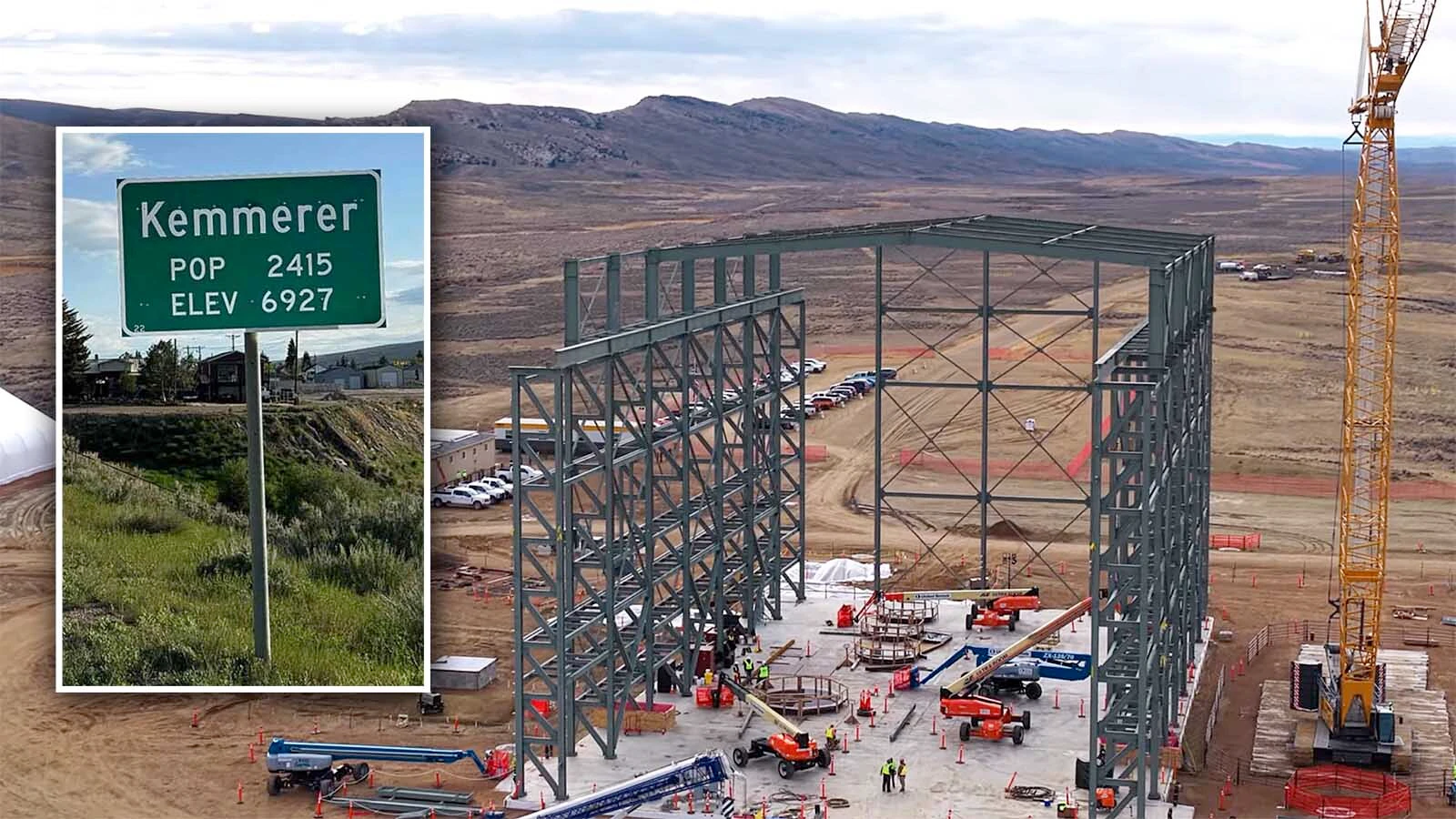
The reactor TerraPower is building as a demonstration project near Kemmerer is a kind of advanced design EIA's model isn't built to assess. The agency said it has pilot studies on advanced nuclear technologies underway and that future outlooks will incorporate them as specific projects firm up.
The report also lists nuclear among the dispatchable resources the grid will increasingly rely on as wind and solar take a larger share of generation, alongside coal, natural gas and oil — a structural argument for more reactors that EIA's own numbers do not yet reflect.
Wyoming’s Part
EIA acknowledged the gap between its flat projections and where federal policy is pointing. The report noted that Congress, the Department of Energy and other agencies have moved in recent years to boost both reactor deployment and domestic fuel production, citing DOE's reactor and fuel line pilot programs.
It also pointed to the White House goal of bringing 400 gigawatts of installed nuclear capacity online by 2050, supported by an additional 5 gigawatts of new and uprated capacity by 2030.
Hitting 400 GW by 2050 would roughly quadruple current U.S. nuclear capacity, an outcome not supported by EIA’s latest analysis.
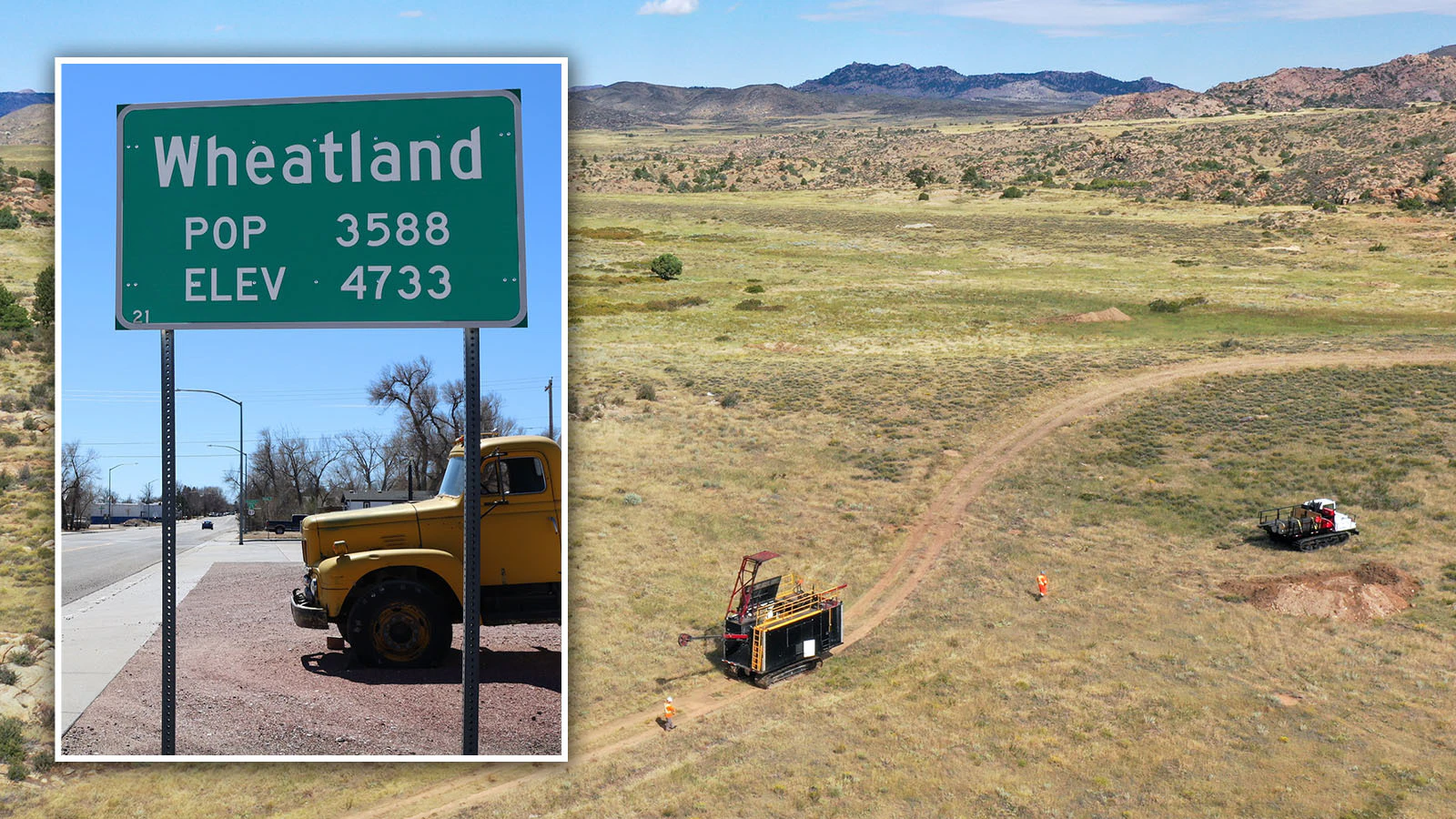
However, companies in Wyoming continue to develop industries at every phase of the nuclear fuel cycle. In addition to TerraPower, BWXT is planning a $500 million TRISO fuel fabrication plant in Gillette, backed by $100 million in state funds.
Uranium Energy Corp does a lot of work in Wyoming and is developing a new uranium hexafluoride conversion facility. Cameco, Ur-Energy and a growing field of explorers are bringing more pounds of uranium out of the ground.
From there it moves on to processing and enrichment — and an old Manhattan Project building in Tennessee is where one company wants to train its lasers on Wyoming uranium.
Fed Push
The president of LIS Technologies, Christo Liebenberg, is trying to put his company on Wyoming's radar.
From a building on the former K-25 site in Oak Ridge, Tennessee — where the Manhattan Project began enriching uranium in the 1940s — he is reviving a laser-based enrichment process first proven in the early 1990s and then shelved for three decades.
LIS is now designing a commercial plant on a parcel of the old K-25 property the company has nicknamed "LIS Island," with a target capacity of 5.5 million separative work units per year — the standard industry measure of enrichment output, equal to roughly the work needed to fuel several large reactors annually.
What Is Enrichment?
Enrichment is one phase of the nuclear fuel cycle, and it is easy to confuse with the steps that come before it. After yellowcake (U₃O₈) comes out of the ground, it first goes through processing — milling and conversion — where the raw ore is purified and chemically transformed into uranium hexafluoride gas.
Enrichment is the next step. It raises the concentration of the fissionable isotope U-235 from its natural 0.7% to roughly 5% for commercial reactors, by spinning the gas through centrifuges or, in the LIS process, by selectively exciting U-235 atoms with lasers. Only after enrichment does the material get fabricated into pellets and rods and loaded into a reactor.
Former nuclear sites like Oak Ridge and Paducah, Kentucky, have become magnets for the new wave of fuel-cycle companies. Tennessee offered LIS nearly $200 million in incentives, alongside grid stability, federal permitting familiarity and community acceptance built up over 80 years of nuclear work.
The federal government has been pouring money into rebuilding domestic enrichment for more than a year.
But for now, enrichment capacity remains limited. The country produces roughly one-third of the separative work units it consumes — all from a single Urenco plant in New Mexico operated by a Dutch-British-German consortium.
"If we were to become self-sufficient and stop importing from Russia and other countries, we need to increase our current capacity by three times," Liebenberg said. "And then on top of that, we want to quadruple nuclear power by 2050. That's another factor of four. So you literally have to increase our capacity by 12X. That's a massive undertaking."
Middle Of The Fuel Cycle
One of the federal officials moving nuclear priorities forward is Dr. Rian Bahran, the U.S. Department of Energy's deputy assistant secretary for nuclear reactors. States already deep in mining and pursuing advanced reactors should be thinking about the middle of the fuel cycle, not just the ends, Bahran told Cowboy State Daily.
"When you think about a nuclear supply chain across the ecosystem, the one thing that every reactor needs is fuel," Bahran said. "Enrichment is one of those cross-cuts. If you're going to get into a game of an ecosystem and of a lifecycle, and you think you have the capacity to attract the businesses that are in the enrichment side of the house, it's conducive because you know that the reactors being built locally will benefit from the enrichment."
Before siting a uranium enrichment facility, regulators and developers must look at potential seismic activity.
"Those centrifuges are extremely sensitive to stability," said Liebenberg.
Traditional centrifuge expansion recently received a $29 million award from DOE, while a separate $28 million investment went into laser separation — a technology Bahran said "certainly has pretty high prospects." The agency's strategy, he said, is to give itself "a few different options for that expanded capacity."
David Madison can be reached at david@cowboystatedaily.com.