
If the dead could bear witness, the ghost of Dr. Elwood Mead might be standing at the rim of the reservoir that bears his name, watching it drain toward oblivion, and muttering the same words he used when he first arrived in the Wyoming Territory 138 years ago.
"The virtue of self-denial had not been conspicuous on the part of claimants," is how the young engineer described what he found in 1888 when he surveyed the water claims filed in county courthouses across the territory.
Years later, he noted that, "If the amount of water claimed had existed, Wyoming would have been a lake."
That observation could run today word-for-word in a report on the Colorado River, which has never held as much water as users have attributed to it.
The seven states that negotiated the 1922 Colorado River Compact divided 15 million acre-feet of water per year based on data from an unusually wet period.
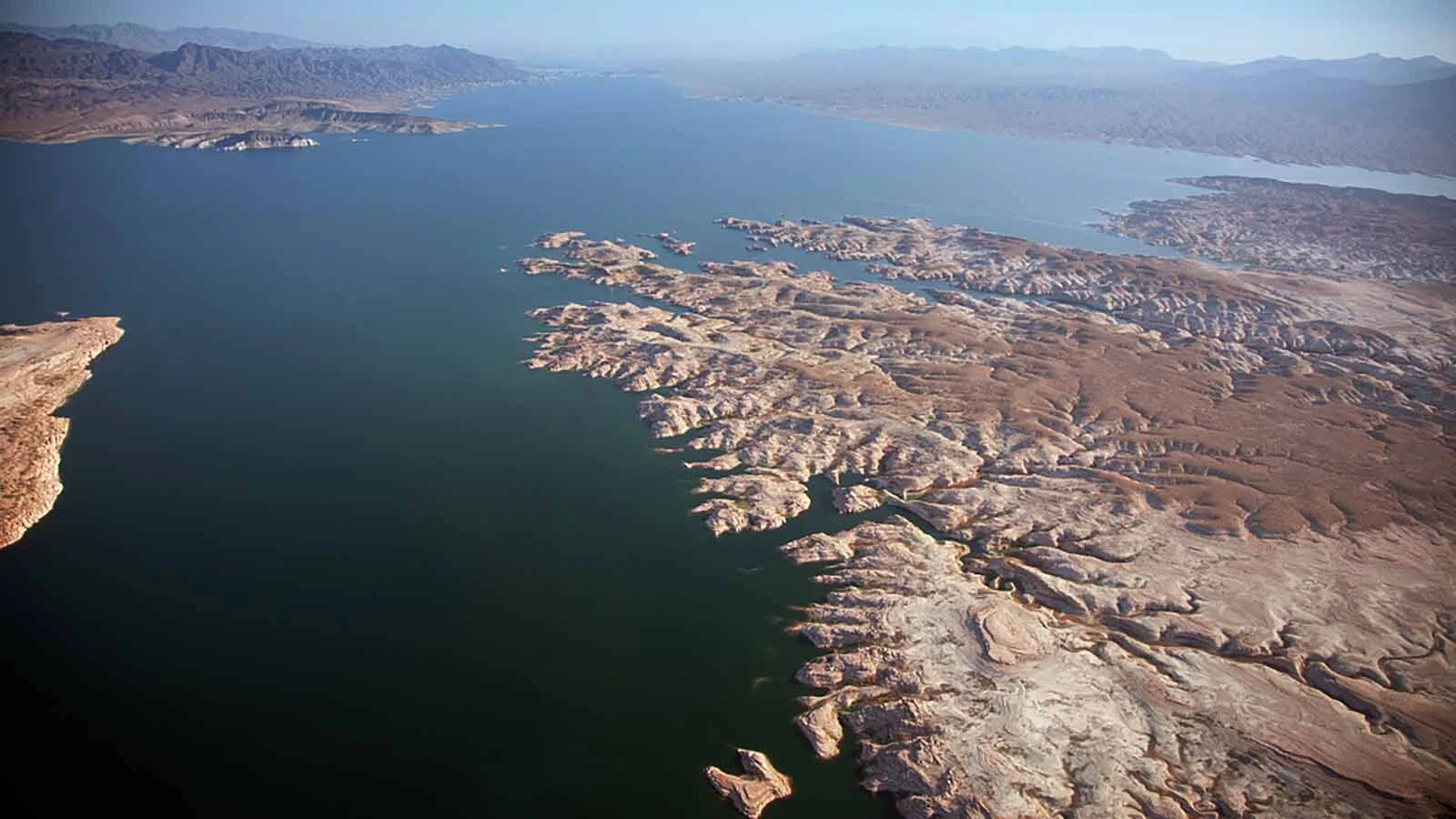
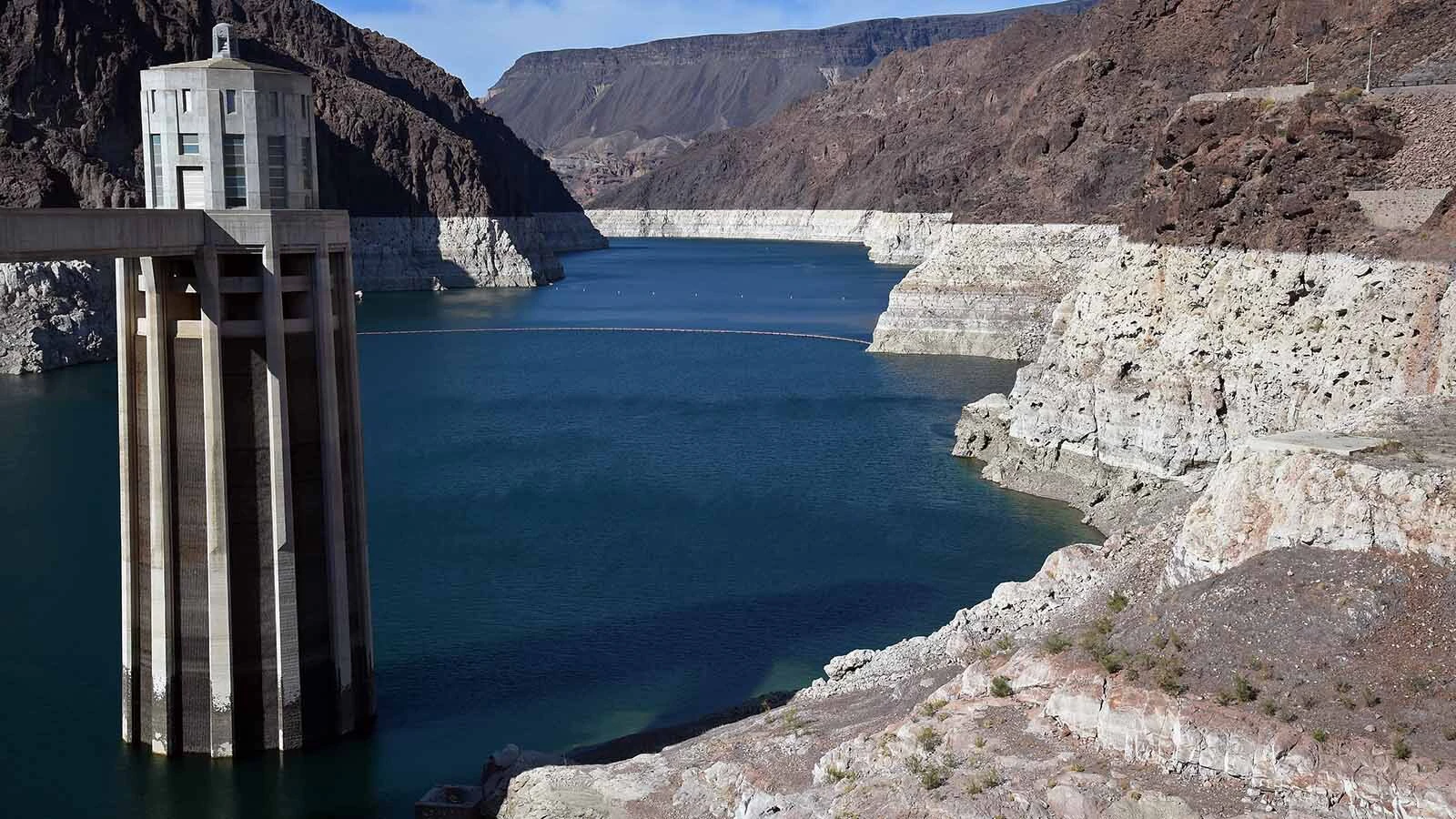
Now with Lake Mead a third full and dropping, with Lake Powell at 25% capacity with total system storage at just 37% and falling, the reckoning that partially began with rampant over-claiming on Wyoming creeks has arrived on a continental scale.
"He hated waste and craved efficiency," said John Shields, a retired Wyoming interstate streams engineer who spent 30 years representing the state on Colorado River issues and now works for the Bureau of Reclamation's Lower Colorado Region.
"He created order out of chaos,” he said of the former head of the federal Bureau of Reclamation from 1924 until his 1936 death. "He would look around at the Colorado River situation right now and he would say chaos is ruling."
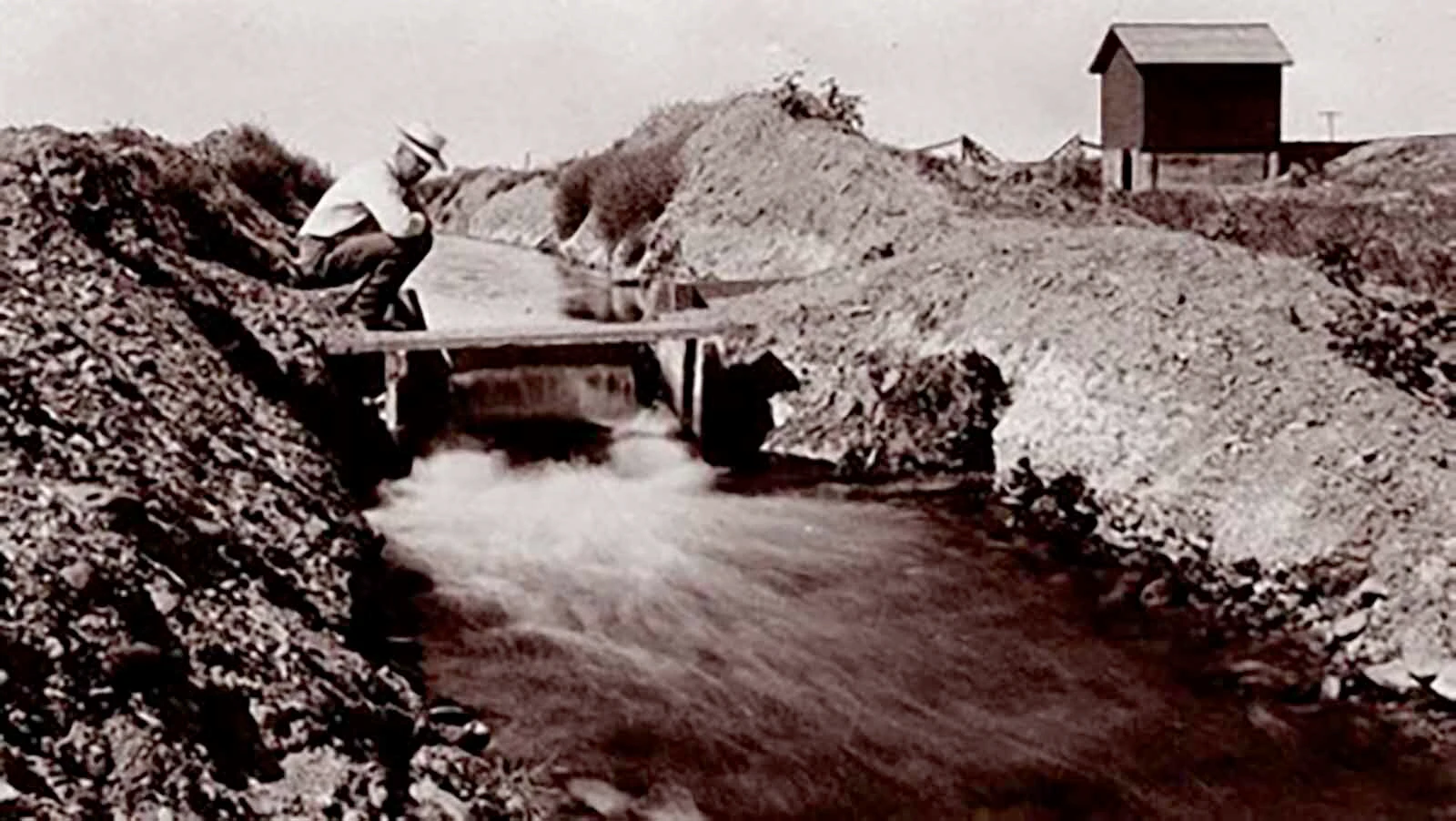
When a fresh-faced 30-year-old Elwood Mead arrived in Cheyenne, no one could predict how his long and storied career would shape water law and policy in the West. He’s seen here measuring irrigation water in Wheatland Flats. (Homesteader Museum photo via wyohistory.org) 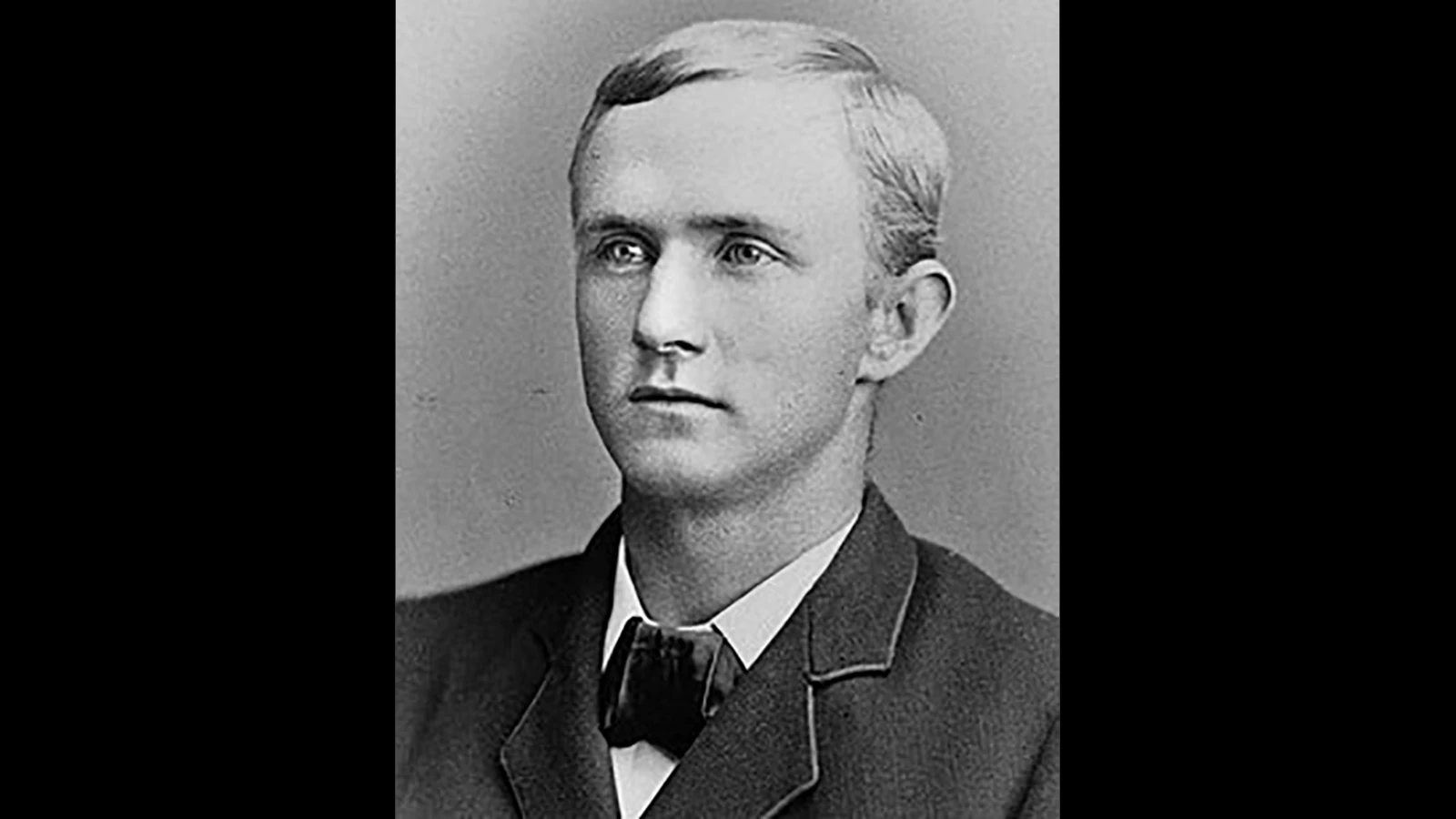
When a fresh-faced 30-year-old Elwood Mead arrived in Cheyenne, no one could predict how his long and storied career would shape water law and policy in the West. He's pictured here circa 1883-1888. (Library of Congress, Stimson Collection) 
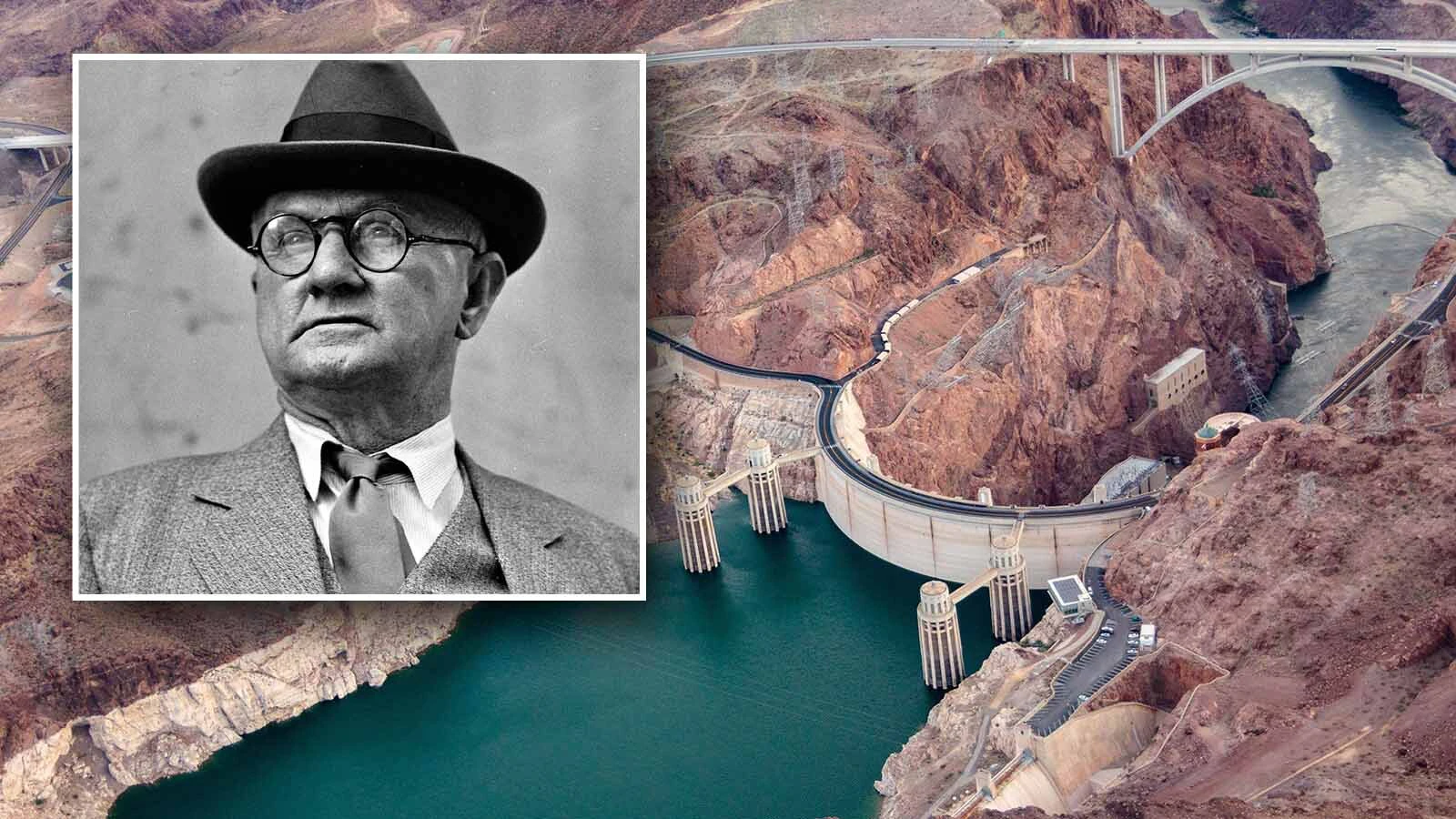
Elwood Mead became Wyoming’s “godfather of measuring water” taming water chaos in the territory, then he built Hoover Dam that created his namesake Lake Mead. Experts say today’s Colorado River crisis could use his insight about now. (Library of Congress)
Young Reformer
The man who would become the father of Western water law arrived in Cheyenne wearing what his patron, Francis E. Warren, memorably described as "pinafores" — a child's dress.
It was Warren’s way of saying the new territorial engineer looked barely old enough to shave.
It was 1888, and the territorial engineer was 30 years old, a farm kid from southern Indiana with degrees from Purdue and Iowa State universities who had spent three years learning about irrigation fights as an assistant to the Colorado state engineer.
As Anne MacKinnon documented for WyoHistory.org, it was not uncommon for someone to claim more water than actually flowed in a stream.
In one case, someone claimed from a single stream more water than flowed in the entire territory, proposing to divert it with a ditch 2 feet wide and 6 inches deep, she wrote.
When disputes moved from the creek bank into court, territorial judges who knew nothing about hydrology often allocated water by the amount stated on paper, or by the size of the ditch.
One irrigator got 20 times as much water per acre as his neighbor just downstream.
The absurdity came to a head early in the young engineer's tenure when the city of Cheyenne asked Mead to regulate the 75 ditches above town so water could reach the city.
The water rights had been decreed by a judge from Ohio, as Mead recounted in his 1930 recollections published in the Annals of Wyoming, “Where the main problem with water was how to get rid of it."
On consulting the decree, the new territorial engineer found that not one of the 75 ditches was named or located.
Instead, the judge had made grants of water to people "who might live in Cheyenne, on their farm, or in Hong Kong,” he said.
When the engineer pointed out that enforcing the decree would mean giving one irrigator 20 times as much water per acre as another, he told the judge he knew something about the opinions and prejudices of irrigators — and that "it was probable that I would be lynched."
The judge's reply: If the engineer didn't carry out the decree, he would see that he was jailed.
The system was, as the University of Michigan would later say when granting Mead an honorary degree, “confusion,” and the young man from Indiana intended to fix it.
Constitutional Revolution
What happened next made Wyoming a legal beacon of the arid West.
Working with constitutional convention delegates, the territorial engineer watched his principles written directly into the Wyoming Constitution, Article 8, which declared all water within Wyoming's borders the property of the state.
The move was radical, and its supporters said so openly.
As MacKinnon wrote, the new system established two innovations that no other state had attempted together: active state ownership of water, requiring a permit from the state for any use, and an expert board of control instead of courts to decide water disputes.
The board was composed of the state engineer and the superintendents of each of the state's four main hydrologic basins, people who actually knew water.
"In Wyoming, at least, there will no longer be the ludicrous spectacle of learned judges solemnly decreeing the rights to from two to 10 times the amount of water flowing in the streams," one admiring observer noted, MacKinnon wrote.
The system tied water rights to actual use, not to paper claims describing what someone hoped to use.
"Every farmer in this region comes to understand the overshadowing importance of water," Mead wrote in his 1903 treatise "Irrigation Institutions."
"Irrigated agriculture is an organized industry, and the prosperity and happiness of those engaged in it are largely determined by the character of its institutions,” he said.
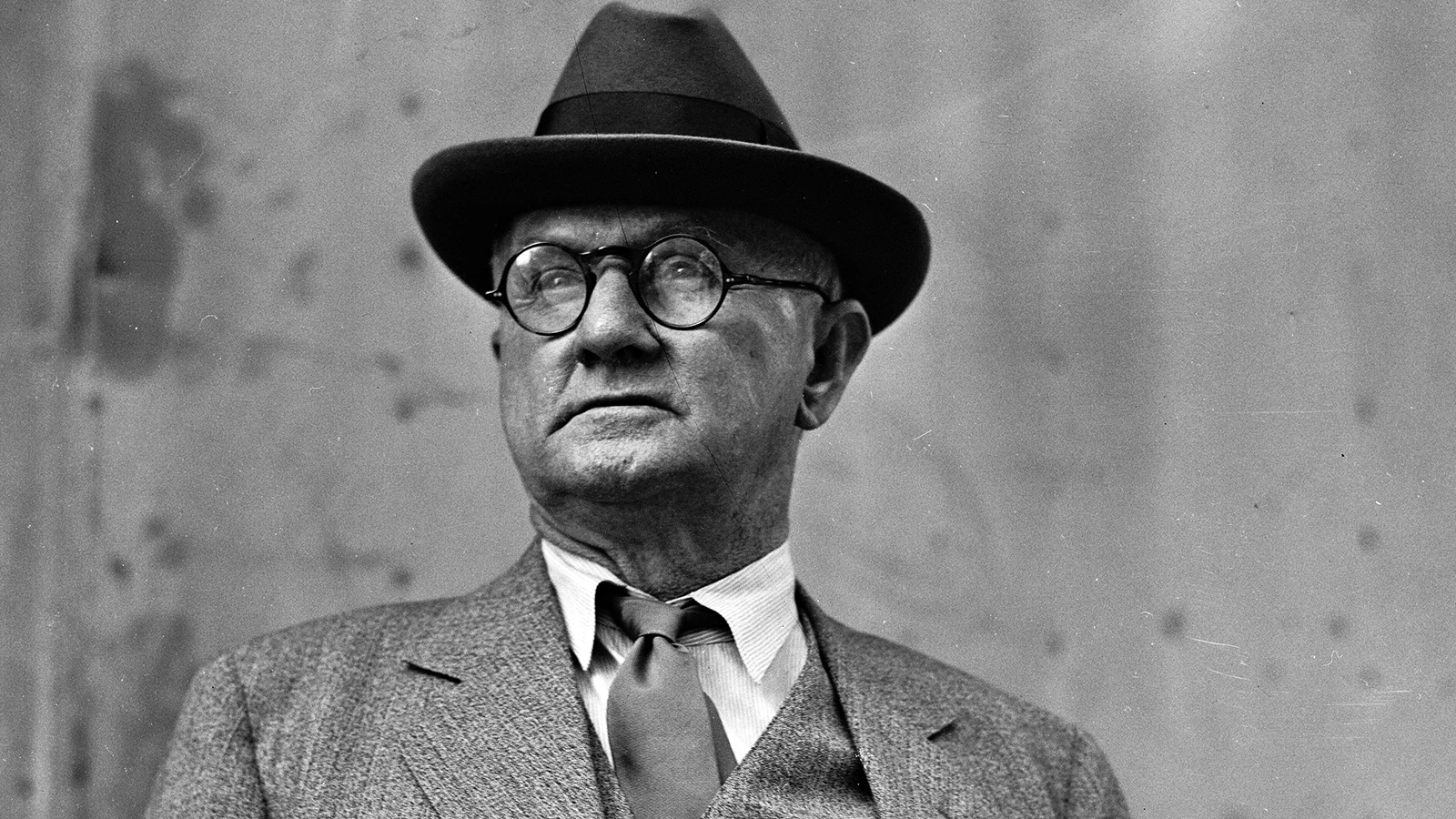
Elwood Mead became Wyoming’s “godfather of measuring water” taming water chaos in the territory, then he built Hoover Dam that created his namesake Lake Mead. Experts say today’s Colorado River crisis could use his insight about now. He's pictured here in 1929. (L.A. Times via UCLA Digital Library) 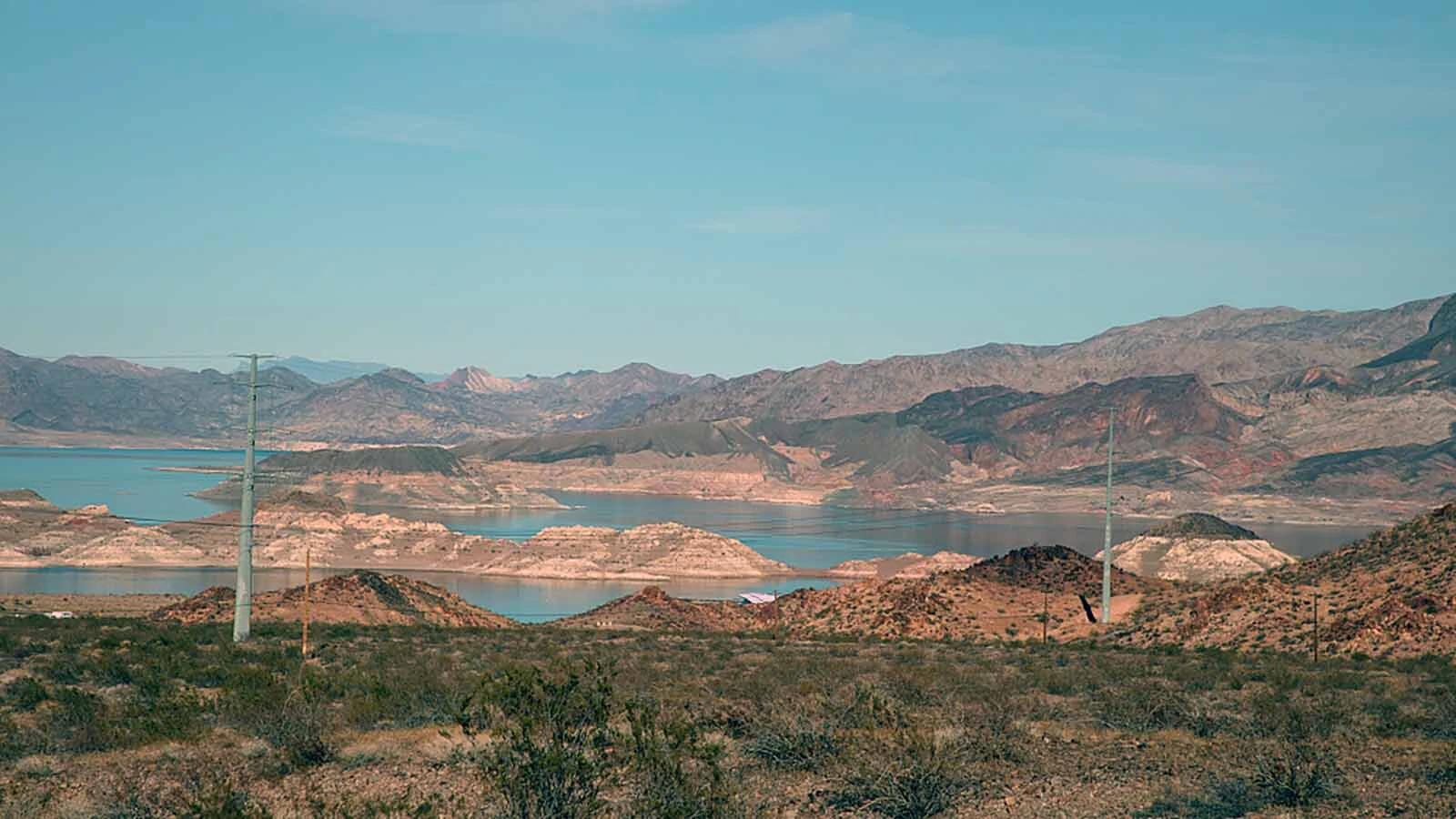
Elwood Mead became Wyoming’s “godfather of measuring water” taming water chaos in the territory, then he built Hoover Dam that created his namesake Lake Mead. Experts say today’s Colorado River crisis could use his insight about now. (Libarary of Congress) 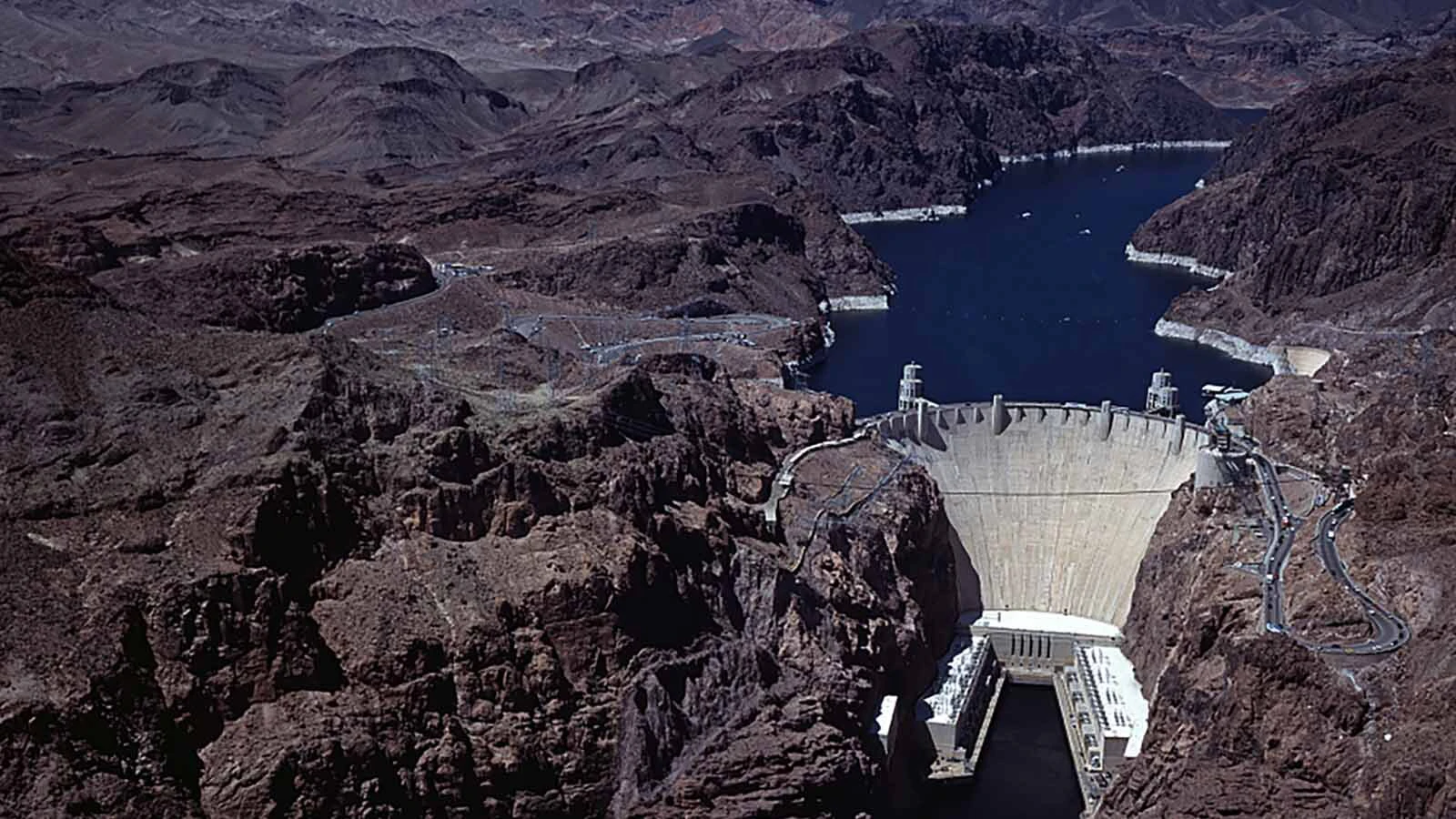
Elwood Mead became Wyoming’s “godfather of measuring water” taming water chaos in the territory, then he built Hoover Dam that created his namesake Lake Mead. Experts say today’s Colorado River crisis could use his insight about now. (Library of Congress)
The ‘Godfather Of Measuring Water'
Before there could be order, there had to be measurement.
As Shields described to Cowboy State Daily, one of the first things the territorial engineer did was design a device he called a “Nilometer," a nod to the instruments ancient Egyptians used to measure the flooding of the Nile River.
Instead of using it to measure the discharge of rivers, though, the engineer used it the opposite way, measuring how much water flowed onto a field.
That allowed him to determine what he called the "duty of water," the amount actually needed to raise a crop.
This calculation is how Wyoming's original water law set the standard at 1 cubic foot per second for each 70 acres of farmland.
"He is the godfather of measuring water in the West and recognizing the importance of it," Shields said.
After 11 years as territorial engineer, the man who'd tamed Wyoming's water chaos left for Washington in 1899 to run irrigation investigations for the U.S. Department of Agriculture.
Then came stints in Australia and at the University of California Berkeley before being appointed commissioner of the Bureau of Reclamation at age 66.
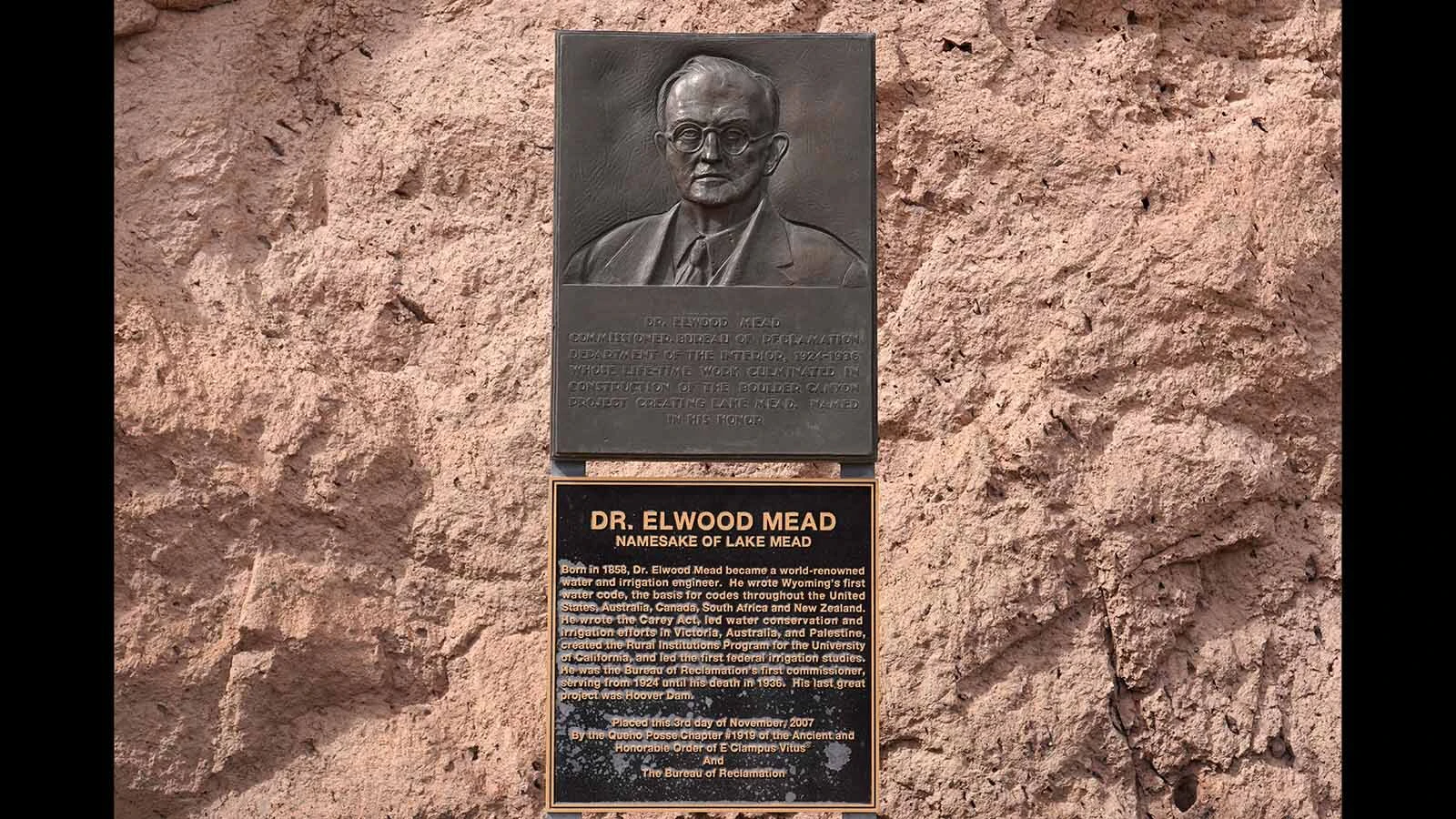
As commissioner, according to MacKinnon's account, the engineer oversaw the construction of a massive dam on the Colorado River near Las Vegas, a project that would become Hoover Dam and back up water to create Lake Mead, the reservoir named for him after his death in office on Jan. 26, 1936.
Water Crisis
"What I would tell Mead," offered Shields, imagining a conversation about the Colorado River with the man today, "is that the federal government — the Department of Interior and the southern states — have been watching a slowly moving freight train coming towards them since 1999.
“And not enough steps have been taken to react."
The Bureau of Reclamation's latest projections show April-through-July inflow to Lake Powell at just 27% of normal.
Snowpack across the upper basin sits at 62% of normal, with Utah and Colorado at record lows.
Under the most probable scenario, Lake Powell could hit minimum power pool — the point where Glen Canyon Dam can no longer generate electricity — by December. In the worst case, it happens by August.
The seven basin states have blown through two federal deadlines without a deal to manage Colorado River water.
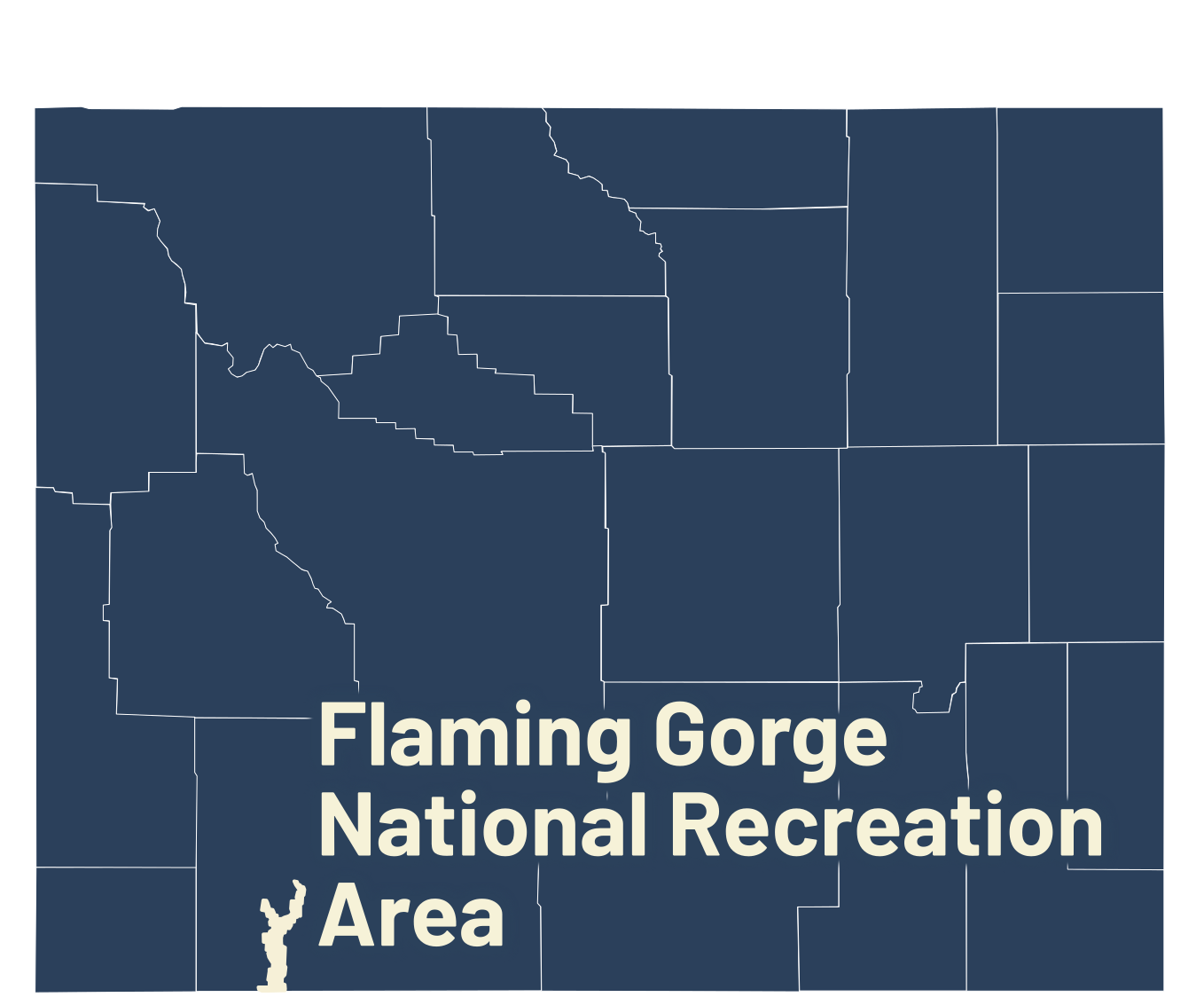
The compact’s current operating guidelines expire Oct. 1. Nevada has proposed releasing at least 500,000 additional acre-feet from Upper Basin reservoirs, including Flaming Gorge.
"Thank goodness Doctor Mead and others were smart enough to build approximately 60 million acre feet of storage on a river that everybody used to think flowed at about 15 million acre feet," Shields said. "And of course, it's less than that now. We find it's more like 12 million acre feet."
Some progress has been made.
As Shields described, cities across the lower basin have been ripping out bluegrass lawns and replacing them with drought-tolerant landscaping.
Las Vegas led the charge, and the Metropolitan Water District of Southern California is now paying up to $7.50 a square foot for turf removal.
Billions in federal money has flowed into conservation projects, water recycling plants, and deficit irrigation programs for farmers.
But huge challenges loom over the Colorado River Basin.
Under a 1948 compact, Wyoming gets 14% of the Upper Basin's share, the second-smallest allocation after New Mexico. The state hasn't fully developed that allocation.
Brandon Gebhart, the current state engineer who holds the office that Mead created in 1888, has said publicly that being asked to cut usage of water that hasn't been developed amounts to being asked to "give up the future we were promised."
Young Voice
In the tradition Mead established as an exceptionally young observer and critic of water policy, Teal Lehto, a Colorado-based advocate known on social media as Western Water Girl, said Wyoming and the other upper basin states are taking the position that any cuts should come from the lower basin.
"In the event that the upper basin fails to fulfill their compact obligations, the lower basin can do something called a compact call," Lehto told Cowboy State Daily. “Which is basically saying, 'Hey, you guys need to shut off all your headgates until we get our water.'"
In Colorado, she said, enforcement would fall to "ditch riders, which are literally dudes on horses that ride around and raise or lower headgates.”
The idea that those riders would shut off their neighbors' water on behalf of California, she said, "seems so highly unlikely."
The deeper problem, Lehto said, is the fiction at the heart of the system.
"We are one basin, hydrologically speaking. There is no upper basin or lower basin. There's just the basin," she said. "And I think creating this arbitrary geographical dividing line is going to be the death of us here in the basin."
Order Needed
The father of Wyoming water law spent his entire career battling waste, inefficiency and chaos. He believed water is a public resource requiring active government management, not a commodity to be speculated on.
He wrote that principle into Wyoming's constitution, and it became the intellectual ancestor of the entire compact system that now governs the Colorado River.
As Shields sees it, the engineer who craved efficiency and hated waste would have understood the current crisis with cold clarity.
The reservoirs are three-quarters empty. The negotiations are in shambles. A federal environmental impact statement with five alternatives has drawn more than 8,000 comments, and as Shields put it, "everybody hated it."
"Leadership is a problem," Shields said. "You can't share in a shortage for water you ain't got."
Somewhere, the man who found chaos in Wyoming's courthouses and spent decades replacing it with measurement, expertise and law would recognize this moment.
On Friday, Sept. 13, 1889, the Cheyenne Daily-Leader published what it headlined "AN IMPORTANT LETTER."
In it, Mead made a comment applicable across the West: “Unless some action is taken to place the location of irrigation works under some intelligent restriction, this will result in a great loss and waste of water and make the future supervision and distribution of the water supply difficult and expensive.”
Now more than a century later, with Lake Mead two-thirds empty and seven states at odds over too many claims on too little water, many say that time is now.
David Madison can be reached at david@cowboystatedaily.com.


