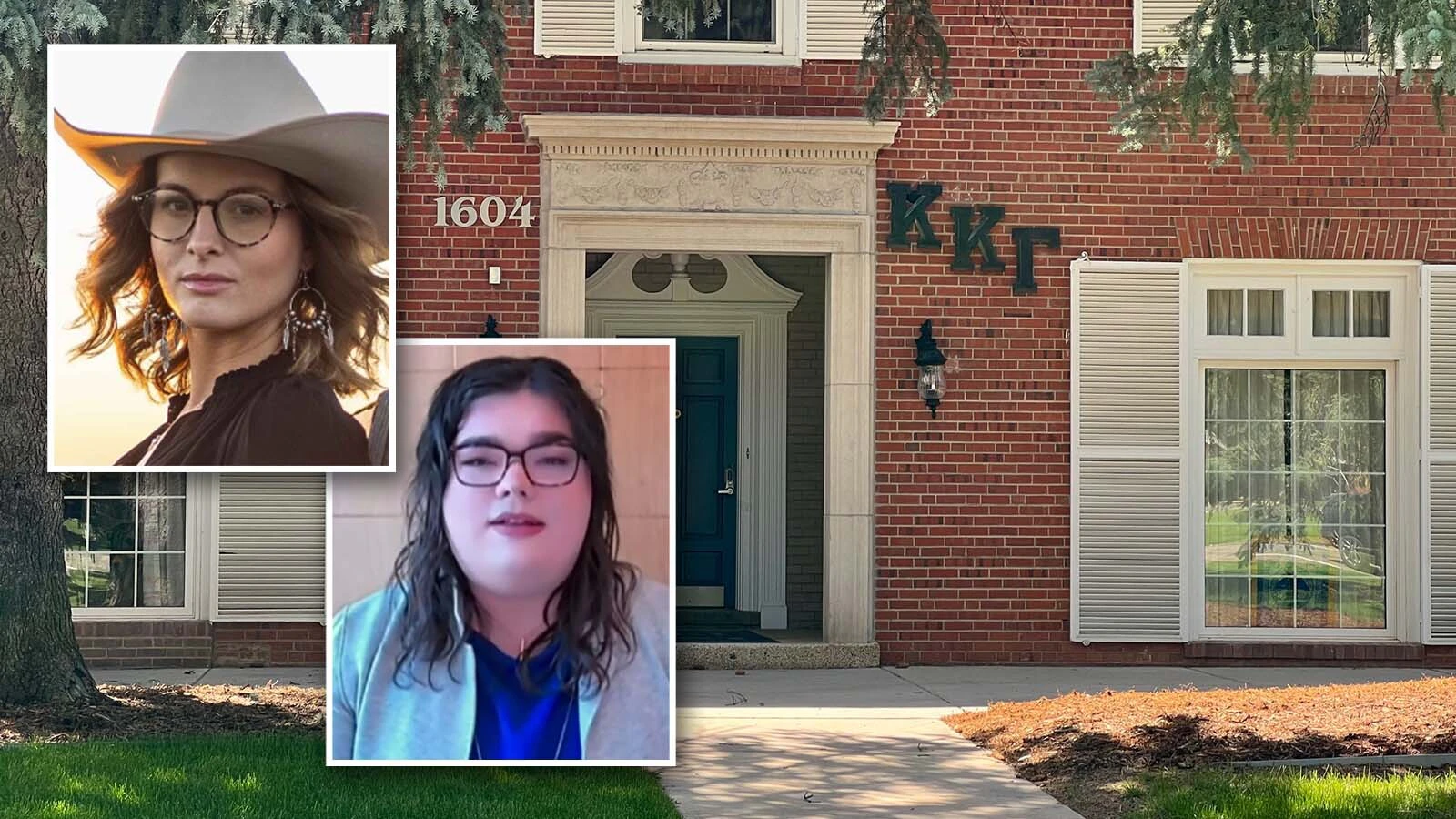
After two attorneys filed a federal lawsuit against the transgender member of a University of Wyoming sorority chapter three years ago, the sorority member, Artemis Langford, sued them back in state court.
Langford accused Cassie Craven and John Knepper, along with their respective firms Longhorn Law and Law Office of John Knepper, of using their legal work to launch a campaign of stigmatization and commercial exploitation.
Craven reached a settlement with Langford this week.
That’s after the case judge, Laramie County District Court Judge Nathaniel Hibben, ruled not to dismiss any of the four claims against Craven via early judgment — because she had not asked him to.
The terms of the settlement are not listed in the public-facing court file.
Craven, who represented herself in the case, did not immediately return a voicemail request for comment placed Friday afternoon. Knepper and Langford's attorney Rachel Berkness both declined to comment.
With the settlement, Craven and her firm are dismissed from Langford’s case against them, says an order Hibben signed Thursday.
Knepper, who did not agree to settle, is still slated to attend trial next month.
The Bombshell
Knepper and Craven represented a group of sorority sisters in a bombshell 2023 lawsuit that at first included Langford as a defendant, but ultimately sued only the sorority leadership.
Their lawsuit accused sorority leaders of breaching contracts and duties to the women by inducting a transgender member. It had sought to void Langford's membership.
That case didn’t survive in the U.S. District Court for Wyoming, as Judge Alan B. Johnson dismissed it saying the sorority could dictate the terms of its own membership under the First Amendment’s associational rights.
The plaintiffs appealed that ruling, and their case is still ongoing in the 10th Circuit Court of Appeals.
The Issue
The civil complaint contained numerous claims about Langford that the federal judge overseeing it, U.S. District Court Judge Alan B. Simpson, called excessive.
Langford had already gone public about being transgender and being in the sorority months before Craven and Knepper filed the lawsuit.
The attorneys at first tried to keep Langford and the suing sorority sisters anonymous, but Johnson ruled the sisters didn’t meet the threshold of anonymity.
When the plaintiffs re-filed the case with their clients' real names, they also replaced Langford’s pseudonym with the inductee’s real name.
“The federal court would later characterize 94% of the (second version of their) complaint as unrelated to the legal claims,” wrote Hibben in a March 20 order that, had Craven not settled, would have sent her to trial to face four civil counts claims her.
“Among the allegations the federal court found were unrelated or irrelevant to those claims,” continued Hibben, “were Langford’s height and weight; grade point average; allegations of sexual conduct; medical history — or lack thereof — social activities and use of dating apps; and allegations of sexual motivation.”
Craven and several of the sorority sisters appeared on national TV programs including “The Laura Ingraham Angle,” the “Megyn Kelly Show,” and “Fox News’ America Reports.”
In an exchange with TV news personality Megyn Kelly, Craven said, “You can put lipstick on a pig, that doesn’t make it a lady.”
Knepper did not have any TV appearances pertaining to the case.
Langford theorized in the state-level lawsuit that the attorneys had a multi-phase fundraising plan that was tied to this exposure, and that Knepper was involved in the plan.
Asking To End The Case
Knepper, through his attorney Anna Reeves Olson, asked Hibben to dismiss the four claims against him for lack of a sufficient controversy to take them to trial.
Those four claims were malicious prosecution, intrusion upon seclusion, abuse of process, and intentional infliction of emotional distress.
Knepper asserted that his actions were part of representing his clients and drafting a legal complaint.
He also argued that the filing of a complaint which contained allegations relevant to a legal theory “even if insensitive,” is necessary and regular conduct of a legal proceeding, Hibben's order relates.
Those arguments are correct, at least in the abstract, conceded the judge.
“But the record here is not so definitively one-sided as to prevent a jury’s review,” wrote Hibben, adding that he’ll leave the question of whether ulterior motives were present to the jury.
Hibben dismissed the first two claims against Knepper, but kept the second two alive for trial. The judge noted that at this juncture in the case, he’s supposed to view Langford’s claims in “the light most favorable” to Langford.
When doing that, it seems “the conduct alleged goes beyond legal advocacy,” wrote Hibben.
“Langford alleges a targeted and sophisticated legal and public relations arrangment that publicized graphic, personal, and stigmatizing information on Langford’s body and private life,” the judge added. “The record, again viewed in the light most favorable to Plaintiff, suggests the allegations were publicized to the nation, which generated vitriol, harassment, and threats against the Plaintiff.”
But for Craven, the judge had chosen to keep all four claims against her alive for a potential civil trial.
That’s because Craven did not join in Knepper’s request to end the case early via summary judgment.
Editor’s note: Craven is a former freelance opinion columnist for Cowboy State Daily who wrote columns during both cases, reflecting her own views. Her final column was published Feb. 22.
Clair McFarland can be reached at clair@cowboystatedaily.com.