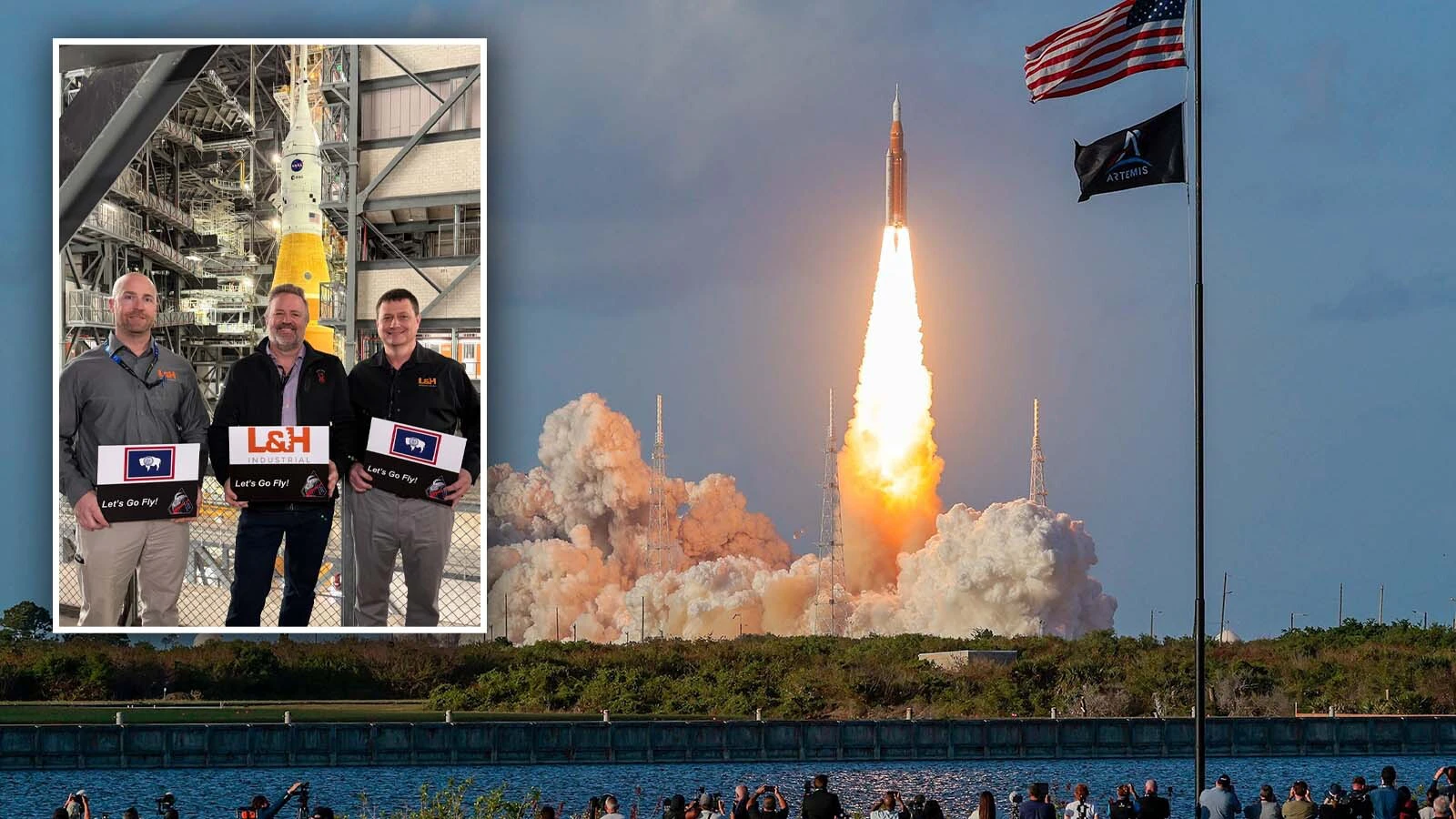
When NASA’s Artemis II mission roared off the launch pad on Wednesday, four astronauts began a 10-day journey that will have them flying by the moon, pushing further into space than any human has ever gone before.
Along the way, they’ll test out every aspect of its Orion crew capsule, ensuring it can handle a landing, which could be attempted as early as 2028.
It’s the most significant manned space mission in the past 50 years and another triumphant moment for America in a renewed space race for the moon.
But it’s not just a story about Florida, Houston, and a bunch of rocket scientists.
If you were watching it from a living room in Wyoming, you had a reason to feel a more personal thrill. That’s because the moon launch didn’t happen without the help of a Wyoming company.
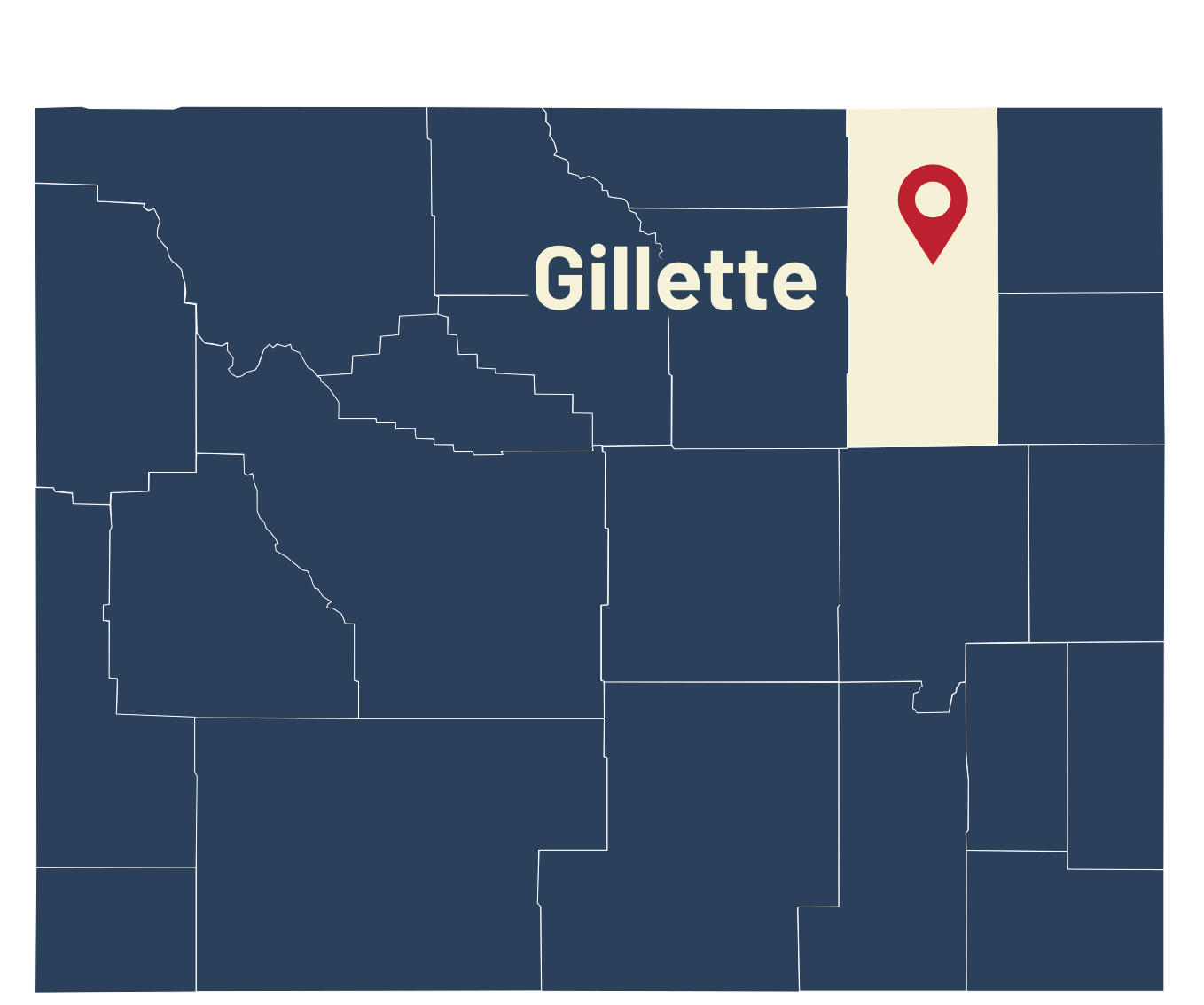
L&H Industrial, based in Gillette, was tapped once again to help NASA by building mission-critical hardware that Artemis II needed to get safely off the ground.
Beating Back 9 Million Pounds Of Thrust
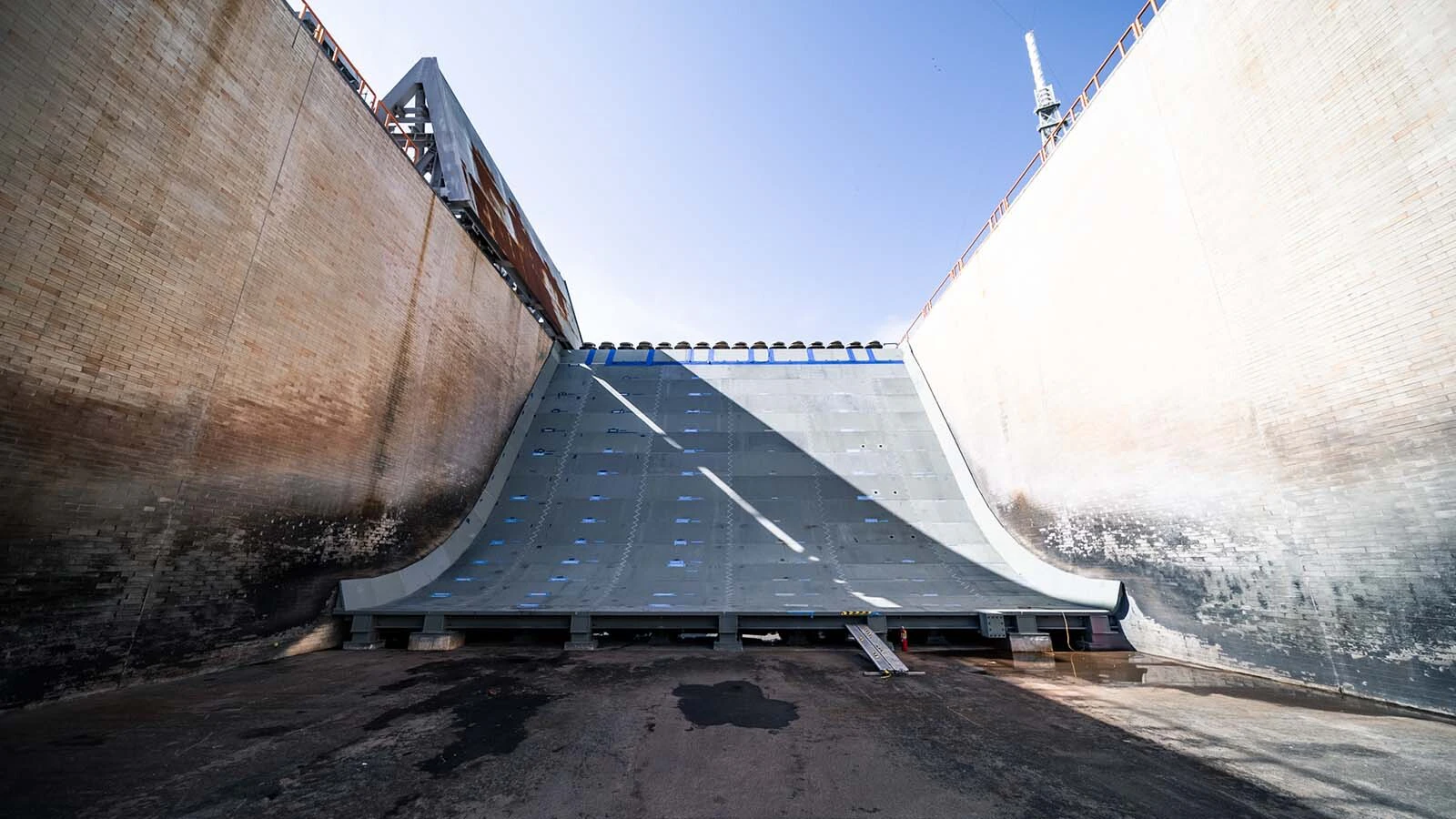
Gary Collins, a project manager for L&H, had a ringside seat for the company’s most recent NASA project, which involved manufacturing the flame deflector plates that shield Artemis during launch, ensuring it can get safely away.
The flame deflector system has to divert all of the rocket’s exhaust, heat, and pressure away at liftoff. That’s 9 million pounds of thrust coming out all at once.
To divert the blast wave, it takes more than just sturdy material. It takes a thoughtful engineering design that leverages the angle and shape of the joints themselves to prevent them from burning through.
For that reason, the joints aren’t a straight line. They’re a zigzag that helps shunt heat away.
The blast wave doesn’t last for long, and water is sprayed into the trench to assist, but with 9 million pounds of force and searing heat coming out all at once, it means there’s not even a hair’s width margin for failure.
“When those solid rocket boosters light up, they’re very, very abrasive,” Collins told Cowboy State Daily. “They’ll actually sandblast steel right off there.
"They’re anticipating that each launch is going to wear up to 5/16ths of an inch. The plates are going to get thinner by 5/16ths each launch.”
Collins will be confirming that projection next week when he takes a trip down to the launch site to inspect the plates in person. His inspection will help determine how many new plates L&H needs to manufacture and when.
Sometimes Bigger Is Better
The deflector plates were actually the second project L&H handled for Artemis II. The first happened a decade earlier in the 2013/14 timeframe, L&H spokeswoman Brittney Thomas told Cowboy State Daily.
“Everyone sees the launch, right? But they don’t realize how long NASA has been planning for these Artemis missions,” she told Cowboy State Daily. “Back in 2013, 2014, that’s when L&H upgraded the crawler transporter to carry an additional 6 million pounds of payload.
"That was because they knew then that these Artemis rockets were going to be a lot heavier than the historical rockets they’ve launched. So, they’ve been planning this for a long time.”
Collins wasn’t directly involved in the crawler upgrade, though he was around working on other things, and is aware of the engineering feat that it was.
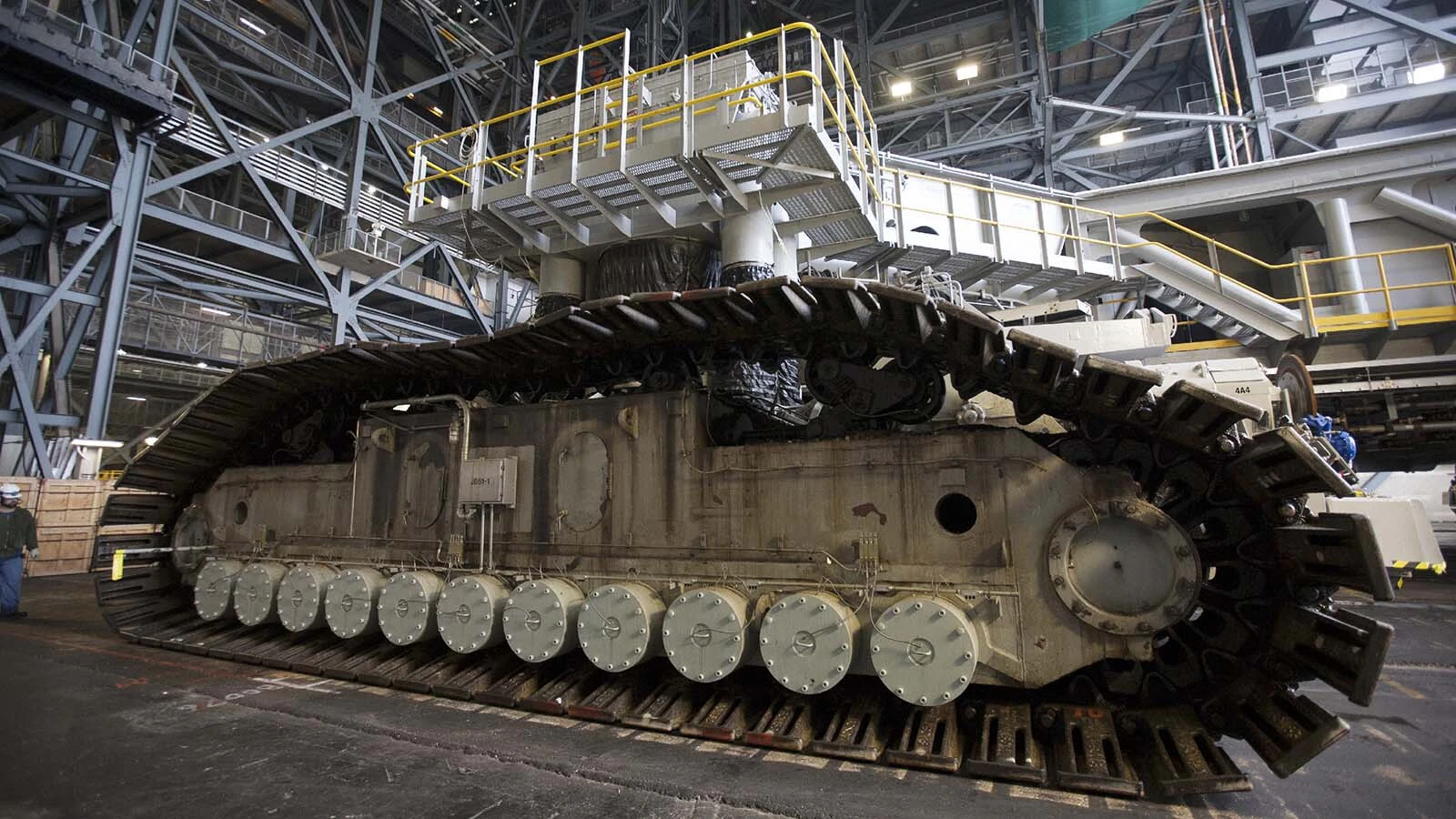
The 6-million-pound Crawler Transporter 2 (CT-2) was built in the 1960s to carry Saturn V rockets to the launch pad during the days of the Apollo program.
It moves at just 1 mph but has carried every crewed rocket since the U.S. space program began.
But for Artemis II, this iconic behemoth needed a huge upgrade.
It was going to need to carry rockets that weighed 6 million more pounds than anything it had ever carried before.
L&H was one of just two companies across the nation identified by NASA as capable of doing this work to the specifications required, and ultimately L&H was chosen for the job.
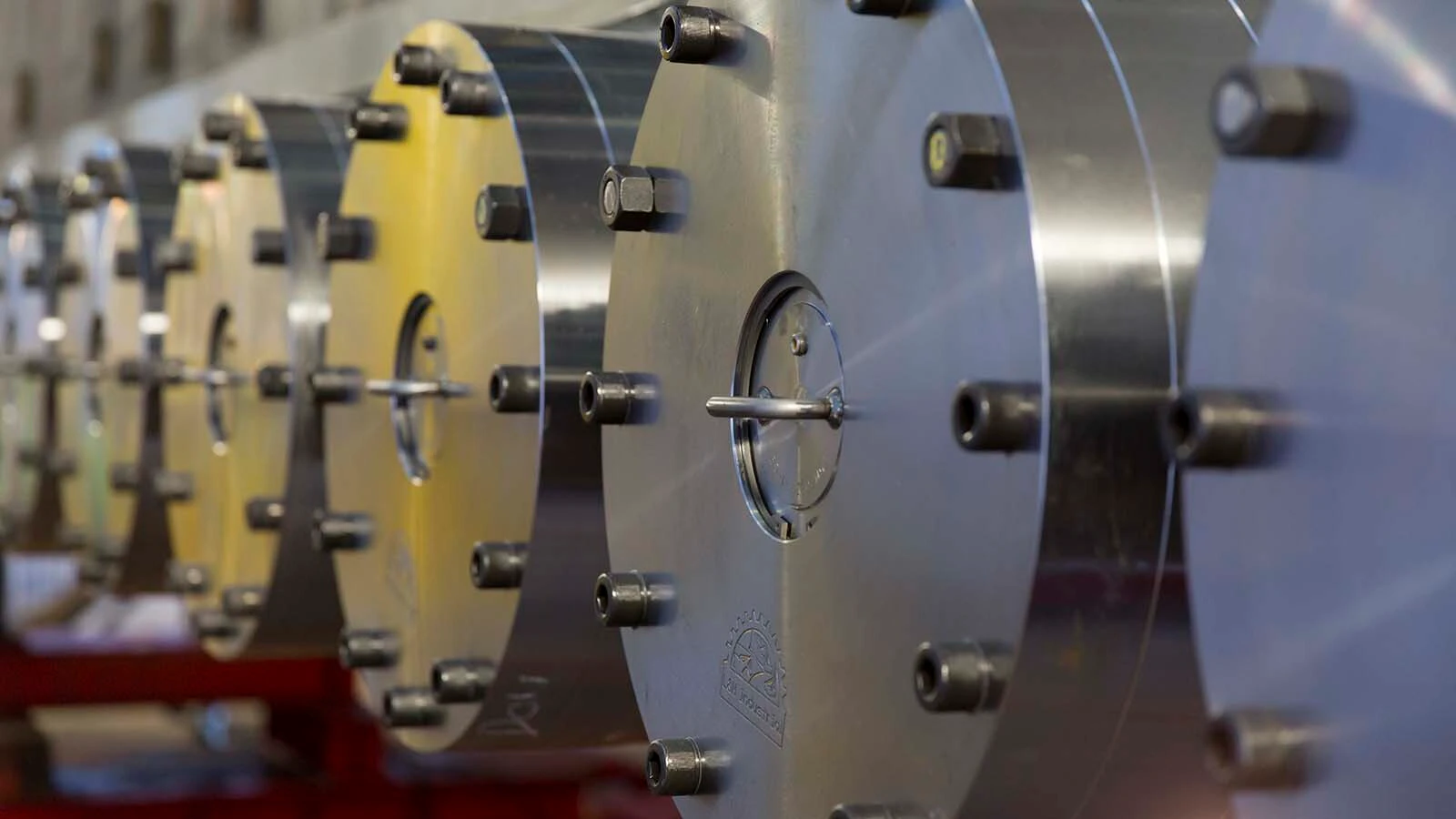
“We manufactured more than 1,300 precision parts to upgrade the outer boss extensions to carry that additional weight capacity,” Thomas said. “And then our field team spent, I think it was six months on site to install all of that project, too.”
The tolerances required for the project were way beyond anything L&H sees with any other industries it has served, she added.
Every part was machined to tolerances of +/- .0002 — which is smaller than the width of a single human hair.
All 16 of the crawler’s propel transmissions also had to be rebuilt as well, to the same exacting standards, then the CT-2 was put through its paces on a 4-mile trek to the launch pad, verifying that it had met each and every NASA specification.
A Wyoming Moment For The Nation
As Wyoming Business Alliance Council’s Renny MacKay puts it, there was more than a “little bit of Wyoming in the moment” with L&H President Mike Wandler and his team being such a vital part of what made the mission a success.
“My daughter, who is 14, had just finished a swim meet, and she put it on her phone as we were driving home from the meet,” MacKay said. “It was so cool for me to kind of share that historic moment with her.”
As it was unfolding, MacKay couldn’t help but think how it tells a new story of Wyoming and its broadening horizons.
“This is a story we can tell our kids about opportunity in Wyoming,” he said. “You can touch a piece of the mission to the moon from Wyoming, if you want to stay here and work here.”
It’s an important message, MacKay believes, as Wyoming is gearing up for a future that includes a nuclear power plant in southwestern Wyoming and gigantic data centers in Cheyenne, Casper and Evanston.
Similarly, University of Wyoming economics professor Robert Godby sees it as a great economic development argument.
“Wyoming isn’t just growing things or taking things out of the ground or bringing people here to see the natural landscape,” he said. “There is really no limit to what you can do in Wyoming and the economic development that can take place here.
"It really cuts straight through any sort of argument that you can’t have such precision manufacturing in a state that is potentially far away from markets. World-class ability is something that can happen in Wyoming.”
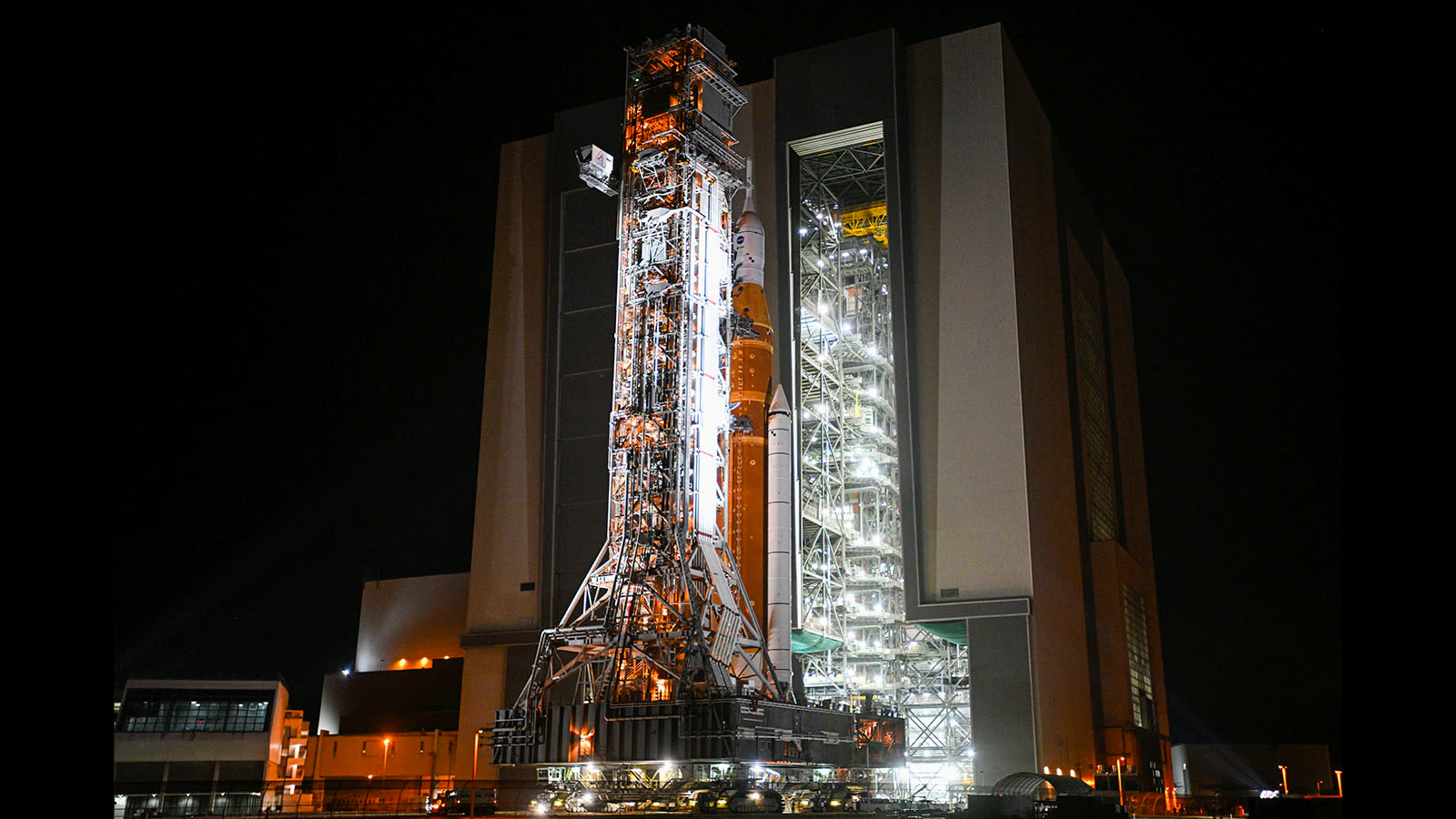
L&H Industrial based in Gillette, Wyoming, built precision parts for NASA and the Artemis II mission, including an upgrade to the huge crawler transporter that — at about 1 mph — takes the rocket to the launching pad. (Getty Images) 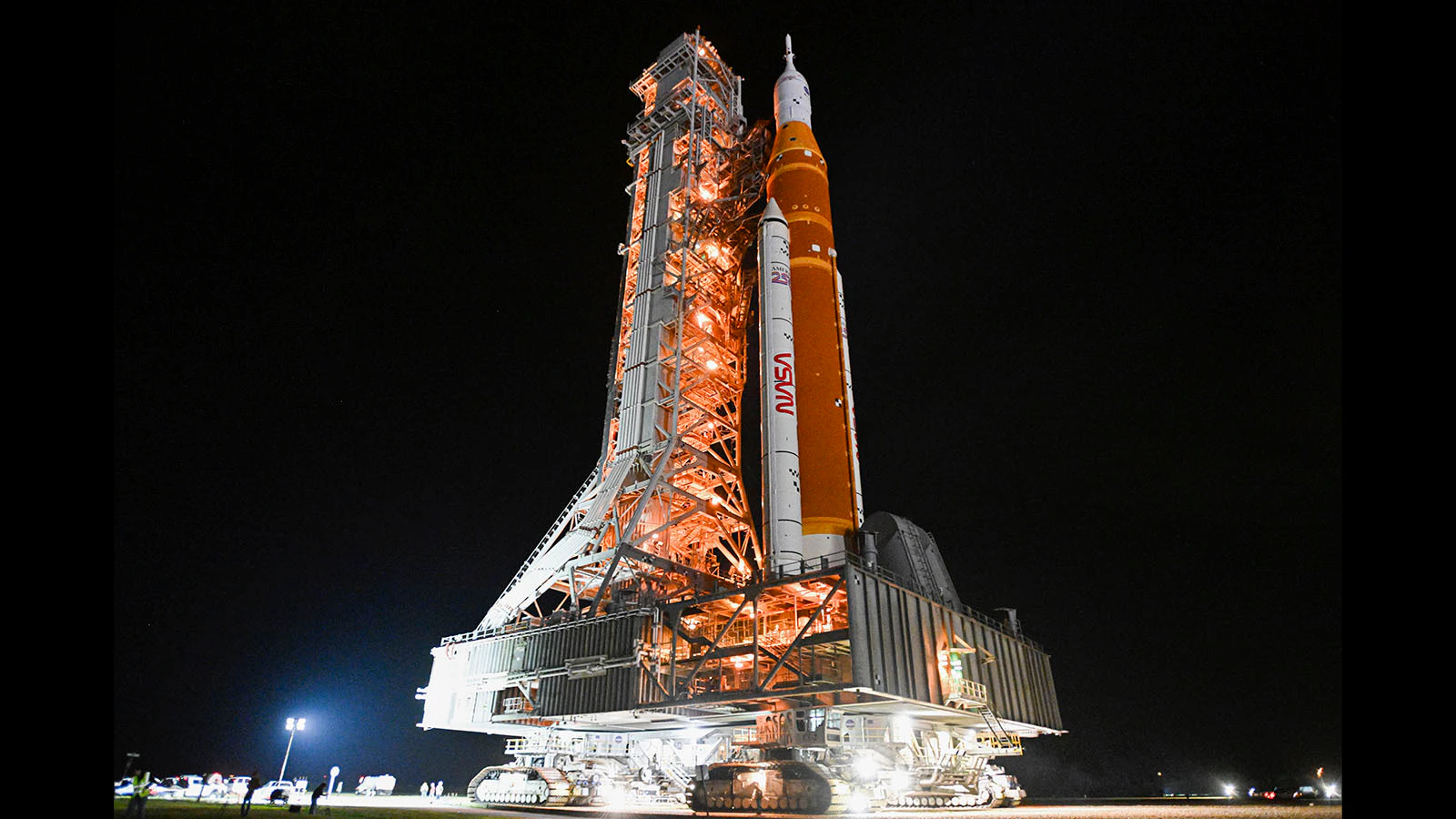
L&H Industrial based in Gillette, Wyoming, built precision parts for NASA and the Artemis II mission, including an upgrade to the huge crawler transporter that — at about 1 mph — takes the rocket to the launching pad. (Getty Images) 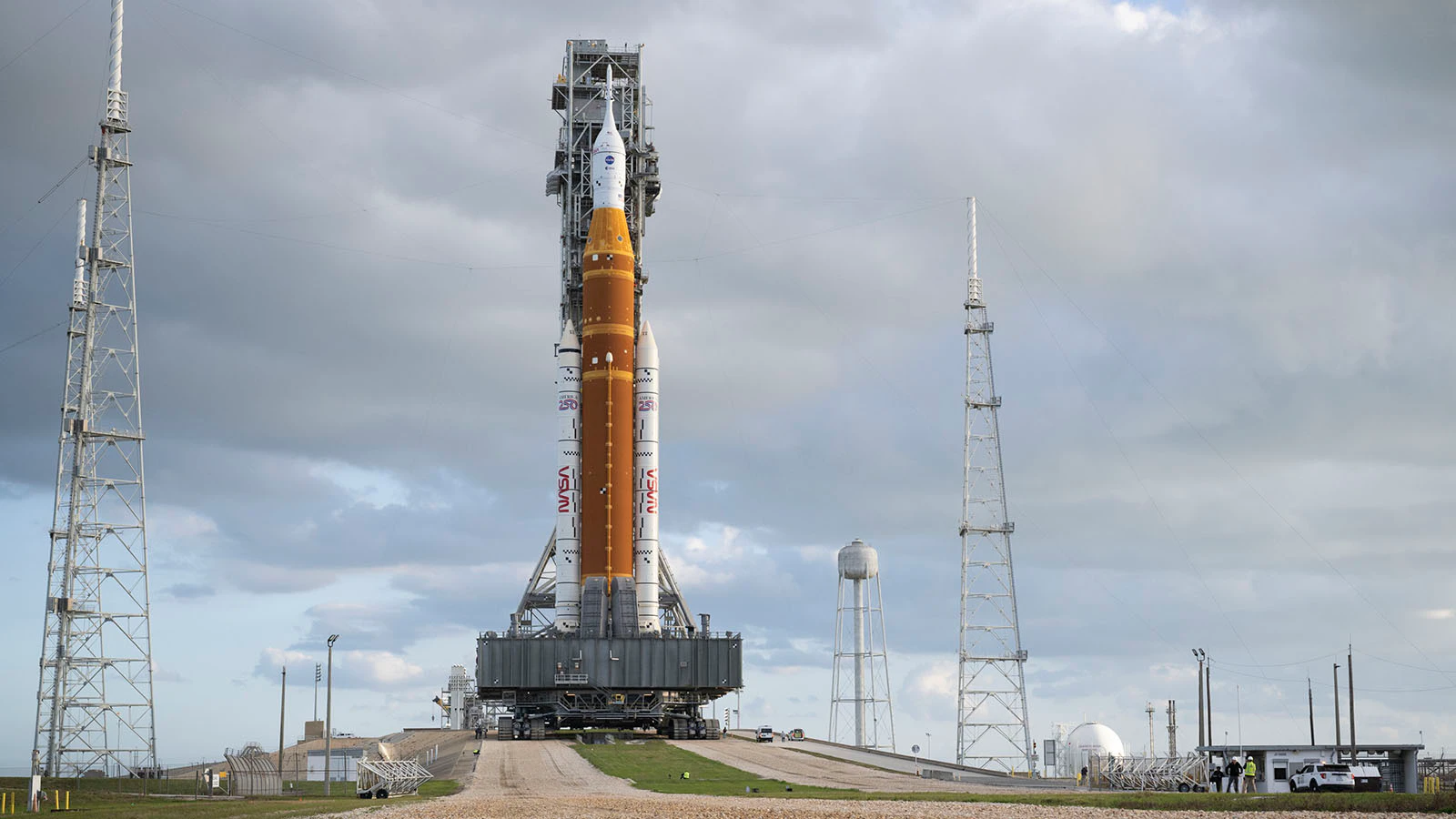
L&H Industrial based in Gillette, Wyoming, built precision parts for NASA and the Artemis II mission, including an upgrade to the huge crawler transporter that — at about 1 mph — takes the rocket to the launching pad. (Getty Images) 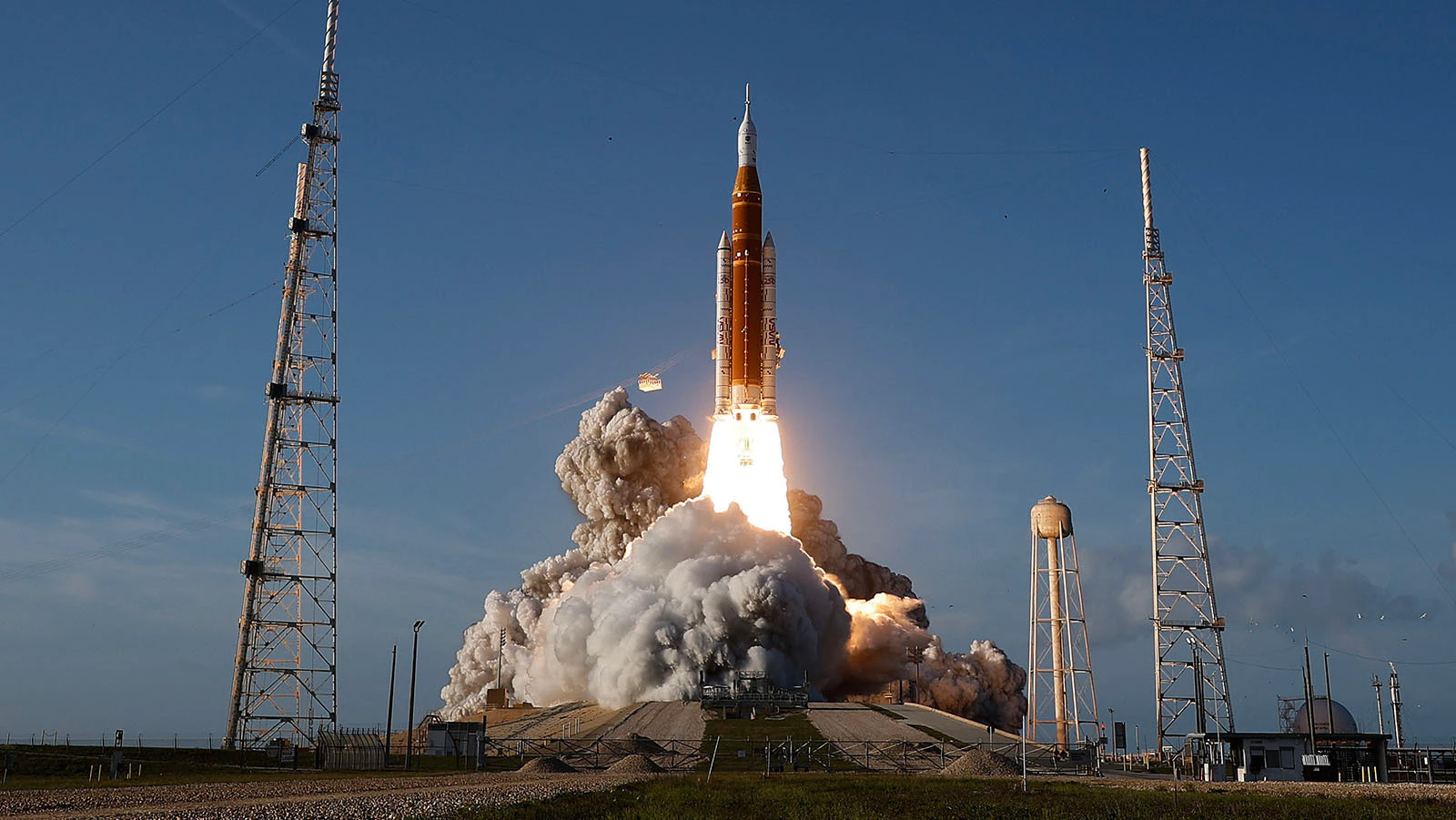
L&H Industrial based in Gillette, Wyoming, built precision parts for NASA and the Artemis II mission, including a redesigned flame trench deflector, which funnels the flames and gasses from the launching rocket. (Getty Images)
Why Artemis II Matters
Artemis II is meant to be a test mission for much bigger things.
It’s not just one giant leap toward NASA’s goal of returning astronauts to the lunar surface for the first time since the 1972 Apollo mission.
It’s also about returning to the moon before the end of President Donald Trump’s term and building a moon base as a steppingstone for future missions to Mars, according to NASA Administrator Jared Isaacman.
A moon base is seen by many as vital to securing American leadership in space, with both China and Russia planning to build bases on the moon.
Meanwhile, more than 80 countries have also been making their presence in space known.
The United Arab Emirates, for example, has sent a probe to Mars, while Israel sent a robotic lander to the moon. It crashed due to an engine failure, but it was the seventh country to send something to the moon.
“The clock is running in this great-power competition,” Isaacman said in a statement. “Success or failure will be measured in months, not years.
"If we concentrate NASAs extraordinary resources on the objectives ot he National Space Policy, clear away needless obstacles that impede progress, and unleash the workforce and industrial might of our nation and partners, then returning to the Moon and building a base will seem pale in comparison to what we will be capable of accomplishing in the. years ahead.”
A 695,000-Mile Trip
Thursday afternoon, Artemis II astronauts were preparing for a major engine burn to put the spacecraft on a trajectory for the moon while still circling Earth in the Orion space capsule in an orbit that’s 184 times higher than the International Space Station’s.
The crew members, who include three Americans and one Canadian, awoke at 5 a.m. Wyoming time after getting just two hours of sleep.
That’s all the time for sleep they had before it was time to begin maneuvering Orion into a higher perigee position, setting the spacecraft up for the translunar injection burn, which will send the capsule on its four-day journey to the moon.
You can follow the journey in real time with NASA’s online tracker.
From Coal To Cosmos
L&H has long been known for keeping big equipment running in the oil and gas and coal sectors of America’s economy. Now it’s also going to be known for its role in exploring the cosmos at large.
Collins was among millions of excited Americans who tuned into the launch online, watching in real-time as a project he worked on for two years went from abstraction to reality as Artemis II makes a round trip of more than 695,000 miles.
“I didn’t get too crazy about (watching) it,” he said. “But I have plenty of friends down there in Florida who were saying everything went well, and they were all excited about it. One of my friends out in San Diego will be going to recover the crew capsule next week when they come back, so I’ve got all sorts of feelers out there to the guys who are operating this.”
Preliminary reports from Collins’ Artemis II network for his deflector plates are that “nothing blew off and went into the swamp.”
It was a relief for Collins to hear that. He never dreamed he would one day be shaking hands with rocket scientists and touching a critical piece of America’s lunar mission.
“It’s definitely one of those things you can have a lot of pride in,” he said. “I never thought I’d be in a position to do that.”
But at the end of the day when Collins got to meet the rocket scientists at NASA, he found out something he hadn’t expected.
“When you get down there and meet them, they’re just like you or other great people in Wyoming,” he said. “These are the smartest people in the world, but you get there, and they’re just normal people like us.”
It just goes to show that the big sky in Wyoming is even bigger than it looks.
Wyoming has long been known for coal and cattle. But it’s also where people are quietly carving out a niche in the Space Age — and helping shape the nation’s future from the Cowboy State.
Renée Jean can be reached at renee@cowboystatedaily.com.