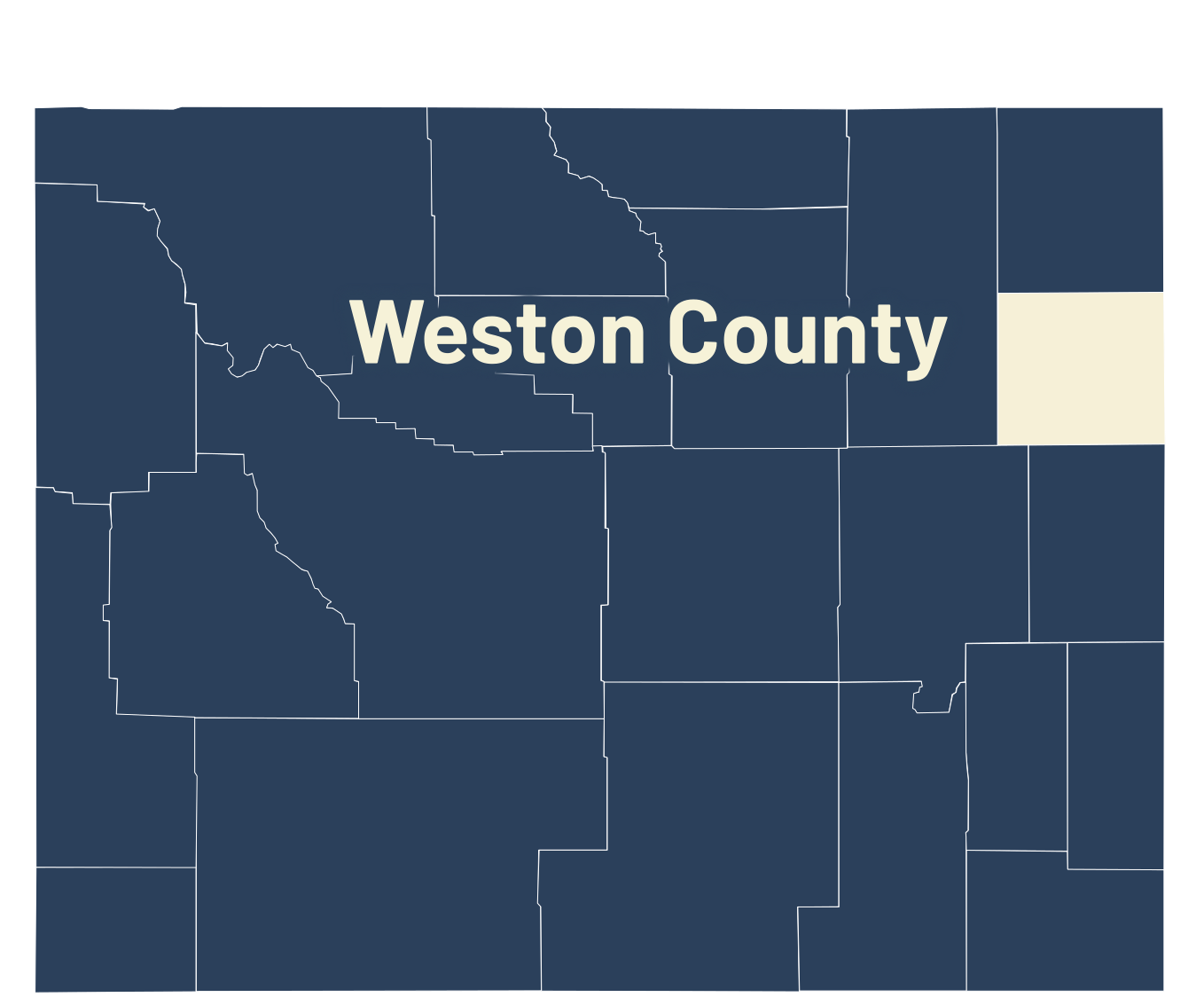
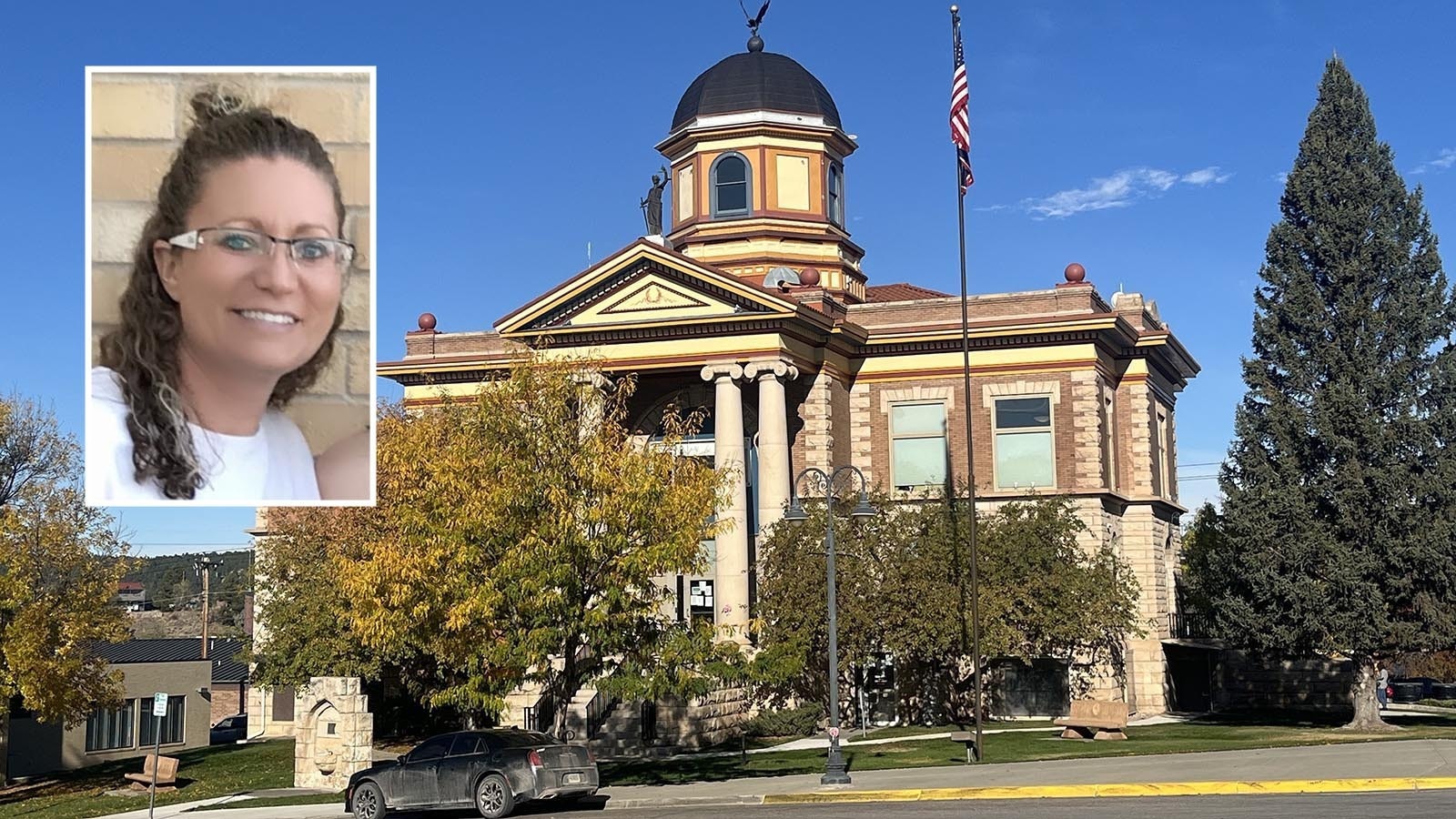
Authorities plan to arrest Weston County’s clerk ahead of her civil trial on whether she should remain in office, court documents say.
Weston County Clerk Becky Hadlock’s office botched two unopposed races in the 2024 general election. Improper ballots from the outside printing company were mixed into the election with proper ballots.
The machines could not read the improper ballots, and it reportedly skewed the races.
Hadlock called for a hand count and her office produced a correct tally in time for a delayed election canvassing.
She had filed a post-election audit with the Wyoming Secretary of State’s Office which reportedly missed 21 flawed ballots out of a sample audit of 75.
Secretary of State Chuck Gray has said repeatedly and before multiple legislative committees in the past 17 months that he believes Hadlock either didn’t conduct the audit though telling his office she had, or that the audit was fraudulent.
Hadlock performed a second post-election audit, corrected the results and submitted those by the audit deadline, her attorney has noted in court documents.
Then, after months of urging by Gray and some Weston County residents, Gov. Mark Gordon in January recommended Wyoming Attorney General Keith Kautz file an action to have Hadlock removed from office for misconduct or malfeasance.
The Attorney General’s Office filed that civil removal action in Weston County District Court on Feb. 20. The three-day trial is set to begin April 13.
New Charges
But Hadlock might be in jail and unable to make it, her attorney Ryan Semerad wrote in a Thursday trial-planning document in the case.
“Defendant understands that the Natrona County District Attorney’s Office, acting as special prosecutor for Weston County, intends to file several new criminal charges against (Hadlock) related to felony-level crimes she allegedly committed,” wrote Semerad in the filing.
Those include allegations relating to the post-election audit, he added.
It’s unclear which laws those charges would cite. Wyoming’s election code lists some criminal penalties for officials who do not follow it.
The Wyoming Senate last month declined to consider a bill that sought to add an overt criminal ban on “submitting a false post-election ballot audit to the secretary of state.”
The filing says the prosecutor’s office told Semerad it intends to file felony charges against Hadlock next week — the week before her civil removal trial.
Hadlock “further understands” the special prosecutor will apply for a warrant for her arrest on the charges and “seek to execute that search warrant and arrest (Hadlock) in Weston County” next week, Semerad wrote. “Thus, it is possible that Defendant will be incarcerated when the jury trial in this matter begins.”
Natrona County District Attorney Dan Itzen declined Thursday to comment, citing the pending matters.
Semerad also declined Thursday to comment, saying the filings speak for themselves.
As for Semerad, his filing says he’s worried that news about Hadlock facing felonies will pollute the jury pool for her civil removal case.
Weston County has a population of about 6,840 people.
“The potential notoriety and pretrial publicity of these new criminal charges, which relate directly to the claims in this case, and Defendant’s arrest for those charges so close to the trial in this case may prevent the selection of a fair and impartial jury,” Semerad concluded.
That Time The Lawmakers Subpoenaed Her
Last summer, legislative Management Audit Committee Chairman Rep. Christopher Knapp, R-Gillette, subpoenaed Hadlock to appear at a Sept. 29 meeting of a subcommittee.
The Management Audit Committee (MAC) had formed that subcommittee to investigate Hadlock’s handling of the general election.
But first, court documents say, legislative staffers invited Hadlock to appear on that date, and she said she had appointments and couldn’t make it.
Knapp sent the subpoena to Hadlock days before the meeting. But her answer remained the same: that she couldn’t make it.
She’s calling her parents to testify at her removal trial, as she’s said she was driving them to out-of-county medical visits they’d planned long in advance.
Because she didn’t appear for the Sept. 29 meeting, Hadlock now faces a misdemeanor of subpoena-dodging in Casper Circuit Court. Trial in that case is set for May 28-29.
Summoning The Summoners
In an inversion of circumstance, Hadlock’s attorney Semerad is trying to subpoena Knapp to attend that trial.
Through Semerad, Hadlock issued another subpoena for Rep. Rachel Rodriguez-Williams, R-Cody, who had chaired the subcommittee meeting to which Hadlock was summoned and called publicly for her to appear and testify that morning.
In the days leading up to the meeting, Rodriguez-Williams replied “read and received” to Hadlock’s email notification that she couldn’t appear Sept. 29.
The state says Hadlock is not allowed to subpoena the legislators, under the law.
Hadlock’s subpoenas are barred by “an absolute legislative privilege because they seek to compel the appearance and testimony of legislator regarding their legislative activities,” says a Thursday filing Wyoming Senior Assistant Attorney General Mark Klaassen written on the lawmakers’ behalf asking the court to block the subpoenas.
The Wyoming Constitution says that members of the Legislature “shall not be questioned in any other place” for the speech and debate they engage in “either house” of the Legislature.
The Wyoming Supreme Court has never had to address the state’s speech and debate clause, wrote Klaassen, but “there is no doubt that the absolute legislative privilege arising from it exists in Wyoming.”
The U.S. Constitution contains a similar clause for members of Congress.
Klassen wrote: “Clerk Hadlock is not entitled to put legislators on the stand to test whether individual questions seek disclosure of specific bits of privileged information.”
Weston County District Court Judge Michael McGrady is tasked next with determining whether the lawmakers have to appear for Hadlock’s subpoenas.
Semerad also subpoenaed Gray, some county clerks and a legislative staffer to testify at Hadlock’s civil removal trial.
‘Legitimate Legislative Activity’
Federal case law says legislative privilege extends to actions within the “sphere of legitimate legislative activity,” wrote Klaassen, adding that the subpoena was legitimate.
Here Klaassen and Semerad are at loggerheads: Semerad argues in court documents that the Management Audit Committee’s subpoena was an overreach of its lawful authority.
Klaassen is asking McGrady to block Semerad’s arguments about that from the civil case.
Semerad in his rebuttal cast that as absurd.
“The state cannot really mean that the legitimacy of the MAC’s investigation or its subpoena has no bearing on this case,” he wrote. “If it did, the state would be opening a Pandora’s box for state interference with and removal of county officers.”
Semerad asserted that legislators then could fire off “illegitimate and illegal legislative command(s)” that could lead to county officers being removed from office when they don’t obey.
That debate is pending in McGrady’s court as well.
Clair McFarland can be reached at clair@cowboystatedaily.com.