A Wyoming philanthropist and conservative thought leader has entered the Republican race for the state’s lone U.S. House seat.
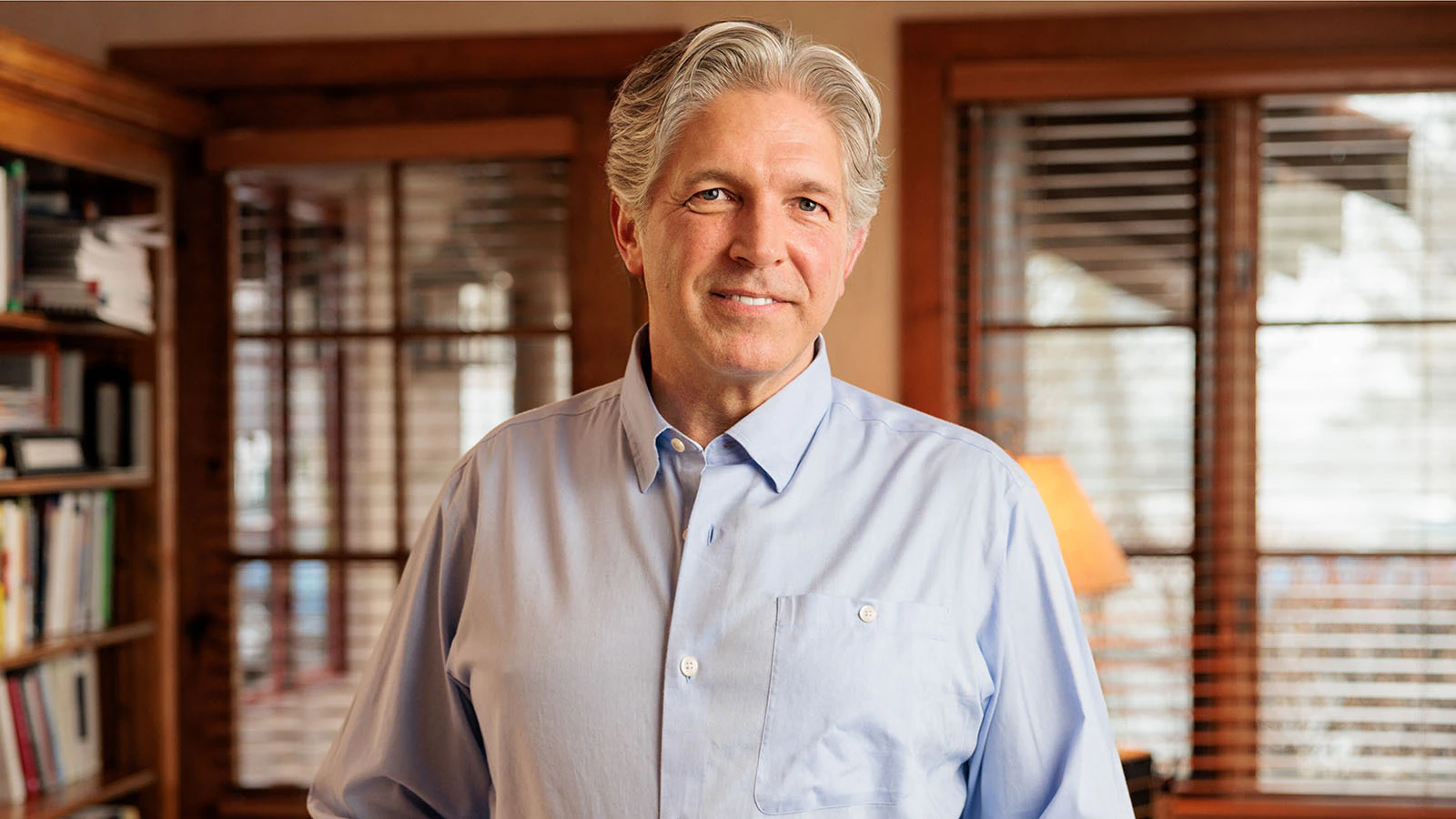
Steve Friess, son of the late Wyoming philanthropist and political candidate Foster Friess, describes his conservative roots as deep and prolific.
“I think (my political philosophy) is reflected in my history of working on the conservative movement," he told Cowboy State Daily this week in a phone interview. “In the early 2000s, I helped raise the first $1 million for Tea Party patriots.
"A few years later (I helped) get Turning Point USA launched, with Charlie Kirk — who we miss terribly.”
Kirk, a conservative activist who held open-mic debates on college campuses, was fatally shot in the neck at one such debate last September.
Cowboy State Daily reported at the time that Kirk sparked a spontaneous inspiration that turned into a friendship in Foster Friess starting in the summer of 2012.
Foster Friess wrote the first check for Kirk’s group Turning Point USA.
Foster Friess was also one of the earliest backers of government spending tracker Open the Books.
As for Steve Friess, he said he misses Kirk “tremendously" and was shocked to see some of the dark joy people voiced when he was killed.
“I think Charlie stood for what’s true, good and beautiful,” he said. “A fantastic leader, he was just such a special man with so many gifts.”
Trades, School Choice, Election Integrity
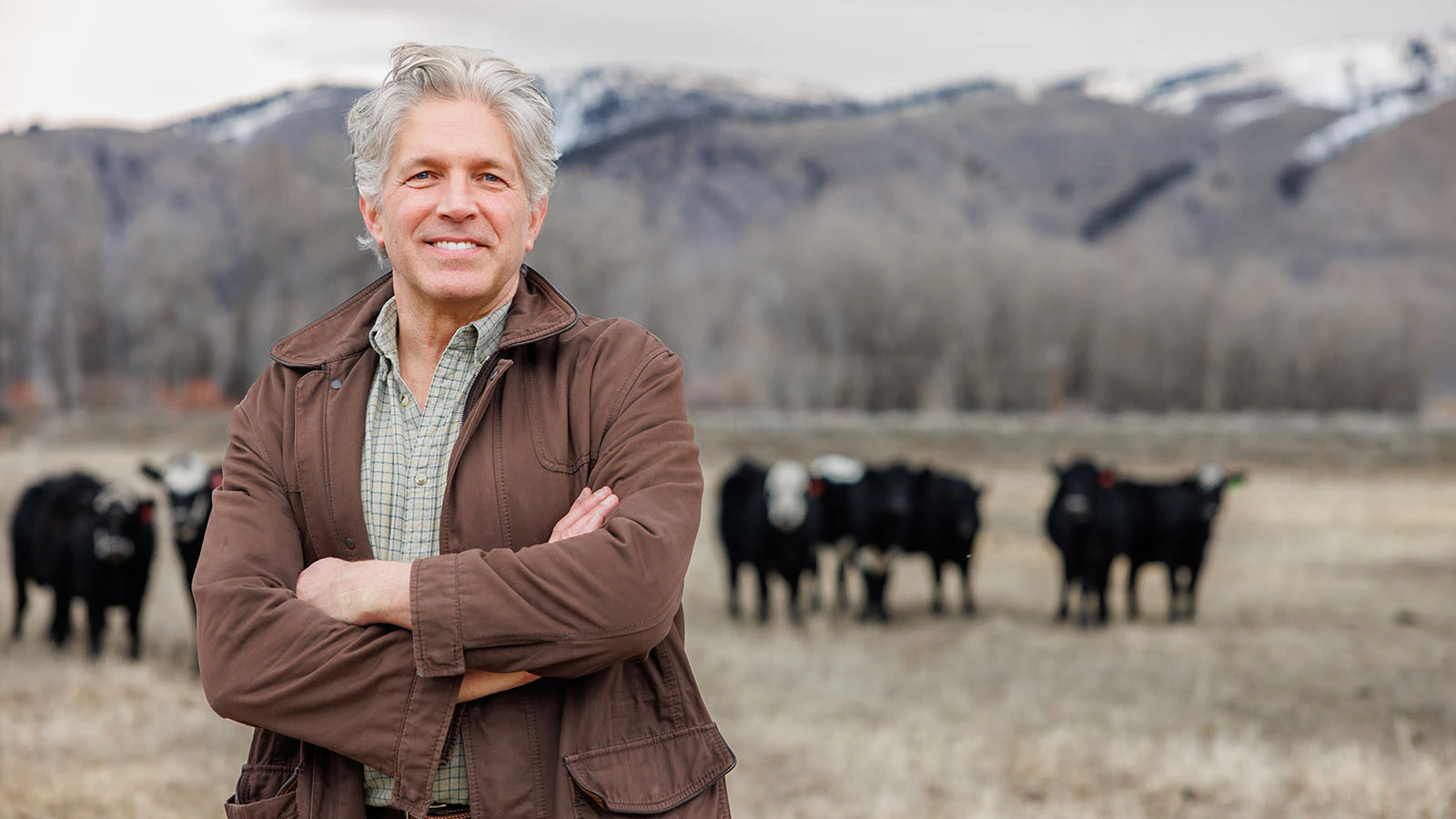
Friess turns 60 later this month. He was born in Delaware and moved to Teton County in 2000, he said, “and I still ask myself what I was waiting for" by not making the move earlier.
He and his wife Polly have four kids ranging from ages 13-20. They founded the Christian school Jackson Hole Classical Academy in 2014.
Polly still helps lead the school, while he serves on a board that oversees the facilities rather than the administration, he said.
Friess said he’s been “very involved” in continuing his dad’s projects since the latter died in 2021, helping to run the trade school scholarship program Foster’s Outriders as well as the Lynne and Foster Friess Family Foundation.
Many of his efforts have backed school choice and election integrity projects, he said.
“Also there’s a group called True the Vote, which we helped fund, when we got really early signals about the voter integrity issue,” said Friess.
Conservative activists started True the Vote around 2009, with the goal of bolstering election integrity.
Friess continued to list groups he’s helped, like Moms for America, which says it’s “a national movement of moms reclaiming our culture for truth, family, freedom, and the constitution.”
He described his own political philosophy as pro-Trump, pro-life, pro-gun, pro-liberty and pro-opportunity.
Think Tank
Friess said he started paying close attention to executive branch policy maneuvers in the Obama administration, when the president signed the Deferred Action for Childhood Arrivals (DACA) order, “which he wasn’t supposed to sign.”
The next order Obama wrote was “a detailed list of everything big labor wanted from the government,” Friess said.
Around that time, he said he ran into some politically experienced people with whom he’d rubbed shoulders in Senate races, and Friess broached the idea of getting potential executive orders for the next president long before that next president took office.
One of the politicos countered, “Oh, you gotta win elections first before you worry about (that).”
“That didn’t sit well with me,” Friess said.
So he reached out to conservative attorneys who had served in past administrations.
“And we built a (slate) of fantastic executive orders … so they were signature ready,” he said.
In President Donald Trump’s first term, the president signed about 20 of the orders the think tank had drafted, said Friess.
One of those, he said, pushed to expedite the construction of the Keystone XL pipeline. Another was a directive to repeal two executive orders before passing a new one.
Friess said his think tank crafted an executive order to repeal "this crazy definition” of the Waters of the U.S. (WOTUS) by the Obama administration, which subjected ranchers who wanted to fill in seasonal puddles on their land to thousands of dollars in fines.
As Trump’s second term started, Friess said his think tank turned toward the more granular work of drafting proposed agency regulation changes.
That’s because America First and Heritage Foundation were working on the “Day One orders” by then, he added.
Friess emphasized that his group offered suggestions but didn’t steer the president.
“I do want to be clear,” he said, “all these were options we presented for the president. And he has complete credit for moving these policies forward.”
Cowboy State Daily asked whether Friess has Trump’s endorsement.
Friess said he’d be thrilled to have it.
“It’s a process. We’ll be seeking that in the days ahead,” he said, adding that he met with Trump not long after Steve’s dad, Foster, died. “He’s a brilliant man and hopefully we’ll have that conversation in the days ahead.”
Hageman, Teton County
Friess has a bachelor of arts degree from the University of Virginia, a master’s degree from the University of Southern California, and has found his real work in the investment business, he said.
He said U.S. Rep. Harriet Hageman, who would be his U.S. Senate counterpart if they both win their respective races, is one of his favorite people in Congress right now.
“It was nice meeting her when she was a rival with my dad in the governor’s race a few years back,” he said. “I’m so excited she’s had the chance to serve in Congress.”
Hageman placed third in that Republican primary election after Foster Friess and the ultimate winner, now-Gov. Mark Gordon.
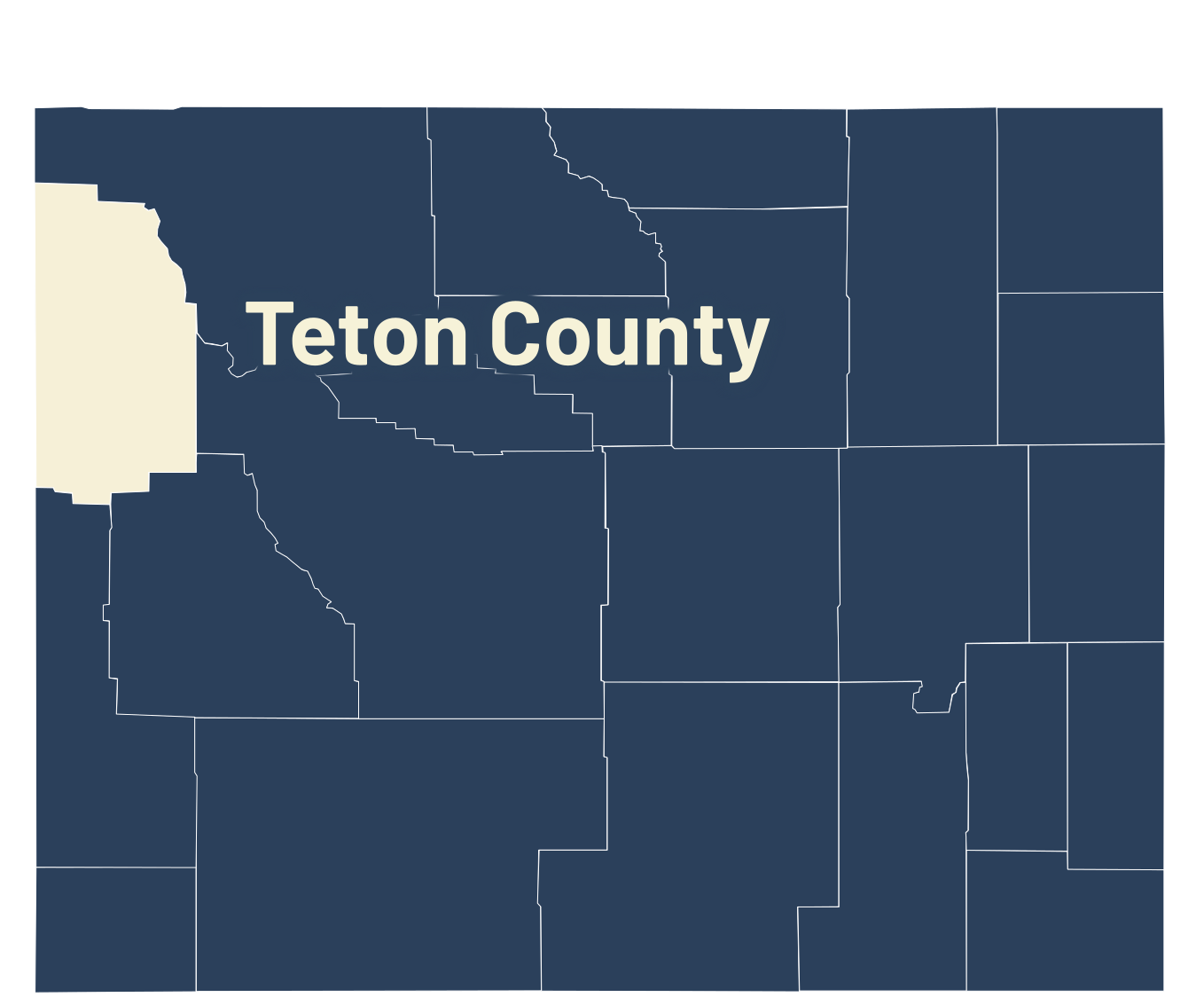
Teton County is the bluest county in an otherwise deep red state that garnered the highest percentage of Trump voters in 2024 at 71.6%.
It’s a beautiful county but “can be very trying sometimes,” said Friess.
He noted the county’s complicated land use regulations. He and his wife found them “impossible to navigate” when they started the school.
But in 2019, the Wyoming Legislature passed a law giving private schools the same zoning benefits as public schools, which Friess said put the academy on a “level playing field.”
Day One In The House
Friess said one of his top priorities is advancing Trump's America-first energy dominance agenda.
He said he’d like to revive the Bureau of Mines, a federal entity formed in 1910 primarily about mining safety, which the government parsed out to different agencies in the 1990s.
Friess’s vision is to headquarter that in Wyoming, not as a regulatory nanny, but as a liaison to help energy workers streamline and quicken their interactions with the government.
“It’s very important we don’t stay in this position where we’re kind of over the barrel with China for strategic minerals,” said Friess. “We have them here.”
He pointed to new technologies to process minerals in a “much cleaner way” and said that industry would expand job opportunities in the state as well.
“My dream for Wyoming is (as a place where) a 20-year-old guy can get a great job and start a family,” he said.
The Chess Board
Hageman declared in December that she won’t seek her House seat this year, but instead will run for the U.S. Senate seat that Sen. Cynthia Lummis is leaving after her term.
Declarations for that lone U.S. House seat avalanched into the news sphere.
Casper businessman Reid Rasner and Wyoming Secretary of State Chuck Gray both declared early this year, casting themselves as MAGA-style candidates.
Former Superintendent of Public Instruction Jillian Balow declared her bid for the GOP nomination soon after.
Senate President Bo Biteman, R-Ranchester, declined to announce his intentions during the legislative session, where he oversaw his chamber’s work in passing the state’s budget and other law changes. But he announced his bid for the nomination once the session ended.
Also seeking the GOP nomination are Casper veterans Kevin Christensen and David Giralt, Teton County rancher Frank Chapman (who is not the same Teton County-based Frank Chapman as Wyoming’s first State Public Defender), and former state Rep. John Romero-Martinez.
Former Casper vice-Mayor Shawn Johnson seeks the Libertarian Party nomination.
Wyoming's primary election is Aug. 18. The primary election in Wyoming is usually more decisive than the November general election, as the Cowboy State is overwhelmingly Republican.
Clair McFarland can be reached at clair@cowboystatedaily.com.