
A bold decision made 52 years ago still shapes Wyoming's budgeting process today and will influence its finances for decades to come.
The 2026 Budget Session is now in the books and Wyoming Legislature accomplished the main purpose of the session - adopting the appropriations bill to operate state government for the next two years. After initial differences between the two houses of the Legislature, they came together and essentially approved the governor's budget recommendations.
Lawmakers had to decide not only how much to spend but also where the money would come from. Sufficient revenue to pay for the budgeted expenditures is critical because the Wyoming Constitution prohibits deficit spending. There was plenty of money in the state’s coffers to pay for whatever the Legislature decided to spend over the next two years.
However, that was not always the case. Wyoming was on the brink of a financial crisis in 1968 when it almost ran out of money to meet its obligations with the general fund dwindling to only $80!
Gov. Stan Hathaway recognized the problem and launched the "Build Wyoming" program to address revenue shortages at a time when most revenue came from a 3% sales tax but which was insufficient to cover the costs of running the government.
To broaden the revenue base, Gov. Hathaway asked the 1969 Legislature to impose the state's first-ever severance tax on minerals.
Despite his strong popularity and a Republican majority in both houses, proposing a new tax was politically problematical. With determined advocacy from the governor, the bill passed – despite heavy lobbying from the mineral industry.
Its passage was helped along by the fact that the tax fell on the mineral industry rather than directly on citizens. Perhaps the old adage that the "best tax is the tax on the other guy" influenced the outcome.
The 1969 decision resolved an immediate revenue shortfall, but its lasting legacy was a fundamental shift in Wyoming’s fiscal policy.
In 1974, with Republican majorities in both chambers, the Legislature again considered increasing taxes on minerals. But Gov. Hathaway warned he would veto any increase unless part of the additional revenue was set aside in a mineral trust fund through a constitutional amendment.
He argued that without such protection, a future legislature might be tempted to spend the revenue all at once. He insisted any increase be accompanied by a permanent fund with its income used to meet the state's needs.
Hathaway worked with Dick Jones, a formidable leader in the state senate, to come up with a constitutional amendment creating the Permanent Wyoming Mineral Trust Fund (Trust Fund), which voters approved overwhelmingly in the 1974 general election.
The amendment mandated a permanent 1.5% tax on coal, oil, natural gas, oil shale with those proceeds to be deposited into the Trust Fund, to remain inviolate, and with the investment earnings placed in the General Fund.
Even though the 1974, tax rates on minerals have changed, initially 3% in 1974 and increased to 4% in 1975, the constitutionally mandated 1.5% tax on minerals dedicated to the Fund has never changed.
Fifty-two years ago, Wyoming had no permanent fund. But with the mineral taxes flowing into the Fund over the last half century it was grown to $12.1 billion as of August 2024 and the earnings from that Fund are expected to contribute more than $600 million to the General Fund over the next two years, which is second only to what is generated by the sales and use tax.
The Trust Fund’s importance cannot be overstated. It will remain a major driver of state funding for generations to come, regardless of what happens to future mineral production.
Some critics have called the Fund a “mixed blessing," arguing it reduces incentives to diversify Wyoming's tax base because so much of the Trust Fund's income flows into the General Fund.
Yet, supporters counter that the Trust Fund provides financial stability with income available to meet essential obligations during economic downturns and reducing pressure to raise taxes.
While in the Legislature, supporting the creation of the Trust Fund was the best vote I ever cast.
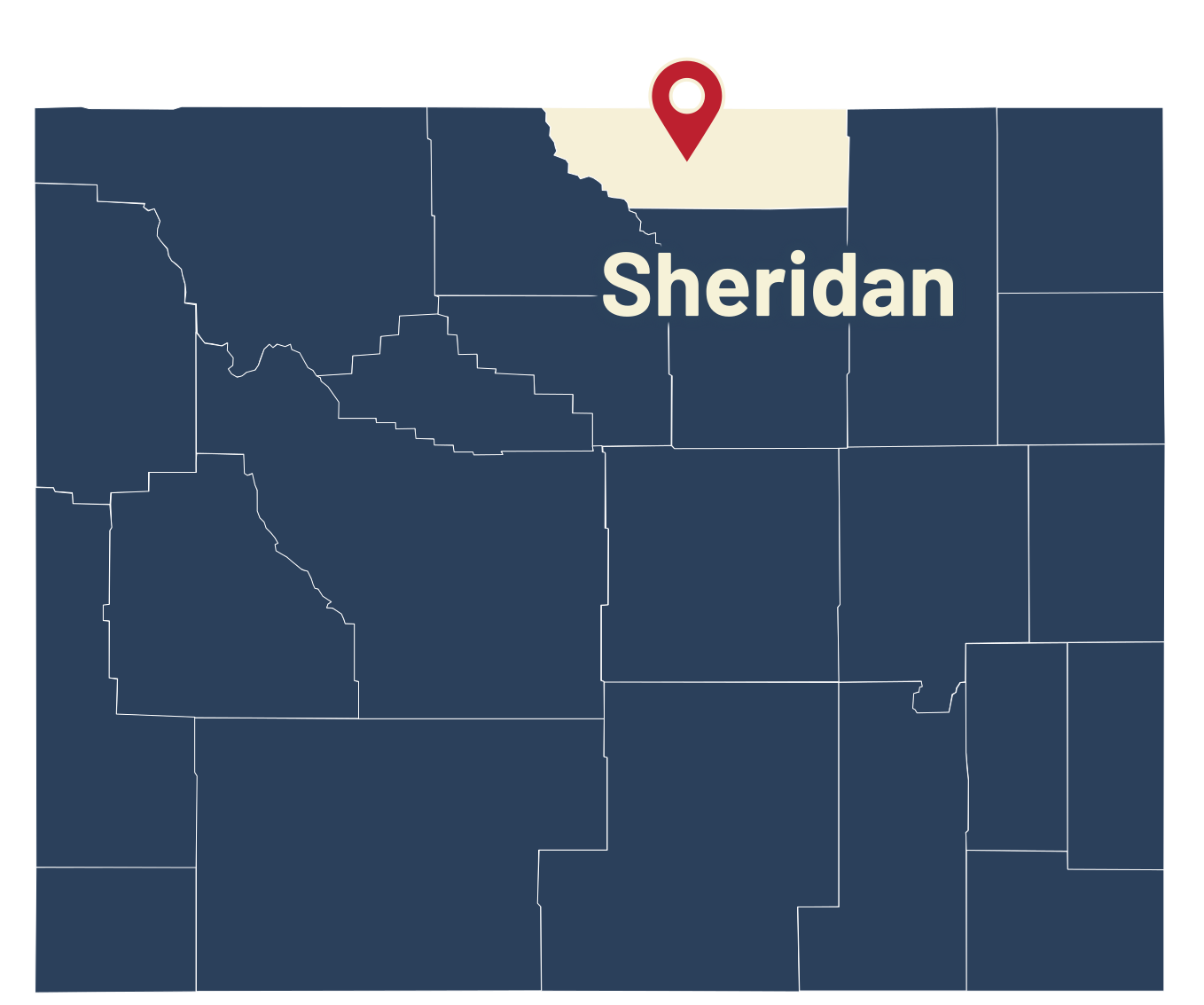
Rex Arney, Sheridan
Rex Arney, a native Wyomingite, served as a Republican member of the Wyoming House from 1973 through 1976 and in the Wyoming Senate from 1977 until mid-1988 when he resigned to become general counsel for National Endowment for the Humanities.