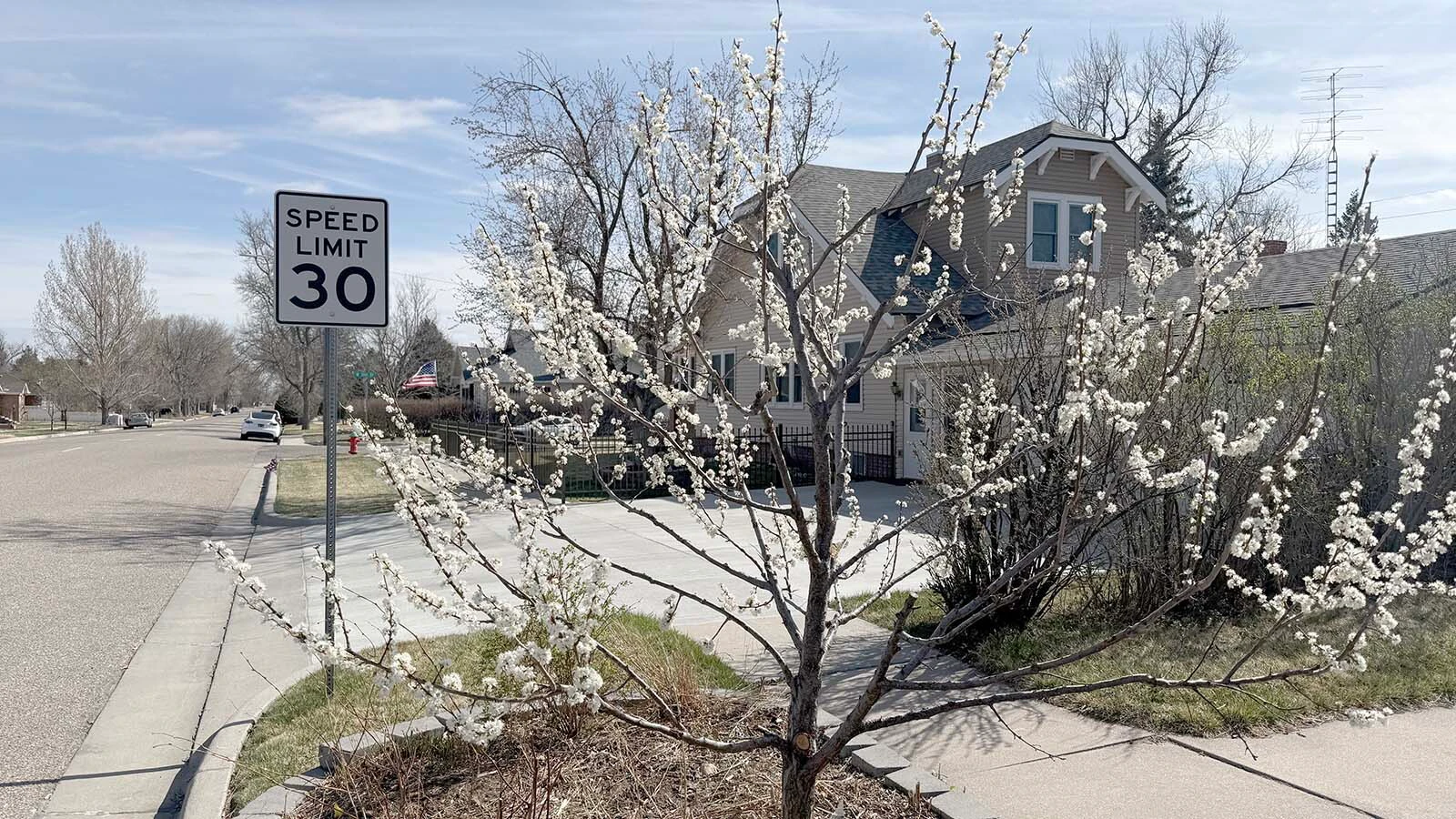
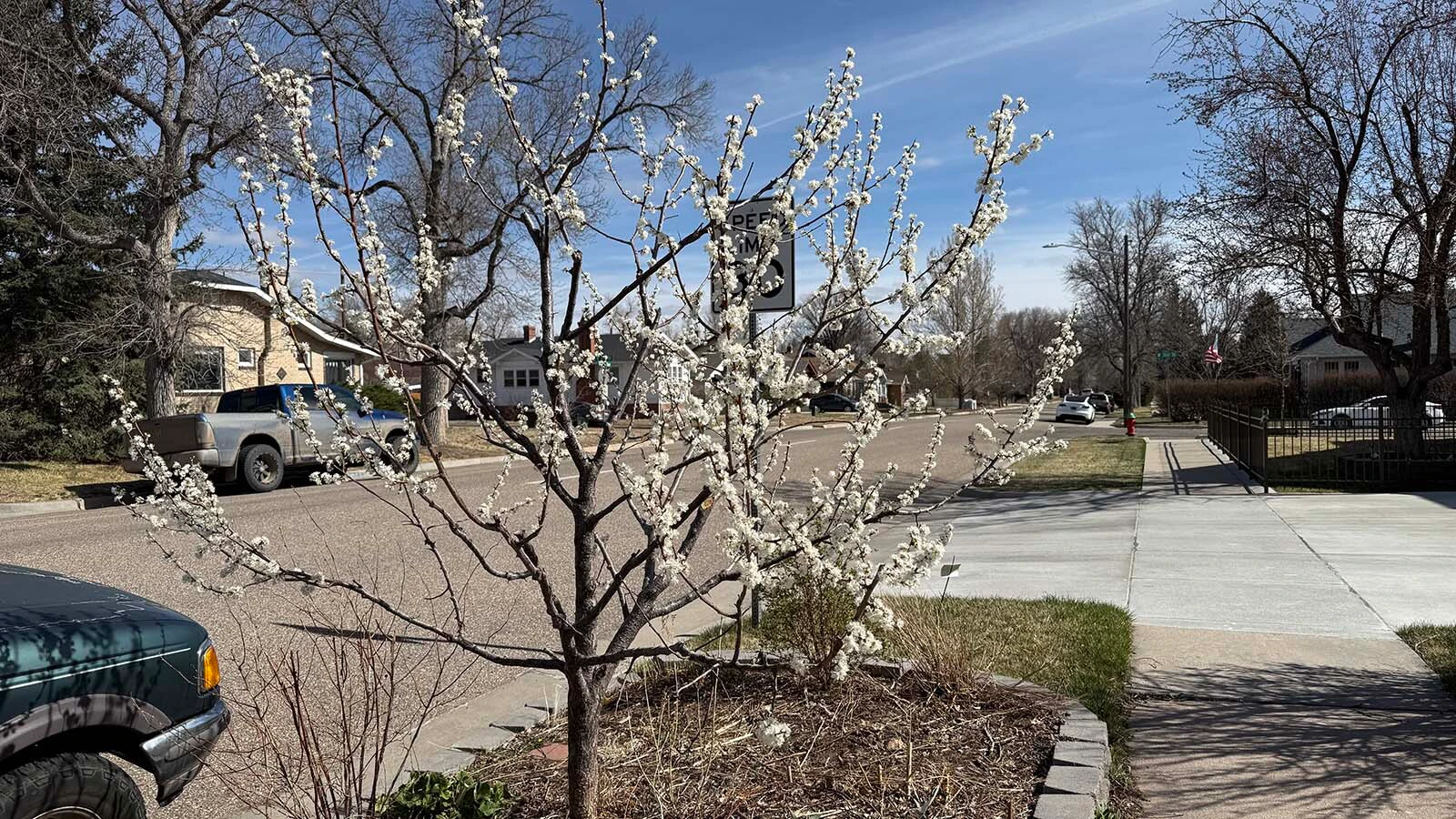
Many people in southern Wyoming are shocked and unsettled by what’s normally a welcome and beautiful sight. Fruiting trees are starting to bloom and flower, and it’s not even April.
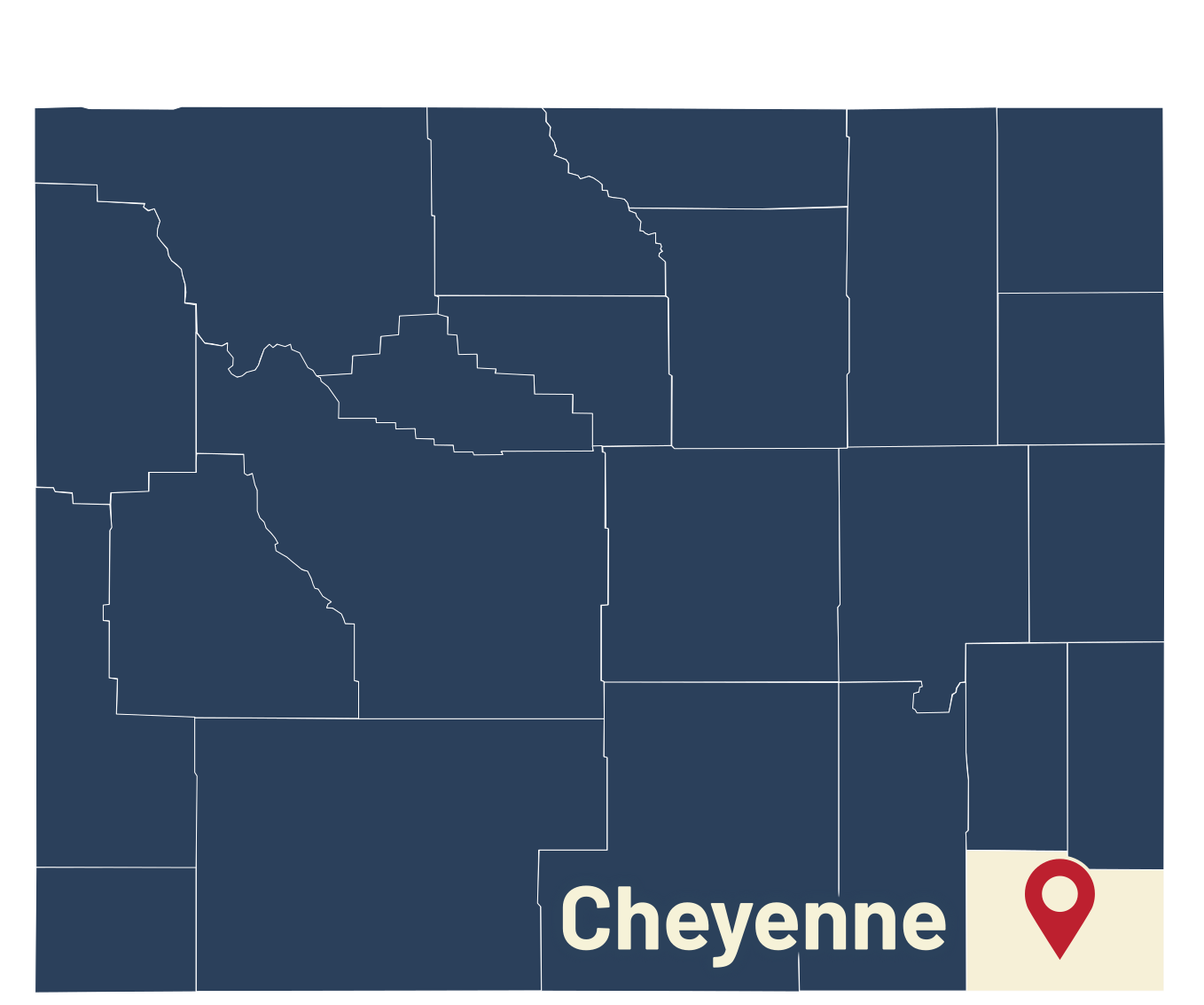
Cheyenne resident Billy Holmes stepped outside to see his backyard crabapple tree starting to bud. That was a first, at least for late March.
“This is the earliest I can remember my apple tree leafing out since we planted it (over) 20 years ago,” he told Cowboy State Daily.
Shane Smith, former director of the Cheyenne Botanic Gardens, checked his own records. He believes Holmes is, unsettlingly, right.
“I wasn't perfect at keeping records, but I can tell you that the earliest record I have for a crabapple is April 19,” he said. “They’re usually blooming in late April, not late March. This is all unprecedented.”
When It’s Ripe
Although trees and plants follow the same seasons as humans, they keep their own calendars. They tend to flower at specific times, but that’s highly dependent on the environment, particularly temperature.
It takes more than one or two abnormally warm days to spring plants into their blooming cycles. Sustainable periods of warmer temperatures signal to them that it’s safe to bloom.
“These trees are pretty sure they’re doing the right thing,” Smith said. “When those temperatures hit, it's time to bloom. Because temperatures are playing out the way they're used to, they’re blooming.”
That’s certainly been the case across the western U.S. this winter, which was the warmest winter on record with one of the worst snowpacks in recent memory. Many Wyoming communities have already experienced highs in the 80s.
The season has already thrown fruiting trees in Colorado and Utah out of whack. Pear trees in Salt Lake City were blooming, and lilacs in Denver, in late December.
When In Doubt, Drop For Drought
Fruiting trees need a certain number of "chilling hours" to stay happy and healthy. "Chilling hours" means the total amount of time temperatures are around 45 degrees or lower—a period of cold weather that trees need before they can go dormant and resume growing and flowering with as little stress as possible.
Chilling hours are a death knell for tropical plants and fruits, but they’re essential for apples, pears, and other fruiting trees in North America.
“You can't grow a rhubarb in Florida, and it’s hard to grow an apple in the tropics,” he said. “These plants need winter, and a certain amount of cold, to stay happy.”
When fruiting trees bloom this early, it’s probably more than a seasonal response. According to Smith, an early-blooming tree might be showing that it’s entered serious survival mode.
“Flowering is a common response plants have to stress,” he said. “They want to reproduce in case they don’t survive. When temperatures are 10 to 20 degrees above normal for days on end, it’s especially hard on fruiting trees.”
People can tell if their trees are seriously stressed by going straight to the top. When trees sense they’re in danger of drought or death, they’ll sacrifice their tallest branches first.
“That’s the tree thinking it needs to reduce its size to survive,” he said. “The upper branches will start to die or fall away, but the tree doesn’t have to die.”
The Earliest Last Frost
When Salt Lake City’s pear trees were blooming in December, Smith and other arborists were concerned but not alarmed. There was still time for colder temperatures and more moisture in the remaining months.
“In my experience, this December is unprecedented,” he said at the time. “I know a lot of people in fruit-growing country are watching nervously.”
Three months later, there’s still time for spring moisture, but a lot less of it. Meanwhile, arborists across the Front Range are already anticipating several worst-case scenarios.
Smith isn’t worried that there will be a widespread death of fruiting trees. However, widespread crop failures are entirely possible.
“The problem is the blossoming,” he said. “If we get another blizzard and a hard frost, where the temperature drops below 32 for the last three hours of the night, that’ll kill all the blossoms. I can't tell you many times I've seen that.”
That’ll be dependent on “the last frost” of the season. It usually occurs around Mother’s Day, which would be a serious concern if trees were blooming this early in a normal season.
However, this has been anything but a normal season. If fruiting trees are already blooming, it’s possible that Wyoming will get its last frost much earlier.
“I'm predicting that we're going to have any number of towns in Wyoming and Colorado experience their earliest last frost on record,” Smith said. “Cheyenne usually has its last frost around May 20. It wouldn't surprise me if this year’s last frost is two weeks earlier than that.”
An early last frost might feel like catching a break in less-than-ideal circumstances. However, the timing won’t matter if trees are already blooming and attempting to fruit.
Potential Good, Probably Bad
Commercial fruit production has never been much of an industry in Wyoming, mainly because its winters are so volatile and unpredictable. However, after the warmest winter on record, some people could have a banner crop in their backyards this spring.
“If there's no more hard frost, that's quite possible,” Smith said. “I wouldn't bet on it, but it's possible.”
Many backyard gardeners are looking to Smith and other experts to determine when they should plant their backyard plants, fruits, and vegetables. After this winter, Smith can’t recommend anything with his usual conviction.
“We're all flying blind,” he said. “We don't really have a ‘last time’ of this kind of extreme weather shift when it comes to gardeners. This will probably be one of the earliest starts to the garden season, at least in recorded history.”
If you’re thinking of following the fruiting trees and planting now, not so fast. It might be unseasonably warm, but there’s still the last frost to consider.
“If you're watching the weather, we're not just looking at below freezing,” Smith said. “We're looking at how long and how far below freezing. Most of us aren't thinking about setting tomatoes out in a week or two. This is the most unprecedented year for warmth, but the last frost can be unpredictable.”
Even if Wyoming gets more crabapples than ever, Smith believes the already-blossoming trees are more of a concern than a benefit. It’s been relentlessly warm and dry for months, and these trees are showing just how serious their circumstances have become.
“It’s all unprecedented,” he said. “The warmth is melting our snowpack, and trees across the Front Range think it's April or May. The whole food industry could be threatened. Could the health of these trees be threatened? Nobody knows. It's been such an unprecedented winter, and it’s not much better in spring.”
Andrew Rossi can be reached at arossi@cowboystatedaily.com.