After the torturous winter that wasn’t, some meteorologists are seeing signs of another ominous weather event: a Super El Niño.
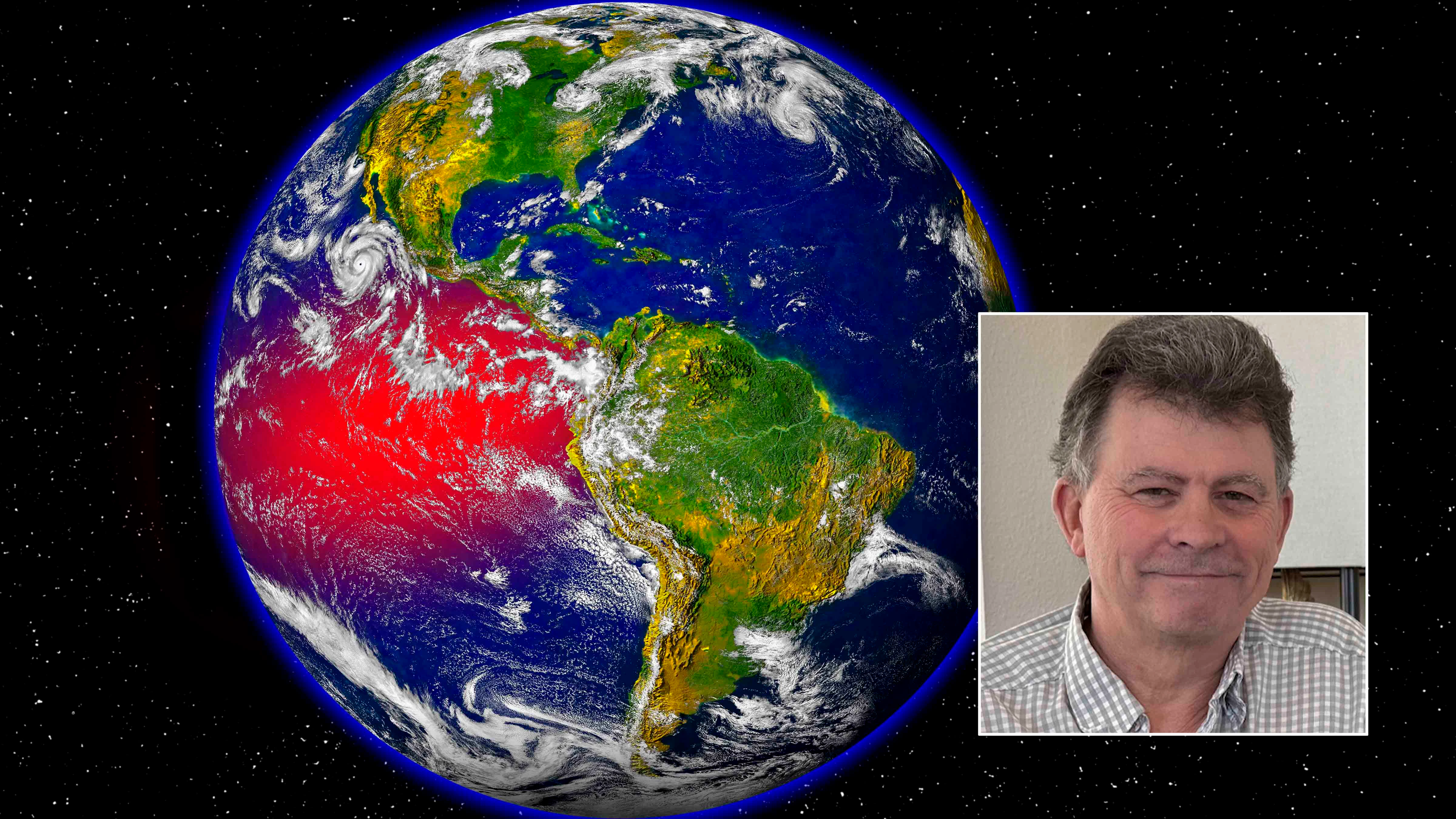
Several meteorologists say that an El Niño is forming over the Pacific Ocean. That means the ocean's surface temperatures are getting warmer along the equator, which always has wide-reaching impacts across the Western Hemisphere.
However, some meteorologists are going a step further. They believe that current conditions have all the hallmarks of a Super El Niño with amplified impacts across the United States.
Ben Noll, a meteorologist with The Washington Post, said a Super El Niño would lead to “changes in location, intensity and frequency of droughts, floods, heat waves and hurricanes.” He predicted there was an 80% chance of a strong El Niño, and a 22% chance of a Super El Niño, by August.
A Super El Niño would have noticeable and potentially favorable impacts on Wyoming’s upcoming summer by adding needed rain after a bone-dry winter.
But is this an accurate assessment or a super-inflated outlook of what lies ahead?
“I've been getting a lot of emails from people about it, and I certainly have some opinions,” said Cowboy State Daily meteorologist Don Day. “There’s a very good chance that we are going to have an El Niño, but it’s very early to say it’ll be a ‘super’ El Niño.”
El Niño And La Niña
El Niño and La Niña are opposite phases of the same Pacific Ocean weather patterns.
El Niño is generally fast and furious, with weaker ocean surface winds that spread warmer water, while La Niña tends to last longer, with stronger surface winds that spread cooler water.
The Pacific Ocean has just phased out of a stronger-than-expected La Niña. That accounts, in part, for the record-breaking warm winter experienced in the American West.
“We very much under-forecasted the intensity of La Niña last fall,” Day said. “There was less than a 50% chance of a La Niña in the March forecast, but it came on in August and reached its peak in December. We didn't get the La Niña wrong, but the intensity was way wrong.”
According to Day, there are strong signs that an El Niño is forming. It’s not here yet, but it could manifest in the next few months.
“There was a pretty significant change from the February forecast to the March forecast in terms of the intensity and timing,” he said. “Confidence is high that an El Niño is coming, but we’ve got to be extremely careful about what we’re saying.”
Super Skeptic
There’s no technical definition for a Super El Niño. It’s just a stronger-than-normal El Niño, where its weather-related impacts are amplified by the intensity of the pattern.
Day’s hesitation about adding “super” to the developing El Niño is two-fold. Firstly, there’s a timeline issue.
“We're in what's called the spring predictability barrier, which means any predictions that are made months in advance in spring run the risk of a higher error rate.”
Those errors are caused by factors such as Earth’s axial tilt and the ongoing seasonal shift in global weather patterns. Furthermore, the last two winter seasons have been dominated by La Niñas, so this would be a significant shift from the last two years.
That’s a lot for long-range weather models to process and anticipate so far in advance, another reason for Day to be skeptical.
“The model that's predicting the strongest El Niño, in my opinion, is not predicting it to be a Super El Niño,” he said.
Then there’s the lingering impacts of this Hunga Tonga-Hunga Ha’apai, the massive underwater volcano that erupted in January 2022. The eruption sent 150 trillion gallons of water into the stratosphere, enough to fill Lake Erie twice.
Day cited the ongoing impact of this eruption as one of the reasons Wyoming had its warmest winter on record. He also believes the amount of water left in the stratosphere could alter the anticipated behavior of an El Niño, regardless of intensity.
“We don't have any historical precedent for the Hunga Tonga eruption, which has been impacting weather since late 2022,” he said. “We don't know what this El Niño is going to interface with that, which is why I’m very cautious about jumping the gun about this El Niño.”
What Does It Mean For Wyoming?
When the Pacific is undergoing an El Niño, things are generally warmer and wetter in Wyoming. That’s good news for the region that’s seeing its already-low snowpack steadily decline after a winter that left most areas devoid of snow.
“When we see this phase change, especially from spring into summer, it has historically led to more precipitation,” he said. “That's potentially really good news for us, as it could get us out of this dry cycle, but we have to tread carefully. We can’t make assumptions that this El Niño will be exactly like the previous ones.”
We should know soon enough. Day’s analysis suggests the impacts of El Niño will reach Wyoming before summer officially begins.
“The most recent forecast is showing a 70% chance we'll be in an El Niño by May, June, and July,” he said. “It’s showing about a 45% chance that it's going to happen in April or May, so it looks like it’ll really kick in between May and June.”
That’s great timing. A strong El Niño in the latter half of spring would make rainstorms more productive, helping alleviate the growing drought deficit across Wyoming.
One might say that’d be “super.” Day isn’t one of them.
Super Clickbait
With all the hype over a looming Super El Niño, Day isn’t “jumping on the bandwagon.” He’s certainly not on the same wavelength as Ben Noll.
“In my personal opinion, The Washington Post is not the place to go to get weather information,” he said.
The looming El Niño could become a Super El Niño, but it’s much too early to determine that. Day acknowledges that long-range forecasts can give people false feelings of hope or despair, which is why he avoids doing them, but he always tries to give Wyomingites the most accurate assessments he can.
“People get themselves in trouble all the time by going too far out,” he said. “It's better to take it a little chunk at a time and see how things evolve. When we’re putting out predictions of what the summer, fall, and winter are going to be like in a Super El Niño, you end up getting idealized outlooks that may or may not happen.”
Day’s assessment is that the signs of Wyoming being impacted by an El Niño before summer are “encouraging,” but that’s as far as he’s willing to go over two months out. With all due respect to his meteorological peers, he has a different assessment of what they’re saying.
“It's clickbait,” he said. “It's getting too far out on your skis. If I were to take it carte blanche, an El Niño at the right time is encouraging, but it’s not a done deal.”
Andrew Rossi can be reached at arossi@cowboystatedaily.com.