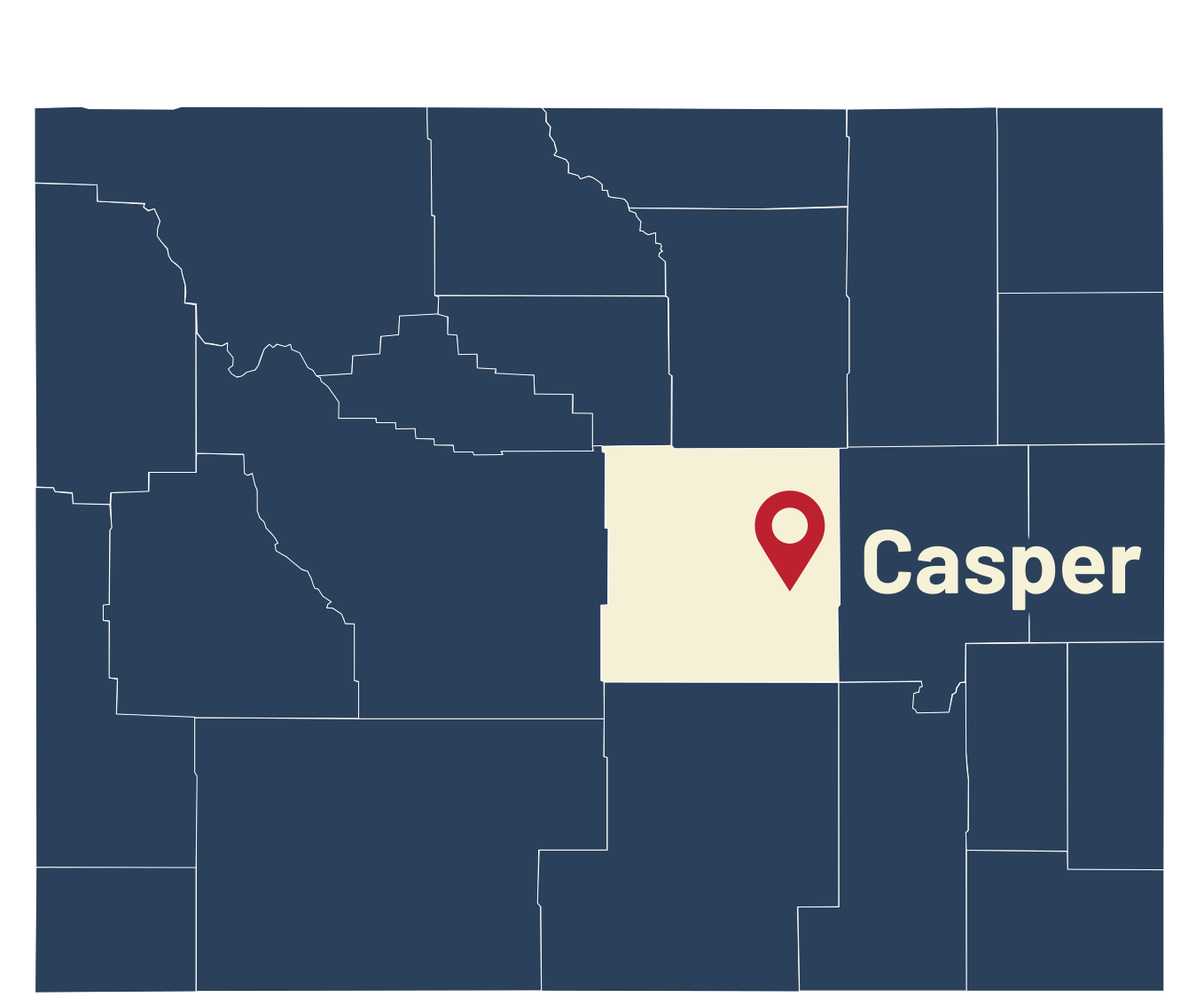
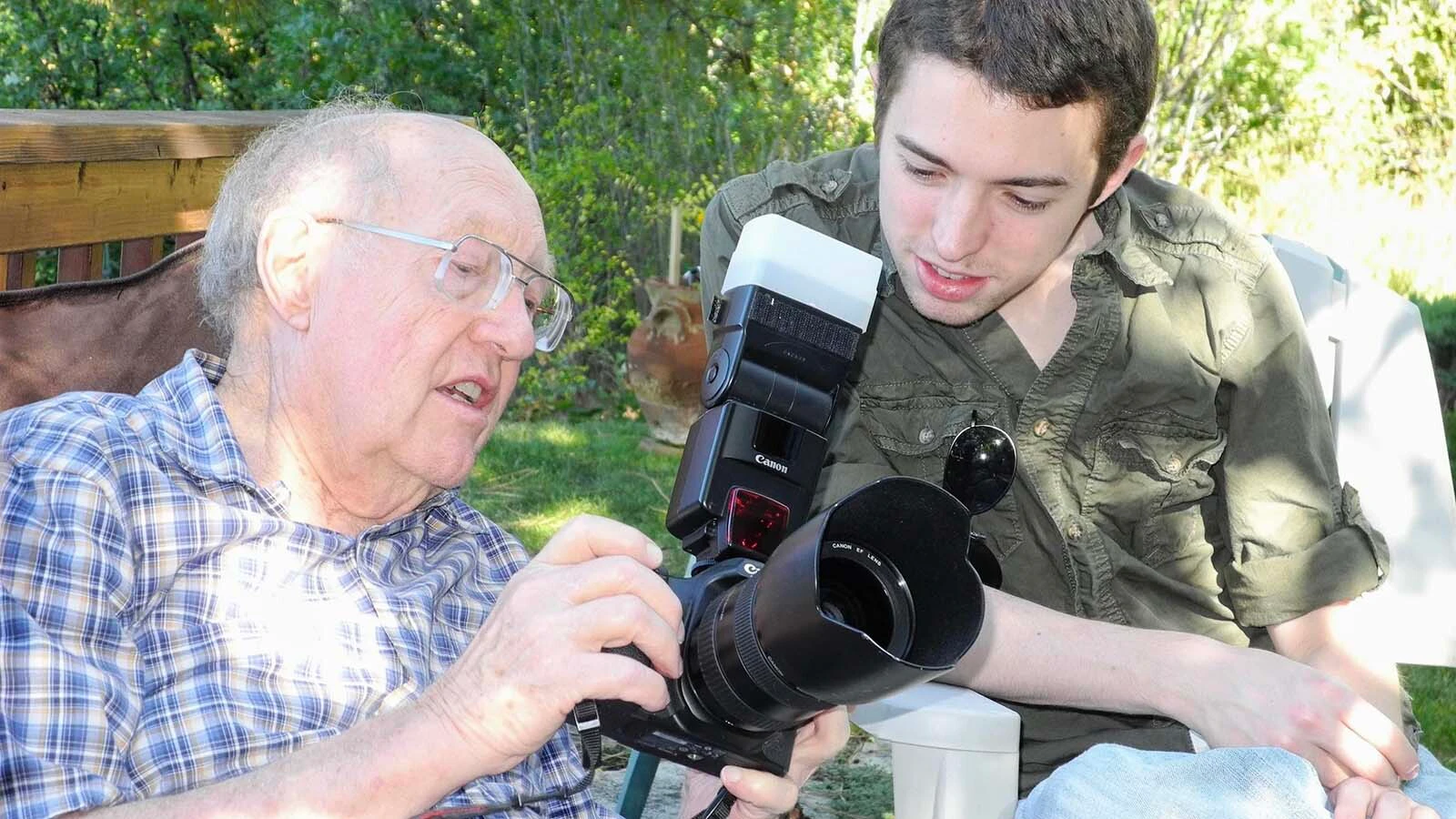
CASPER — Dean Conger fueled airplanes as teen, hung out of airplane windows to capture news photos in the West in his 20s, and then worked for National Geographic until retirement.
Along the way, he captured some of the most historic and important moments of the times, such as one of astronaut John Glenn with President John F. Kennedy.
The Casper native’s interest in looking at life through a lens began early with a Kodak Brownie camera as a boy.
He would graduate to Leica Rangefinder Finder cameras as a newspaper photojournalist, and then Nikon 35mm equipment using Kodachrome and Ektachrome slide film for the National Geographic Society.
Following his death on Sept. 7, 2023, the award-winning photojournalist left his career’s work of 100,000 unedited 35mm slides with middle son and his wife, Kurt and Robyn Conger of The Dalles, Oregon.
They are still figuring out how others could benefit from the huge trove of images.
“He took up photography very early on,” Kurt Conger said. “He was taking pictures in high school.”
The Casper-Star Tribune on Jan. 23, 1982, in a story on Dean Conger’s prestigious career quoted Conger about a friend who invited him into a darkroom at age 10, which spurred him to his own experimentation with a box camera owned by his mother.
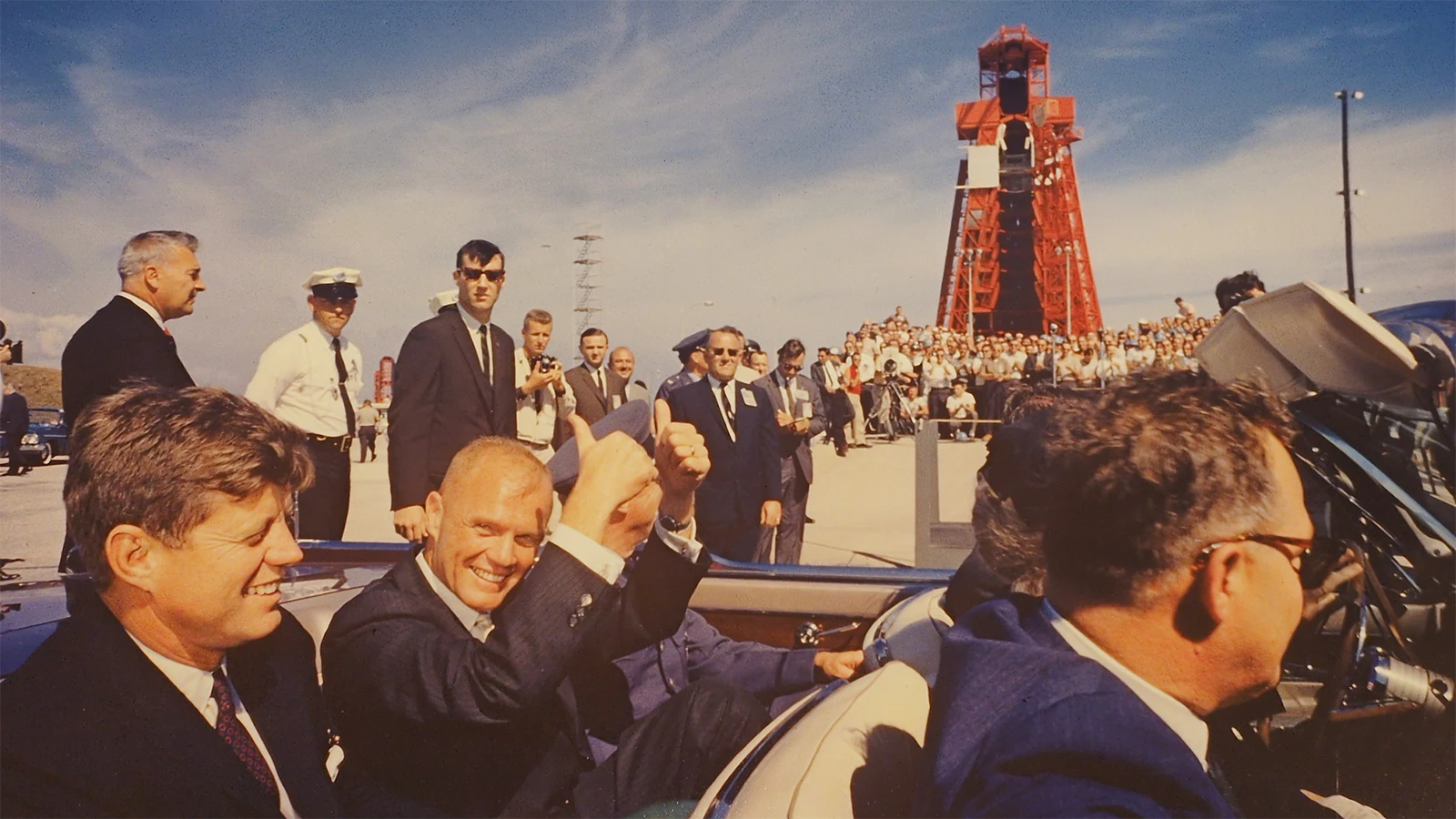
Dean Conger was assigned to NASA in the early 1960s. Among his photos of the Mercury program was on of President John F. Kennedy with astronaut John Glenn celebrating Glenn’s orbit of the Earth. (Courtesy Kurt Conger) 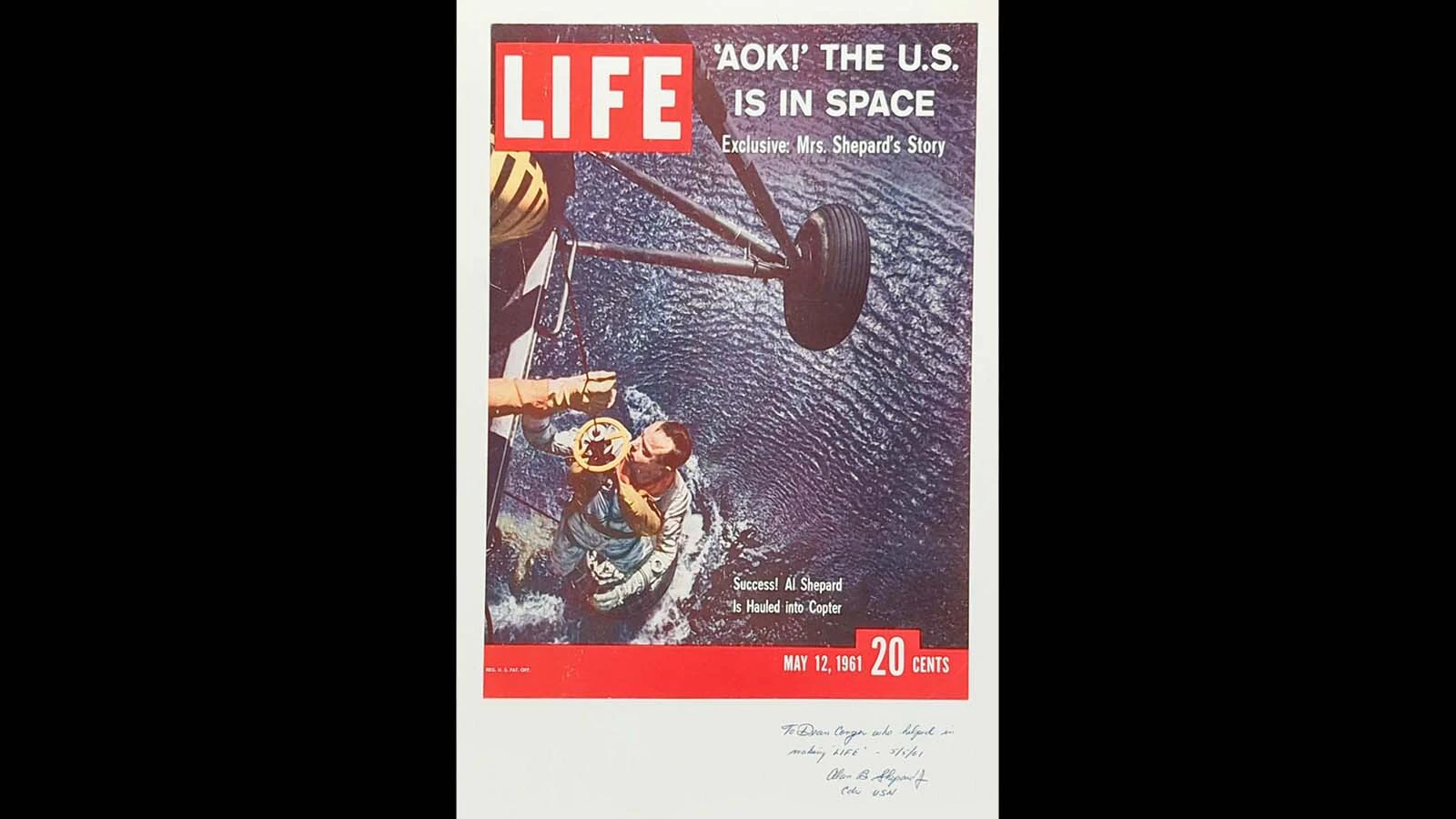
A photo taken by Dean Conger for Life Magazine of Alan Shepard being hauled into a helicopter from his NASA Mercury mission. (Courtesy Kurt Conger) 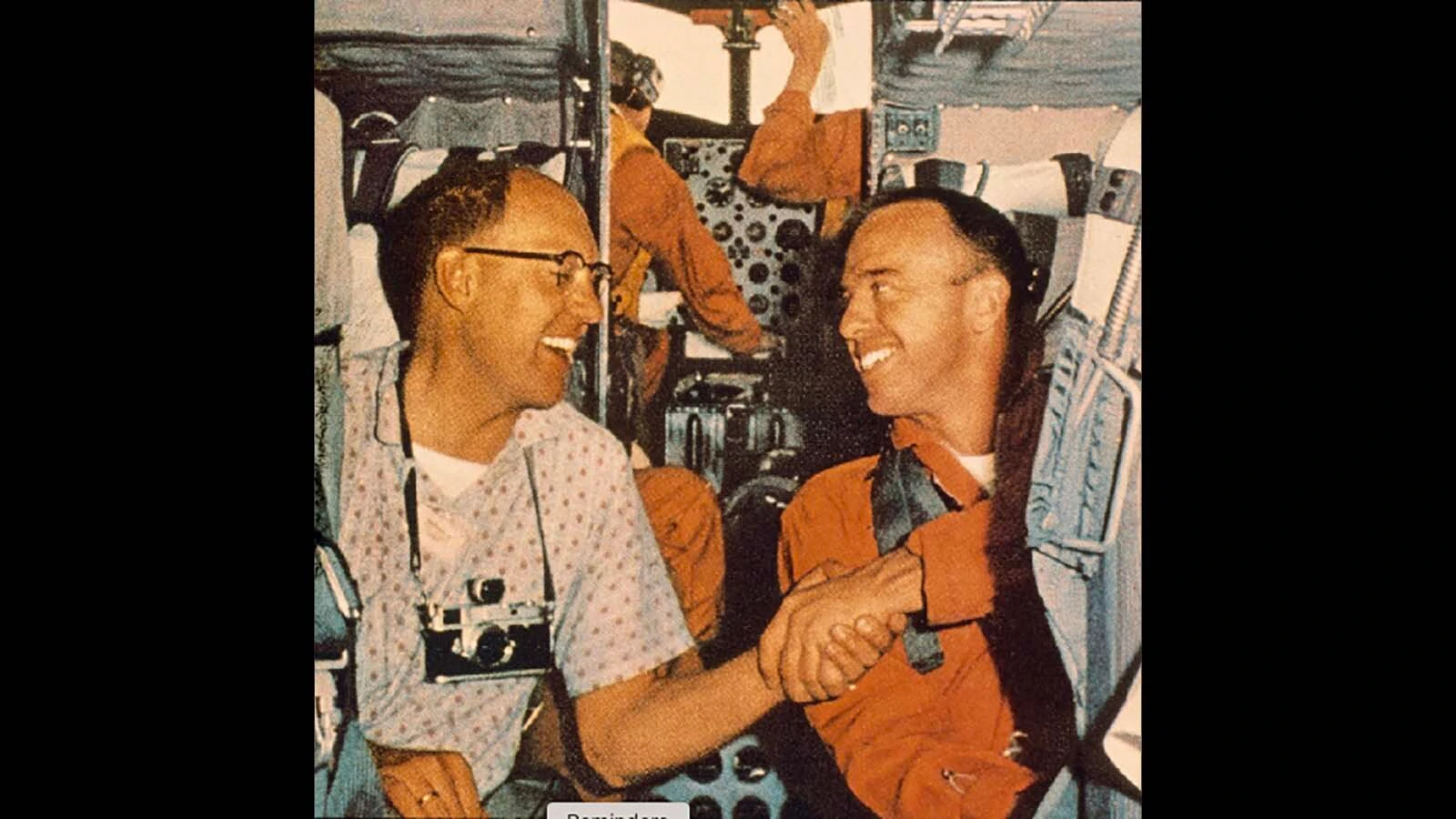
Dean Conger and astronaut Alan Shepard on the Mercury 13 capsule. (Dean Conger Library via The Photo Society) 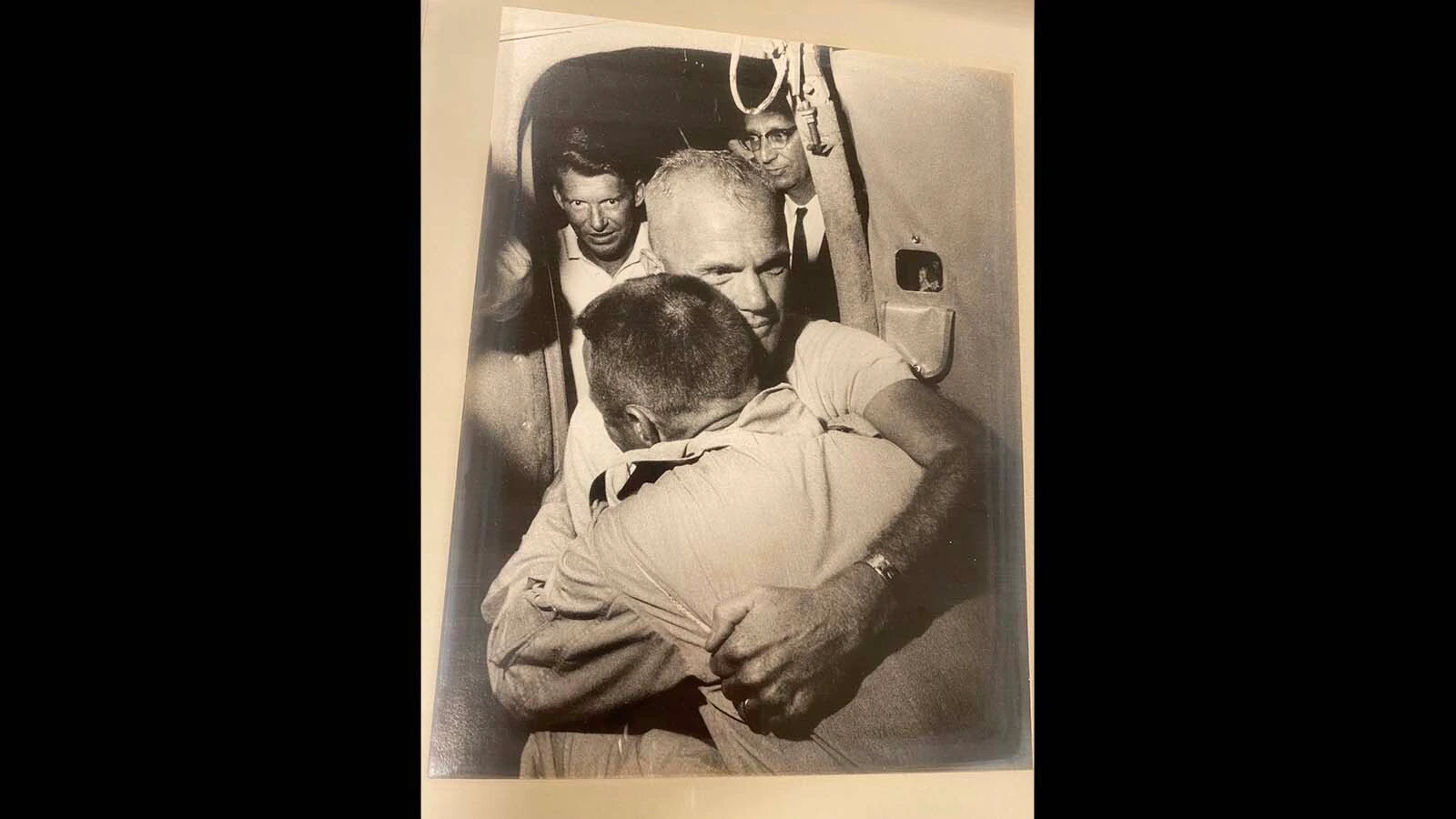
Dean Conger Astronaut John Glenn returns after being the first man to orbit Earth on Feb 20. 1962. (Dean Conger Library via The Photo Society) 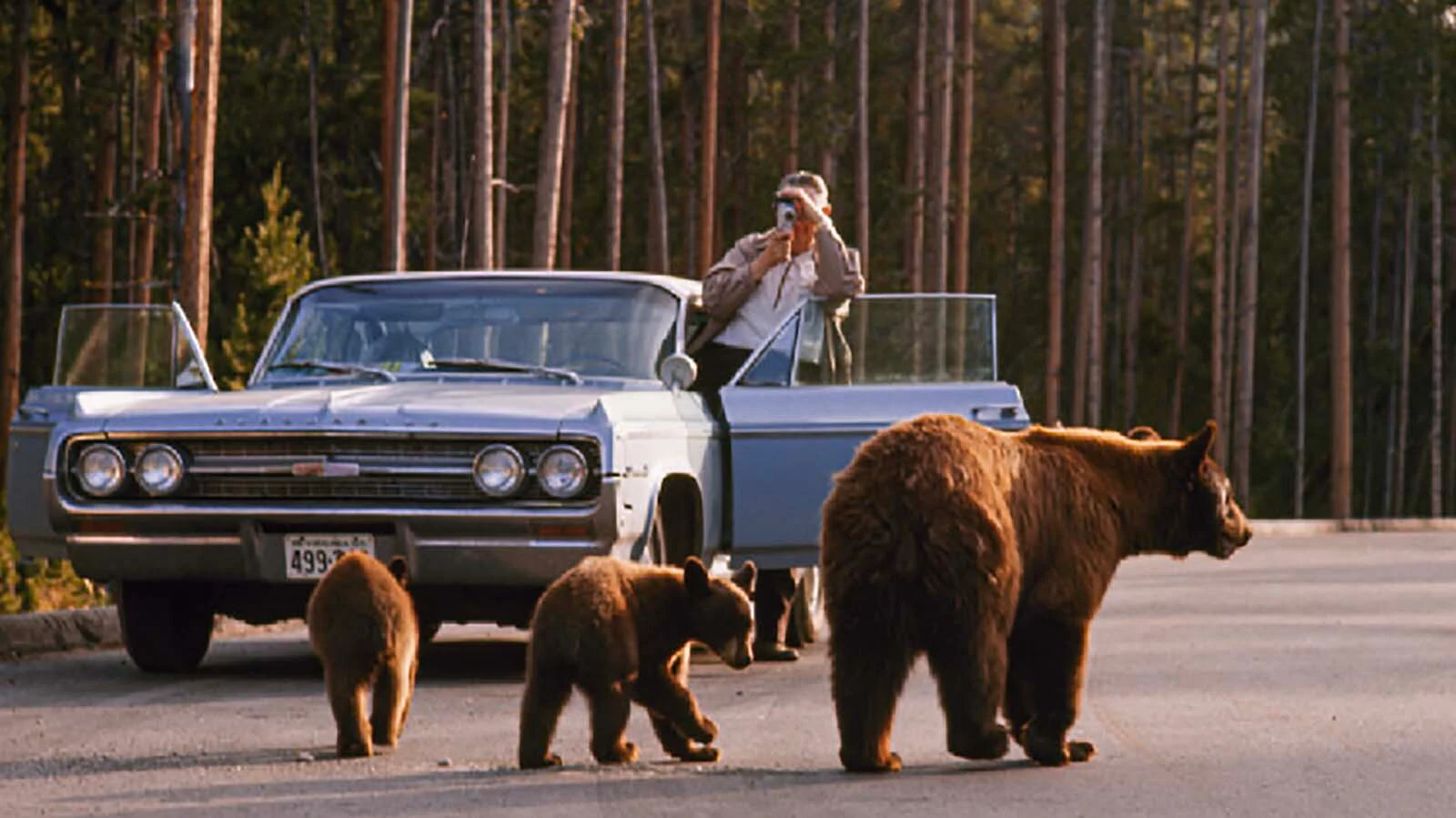
Tourists check out the bears in Yellowstone. (Dean Conger Library via The Photo Society)
Wyoming Beginnings
Dean Conger was born on Aug. 26, 1927, in Casper to Cecil and Bernice Conger.
During the war years prior to his graduation from Natrona County High School in 1945, he worked part-time for the Casper Tribune-Herald.
Kurt said his father also got a job fueling airplanes at the airport.
“He eventually figured out how to get a pilot’s license through that experience,” he said.
Drafted into the U.S. Army in 1945, Conger’s eyesight was flagged, but he spent more than a year in the service as the war wound down, becoming a sergeant and working in darkrooms processing photos and then X-rays, as well as teaching others how to do it.
After his discharge, he attended Casper College and then the University of Wyoming, graduating with a Bachelor of Science degree in 1950.
Throughout it all he kept taking photos freelancing for The Denver Post.
His photo of an Afton, Wyoming-built Call-Air aircraft with skis made the cover of Flying Magazine in January 1950.
Then The Call From National Geographic
In 1951, he was working for The Denver Post and covered the downing of a United Airlines Mainliner that crashed into Crystal Mountain 18 miles west of Fort Collins, Colorado, from the air.
“I flew over the area and shot pictures for about a half an hour,” he said in a story reprinted in the Casper Tribune-Herald on July 1, 1951. “It looked like somebody busted a big bag of peanuts on the side of the mountain.
While Dean did not pilot the plane that captured those photos, his son said he often flew his own plane and took photos out a window as he covered certain news assignments.
Dean and his wife, Leona Moore, were married on Aug. 14, 1953.
Their first son, Eric, was born and they had just finished building a house in Arvada, Colorado, in 1959 when something very unexpected occurred, Kurt said.
National Geographic called, offering him a job.
Robyn Conger said her conversations with Leona about that decision would always bring her mother-in-law’s voice to a near whisper of reverence.
“She said the day that the National Geographic call was really a big day in their life,” Robyn Conger recalled. “That’s not something you say ‘no’ to.”
And so, the 32-year-old Dean Conger flew to Washington, D.C., to begin a career that would take him to retirement in 1989.
His wife was tasked with getting the house sold and making a move across the country to Maryland as he started traveling the United States and the world.
During the first part of his career with National Geographic, two more sons would be born — Kurt and younger brother, Chris.
Dean Conger’s passports started to multiply, and Kurt Conger said his assignments would take him from his family for nearly nine months out of the year.
The photographer kept a darkroom in his house, and he taught his sons as they grew up how to develop film and frame a photograph.
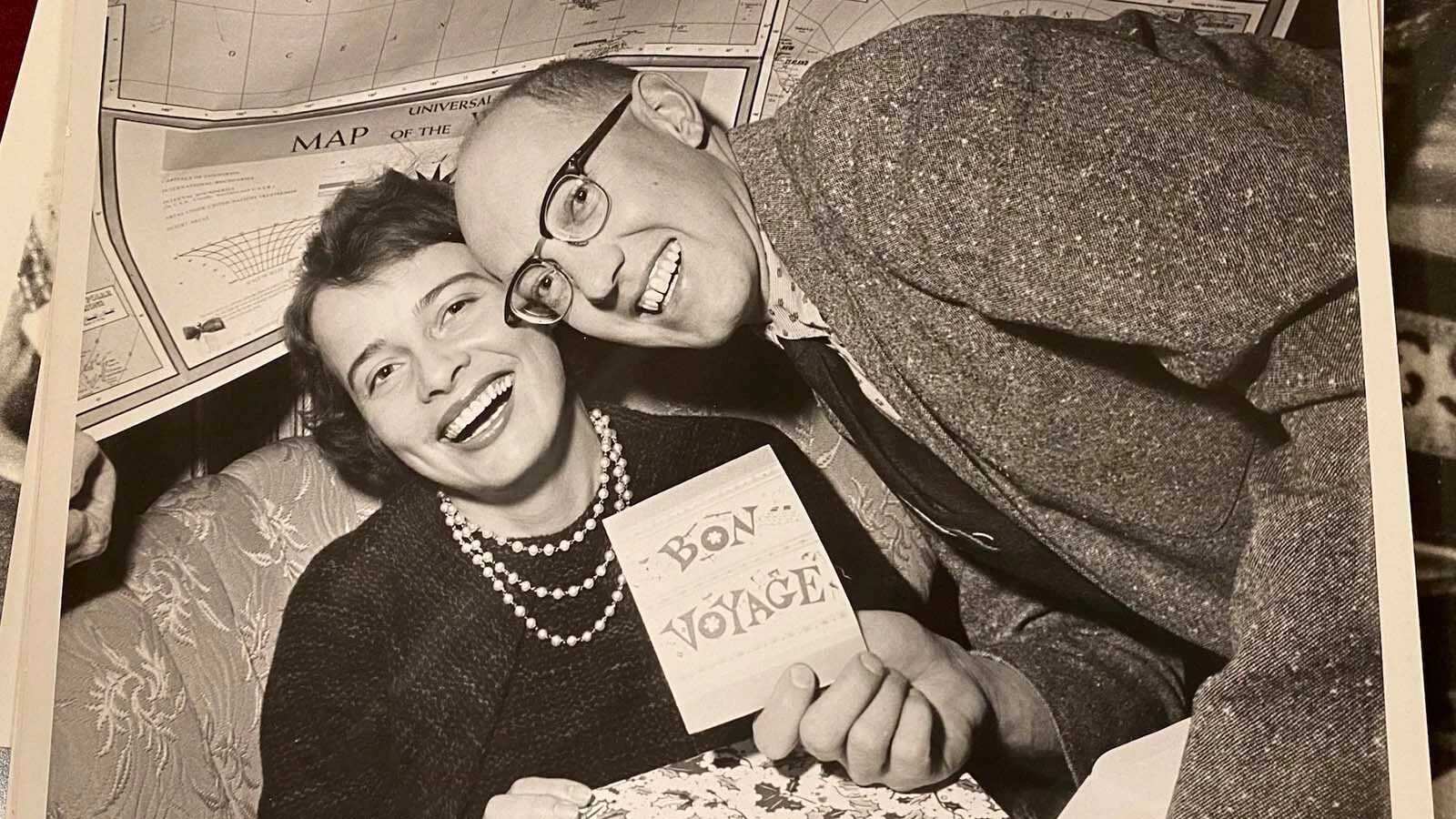
Leona and Dean Conger at a going away party at The Denver Post to go work for National Geographic. (Dean Conger Library via The Photo Society) A photo taken by Dean Conger for Life Magazine of Alan Shepard being hauled into a helicopter from his NASA Mercury mission. (Courtesy Kurt Conger) 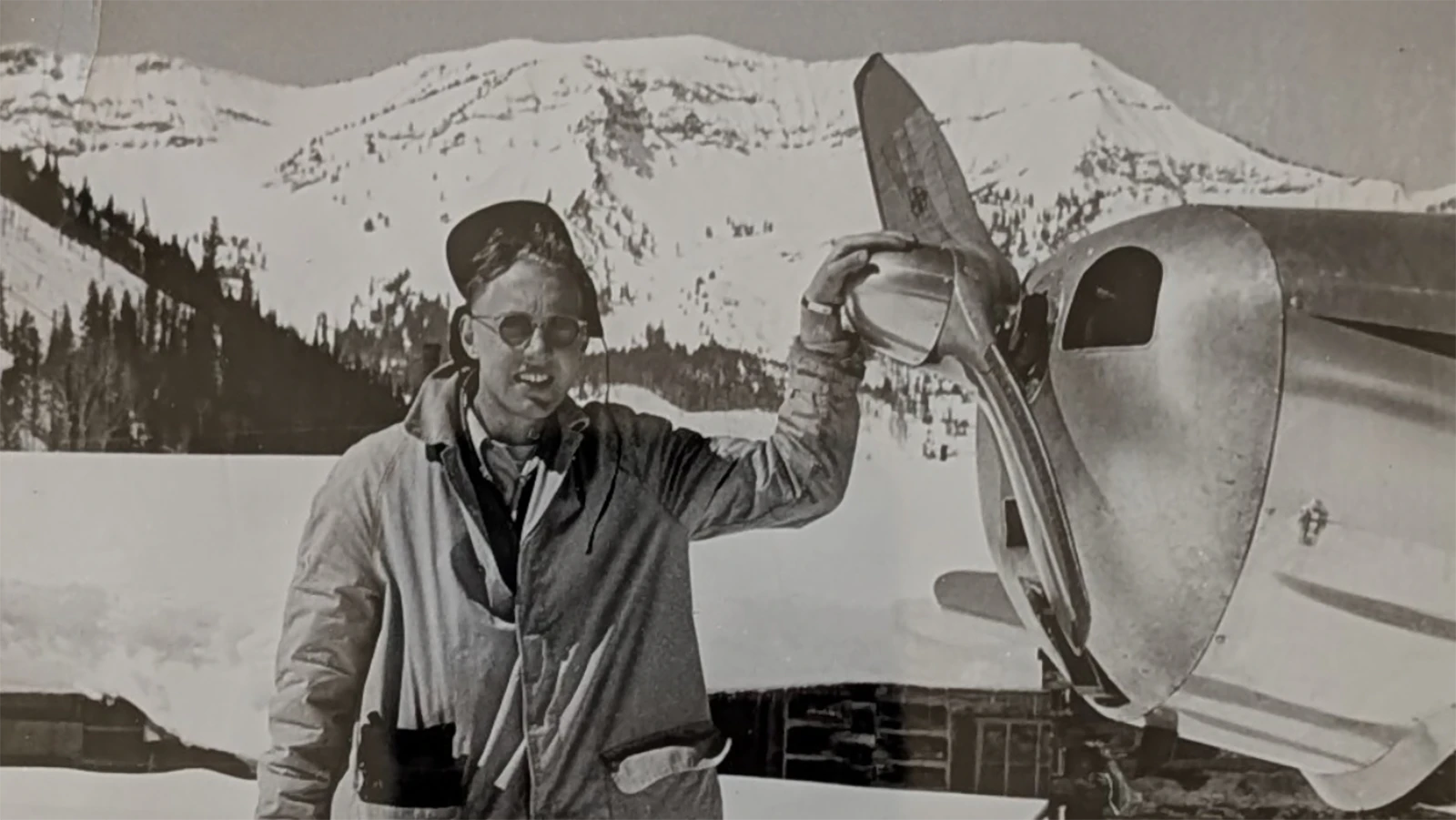
A younger Dean Conger with a beloved pastime. (Courtesy Kurt Conger) 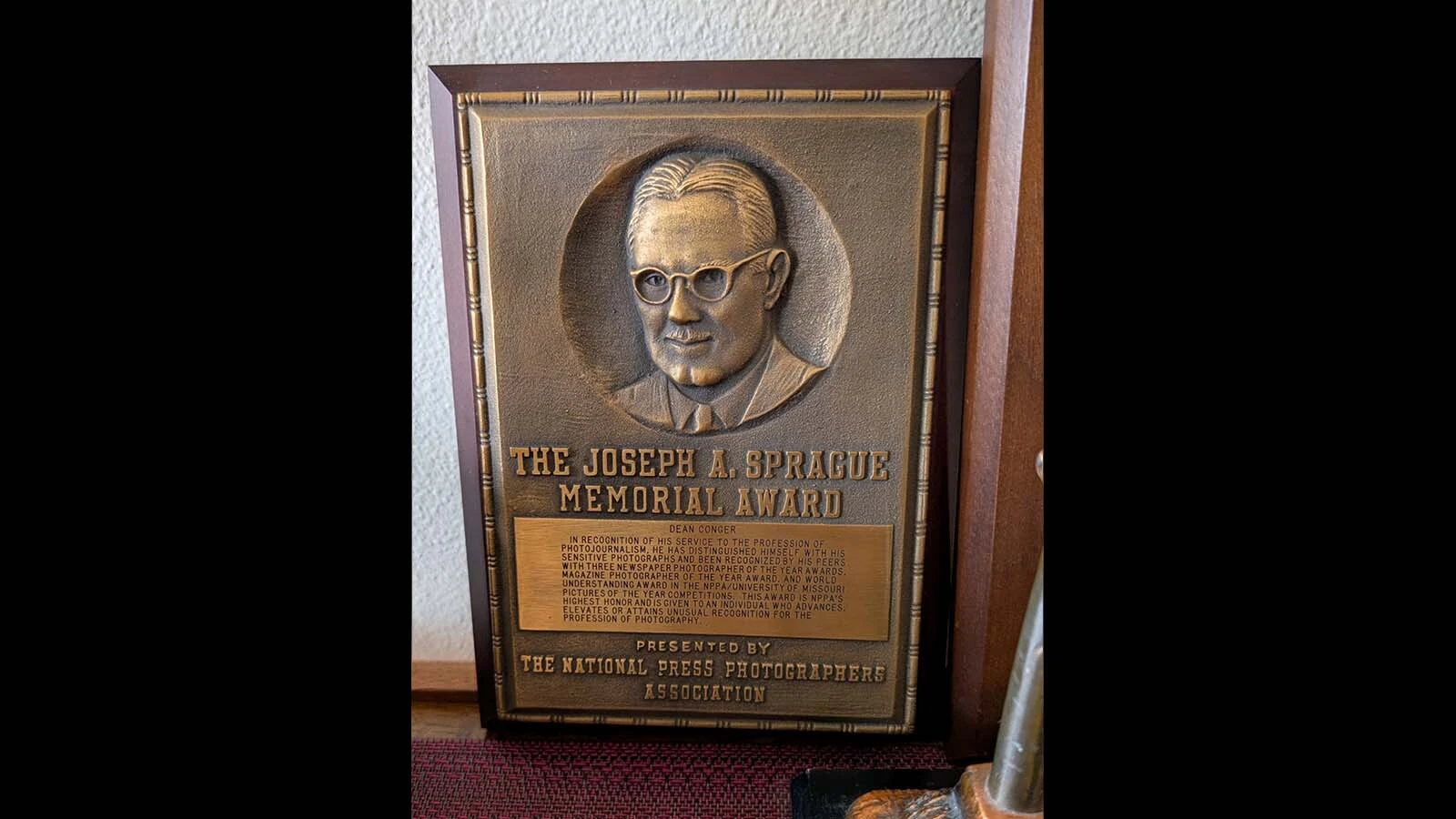
Dean Conger was honored with several awards during his career, including this lifetime achievement award. (Courtesy Kurt Conger) 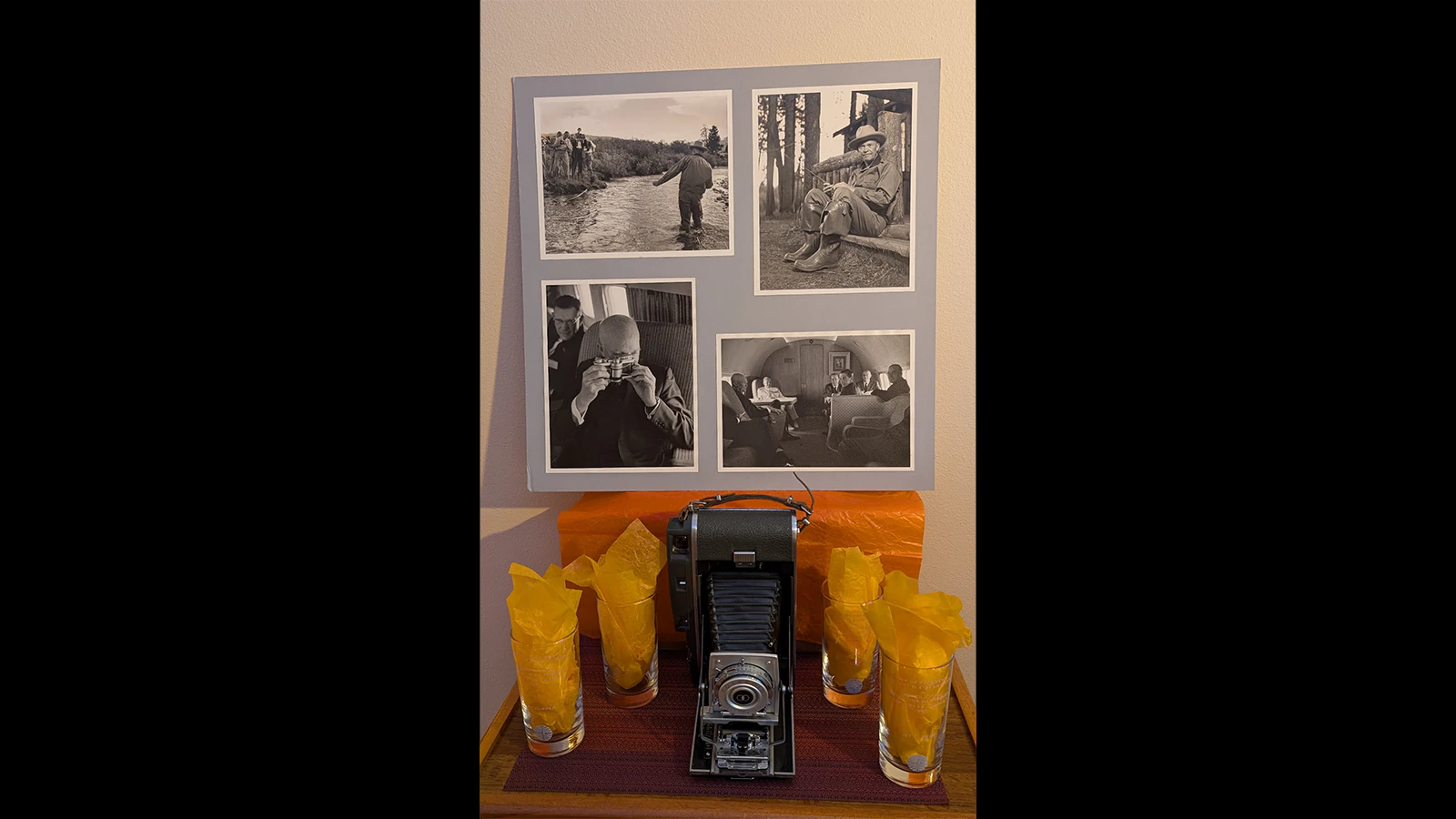
Dean Conger accompanied President Dwight Eisenhower on a trip to South America in the 1960s. His son and daughter-in-law have a framed poster of that trip as well as souvenir water glasses from it. (Courtesy Kurt Conger) 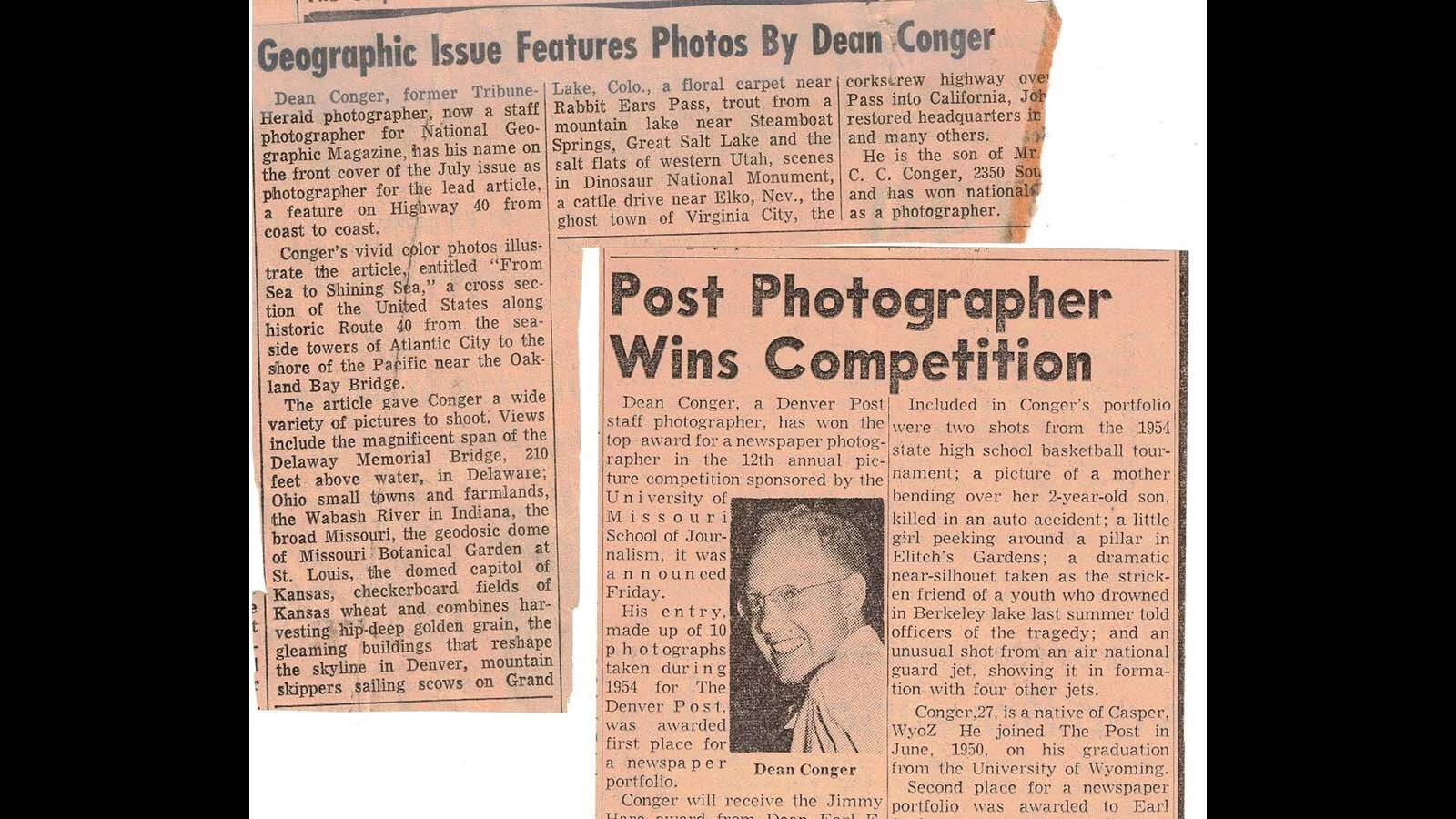
The Casper newspaper kept track of its native son as he started gathering recognition during his career. (Courtesy Kurt Conger) 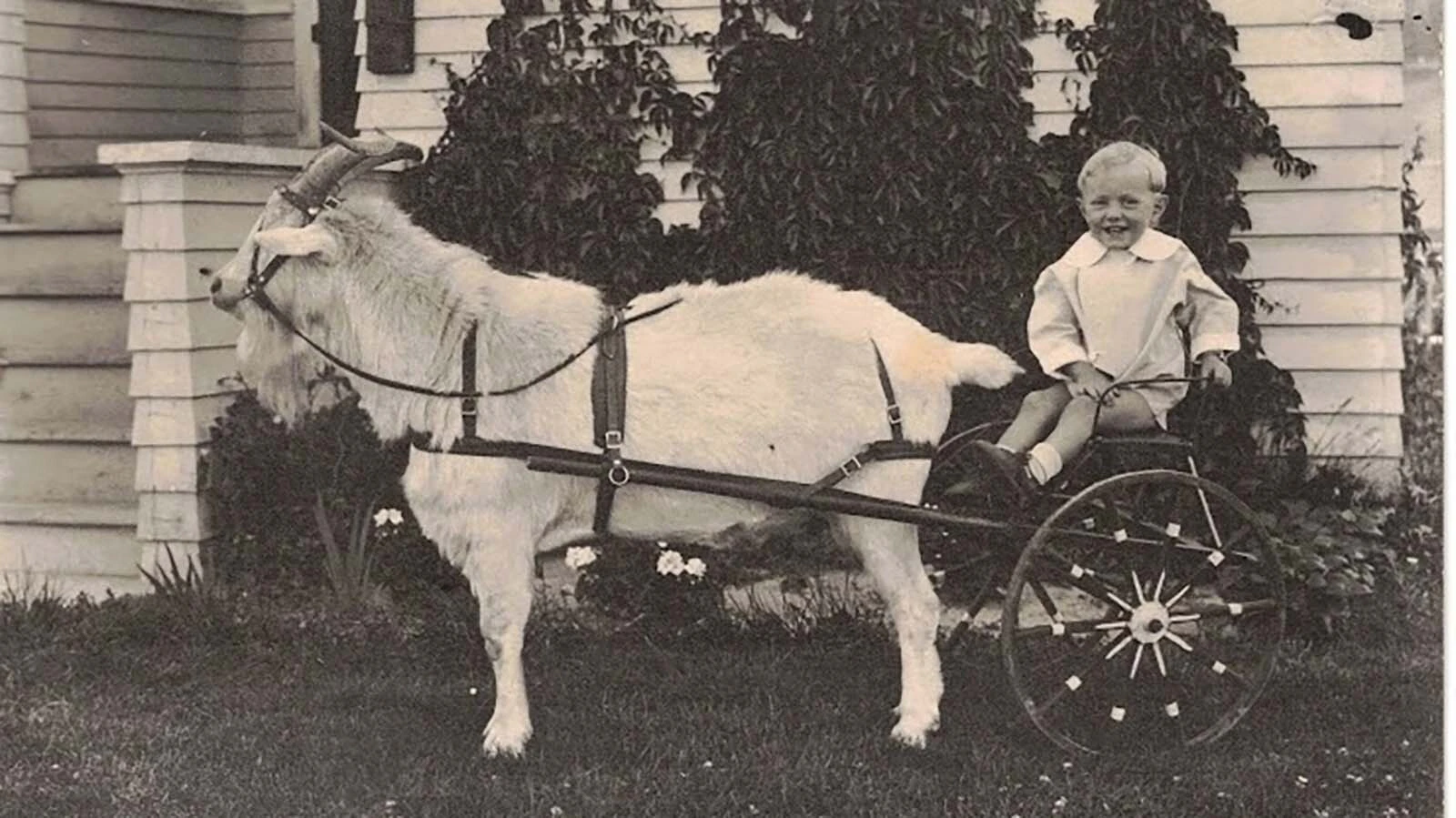
A young Dean Conger ready to ride. He grew up in Casper. (Courtesy Kurt Conger)
On The Go
Early assignments for National Geographic in Dean Conger’s first passport show trips to Bulgaria, France, and Cyprus, said his son.
From Feb. 27 to March 7, 1960, he accompanied President Dwight D. Eisenhower on a South American tour that took him to Brazil, Chile, Argentina and Uruguay.
Kurt and Robyn Conger inherited souvenir water glasses that are stamped with details of the trip.
“We have a very cool photograph of Dean taking a picture of President Eisenhower, who is holding one of Dean’s cameras pointed at Dean,” Robyn Conger said. “They’re probably on Air Force One.”
In the early 1960s, Dean Conger was assigned to NASA and covered the Mercury space program astronauts as the country raced to catch up with the Soviet Union’s exploits.
During that time he captured an iconic photo of John Glenn riding in a limousine with President John F. Kennedy following Glenn’s historic orbit of the Earth.
Dean Conger’s photo of a helicopter hauling up astronaut Alan Shepard made the cover of Life Magazine on May 12, 1961.
Shepard penned note on a poster of the cover dedicated to his photographer: “To Dean Conger, who helped in making ‘Life’,” he wrote on May 5, 1961.
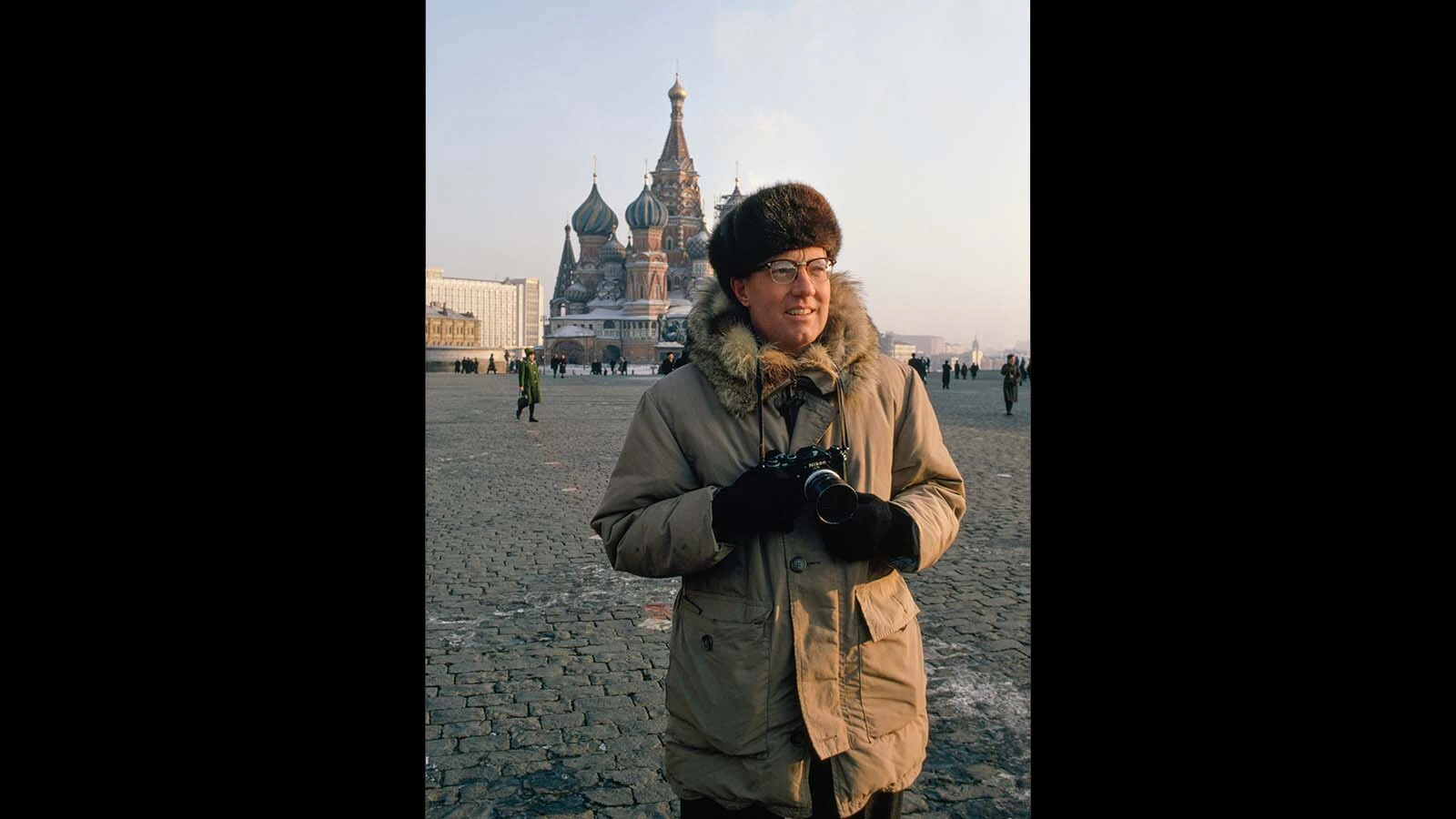
In the 1960s and 1970s, the Casper native was sent on several assignments to Russia.
He also was in Thailand during the Vietnam War and would spend time chronicling an evolving China as it headed toward the superpower it has now become.
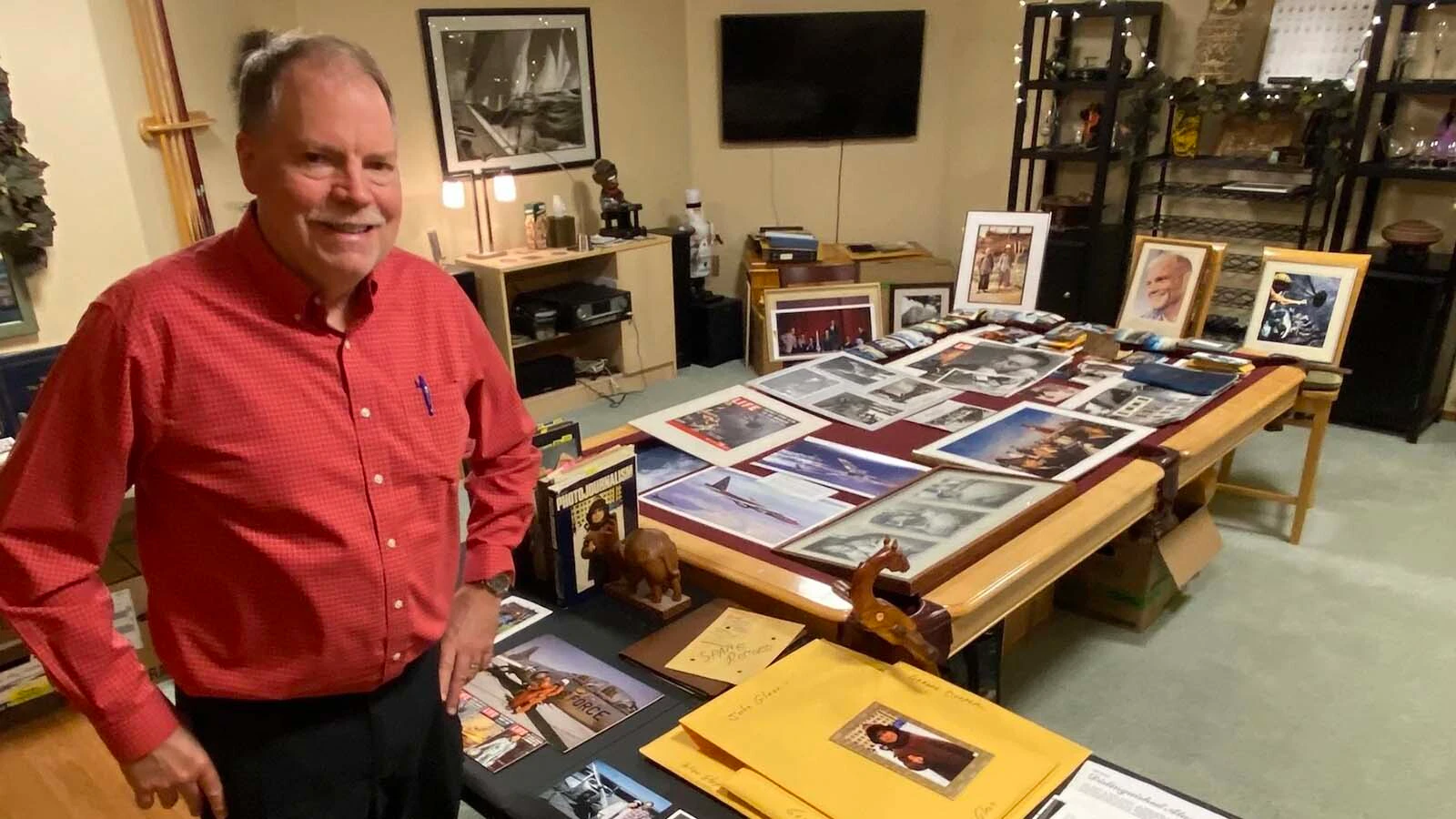
Kurt Conger with some of his father's photos. (Dean Conger Library via The Photo Society) 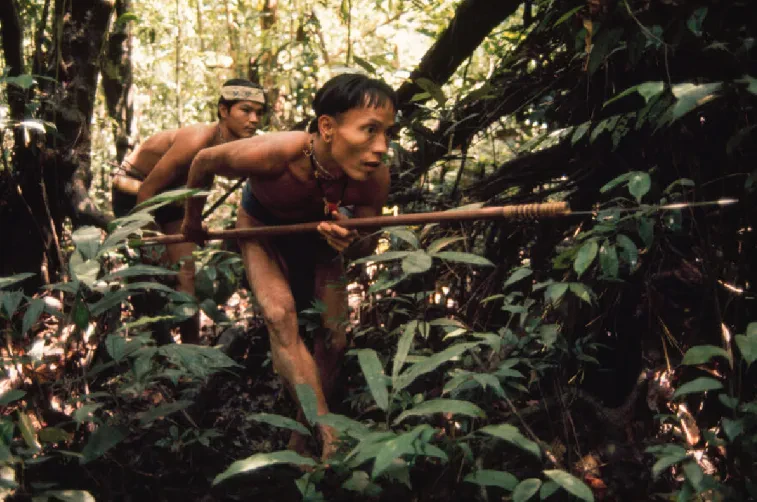
Casper native Dean Conger was 32 and a photojournalist for The Denver Post in 1959 when he got a job offer from National Geographic. He spent the next 30 years taking photos of presidents and astronauts, while earning a reputation as one of Nat Geo’s best. (Dean Conger Library via The Photo Society) 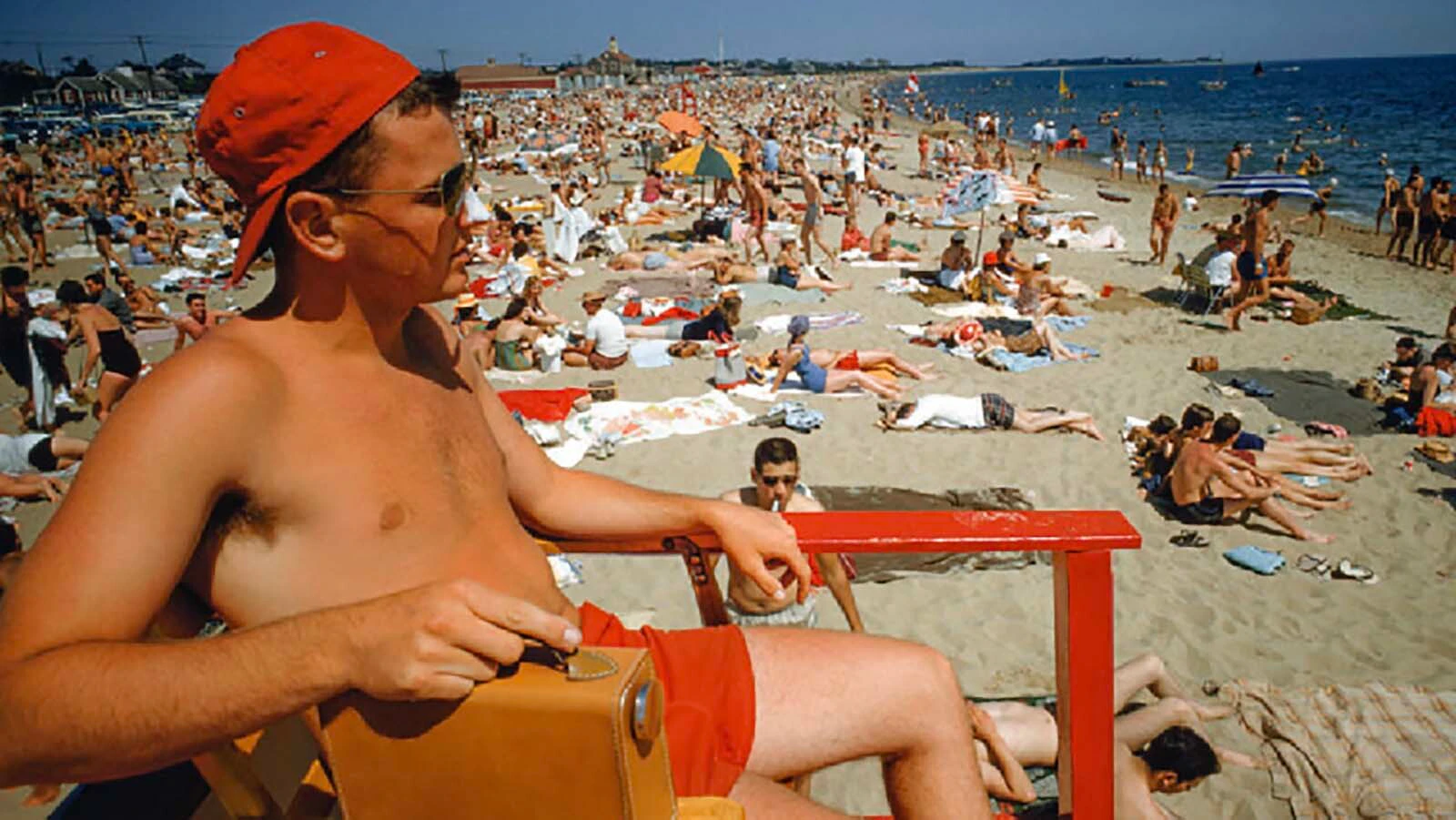
Casper native Dean Conger was 32 and a photojournalist for The Denver Post in 1959 when he got a job offer from National Geographic. He spent the next 30 years taking photos of presidents and astronauts, while earning a reputation as one of Nat Geo’s best. (Dean Conger Library via The Photo Society) 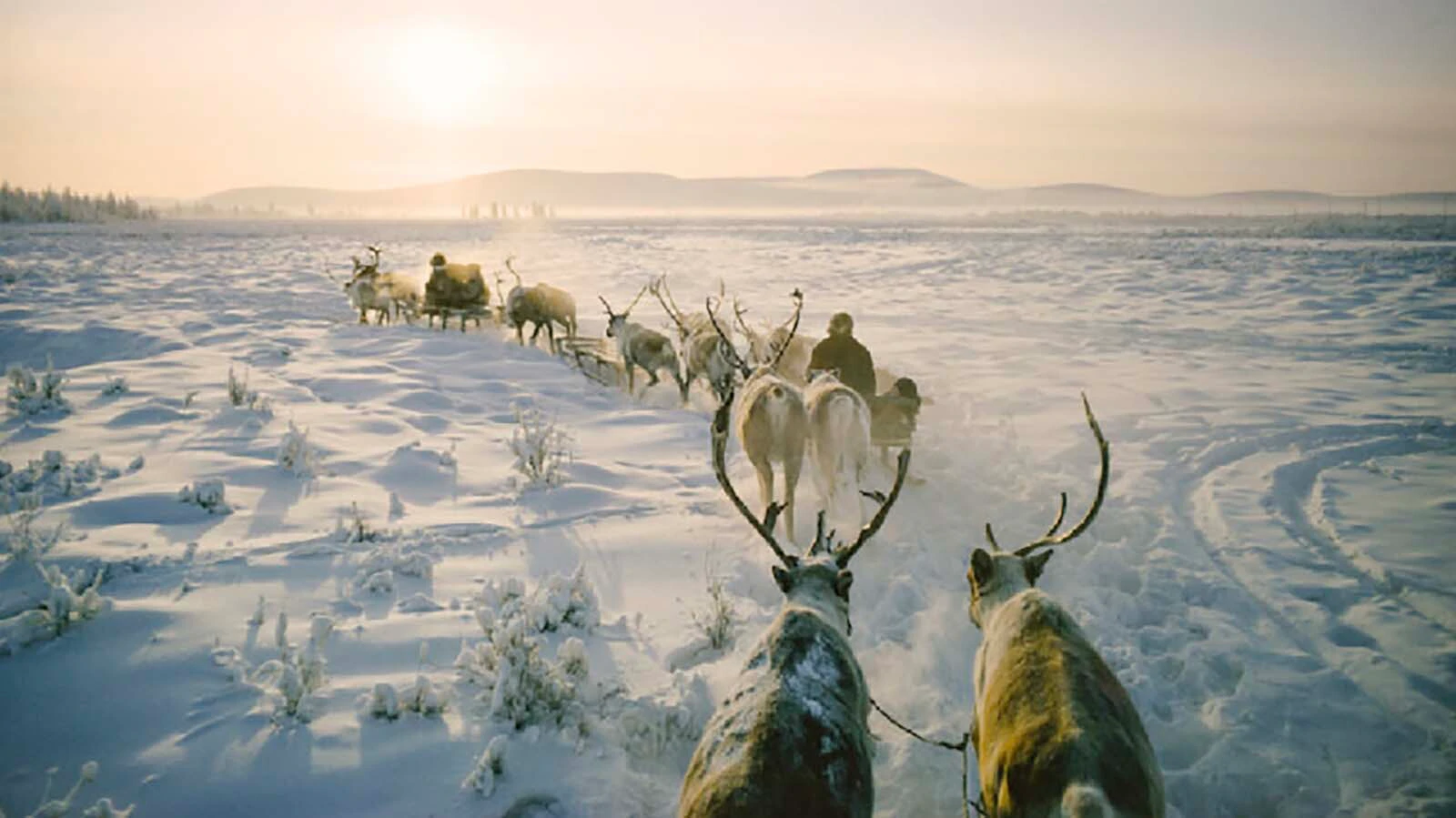
Reindeer pull sleighs across the frozen Siberian landscape. (Dean Conger Library via The Photo Society) 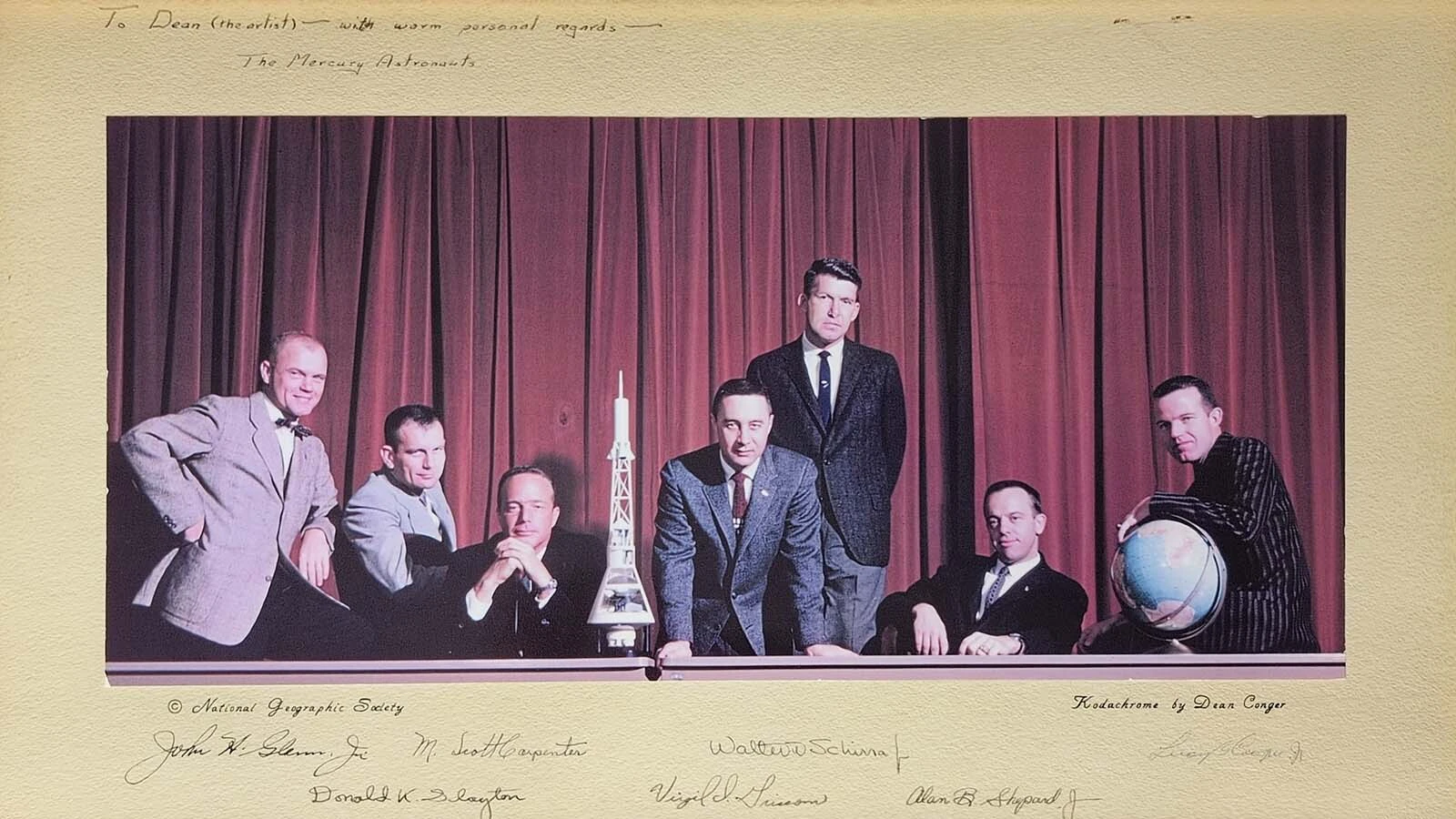
The Mercury astronauts signed special messages to Dean Conger for his work covering their exploits. (Courtesy Kurt Conger) 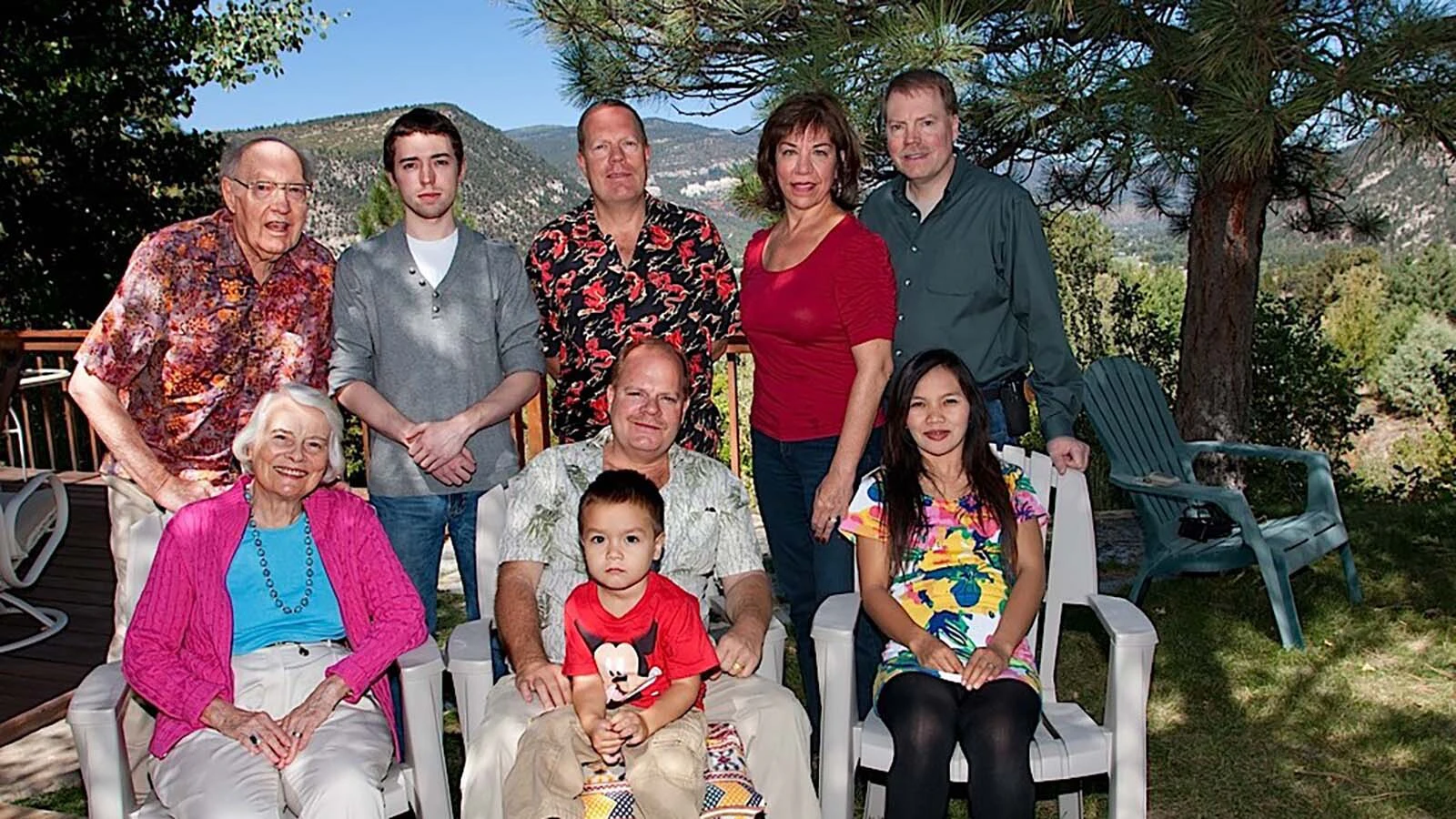
Dean Conger is his later years with his family. On his death bed, he said he had “no regrets” and had a “great family.” (Courtesy Kurt Conger) 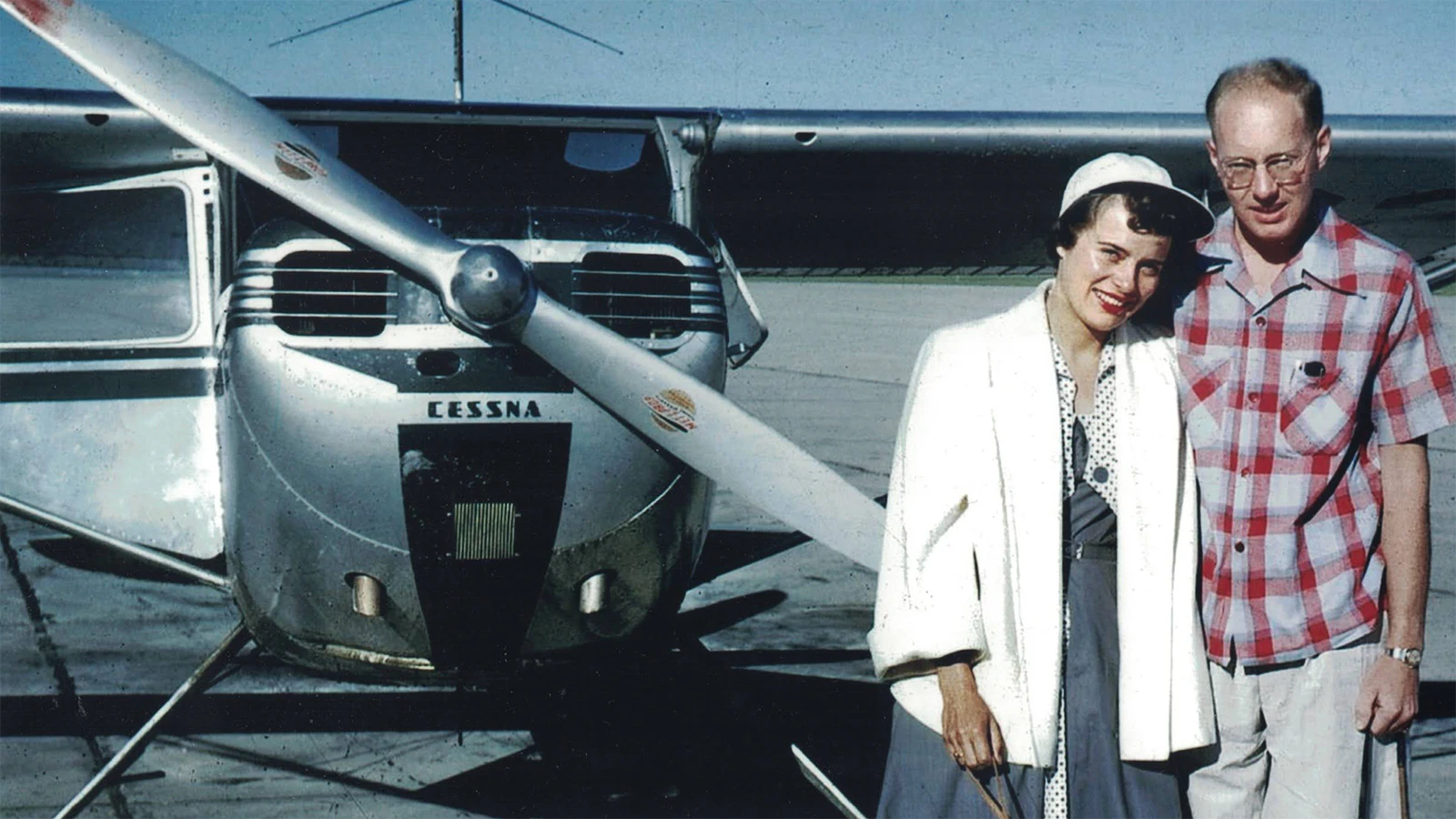
Dean Conger and wife, Leona, at the airport. Conger loved to fly. (Courtesy Kurt Conger)
Soviet Trips
While he visited the former Soviet Union numerous times, that country was probably not one of his favorite places to visit, Kurt Conger said.
But in 1977, those 40 or so assignments resulted in a book published by The National Geographic Society called “Journey Across Russia: The Soviet Union Today.”
One of his favorite places may have been China, said his son, adding that his parents after Dean’s retirement would visit the nation as well as Vietnam as tourists.
“I think he found travel was always interesting,” Kurt Conger said. “As long as you know, the subject he covered was cooperative … and the weather had to be right. It could be frustrating.”
Assignments for the magazine typically involved National Geographic research staff telling him what shots they wanted and sending him to various planned events.
Sometimes, however, those events were canceled or the weather complicated shots. The photographer had to be patient and flexible.
Awards
Kurt said his father was an outgoing person for most of his life.
On assignments, he wrote letters home, and when his sons were in their teens, he became an assistant director of photography at the magazine.
That allowed him to be at their Maryland home for six months of the year and six months in the field.
Dean Conger was respected by this colleagues and earned several awards during his career, including Newspaper Photographer of the Year three times in the 1950s, Magazine Photographer of the Year in 1962 and the National Press Photographers Association Joseph A. Sprague Memorial Award for lifetime achievement in 1987.
He was also honored with distinguished alumni awards by both Casper College and the University of Wyoming.
Western Ties
While growing up, Kurt said he, his brothers and their mom would visit Casper to spend time with Dean Conger’s parents as he was on assignment overseas.
The Congers liked the West, which is why after retirement they moved to Durango, Colorado.
During the early years of his career as a newspaper photographer, Dean Conger really enjoyed being assigned to cover rodeos, and won awards with those photographs, Kurt Conger said.
The elder Conger had a darkroom in his home in Maryland during his National Geographic career and following retirement to Durango in 1992 built one in his house there — just as the photography world turned digital.
He probably never used that darkroom and totally embraced the new technology, his son said.
“He always said that, ‘I was born 40 years too soon,’” Kurt Conger said. “He was just amazed at what the digital photography could do.”
While his dad became proficient at using Adobe Photoshop, the last decade of his life he developed macular degeneration in his eyes and eventually had to give up on the profession and hobby that brought him a living, the awards, and a lifetime of pleasure.
Robyn Conger said she first met her father-in-law 20 years ago and characterized him as someone who remained sharp of mind until the end of his life.
The couple helped both parents after they moved to Oregon to be closer. As he lay dying, she said she remembers Dean Conger saying something very poignant.
“On his deathbed he told us, ‘I’ve had a great life, I’ve had a great family, and I have absolutely no regrets in what I’ve done,'” Robyn Conger said. “So, I think that said a lot about him and everything he had done in his life.”
Dale Killingbeck can be reached at dale@cowboystatedaily.com.