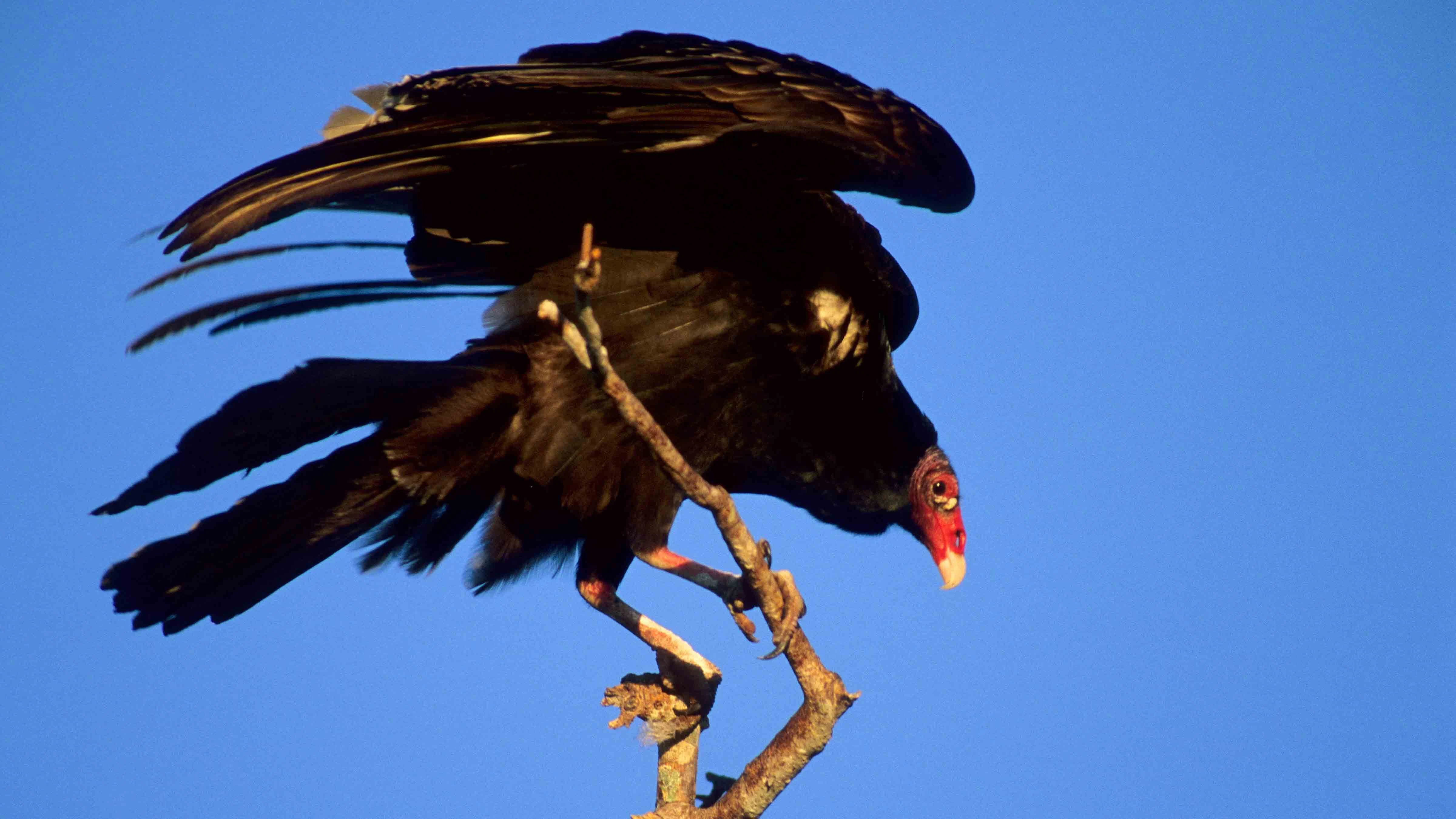
Many people in Wyoming aren’t terribly fond of turkey vultures. They poop all over trees, barf up “pellets” of leftover gristle and who knows what else, and just hang around looking creepy.
That’s a rush to judgment, vulture advocates say. They admire turkey vultures as a bird that can migrate from Canada all the way to South America and play a vital role in keeping the landscape clear of rotting carcasses.
One of the first signs of spring is vultures showing up in Wyoming, usually in March. They roost by the hundreds on the University of Wyoming campus, in Casper and elsewhere across the state.
They’ll fly out in the morning, usually between dawn and about 8 a.m., and spend the day soaring through the skies, looking for carrion to devour. Then they return in the evening to roost for the night.
Around October, they’ll leave, migrating south for the winter.
Much remains unknown about Wyoming’s turkey vultures. To help find out more, the UW Biodiversity Institute launched the Vulture Watch Wyoming volunteer program in 2024. A vulture-watching training session is set for March 24.
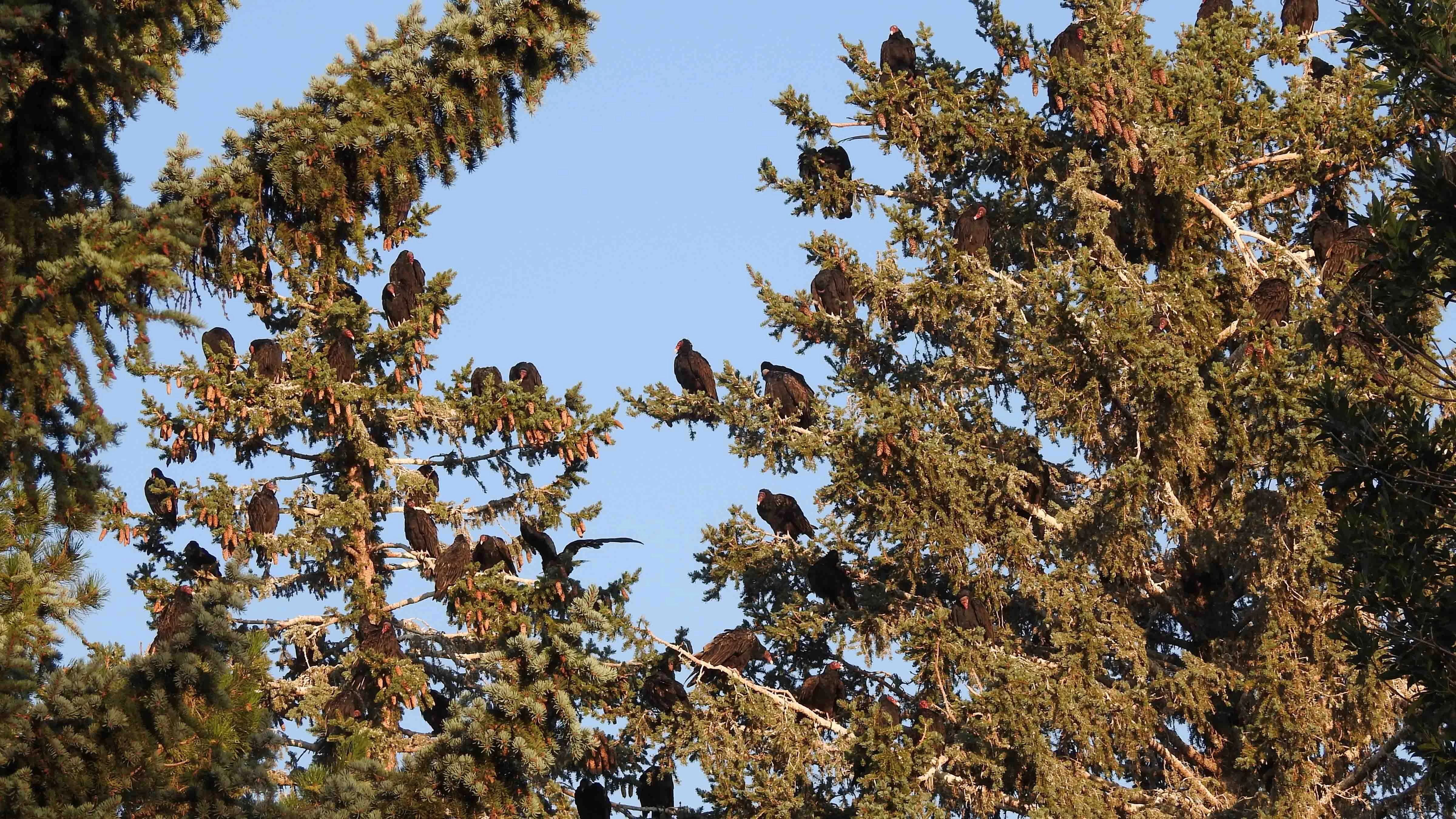
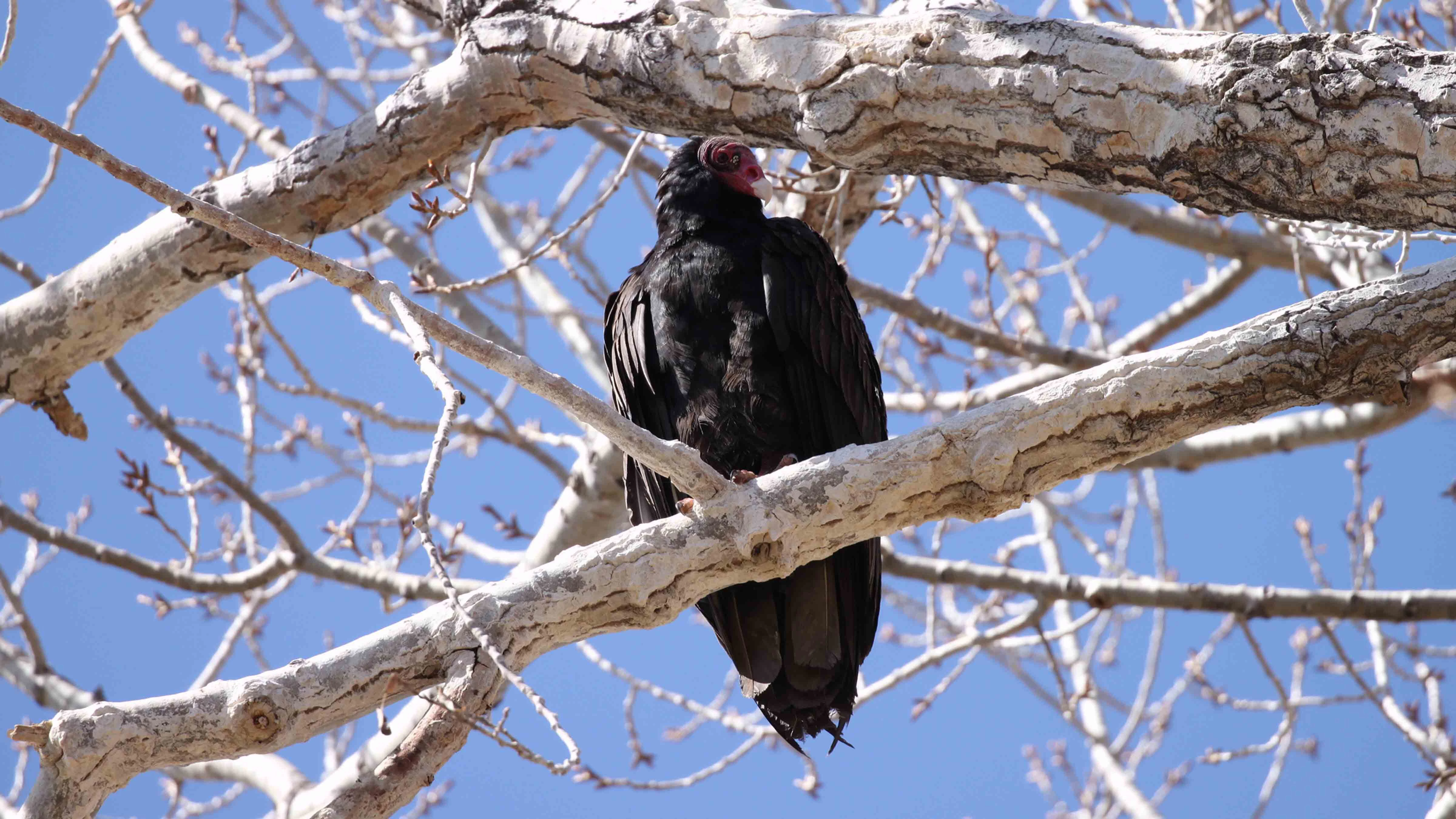
Turkey vultures show up in Casper in March, and stay until October, when they migrate south. (Courtesy: Joanne Theobald) 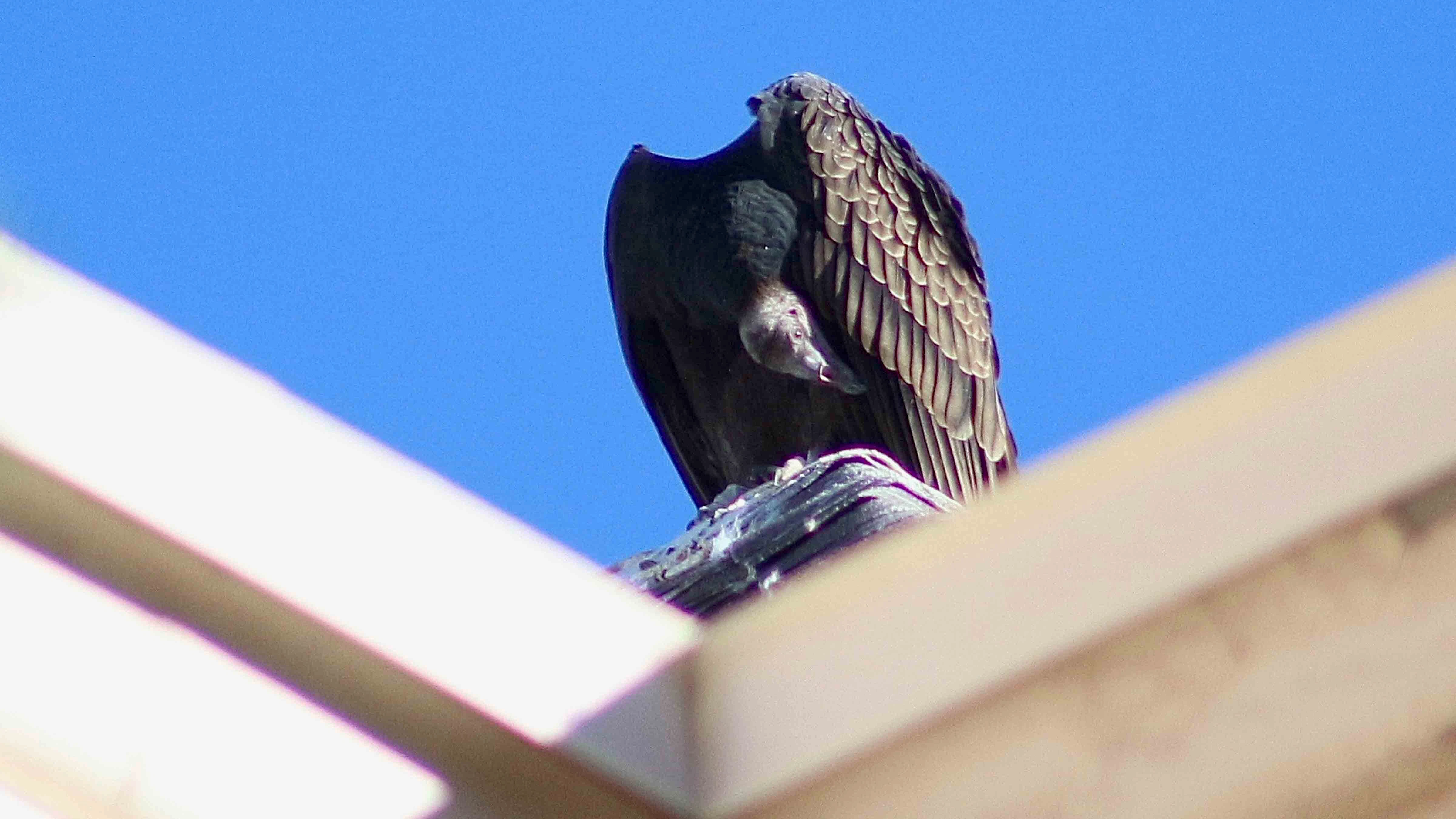
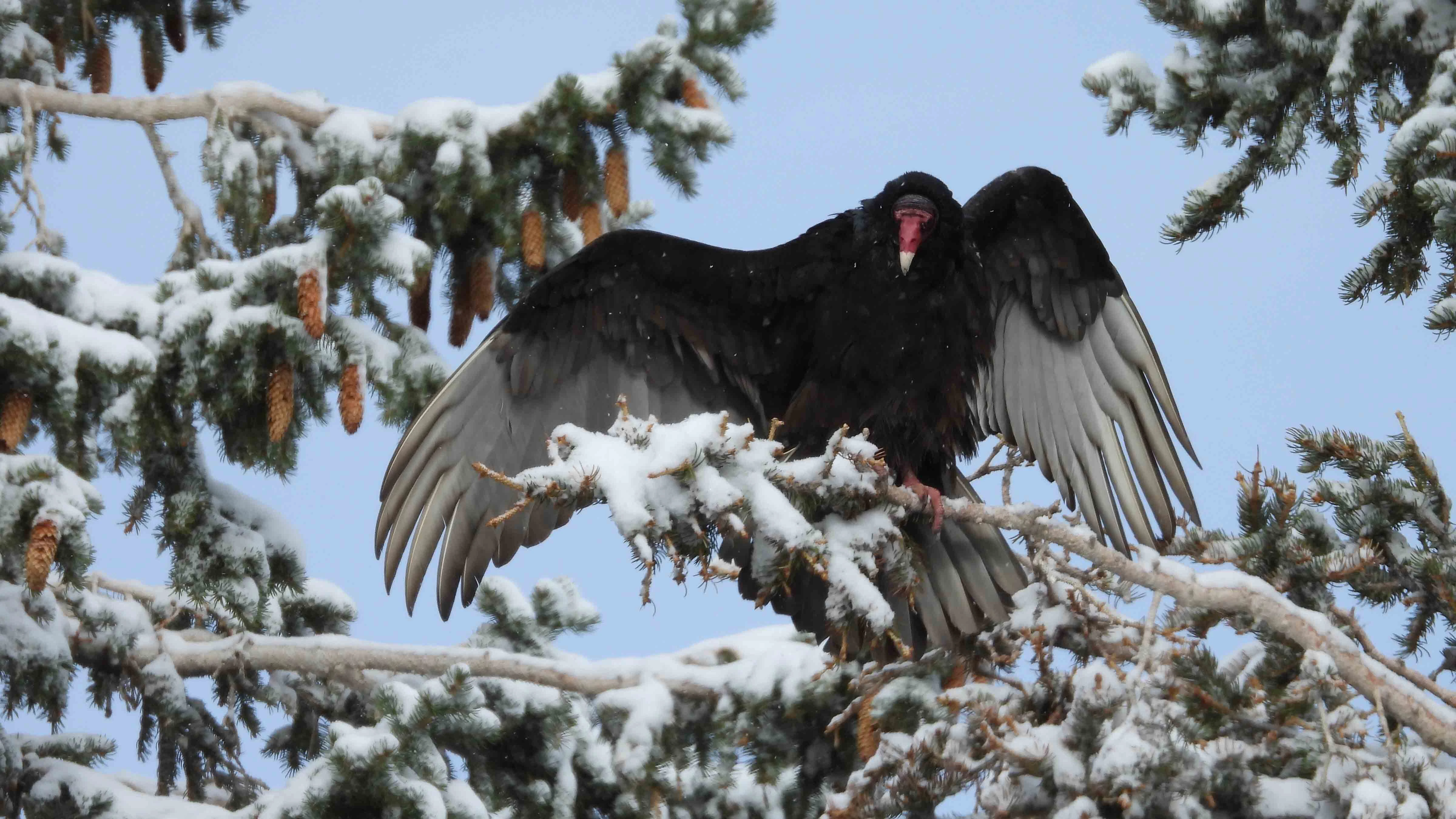
Every spring, hundreds of turkey vultures show up on the University of Wyoming campus and stay until fall. (Courtesy: Anna Petrey) 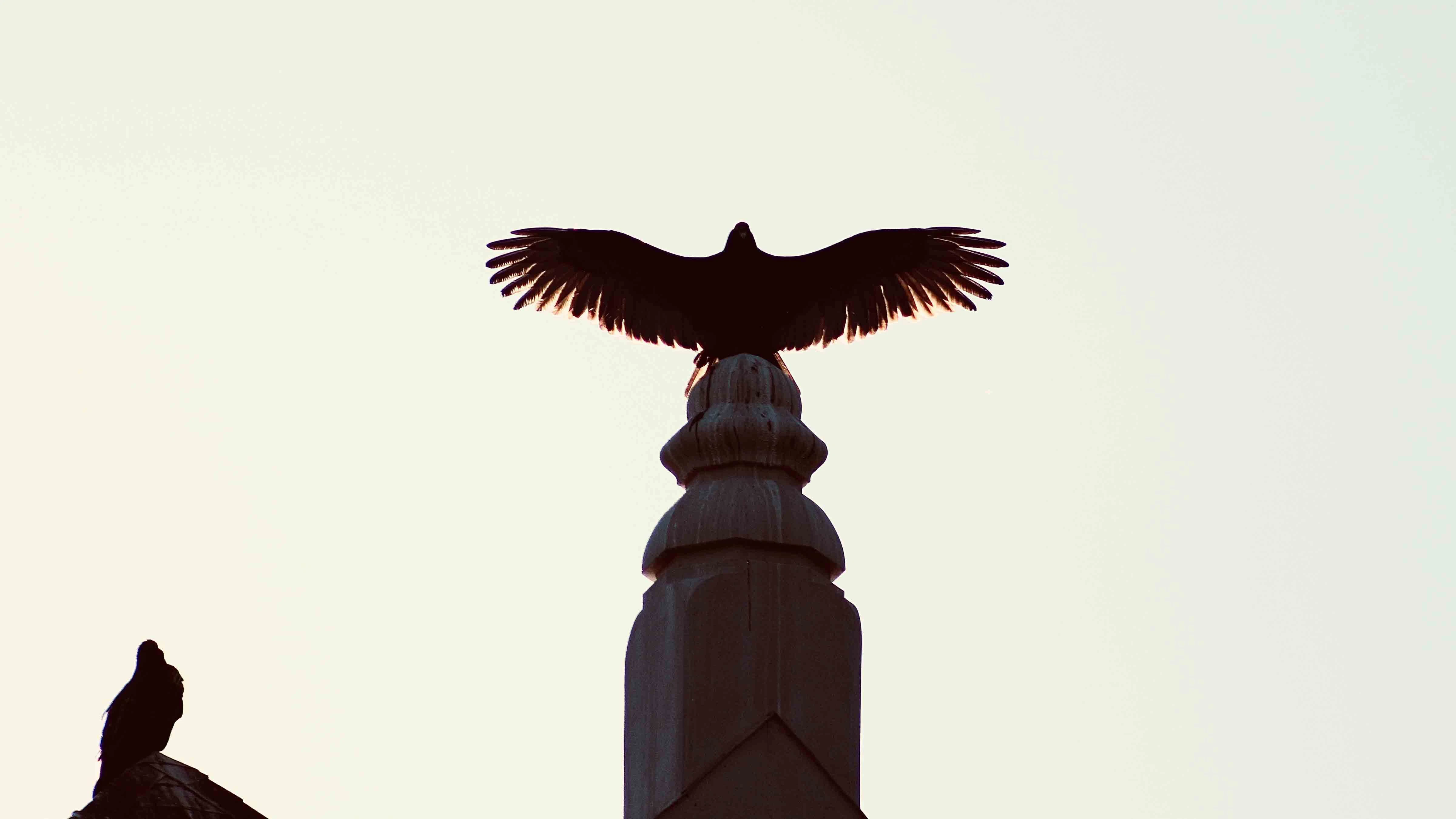
Every spring, hundreds of turkey vultures show up on the University of Wyoming campus and stay until fall. (Courtesy: Anna Petrey)
Here Come the UW Vultures
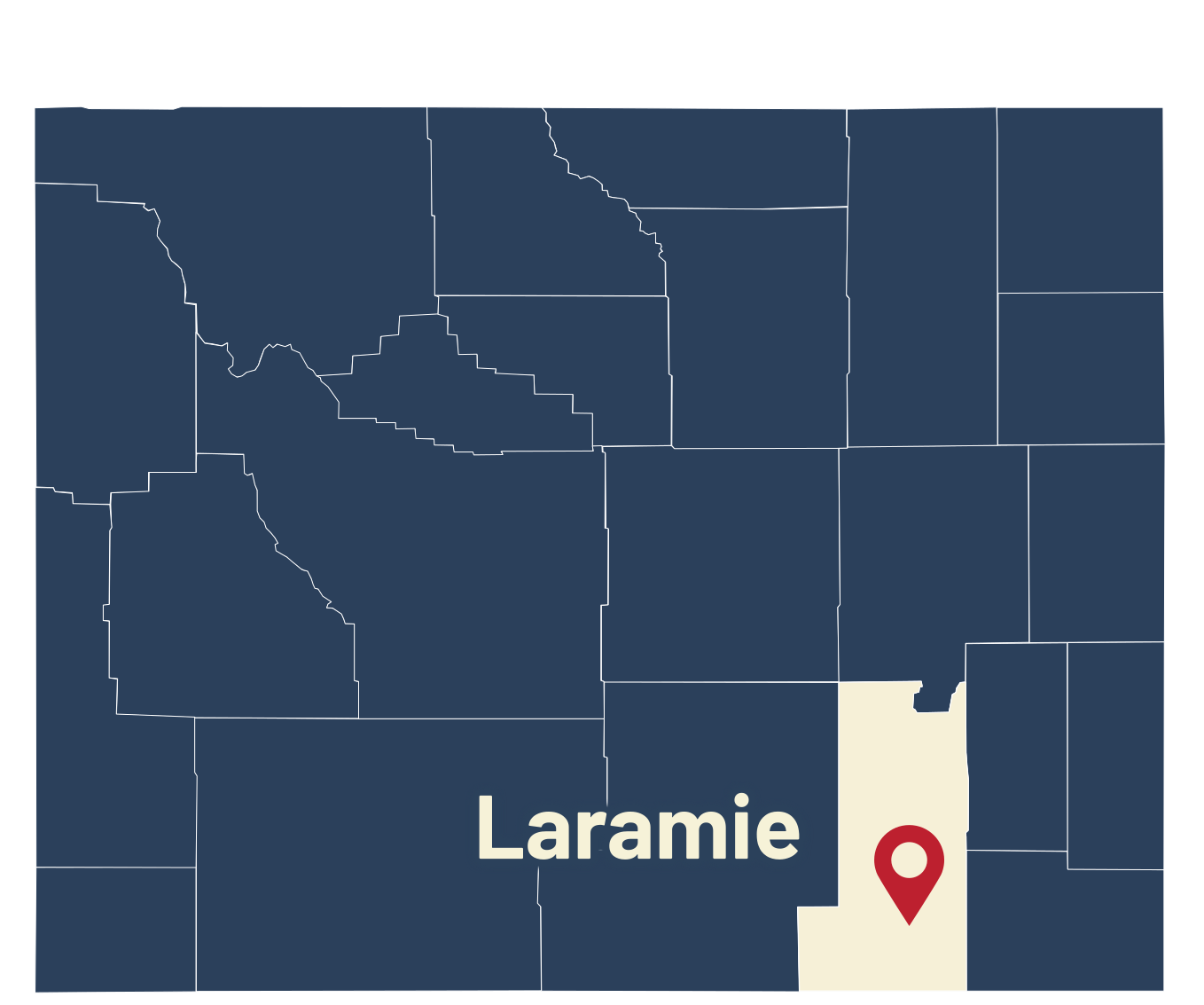
In Laramie, the UW campus is turkey vulture central; there have been as many as 297 of them counted roosting in trees or on buildings, mostly around the Old Main building or in clusters of spruce trees around 15th and Garfield streets.
Vultures seem to like spruce, cottonwood and poplar trees. They don’t seem to care much for pine trees, and nobody is sure why, said Elizabeth Wommack, curator and collection manager of vertebrates at the UW Museum of Vertebrates.
They first started showing up on campus around 2010, she told Cowboy State Daily.
“They sort of used that core group of spruces when they first arrived, and they spread out to other trees,” she said.
Anna Petrey, a Ph.D. student in Clinical Psychology at UW, told Cowboy State Daily that she developed a fascination with turkey vultures after spotting them on campus and joined Vulture Watch Wyoming.
“Vultures are a really precious and interesting bird to me,” she said.
She understands that most people don’t perceive vultures that way.
“I think it’s in part because people do find them to be stinky and gross. But I thought, ‘that can’t be fair, I need to learn more about them,’” she said.
“I think they’re pretty cool-looking; that might be an unpopular opinion,” Petrey added.
Even when there are hundreds of them roosting on campus, it’s easy to miss noticing them.
“They roost up high in trees, and people might not look straight up and see them,” she said.
Vultures are also incredibly quiet, because they basically can’t vocalize, she added.
“The best that they can do is a quiet hiss, and that’s all they can produce,” Petrey said.
Every spring and summer, hundreds of turkey vultures roost in trees on the University of Wyoming campus. (Courtesy: Mason Lee) 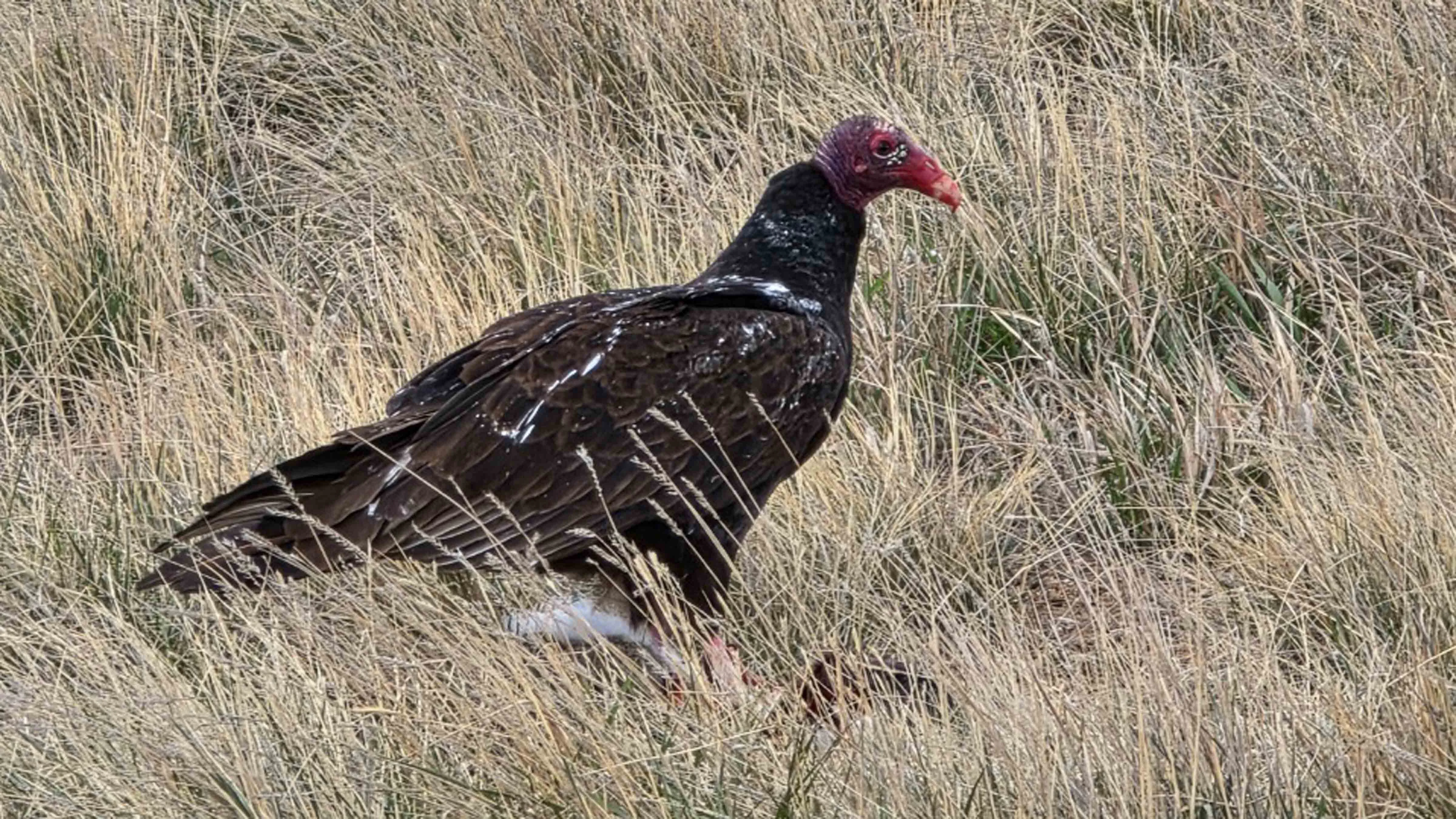
Turkey vultures scour the countryside across Wyoming, looking for carrion to eat. (Courtesy: Rena Parsons) 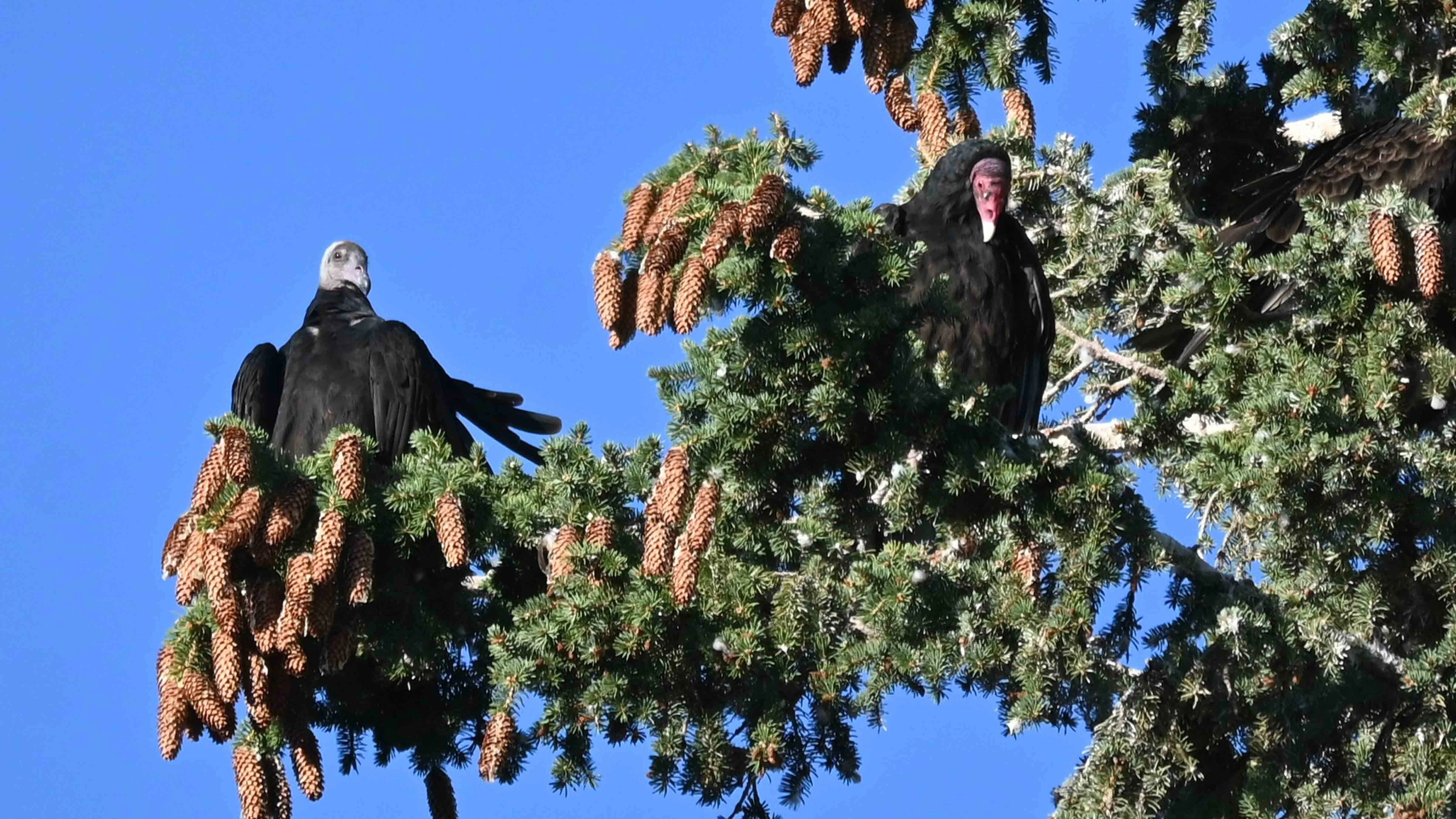
The turkey vulture on the left in this photo is a juvenile, identifiable by its gray head and beak, compared to the red head and white beak of an adult. (Courtesy: Joanne Theobald)
Roosting, Not Nesting
Wommack said that roosting spots are where turkey vultures go to rest and sleep. They don’t nest or raise their young in those places.
Vultures nest in hidden, isolated places, and don’t like their nests being disturbed, she said.
“The nests are hidden, in places like crevices, caves or hollow trees,” she said.
A turkey vulture nest was once discovered in the trunk of an abandoned car in Nebraska, Wommack said.
Juvenile turkey vultures are ready to leave the nest after a few months. They can be identified by their gray heads and dark-colored beaks.
That’s in contrast to the red heads and “bone-white” beaks of adults, Wommack said.
It’s uncertain just how many turkey vultures spend the spring, summer and early fall in Wyoming, she added.
That’s one of the mysteries that she hopes the Vulture Watch Wyoming program will help unravel, she said.
“It’s one of those common avian species that we sometimes take for granted,” she said.
“We decided that reaching out to the community and asking the community to help would be the best way to find out more about them,” Wommack added.
Turkey vultures show up in Casper in March, and stay until October, when they migrate south. (Courtesy: Joanne Theobald) 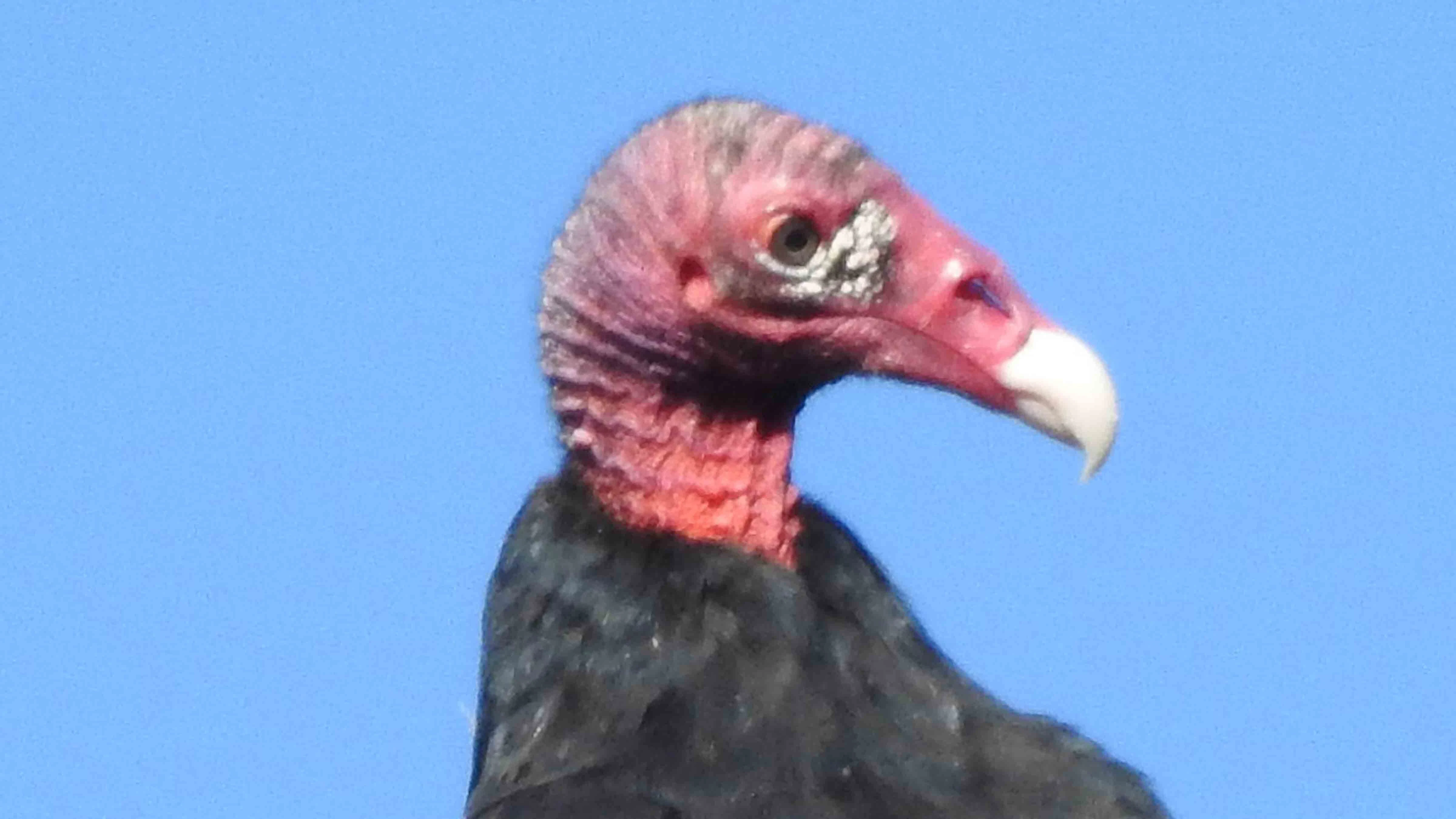
Turkey vulture have warts on their faces, called crunkles. (Courtesy: Joanne Theobald)
Nature’s Clean-Up Crew
Vultures are designed to consume dead animals, particularly in warm weather, Wommack said.
“They don’t have the same equipment that eagles do,” such as huge claws and sharp, curved beaks for catching prey and killing it, she said.
Those same features allow eagles to turn to scavenging during the winter, because they can rip into frozen carcasses.
Vultures, on the other hand, require softer carcasses that have started to rot a little, which is why they show up to scout the Wyoming landscape during the warmer months.
Vultures search for food by soaring at high altitudes. As one might expect, they have excellent eyesight for spotting dead animals below, Wommack said.
They also have an incredible sense of smell, which helps them find rotting carcasses from great distances, she added.
In Wyoming and across the Great Plains region, turkey vultures don’t have much direct competition.
Farther east or west, they must contend with black vultures or California condors, both of which are bigger and will bully turkey vultures off carcasses.
Adult turkey vultures weigh about four pounds on average and have wingspans of 4½ to 6 feet.
“They have about the same wingspan as golden eagles, but they weigh much less than golden eagles,” Wommack said.
There are written records of turkey vultures in Wyoming going back to the 19th century, she said.
‘Crunkles’ in Casper
Multitudes of turkey vultures roost in trees in Casper, said resident Joanne Theobald, a Vulture Watch Wyoming volunteer.
“I’m lucky enough to live in a tree neighborhood in Casper. So we’re lucky enough to have roosting vultures, including one right outside my window, in my neighbor’s tree. So I get the view without the mess,” she said.
Though vulture poop is remarkably clean, it builds up over time, so she understands why homeowners with trees get fed up with it.
“They also throw these pellets; they barf them up. And then there’s the feathers too,” she said.
“People just kind of develop this idea that vultures are dirty, or that they mean death, or they’re going to carry off your small animals,” Theobald said.
“People think they’re creepy, because they’re ugly, but that’s not their fault,” she added.
In addition to their bald heads, vultures develop white facial warts, called “crunkles,” she said.
That might make them even less visually appealing to some, but Theobald said she wonders if the differing number of crunkles on vultures’ faces could help identify individual birds.
Theobald hosts presentations to educate people about vultures and dispel some of the negative impressions about them.
And she thinks Wyoming makes a great place for turkey vultures to come hang out during the warm months.
“If I were a vulture, I would love Wyoming. It’s windy here and they just love to ride the thermals. And there’s wide open spaces with lots of things just dying of natural causes,” she said.
Mark Heinz can be reached at mark@cowboystatedaily.com.