Are Wyoming's iconic shaggy, humped-backed behemouths buffalo or bison? Or are they interchangable?
With America’s 250th here, the question has historian Paul Hutton, interim curator of the Buffalo Bill Museum, drawing a personal line in the sand when it comes to the word “bison.” It's as line that for him runs right smack through the menus of modern restaurants.
“When I go into a restaurant, I will not use that term,” he told Cowboy State Daily with a chuckle. “I will demand a buffalo burger.”
For Hutton, who is an expert on all things West and author of New York Times bestseller “The Undiscovered Country: Triumph and Tragedy in the Shaping of the American West,” the issue isn’t that biologists are wrong when they insist that buffalo are really bison.
He’s happy to concede the scientific point that the iconic, hump-shouldered beasts that once crowded the Great Plains are bison — Bison, bison, bison, if you want to be exact. That’s genus, species, and subspecies, but say it aloud and it sounds like a wizard trying to cast a spell to forever transform the buffalo’s name.
What Hutton objects to more broadly is the idea that an elite academic, with the stroke of a pen or a famous style guide, like the Associated Press Stylebook, is all the tyranny it takes to erase three centuries of lived-in American language.
For “Undiscovered Country,” Hutton deliberately chose to wade right into the buffalo versus bison debate early on in the book, and landed squarely on buffalo for the rest of the book.
“It’s such an icon — a national icon — that I thought it was important to use the language of the time, especially as a writer,” he said, adding, “It’s a tough sell to me for the government to make us all conform to what they think is the correct term.
"But we’re not changing Buffalo Wild Wings to Bison Wild Wings, right? We’re not going to change the name of the Buffalo Bills NFL team to Bison Bills.”
And no one is going to dare change Buffalo Bill Cody to Bison William.
“We’re just not going to do it,” Hutton said. “At least, I’m not going to.”
Mistaken Identity?
The story of how bison were first named buffalo has been largely cast as a case of mistaken identity.
A Frenchman named Samuel de Champlain, exploring America in 1619, saw huge creatures in New York that reminded him of the French “buffle,” a French term for the African water buffalo.
There were also some French fur trappers who referred to the shaggy bovines as “boeuf,” a French term for beef that’s pronounced “buhf” — not so very far off from the first syllable of “buffalo.”
“So (buffalo) is what really entered the colonial American language,” Hutton said, adding with a laugh, “I don’t usually agree with the French on anything, but on this one, I’m going with them.”
Other explorers had their own ideas. The Spanish, for example, called them vacas jorobadas, which literally translates to hump-backed cow.
Native Americans, meanwhile, with more than 300 different languages, had at least one different word for buffalo, and some had many more. The Cheyenne, for example, had 27 different words, depending on the age, sex , and condition of a given animal.
Buffalo won out in everyday speech for a century and a half. Though the first known use of the word in print is Mark Catesby’s 1754 mention, America has hundreds of place names that feature buffalo — Buffalo Creek, Buffalo Swamp, Great Buffalo Lick, Buffalo Trace, the list goes on.
Today there are 14 states with a city or town named Buffalo, five of them in the West, and one of them in Wyoming.
“Bison,” however, became the favored word of educated naturalists, who adopted it from the Latin word for “wild ox.”
Scattered instances of the word “bison” appear starting in the late 1690s, leading up to 1758, when Swedish naturalist Carl Linnaeus officially classified the species as bison in his foundational, “Systema Naturae.”
That may have made things official, but it took a while for “bison” to start filtering into common usage.
William T. Hornaday helped popularize the term with his 1889 book, “The Extermination of the Bison.”
President Theodore Roosevelt, meanwhile, used the scientific term when he created the American Bison Association, an organization that sought to save the buffalo from extinction.
There’s been tension between scientific precision and the stubborn weight of tradition ever since.
Many people today still refer to them as buffalo, even as it grates on the sensibilities of purists and trade groups alike.
When Precision Matters
There are times when precision is warranted, past president and lifelong member of the National Bison Association, Ken Klemm, told Cowboy State Daily.
Klemm has managed some of the largest bison ranches in the world, and there are times he finds that precision is critical when meat will be crossing borders, or when the conversation is with global producers, who will more naturally think of other species when they hear the word “buffalo.”
“There are only two true buffalo in the world, and that’s the Cape buffalo of Africa and the water buffalo of Southeast Asia,” he told Cowboy State Daily. “So, we do like to use the word bison, just so there’s no confusion.”
Not everyone plays fair, Klemm said. There have been instances when unscrupulous pet manufacturers have slapped pictures of bison on pet food that’s actually been made with cheaper alternatives like water buffalo meat.
“We were able to get that fixed, but there are also some unscrupulous people selling water buffalo to humans, because a lot of people don’t realize that true mozzarella cheese comes from water buffalo,” he said. “So when you have a water buffalo dairy, you have meat as a byproduct. And that’s one reason why our trade associations are specific about using the term bison.”
The Mozzarella di Bufala Campana that Klemm referred to has been made since the 12th century in the Campania region of Italy. Water buffalo were introduced to that area after an Arab invasion, and have become a much sought-after, expensive delicacy.
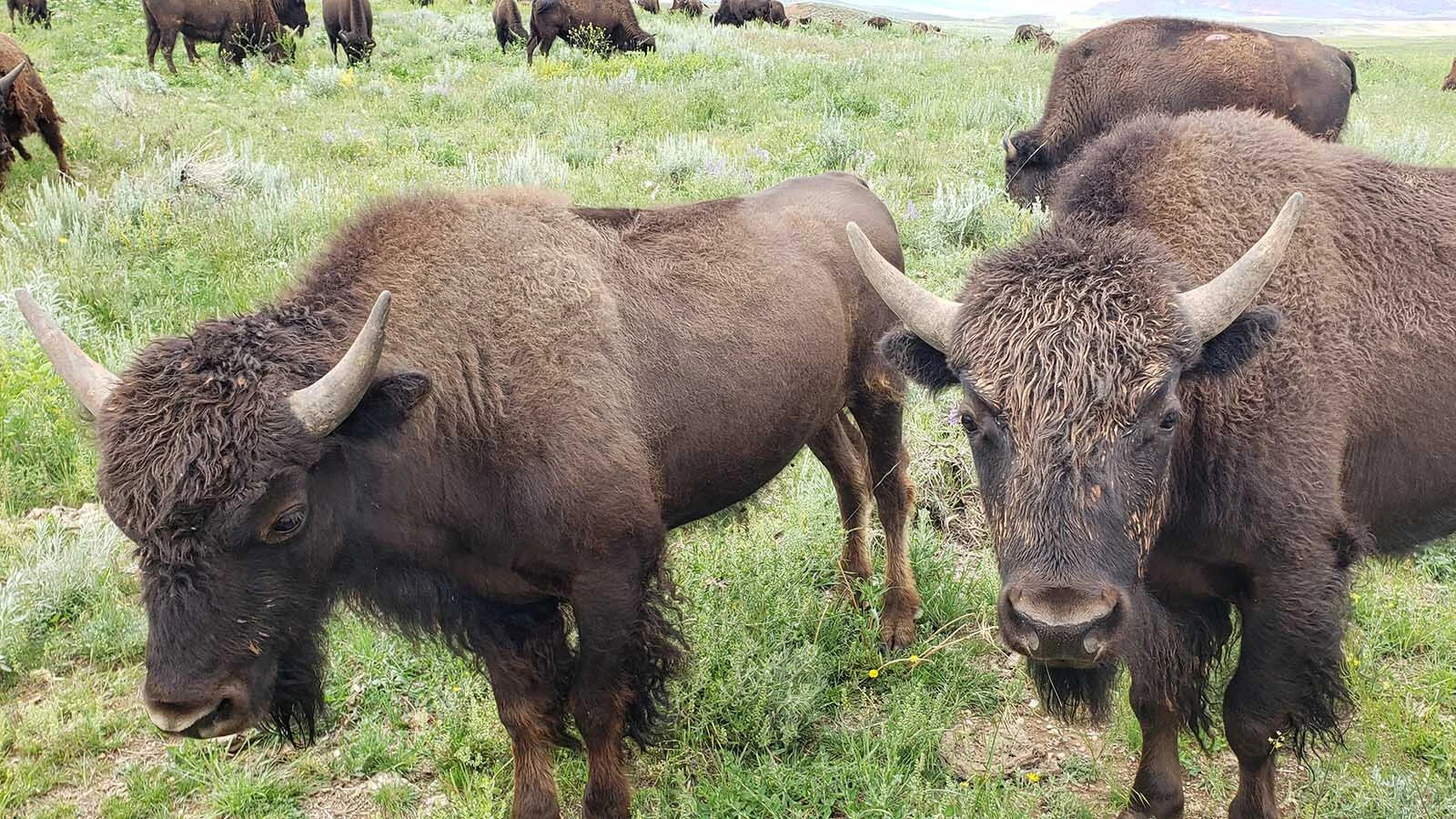
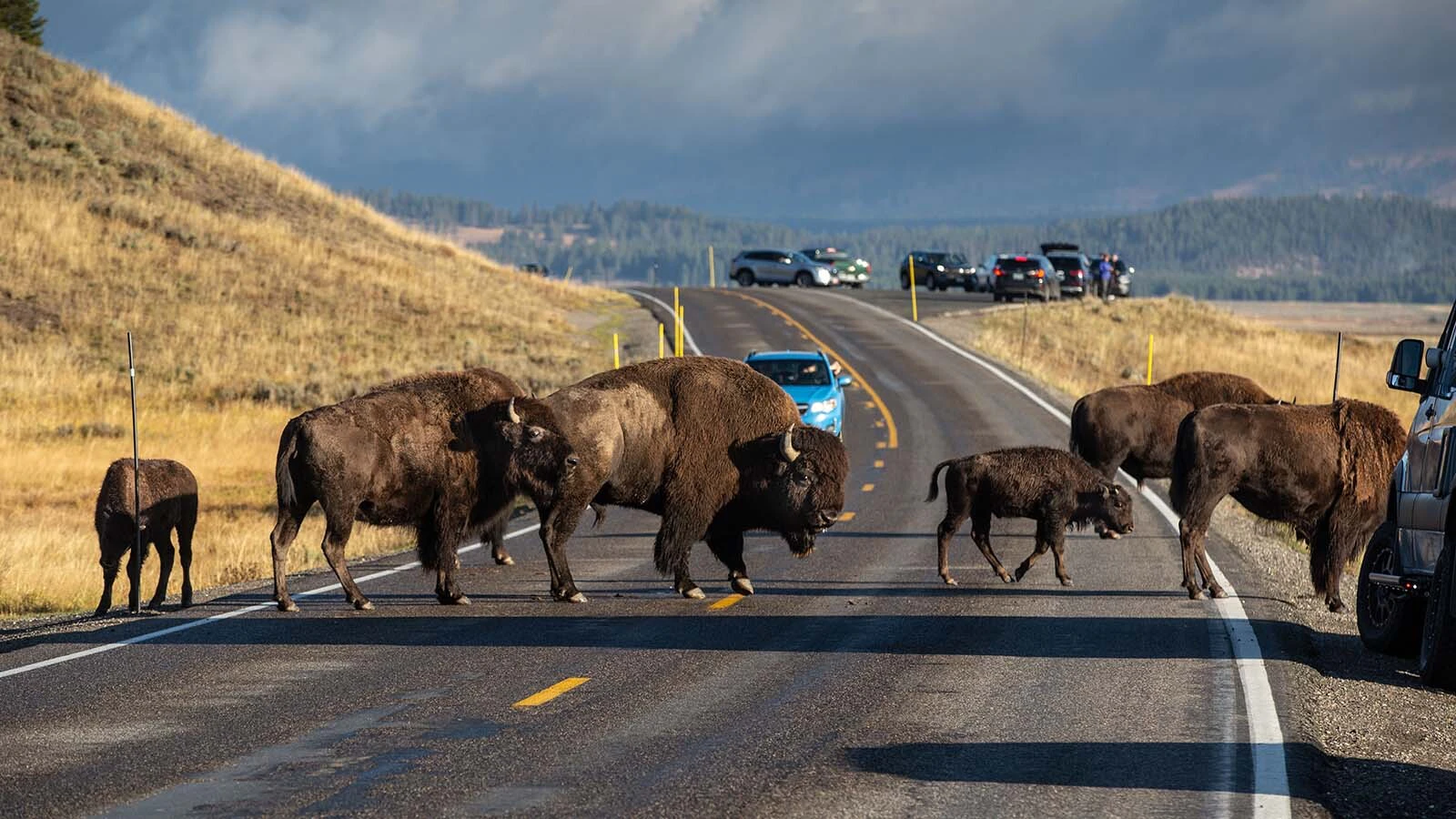
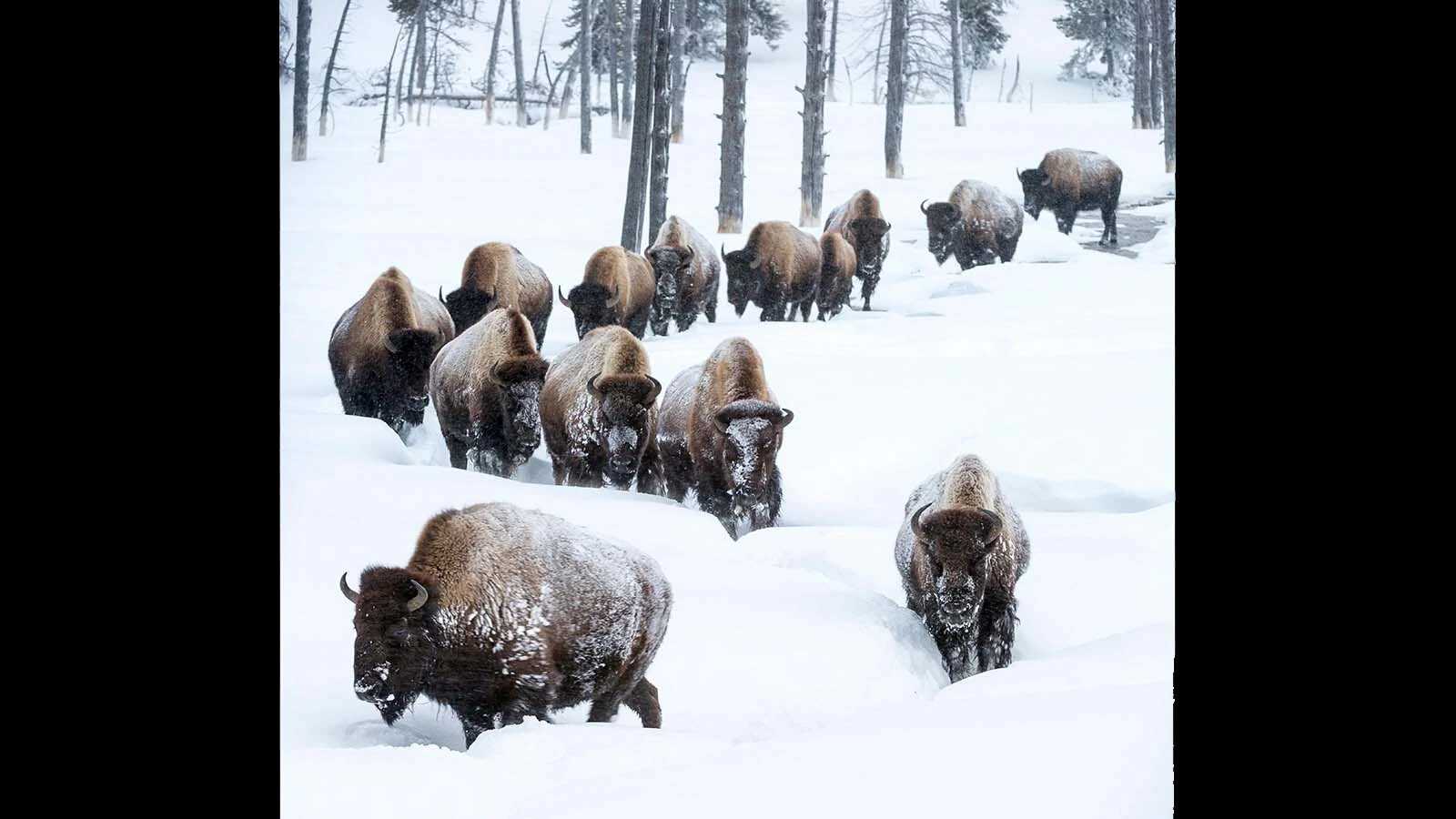
Is it bison or buffalo or both? Bison is the scientific name, but buffalo has a 300-year history in America. (Renee Jean, Cowboy State Daily) 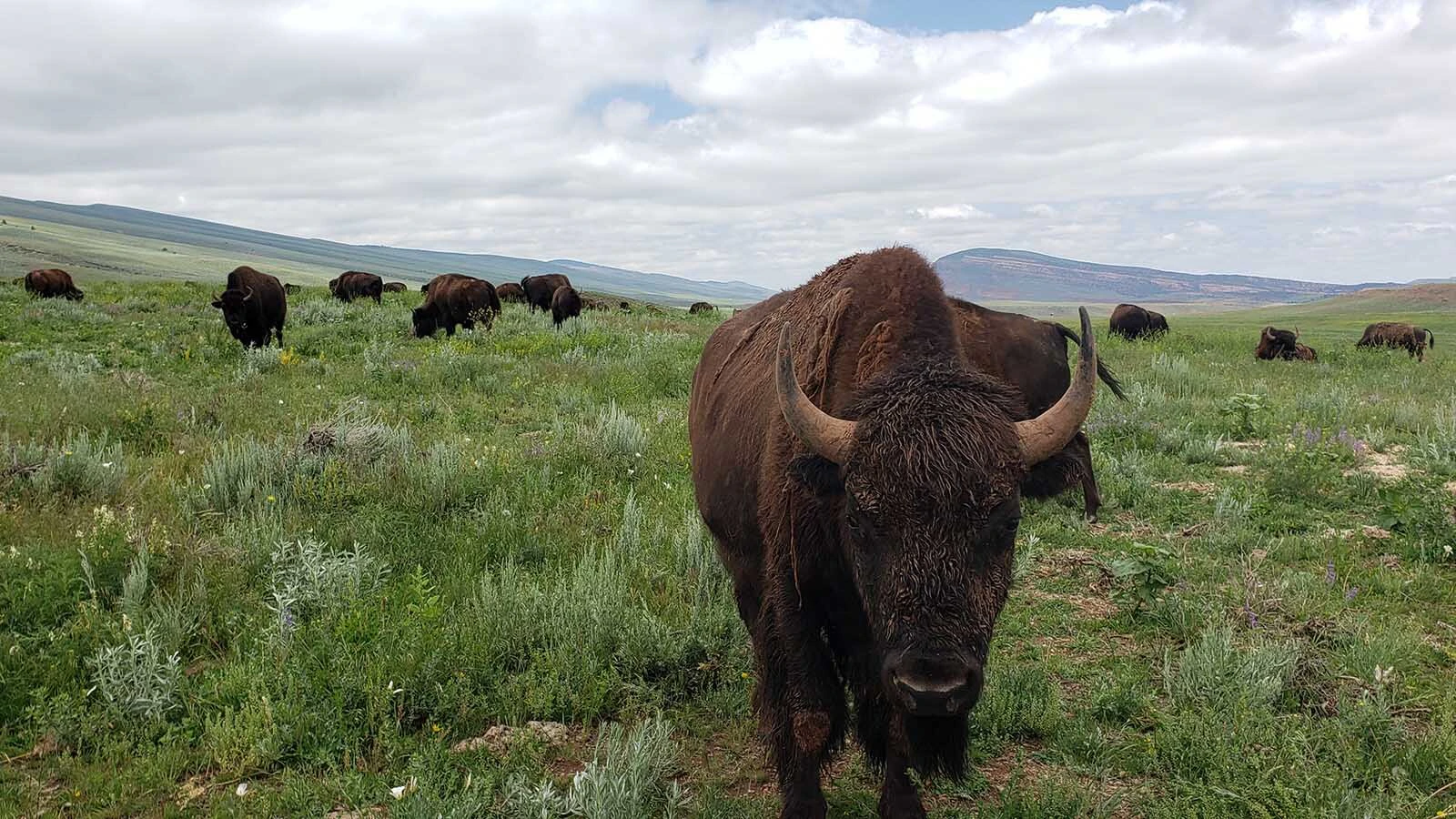
Is it bison or buffalo or both? Bison is the scientific name, but buffalo has a 300-year history in America. (Renee Jean, Cowboy State Daily) 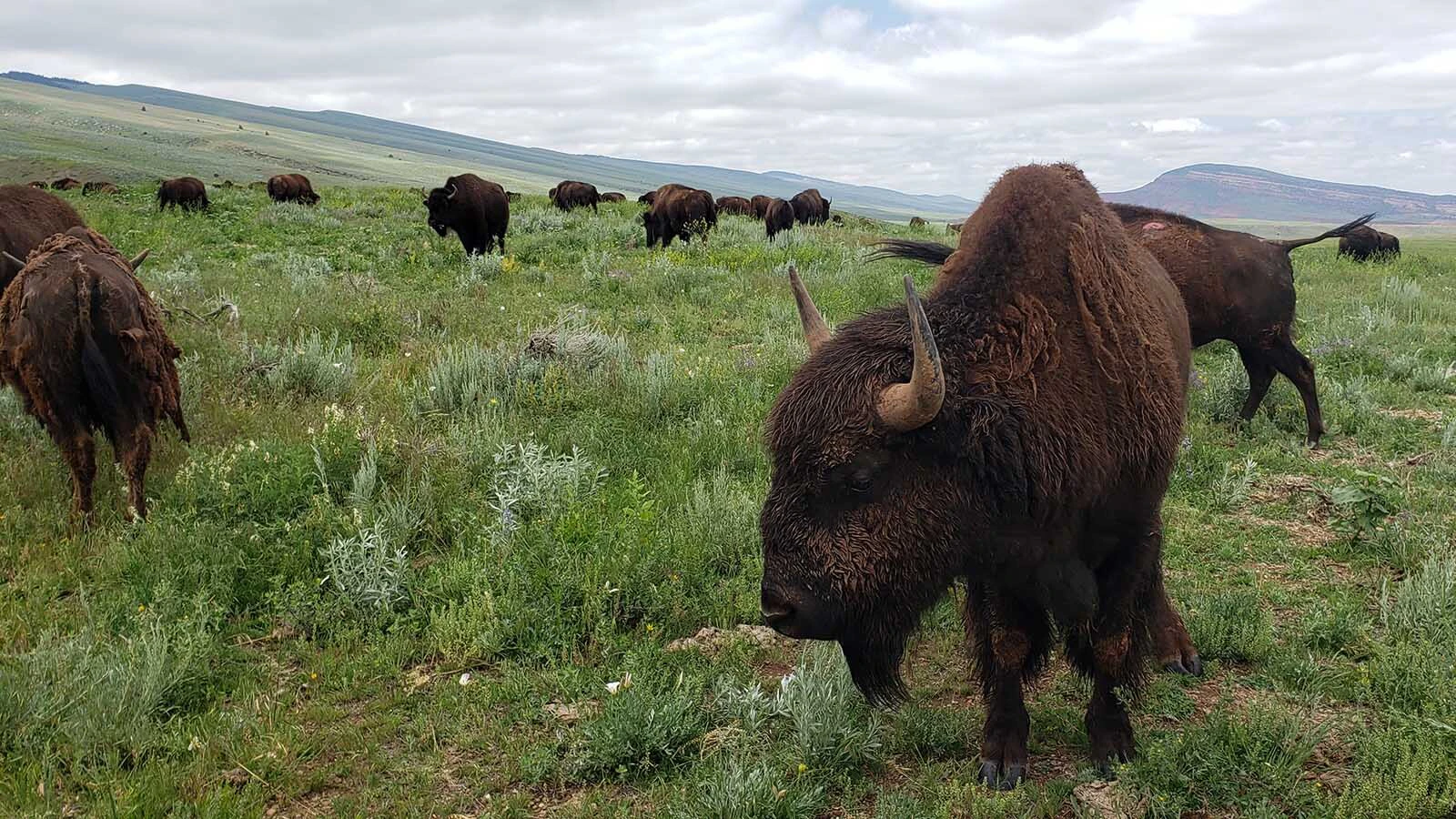
Is it bison or buffalo or both? Bison is the scientific name, but buffalo has a 300-year history in America. (Renee Jean, Cowboy State Daily)
Sometimes Precision Is Required
Even Klemm admits, however, that in common everyday speech, he’s just as apt as Hutton to use the word “buffalo” now and then.
In fact, back when he was packaging bison meat for market, he and his crew were often referred to as the “buffalo guys.”
Ditto for wildlife expert George Wuerthner, who said he will sometimes switch out bison for buffalo in an article, just to avoid repeating the same word over and over again.
“If you’re here in the United States, if you say buffalo or you say bison, everybody has this visualization of the same animal,” he said. “But I would say in any formal setting — a scientific paper, or a book about natural history — it’s important to use the scientific name.”
For articles in a newspaper or magazine, though, Wuerthner believes buffalo is fair enough. And he does have a soft spot in his heart for the word, “buffalo.”
“I was born in Buffalo Crossroads, Pennsylvania,” he said. “Which was the last place a bison was killed in the 1800s. That’s my claim to fame. I don’t know if the town even exists anymore. It was very small when I was born there.”
Killing All The Buffalo
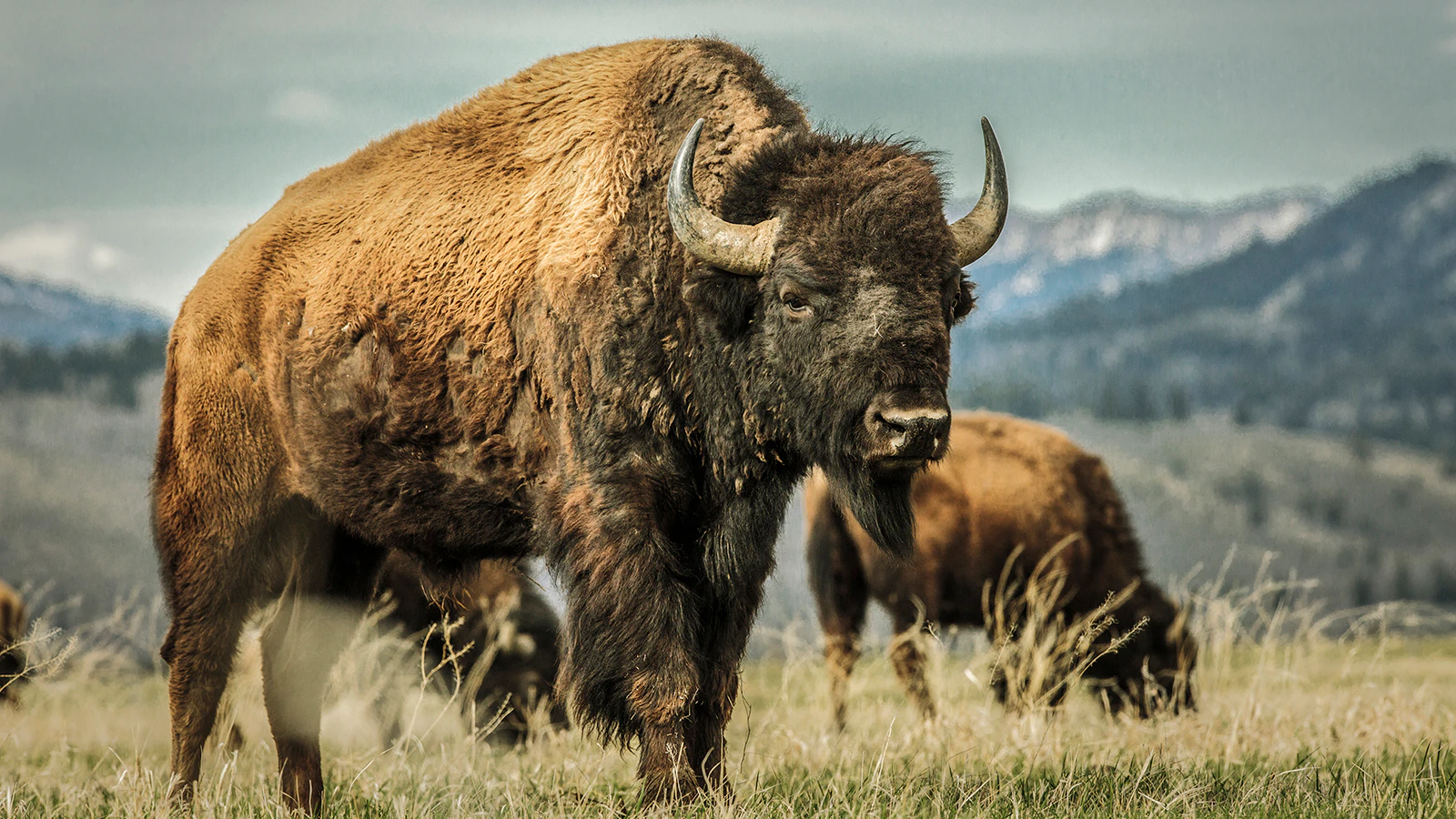
One thing that’s not up for debate is the weight the iconic, shaggy beasts of the Plains had, whether they are called buffalo or bison.
Bison are the largest land mammal in North America and have become closely tied to America’s national identity. So much so that it was named the U.S. national mammal in 2016.
“The buffalo is just endemic in the American experience,” Klemm said. “It is as recognizable as the American cowboy. When you go around the world, people equate it with America.”
Yet, despite that, bison almost went extinct in the late 1800s.
Hutton estimates buffalo numbered 20 to 50 million across the Great Plains prior to widespread settlement. But by the 1880s, the herd was down to just hundreds.
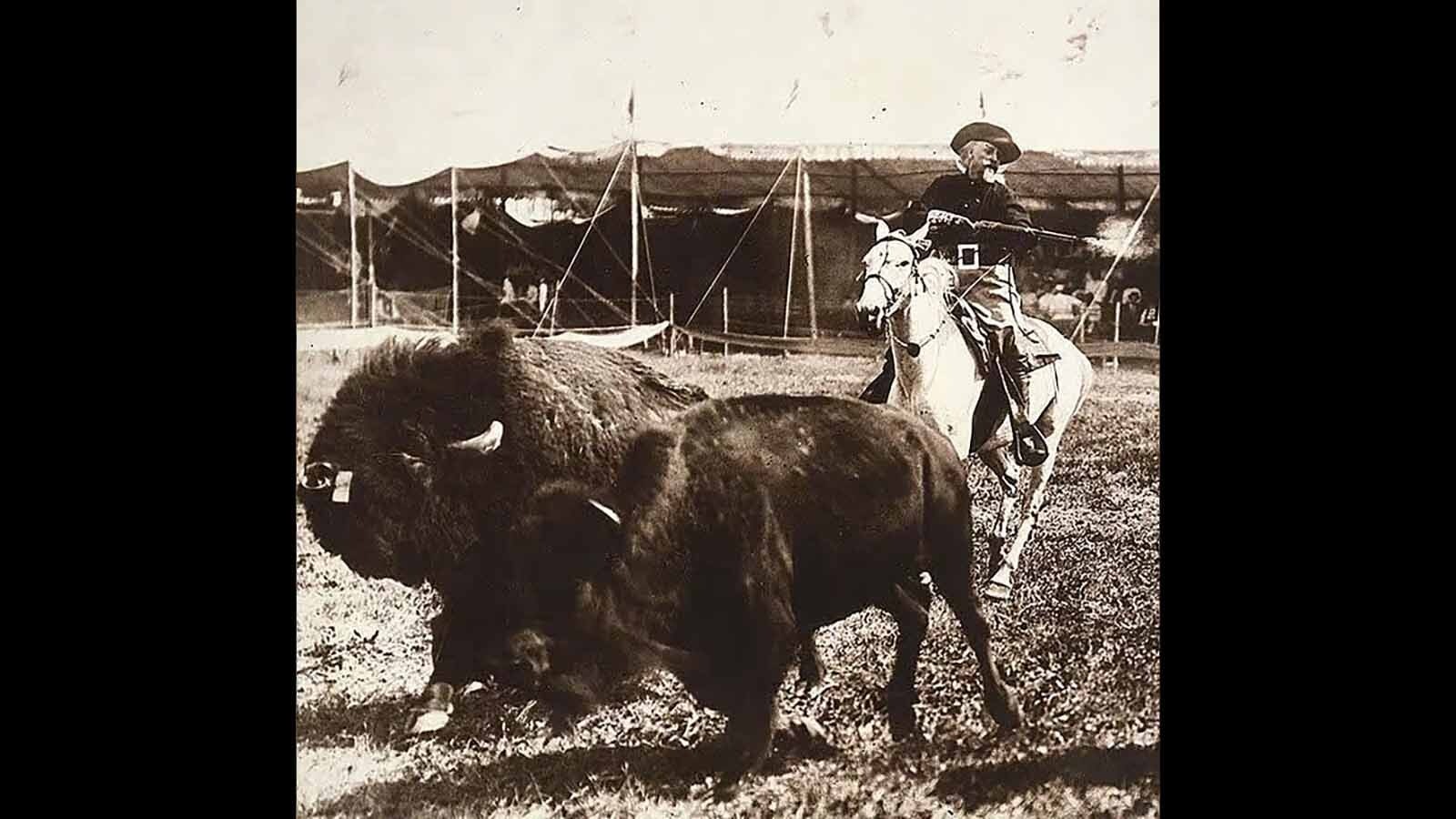
Buffalo Bill Cody is perhaps the most famous of all the buffalo hunters in history. He killed 4,280 buffalo for the Goddard brothers from October 1867 to May 1868 on a fleet horse named Brigham using a .50-caliber Springfield rifle named Lucretia Borgia.
Because of that, Cody was a familiar and welcome face at any Hell on Wheels tent city, the name given to the tough towns that sprang up along the transcontinental railroad that Union Pacific was racing to build through Wyoming.
People of those rough-and-tumble towns took to calling Cody “Buffalo Bill,” a nickname that held ever after, even though he stopped hunting buffalo after eight months, and wanted no part in their extinction.
Cody’s hunting method was similar to the American Indian.
“My great forte in killing buffaloes from horseback was to get them circling by riding my horse at the head of the herd, shooting the leaders, thus crowding the followers to the left, till they would finally circle round and round,” Cody once said in describing his method.
Not Dumb Beasts
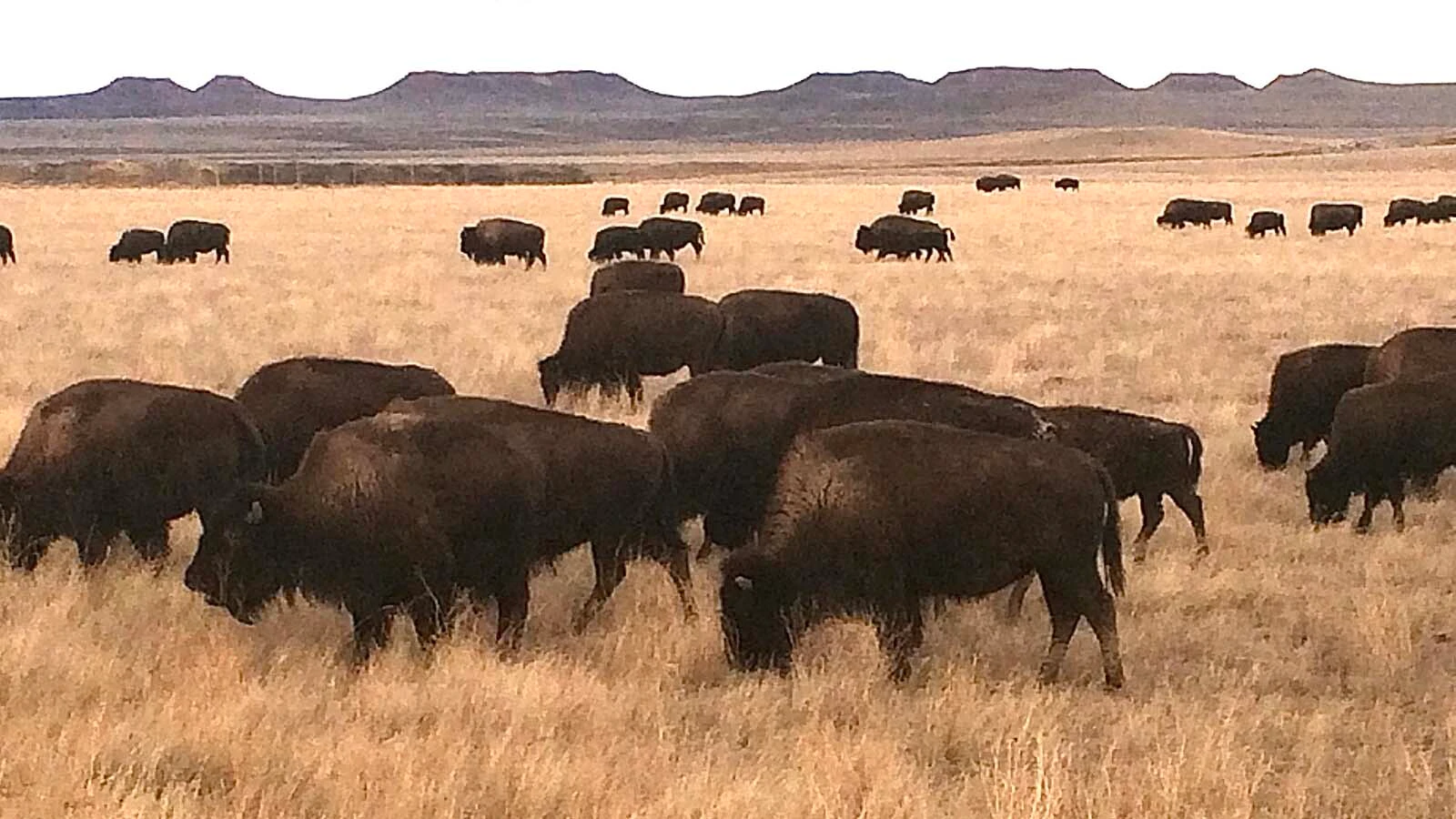
Most hunters, however, didn’t hunt bison like Cody. Buffalo hunting that way was a dangerous, dirty job, one that most hunters tried to avoid. They preferred stands, where they could pluck off bison one at a time. This wouldn’t typically cause a stampede. The bison, confused, would meander to their fallen brethren, trying to understand why they’d suddenly fallen to earth.
That has led some to believe that bison were “dumb” animals, but that interpretation doesn’t fully account for natural adaptations the animals needed to survive creatures like wolves.
“Wolves, if they get a broken jaw or leg bone , are not going to live very long,” Wuerthner explained. “So, they’ve got to be very careful what they engage with.”
That leads them to pounce into a herd, trying to cause a stampede, which will quickly expose which animals are weakest.
“The bullets are coming out of nowhere,” Wuerthner added. “And in many millions of years of evolution, they never had to contend with rifles. This was just a new way of dying they were unfamiliar with. It was not part of their evolutionary history.”
American Indians exhibited similar confusion when they first encountered rifles, Wuerthner added.
“All they knew is that they were standing there and suddenly one of their fellow souls is dead and there was a loud boom,” Wuerthner said. “But they didn’t know what happened at first. And you can read these early accounts of that.”
Bison William? No Thank You
Cody, Hutton said, would never in a “gazillion years” call buffalo bison instead.
“He in fact is probably spinning in that grave up there on Lookout Mountain above Denver,” he said. “Where we need to dig him up and get him back here to Cody, where he belongs.”
In fact, during his lifetime the name “Bison William” was used as an insult by European papers to make fun of him, Hutton said.
“The British press would do that to make fun of how popular he was, you know, the way the press is always making fun of us out here in the West,” Hutton said. “And how we’re a bunch of goat ropers and rednecks. Well, they would do that with Cody, so they’d refer to him as Bison William, you know, met the Queen. So that probably explains part of my prejudice as well.”
Even though Hutton is against the word “bison,” it’s still used liberally in the Buffalo Bill Center of the West’s planned exhibition, Buffalo Nation, which celebrates America’s 250th.
“We felt there wasn’t anything better than the buffalo to use for this celebration of America,” Hutton said. “But we do use bison throughout the exhibit.”
The exhibit opens Aug. 22 and includes a lot of fantastic artifacts, including Cody’s favorite rifle, Lucretia Borgia, as well as fantastic paintings of buffalo and many other things.
“We’re going to have exhibits on conservation and the lifeways of the buffalo,” Hutton said. “The buffalo were absolutely critical to Plains Indian survival, and so important that many of the native tribes worked them into their creation stories.”
Saving The Buffalo
Buffalo Bill Cody’s own buffalo, which were part of Buffalo Bill’s Wild West and Congress of Rough Riders of the World, are part of what helped save the buffalo herd from extinction. That and Charlie Goodnight, a famous cattleman in Texas, who kept a small buffalo herd after his wife told him the creatures were all being killed off. Buffalo calves weren’t killed because their robes weren’t worth anything, but with their mothers gone, the babies would starve to death.
“So, she had her husband’s cowboys go out and collect these calves and bring them in,” Hutton said. “They had a nice little herd.”
There was also a small herd preserved on the Blackfoot reservation in Montana.
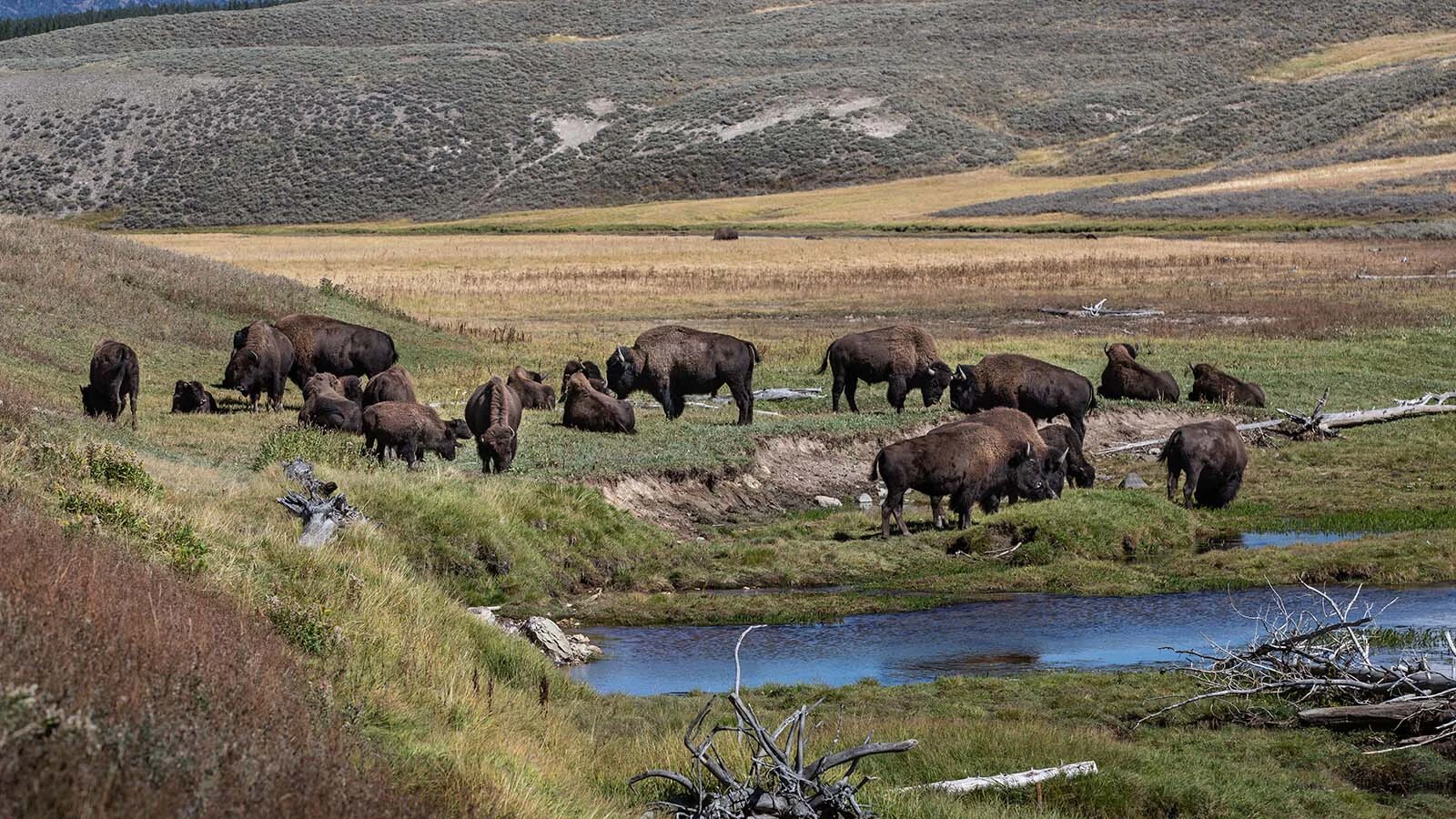
“All of these animals have been used to bring the buffalo back,” Hutton said. “And there was a small herd in Yellowstone that survived because they were protected.”
The return of buffalo, Hutton said, is a great American story, because today there are now 400,000 buffalo in the country, up from a few hundred at the lowest point.
“Wind River Reservation has a herd they’re bringing back,” Hutton said. “There’s a huge herd in the Black Hills the Lakota are bringing back.”
Why Not Yes To Both?
In the ongoing battle of whether it’s a bison burger or a buffalo burger, the real answer is probably that it’s “yes” to both.
Bison is scientific and precise, but even scientists and wildlife experts like Klemm and Wuerthner sometimes adopt common names like buffalo when it’s expedient.
Common names do have a long history for all sorts of plants and animals.
Just take prairie dogs as an example.
The current scientific name is “Cynomys,” with individual species dropping in with words like ludovicianus, gunnisoni, or parvidens.
Somehow, prairie dog just has a nicer ring to it when compared with any of those, doesn’t it?
And who is even going to argue that prairie dog must always be Cynomys with any vigor, so why should buffalo be any different?
It just makes sense to use the common name whenever it would sound better. So Buffalo Wild Wings, Buffalo Bill Cody, and Buffalo Swamp live on because buffalo is a perfectly good, lived-in word that has centuries of history behind it.
So, when you order a “bison” burger, just remember that you’re speaking the language of scientists and regulators, imposed by an academic with a pen and bureaucrats with style books.
Perhaps you too will then choose to be like Hutton and insist on the buffalo burger instead.
That’s the language of history and cowboys talking there — and doesn’t it just taste better with lettuce, tomato, cheese and all the fixings?
Renée Jean can be reached at renee@cowboystatedaily.com.