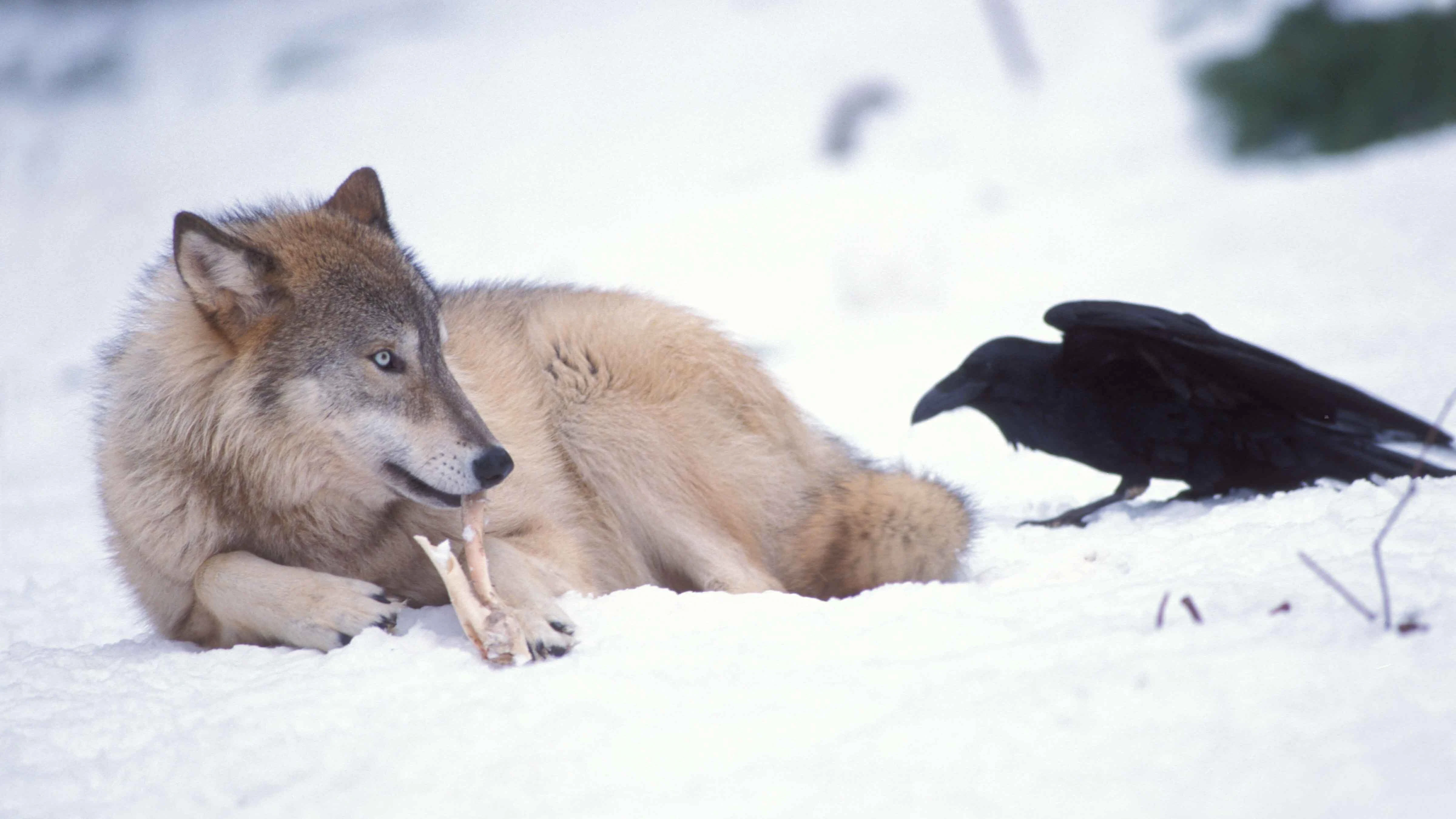
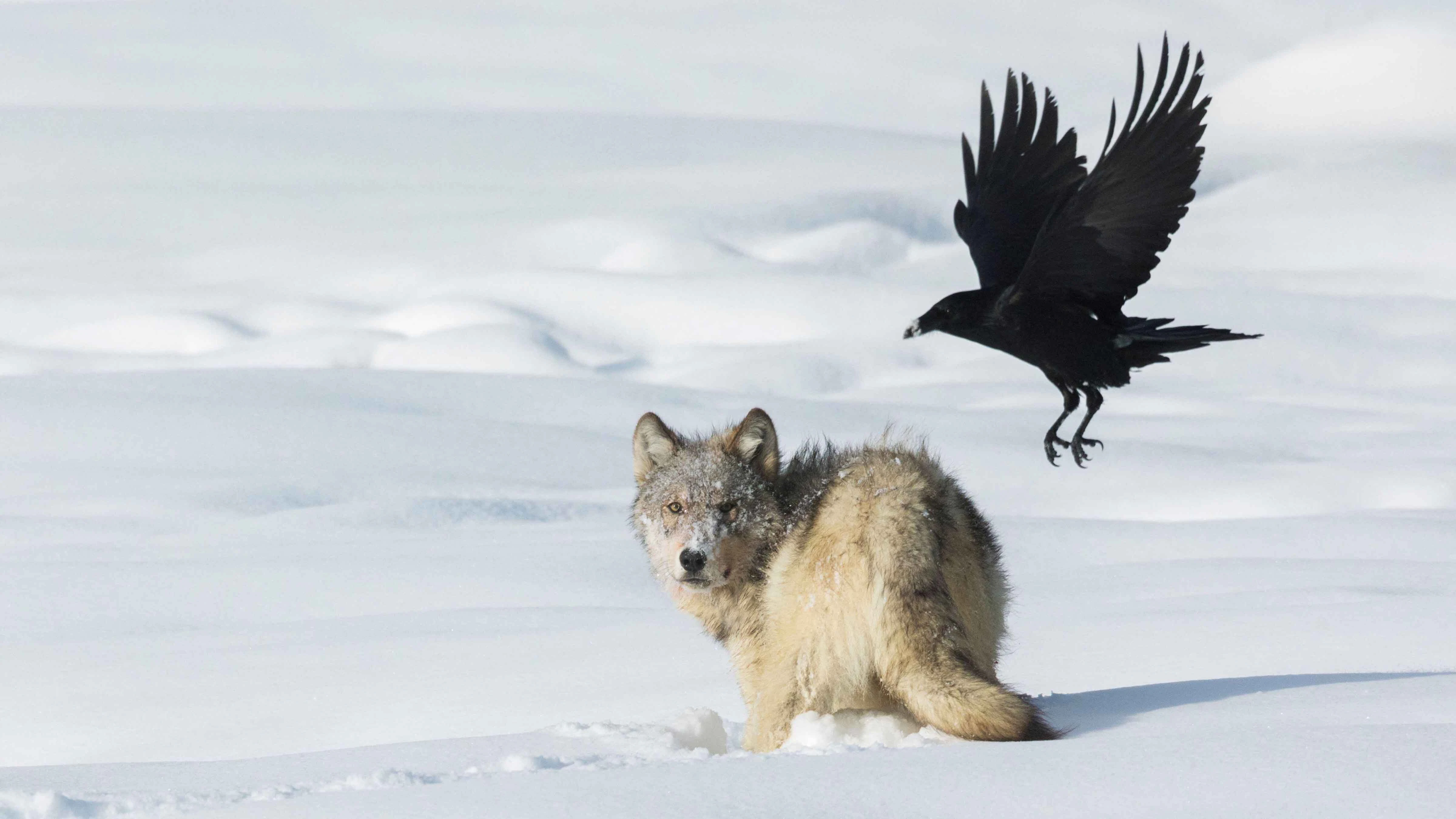
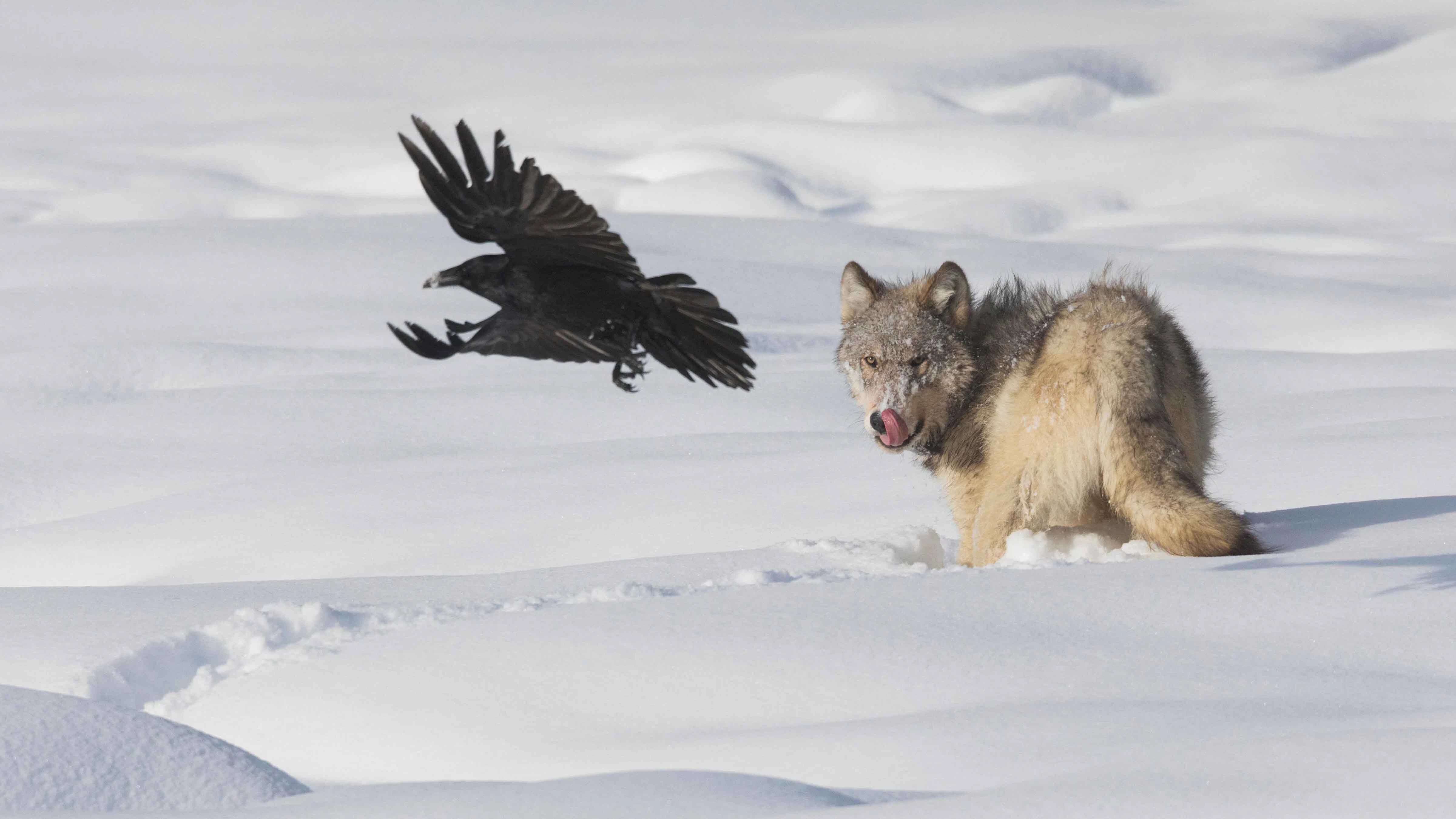
When wolves make a kill, ravens frequently show up to feast on the leftovers.
And for decades, wildlife biologists thought it was as simple as people might assume — the ravens were following wolf packs around, waiting for them to kill an elk, bison or some other big animal.
As it turns out, things are probably more complex. Ravens apparently have “cognitive maps” of their vast territories — sort of like GPS embedded in their brains. And those maps include likely sites for wolf kills, as well as garbage dumps, sewage lagoons and other likely dining spots.
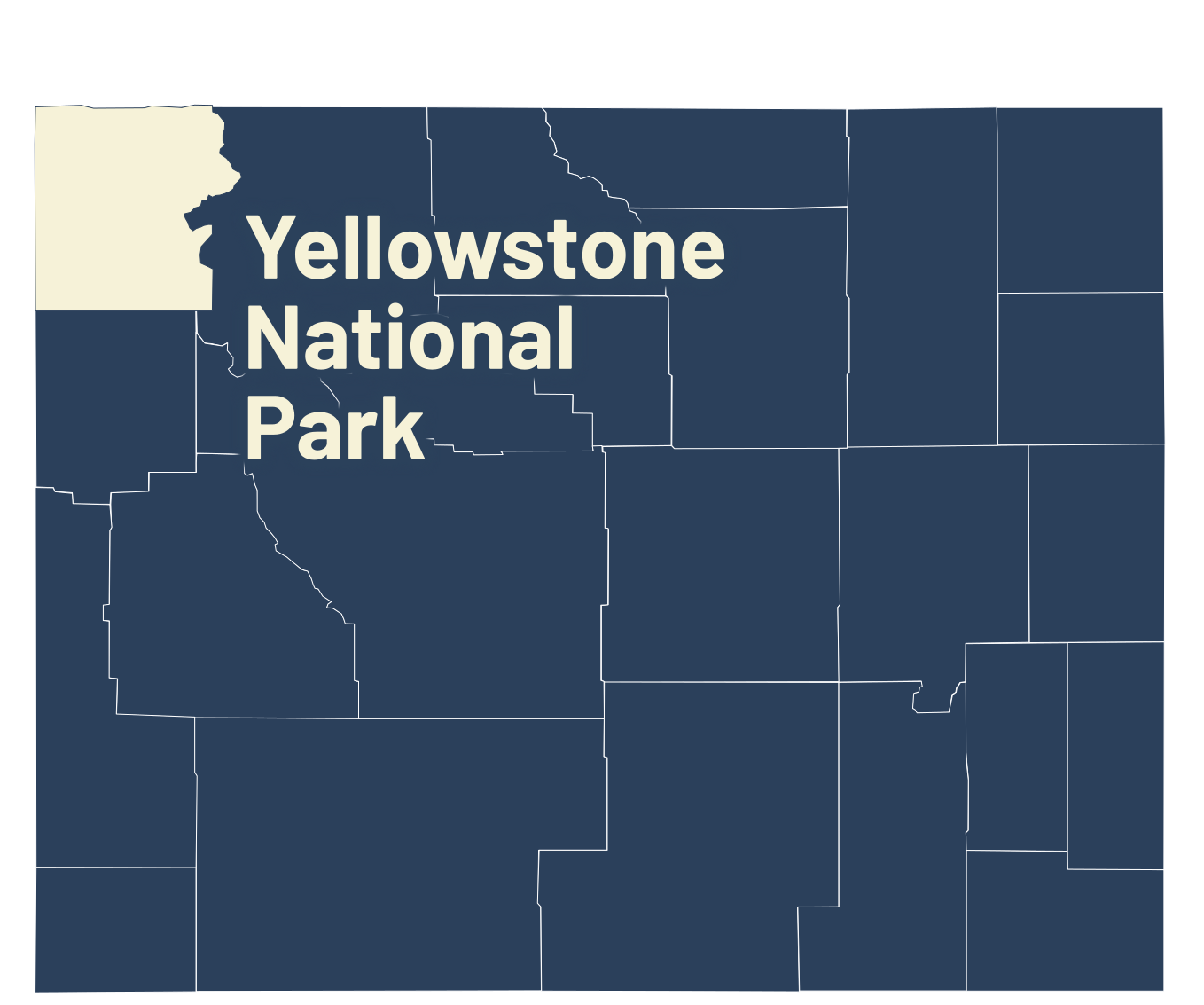
That’s according to a study of ravens and wolves in the north end of Yellowstone National Park, recently published in Science.
Biologist Doug Smith, who led the wolf program in Yellowstone for nearly three decades, was the lead wolf expert for the study.
During his career, Smith spent countless hours tracking wolves’ movements with radio collars. But the study also involved putting tiny radio transmitters on ravens’ backs.
“We had marked (radio-collared) wolves and followed wolves. But we had never followed ravens,” he said.
‘The Old Guard’
Prior to being involved in the wolf-raven study, Smith assumed that the relationship between the species was simple.
“I’m part of the old guard in the wolf world. And the old guard thinks that ravens follow wolves,” he said.
After all, that’s apparently what he’d seen while studying wolves. Whether on Isle Royale in Lake Superior, then in the remote wilderness of Alaska and in Yellowstone, Smith saw the same thing happening over and again.
“As soon as the wolves make a kill, ravens are on the scene,” he said.
And so it seemed, the ravens were just lurking behind the wolves, waiting for the pack to make a kill and ring the dinner bell.
A Matter Of Memory
But when both ravens and wolves were outfitted with tracking devices, a different picture began to emerge.
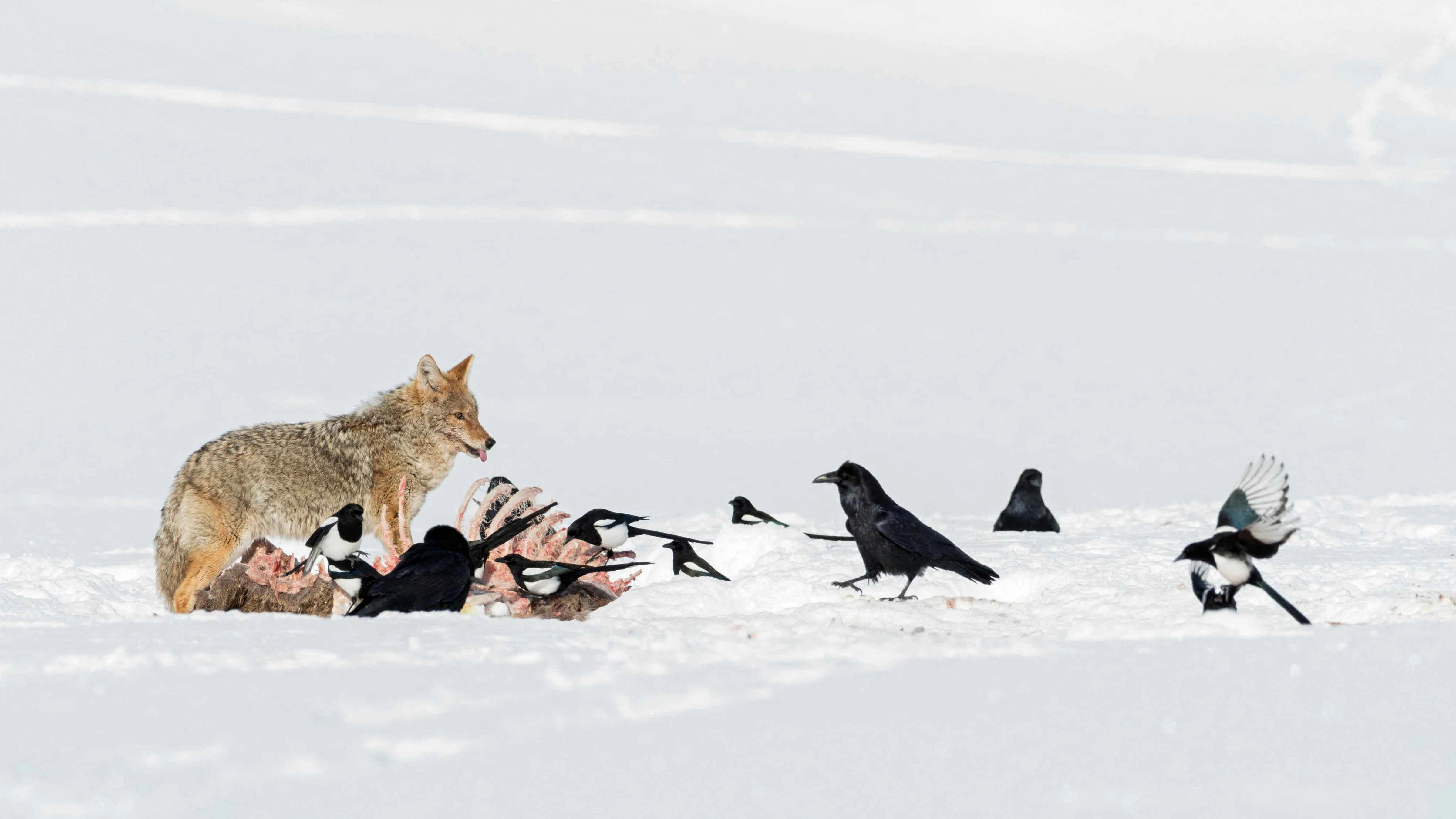
The ravens were going all over the place — sometimes as far away as Billings, Montana — to hit likely feeding spots.
Researchers began leaning toward the conclusion that instead of directly following the wolves, at least some of the ravens knew the territory well enough from memory that they’d pegged the spots where packs were most likely to make kills. And so, those likely kill sites became just another stop on the ravens’ circuits.
Researchers also tracked mountain lions, although their kills are usually harder for ravens to find, Smith said.
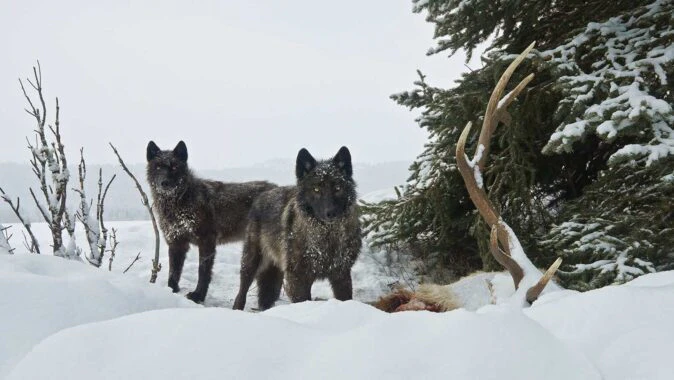
Mountain lions make kills in extremely remote areas and tend to cover the carcasses with dirt, brush and the like, whereas “wolves kill out in the open,” he said.
Tracking data revealed that ravens weren’t tagging along behind either big predator species, according to the study’s abstract.
“… by satellite tracking 69 ravens, 20 wolves and 11 cougars in Yellowstone National Park, we found that following of predators over large distances rarely occurred. Instead, ravens routinely revisited sites where wolf kills were common — returning from distances of up to 155 kilometers (about 96 miles) to find carrion,” according to the abstract.
Residents And Vagrants
Research indicates that there are two types of ravens — residents and “vagrants,” Smith said.
The residents are those that stay more or less in the same area, while the vagrants fly vast distances, checking likely spots for food.
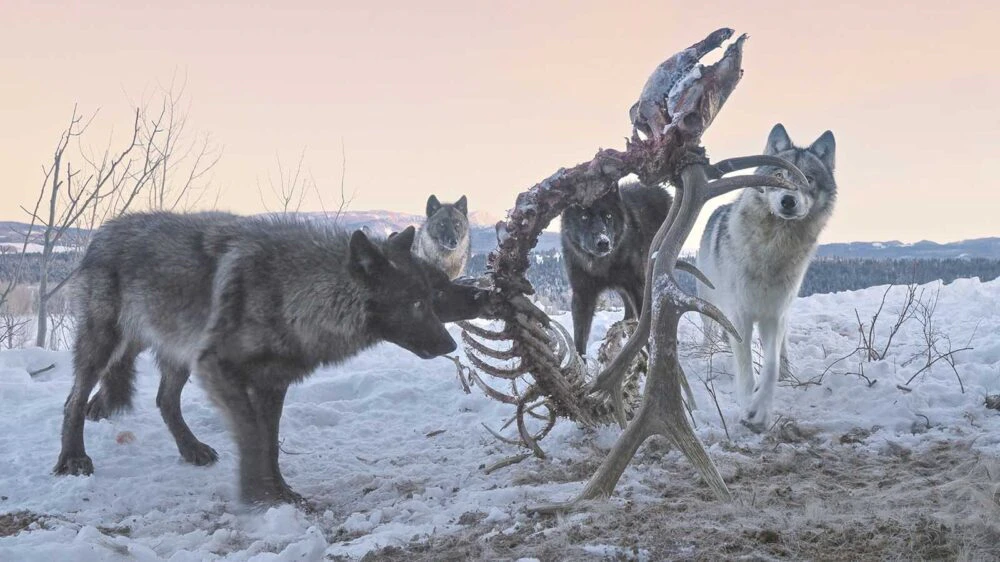
Smith noted that over the years, in relatively less remote places like the central parts of Yellowstone, mobs of ravens show up to pick at wolf-killed carcasses, sometimes 20 or more at a time.
In isolated areas, like Wyoming’s Thorofare, there might be only a half dozen ravens on a carcass.
That could be partly due to vagrant ravens homing in on the calls of residents.
“They have a particular call that says, ‘I’ve got food,’” Smith said.
In some instances, an overwhelming number of vagrants would show up and bully the residents off the carcass, he said.
Human Influence?
The smaller groups of ravens on carcasses in isolated places like the Thorofare also make Smith wonder about the influence of human-provided food sources.
For instance, at the northern end of Yellowstone, “Gardiner, Montana, is right there,” he said.
And Gardiner has a garbage dump and a sewage lagoon.
A thin layer of fat builds up on the surface of sewage lagoons. And, as gross as it might seem from a human perspective, that’s a great source of nutrition for ravens because they can “skim the fat off” for a quick meal, Smith said.
If ravens’ cognitive maps have numerous reliable human-provided food sources in a certain area, Smith wonders how that affects their habits.
In extremely isolated areas with no human influence, might they be more likely to directly follow a pack of wolves in hopes of getting a meal?
That could be an open question, Smith said.
“Science generates more questions than answers,” he said.
Mark Heinz can be reached at mark@cowboystatedaily.com.