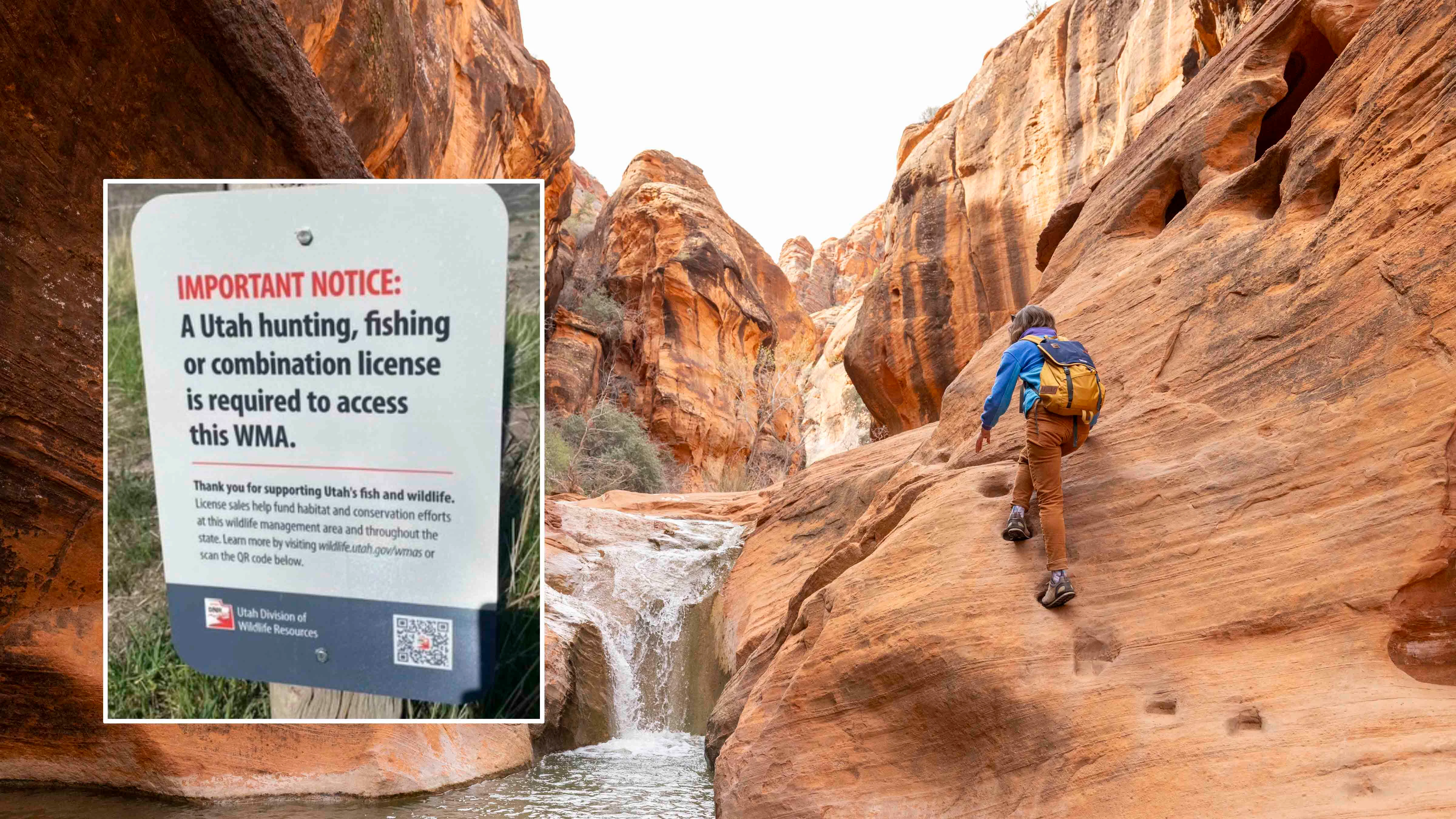
Utah has moved to make people buy a hunting or fishing license to recreate on roughly 150 state-managed areas across the state, even if they aren’t hunting or angling.
In principle, a new law would make users such as birdwatchers, hikers and bicyclists pay their fair share of keeping up Utah’s state wildlife/waterfowl management areas (WMAs).
Utah’s House Bill 30 aims toward that end, although it was watered down by the time it passed the Legislature and headed to Gov. Spencer Cox’s desk.
The final version of the bill included two other options: non-hunters and anglers can make voluntary donations to WMAs or simply prove that they watched a video about what distinguishes WMAs from other state lands, the Salt Lake Tribune reported.
The move toward fee requirements in Utah cuts to the heart of a longstanding debate in Wyoming and other Western states — whether hunters foot most of the bill for public lands and wildlife conservation while other users reap the benefits. And if so, should other users pay more?
Some Wyoming outdoors enthusiasts told Cowboy State Daily that while they can see the wisdom of making other users pay some sort of fee, specifically requiring hunting or fishing licenses wasn’t a good idea.
‘I Have to Get Lunch Somewhere’
Avid birdwatcher Lucas Fralick of Laramie said he can understand why Utah moved to get more financial support for its WMAs.
However, requiring birdwatchers, cyclists and the like to buy hunting or fishing licenses seemed “fairly ridiculous,” he said.
Depending on where birdwatchers go in Wyoming, they already have to pay fees, he said.
“Even here in Wyoming, there are plenty of state parks that require a user fee, and that seems reasonable,” he said.
If Wyoming wanted to extend such generalized user fees to WMAs and other state lands here, that would be reasonable and fair, he said.
Also, many recreationists aren’t consumptive users. In other words, they’re not taking anything off the land, as hunters and anglers might take fish, game birds or big game, he added.
“We’re not taking anything out, in theory. All we’re doing is watching some birds,” he said.
Birdwatchers and other non-hunting or fishing outdoor recreationists also help fuel local economies across Wyoming, Fralick said.
“Local town economies are getting my cash because I have to get lunch somewhere,” he said.
Good in Principle, Not Practice
It’s understandable that hunters and anglers might feel that they pony up most of the cash for wildlife conservation and habitat improvement, so they should have the most say, Buzz Hettick of Laramie said.
Hettick has hunted in Wyoming, Montana and other Western states.
He said he likes the idea of generalized fees for state lands. But, like Fralick, he thinks specifying it to hunting and fishing licenses wasn’t a practical or fair idea.
Hunters put considerable amounts of money into wildlife management, he said. But compared to fuel costs and other expenses, license fees might be the least of their worries.
In addition to buying licenses and game tags, hunters and anglers pay federal taxes on firearms, ammunition and fishing tackle. That money is funneled back to state game and fish agencies.
And for hunters, the high costs of nonresident hunting licenses can sting, Hettick said. However, when he hunts outside of Wyoming, he doesn’t mind paying other states’ higher nonresident fees.
As he sees it, resident hunters and game agencies in those states put most of the work into wildlife conservation and habitat preservation, so it’s only fair that, as an outsider, he should pay more to hunt there.
Hettick is co-chair of the Wyoming chapter of Backcountry Hunters and Anglers and has been involved in lobbying for wildlife-related bills.
He recalled that several years ago, there was an effort to implement a user fee for state trust lands in Wyoming.
However, that bill failed before the Legislature, probably because it would have put the revenue toward hunting and angling interests, he said.
“The reason that it got shot down was, rather than that money going back into the state trust, it would have been tied directly to hunting- and fishing-related interests,” he said.
Trying to tie that fee money to certain things isn’t politically feasible or fair, he added.
And when proponents of HB 30 in Utah tried to tie it to hunting and fishing licenses as the only option, it undercut their cause, Hettick said.
Mark Heinz can be reached at mark@cowboystatedaily.com.