A federal trade secrets lawsuit filed this week in Wyoming accuses a former executive at one of the state’s highest-profile mining operations of stealing confidential data and carrying it to a direct competitor in the fast-moving race for American rare earth dominance.
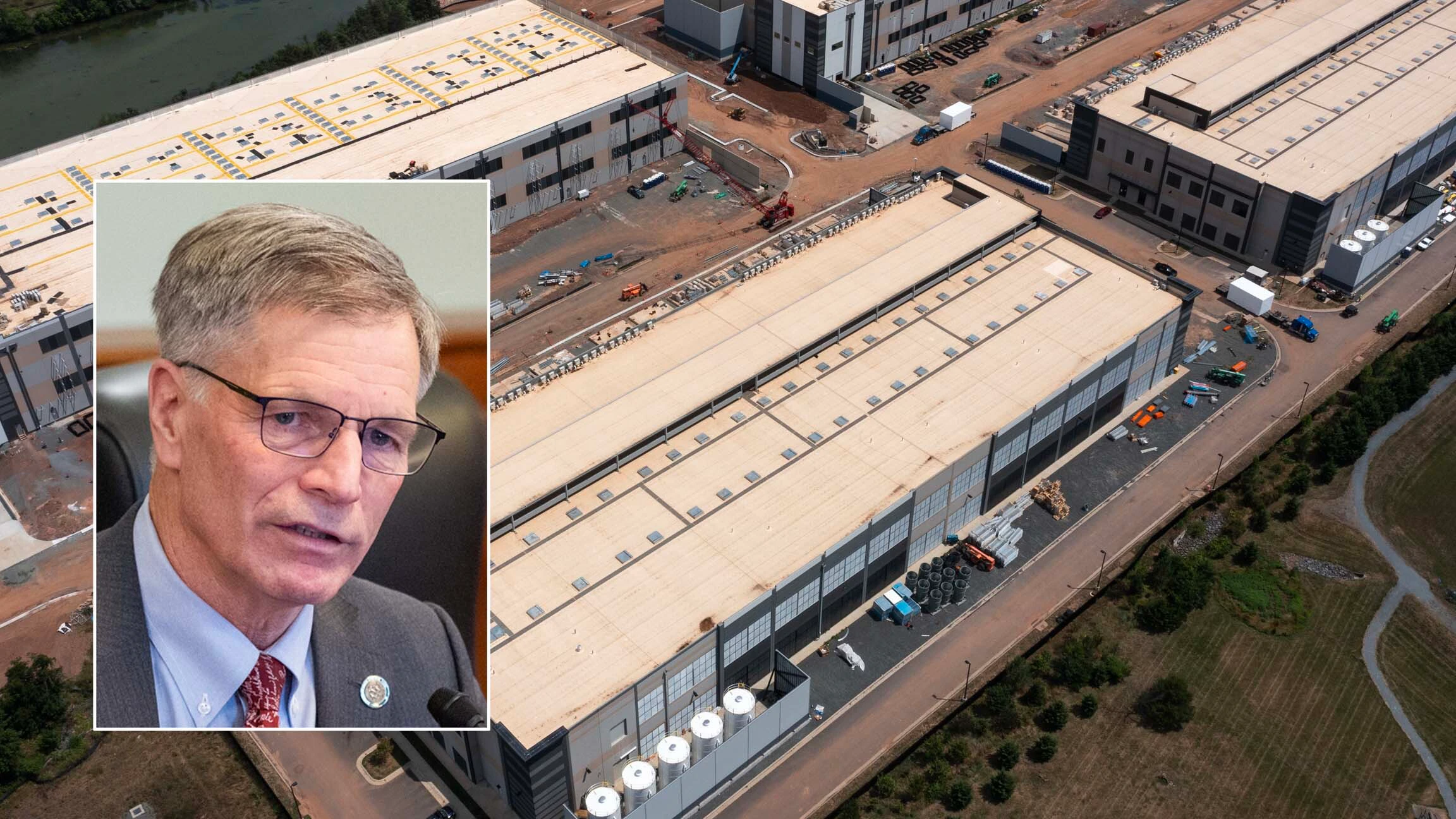
The complaint, filed March 16 in U.S. District Court for the District of Wyoming, alleges that Alex J. Moyes — who served as director of critical minerals and planning at Ramaco from January 2024 to October 2025 — emailed more than 40 sensitive technical and financial documents to his personal Gmail account in the months before resigning, then took a vice president position at rival USA Rare Earth Inc.
Ramaco filed the lawsuit alongside an emergency motion for a temporary restraining order, seeking immediate court intervention before, as the company alleges, evidence can be destroyed.
Speaking for Ramaco, attorney Mark Miller told Cowboy State Daily, “Because of the pending litigation, the company has no comment. The complaint and related pleadings speak for themselves.”
USA Rare Earth Inc. and Moyes did not respond to requests for comment.
Spotlighted Last Summer
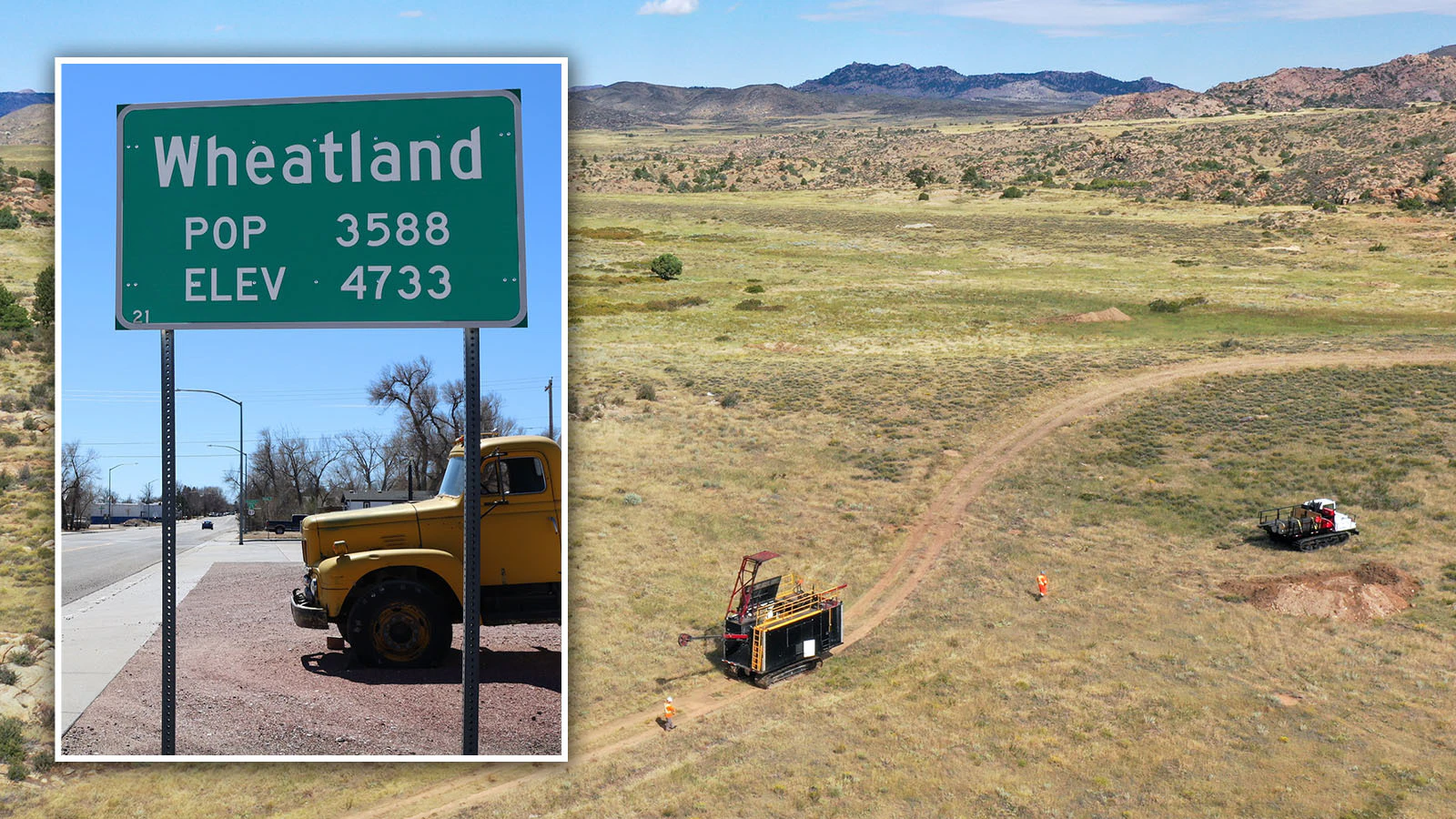
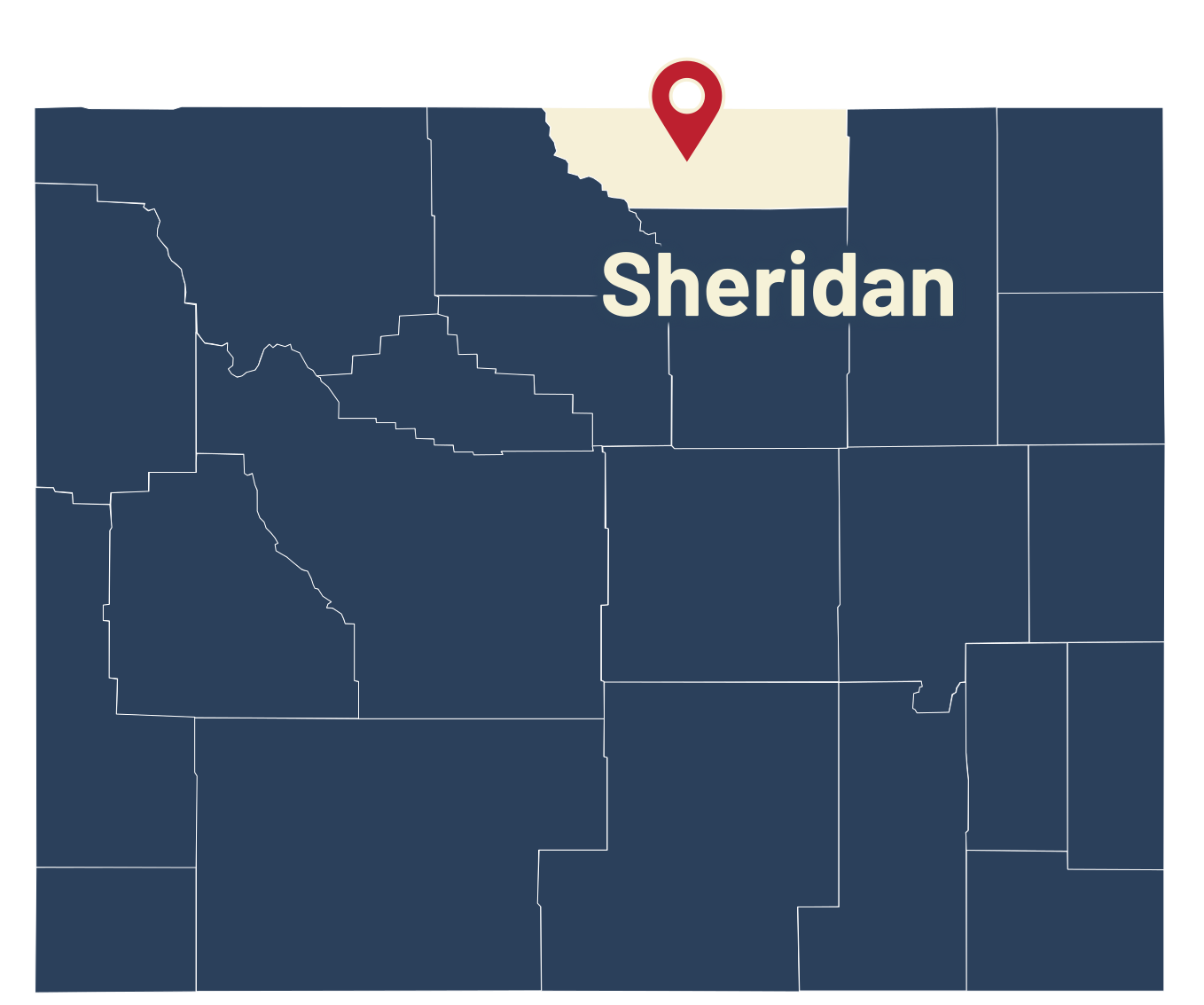
Ramaco operates the Brook Mine near Ranchester — a site it has promoted as the first new rare earth mine to open in the U.S. in more than 70 years.
Rare earth elements are the strategic minerals used to build everything from fighter jets to smartphones to electric vehicles. China currently controls the vast majority of global production, and the push to develop domestic sources has become a bipartisan priority in Washington, D.C. and Wyoming.
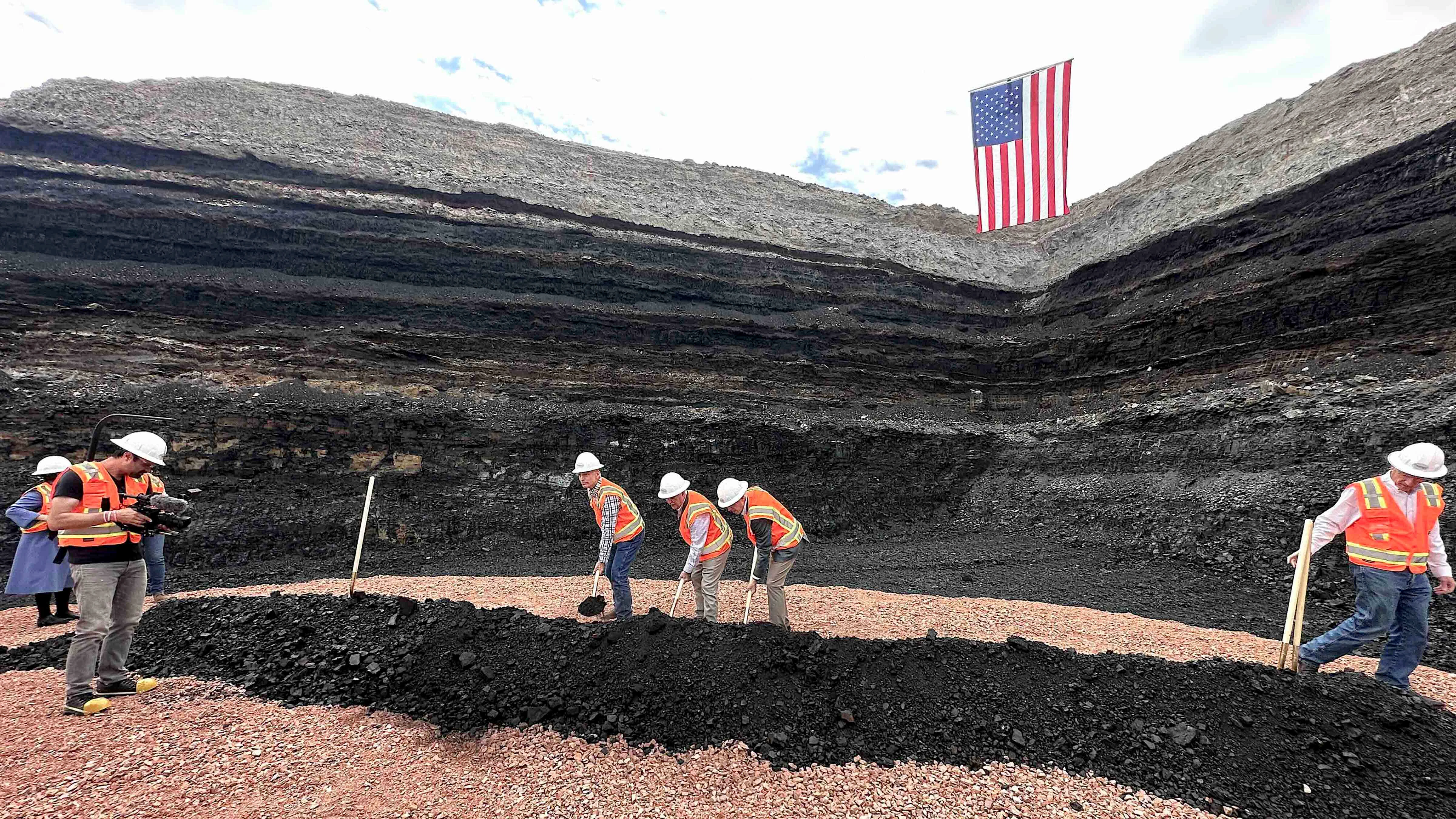
The Brook Mine’s July 2025 grand opening drew U.S. Secretary of Energy Chris Wright, Gov. Mark Gordon and Wyoming’s entire congressional delegation. At the ceremony, Ramaco CEO Randall Atkins told the crowd the site could supply the country’s rare earth needs for more than a century.
“The Brook Mine will be America’s mine,” Atkins said. “This one mine can break our reliance on China.”
That ambition has made Ramaco a magnet for both investment and scrutiny.
The company has raised more than $600 million in financing, including offerings led by Goldman Sachs and Morgan Stanley. But it has also drawn sharp criticism from short-sellers and independent mining professionals who have questioned whether the project is commercially viable — questions Ramaco has vigorously disputed.
Alleged Theft
According to three sworn declarations filed with the complaint, a forensic investigation of Ramaco’s computer systems uncovered what the company describes as a systematic pattern of “data theft” spanning Moyes’ final three months on the job.
Drew Perry, Ramaco’s vice president of information technology and cybersecurity, stated in his declaration that after learning Moyes had joined USA Rare Earth, he was asked to examine the company’s systems.
What he found, Perry stated, were “dozens of emails sent from Moyes’s Ramaco email account to his personal email account between July 8, 2025 and his final day with Ramaco on Oct. 10, 2025.”
A forensic spreadsheet attached to Perry’s declaration catalogs more than 40 emails Moyes sent to his personal address during that period, each identified by date, time, subject line and attachments.
The timing is central to Ramaco’s case. The first email in the log is dated July 8, 2025 — the day after Ramaco received its Preliminary Economic Assessment from engineering firm Fluor, and just three days before the Brook Mine’s grand opening.
In that email, according to Perry’s forensic log, Moyes forwarded a USA Rare Earth confidentiality agreement to himself — a document the complaint describes as covering “discussions relating to a potential role or engagement.”
In other words, Ramaco alleges Moyes was already talking to the competition while the company was preparing to celebrate its biggest milestone.
What followed, according to the forensic log, was a steady flow of confidential documents over the next three months: the complete Fluor PEA report, confidential test results, expansion scenarios at different production scales, financial models, draft DOE research collaboration documents, and even Ramaco’s internal HR policies.
Expert Assessment
A sworn declaration from Michael Woloschuk, now Ramaco’s executive vice president for critical mineral operations, provides the technical dimension of the case.
Before joining Ramaco, Woloschuk served as global executive director of critical minerals for Fluor Australia — the same firm that prepared the Brook Mine’s economic assessment.
Woloschuk stated that he and his team at Fluor “worked directly with Alex Moyes” to develop the technical and financial models for the Brook Mine. He described the resulting report as containing “highly sensitive trade secrets owned by Ramaco.”
After personally reviewing the emails Moyes sent to himself, Woloschuk concluded that the material posed a serious competitive threat.
“These emails include information that could cause potential irreparable harm to Ramaco’s competitiveness and market position in the nascent REE space,” he stated.
The minerals at the Brook Mine include scandium, germanium and gallium — elements used in defense applications including hypersonic missiles, military aircraft and advanced 6G drones.
Personal Betrayal
In his own sworn declaration, Atkins said he personally conducted Moyes’ exit interview on his last day.
“I feel personally betrayed by Moyes’s deception,” Atkins stated. “Moyes never disclosed to me or anyone else in Ramaco’s leadership that he was having discussions or considering employment with USAR, which Moyes knew to be a competitor of Ramaco. In fact, he told me the opposite — that he had no plans to join a competitor.”
On Oct. 29, USA Rare Earth publicly announced it had hired Moyes as its vice president of mining.
“Before working for Ramaco, Moyes had no direct experience in REE processing,” Atkins stated.
Everything Moyes learned about the Brook Mine’s proprietary processes, flowsheets and economic models — knowledge the company values at millions of dollars in research investment — he gained on the job, according to the complaint.
The complaint goes on to allege Moyes was bound by a nondisclosure agreement signed in December 2023 and by confidentiality provisions in his employment offer letter.
On his last day, Ramaco sent him a letter reminding him of those obligations and asking him to sign a confirmation. According to the filing, Moyes declined to sign but said he remained “fully committed to maintaining the confidentiality of Ramaco’s proprietary information.”
Less than two months after hiring Moyes, USA Rare Earth announced an accelerated production schedule, moving its timeline up by two years, according to the complaint.
In January 2026, USA Rare Earth publicly touted $1.6 billion in government funding and $1.5 billion from private investors to advance its operations.
Atkins called the timing suspicious. The convergence of USA Rare Earth engaging Moyes in July, Moyes allegedly emailing himself Ramaco’s most sensitive documents through October, his departure and quick hiring by the rival, and USA Rare Earth’s subsequent acceleration “seems far too coincidental to be unconnected,” Atkins stated.
After leaving Ramaco, Moyes also recruited another former Ramaco employee, Adam Nawacki, to resign and join USA Rare Earth, the complaint alleges.
Court Relief
Ramaco is asking the court for three forms of immediate relief: a forensic imaging of all devices in Moyes’ possession, including any issued by USA Rare Earth; an injunction barring Moyes from further possessing or using Ramaco’s trade secrets; and a sworn certification from Moyes about whether he shared the information with his new employer.
That final request could set the stage for a broader fight. In his declaration, Atkins warned that if evidence shows Moyes communicated Ramaco’s trade secrets to USA Rare Earth, “Ramaco will have no choice but to pursue injunctive relief against USAR as well.”
The suit brings five causes of action including federal and state trade secret misappropriation, breach of the nondisclosure agreement, breach of the employment offer letter, and a claim for injunctive relief. The company is seeking compensatory and punitive damages, attorneys’ fees and a jury trial.
Broader Context
The lawsuit lands amid broader turmoil for Ramaco. A securities fraud class action filed Jan. 30 in the Southern District of New York alleges the company and two senior officers misled investors about the Brook Mine’s development progress.
That case was triggered by an October 2025 report from Wolfpack Research, which called the Brook Mine a “hoax” and deployed drone footage that it said showed no active mining months after the grand opening. Independent mining professionals who spoke to Cowboy State Daily in November raised similar concerns about the project’s economic feasibility.
Ramaco has disputed those claims, calling the Wolfpack report a short-seller smear campaign and pointing to its financing from major Wall Street firms as evidence of the project’s credibility.
In an 8-K filing with the Securities and Exchange Commission in February, Ramaco said it has “meritorious defenses” to the class action and intends to defend the case vigorously.
Meanwhile, Ramaco stock has fallen more than 75% from its 52-week high of $57.80 to around $14.18 as of mid-March.
Four company insiders have sold a combined $37.9 million in Ramaco stock over the past 12 months, with no insider purchases during that period, according to financial data service MarketBeat. The selling was concentrated in Q3 2025 — the same quarter during which Moyes was allegedly exfiltrating documents.
David Madison can be reached at david@cowboystatedaily.com.