After such an unseasonably warm winter, Wyoming’s insects are starting to stir. It’s the beginning of what could be a very long, bothersome, and potentially dangerous “plague” of summer insect swarms.
Insects usually stay dormant underground in the snow-covered Wyoming winter. They start to emerge in spring and summer when temperatures rise.
Now, with record-breaking warmth throughout most of meteorological winter and possible record-breaking high temperatures in the 80s this week, some insect species are seizing the moment.
And the insects that’ll do the best are the most bothersome.
“We deal with pest populations every year,” said University of Wyoming Extension’s entomologist Scott Schell. “In a year where we have warm temperatures, I think we'll end up with very high populations at the end of the summer.”
Shoo, Flies
When asked what insects would thrive after an abnormally warm winter, Schell had an immediate answer, and it’s every homeowner’s favorite.
“I was seeing filth flies out in February,” he said. “Many filth, house, and bottle flies have overwintered successfully, and now they're out, active, and seeking out sites to lay eggs. The warmer it is, the earlier they start.”
“Filth flies” are species that reproduce in unsavory places like animal excrement, food waste, and garbage. A single fly can lay over 1,000 eggs at a single site.
Schell said filth flies go through multiple generations in a single season. That season is usually short because of Wyoming’s harsh winter and relatively short summer, but that’s not the case in 2026.
“Unless we have one of those terrible late spring cold snaps, we’re probably going to build up quite a population of those pesky flies associated with humans and our environment,” he said. “I would think that having mild conditions would be very beneficial to them.”
Our Friends Are Losers
Many people are inherently entomophobic, but even the most insect-averse person must acknowledge the benefits of bees and butterflies. Unfortunately, Schell said these beneficial species might have the hardest time this year.
“The majority of insects are like us in that they depend on plants as the basis of their food,” he said. “Even if they survive this warm, mild winter in higher numbers, they could have issues if they don't have a strong food supply.”
Nobody’s saying that Wyoming’s facing a definitive drought yet, but drought conditions would mean healthy oases of leafy plants and wildflowers would be fewer and farther between. With less food, these insects that need these plants will struggle.
A warmer winter could lead to an extended growing season, but it’s too early to know whether that will manifest this spring and summer. If it doesn’t, Schell thinks Wyomingites will see fewer bees and butterflies this year.
“I would say those insects would suffer the most if we have a continued drought with this kind of weather,” he said.
The Real Risk
Swarms of filth flies and a lack of bees and butterflies would be unfortunate, but that’s not the most concerning insect-related population boom that could result from Wyoming’s unseasonably warm winter.
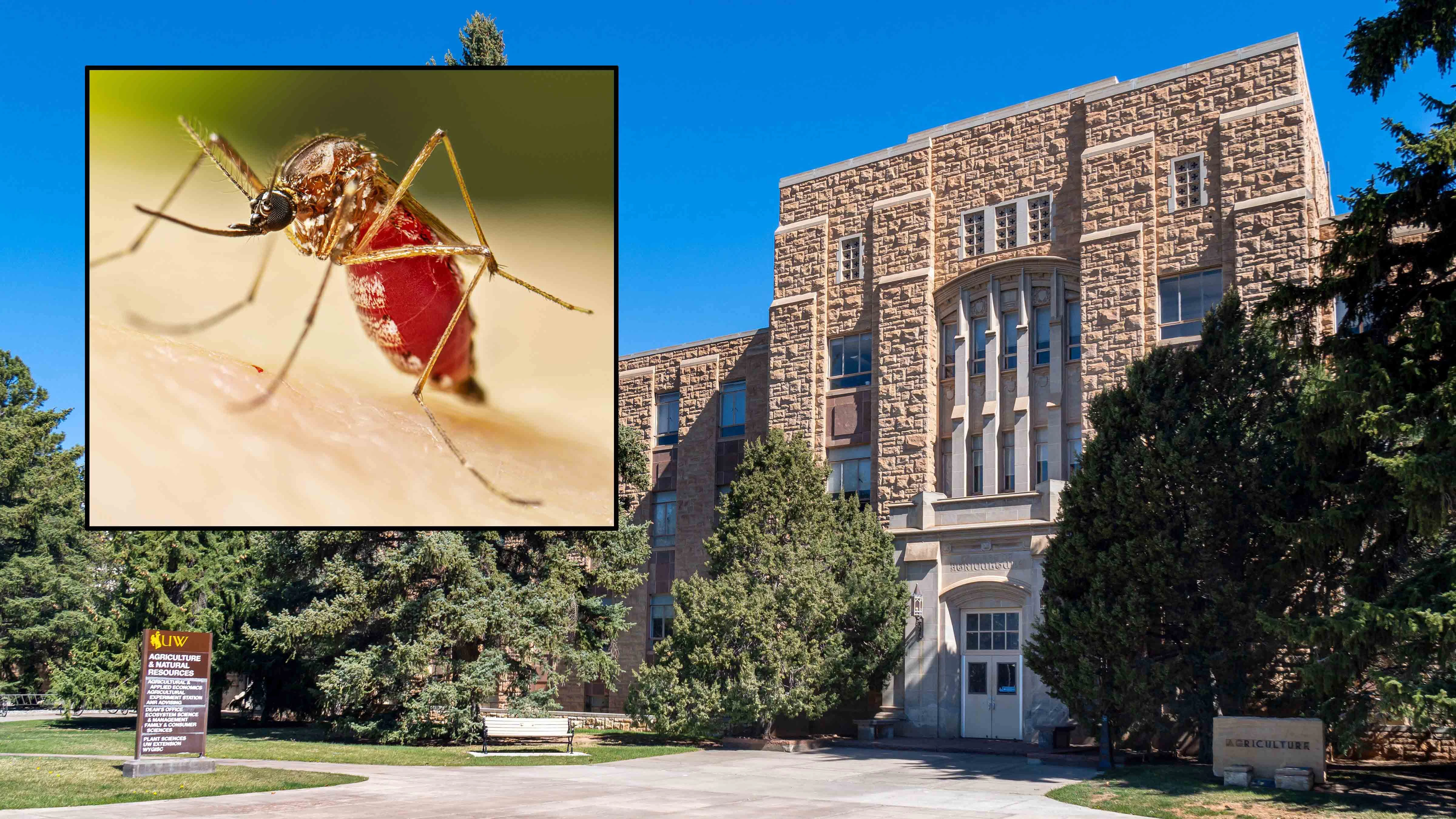
The insect of most concern, in Schell’s opinion, is Culex tarsalis, the Western Encephalitis Mosquito. In Wyoming, it’s the primary vector of West Nile virus.
Mosquitoes might already be Wyoming’s deadliest animal, but the threat they pose might be heightened in 2026. Schell said they have a Goldilocks-esque preference for habitat: not too hot or too cold, but just right.
“Culex tarsalis overwinters as adult females,” he said. “They seek out areas where they're not exposed to temperatures above or below the threshold they can withstand. They can have problems and run out of energy if it's too warm.”
Schell said the West Nile virus transmission cycle usually correlates with the return of migratory birds in spring. Those birds might have thrived in the warmer weather, returning to Wyoming in greater numbers.
That would be a target-rich environment for mosquitoes to spread the virus, to which birds are particularly susceptible.
However, mosquitoes require standing water to reproduce. If Wyoming’s facing a droughty summer, wouldn’t that reduce mosquito populations?
Not necessarily. In fact, Schell said a drought might make Culex tarsalis populations even higher.
“They are well-adapted to living within our towns and can utilize the water that we create through irrigation,” he said. “If our water is running off the sidewalk, goes down a storm sewer, and holds there, that’s a perfect recipe for producing West Nile virus mosquitoes.”
Late Summer Swarms
If Wyoming is going to be a hotbed for West Nile mosquitoes this year, it won’t happen immediately.
According to Schell, the mosquitoes that bite and annoy Wyomingites in spring and early summer are floodwater or meltwater mosquitoes. They thrive on pools of standing water produced from snowmelt and irrigation earlier in the year.
If there isn’t widespread flooding this year, Wyoming could see fewer floodwater mosquitoes. Culex tarsalis and the West Nile virus are a late-summer problem, but the warm winter temperatures might have extended their breeding season.
“If the breeding season of the mosquito is extended, then we'll end up with very high populations at the end of the summer,” he said. “Then, we might have a bad year with more West Nile transmission to birds, horses, and humans.”
Insect Avoidance
More filth flies and disease-carrying mosquitoes, fewer bumblebees and butterflies. Sounds like a great summer.
If Wyoming spends the summer plagued by its most annoying insects, Schell believes people should be aware and prepared. There are preventative steps they can take to reduce the infestation.
“It's just a matter of putting water on the plants that you want to grow and don't have it standing around, getting stagnant, and producing mosquitoes,” he said. “The species that transmits West Nile virus to humans utilizes container-type water for their larvae. That can be bird baths that aren't emptied regularly, neglected swimming pools, and buckets that are left out.”
A common place to find breeding filth flies is compost piles. Ironically, Schell said the solution to reducing the site's viability is to add water.
“In Wyoming, you actually have to stir and water compost piles to get them to work correctly,” he said. “A compost pile is just a pile of slightly rotting vegetative matter, and if it’s working properly, it gets hot enough to kill the insects and larvae trying to use it.”
Beyond that, people should be extra diligent about keeping their garbage cans closed and picking up after their pets. Those simple steps can go a long way toward reducing filth fly populations.
It’s too early to say how well insects will thrive in the months ahead, as it’s very dependent on weather and environment. Still, current conditions suggest that Wyoming’s least-favorite insects could have a stellar summer.
“That’d be my guess,” Schell said.
Andrew Rossi can be reached at arossi@cowboystatedaily.com.