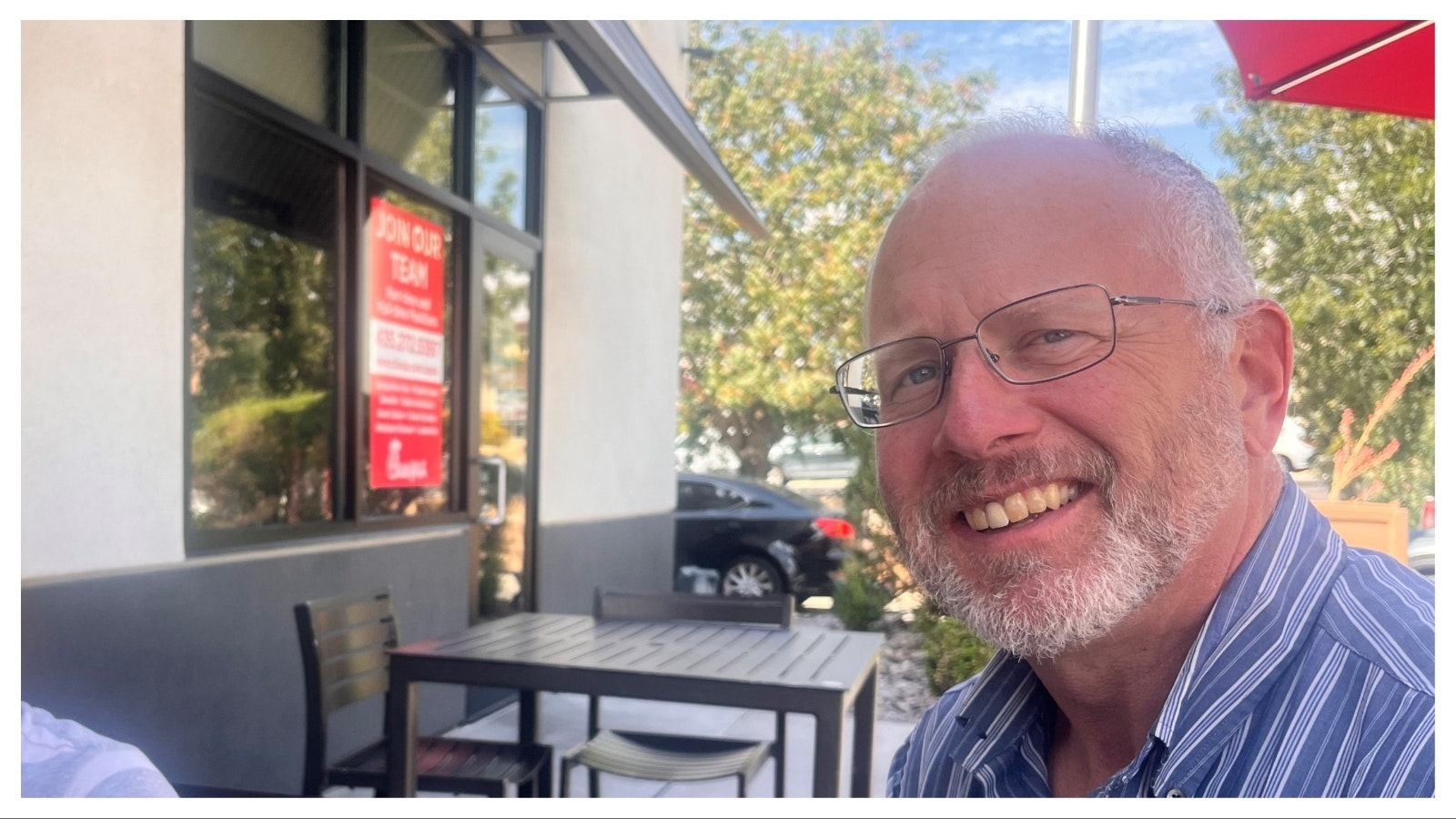

A newly formed political website founded by the CheckGate activist, recently ran a political cartoon asking a question. “Who is Gail Symons, Really?”
I have to admit, I appreciated parts of it. The creator promoted me to Admiral and somehow turned me into a Navy pilot, two accomplishments I never managed in my career.
They also pointed out that I’m a fourth generation Wyomingite, which happens to be true. It also made me look quite attractive.
The cartoon was meant as a jab. The implication was clear. If I criticize their ideology, I must secretly belong to the opposite one.
That assumption says a lot about how ideological politics works.
In an ideological world, every issue has to fit a simple spectrum. If you reject one doctrine, you must support the other. There are only two camps and everyone must belong to one.
I reject that premise.
My concern is not that one ideology is wrong and the other is right. My concern is ideological politics itself. Rigid ideology replaces judgment with doctrine.
Ideology begins with conclusions. Governance begins with problems.
Ideological politics starts with the answer and works backward. The goal becomes defending the doctrine rather than solving the issue in front of you. Evidence matters less than whether a policy fits the narrative.
You start to see the same patterns repeat.
Bills appear with titles designed to signal allegiance to a cause rather than describe what the legislation does. The title becomes a political weapon. Vote against the bill and you’re accused of opposing the principle in the title, even when the actual language of the bill raises serious practical concerns.
Local expertise also gets pushed aside. County officials, law enforcement leaders, educators, and administrators who actually operate the systems affected by legislation raise concerns about how a proposal would work in practice. Those concerns get dismissed because they don’t fit the story.
Compromise becomes suspect as well. In ideological politics, adjusting a proposal based on feedback looks like weakness. Negotiation becomes surrender.
We’ve seen that dynamic play out here in Wyoming.
Take Senate File 0101, titled the “Second Amendment Protection Act Amendments.”
The rhetoric around that bill started early. If you were against the bill, you were against the Second Amendment. That was the narrative.
The reality looked very different.
The bill was written by the head of WYGO: an out-of-state Second Amendment activist with a long record of interfering in Wyoming legislation. Through legislative surrogates, he refused to allow any changes to the bill.
Meanwhile, every elected county sheriff in Wyoming opposed it. All 23 of them. Police chiefs and other law enforcement leaders joined them.
These are the people responsible for public safety in our communities. They warned that the bill would interfere with their ability to do their jobs.
But ideological politics doesn’t handle that kind of feedback well. When doctrine drives the process, expertise becomes inconvenient.
The narrative continued. If you oppose the bill, you oppose the Second Amendment.
Here’s the problem with ideological politics: it reduces complicated questions to slogans and loyalty tests.
Wyoming has traditionally approached problems differently.
In this state, neighbors help neighbors. When someone loses a home to fire, people show up with trucks, tools, and supplies. When wildfire threatens livestock and property, communities mobilize to help. When people realize that kids in their town are going hungry, they organize food drives and delivery programs.
Those responses don’t begin with ideology. They begin with recognizing a real problem and figuring out how to solve it.
Good governance should work the same way.
Think about how the best legislation actually gets written. A county clerk struggling with a procedure that doesn’t work. A rancher dealing with conflicting regulations. A teacher navigating a statute that complicates classroom management.
They bring that issue to a legislator they trust. That legislator talks with the agencies and local officials who actually run the system. They work with colleagues to refine language until the law fixes the problem without creating new ones.
That process requires listening. It requires patience. It requires a willingness to adjust ideas when evidence suggests a better path.
Values guide those decisions, but they don’t dictate them.
Ideology flips that process. The doctrine comes first. The problem becomes optional.
So when a cartoon asks who I really am, the answer is straightforward. I am someone who believes government should focus on real problems.
And when you hear political rhetoric that sounds suspiciously like a slogan, try asking a simple question.
Is this addressing a real problem in Wyoming?
Or is it repeating an ideological talking point from somewhere else?
Gail Symons can be reached at: GailSymons@mac.com