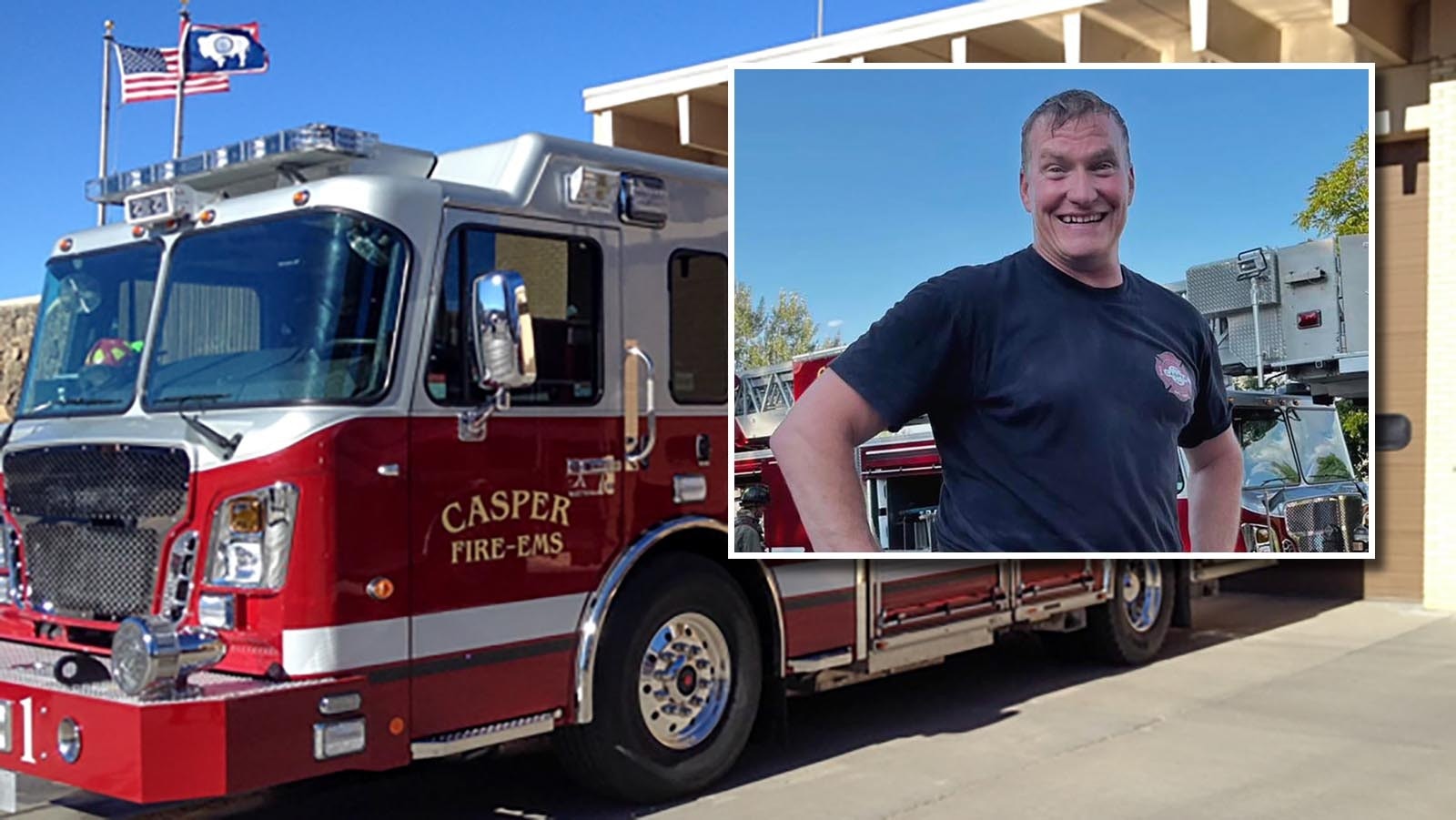
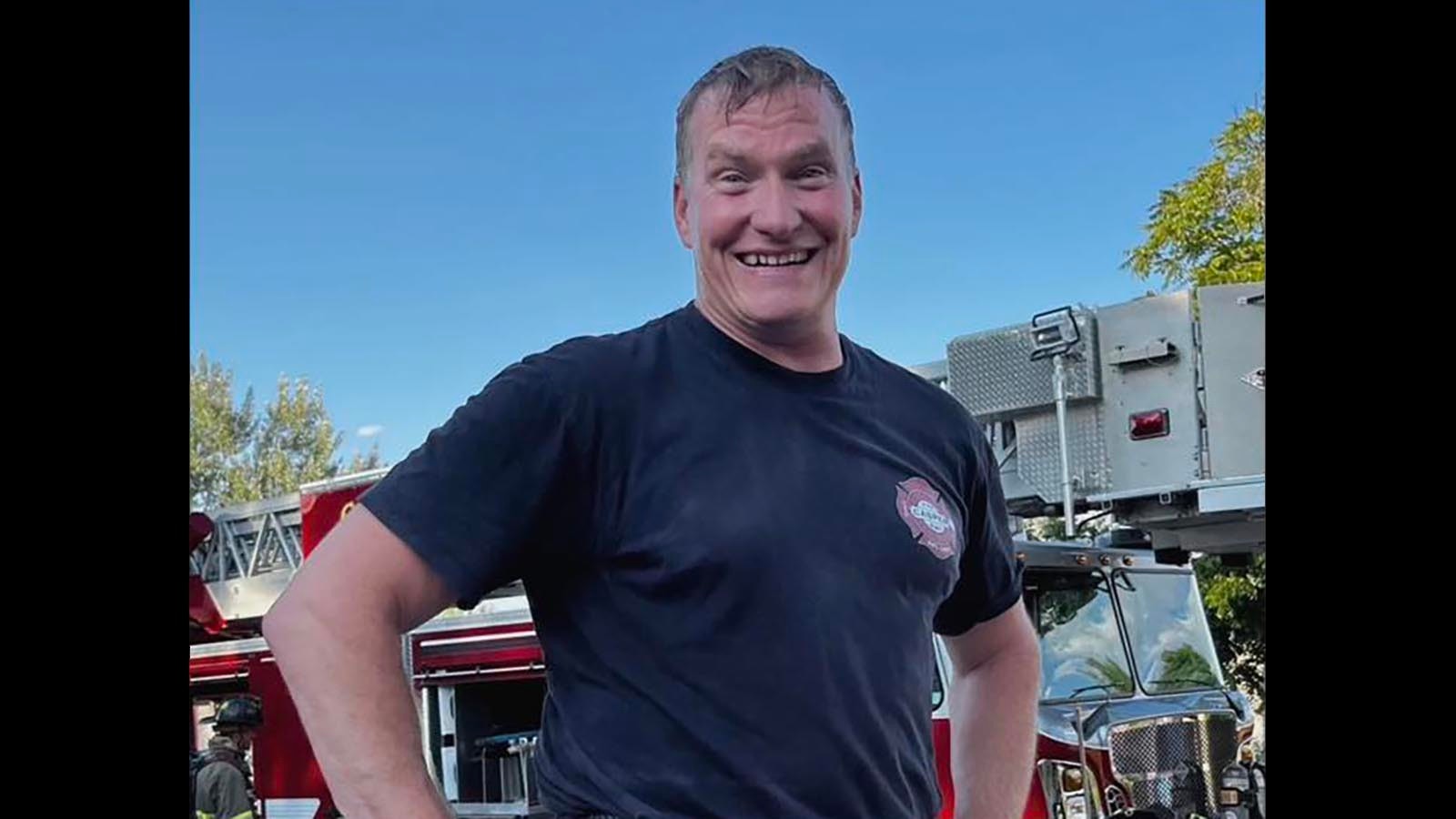
CASPER — Brian Dixon fights fires for a living, and he’s good at it for three reasons, his peers say: He has a strategic mind, a robust body, and an unbreakably positive attitude, which often comes out as a melody.
“He's always singing a song as a way to make things light,” said Caitlin Dixon, Brian’s wife, explaining what she hears from his colleagues. “It might be 2 o'clock in the morning, and they're going to a call and he's singing some crazy song.”
His crew appreciates the uplift, even if it runs longer than strictly necessary — including when he’s still singing as “they're trying to go back to sleep after the previous call.”
He’s not just positive, said Casper Fire-EMS Department firefighter Toph Steinhoff, he’s tough.
“You don’t hear him complain. Ever,” Steinhoff said, explaining that whether Dixon’s making entry on a structure fire, wading out on a river rescue or responding to highway emergencies, he takes the job’s bumps and bruises on the chin.
“He’s a man’s man,” Steinhoff said.
That toughness is partly the reason Dixon downplayed a nagging pain in his lower back earlier this year.
His wife, a pediatric nurse, worried it was a kidney stone. A CT scan showed something far worse.
Casper’s Cancers
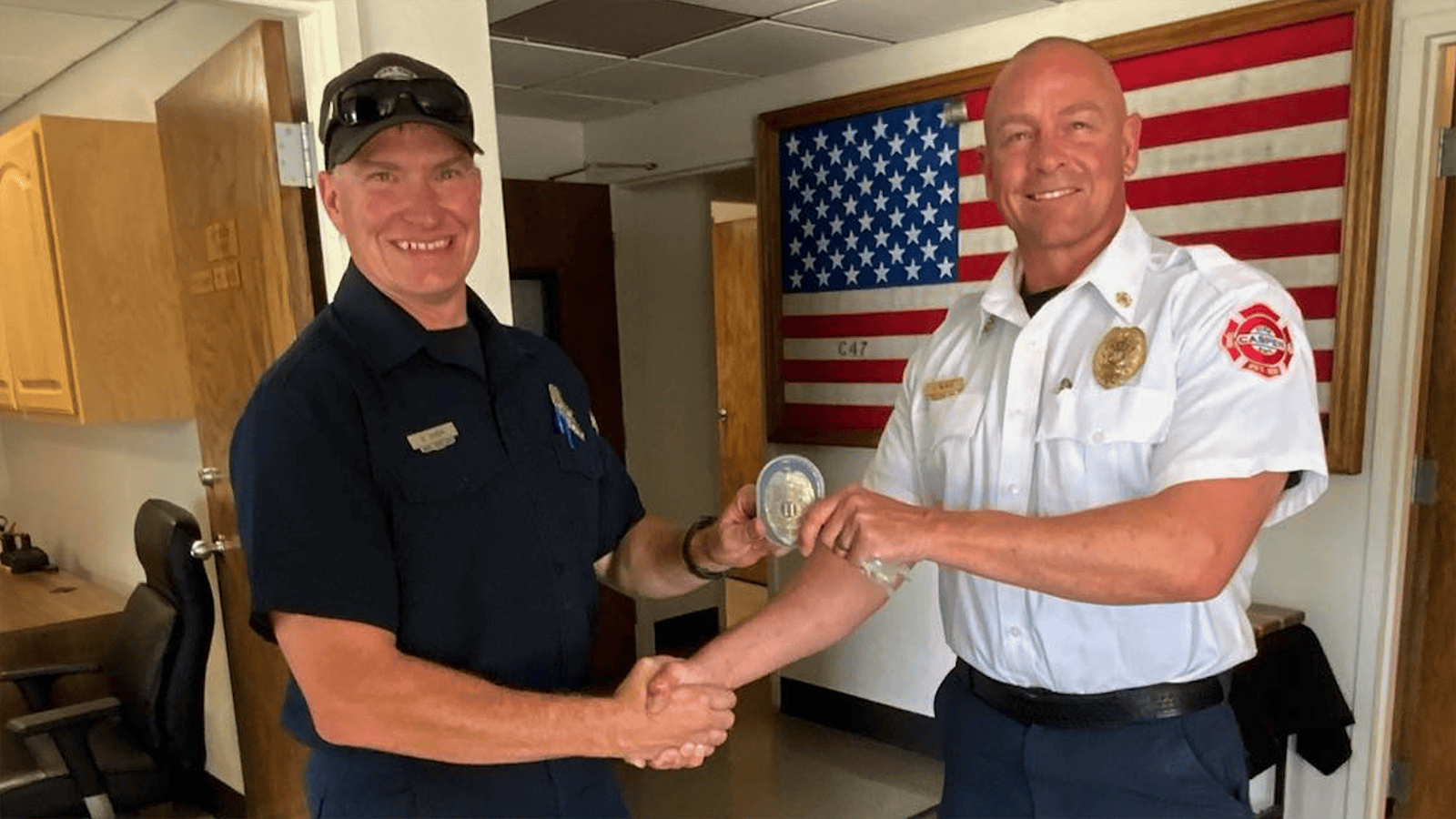
In February, he was diagnosed with Stage 3 mantle cell lymphoma, making him the latest in a line of Casper firefighters diagnosed with cancer.
Casper Fire-EMS Capt. Jeff Atkinson died in his 40s from testicular cancer. Capt. Matt Trott died at 46 from pancreatic cancer. Officer Steve Klockseam died in his 30s from a brain tumor. Others from the department have been diagnosed and have survived.
For decades, the link between line-of-duty exposures and cancer was anecdotally assumed, but research in recent years has made it unequivocally clear: cancer is the highest occupational risk for firefighters worldwide.
That’s according to Dr. Jeff Burgess, director of the Center for Firefighter Health and Collaborative Research at the University of Arizona’s Zuckerman College of Public Health.
Seven specific cancers are collectively cited as the No. 1cause of line-of-duty deaths among firefighters, according to the International Association of Fire Fighters, but Burgess says they face a heightened risk for many more cancers as well.
For Casper’s close-knit firehouse family, these diagnoses don’t feel like a statistic. They feel like a floor giving way.
“It’s a feeling of overwhelming sadness,” said Steinhoff.
“We didn't sign up to get cancer at the fire department, but we signed up to help people knowing that there were risks,” he said. "I try not to be frustrated or angry, but it’s sad to know that such a good human will encounter some difficult times moving forward.”
Despite some strides in mitigation, Dixon’s story calls attention to a major preventative blind spot, and raises tough questions about the balance between public service and personal health.
It offers a humbling lens on human vulnerability by showing how even the most physically and mentally sound people can crumble under the cracks of cumulative risk.
Alter Ego
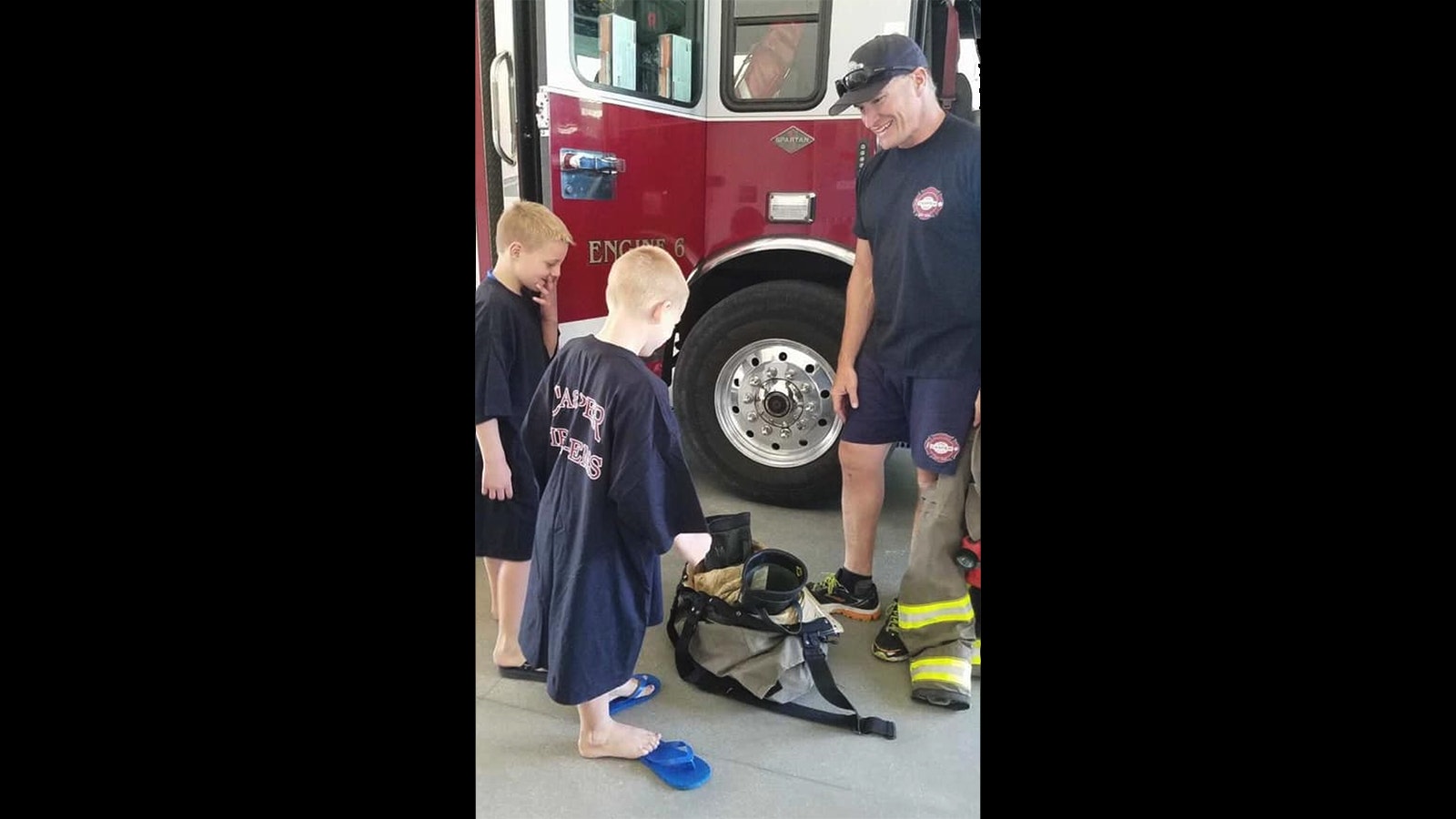
Dixon is described by his peers as a “physical specimen” with a second-to-none work ethic. He doesn’t just hold himself to a high standard.
Dane Andersen, who served beside Dixon in his early career, remembers the way Dixon pushed his team to meet goals, even to the point of passing out.
“I prepared myself for the fire service by running a lot. I signed up for every 5K I could to get my cardio health down,” said Andersen. "But I discovered quickly that you need strength training to perform well as a firefighter.
"And Brian’s the guy that identified where you need improvement and then personally helped you get there."
Andersen recalls a workout when Dixon helped him reach a goal on leg day, then he almost blacked out.
“I remember being on the floor of Station 6, and Dixon was training me in my deadlift,” he said. "He’s got a unique way of motivating people with positivity, because I almost passed out getting that deadlift.”
Dixon doesn't compute failure as an option in emergency response, Andersen said.
He didn’t see failure as an option in his romantic pursuits, either.
Brian and Caitlin met in a pediatric advanced life support course she was teaching to his crew, and she took his breath away.
“He was very persistent in asking for my number, and I was very persistent and not giving it to him,” said Caitlin. "It speaks loudly to his attitude. He puts his mind on something, and he will not stop until it's completed.
"His perseverance paid off. We went on a date, and the rest is history.”
He brought that level of persistence to battles against some of the most daunting fires in the department’s history.
Double Exposure
For Casper’s crews, the dangers come from both structure fires and wildland fires, each with their own chemical footprint and long-term risk.
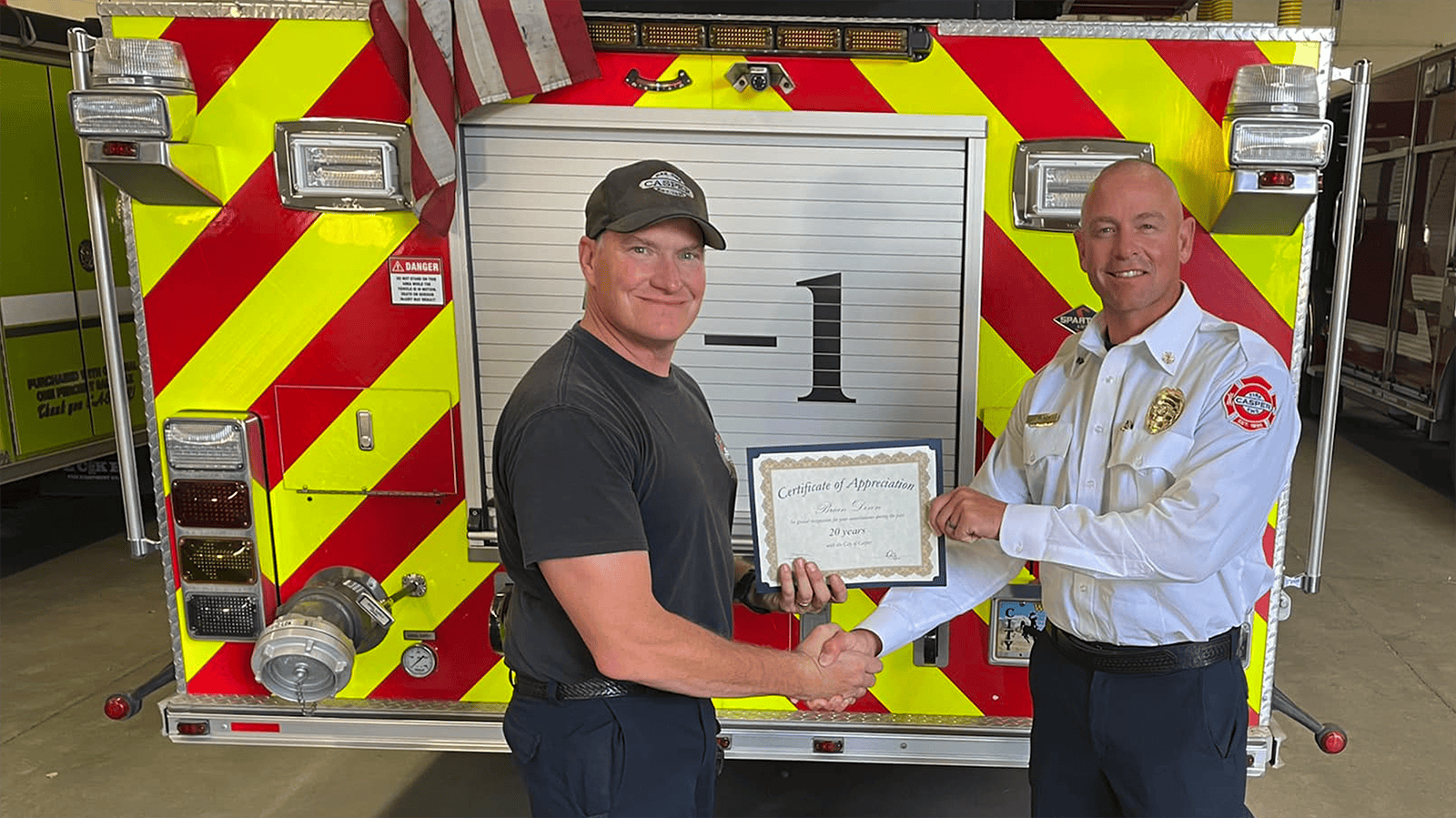
Dixon has been on the frontline of multiple wildland fires during his 23-year career, including the recent Station Fire, and the Jackson Canyon Fire on Casper Mountain in 2006.
“Those are the types of fires where you're standing 2 miles away and you feel the heat coming off it,” said Andersen.
“The sound of an uncontrolled fire going through the trees doesn't sound like anything else on Earth, but it’s almost like the sound of a very large commercial aircraft flying over you,” he said.
The sensory intensity of those fires is matched by the carcinogenic risk, according to Burgess of the Center for Firefighter Health.
Unlike structure fires, wildland fires can see crews immersed in smoke for hours, or even days, at a time as they hike, drag hose and carve fire lines.
In many wildland fire scenarios, respirators are worn intermittently, if at all, in part because the technology and best-practices are still catching up with the scientific consensus.
“Until recently, there was not the appreciation that natural smoke — i.e. wildfire smoke — could be dangerous,” Burgess said, explaining the reality is that wildfires expose humans to carcinogens known as polycyclic aromatic hydrocarbons (PAHs), along with formaldehyde and benzene.
“Folks felt like, ‘Hey, it's burning natural stuff, so it might not be that bad,’” Burgess said.
Forever Chemicals
Structure fires invite different problems, as plastics, treated wood and electronics release a dangerous cocktail of carcinogens known as PFAS, sometimes referred to as “forever-chemicals.”
Even when breathing bottled air, these toxins seep through turnout gear and get into the body through the skin, because the gear is meant to minimize heat, not chemicals.
In one study, Burgess showed that some chemical levels rise 1% every minute that a firefighter is inside a structured fire environment, as measured in urine samples.
“That means if they’re in there for 15 minutes, they have a 15% increase in the amount of chemicals in your urine,” Burgess said. "And that's all while wearing this very protective respiratory equipment, because their gear can’t stop those chemicals from getting through and into the skin."
Ironically, the gear itself can be a source of exposure, as it’s traditionally treated with chemical coatings that get released with heat and can absorb into the skin.
The biggest risk is the cumulative impact of exposure over the course of a career.
The Casper Fire-EMS Department last year answered roughly 9,000 calls for service, which was typical, said Andersen, explaining that only a fraction of total calls pertain to fires.
“Our agency is an all-hazard agency. We respond to wildland fires, trash fires, building fires, vehicles on fire … along with emergency medical, hazardous materials responses,” he said. “We’re responding to calls 365 days a year.”
‘… Before It Gets To This Devastating Path’
In 2017, Wyoming created a “presumptive disability” law that awards firefighters financial support for some cancer treatments.
And in 2024, it bolstered legal and financial support for a range of cancer screenings, said Andersen, a board member of the Federated Firefighters of Wyoming.
But Dixon’s case shows the limits of those protections.
The screenings he received weren’t designed to catch the kind of cancer he developed, and the disease advanced long before anyone saw it.
First, Dixon flushed his kidneys and learned it wasn’t a kidney stone. Then he had bloodwork done, but it showed nothing suspicious.
“The lab work looked OK, but it just didn't feel right. So we both insisted on a CT scan,” said Caitlin Dixon. "We were told it wasn’t really warranted, but we said, ‘We don't care what it costs,' and we pushed forward for the scan.
"And we’re glad we did. It ended up being this terrible diagnosis.”
Caitlin is calling on leaders to institute more aggressive, imaging‑based cancer screening tailored to firefighters’ known risks.
The current standard for firefighters is an annual basic physical and single tumor marker test, which she says will leave families blind to early‑stage disease, especially for cancers like Brian’s.
“They deserve better. Our families deserve better,” she said. "We’ve got to figure out how to get better preventative screenings for these guys before it gets to this devastating path."
In the meantime, Dixon is still showing his trademark optimism, but he’s learning he’ll need to overcome more than just the disease.
‘Never Easy’ To Admit Problems
On his first day of chemo treatment last Wednesday, Caitlin dropped him off at 8 a.m., and when she picked him up eight hours later, the first thing he said was, “Let’s crush it. Let’s get going.”
But in addition to his body, his identity has come under attack too.
Dixon is accustomed to being the hero, not the guy who needs to be saved, which has made the last few weeks a big adjustment, his peers said.
“He's not the type of person who wants to ask for help. There aren't many firemen who do. It's kind of in our nature to be hard‑headed and stubborn and get through things,” said Steinhoff. “This exposes his vulnerability, and it’s never easy for a man's man to stand up and admit that he's got some problems and needs help.”
As a professional caregiver, it's a role reversal that cuts into Caitlin's identity as well, and she says it's been an uncomfortable and humbling shift to be on the receiving end of so much support.
“We feel so loved and taken care of,” she said. "But being a firefighter and being a nurse, our jobs are to take care of people. So when people are trying to take care of us, it’s hard for us to be in that situation."
For those who know Dixon, they like his chances.
“I think that cancer's in trouble, because if there's ever a guy who could beat it, it's Brian Dixon," said Steinhoff.
Zakary Sonntag can be reached at zakary@cowboystatedaily.com.