Ryan Roybal grew up outside of Rawlins in Carbon County where meat came from the land, not a store.
His parents bought eighths, quarters and halves of beef from friends who ranched nearby.
He and his sister showed pigs through 4-H and relied on Little Snake River Processing in Baggs to butcher their pork.
His dad taught him to hunt, and elk, deer and antelope filled the freezer through the lean months.
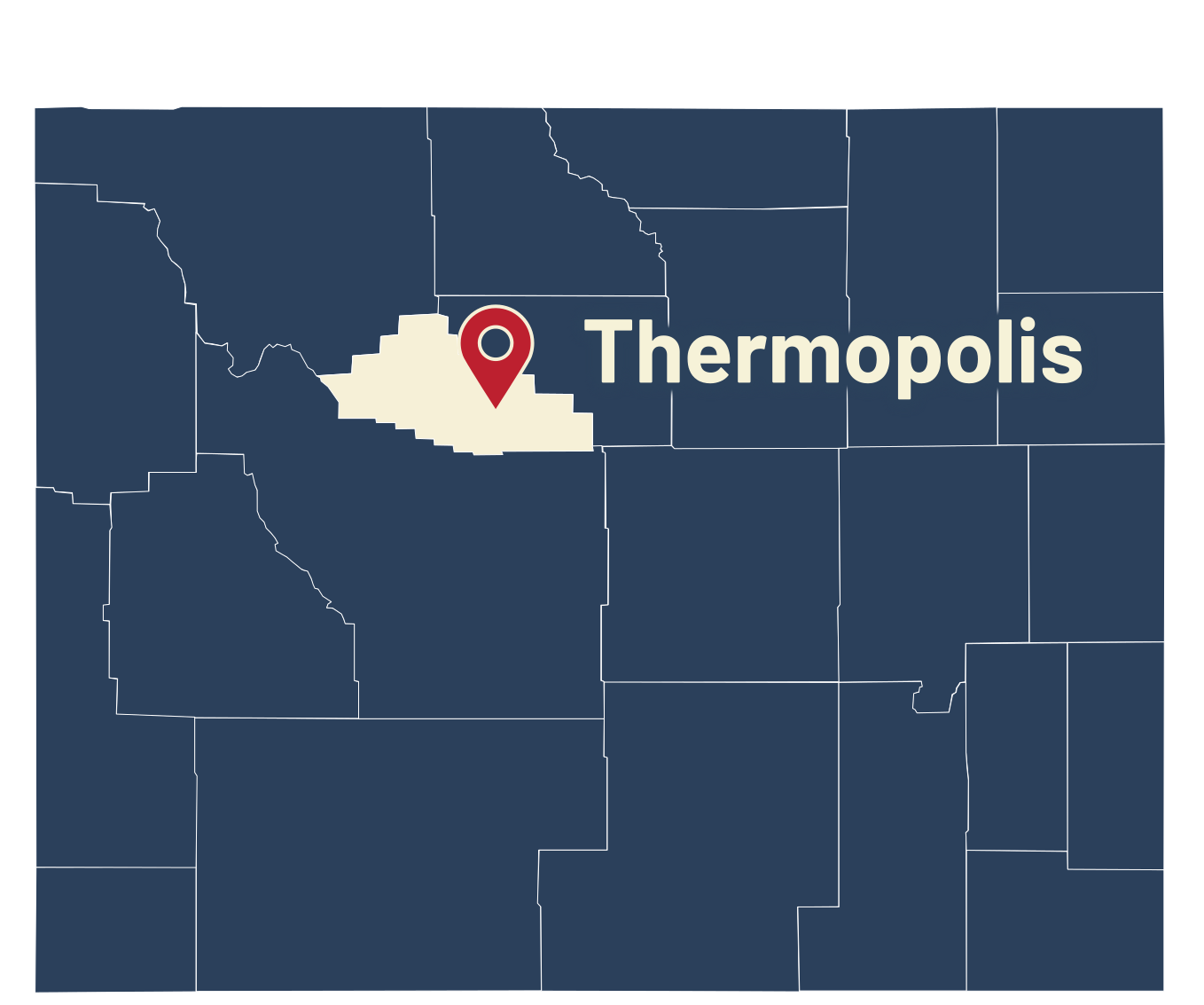
Now a high school science teacher in Thermopolis with a wife and two young sons — one almost 3, the other about to turn 1 — Roybal found himself last fall low on meat and high on mouths to feed.
A fruitless hunting season had left the family without an elk in the freezer for the first time in years. So he did what his parents had always done.
He reached out to local ranchers.
Jennifer and Chip Axtell raise cattle on a sizable spread east of Thermopolis. Roybal knew Jennifer from the Catholic church in town, where they both volunteer as religious education instructors on Wednesday nights. He asked if he could buy a half beef.
“I said, ‘Hey, I’ll take a half of beef next time you have some openings,’” Roybal recalled. “And Jen said, ‘Yes, absolutely, we got one. I’ll write your name down.’”
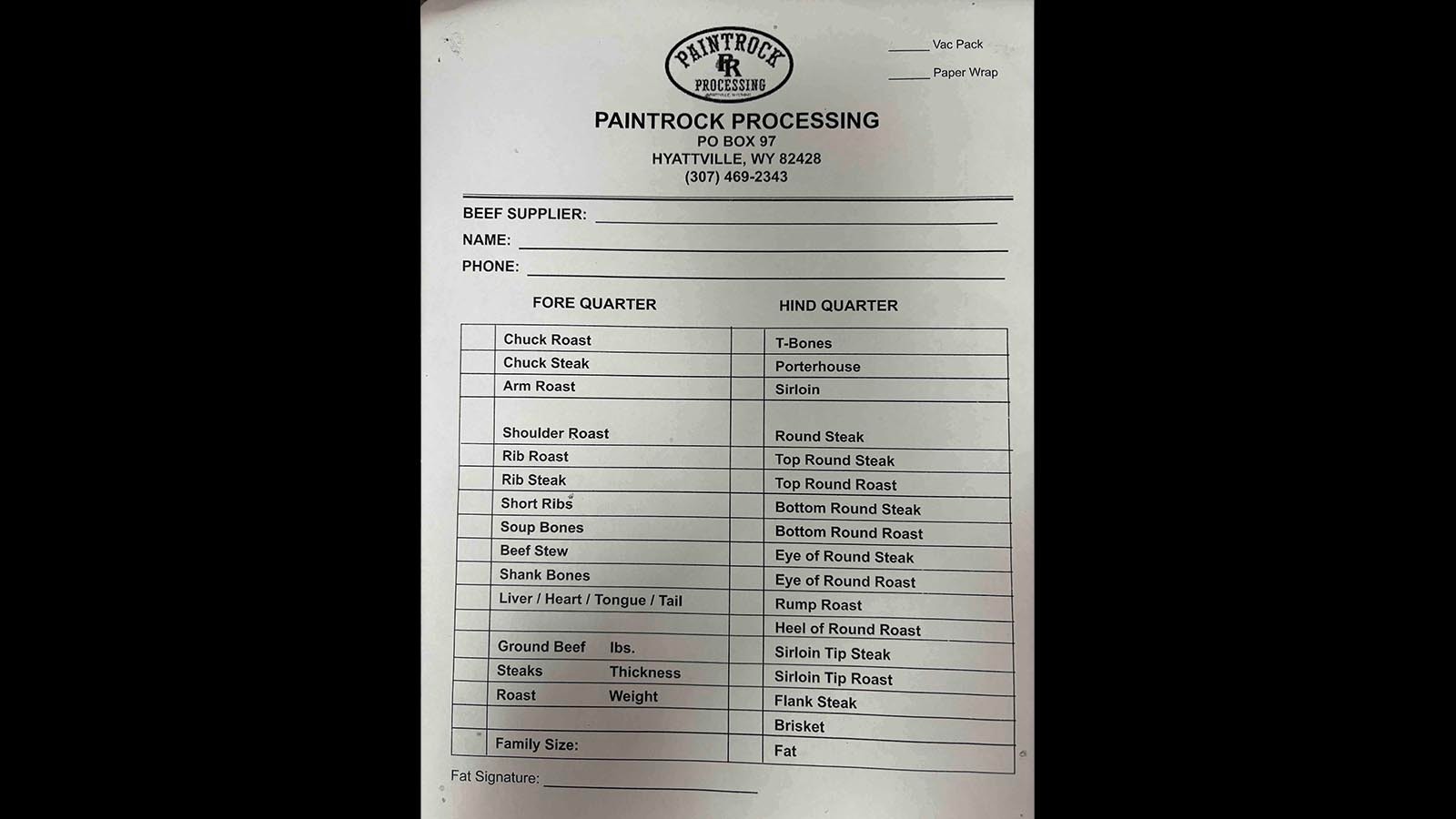
That was October. A few weeks later, Paintrock Processing in Hyattville called him and started asking crucial beef-stocking questions:
• How thick do you want your steaks?
• How many per package?
• Arm roast or chuck roast?
“There’s a rump roast, there’s an arm roast, there’s a chuck roast. And when they’re asking you those things, I was just like, ‘Well, which one’s a little bit more tender?’” Roybal said. “And he was like, ‘arm roast.’ So that led me to have a few more of those over the chuck roast.”
In November anticipating the haul, Roybal drove to Menards in Casper and bought an upright freezer to go with the two chest freezers already in his garage.
The Axtells send their cattle to Paintrock for butchering and handle the whole process, delivery included.
The total for Roybal’s half: right around $2,000, working out to about $5.40 a pound averaged across every cut — ground beef, steaks, roasts, prime rib, everything.
At the grocery store, ground beef alone is running $6 to $7 a pound — and it’s heading higher.
The U.S. Department of Agriculture report paints a grim picture across the meat case: beef and veal prices were 15% higher in January than the year before, and the agency predicts another 5.5% increase through 2026 as the national cattle herd continues to shrink while consumer demand stays strong.
Roybal isn’t sweating it. He negotiated both prime rib and ribeye steaks onto his cut list — a luxury he used to budget for once or twice a year.
“Usually that is the one cut — Christmastime, Thanksgiving, once, twice a year at most — I go to Walmart and buy a bone-in or boneless prime rib and I smoke it, and it’s $80 to $150,” Roybal said. “I’m looking forward to having a couple of those on hand and not having to wait.”
His advice for anyone considering the leap: don’t overthink the cut list. The processor will walk you through it.
“He just asked, ‘How many people are you feeding? And I said ‘four,’ and he said, ‘OK, yep, 3- to 4-pound packs, boom,’” Roybal said.
And with his sons still small, he is also getting custom three-packs for steaks, one each for Roybal and his wife, and one for the boys to split.
Butcher Knows
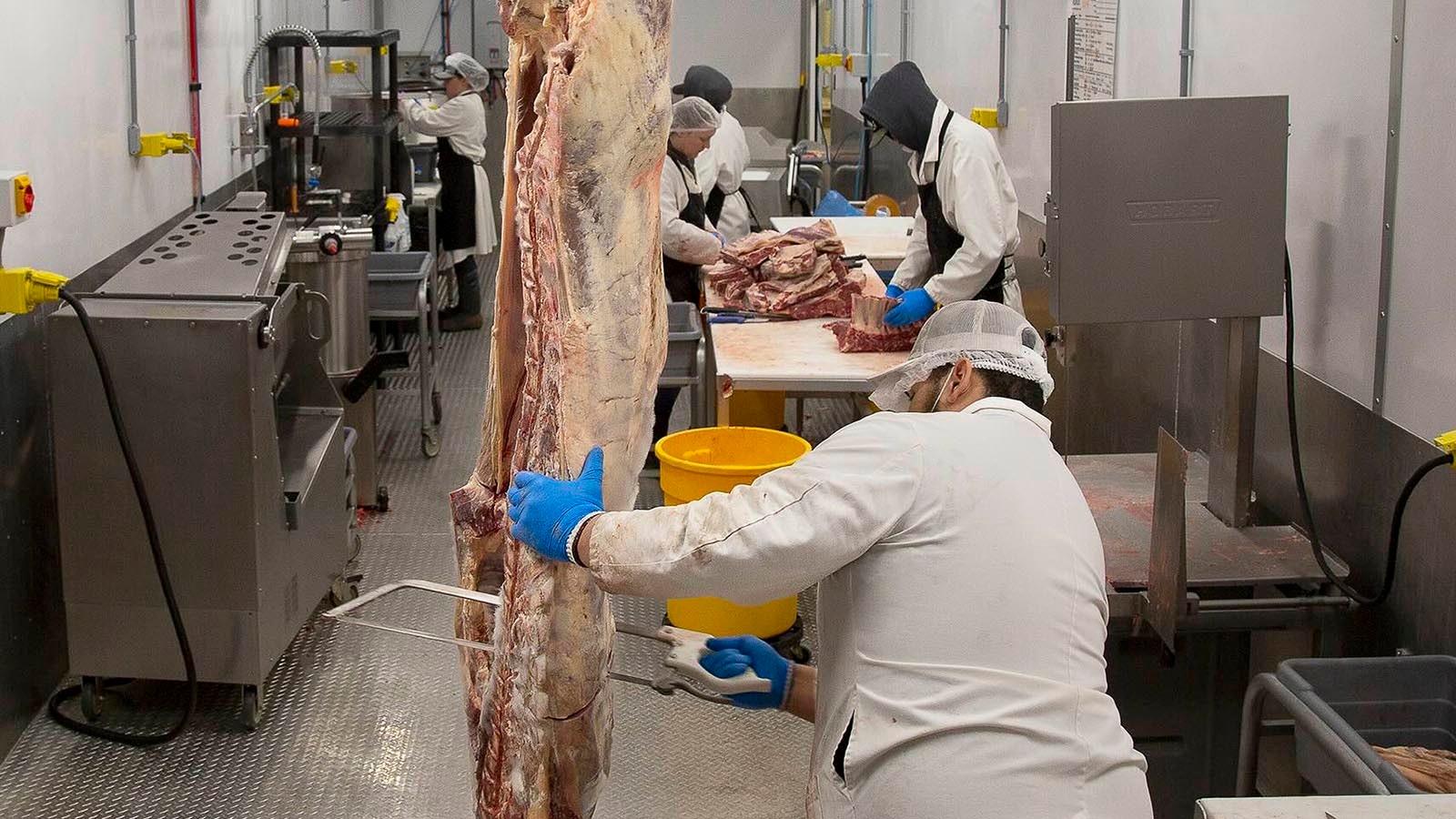
On the other end of Roybal’s phone call was Paintrock Processing.
It sits at the foot of the Bighorn Mountains in Hyattville and is owned by Tommy Searfoss.
Searfoss has been in the meat industry since he was 6 years old. His mom owned the plant before him, and since he took over, he’s added a smokeroom, a 20-by-20 cooler and two new freezers that tripled the operation’s capacity.
What he’s seeing from the cutting floor is unmistakable: rising grocery prices are pushing families toward local operations like his.
“The store prices are starting to scare some people, and I think they’re going to the local feedlots and buying beef and bringing them to processors,” Searfoss said. “And they’re finding out that their meat is way better. There’s no dye. There’s none of that stuff that you get in the grocery store.”
A half beef through Paintrock runs between $2,200 and $2,400, cut, wrapped and out the door.
A 400-pound carcass yields roughly 200 pounds of meat — working out to about $8.50 to $9 a pound across all cuts. For that, customers get a superior, healthier product, said Searfoss.
The Federal Reserve Bank of St. Louis, which tracks the price of ground beef, shows the current average cost in U.S. cities is $6.74 per pound.
Clearly, customers have options beyond chain grocery stores: Bring your own cow, have a feedlot deliver one, or call Searfoss and let him handle everything.
He’s a firm believer in aging beef — hanging carcasses in a humidity-controlled, ozone-equipped cooler for about 20 to 21 days to break down fibers and develop tenderness that flash-frozen grocery store beef can’t touch.
But sourcing, Searfoss warned, is where rookies get burned.
“The rookie mistake would be getting a cow that you’re not familiar with,” he said. “Go through the people that know what they’re doing, that know how to feed, and you’re going to get back some premium awesome beef like you’ve never ate before.”
He stressed the importance of working with feedlot operators who buy bulls specifically for carcass quality and who don’t send cattle to slaughter until they’re genuinely finished — full briskets, full tailheads, enough back fat to trim down to a premium steak. He boasts a rolodex of trusted cattle producers in the Worland area.
One misconception Searfoss likes to correct: Buying a quarter doesn’t mean you’re stuck with just the front or hind of the animal.
“When you quarter a cow, that quarter and that other quarter will equal half, and a steak goes to one quarter, steak goes to the other quarter,” he said. “That half is split, quartered equally, all the way through.”
As for the most underrated cut in the game, Searfoss has some ideas.
“Everybody used to throw a flank steak in the burger. Everybody used to throw a brisket in the burger,” he said. “They’re finding out ways to cook brisket that’s really fantastic. I think that’s probably the biggest sleeper over the years is that flank steak.”
Business is brisk. In a single recent week, Searfoss sold nine whole beefs. His doors, he said, are always open — customers can come watch him cut their meat.
Micro Producer
Down in Torrington, Kirk Hall approaches the beef business from a unique angle.
He trains horses using cattle, then eventually harvests the beef. It’s a side hustle layered on top of his main work, but one that’s become more in demand as prices climb.
“The low-end consumer is struggling. It’s hard for them to even afford beef,” Hall said, reached while on horseback. “Now it’s going to get worse with gas and beef going through the roof.”
He noted that Wyoming’s animal share laws now allow micro-producers like him to sell portions of their herd directly to friends and neighbors.
“It’s their own cow that’s getting processed,” Hall said. “Makes it easy peasy, and the customer knows where their beef is coming from and cuts the beef packer monopoly out of the loop.”
For Hall, the pitch is simple: Keep Wyoming money in Wyoming.
“It allows the rancher to capture the entire market without having to share it with the feedlot or beef packers,” he said. “Supporting your local rancher rather than supporting the beef packers — let’s keep the money in the state. We’ve got plenty of cows.”
Bear Mountain
Hall’s favorite local processor is Bear Mountain Beef in Hawk Springs.
When the pandemic hit, Mac Sussex and his wife Celsie were running about 100 head of beef a year on their ranch. The problem wasn’t the cattle — it was the transition from hoof to home freezer.
“We couldn’t find processing during COVID,” Sussex said. “We were hauling cattle 300 and 400 miles to get them processed.”
So they built their own solution. In 2021, the Sussexes launched Bear Mountain Beef, a USDA-inspected processing operation. The plan was to handle their own cattle and stop burning diesel on cross-state hauls.
“Initially we were just going to do our own stuff, and then it blew up,” Sussex said. “Now our own stuff is a very small portion of what we actually do.”
By 2025, Bear Mountain was slaughtering 25 to 30 head a week, all direct consumer sales, every one filling a family freezer. The operation also handles hogs, lambs and goats, and processes animals for six or seven county fairs.
Sussex said average per-pound prices on finished product weight have climbed from about $7 when they opened to between $10 and $12 now — driven primarily by soaring live cattle prices that make it tempting for producers to simply sell at the sale barn rather than deal with individual customers.
“The biggest driving factor of all that price increase is the price of these cattle has went so high that a lot of these direct consumer guys could take it to the sale barn and make a pile of money,” Sussex said.
But quality keeps customers coming back, he said.
Cuts Of Meat
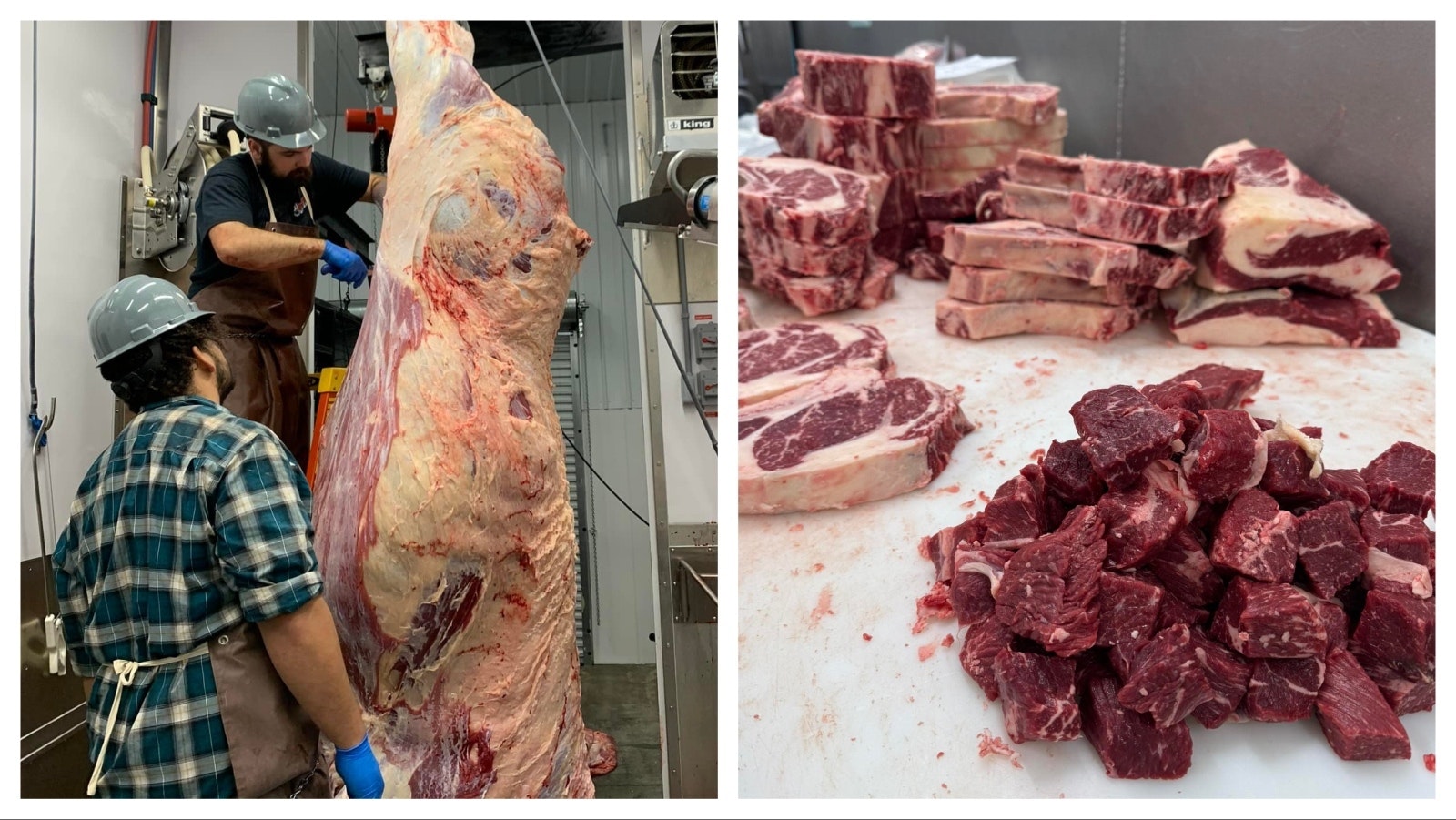
Bear Mountain hangs carcasses for a minimum of 14 days, with some customers requesting 21 or 28, which improves tenderness dramatically. The big corporate plants, Sussex said, process and cut as fast as possible and freeze immediately.
Custom processing also opens up cuts that are hard to find at the grocery store: tri-tips, cow tongue, tomahawk steaks, Korean short ribs cut into half-inch strips for the grill, and Thor’s hammers — a shank cut with the bone sticking up, loaded with meat.
Sussex’s pick for the most overlooked cut is the chuck eye steak, which sits right at the bottom of the ribeyes.
“They’re basically a ribeye steak, and people don’t see them as that — they see them as a chuck steak,” Sussex said.
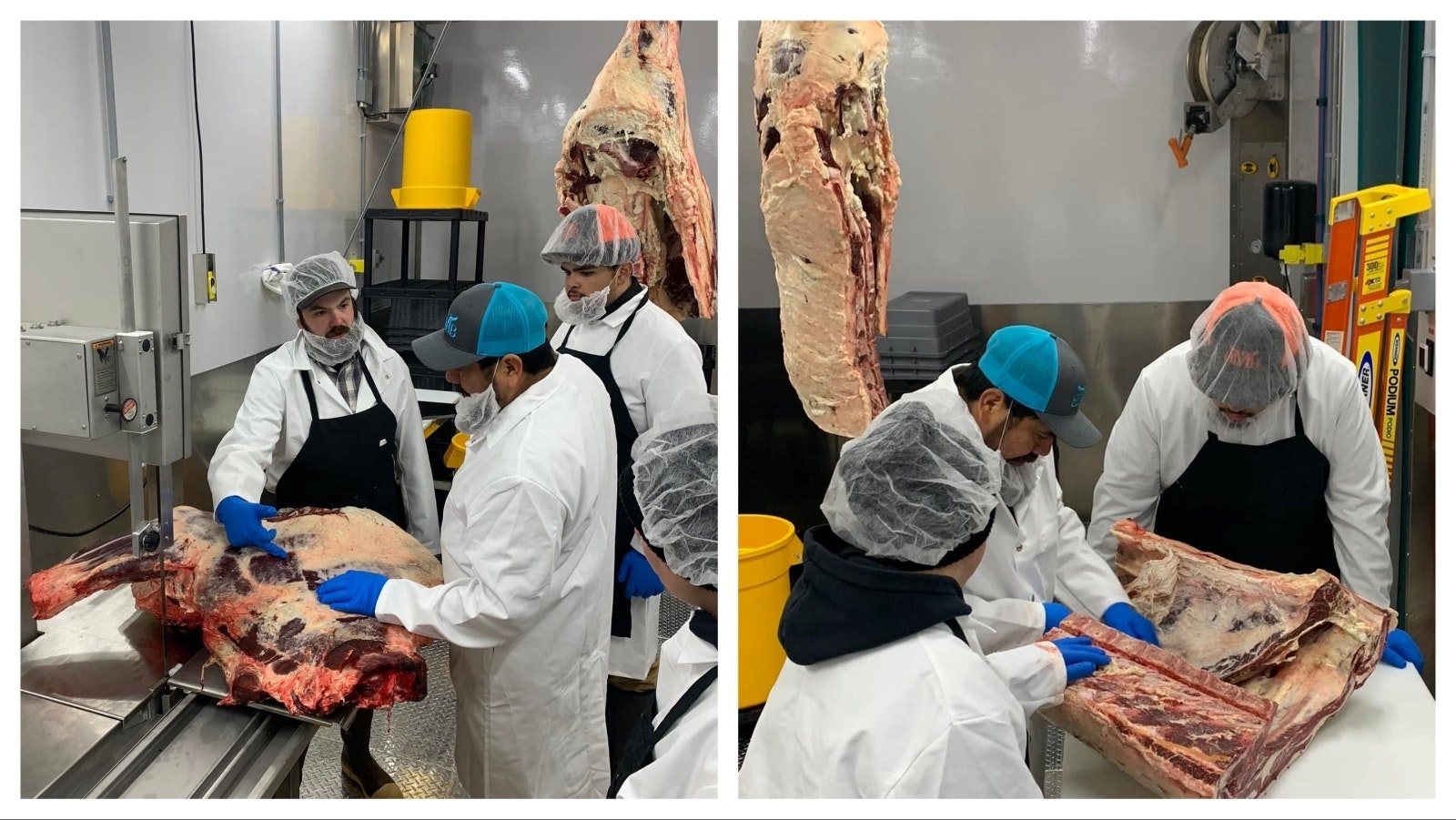
The demand for local processing inspired the Sussexes to add a butcher school to the operation.
Students travel from as far as California and Pennsylvania to learn knife skills, USDA compliance and the finances of building a processing business.
“We had no experience in this business,” Sussex said. “The big thing with the butcher school — we wanted to give people that are wanting to get into this, start their own plant or just learn how to do this, a leg up that we didn’t have.”
Most graduates have gone on to start their own operations or work for existing processors, filling a growing need in rural communities where the nearest butcher is a long drive away.
Sussex offered a parting thought that carried weight beyond the business.
“Our food supply system in this country is very, very fragile,” he said. “It doesn’t take much to completely disrupt the system. A more localized approach, smaller processors in local communities — it’s a little more resilient.
"And we need to, as citizens, pay attention to that kind of stuff.”
David Madison can be reached at david@cowboystatedaily.com.