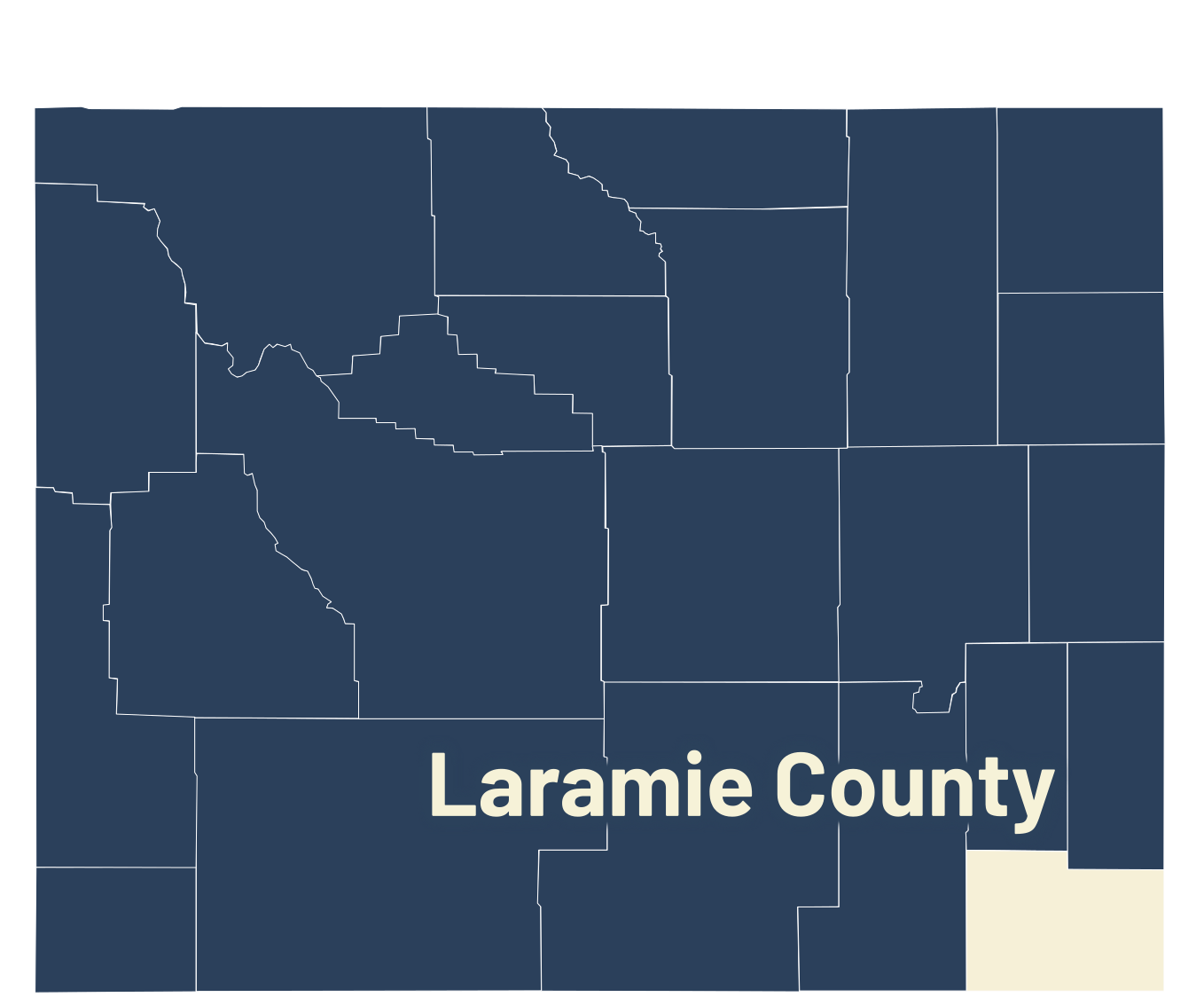
On a September afternoon in 2019, a supercell thunderstorm boiled up over northern Platte County and began marching east toward Goshen County, threading the corridor between Wheatland and Chugwater that storm chasers know as a turbulent weather generator downslope of the Laramie Range.
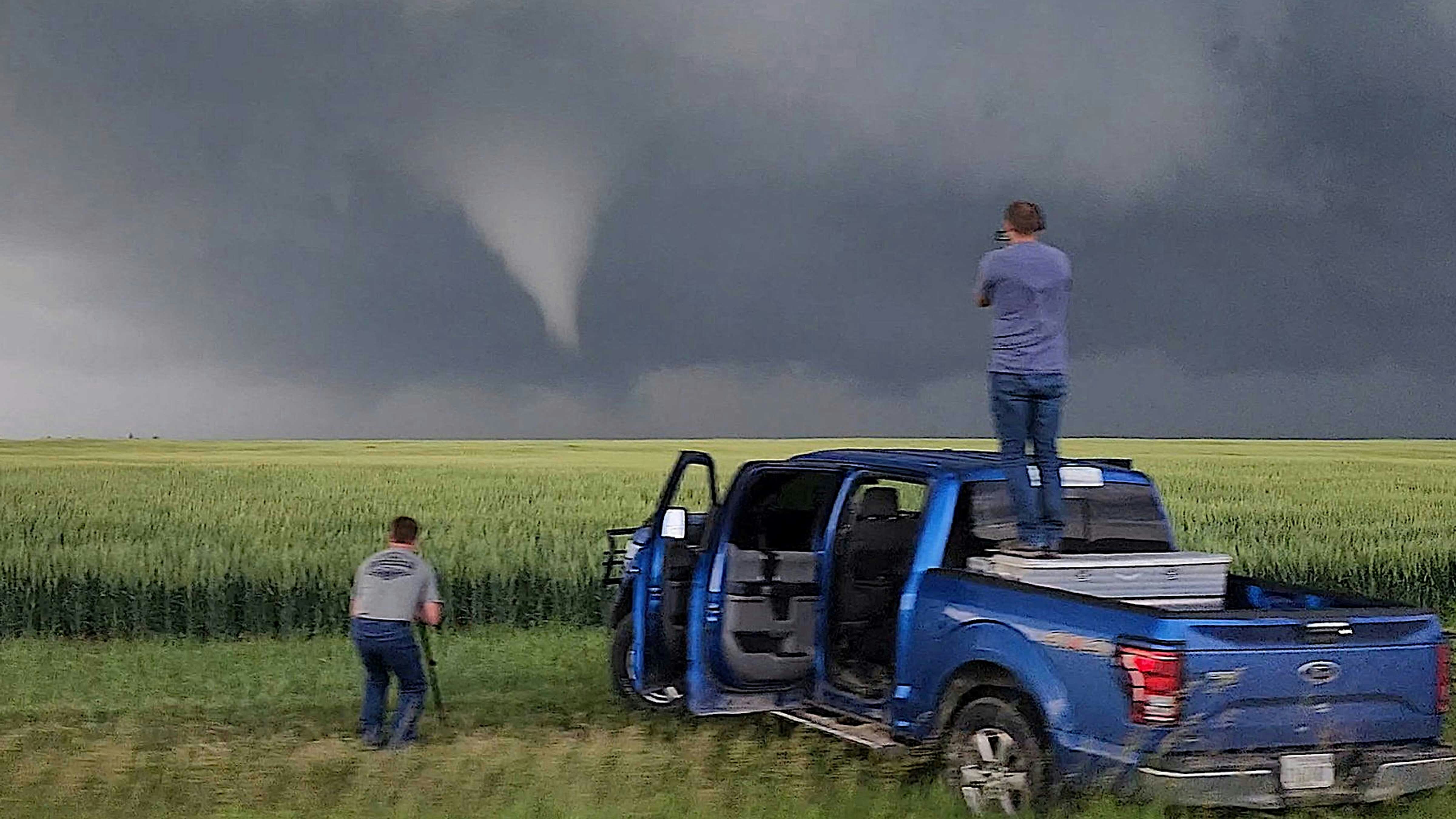
The system spawned four or five tornadoes, including what the National Weather Service would later rate an EF-2 on the Ehanced Fujita tornado-severity scale with estimated peak winds around 130 mph — a wedge-shaped, multi-vortex monster that chewed across 25 miles of open rangeland, collapsing barns and killing livestock north of Fort Laramie.
One truck was out ahead of it, driven by a bean farmer from western Nebraska who’d been running toward storms since before he could drive.
“Probably one of the most intense, strongest tornadoes I’ve ever seen, to tell you the honest truth,” Dan Fitts told Cowboy State Daily, recalling that day and explaining what he saw was across mostly open country, so it never got an official damage rating commensurate with its fury.
“It has to hit something,” he said, with the matter-of-fact shrug of a man who has spent decades watching the atmosphere do extraordinary things where nobody else is looking.
That’s the essential condition of storm chasing along the Wyoming-Nebraska border: The weather is world-class, and the audience is mostly pronghorn.
Fitts, a storm chaser whose range includes Nebraska and Wyoming, goes by “The Iceman” because of his affinity for hail. He runs a Facebook page called Right Turner Chasers, is the most active storm chaser feeding real-time reports to the National Weather Service in Cheyenne.
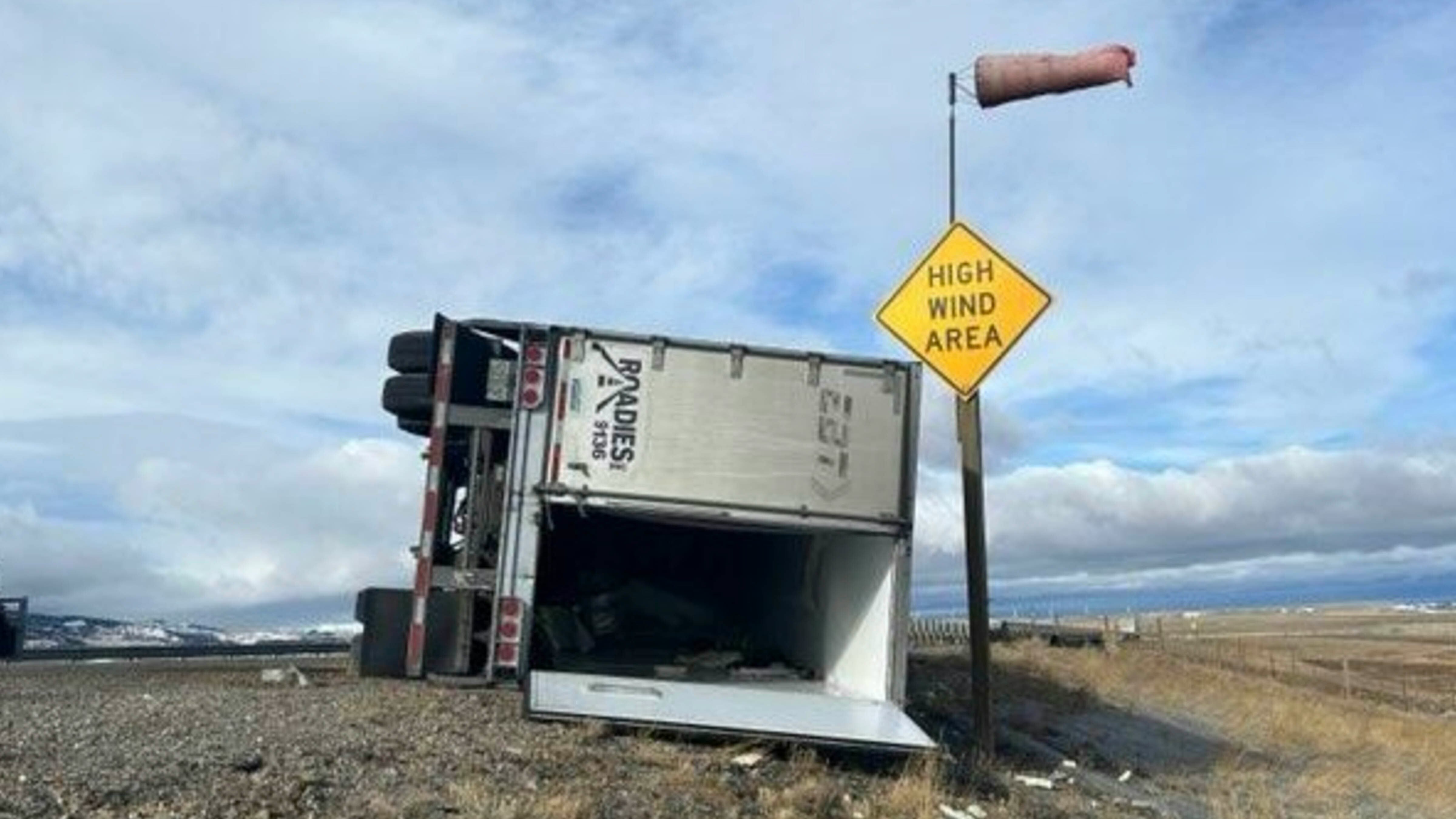
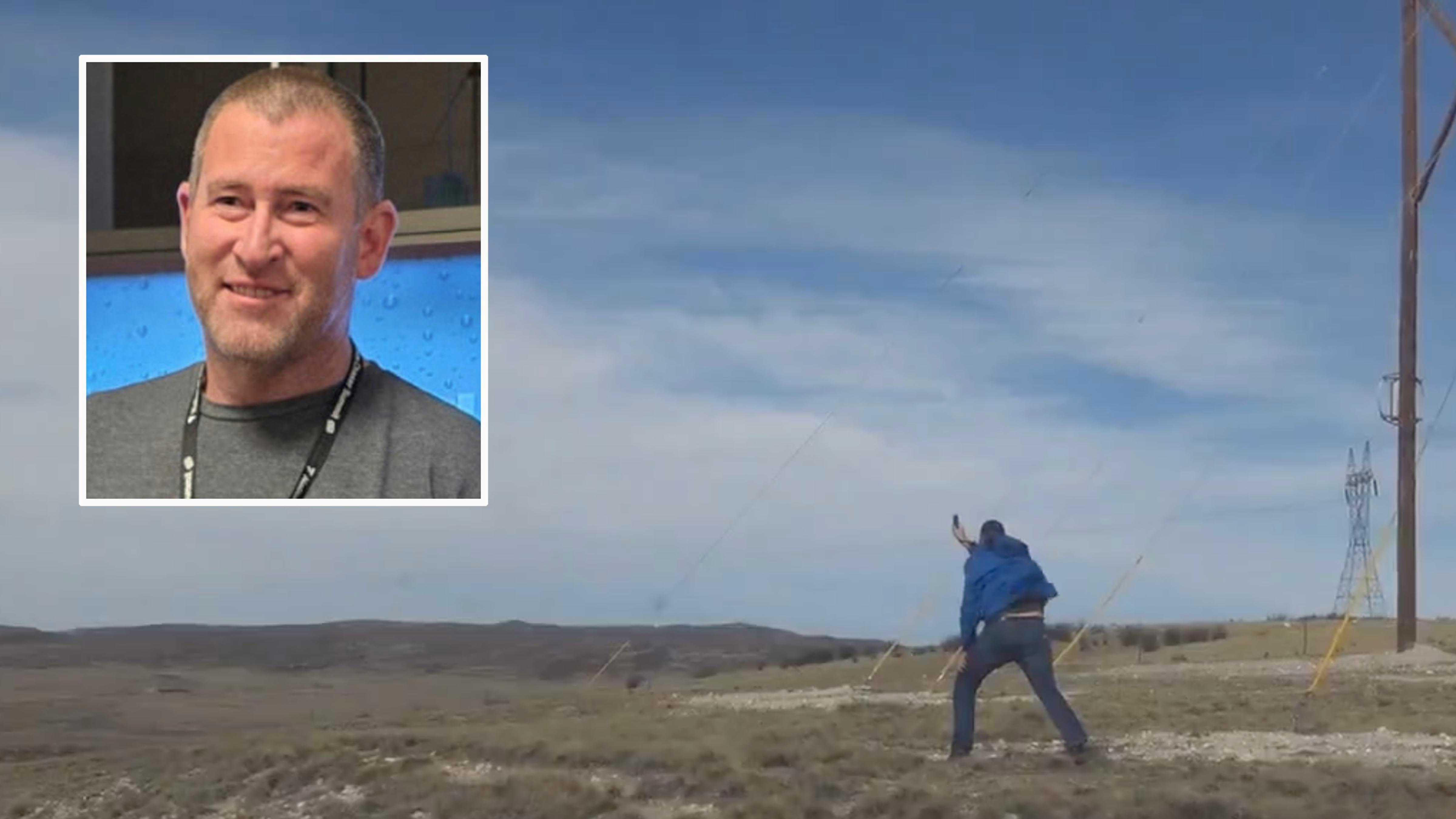
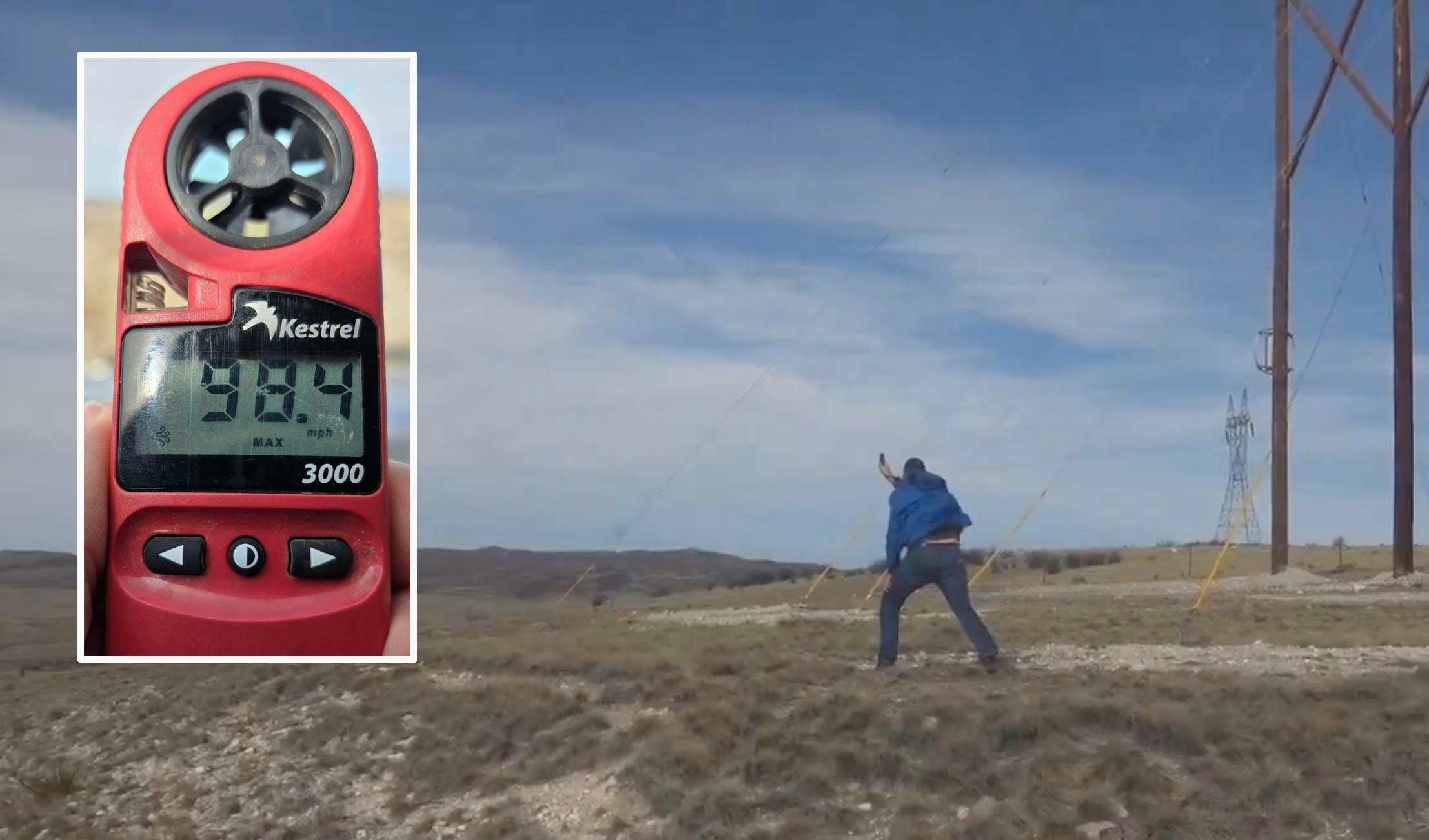
This week, he was at it again — measuring a 98.4-mph wind gust on a handheld anemometer while standing on foot west of Chugwater.
“From there, I ended up working my way a little further south to Bear Creek,” said Fitts. “There was a gust that come through that just really was intense. When that gust came through, it tore apart those wooden snow fences, they started moving, rolling across the pasture.”
Farm Roots
Growing up on a farm just west of Melbeta, Nebraska — two miles from where he lives and farms today — young Fitts had one problem: a rolling hill blocked his view of incoming weather.
“I’d always run to the top of the hill as the storm’s coming in,” he said. “About three-quarters of a mile to the top of that hill. I’d go up there and sit up on the hill, watch the storm come in.” Some storms came straight at him. Others veered south or north, which was unacceptable.
“I wanted to go to it to see it,” he said. “So that’s how it kind of started.” The solution, for a kid without a driver’s license, was, “I talked my mom into taking me out a few times when I was young.” Once he had his own vehicle — he graduated high school in 1992, years before the movie “Twister” made storm chasing look glamorous — he simply never stopped.
“The movie ‘Twister' wasn’t that much of an influence on me, really,” he said. “I was before that.”
Hail King
Chasing weather, it turns out, does not constitute a business plan.
“I call it a passion,” Fitts said of his pursuit, now in its fourth decade.
So he farms beans, corn and sugar beets, and serves as a Pioneer seed representative — a life that keeps him outdoors and weather-dependent in ways that, according to those who know his work, have made him a better forecaster than some professionals. “Folks like Dan, who have some sort of antecedent reason for needing to know the weather as intimately as he does, it gives him such a leg up,” said Matthew Cappucci, a senior meteorologist with the weather-app company MyRadar, a Harvard-trained atmospheric scientist, and the author of “Looking Up: The True Adventures of a Storm-Chasing Weather Nerd.”
“Some of the best forecasters I know are not the ones who went the conventional meteorology school route. They’re the ones like Dan who learned it on their own,” Cappucci told Cowboy State Daily.
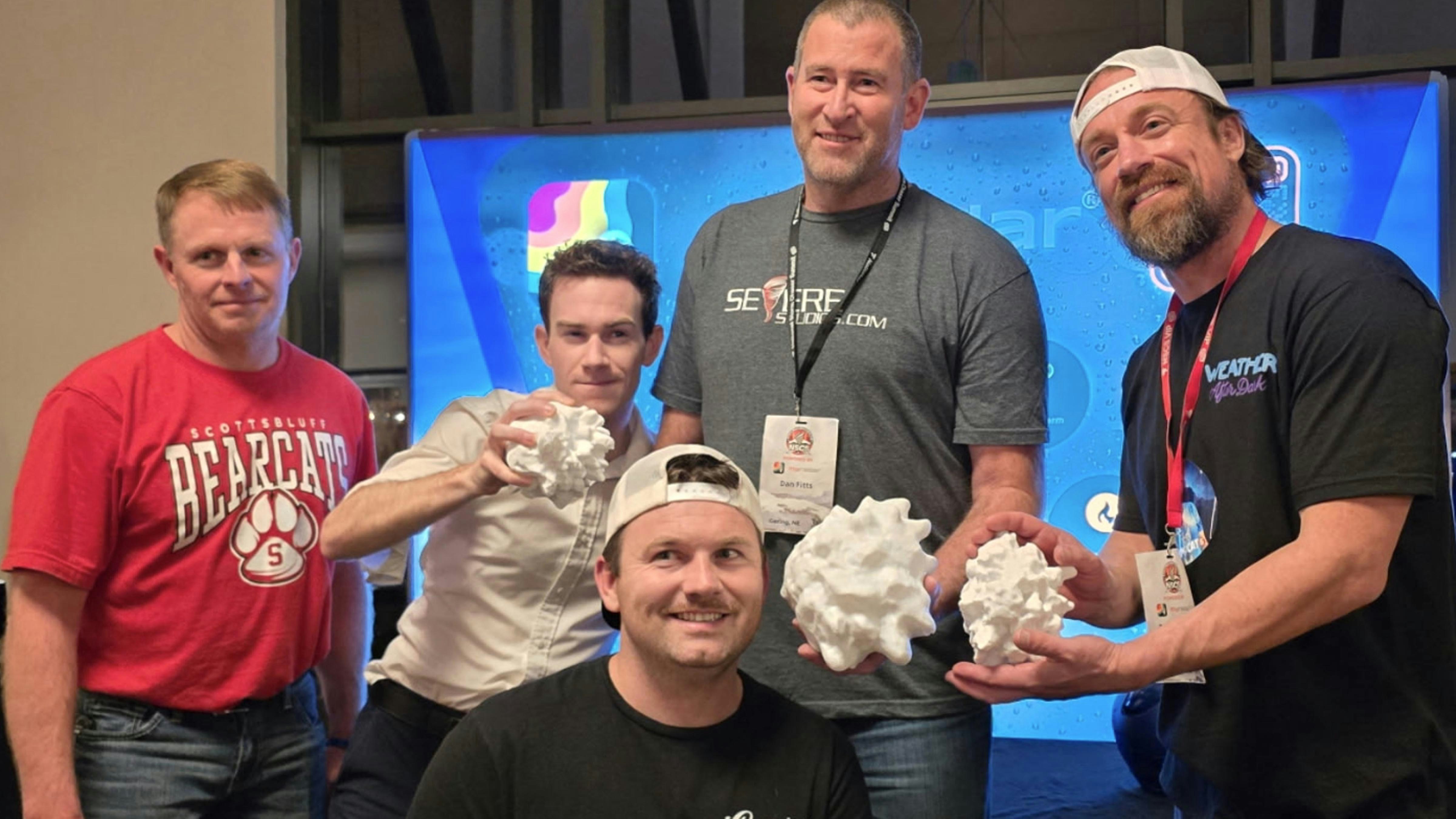
Living near what he calls “the hail capital of the world,” Fitts became known in chasing circles as the hail guy — the one who could find the biggest ice when others couldn’t.
“That iceman thing just kind of came up here recently from some friends,” he said. “I just grabbed ahold of it, I guess.” The reputation is well-earned, according to Cappucci.
“He has a knack for finding the biggest hail,” Cappucci said. “There are probably only half a dozen of us in the field who really, truly love hail, and he’s sort of the king of big hail.”
The skill is not as straightforward as tornado-chasing, where the funnel is visible and the target is obvious.
“Hail is a very mystical thing,” Cappucci said. “It’s a more finicky beast, and yet he can really sniff it out.” The informal scouting report is simple: “If I see him in the area,” Cappucci said, “I’m like, ‘Oh shoot, we’re gonna get some big hail.’”
Battle Wagon
The vehicle that carries Fitts into the teeth of supercells is a 2016 Ford F-150 that he bought at an insurance auction — because it had already been hailed on.
“That’s what I do to vehicles,” he said. “I destroy them.” The prior damage just “added to its character.”
The truck’s most distinctive feature is its windshield: a NASCAR-grade Lexan panel, the same polycarbonate plastic used in stock car racing, installed because Fitts was going through traditional auto glass at an unsustainable rate.
“I go through windows a lot,” he said. “I like to get in there, especially with a big supercell thunderstorm. I just like to get in there and experience that big hail.”
The Lexan takes a beating without shattering.
“I’ve had well over four-inch hail just bounce right off that window,” he said.
The trade-off is visibility in dusty conditions. Plastic accumulates static electricity, and dirt clings to it in ways glass resists — a relevant drawback on a day like this week’s wind event, when the air was thick with topsoil. But for hail, nothing beats it. Beyond the windshield, the cockpit holds a laptop for live-streaming video, a tablet running radar and road maps, a phone, his handheld anemometer and a freezer.
When Fitts encounters a massive hailstone, he throws it in the freezer and brings it home to his son.
Right Turners
The name of Fitts’ Facebook page, Right Turner Chaser, which Fitts started in the mid-1990s, is a tell.
A supercell becomes a supercell when it develops a mesocyclone — a rotating updraft.
As that rotation intensifies, the storm deviates to the right of the prevailing wind flow.
“We chase the right turners, the ones that turn right,” Fitts said. “Those are the most severe ones, usually. The tornado producers.”
What hit southeastern Wyoming this week was not a supercell. It was something meteorologists call a downslope wind event — a mountain wave that turned the atmosphere into a gravity-fed accelerator.
“When you have a strong low-pressure system pass to the east, that tends to induce westerly flow, and that causes something called downslope,” Cappucci explained. “You’re basically pulling air down the mountains. And when that air comes out of the west, it not only heats up, but it dries out, and that drying out makes it much more dense.
"And so it wants to accelerate downhill even faster, and you get this self-repeating process.”
The result, he said, was like being caught in “a waterfall of air — but it’s dry air.” At the National Weather Service office in Cheyenne, forecaster Matthew Mclaughlin described the mechanics in similar terms.
“We had the jet stream set up almost directly over us, and that created a mountain wave,” Mclaughlin said. The wave effect works like a roller coaster: “It goes up, and then when it comes down, the winds accelerate towards the ground.”
The peak gust recorded near Chugwater hit 109 mph.
Throughout the recent wind event, Fitts was streaming live video through his laptop for KNEB radio in Scottsbluff, and posting updates to X, and keeping the Cheyenne Weather Service informed.
“I try and keep in touch with the weather service in Cheyenne,” he said. “They quite often tune into my live stream so that they can see what I’m seeing.”