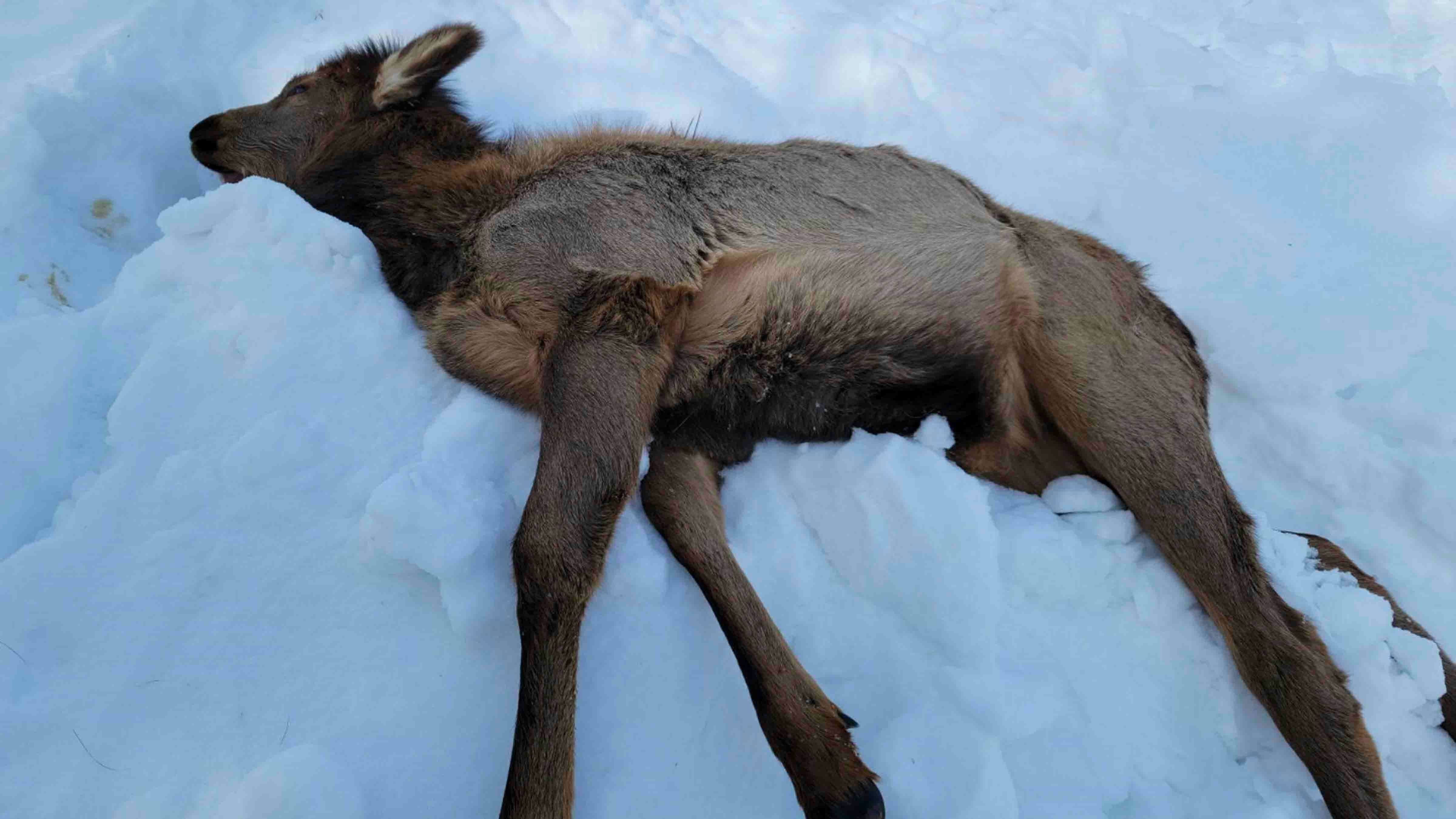
At least five elk died in Montana after eating needles from Japanese yew, a popular ornamental landscaping plant that is non-native and lethally toxic to animals.
Elk have been dying after eating yew near Missoula, Montana, Field & Stream reported.
“A mouthful of yew needles are enough to kill an adult elk,” Idaho Fish and Game public information supervisor Roger Phillips told Cowboy State Daily.
It kills quickly.
“Animals pretty much just tip over dead when they eat them,” he said.
Japanese yew is equally deadly to other wildlife species, such as pronghorn, livestock and pets, Phillips said.
In January 2017, Japanese yew caused one of the worst wildlife disasters in Idaho’s history. A herd of 50 hungry pronghorn crossed the frozen Snake River from Oregon into Payette, Idaho.
They found and started gobbling Japanese yew, dropping dead on the spot.
There have been cases of people sickened or dying after accidentally ingesting it, according to ScienceDirect.
Fence It In
Japanese yew might be a tempting option for landscaping in the cold, arid West, horticulturist Shane Smith, the founder of the Cheyenne Botanic Gardens, told Cowboy State Daily.
People might try other shrubs or small trees, such as Arborvitae, only to discover they can’t make it in Wyoming’s climate, he said.
“It’s relatively drought tolerant. It doesn’t need a lot of water,” he said.
And it can thrive in shady areas.
“The only place it wouldn’t be happy would be something like xeriscape in a hot, sunny spot,” he said.
It can be difficult to find in garden centers or big box stores in Wyoming, but it's usually available in Colorado, or can be ordered online, Smith said.
However, because of the danger to wildlife and pets, people should be mindful about where they plant it, he said.
“It’s got that problem. And almost anywhere you live in Wyoming, you’re at least going to have deer walking through,” Smith said.
“If you’re worried about wildlife, it’s probably not a great choice,” he said.
Those who plant Japanese yew should keep it fenced in, out of reach of animals, he said.
Smith retired from the Botanic Gardens and lives in western Colorado. He has some Japanese yew on the north side of his house, enclosed by a tall, sturdy wooden fence.
Has Killed Wyoming Pronghorn
Retired Wyoming Game and Fish wildlife biologist Rich Guenzel told Cowboy State Daily that Japanese yew occasionally kills wildlife here.
He recalled a rash of pronghorn deaths in the Cheyenne area during one particularly dry year, when the animals tried to find alternative food sources.
Guenzel, who retired as the Game and Fish Laramie District wildlife biologist, said he didn’t remember any losses on the scale of the Payette, Idaho pronghorn die-off.
“I don’t recall us having any loss of that magnitude, but it’s certainly something that has happened to pronghorn in Wyoming,” he said.
Japanese yew wildlife deaths are a steady problem in Idaho, Phillips said. His agency puts out reminders to the public and landscapers, in hopes of mitigating the hazard.
“I think it’s been an ongoing problem for decades. It crops up every few years and we try to let people know it’s happening,” he said.
“You’re never going to keep up with something like this. When people go to pick up some Japanese yew for their landscaping, the toxicity to wildlife really isn’t going to be on their radar,” he added.
Mark Heinz can be reached at mark@cowboystatedaily.com.