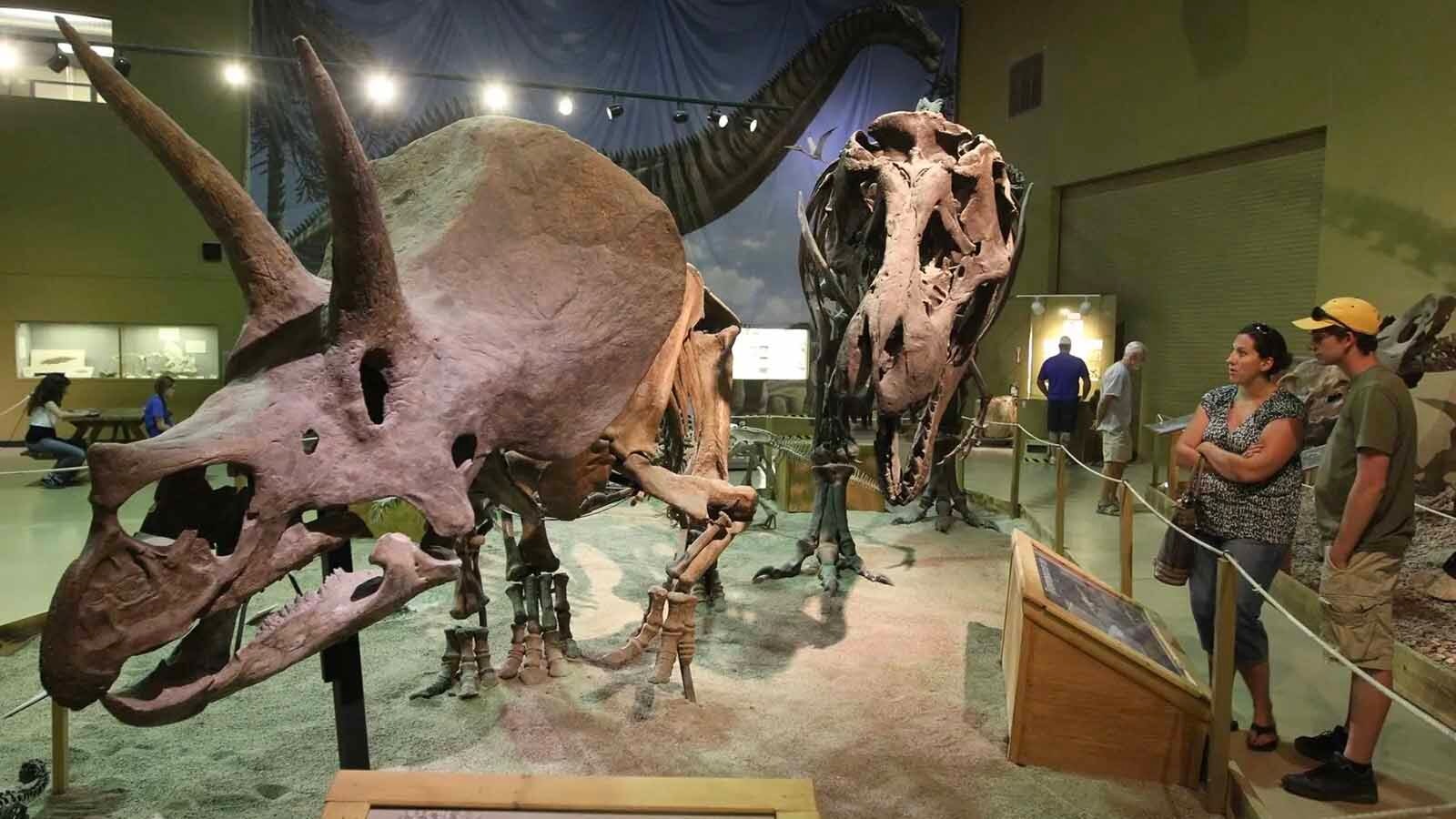
A popular and well-known skeleton of Wyoming’s state dinosaur is going on the auction block.
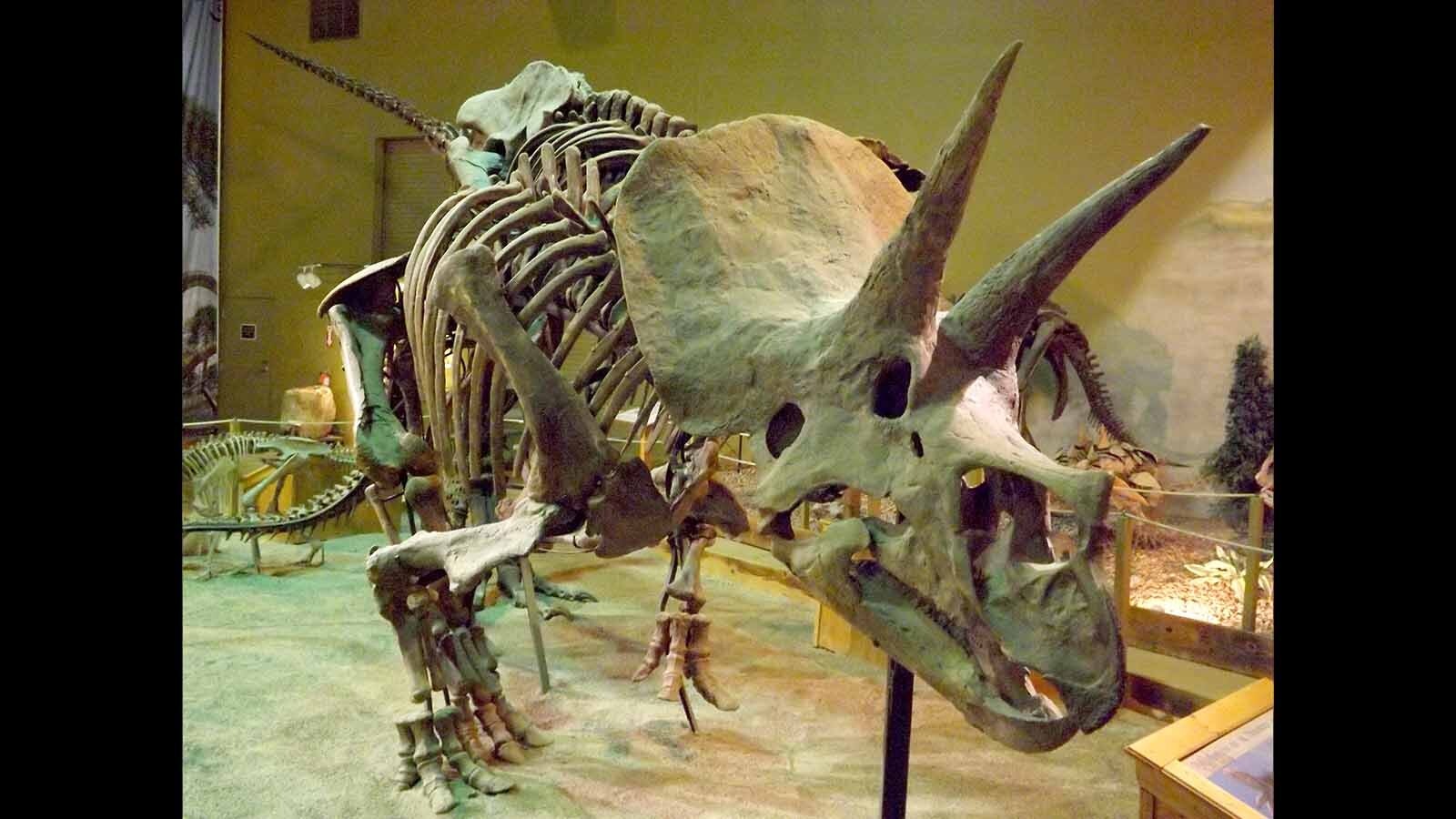
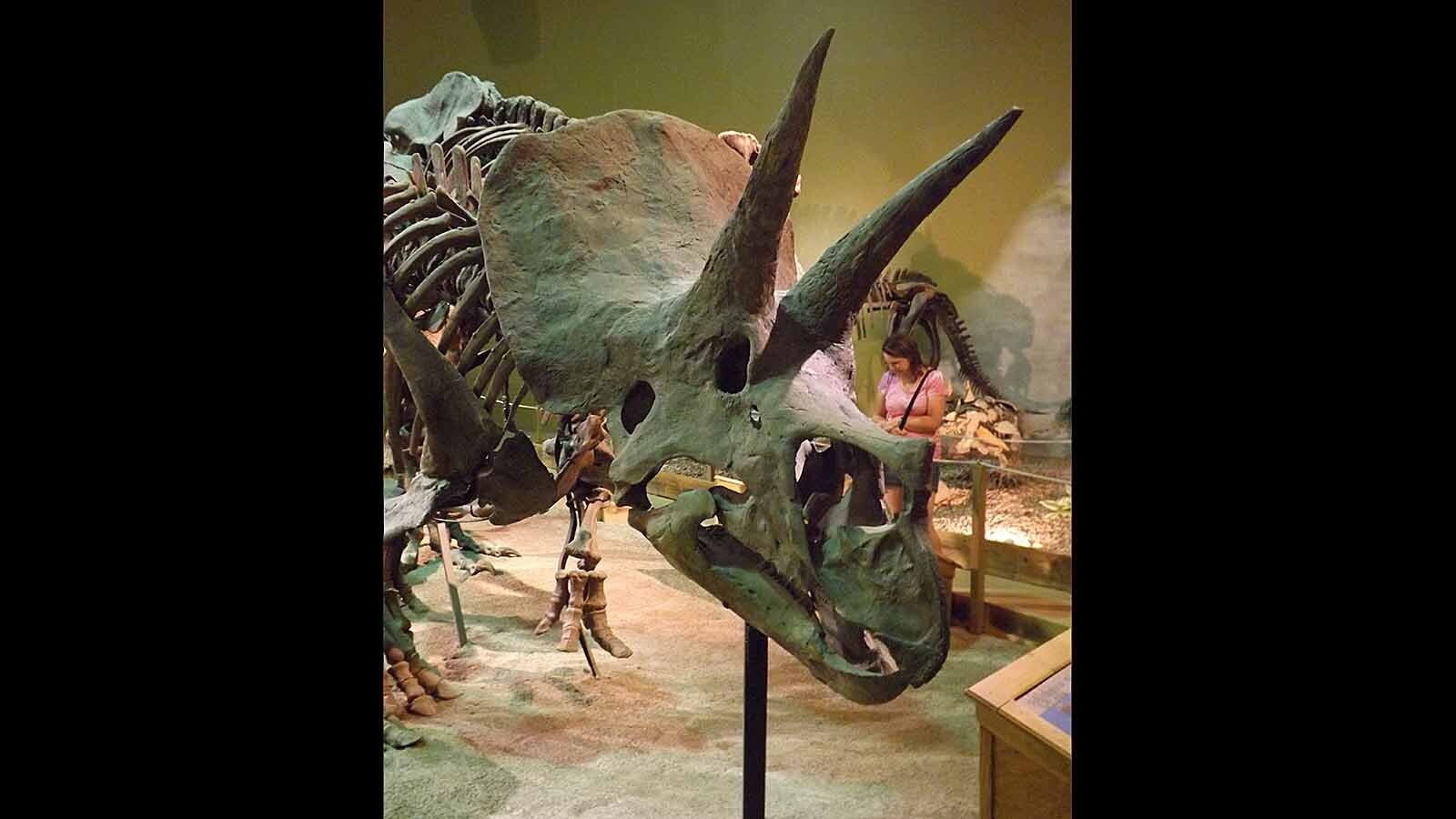
“Trey,” a 17-foot-long Triceratops, will be auctioned off by Joopiter, an online platform started by musician Pharrell Williams, with a pre-sale estimate of up to $5.5 million.
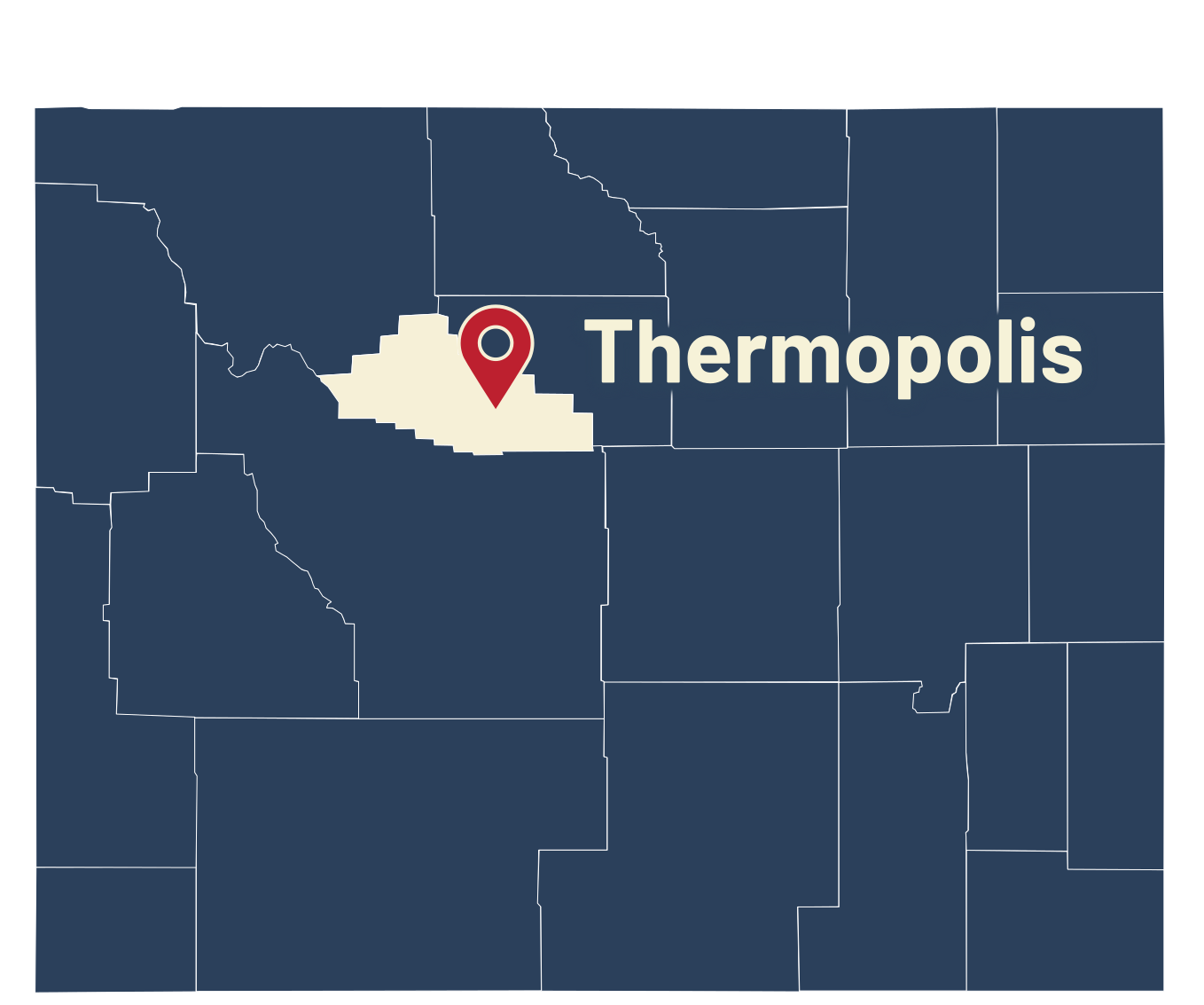
Even with a number of dinosaur auctions in recent years, this one’s different. The Triceratops in question has spent the last 30 years as one of the main exhibits at the Wyoming Dinosaur Center (WDC) in Thermopolis.
It was the first real skeleton of Wyoming’s state dinosaur ever displayed in the state. Now, Joopiter is selling it as “the only museum-shown Triceratops skeleton” ever put up for auction, “viewed by over 1 million visitors over the past three decades.”
High-priced dinosaur auctions are a polarizing issue in the paleontology community, but this auction hits closer to home for those in the Cowboy State.
Some people, including those at the WDC, see this as an opportunity to share more of Wyoming’s remarkable fossils with the world.
“The WDC’s longstanding role in preparing, studying, and displaying important fossils continues to highlight the work being done in Thermopolis,” said Angie Guyon, the WDC’s general manager. “While the Triceratops was certainly a memorable exhibit, the museum’s mission and collections continue to grow.”
Many others aren’t sharing that optimistic assessment. They worry that this auction and the existing circumstances of ownership at the WDC are setting a precedent that Wyoming could come to regret.
“There’s a sad trend of Wyoming dinosaurs going to world-class museums elsewhere,” said Lee Campbell, the paleontologist who excavated the Triceratops in the 1990s. “The WDC is world-class, but most of what’s in there is privately-owned. They could liquidate the entire museum with one phone call.”
The First And Only (For A While)
Triceratops is one of the most common dinosaurs in North America, particularly in the Late Cretaceous Lance Formation of Wyoming.
Dozens of museums around the world feature Triceratops fossils excavated in Wyoming as centerpiece exhibits.
One of the few places that didn’t have its own Triceratops was Wyoming. Despite it being so common in the ground, no Wyoming museum had a real Triceratops skeleton on display.
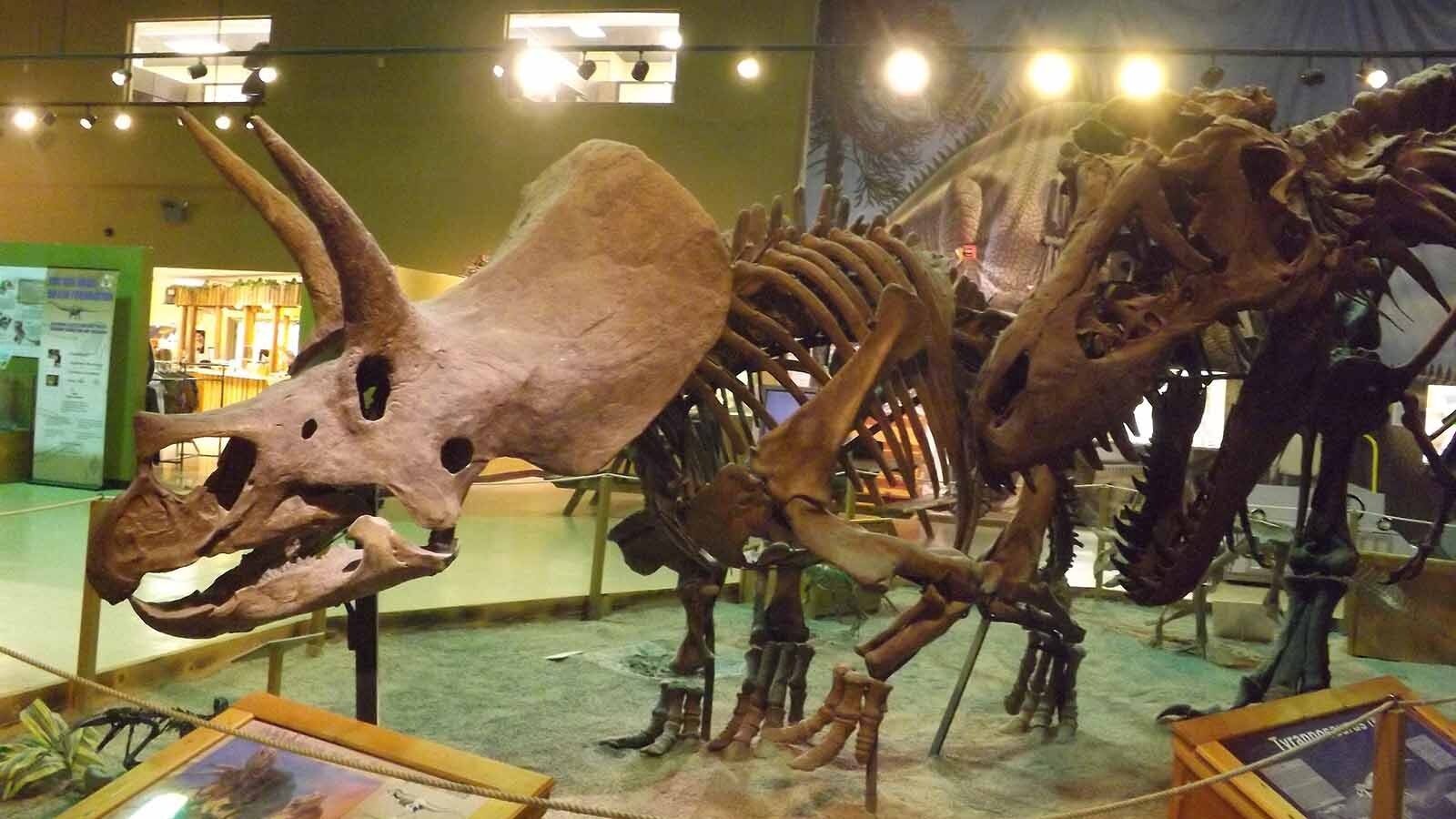
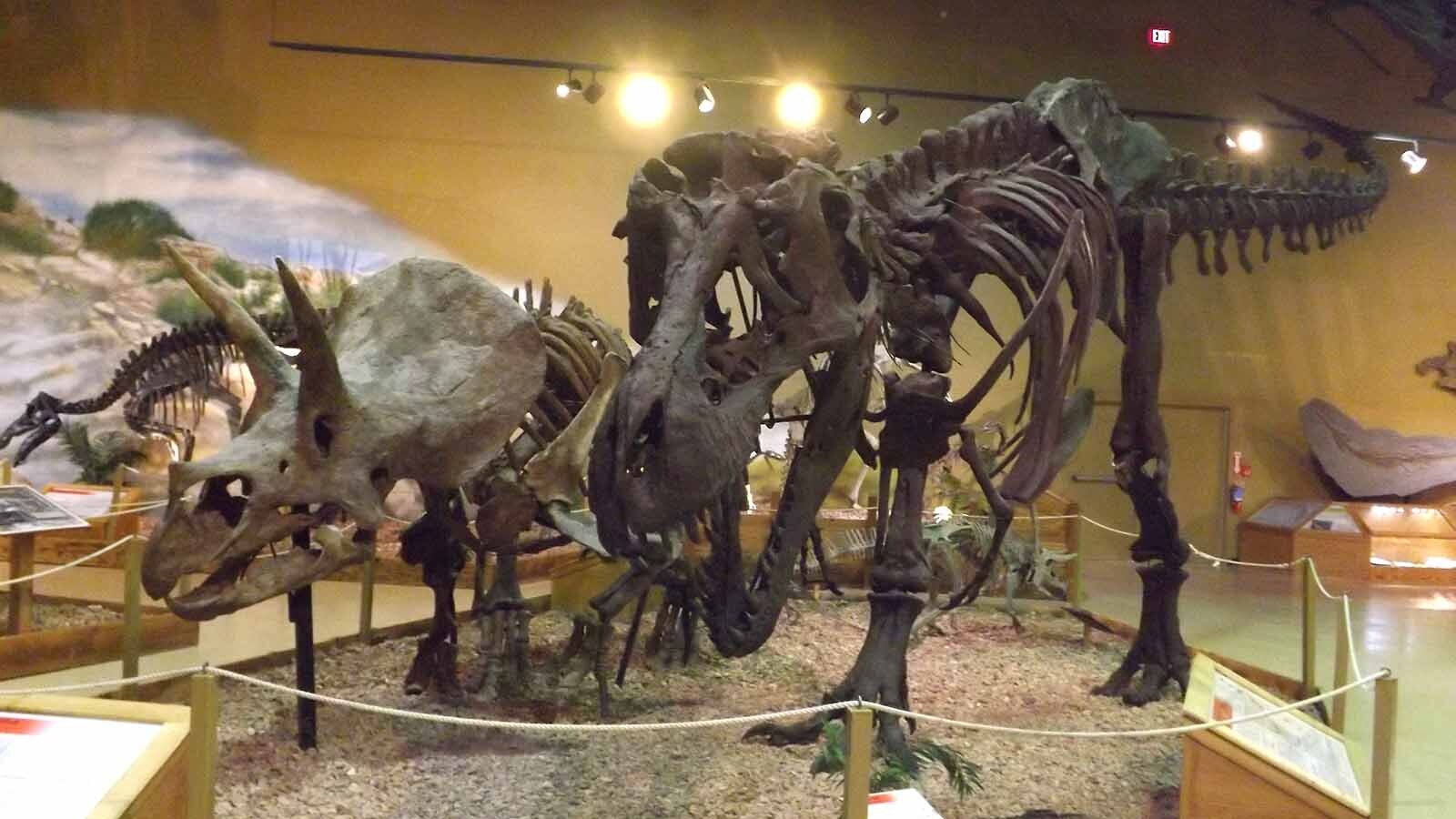
That changed when the WDC opened in 1995. Although the museum was founded because of the rich deposits of Jurassic fossils outside Thermopolis, the only fully-mounted real fossil dinosaur inside was Trey the Triceratops, mounted in Germany and shipped back to Wyoming for the museum.
“The Triceratops was displayed at the WDC for many years as part of our private collection and was part of the museum’s exhibits from the early days of the facility,” Guyon said.
The WDC could boast that it had the first and only real Triceratops on display in Wyoming for many years. Even when other Wyoming museums acquired and displayed their own Triceratops fossils, like the Glenrock Paleon Museum, the WDC had the only mounted skeleton.
But while the WDC exhibited the Triceratops, it didn’t own it.
“The Triceratops was not owned by the Wyoming Dinosaur Center 501(c)3,” Guyon said. “As with any privately owned specimen, the owner retains the right to determine its future, including whether it remains on display, moves to another institution, or is sold.
"When the owner decided to pursue a sale, the specimen was removed from the museum.”
Trey spent several decades fleeing the open jaws of a Tyrannosaurus at the museum until the WDC briefly closed for a renovation to commemorate its 30th anniversary. When it reopened last summer, the Triceratops was gone.
From Lusk To Germany To Thermopolis
According to Joopiter, the Triceratops was found in 1993 by Lee Campbell and Allen Graffham of Geological Enterprises Inc., “one of the defining figures in modern commercial paleontology.”
Campbell, now retired and living in Thermopolis, remembers it well. He and Graffham were certainly working on that Triceratops in 1993, and several years prior.
“It took me five years to get that one ready, because it was a composite skeleton,” he told Cowboy State Daily. “We didn’t have quite enough tail vertebrae and foot bones, but the rest of it is pretty much there. It’s about 70% complete.”
Composite skeletons are a mixture of similar-sized fossils from the same type of dinosaur, rather than being a complete skeleton of a single individual. That’s how paleontologists get most dinosaurs, especially Triceratops, complete enough for museum exhibits.
“You dig up two, three, or four specimens in order to get enough bones for one dinosaur,” he said. “All the original Triceratops specimens, like the one in the American Museum of Natural History in New York, are composites.”
Campbell said he assembled the Triceratops with fossils collected from several sites along the Cheyenne River near Lusk, a hot zone for Triceratops fossils.
In addition to paying ranchers and all the other costs of field paleontology, Campbell said he’d spend over $2,000 a year just on super glue.
“The bones out of the Lance Formation have thousands of cracks in them, so you stabilize them with super glue,” he said. “When they were stabilized, they were so solid you could pick them up and walk away with no trouble whatsoever.”
To his surprise and delight, Campbell found a foreign buyer who wanted the Triceratops for his museum in Wyoming: Burkhard Pohl, a Swiss-German fossil collector and the founder of the WDC.
Pohl wanted the Triceratops for the opening of the WDC. Campbell said he sold that specimen and “a semi-load of other stuff” from excavations in the Lance Formation for $225,000.
“We had ocean shipping containers come into my shop in Lance Creek, and we crated it up and shipped it to Frankfurt,” Campbell said. “This Triceratops was shipped all the way to Germany, restored, and shipped all the way back over here.”
Private Property
The WDC has grown significantly since 1995 and is now regularly ranked as one of the best dinosaur museums in the world.
It's filled with a wide menagerie of spectacular fossils from around Wyoming and the world, including full skeletons of Allosaurus and Camarasaurus found in the sites near Thermopolis.
“The WDC’s permanent collection, particularly fossils excavated from Thermopolis, are held for research, education, and public display,” said Guyon. “Privately owned specimens that have been exhibited here have done so through loan agreements that make it possible for the public to see scientifically important fossils that might otherwise remain in storage or private collections.”
Exhibiting private specimens has made the WDC something of a paleontological pariah since its inception.
Paleontologists tend to be wary of private collectors. If there’s a scientifically valuable fossil in a private collection, the owner could sell it to another museum or individual who might deny access to future paleontologists, just as anyone can do with their private property.
The Museum of Ancient Life in Lehi, Utah, was condemned by the paleontological community after it sold the only known specimen of a juvenile Ceratosaurus, found in Wyoming, to commercial fossil hunter Brock Sisson.
That specimen sold for $33.5 million at a Sotheby's auction in July 2025, and its new owner and whereabouts are unknown.
Guyon doesn’t see the WDC as any different from other paleontological museums.
“Many of the fossils displayed in museums around the world, both large and small, are privately owned specimens that have been placed on loan for public exhibition,” she said. “The WDC is no different in that respect. As with any privately owned specimen, the owner retains the right to determine its future, including whether it remains on display, moves to another institution, or is sold.
"That is a standard and well-established part of how fossil collections are displayed in many museums.”
Joopiter is highlighting Trey’s decades-long stay at WDC as a selling point for the auction. Paleontologist Andre Lujan is quoted as saying it’s “a rare collision of science and human memory.”
“(It’s) an extraordinary Triceratops preserved at a pivotal stage of growth, and shaped by decades in the public eye,” he said. “More than a million people have stood before him. He is a teenaged ambassador from deep time — proof that research can become something the public feels and carries with them."
That sentiment doesn’t sit well with many, including Campbell.
Big Dinos, Big Bucks
When Campbell was informed that the Triceratops he excavated was being auctioned with a pre-sale estimate of up to $5.5 million, he said it was “a sad step backwards” for the WDC and the state of Wyoming.
"I'm sad to hear it," he said. "It's very discouraging."
Museums around the world have spent millions of dollars acquiring dinosaur fossils from Wyoming, where they attract millions of visitors and millions of dollars. That trend started in the 1870s and continues to this day.
There’s also a lot more money to be made in paleontology than there was in 1993, when Campbell sold the Triceratops to Pohl. Dinosaurs are now the trendy big-ticket items for auctions, especially when a single Stegosaurus can go for $44 million.
Campbell referenced the annual Tucson Gem and Mineral Show, held every February in Arizona, as the spot where multimillion-dollar dinosaur deals are constantly being made, either between private individuals or auction houses.
“Everybody goes to Tucson,” he said. “There are representatives there from Sotheby’s, Christie's, Bonhams, and all the other auction houses that approach everybody asking if there’s anything they want to consign to their next natural history auction.”
That makes Campbell one of many people and paleontologists unsettled that the decision to sell or not sell so many significant Wyoming fossils resides with one person.
Here Today, Gone Tomorrow
Pohl, who’s still an active presence at the WDC and in the paleontological community, has previously been praised by many, including Campbell.
He's spent significant sums of money to acquire certain fossils specifically so they’d end up in a public-accessible museum, available to paleontologists to study.
Campell noted that all the fossils found on the Thermopolis ranch are Pohl’s property, as fossils fall under any property’s surface rights. The vast majority of the fossils inside the museum also belong to Pohl, who has acquired an immense collection over several decades.
“The WDC was doing more to offset that trend of our dinosaurs leaving Wyoming than anybody else,” he said. “But that massive ranch and most of the fossils in the museum are entirely private property and, as is his right, Burkhard can do what he wants with it.”
In 2005, the WDC's acquisition of an Archaeopteryx, one of the most important fossils in history, made international news. It remains the museum's rarest and most treasured artifact, and is known worldwide as "the Thermopolis Specimen."
When asked about the Archaeopteryx, Guyon said it’s “a privately owned specimen on loan to the museum.” That means there's always a chance the "Thermopolis Specimen" could leave Thermopolis forever.
“Like any loaned specimen, its long-term future ultimately rests with its owner,” she said.
The ownership of most of the WDC’s collection, coupled with the sale of the Triceratops, makes many people uneasy. If it's all private property, everything is potentially for sale to other museums, private collectors, or at a consignment auction.
In Campbell's view, the best collection of Wyoming dinosaur fossils currently in Wyoming could disappear in an instant, effectively making one of Wyoming's top-tourist attractions extinct.
“It’s (Pohl's) private property, so has the right to do whatever he wants with it," Campbell said. "I hate to see us take that step backwards, but that's the reality of the situation. It's all up to him."
Past As Prologue
Guyon said the WDC “maintains an extensive permanent collection that includes thousands of cataloged specimens from Wyoming and across the world.”
The permanent collection includes “many fossils excavated by WDC field crews over the past several decades” from the sites near Thermopolis.
One of the newest additions highlighted by Guyon was a first-of-its-kind Kosmoceratops specimen. Only discovered in 2006 in Utah’s Grand Escalante National Park, it’s a bizarre horned dinosaur and a relative of Triceratops.
“That specimen ... represents another remarkable horned dinosaur from the region, one of only four known specimens on display, and reflects the ongoing work being done to bring new fossils and discoveries to the public,” she said.
Guyon said that the WDC “will not receive proceeds from the sale” of the Triceratops, even though the specimen’s long history at the museum is being highly publicized to promote the sale.
She sees that as an opportunity for more people to learn about the museum and its offerings.
“Increased attention around significant specimens like this Triceratops helps bring visibility to the museum, the research conducted here, and the region’s remarkable fossil resources,” she said. “That visibility ultimately benefits the WDC by encouraging visitation, scientific collaboration, and support for future projects.”
The WDC sold at least one replica of the Triceratops specimen. It was acquired and is currently on display at the Wyoming State Museum in Cheyenne, so Trey still has a foothold in his home state.
Campbell doesn't deny that the WDC has plenty to be proud of. He believes it’s Wyoming’s best and most popular paleontological attraction, even surpassing Fossil Butte National Monument near Kemmerer.
Still, he couldn’t help but point out the irony that he’s still seeing billboards promoting the WDC with pictures of the museum’s original “bragging rights” specimen: Trey the Triceratops, which has since been sold and will soon be auctioned off.
“They still have that Triceratops on a billboard right outside of Thermopolis,” he said.
Guyon said the loss and upcoming auction of Trey the Triceratops hasn’t changed the WDC’s “commitment to research, education, and sharing Wyoming’s extraordinary fossil heritage with visitors from around the world.”
Campbell, however, is concerned that selling a significant specimen of Wyoming’s state dinosaur, a Day One attraction for the WDC, is a worrying sign.
Wyoming has already lost many of the best dinosaur specimens ever found. Since so many fossils at the WDC are privately owned, Campbell said they can never escape the potential price tag hanging around their massive necks and tails.
“There's a lot of bragging rights to keeping Wyoming dinosaur in Wyoming,” he said. “The WDC has been very successful in doing that, which is why I think this sale has a lot of negative impact. I was happy to see that Triceratops ended up at the WDC.
"Now, I’m really disappointed to see that it’s gone. The trend of Wyoming dinosaurs leaving continues, and that’s sad for the State of Wyoming."
Andrew Rossi can be reached at arossi@cowboystatedaily.com.