President Donald Trump’s administration is prioritizing forest health and management by rescinding the 2001 “Roadless Rule,” a move that is long overdue and one that will provide benefits into the long distant future.
That lame-duck decree, which was handed down in the final days of the Clinton administration, has denied access, management and use to nearly 60 million acres over the last 25 years, including 3.2 million acres in Wyoming.
The Trump Department of Agriculture formally moved to bring this environmental calamity to an end last summer.
But an executive decision to terminate prohibitions on the construction of forest roads remains vulnerable to swift reversal under a new administration. So last week, I introduced legislation to codify Trump’s efforts and cement the gravestone for the Roadless Rule once and for all.
The bureaucratic restrictions on forest management eliminated access to nearly 30 percent of our National Forests, which total 192 million acres. That’s 3 percent of total land mass across the lower 48 states, all unilaterally roped off by the hand of an outgoing executive who had less than two weeks left in office.
The 25 years that followed fostered the overwhelming growth of monolithic forests left more vulnerable to beetle outbreaks and catastrophic forest fires fed by excessive fuels.
We personally witnessed the impact of this wrong-headed decision during the summer of 2024, when the Elk Fire in the Bighorn National Forest scorched over 98,000 acres, including a 25,000 acre section that burned in just three hours.
The collection of images below illustrate how federal mismanagement has proliferated the artificial growth of thick dense forests more prone to disaster, less hospitable to wildlife, and producing ever-decreasing amounts of runoff.
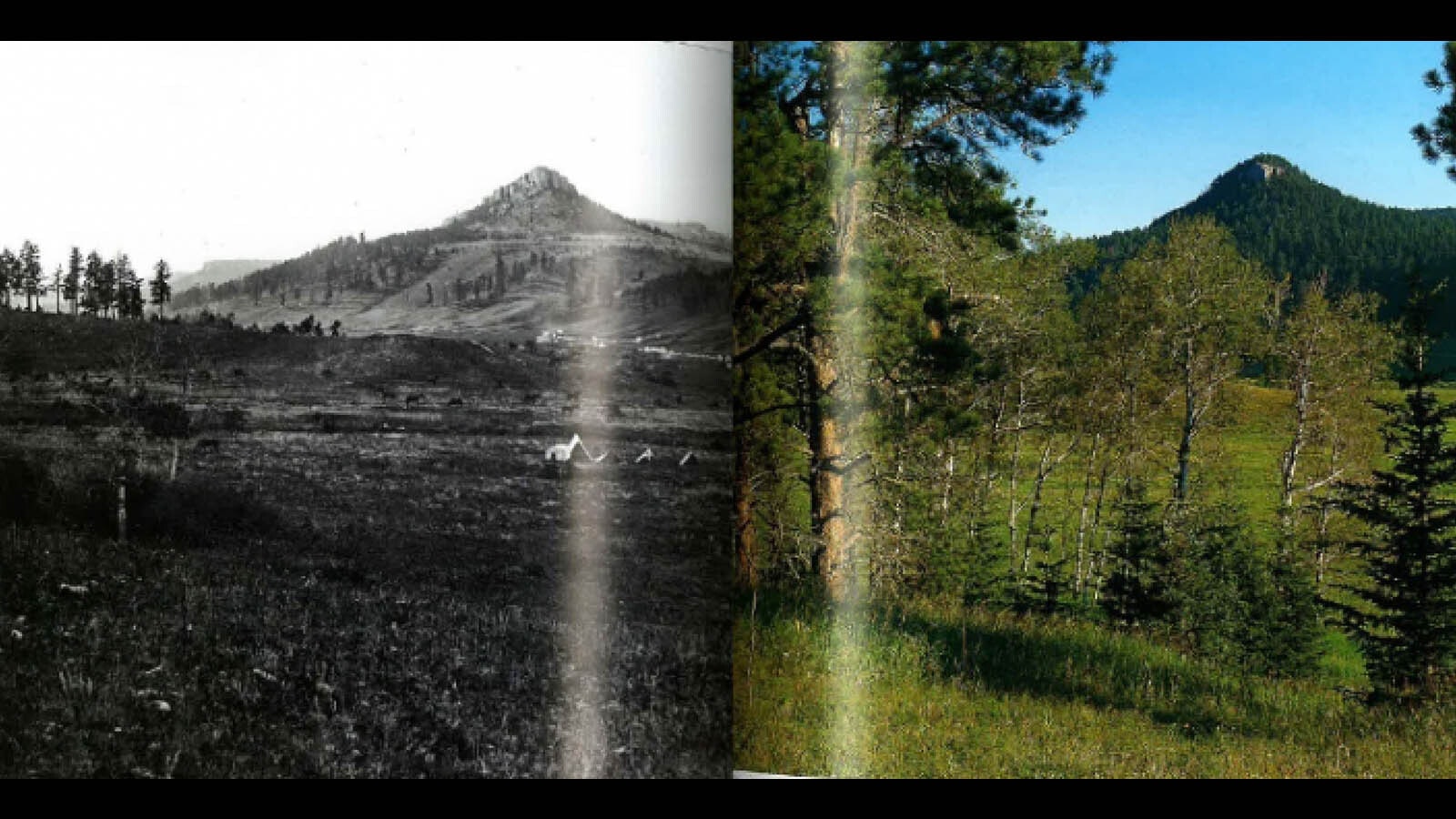
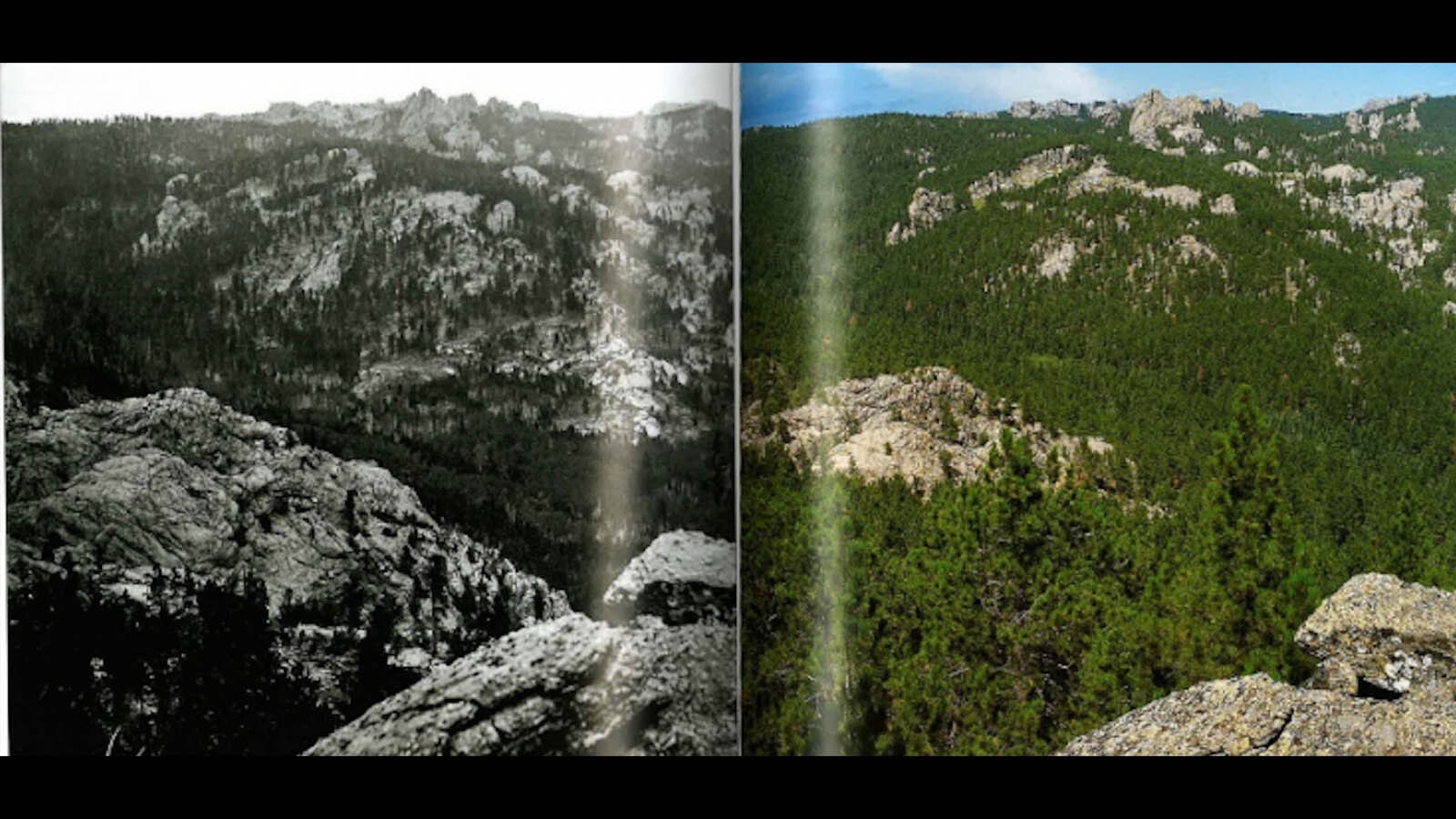
The photographs from Ernest Grafe and Paul Hosted’s “Exploring with Custer: The 1874 Black Hills Expedition” illustrate how America’s forests previously consisted of thinner clusters of trees and vegetation.
Today, they have become havens for tree-killing insects and piles of firewood ready to ignite at the match of a lightning strike. Bureaucratic prohibitions on roads have sacrificed our ability to conduct the surgical maintenance necessary to insulate our forests from predictable disasters.
Agriculture Secretary Brooke Rollins wrote last summer that “instead of protecting forests,” the rule “trapped them in a cycle of neglect and devastation.”
“To date, we’ve seen more than 8 million acres of Roadless Areas burn,” wrote Rollins. “To put that into perspective, the average acreage lost to wildfire each year has more than doubled since 2001.”
The quest to build President Clinton a “legacy” produced a regulatory travesty bypassing Congressional-approval with an ash-stained history of environmental self-destruction. Nine of America’s ten most catastrophic wildfires have occurred since the Roadless Rule was imposed 25 years ago.
The consequences of the Roadless Rule will linger for generations as well 1/3 or our National Forests have been “managed” for a quarter century with no plans for road construction, and no opportunities for timber harvest. Rural communities are being hurt the most with restrictions robbing families of sustainable salaries while entire regions remain inaccessible.
The Clinton Roadless Rule epitomizes the problems associated with an ever-expanding administrative state that ignores the actual laws in order to legislate through executive fiat. The one-size-fits-all prescription was rushed through the entire federal rulemaking process in just 13 months.
Bureaucrats ignored the physical aspects, management considerations, economic issues, vegetation, hydrology, geography, wildlife needs, fire risks, and the cultural dynamics that define each individual National Forest.
The Forest Service ignored Congress’ demand under the National Forest Management Act to consider local needs, choosing instead to adopt a policy whereby forests in Wyoming were treated the same as those in Puerto Rico.
The federal government overstepped its authority and compromised the recreational, economic, and spiritual resources of our National Forests by eliminating effective tools for management. We cannot manage what we cannot access.
Our forests are the lungs of the planet, and we have prohibited ourselves from offering treatment.
Repealing the Roadless Rule is the first step to saving ourselves from further environmental harm.
Congresswoman Hageman is the lone member of the U.S. House of Representatives for Wyoming