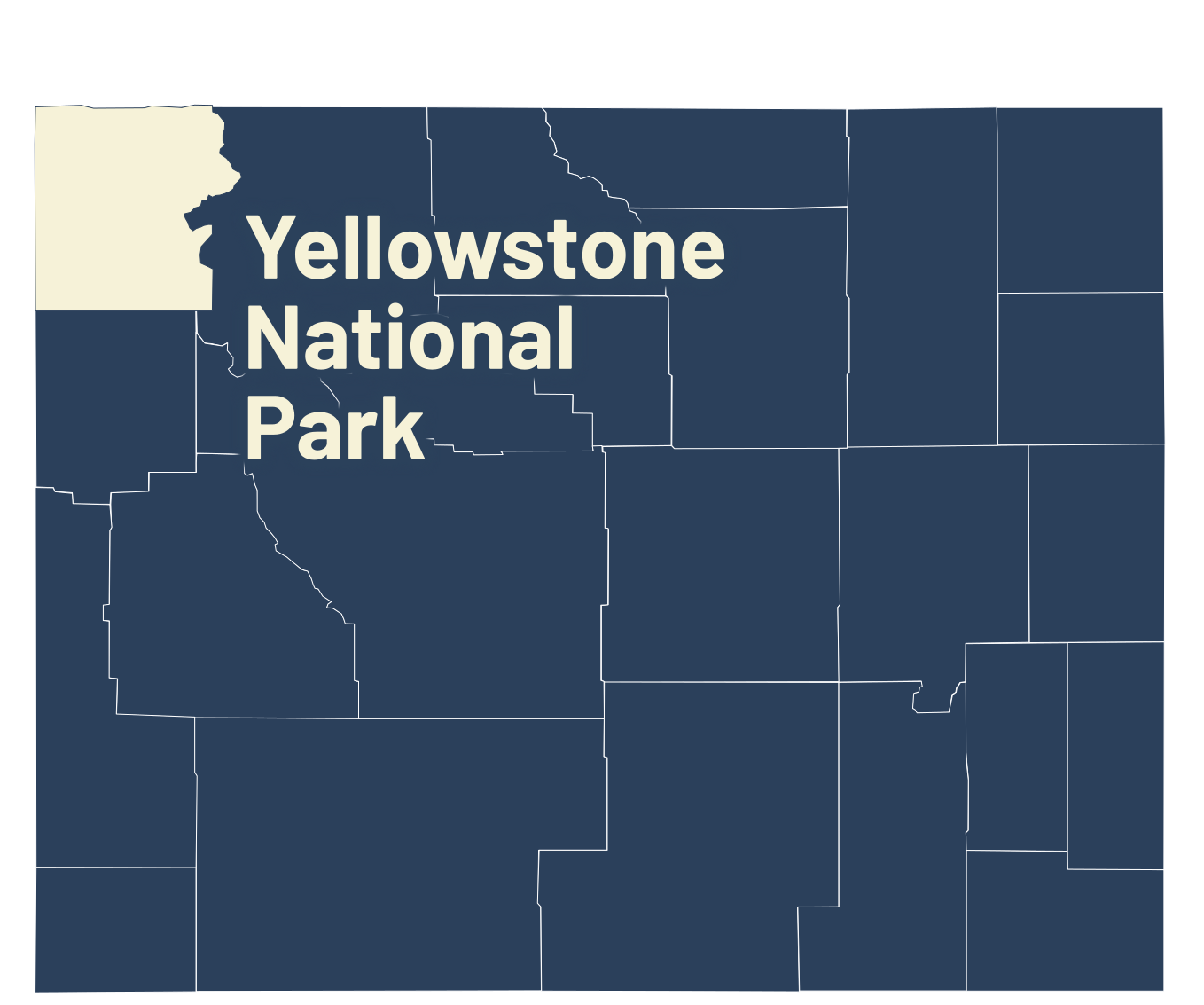
Yellowstone National Park is renowned for its pristine water, whether it’s the untamed flow of the Yellowstone River or the crystal-clear surface of Grand Prismatic Spring.
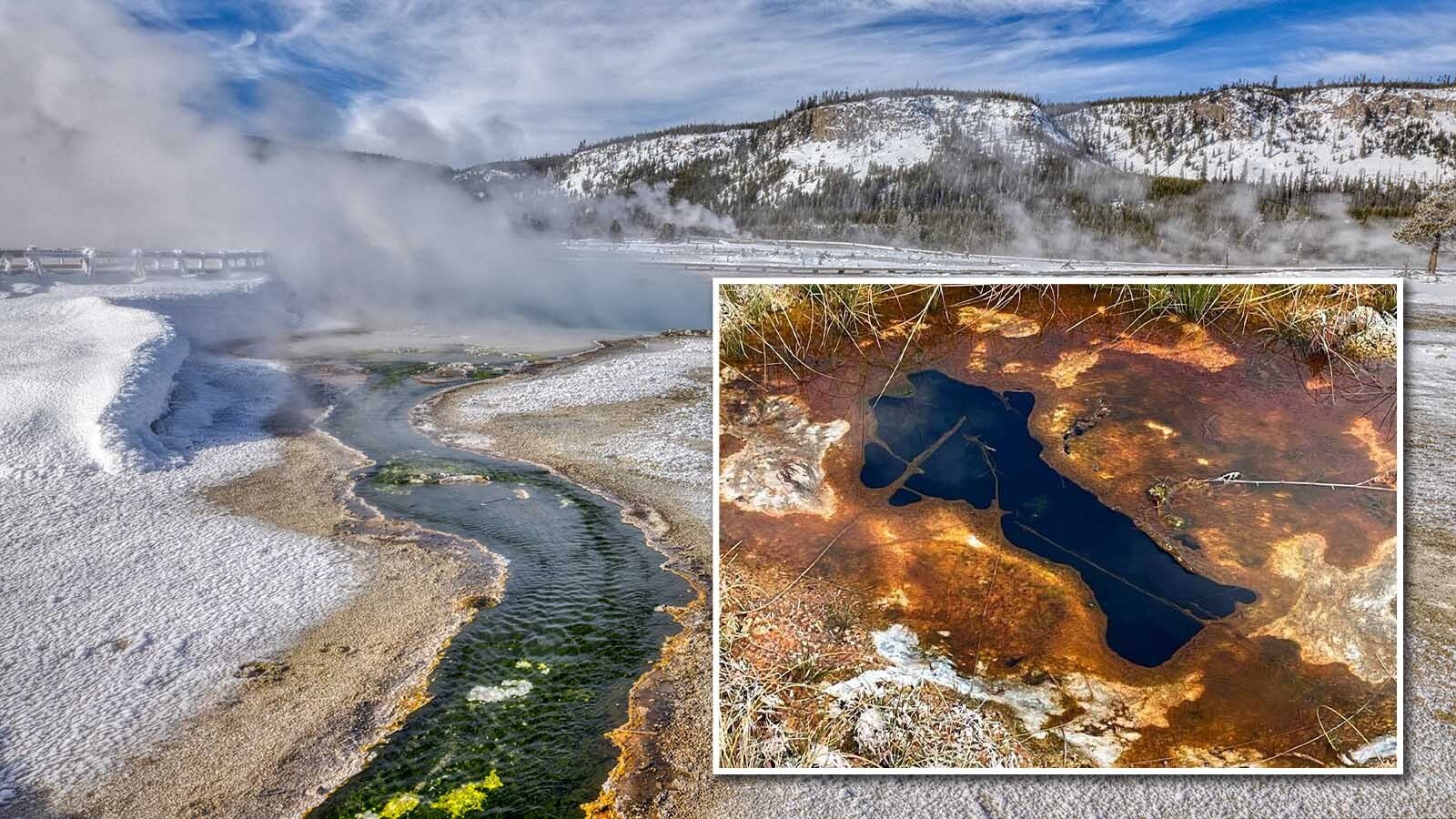
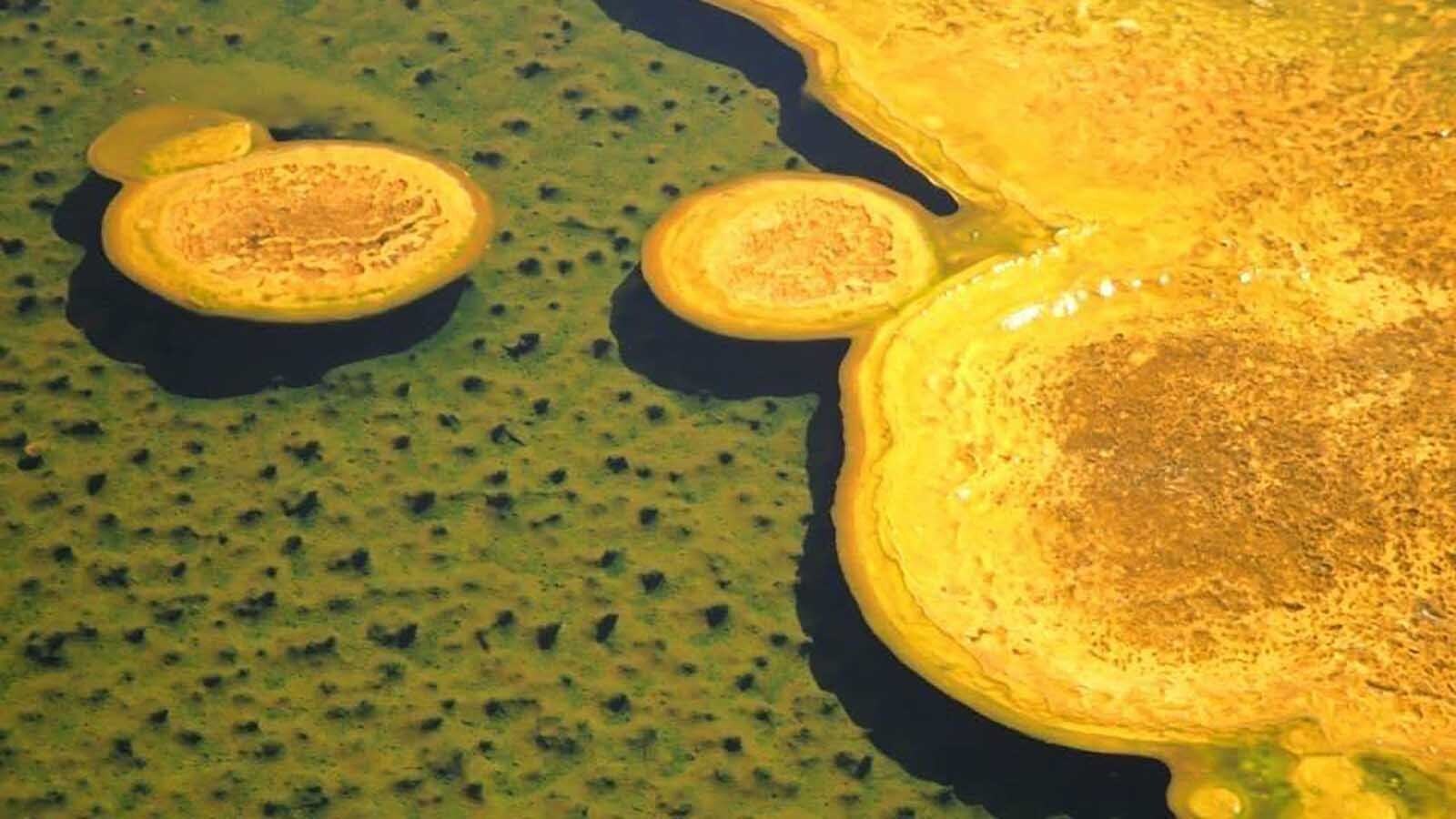
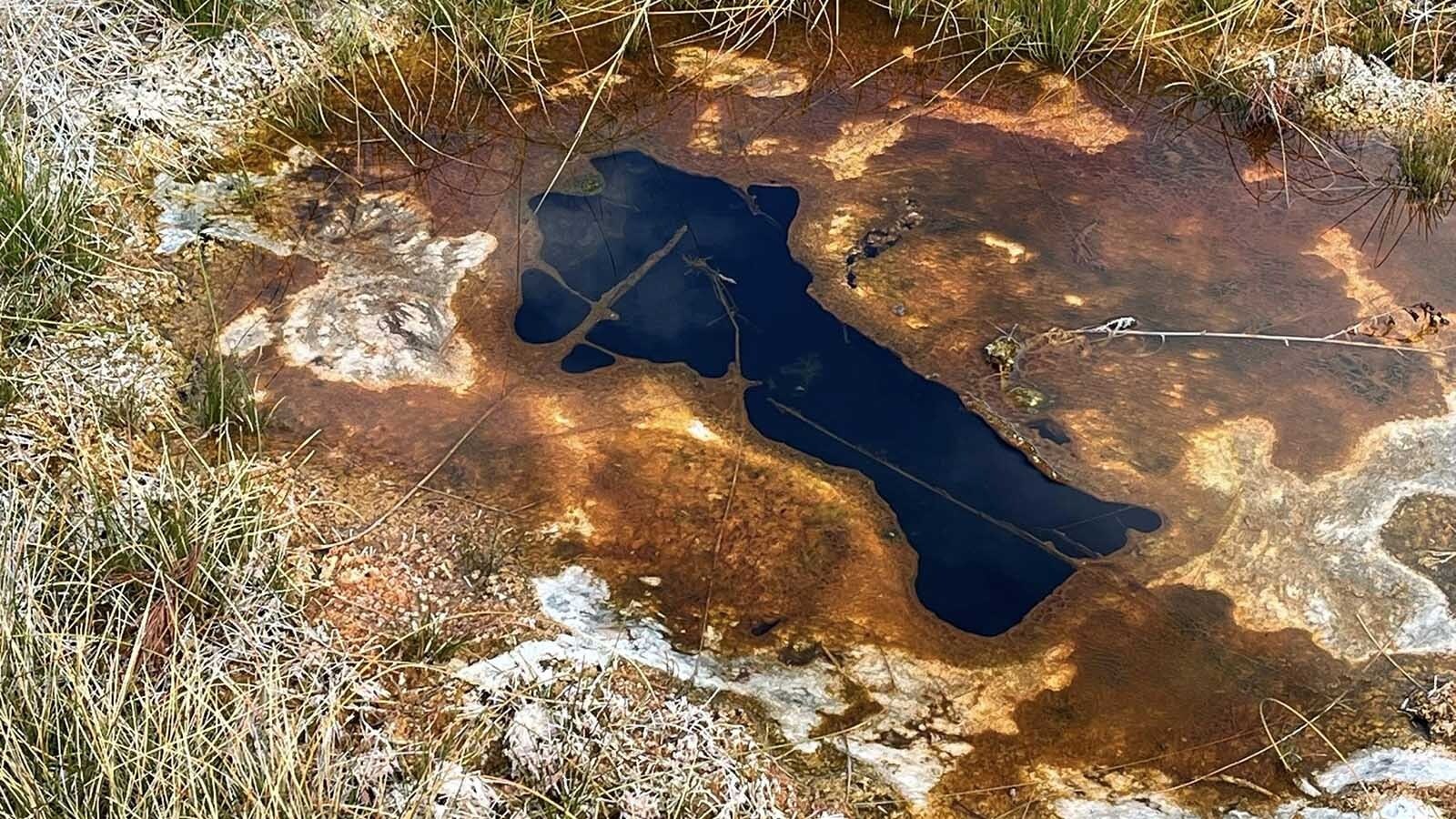
Meanwhile, there are certain pools covered with thick layers of oozing orange-yellow “scum,” as it’s affectionately called by some of Yellowstone’s geyser gazers. It’s like a partial scab concealing an otherwise beautiful pool of thermal water.
But it’s not scum. It’s Mastigocladus laminosus.
Of the many thermophilic organisms that thrive in Yellowstone, M. laminosus isn’t the most unique or widespread. However, ongoing studies into this complex cyanobacterium are revealing how it lives, which might help humanity live in a better world.
“It’s an organism that doesn’t get a lot of press,” said Scott Miller, a professor and evolutionary biologist in the division of Biological and Biomedical Sciences at the University of Montana. “Some people think they’re unsightly, but I’ve never thought of them that way. There’s a lot that’s really interesting about them.”
The Goldilocks Gunk
Chemistry is important in Yellowstone National Park. It’s what determines the color and occupants of the thermal features throughout the park.
“Old Faithful, Norris Geyser Basin, Mud Volcano, and Mammoth Hot Springs are all very different from each other,” Miller said. “You see different kinds of microbial mats living in these places because of differences in the chemistry of the hot spring waters.”
Those microbial mats are thermophilic cyanobacteria, microorganisms that thrive on the nutrients in the hot waters of thermal pools. There are several known species of cyanobacteria in Yellowstone, which often determine the color of the mats surrounding the pools.
According to the National Park Service, cyanobacteria are responsible for oxygenating Earth’s atmosphere billions of years ago. Without these microscopic organisms, life on Earth wouldn’t exist.
M. laminosus is like the Goldilocks of cyanobacteria. According to Miller, it only thrives in pools where the temperature and chemistry are just right.
“It only likes particular water chemistries,” he said. “The pH level of pure water is 7, and these things like water that’s at 7 or slightly basic, so 8 or 9.”
Miller added that M. laminosus doesn’t thrive in waters that are too hot or too cold. It can be found in natural hot springs and streams, but only if the temperature doesn’t exceed 165 degrees.
So, where can someone find M. laminosus in Yellowstone? Only in the spots that are just right, but that can and has been proven to be anywhere that’s just right.
World Traveler
In a 2007 study, Miller and biologists with Montana State University and the NASA Astrobiology Institute at the University of Oregon collected DNA samples from M. laminosus from several places in Yellowstone. Those spots included the Boiling River, Obsidian Pool, White Creek, and the Chocolate Pots.
“We focused a lot of our work at White Creek,” he said. “It’s the main fabric of the microbial mats there, rather than a minor component.”
They compared those DNA samples to others collected from M. laminosus mats in other thermal pools. However, those pools were in such far-flung places as Italy, Iceland, Japan, Guatemala, and New Zealand.
Many of Yellowstone’s cyanobacteria exclusively exist within the park. Miller and his team discovered that M. laminosus can disperse itself worldwide, and the global diversity of today can be traced back to a common ancestor in Yellowstone.
“They’re pretty good at long-distance travel,” he said. “They have these resting structures, kind of like spores, that allow them to tolerate dry, freezing conditions in the atmosphere. They’ve done a good job of getting around the world, as long as the hot spring they land in has the right kind of water chemistry.”
That’s an incredible discovery about how M. laminosus can travel, but that’s not the only reason this scummy cyanobacterium is gaining attention.
All-In-One Organism
Miller’s ongoing research on M. laminosus is focusing on “the nuts and bolts of how these organisms can live at high temperatures.” The essentials are how this surprisingly complex organism produces two essential elements.
Like many thermophilic cyanobacteria, M. laminosus is photosynthetic. Like plants, it converts the energy of the sun into chemical energy, with oxygen as the released byproduct of that reaction.
M. laminosus is also capable of a process called nitrogen fixation, a chemical process where nitrogen is converted into ammonia and other nitrates.
Every living cell in every living organism contains nitrogen, but it only exists as an inert gas in the atmosphere. Nitrogen fixation is an essential process that ensures the world is full of reactive nitrate compounds needed for life.
“Humans do it on an industrial scale to make fertilizer, but M. laminosus has the machinery inside its cells to do this process,” Miller said.
Miller said one reason M. laminosus can accomplish this is that it’s a rare multicellular bacterium. They can accomplish photosynthesis and nitrogen fixation through cell differentiation within the same organism, making it a surprisingly complex bacterium.
“They show a division of labor,” he said. “The photosynthetic cells need nitrogen, and the nitrogen fixation cells need the sugars made from carbon dioxide in the photosynthetic cells. These cells depend on each other for the organism to survive.”
That, according to Miller, is why understanding how temperature affects M. laminosus has been a major focus of study. M. laminosus is making the most of its environment and is slowly revealing the incredible ways it does it.
“This is where the potential utility comes in,” he said.
Photon Prototype
When it finds thermal water of the right temperature, M. laminosus can thrive and keep itself and the environment sustained with oxygen and nitrates. In these ideal environmental conditions, M. laminosus regularly accomplishes something remarkable.
It’s so remarkable that the U.S. Departments of Energy and Agriculture have been keeping an eye on Miller’s research. Specifically, they’re interested in the effectiveness of M. laminosus’s photosynthesis.
“Certain cyanobacteria produce a different kind of chlorophyll molecule than the green pigment we're used to seeing in plant leaves,” he said. “What they’re doing is absorbing what’s called far-red light or near-infrared radiation.”
Sunlight contains an abundance of photons, which is what plants absorb for photosynthesis. However, there are entire spectra within that light that Miller said is “invisible” to many plants because they don’t have the ability to absorb it.
When sunlight is less abundant, the chlorophyll molecules produced by M. laminosus can absorb the near-infrared photons in sunlight and convert them to chemical energy.
“It’s a process called the far-red photosynthesis,” he said. “They can make a different kind of chlorophyll that's good for absorbing light that we can't see, so we're studying the process of how the M. laminosus genes are involved in that.”
Miller and many scientists are still trying to “understand the basics” of far-red photosynthesis, but the potential applications are enormous.
While he acknowledged those applications are “above my pay scale,” Miller said initial tests have shown how far-red photosynthesis could revolutionize agriculture and solar energy.
“There's some interest in trying to engineer or improve crop productivity by putting M. laminosus chlorophyll molecules into plants,” he said. “Some estimates suggest that if wheat or corn could absorb far-red photons, productivity could potentially increase by 20% per unit area.”
Bioprospecting
Miller said M. laminosus has “played a really important role” in humanity’s understanding of the fundamentals of photosynthesis and nitrogen fixation. While his research might not change the world today, or ever, he sees the ongoing work as laying a foundation of understanding for an unknown and potentially limitless future.
“Downstream applications are part of the justification we use when we seek funding,” he said. “We can easily say what we’ll learn from these studies, but also, serendipitously, suggest where these insights might go farther down the road.”
This falls under the umbrella of “bioprospecting,” in which scientists study unique organisms in extreme environments to determine whether their adaptations can benefit humanity via industrial or technological innovation.
Yellowstone is a bioprospecting hub. A team of entomologists studying unique populations of wetsalts tiger beetles discovered a unique method of micro-grooving that allows them to retain water on their hydrophobic exoskeletons.
That research led to a U.S. patent for “a process for establishing uniform liquid films on polar and non-polar substrates.”
Miller said many scientists working in Yellowstone are adopting a bioprospecting perspective.
“There's a continuum of how researchers use Yellowstone for their research,” he said. “We are at novel organisms in extreme environments, so we can try to find enzymes, structures, or chemical processes that could be engineered for industrial or biotechnological purposes. The continuum is between what we can learn today and how it might be useful tomorrow.”
That’s why the “unsightly” scum that is M. laminosus could change the world. You have to start somewhere, which is why understanding its basic processes is so crucial.
“The outputs of my research aren’t necessarily directly applicable to these potential utilities, but the more we learn about these organisms, the more potential they may have down the road,” he said.
Respect The Scum
Many people might look at a thermal pool filled with M. laminosus and think it looks dirty or polluted. Some have called the thick, floating layers of secretions “unsightly.”
Miller doesn’t agree with that sentiment, and it’s not just because he’s a biased biologist. In most instances, mats of M. laminosus are quite beautiful.
“If anyone goes to White Creek, they’ll see long streamers or small tufts of blue-green attached to rocks that float and wave side to side in the current,” he said. “That’s how M. laminosus looks normally.”
Miller said M. laminosus usually stays submerged in the warm thermal water. When the mats turn into floating layers of yellow and brown at the top of a pool, they are probably “victims of their own success.”
“They can actually produce enough oxygen gas that the mat will lift up to the surface of the pool and start to bleach out, turning white or orangeish,” he said. “That might qualify as unsightly, but it’s an indication that the cyanobacteria are growing and really productive.”
Mastigocladus laminosus isn’t the most beautiful or successful cyanobacterium in Yellowstone, but it could become one of the most important. The secrets of its success, evident in thermal pools all over the world, could revolutionize the future.
“This one organism played an outsized role in our understanding of how light is harvested by cyanobacteria,” Miller said. “Now we have a lot more data, and there are more methods for getting this structural information. We'd like to use M. laminosus as a model to understand the mechanisms of evolution, and that could be a gamechanger. It’s a complex and underrated organism.”
Andrew Rossi can be reached at arossi@cowboystatedaily.com.