CHEYENNE — When the Elk Fire roared out of the Tongue River Canyon in the fall of 2024, it had already scorched tens of thousands of acres across the Bighorn Mountains, threatening municipal watersheds and homes around Dayton.
But at Steamboat Point, local prayers were answered.
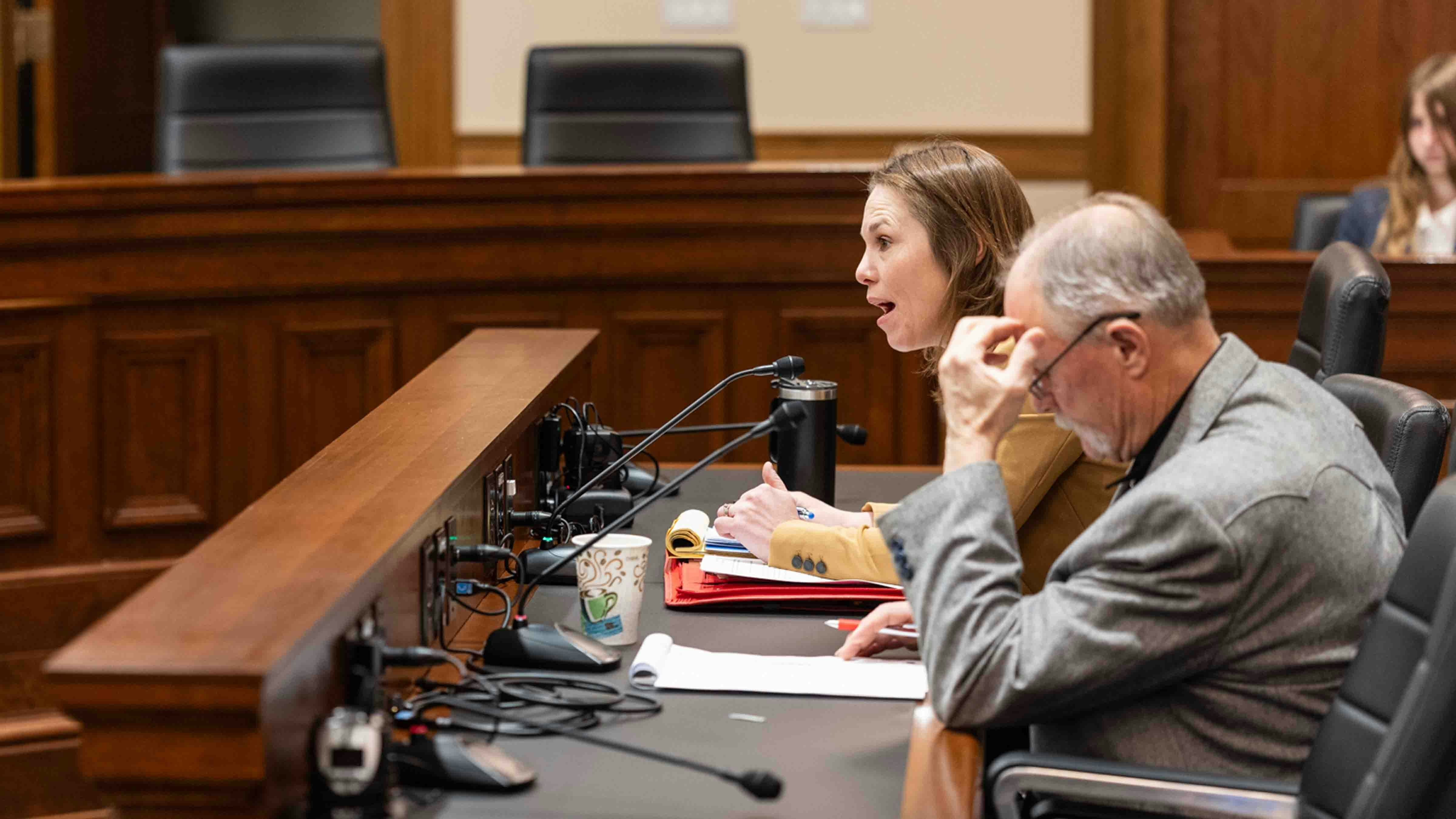
“As the fire came barreling out of the Tongue River Canyon, the fire burned into state forestry’s past harvest units and a large aspen enhancement project that was completed in coordination with Wyoming Game and Fish and the U.S. Forest Service,” Wyoming State Forester Kelly Norris told a legislative committee on Tuesday.
“This is where the fire stopped and saved three state-leased cabins, wildlife habitat, and essential grasslands for grazing and operations," she said.
The area had been treated over a period of years with timber harvests, patch clear cuts, and a large aspen enhancement project on state trust lands.
That project involved removing conifer encroachment from around aspen stands, allowing the aspens to regenerate and flush again — creating a natural break in the kind of dense fuel that drives catastrophic wildfires.
“The management that was completed on state lands resulted in lower suppression costs because there was no need to call that large air tanker in to put retardant down around those cabins,” Norris told the Senate Agriculture, State and Public Lands and Water Resources.
“There was no need to call in that heavy dozer to get a blade line around those cabins, around that infrastructure, and there was no need to bring in a whole other crew to try and do the mop-up on those lands," she said.
Then Norris posed a question that hung over the entire hearing: “If only the rest of that forest would have been managed that same way, how different the Elk Fire would have looked in the end?”
Paying Up
House Bill 78 would create a $3 million Forest Health Grant Program to fund the kind of preventative work that stopped the Elk Fire at Steamboat Point.
Sponsored by the Select Water Committee, the bill establishes a cost-share program administered by the state forester — up to 75% on state, local, and private lands, and up to 50% on federal lands using the Good Neighbor Authority program.
Eligible projects include enhancing water yield and quality, reducing catastrophic wildfire risk, increasing forest product production, and improving habitat conditions for wildlife and livestock.
But the logs themselves don’t cover the cost of all the restoration work — and that’s the fundamental problem the bill is designed to solve.
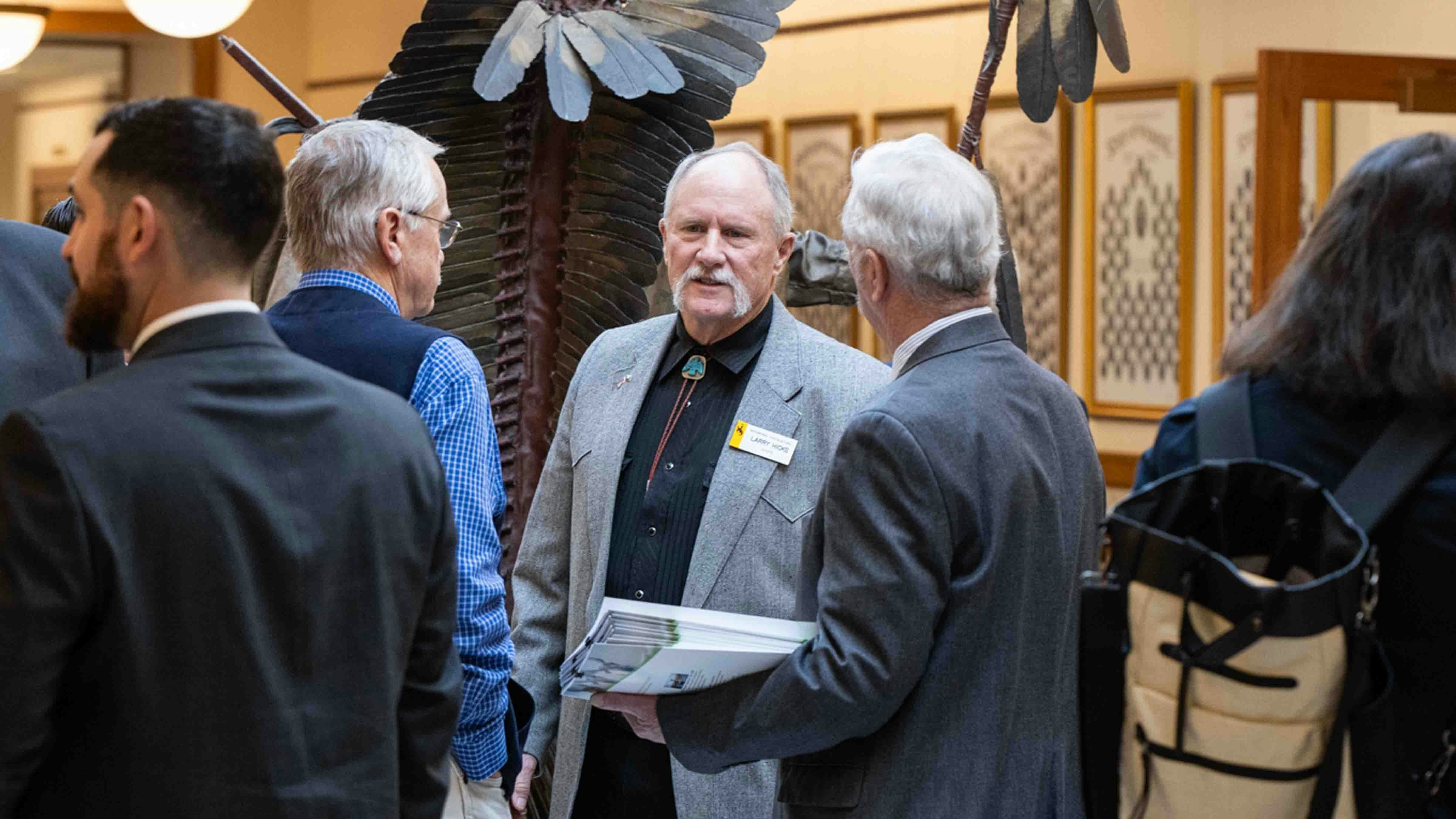
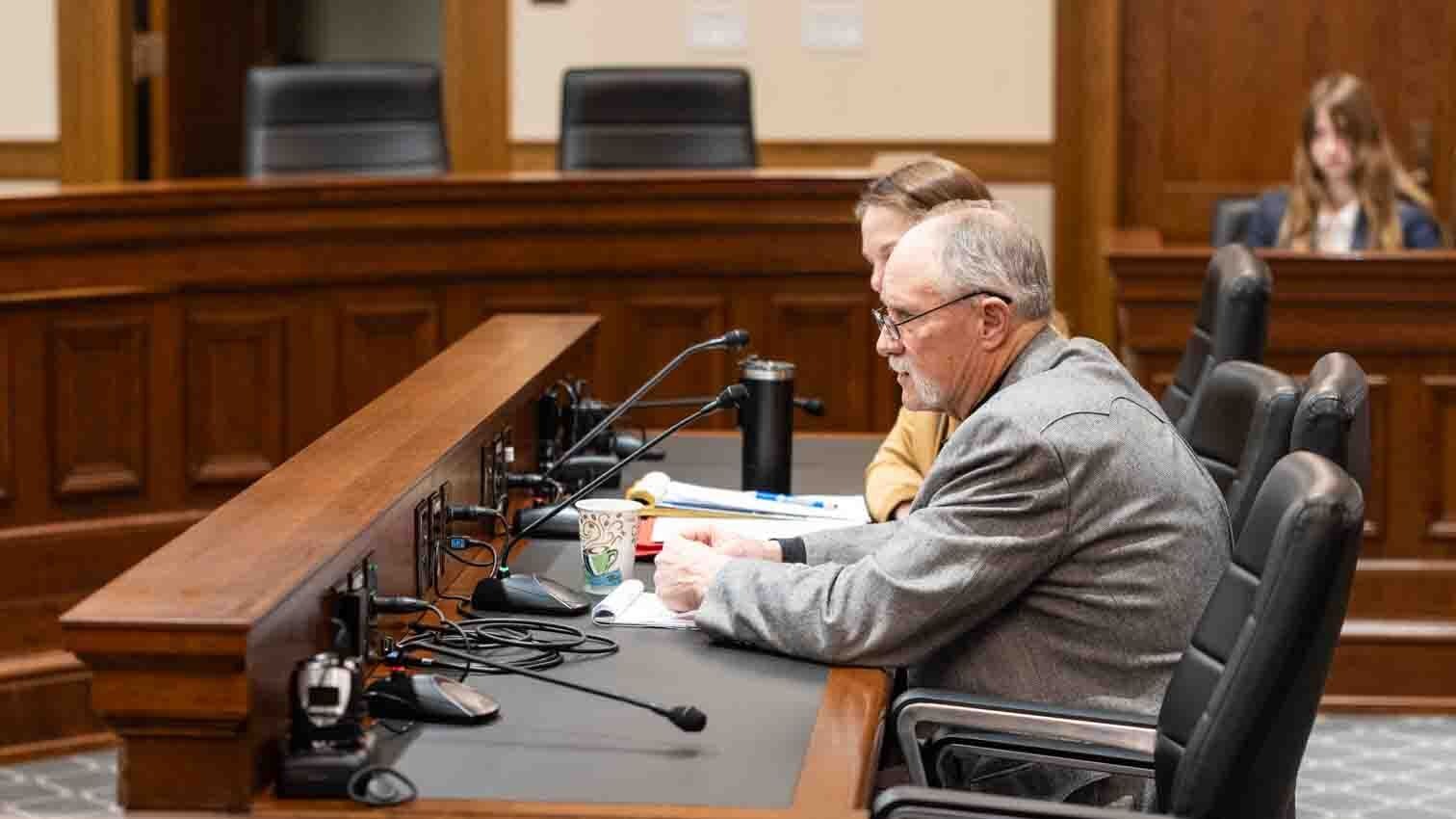
“Fuels projects are designed to get back to the protection of those resources,” Sen. Larry Hicks, R-Baggs, told the committee. “And so what we often times end up with what used to be called a below cost timber sale. In other words, the timber doesn’t pay for it.”
Hicks explained that timber revenues might cover 20% to 25% of a project’s cost, representing the landowner’s contribution. But nobody is going to make money on these projects — otherwise, the work would have already been done.
“The only way to effectively treat this stuff is we have to come in there and provide that additional cost to implement these projects,” Hicks said.
Norris put a finer point on the economics, noting that Wyoming’s mountain forests simply don’t produce the kind of timber that makes restoration self-sustaining.
“We don’t grow as tall and straight of trees in our mountains as places like Idaho and Montana,” she told the committee. “And so there is a cost to all of that work to get that work done.”
The state’s largest forest product is firewood, she said, and much of what’s being harvested is dead timber that in some areas is nearly two decades old.
Stars Aligning?
Hicks framed the bill as a rare opportunity, arguing that current federal policy under the Trump administration has created conditions that haven’t existed in his three decades working in forestry and natural resources.
“Never have I seen the stars align from a situation that our federal partners are at the table,” he said. “This is a tremendous opportunity to make hay when the sun shines.”
He cited devastating numbers to illustrate how decades of failed federal policy created the current crisis.
In 1980, the Medicine Bow National Forest harvested 44 million board feet of timber per year against an average annual growth of 50 million board feet. By the end of the Clinton administration, that figure had collapsed to 2.8 million board feet.
“And so the accumulation of just timber fuels, logs, all this has been substantial,” Hicks said. “At the same time, we lost industry.”
Sawmills in Laramie and Encampment closed. Only Saratoga has come back, he said, along with mills in the Black Hills, Uinta County, and scattered small operations across the state. Some logs cut in the Bighorn Mountains have to be trucked all the way to a mill in Livingston, Montana.
Based on the latest aerial surveys, roughly 26% of all forested lands in Wyoming are currently infected with beetles and disease and likely to see high levels of mortality over the next 15 years, Hicks told the committee. He called the bill a modest attempt to address what amounts to tens of millions of acres of tinder fuel that’s increasing, not decreasing.
The return on investment is compelling, he said. For every dollar spent reducing fuels, the state saves $7 in suppression costs.
“A stitch in time saves nine,” Hicks said. “It’s a good investment of our dollars.”
On The Ground
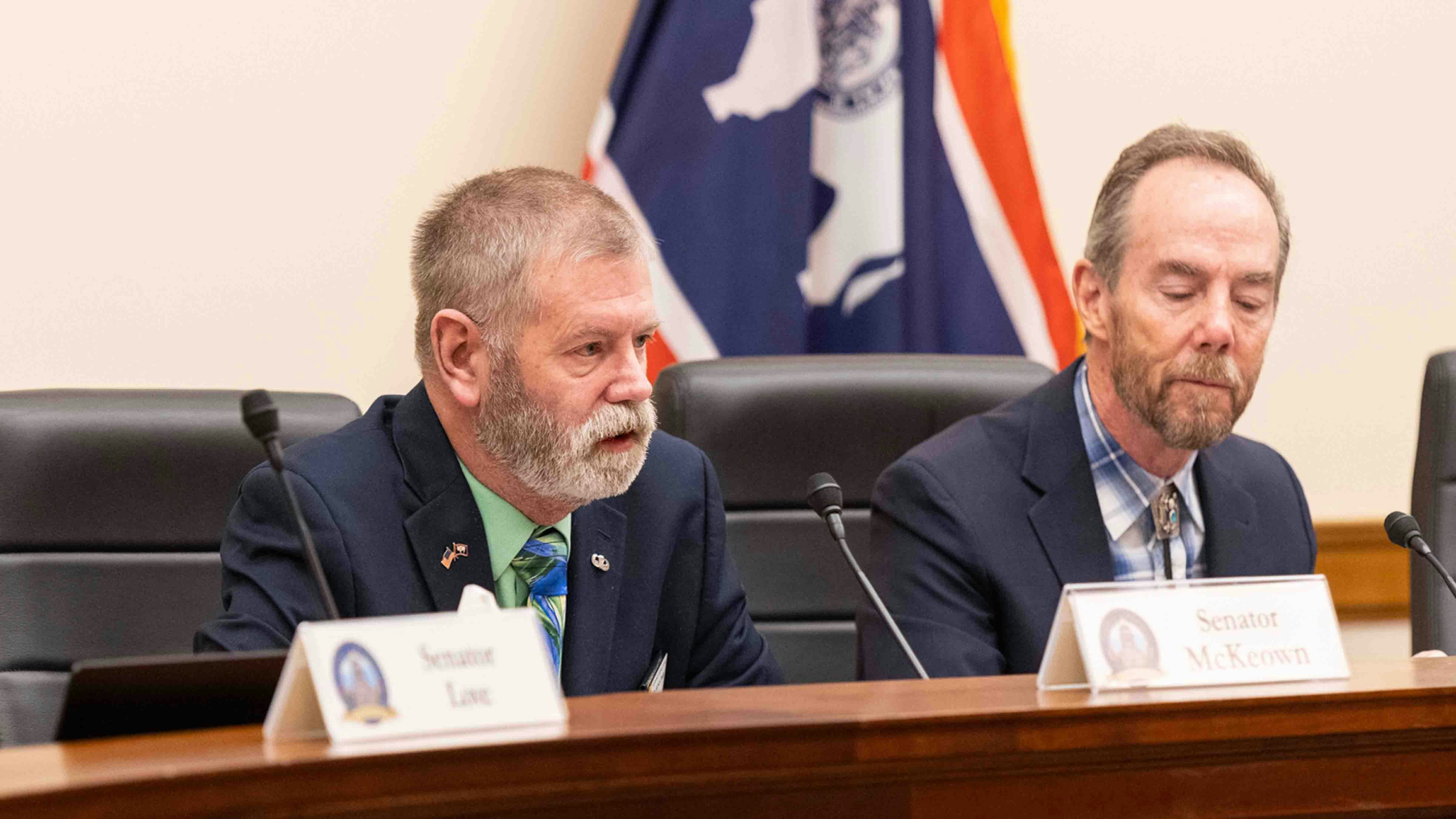
Sen. Troy McKeown, R-Gillette, pressed Norris on whether the state could simply walk onto private land to do the work. She said it could not.
“In order for this project work to be done, it’ll be done through either state agencies or local governments,” Norris said. “And that has to be agreed upon in contract and contract landowner agreements.”
McKeown also asked whether the remaining timber was good enough for a paper mill. Hicks said the state has no paper mill infrastructure, and the wild fluctuations in federal timber policy over decades have made large-scale investment impossible.
“Nobody’s willing to make that investment because of the historic lack of access to that federal timber,” Hicks said. “It’s just not good business sense.”
Sen. Bob Ide, R-Casper, the committee chairman, noted he had personally worked in two logging camps — one outside Tie Siding near the Colorado border and another near Meeker, Colorado.
“Good business,” Ide said. “We need to ramp it up.”
Fire Lines
Brent Godfrey, fire warden and fire chief for Big Horn County, told the committee his father was a logger who used to clear cut sections of the Bighorns 50 to 60 years ago, creating fire breaks and encouraging new tree growth.
“Well, all that’s gone away,” Godfrey said. “It’s starting to get overgrown.”
He described a lightning strike last year in a mitigated area where the fire grew to only about half an acre before crews snuffed it out — instead of becoming a major forest fire. The Elk Fire, he said, was the perfect example of what happens when forests go unmanaged.
Chris Kocher, the Washakie County fire warden and Worland fire chief, testified on behalf of the Wyoming Fire Chiefs and Rural Fire Association. He described serving as incident commander on several fires last summer, including three emergency fire suppression account fires in Washakie County alone.
“There’s occasions where it becomes a point where we just don’t even have a point to start,” Kocher said. “It becomes an untenable, an unwinnable position.”
Without fuel mitigation ahead of time, firefighters are forced to fall back two or three ridges, losing grazing land and grassland in the process, he said. But on the Spring Creek fire last summer, significant mitigation work along BLM and private lands gave his crews a place to catch the fire and stop it.
“Had we not had some mitigation there, there was no way in the drainage that we were in that we would have caught it,” Kocher said. “We would have lost another tens of thousands of acres.”
Broader Benefits
As district manager of the Weston County Natural Resource District, Caleb Carter testified remotely to highlight the leveraging power of the grant funding. Conservation districts could use HB 78 funds as match money to unlock additional dollars from federal sources and nonprofit organizations like the Mule Deer Foundation, Muley Fanatics and Rocky Mountain Elk Foundation, he said.
“These entities are very interested in supporting forest health work, but their funding requires a match,” Carter said. “So the real benefit of having this money is it would be able to be utilized to leverage additional funds to expand this effort even more.”
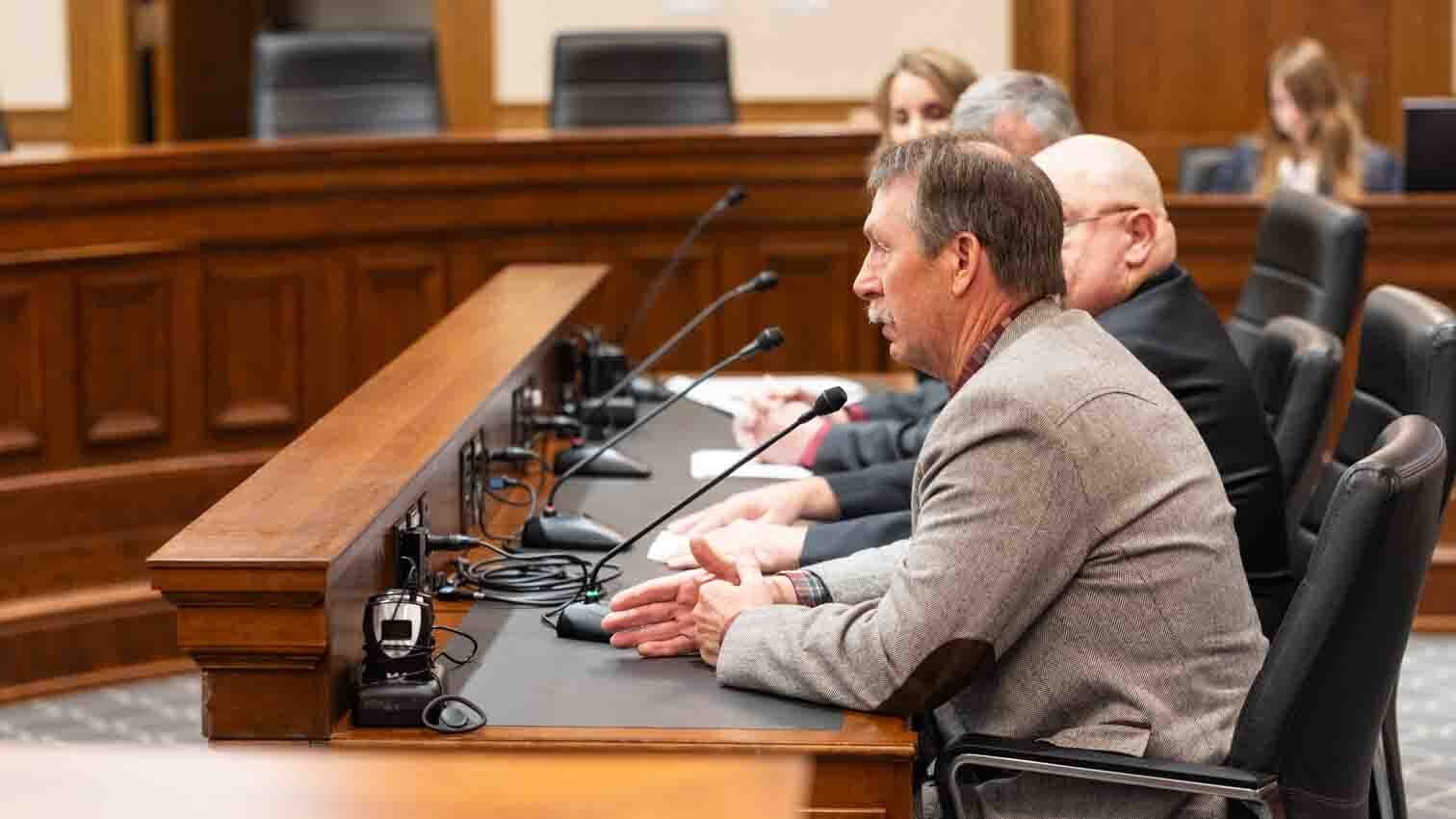
Dave North, a Natrona County commissioner testifying on behalf of the Wyoming County Commissioners Association, said the state’s fire problem runs far deeper than timber.
“Every one of us have been affected by wildfire in this state,” North said. He ticked off a list: the fires on Union Pass and out of Jackson, Casper Mountain — which he called a tinderbox — the Black Hills, and other areas across Wyoming.
“In the ’70s, we had some of the healthiest forest in the country,” he said. “And it was because of logging.”
No Opposition
Nobody spoke against HB 78 on Tuesday. No conservation groups testified in defense of the federal roadless rule, which conserves 3.2 million acres of Wyoming forests and which state forester Norris said could be rescinded under the current administration.
If the roadless rule changes, she said, particularly in forests like the Bighorns and the Bridger Teton, “there could be some real opportunities for restoration work ahead of us.”
HB 78 passed out of the Senate Agriculture Committee Tuesday with a unanimous 5-0 vote.
The Roll Call Vote
Ayes: Ide, Crago, Love, McKeown, Pearson
David Madison can be reached at david@cowboystatedaily.com.