CHEYENNE — Anyone who wants to understand the Wyoming Legislature should try calving out a pen of first-year heifers.
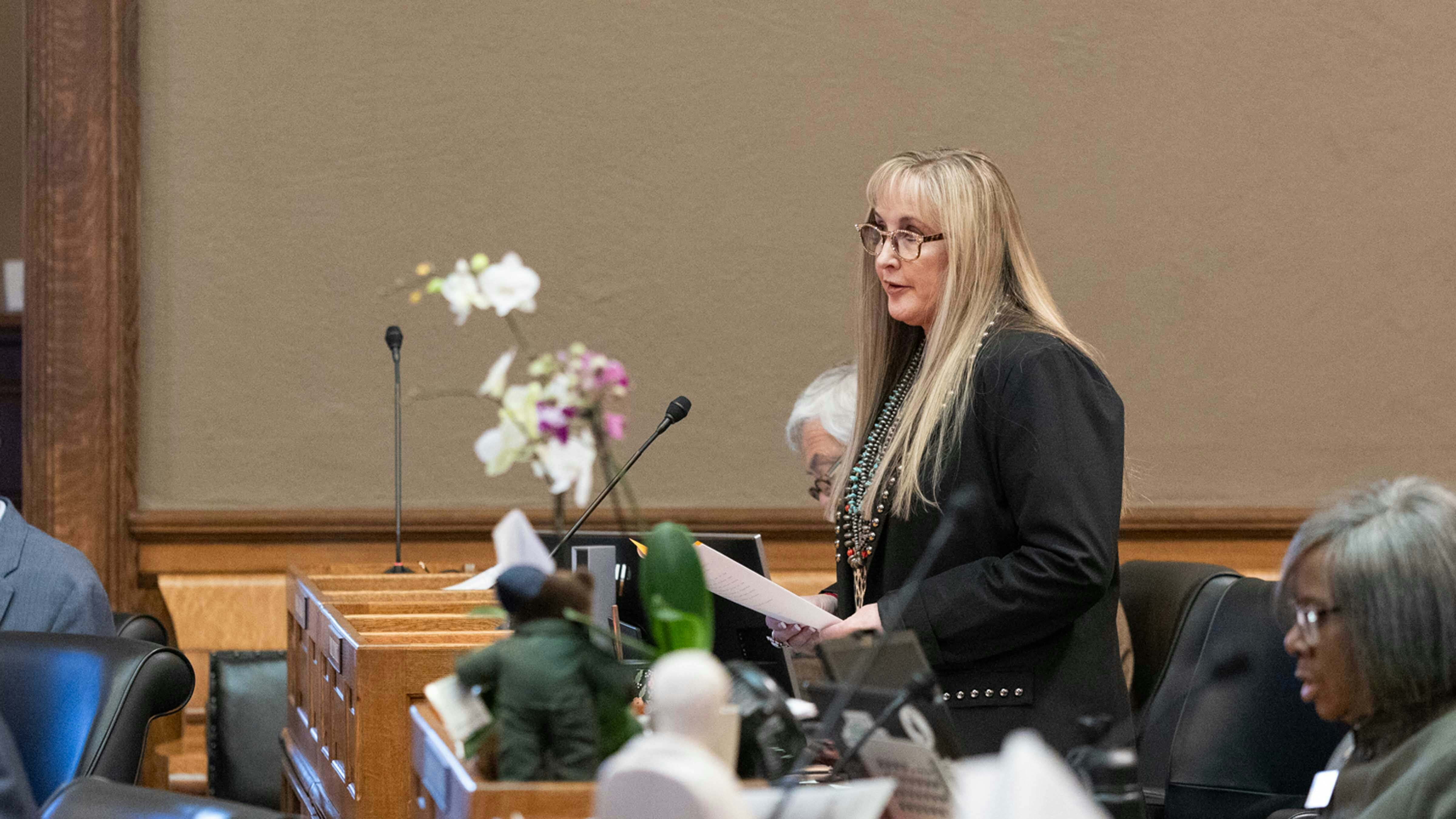
That was the advice offered Tuesday by Sen. Cheri Steinmetz, R-Torrington, moments after the bill she’d been trying to amend stalled on the Senate floor.
“Heifers are pretty unpredictable,” Steinmetz said. “You watch and you watch, they may or may not show, and then all of a sudden, there they are, and there you are, and you better be ready, whatever time of day or night.”
On the Senate floor Tuesday, there appeared to be a sudden swing in sentiment about the Wyoming Business Council.
On Feb. 9, only 10 senators voted to dismantle the Business Council outright, losing 21-10. Two weeks later on Tuesday morning, 15 senators voted for Steinmetz’s amendment to Senate File 125, requiring the council to document the public purpose and state benefit of every grant it awards — falling just one vote short of passing.
Five senators who had voted to save the agency on Feb. 9 crossed over to support the amendment: Sen. Cale Case, R-Lander; Crum; Sen. Larry Hicks, R-Baggs; Sen. John Kolb, R-Rock Springs; and Sen. Taft Love, R-Cheyenne.
“I think people are evaluating what things look like going forward, and the more information they have, the more informed decisions they can make on behalf of the public and their constituents, and also upholding their oath to the Constitution,” Steinmetz told Cowboy State Daily.
Conceived as a sweeping reform measure targeting the Wyoming Business Council, SF 125 essentially died on the floor when the bill’s sponsor, Sen. Gary Crum, R-Laramie, asked to lay the bill back one legislative day. This could kill it because Tuesday was the deadline for bills to pass third reading in their house of origin. But lawmakers can overcome that rule and resurrect it with a two-thirds vote.
SF 125 seeks to freeze the business council from taking on any new programs or expanding existing ones for a year, then shut down all new grant, loan, and bond activity entirely by April 2027. It also originally sought to create a 13-member task force to evaluate every function of the agency and recommend to the 2027 Legislature which should be retained, reformed, privatized, transferred or eliminated.
Still Alive
Despite the bill’s struggle, the business council itself remains alive in both chambers’ draft budgets.
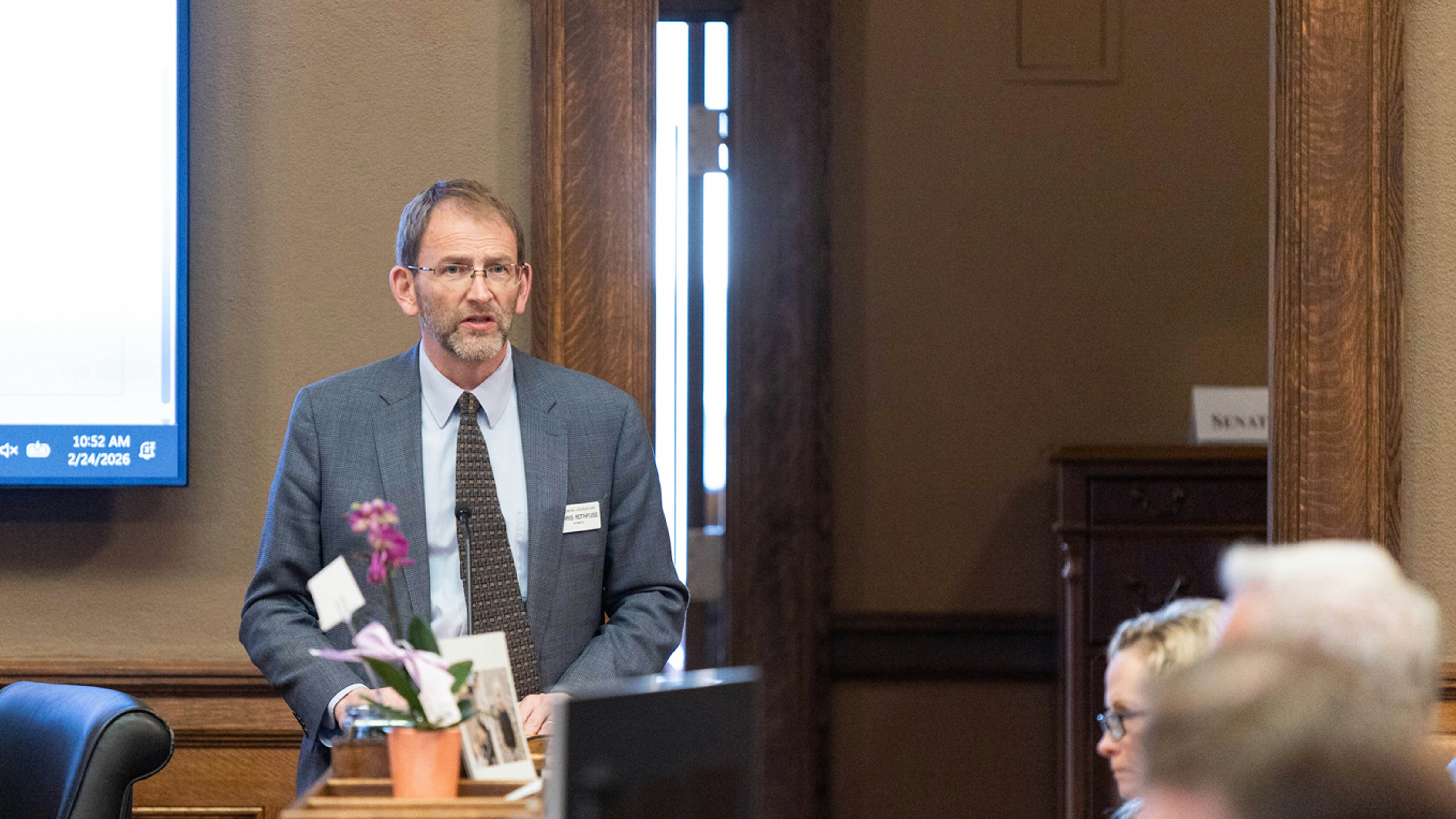
“And so the question is, how much money do they have?” Sen. Chris Rothfuss, D-Laramie, told Cowboy State Daily.
The House’s draft budget contemplates giving the agency $9.8 million to operate for one year while lawmakers scrutinize it. The Senate’s version would fund it at $55 million for the biennium — half of its budget request, but on par with the governor’s recommendation.
“They’re in pretty good shape from the Senate side,” Rothfuss said. “They’re not in very good shape over on the House side, and once the conference committee gets together, we’ll see where they end up positioning it.”
Next Round
The debate over the Business Council’s future will continue in the interim either way. A committee amendment Rothfuss successfully advanced earlier this month would route the review to the Joint Minerals, Business and Economic Development Committee rather than the standalone task force originally proposed.
“If there are concerns, it’s our committee that is responsible for working with the business council to address those concerns, and we’re happy to do it,” Rothfuss said.
His sense is that the sharpest criticism is aimed at one program in particular.
“There’s a lot of concern about the Business Ready Community program and the grants associated with it,” Rothfuss said. “I have not heard any concern from anyone about any of the rest of the programs that the business council runs.”
Two Views
The constitutional question at the heart of Steinmetz’s concerns about the business council could follow the issue into the interim.
Her amendment was rooted in a 2005 LSO research memo that compiled two Attorney General opinions on the constitutional limits of public expenditures — one from 1986 on the legality of government funds aiding private entities, and a second from 2003 that applied the same framework specifically to the Business Council’s Business Ready Community Grant and Loan Program.
The 2003 opinion stated that “the purpose of the constitutional prohibition is to prevent governmental bodies from depleting the public treasury by giving advantages to special interests, or by engaging in non-public enterprises.”
That’s what Steinmetz says she’s seen happen in her district.
“When a business can get the thumb on the scale of government funds, there really should be a public purpose to that, if we’re going to unbalance the scales with other businesses around them,” Steinmetz told Cowboy State Daily. “And that has been a problem in my area in Goshen County in the past.”
The state’s aging infrastructure — irrigation systems, municipal water and sewer lines, electrical systems approaching 100 years old — represents a better use of those dollars, she argued.
“We’ve absolutely got to make sure that our funds are being used adequately for the citizens of the state, not just to benefit private businesses,” Steinmetz said.
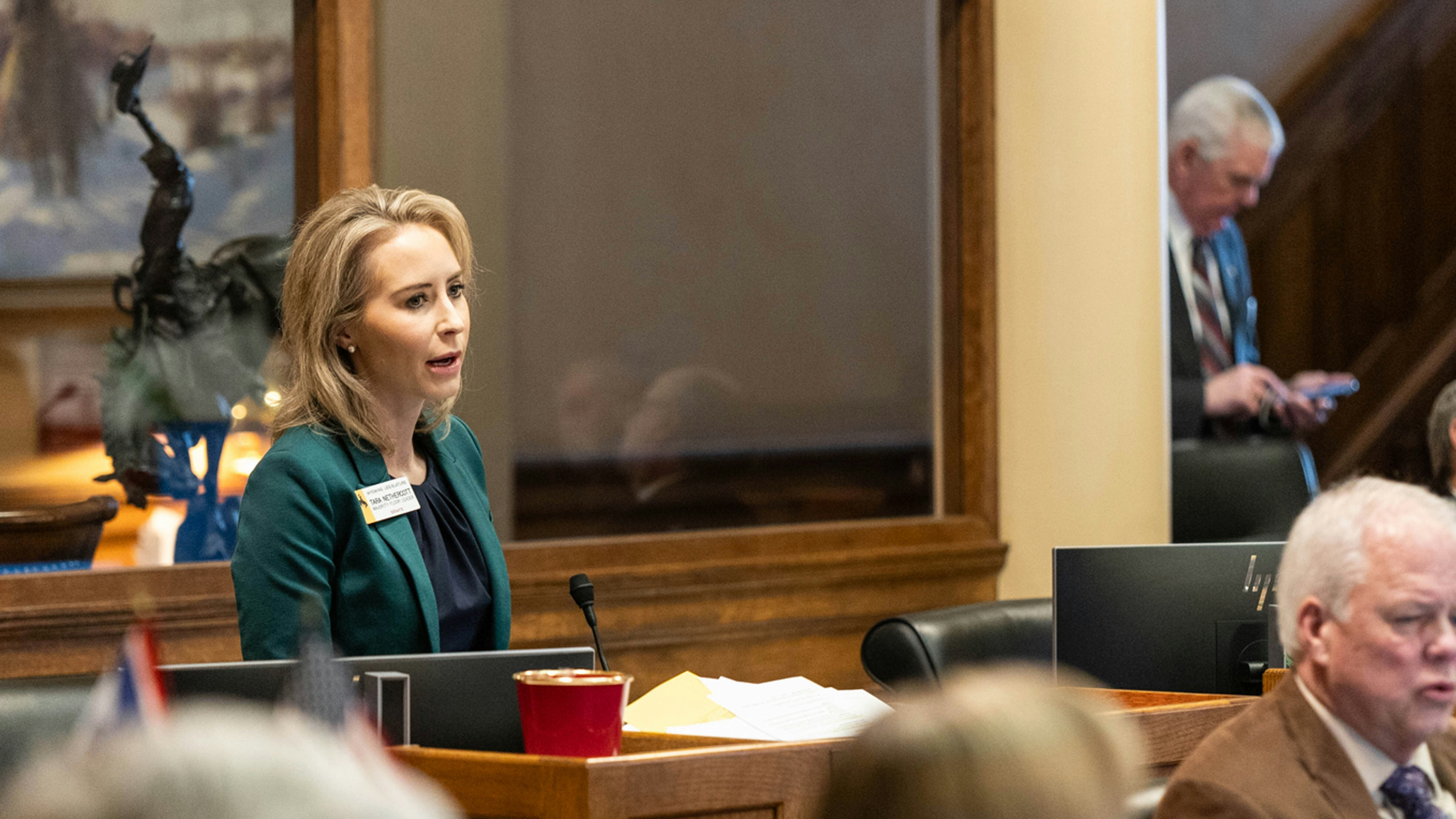
On the floor Tuesday, the Senate’s majority floor leader, Sen. Tara Nethercott, R-Cheyenne, argued the business council’s spending already passes constitutional scrutiny.
Wyoming Attorney General opinions, she told the chamber, “have no precedent. They have no force and effect of law. That is the law.”
Citing a Wyoming Supreme Court ruling on the Wyoming Community Development Authority, Nethercott said the court found that WCDA lending programs did not violate Article 16, Section 6 of the Wyoming Constitution, “provided no debt is created in the state beyond the current year’s taxes,” and that any private benefit would be “purely incidental and not within constitutional prohibitions.”
Nethercott told her fellow senators that by questioning the constitutionality of the business council, “We’re walking into very dangerous territory.”
How It Works
Rothfuss pushed back on the premise that the Wyoming Business Council funnels public money to private companies.
“The public dollars have always gone through the business council, through Business Ready Communities, to public dollar projects,” Rothfuss told Cowboy State Daily. “In other words, they fund infrastructure. They fund things that are public resources and that facilitate business. So it’s never dollars going to a business.”
As an example, he pointed to data center development in Laramie County, where a Business Ready Community grant might fund the public infrastructure — roads, utilities, zoning — needed to make a site viable for private investment. The state or municipality continues to own those resources.
And the concern Steinmetz raised about the agency tipping the competitive scales? Rothfuss said the council is specifically structured to prevent it.
“The business council is tasked with not doing that,” he said. “They have that as one of their required missions. They are not supposed to be entering a competitive business space where they’re tipping things towards one business over another business… Because they don’t want to be picking winners.”
David Madison can be reached at david@cowboystatedaily.com.