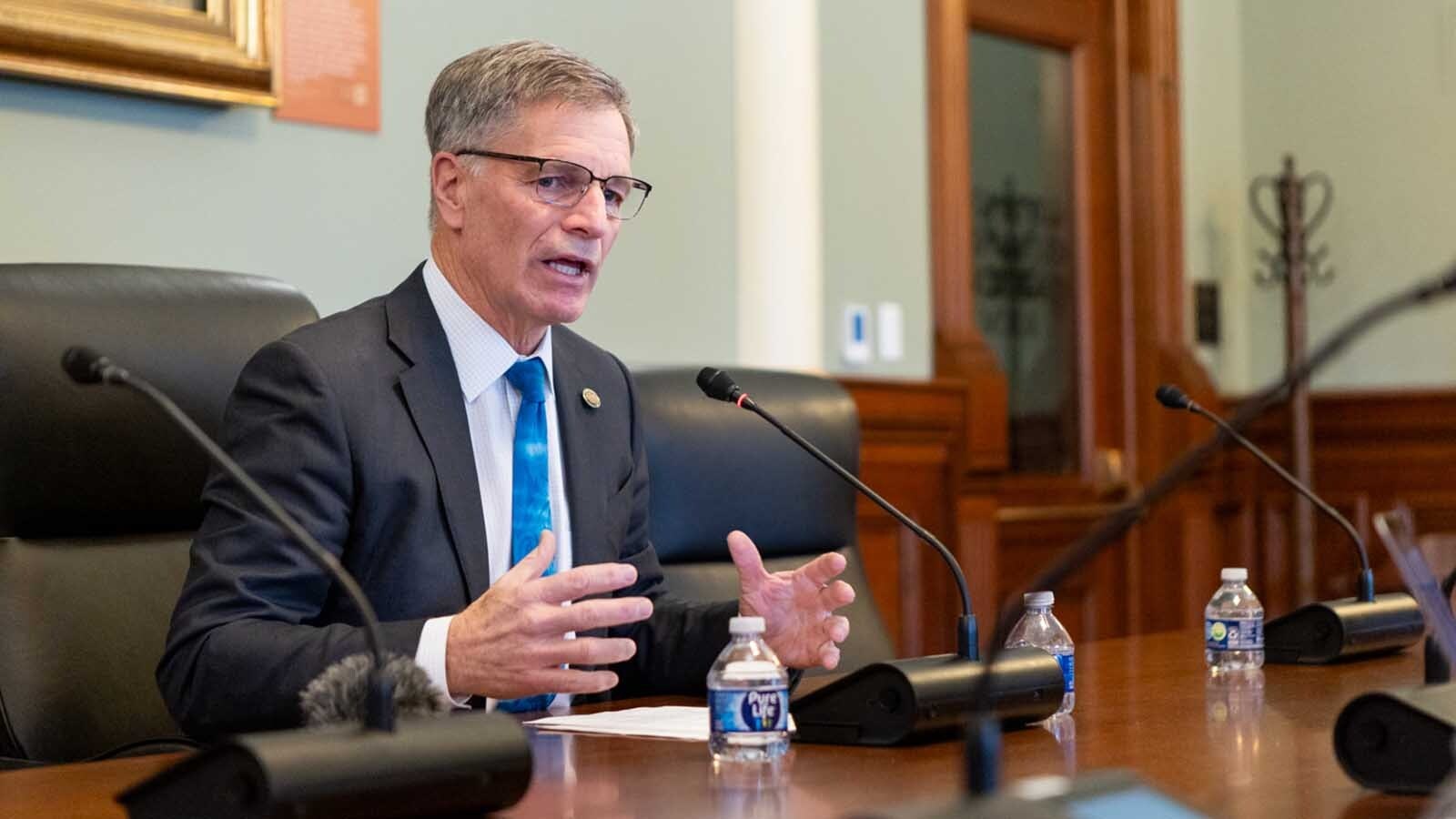
Wyoming’s governor was cautiously optimistic Tuesday as he discussed the state’s two-year spending plan, though he said many of the state House of Representatives’ $171.4 million in reductions from his own budget plan are “cuts in name only.”
Gordon hosted reporters at a roundtable press conference Tuesday - one day after the state Senate and the House of Representatives sent each other different budget drafts bearing $170 million in differences across roughly $10 billion in planned expenses.
It’s a slim gap compared to the $900 million chasm the two chambers overcame in the last budget session, 2024.
“It’s obviously been pretty wild and wooly for a bit,” said Gov. Mark Gordon, adding, “We’re generally encouraged by what we’re seeing.”
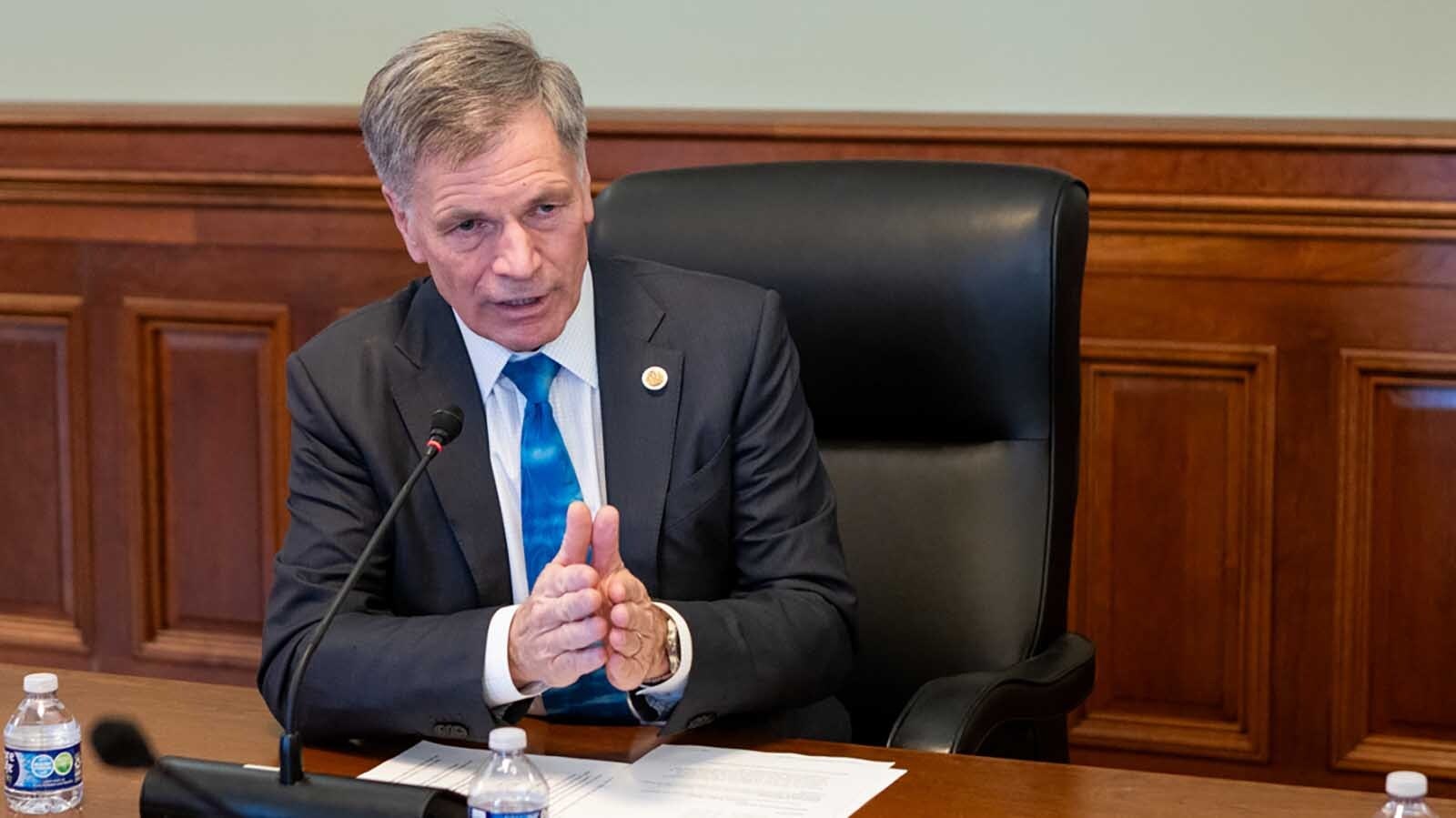
Gordon later said, in response to a Cowboy State Daily question, that at least half of the House’s budget reductions appear to be for show - or, not actual and lasting cuts.
“I would say there are some sizable cuts the House made, which are really cuts in name only,” said Gordon. “When we make cuts we should understand what they are, not anticipate there’s going to be a subsequent budget we can come in and add back into.”
Some examples of reductions on the House side that lessen the bottom line of its budget bill but are either spinoffs or deferrals are:
- Separating a $615 million federal grant package for rural health care into its own bill;
- Opting to fund some agencies’ technology upgrades for just the first year of the two-year budget - which detractors said would only drive those agencies back and plume the odd-year, supplemental budget and not comprise a total cut;
- And denying the Public Service Commission the authorization to use $600,000 from the fees it collects, to upgrade its docket system.
The supplemental budget the Legislature crafts in odd years is meant to address changes in the economy that the two-year budget didn’t foresee, Gordon told Cowboy State Daily.
But, Gordon’s chief of staff Drew Perkins added, legislators do face a temptation to delay expenditures for that odd-numbered year and “come in a few shekels under the governor.”
Gordon voiced disappointment Tuesday over the House opting not to fund the $3.53 million “Sun bucks” program, a half-federal, half-state-funded summer lunch program for kids.
And The House’s Negotiators Are…
On Monday evening, Neiman announced the five negotiators, all Republicans, he’s sending into a joint conference committee to smooth out the budget differences.
Those are:
Neiman, House Appropriations Chair John Bear (Gillette); Majority Floor Leader Scott Heiner (Green River); and appropriations members Reps Abby Angelos (Gillette) and Ken Pendergraft (Sheridan).
Neiman said the conferees will work with the Senate and will also "diligently work to defend the House position."
Senate President Bo Biteman, R-Ranchester, had not announced his chamber’s five negotiators as of Tuesday evening, though he told Cowboy State Daily on Monday that three of the five will be Senate leadership: Biteman, Senate Majority Floor Leader Tara Nethercott, R-Cheyenne; and Senate Appropriations Chair Tim Salazar, R-Riverton.
Numbers Right Here
The Senate used Gordon’s $10.1 billion draft budget as a starting point for its work this budget at the Capitol, while the House started from the Joint Appropriations Committee’s budget draft, which was $481 million lower.
(Gordon’s original budget draft was $11.13 billion, but these numbers have been adjusted to account for expenditures lawmakers separated into spinoff bills apart from the budget.)
The Senate ended $1.4 million under Gordon’s recommendation, after rounds of debate the chamber’s leaders cast Monday as productive and organized.
The House ended $171.4 million under the governor’s recommendation after fiery debates that delved into political philosophy and the true role of government; which House Speaker Neiman, R-Hulett, cast in a Tuesday-morning interview as a faithful and tenacious representation of Wyoming residents.
Bear Disputes
Bear disputed Gordon’s statement about “cuts in name only.”
“This from the man that said (the Joint Appropriations Committee) took a chainsaw to the budget,” said Bear in a Tuesday-evening text message response to a request for comment. “So now it’s a tomahawk?”
“I hope he will see the need to slow the growth of state spending as we look at a looming deficit in K-12 funding,” Bear added.
Recent longterm estimates have shown Wyoming plunging into a deficit in about four years.
Some lawmakers, Bear among them, have urged caution and cuts for Wyoming in response.
Other lawmakers have said those long-term reports are unreliable and generally more dismal than reality.
Two of the major factors influencing Wyoming’s fate are:
On the one hand, State Treasurer Curt Meier in October celebrated $1.86 billion in investment revenues, a watermark that, in a nonce, surpassed mineral severance taxes and royalties by $660 million.
Gordon announced Feb. 9 during his State of the State address that after the November release of his budget release, the state’s revenues plumed even more, and, “we’ve harvested another $250 million in investment income.”
On the other hand, Wyoming is under court scrutiny and pressure to produce a high-caliber K-12 education package.
It’s now contemplating adding around $290 to its $3.6 billion, two-year education funding model.
Bear estimated Tuesday that the “status quo” from the House or Senate position could drive Wyoming’s checking account and school funding account into “the hole” in about four years.
“What are the things that could fix this?” began Bear. He said Wyoming could be better off if its return on investments exceeds the projection of 3%.
“We could have a war, and the price of oil might take off. That could save us. We could also have a downturn,” he said.
Still, Bear urged House colleagues to work to “slow the growth of government.”
Former House Speaker Steve Harshman, R-Casper, warned lawmakers to be wary of projections, saying aren't based on all factors.
Correction - an earlier version of this story said the projections are five years out, when they are four.
Clair McFarland can be reached at clair@cowboystatedaily.com.