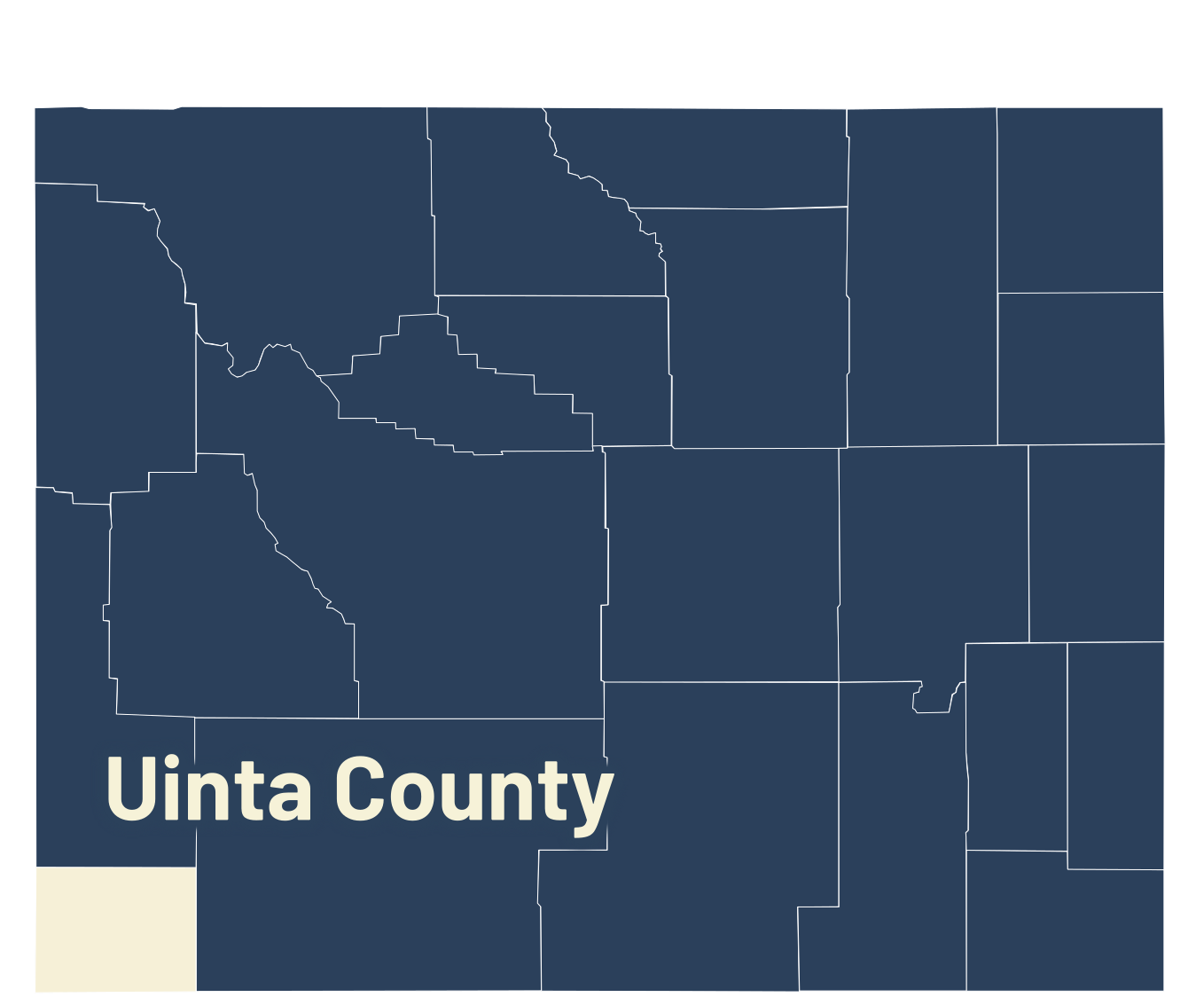
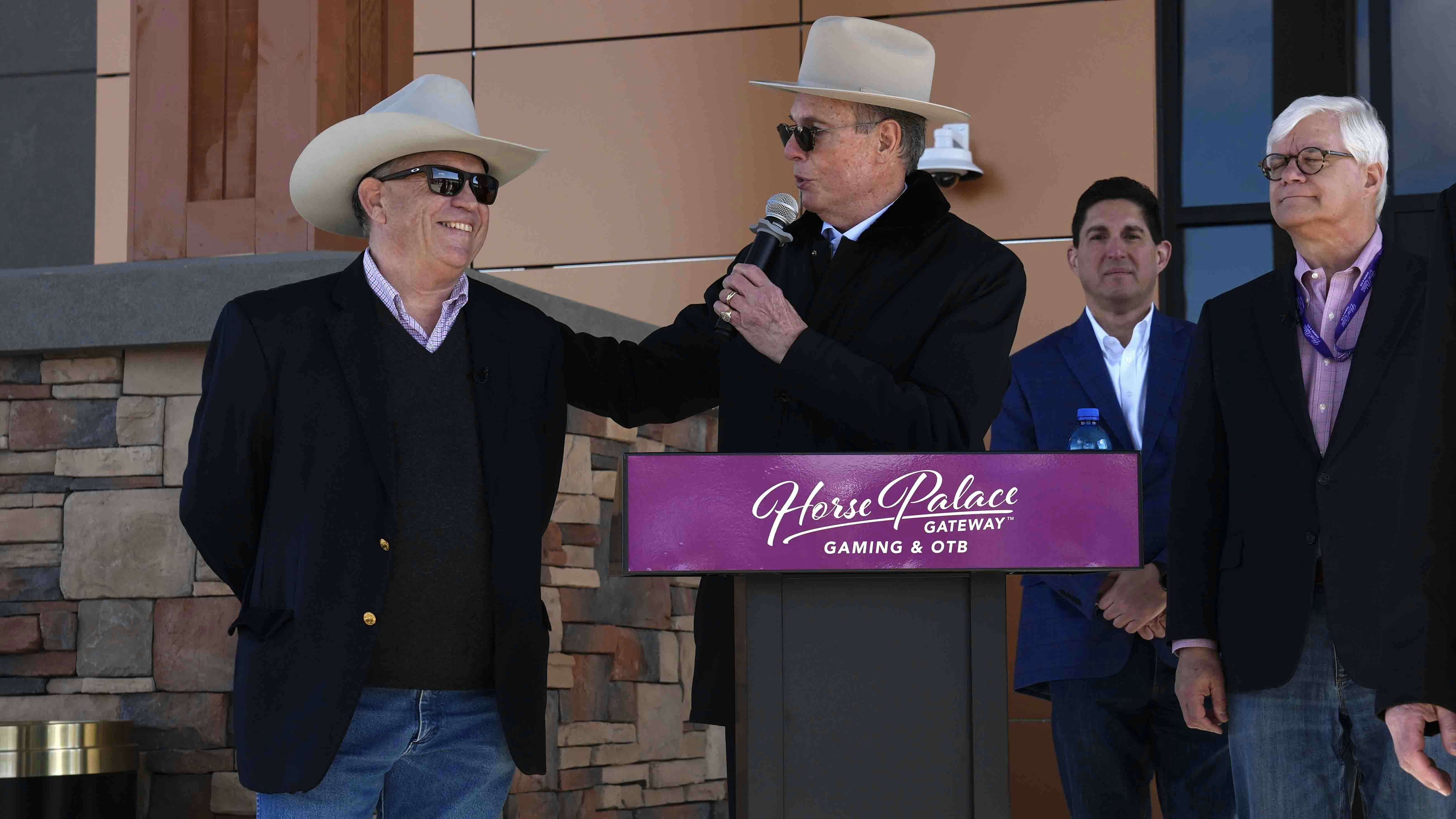
As the old saying goes, a rising tide lifts all boats. It’s a dynamic Uinta County rancher Jack Sims is seeing in action in Evanston, Wyoming, where Wyoming Horse Racing LLC just opened the Horse Palace Gateway.
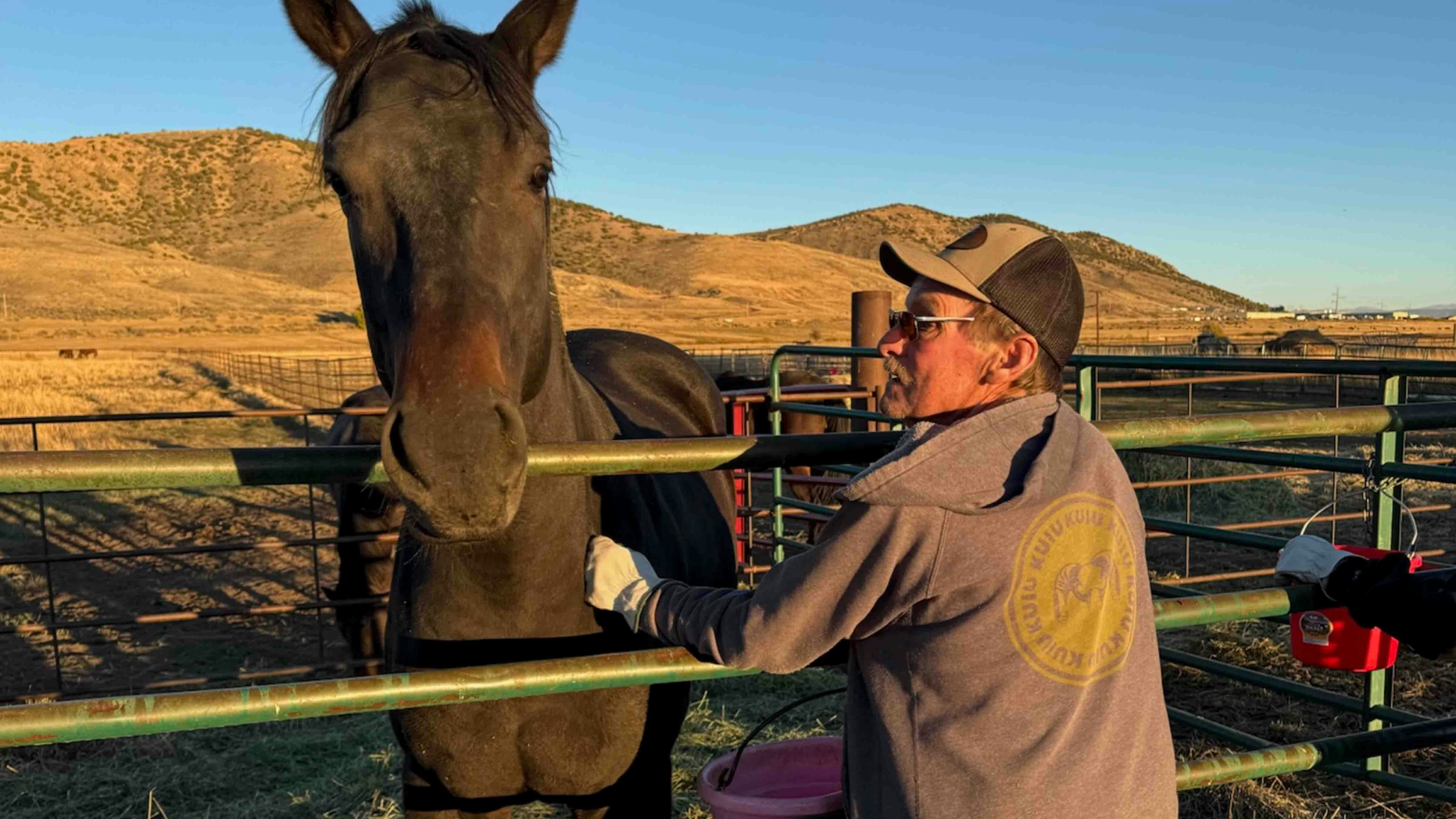
“When I first came here, there was nothing at all,” Sims recalled. “I mean there was a couple of restaurants. And there was a really good restaurant here, but it’s been closed for a long time.”
Now, however, Sims is seeing signs of new life. New restaurants have opened, new businesses have opened, and he believes that is thanks, in no small part, to the growing role Evanston is now playing in the horse racing industry.
For him, it starts at the grassroots, literally. Ranchers like him are buying more hay and more horse feed, which is helping to support other longstanding agricultural businesses.
“The farm store here in town, Murdoch’s — they’re a lot busier,” Sims said. “My place, I really didn’t make any money on my place. I would sell a little bit of hay. Now my income will be about $300,000 in a year. So that’s a big difference.”
People who shoe horses have more work, Sims said, and people who raise hay are selling more of it.
“There’s over 300 brood mares in the Wyoming breeding program around Evanston,” Sims said. “And it’s bringing a lot of money to this county.”
Horse Magnet
Sims once boarded high-dollar brood mares in Kentucky. One of them produced a baby that sold as a yearling for $800,000, and another sold for $695,000.
“I’m bringing her home,” Sims told Cowboy State Daily. “The money is getting better in Wyoming.”
That’s thanks to historical horse racing’s parimutuel wagering, Sims said. It’s raised a huge kitty of money that’s attracting horses from Texas, Louisiana, Oklahoma and beyond.
This year’s kitty will run between $10 to $11 million for Wyoming-bred horses, Wyoming Horse Racing owner Eugene Joyce told Cowboy State Daily.
“That’s a real economic magnet for people to invest in and run horses here in Wyoming,” Joyce said.
Sims’ ranch is a microcosm of the effect.
“I used to just have some of my own horses,” he said. “And we hadn’t run any horses ourselves in Wyoming for a long time.”
Now though, Sims is not only running his own horses at his ranch, McKenzie Bloodstock, but horses that have landed in Wyoming from Texas, Louisiana, and other states.
“It’s a big economic boom, the way I look at it,” Sims said. “It’s an equine boom … And I think it’s going to continue to really grow for a while. It may level off, but I still see more growth.”
Large-Animal Veterinary Services
That growth isn’t just affecting ranchers like Sims. It’s a ripple effect that’s reverberating across the agricultural economy, and it’s helping Uinta County buck a national trend.
Large-animal veterinary services are waning in most rural communities, with many veterinarians more interested in practices near metro areas, where they can make more money.
But veterinarian Sam Nielsen is building a brand-new equine hospital in Uinta County and looking to hire more staff, fueled by the fact his equine patients tripled last year.
“This is a mixed-animal practice,” he said. “And we would do like 40% small animal, 30% to 40% cattle, and 20% to 30% equine. Now the equine is closer to 40%, and our revenue from it has tripled. And I imagine it’s going to increase by another 20% this year.”
Nielsen calls his new facility a mare motel. It will have around 40 heated stalls as well as state-of-the-art rehabilitation equipment, including what Nielsen called an aquatread machine.
It’s a high-end machine that’s essentially an underwater treadmill for horses, which can be used both for winter conditioning and rehabilitation.
“They walk into this container and we’ll fill it up with water and then start the treadmill,” Nielsen said. “And then they start walking on the treadmill, and the water provides resistance as they’re walking, so they’re pushing to get to something.”
The water resistance helps build muscle and stamina without high impact to joints, reducing the chances of injury.
But it’s also particularly useful for certain tendon injuries, Nielsen said.
“So it’s a super nice piece of equipment, which we don’t have nearby,” he said. “The closest one we have is about two hours, a little over two hours away at South Valley Equine.”
There’s also one about five hours away in Meeteetse.
“A lot of these race horses up here — barrel horses, rope horses — in the wintertime, it can be tough to get out and ride when it's minus 20 outside and there’s a couple of feet of snow on the ground,” Nielsen said. “Unless you have an indoor arena, it can be hard to get out and keep your horses exercised. So, a lot of people around here will haul their horses to different places to have their horses exercised in the water treadmills or the aquatrainer.”
Rodeo, Western Pleasure
Nielsen has seen horses coming up from Utah, Idaho, and other places to become part of the Wyoming-bred racehorse program, and believes that’s a trend that’s only going to continue.
Meanwhile, Nielsen is looking at expanding in that direction as well, to help meet expected demand.
“We’re looking at partnering with an embryo transfer company out of Utah that has like 900 recipient mares for embryo transfer,” he said. “And we’re going to hopefully expand up here and have a place up here that we can do that for Wyoming, whether it’s race track or western pleasure or whatever.”
But it’s not just horse-racing stock that’s now feeding into Nielsen’s practice. He’s seeing Western pleasure stock as well as rodeo stock benefiting as well, from a facility he never would have been able to build without the equine boom that’s come alongside Wyoming’s rising horse racing industry.
“Had it not been for the demand that we saw coming and the people that we were able to talk to, we would have built quite a bit smaller,” Nielsen said. “We would have taken it quite a bit slower trying to get into any of this stuff. So it’s really helped us grow quite rapidly.”
Now Nielsen is looking at bringing in additional veterinarians. That’s much different than the more usual nationwide trend, where many rural areas have lost their large animal vets. A Johns Hopkins study in 2023 found that since World War II, the United States has lost 90% of its large animal and livestock veterinarians.
Out-Of-State Revenue
Evanston’s Horse Palace Gateway is similar in scope to a facility Joyce opened in Cheyenne in 2024, the Horse Palace Swan Ranch.
“The concept looks outward to bring money from out of state into Wyoming to help us,” he said. “Wyoming has a limited population. There’s only so many OTBs (Off Track Betting) you can put in some locations.”
By focusing outward instead of inward, Joyce believes his facilities can maximize benefits to the state, without further saturating the market.
“In talking with Uinta County Commissioners, when they had the property tax cuts a couple of years ago, it cut about $1.2 million out of their budget, which is a lot of money here in Uinta County,” Joyce said. “We will generate over a million dollars for Uinta County and over a million dollars to the city of Evanston.”
Adding revenue to local cities and counties was an aim of the historic horse racing bill when it was passed in 2013.
“Gov. Mead, at the time, he was looking for direct, unencumbered revenue sources to the cities and counties. And our industry is providing that in spades now to help out the municipalities where we operate.”
Hotels, Conference Centers
Joyce’s vision isn’t stopping with just the Horse Palace facilities he’s already built.
They are part one of a three-part plan for the future that he envisions for each facility.
“We want this as a destination, as an entertainment stop,” he said. “Phase two and three have the construction of a hotel, conference center, theater. It’s our vision to give you several different reasons to come into our facility.”
Economic impact studies from 2022 suggested horse racing would have a $150 million impact to the Cowboy State, Joyce added. But his new studies suggest that could have been a low-ball estimate of the actual economic impact.
“We just finished up an economic impact study looking back to 2024, and the economic impact has grown to $275 million,” Joyce said. “And that’s just for ’24. I’m guessing we are way over $300 million when we start to plug in the ’25 and ’26 numbers here.”
Renée Jean can be reached at renee@cowboystatedaily.com.