Thirty years ago this summer, Melissa Parkinson and Tana Libolt landed one of the most unusual jobs they’ve ever had.
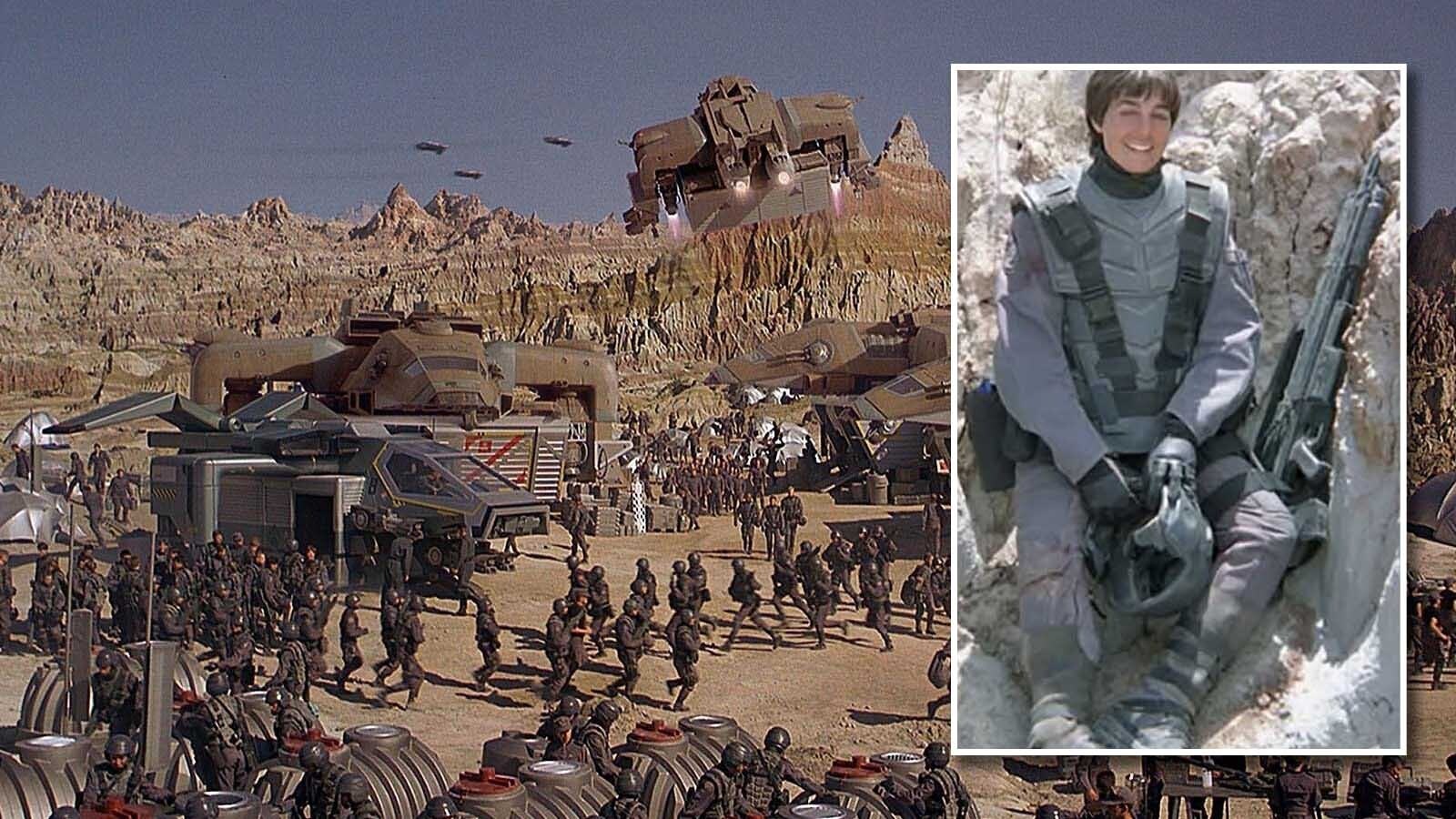
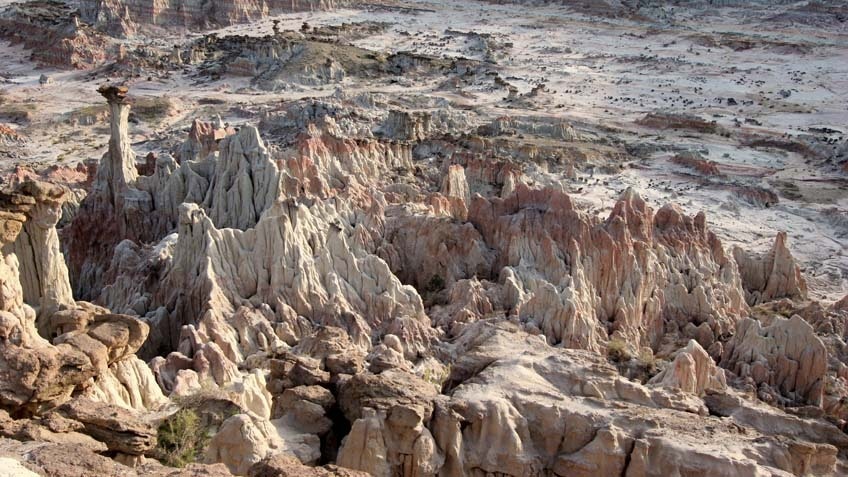
They were hired to be soldiers at Hell’s Half Acre near Casper.
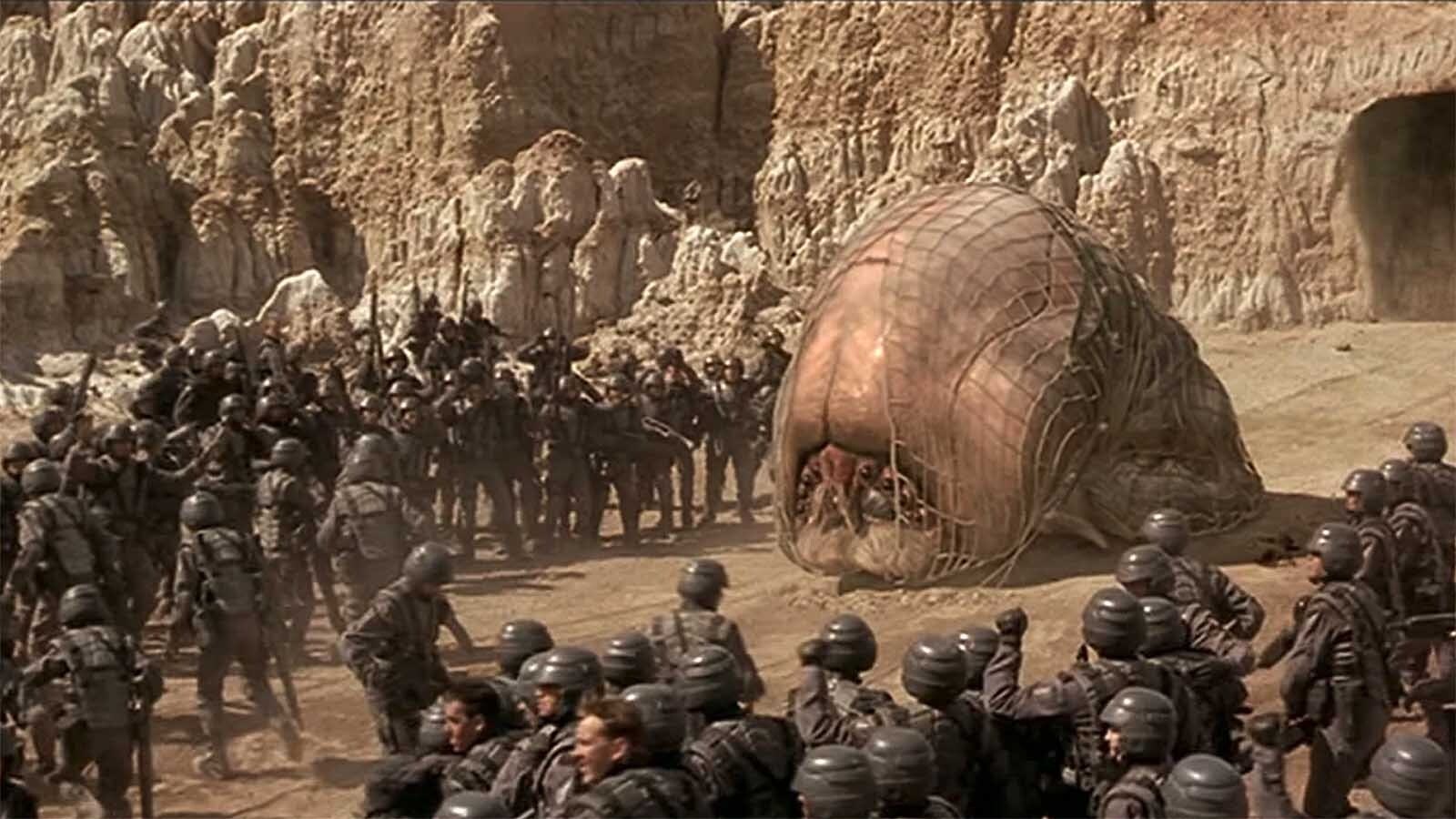
Only for them it wasn’t Hell's Half Acre, it was a barren planet called Klendathu crawling with huge, angry alien insects.
And sometimes the two college-age students weren’t fighting at all.
Parkinson and Libolt were dead bodies lying on the canyon floor, victims of the Arachnid race, which was trying to erase humanity from the universe.
This year is the 30th anniversary of the 1996 filming of "Starship Troopers,” now a cult classic film that’s spawned a must-watch franchise for anyone claiming to be a true sci-fi fan.
Parkinson and Libolt were among 300 or so extras from Wyoming who answered a newspaper ad in Casper for what sounded like a fun summer gig for a college student.
The qualifications for the job were also pretty simple: Look good in a helmet, and don’t be too tall while doing it.
“You filled out a little form, and they took a picture of you,” Parkinson recalled. “Then they’d call you back if they thought you’d work.”
The Napping Is Over
Parkinson was among the first extras to get a callback, which meant she got to participate in a two-week boot camp before filming began.
Part of the purpose behind that was to get some of the extras used to the stars in the movie so there wouldn’t be any goofy starstruck behavior during filming.
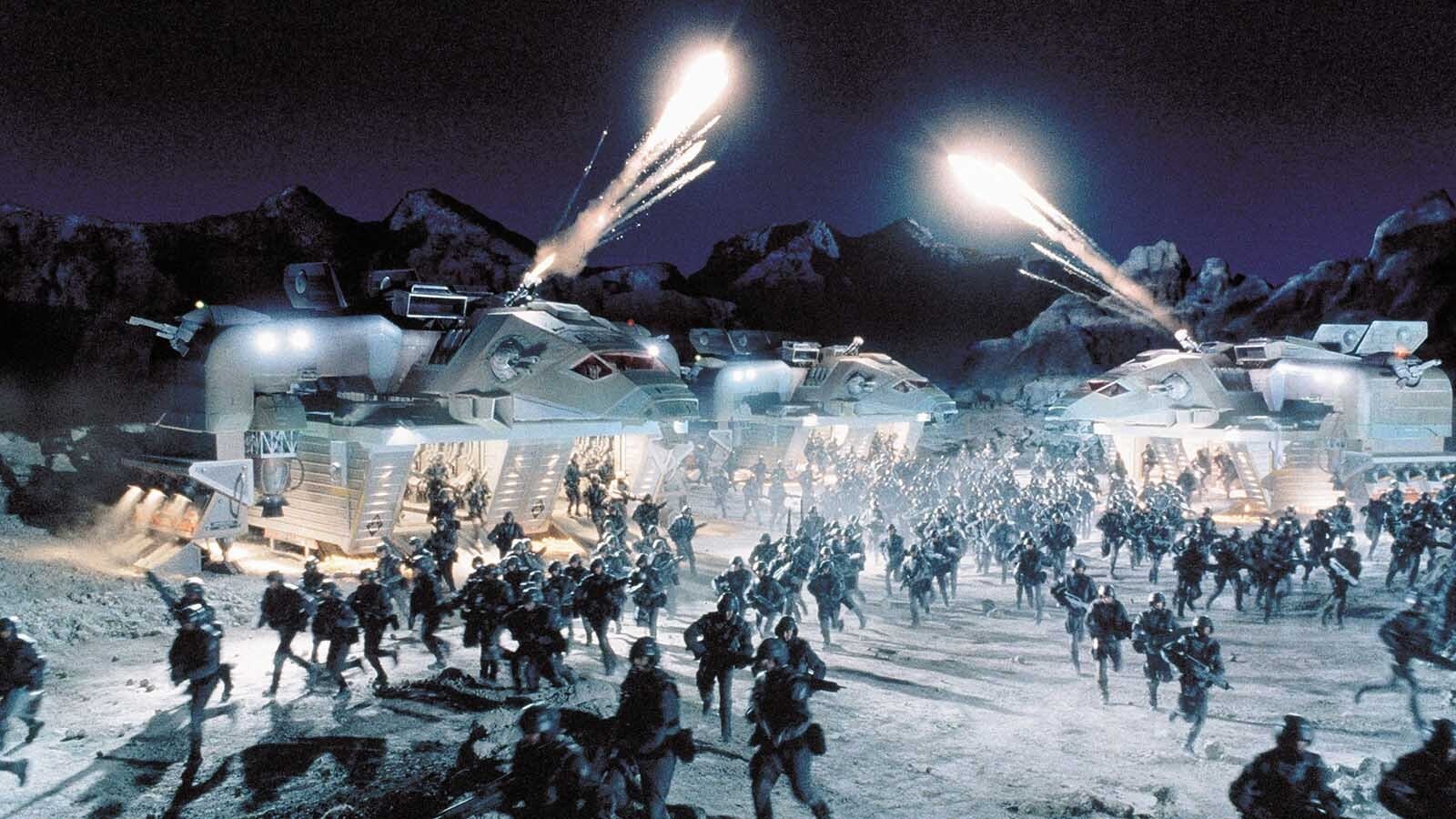
It was also about how to look and act like a soldier while carrying rubber rifles in hot and sweaty rubber suits that often didn’t fit so well.
Nobody, however, had said anything much about how to look dead, and that was Parkinson’s job on the first day.
“This was the scene where all the settlers have been slaughtered,” Parkinson said. “So, we came in as the dead bodies. The main characters came in to save the fort, but it was too late.”
Parkinson was told to pick a comfortable position, one she could hold “for a while.”
Little did she know she’d be holding that position for hours, as the scene was shot over and over and over again.
“I was sprawled out on my back, and they would come around with these bug sprayers full of fake blood,” she said. “And the guys doing that just laughed. They thought it was so funny.”
To get through it all, Parkinson kind of took a nap, figuring that would be the best way to stay motionless for such a long time.
But there was too much activity to actually sleep.
Not only were stagehands roaming around spraying the extras and cackling maniacally about it, but Director Paul Verhoeven was also shouting at the top of his Dutch-accented voice: “Blood! I want more blood! Come on, it's a slaughter!”
So, every take there was more blood.
By the end of the day, Parkinson was a little nervous about going home. She looked like she had a gunshot wound to the head.
People would be calling the police if they saw her.
Rubber Rifles, Rubber Suits
The uniforms the extras wore weren’t all that comfortable either, Parkinson and Libolt both agreed.
“I ended up wearing a medium, but it was a men’s medium,” Parkinson said. “And it really sat down hard on my shoulders.”
The worst was the neoprene neckpiece, Libolt added.
“Those chafed,” she said. “They got very hot. The whole costume was very hot during the day shooting.
"In fact, there were people who succumbed to the heat, people who fainted, because those people weren’t hydrating well enough.”
Many of the female extras also had long hair, Libolt added, which didn’t help the heat situation.
“There was a small fleet of hairdressers who would help us get ready in the morning and put our hair into many small braids that could be pinned tightly to our heads so the helmets would fit,” she said. “So, there was a little bit of a process to getting ready.”
Parkinson said they quickly learned not to eat quite so much during the catered lunches, particularly in the early days of the film’s production before the number of extras swelled, when the food was particularly rich.
“We were getting our choice of like chicken, fish, or steak for lunch,” she said. “So, it’d be like swordfish, chicken cordon bleu, or New York Strip.
“You only did that like once or twice, and then you learned not to eat so much food in the middle of the day, because you’re probably going to be running in the heat in your uniform later.”
Launched A Wyoming Boy’s Film Career
"Starship Troopers," with its roughly $100 million budget, would turn out to be a disappointment at the box office, grossing just $121 million worldwide.
Maybe that’s one reason Cody resident Patrick Mignano, who was location manager for “Starship Troopers” at the time, doesn’t count the film as a favorite.
He’s quick to point out, though, that the movie eventually did come into its own.
And he does have a soft spot in his heart for the film. It was, after all, the movie that launched the the Star Valley native's career as a location manager.
That career has included being location manager for several popular Clint Eastwood movies like “American Sniper” and “Invictus.”
The Wyoming film set Mignano oversaw was no joke. It was a rough start, and a make-or-break situation.
Mignano faced blizzards and 80 mph windstorms, plus a strict deadline for what was an ambitious set.
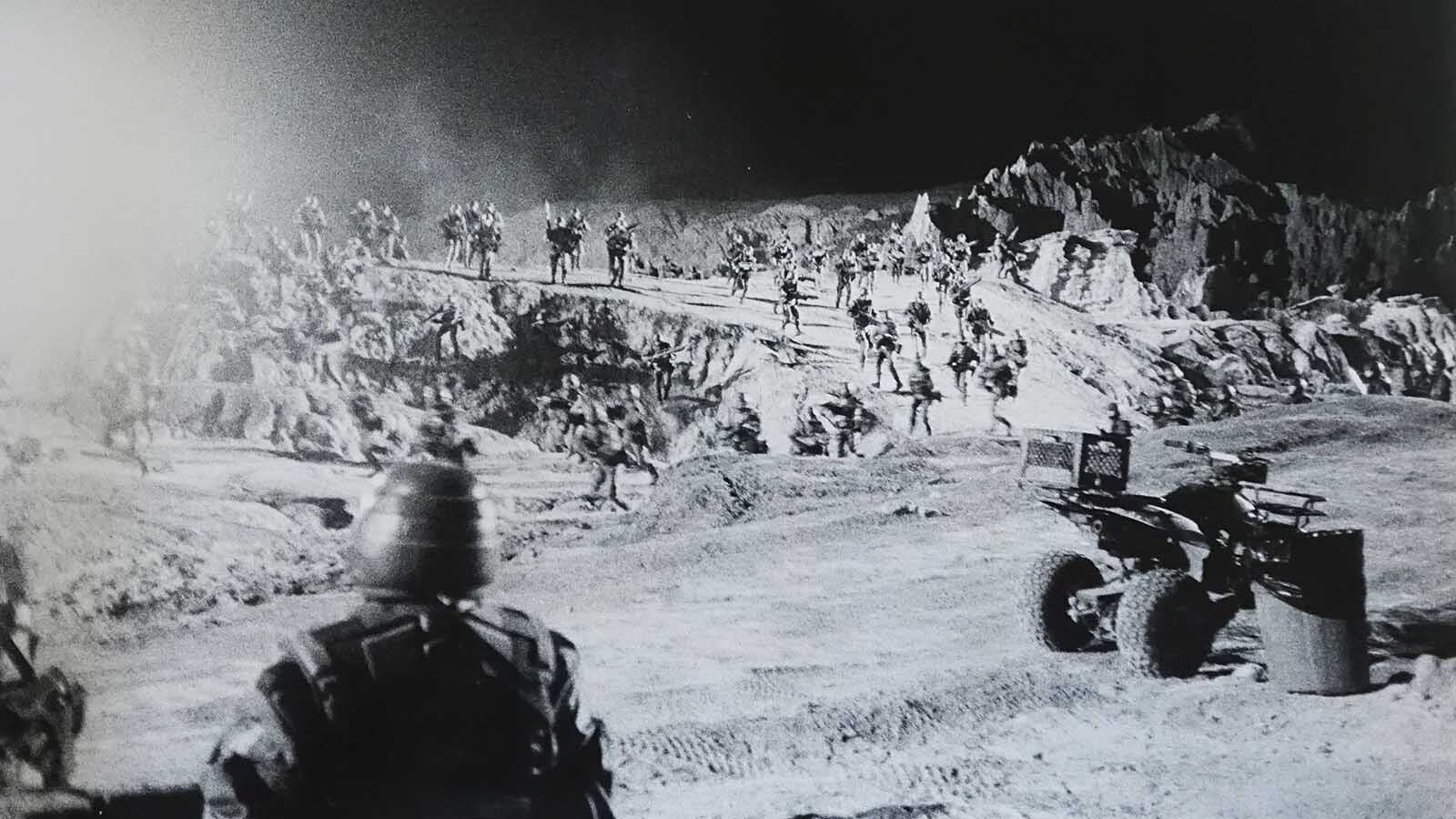
“When you see the film, we built this fort in the bottom of the canyon there, and it was massive,” he said. “It took a lot. And the thing was, we started prepping there in mid-March. So it was winter when we started prepping.”
The bottom of the canyon, meanwhile, is bentonite. Which does not play well with heavy equipment like cranes and trucks and side-by-side carts in wet weather.
“Oh my gosh, it’s like trying to work on an ice-skating rink,” Mignano said. “And it just gets so gummy.”
The job wasn’t just building the massive set, either. Mignano also had to put together a massive camp for the 600 incoming production crew members, another huge undertaking in itself.
“We had to have these huge tents to facilitate all the wardrobe and the props and the catering areas,” he said. “There were lots of trailers and all the stuff that goes along with having a big production like that.”
These weren’t flimsy tents either. Because it’s Wyoming, the tents had to be tough.
“The tents we built were steel girder construction,” Mignano said. “They literally were built to withstand 100 mph wind and stuff.”
Of Floating Bugs And Pimply Cadavers
Storms didn’t stop causing problems on the location after the set was built, VisitCasper film liaison Kelly Eastes told Cowboy State Daily.
He was tapped to serve as location liaison for “Starship Troopers.”
His job was to ensure all the rules were followed so the area was protected, as well as making sure the film production crew was finding its way around Casper and getting everything it needed.
One of the things he remembers best is what happened to the computer-generated images of Arachnids after a major storm came through and essentially resculpted the canyon on Memorial Day weekend.
Helicopters had come in to do several surveys of the canyon, getting all the elevations just right using a laser so they could input a replica of the canyon into their computer system.
It is a time-consuming and expensive process — one that normally doesn’t need to be done again.
But there were a few problems after the storm.
“When they went back in and were doing the animations with the bugs on the new shots, some of the bugs were floating off the ground,” Eastes said. “And some of them were down below the ground. The terrain had changed so much because it’s all silt and sand out there.
"So, they had to go back and redo a whole lot of the shots they had done to make them work.”
Eastes also remembers how much attention was paid to detail during the film’s making.
Rubber cadavers, for example, were so realistic as to have pimples and blackheads. A fake cave for the brain bug to come out of was created by matching paint colors to the actual soil color and then building a manmade arch so realistic it was impossible to tell once finished that it was fake.
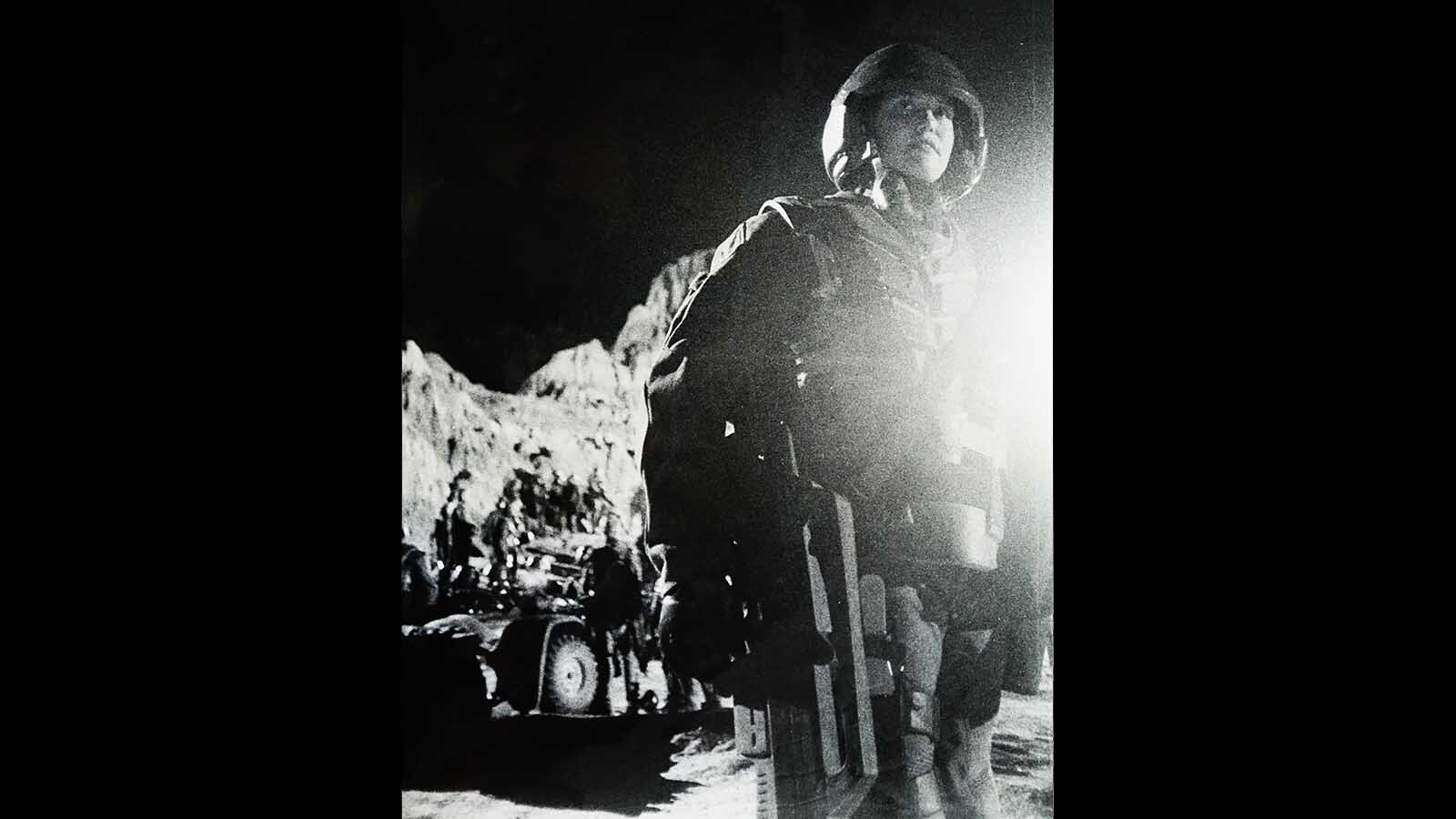
There was even an actual U.S. Marine on set, Capt. Dale Dye, who was a military consultant to help all the actors and extras better understand their roles.
Libolt particularly remembers Dye and the way he helped to positively motivate everyone.
“He stood up and gave this speech, kind of uncharacteristically praising all of the extras,” she said. “He said, ‘We could never get people in L.A. to do this. We could not get people in L.A. to do what you have done for $5 an hour.’
"And he said, ‘You are making this movie. You’re making this movie what it is.’ Which I thought was so kind of him to say and just so interesting to hear him talk that way.”
Financial Boost For Casper
The movie may have been a huge disappointment at the box office, but it was a huge economic development boost for Casper at the time.
A financial report done at the end of the movie showed a $4.3 million direct injection into the local economy.
That’s an impact, however, that hasn’t stopped, Eastes added, because so many fans of the film have put Hell’s Half Acre on their road trip itineraries.
“We’re putting interpretive stuff out there now,” he said. “And every time we’re out there working on the project or trying to figure anything out, there are people stopping by every 10 minutes.
“Some are just there to look at the hole, and others are saying, ‘Isn’t this where the movie was filmed?’”
That kind of tourism has worked out well in other states, Eastes added.
“Oregon’s tourism is going nuts because of it,” he said. “People are driving all over the place looking for where things were filmed so they can take a selfie where someone famous stood.”
Thanks For The Memories
Many of the people involved with helping to make “Starship Troopers” at the time realized that they were about to become part of making movie history.
Libolt, for example, never got any of the stars' autographs, including the leading actor Casper Van Dien. Parkinson only watched the film once or twice, a long time ago.
But when a kid asked for her autograph in 2011 after finding out she’d been an extra in the first “Starship Troopers,” she began to realize something is up.
“He got really excited when he found out,” she said. “So, I showed him a picture, and he thought it was the coolest thing. I was like, 'I’m the fourth dead body to the left. I think my arm’s sticking up.'”
Parkinson went on to become a forensic anthropologist, a job that’s taken her all over the world. But she still has all the memorabilia family and friends gave her the Christmas after the movie came out, the "Starship Troopers" toys and a warrior bug or two.
A Museum Exhibit Is Coming
Eastes also still has one of the warrior bugs. It oversees his work at VisitCasper as the film liaison.
“If you wait only eight and a half minutes through the credits, you can see my name in the film,” he said, chuckling a little bit.
In the end, it’s a little slice of history he’s proud to have helped create. It’s fun to be able to say he has a rather famous film credit to his name.
Recently, Eastes lent his treasure trove of storyboards and photos from the making of “Starship Troopers” to Fort Caspar Museum. It plans to create an exhibit about the time Hell’s Half Acre stood in for the alien planet Klendathu 30 years ago.
That's something Eastes hopes will contribute to keeping tourists in Casper just that little bit longer, so they can discover for themselves the untold stories and engineering behind the making of an enduring cult classic film in America.
Renée Jean can be reached at renee@cowboystatedaily.com.