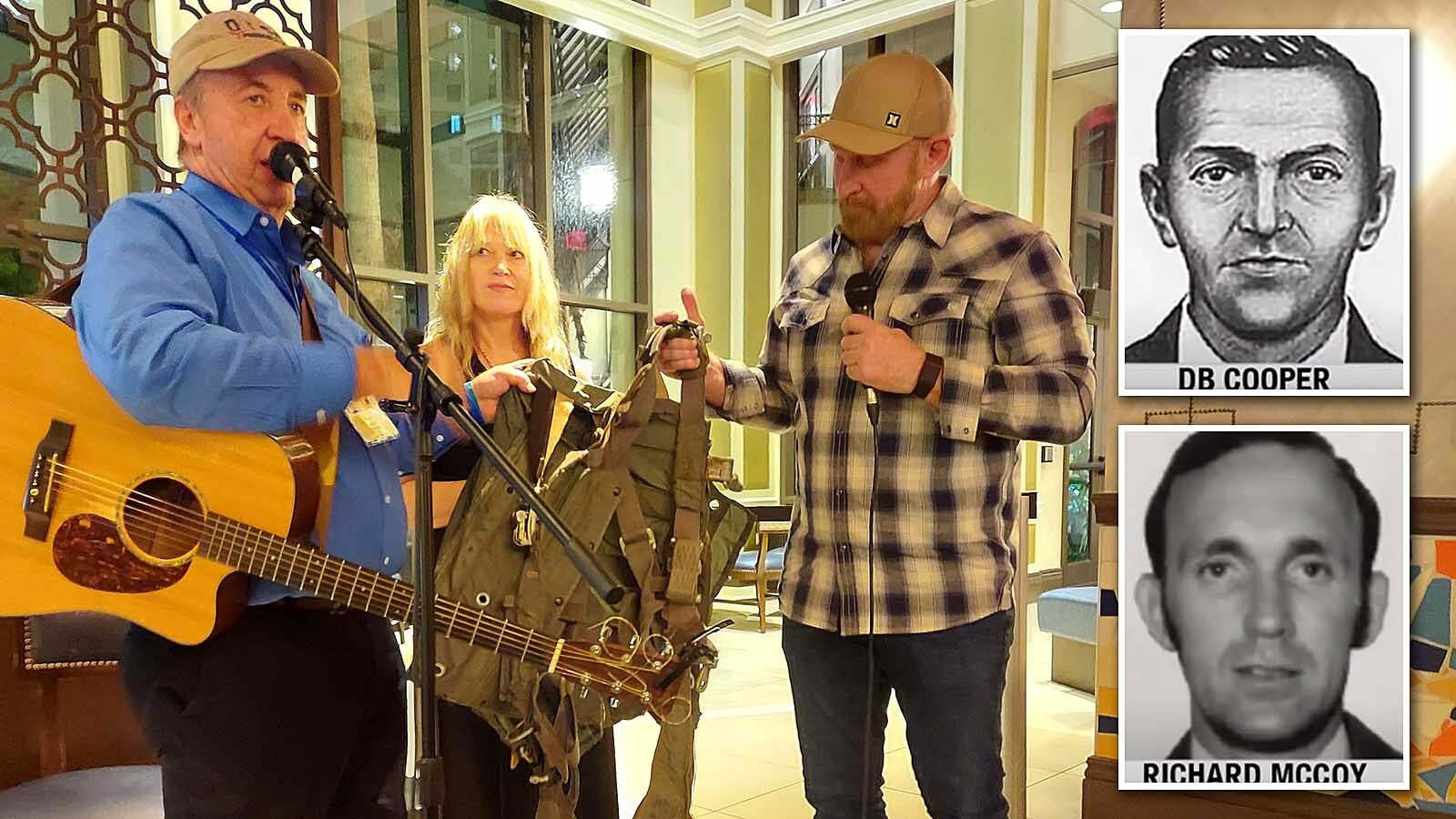
This is the fourth part of a series. Part one detailed how new evidence has been unveiled that may crack the D.B. Cooper case, America’s most notorious and only unsolved hijacking 53 years later. Part two explores the potential impact of new bombshell evidence in the decades-old investigation. Part 3 discusses the parachute that revived the case.
On Thanksgiving eve in 1971, a mysterious hijacker flying under the name of "Dan Cooper" vanished into the night sky over the Pacific Northwest after leaping from the rear staircase of a Northwest Orient Airlines Boeing 727.
Clutching the ransom money — $ 200,000 stuffed into a canvas bank bag secured at his waist with bills flying in the wind — he made his daring escape with one of the four parachutes he demanded, leaving behind the crew and passengers whose lives he'd spared.
Cooper’s actual identity was never discovered, but initial reporting dubbed him "D.B. Cooper,” erroneously based on a suspect who was quickly cleared.
The man behind the moniker was never seen or heard from again, but the artist rendering of the tie-clad, sunglass-wearing man became an integral part of pop culture, and his story resonates more than five decades later.
The case remains the nation’s only unsolved skyjacking to date.
It’s a mystery that has eluded law enforcement for more than 55 years while capturing the imagination of the public, spawning numerous books, movies and documentaries and just as many theories as amateur sleuths clamor to solve the mystery.
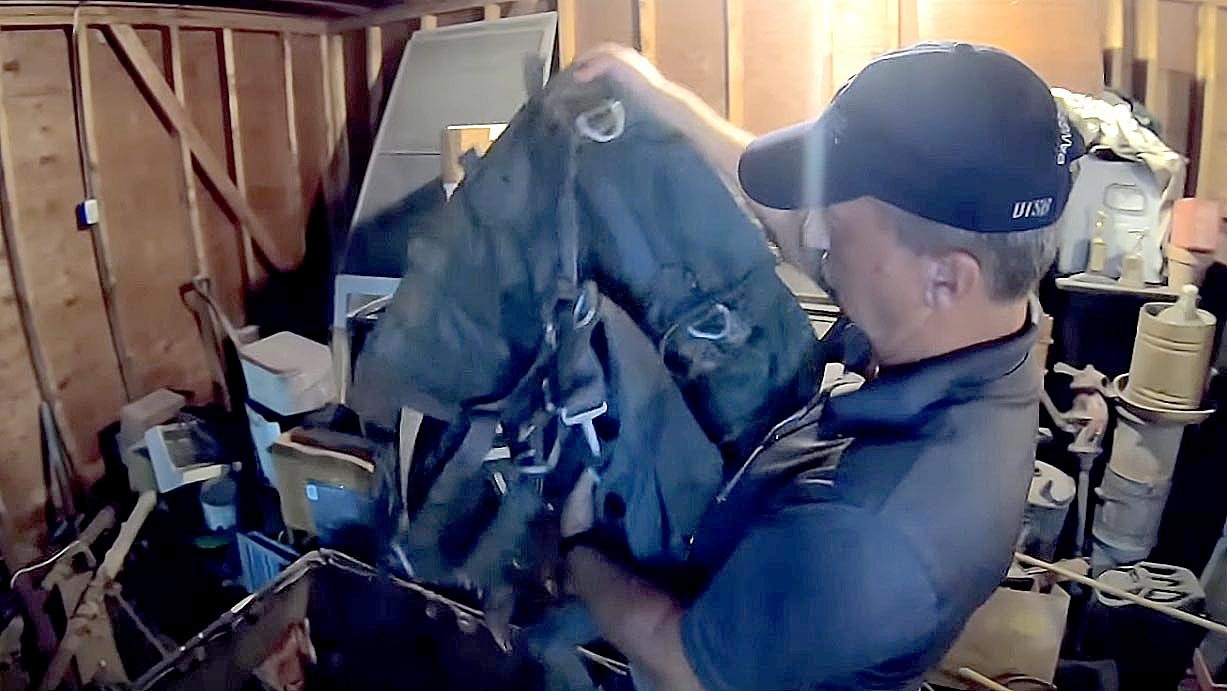
Dan Gryder unearthed a harness and canopy belonging to Richard McCoy II at his family's property in Cove City, North Carolina. Gryder is convinced this was the rig used in the D.B. Cooper hijacking in 1971. (Courtesy Dan Gryder) 
An FBI sketch of D.B. Cooper. (Probably Cause: Dan Gryder via YouTube) 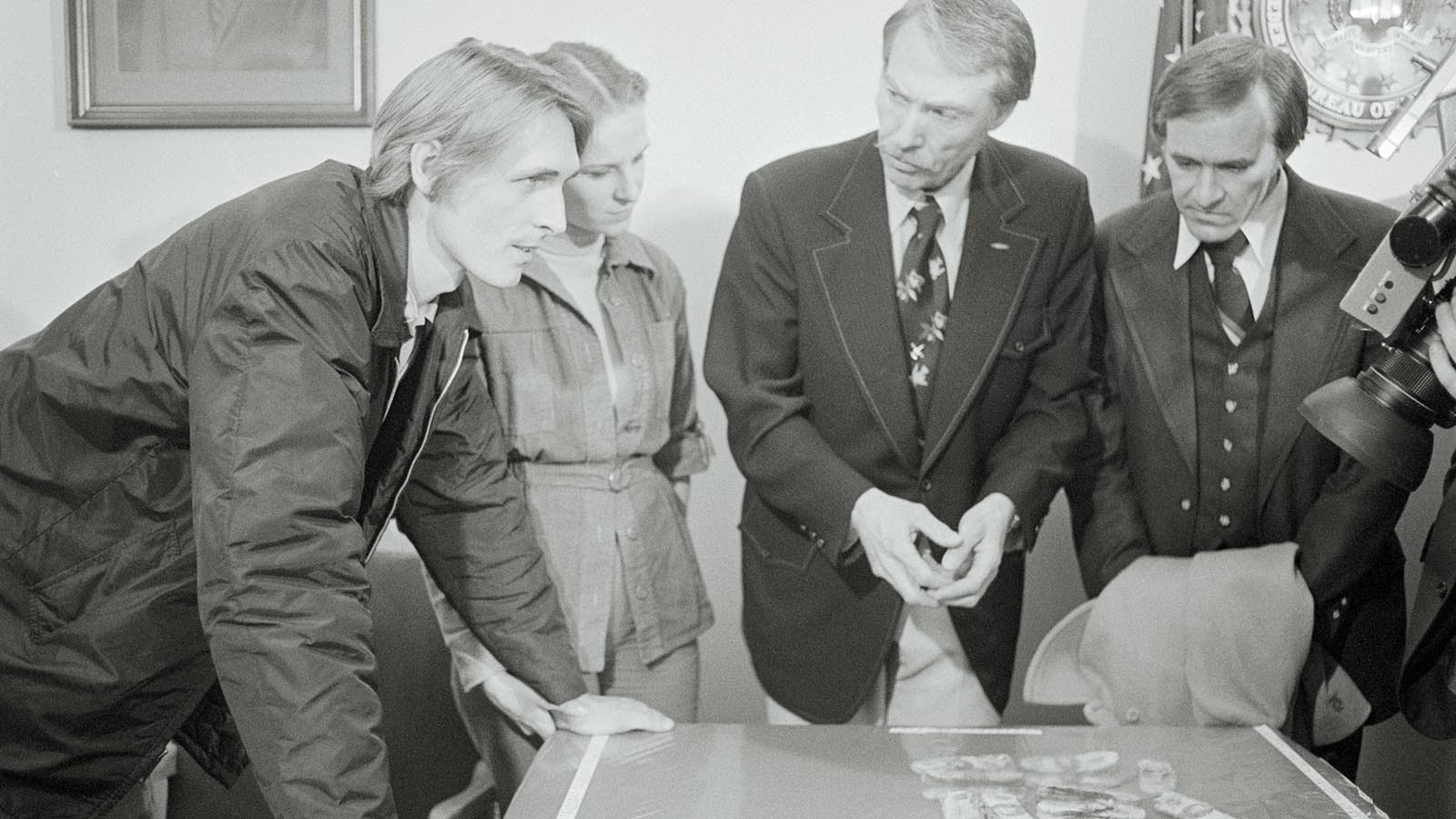
FBI agent Ralph Himmelsbach, second from right, asks questions of Mr. and Mrs. Harold Dwayne Ingram, left, at FBI offices where it was announced that the Ingram's son Brian, 8, had found the D.B. Cooper hijacking money while on family outing on the north shore of the Columbia River. Listening is William Wren, right, Northwest Orient Airlines, whose jetliner was hijacked by Cooper on Nov. 24, 1971. (Getty Images)
The Parachute
Other than $5,800 in marked bills that washed up on the banks of the Columbia River outside Portland more than nine years after the crime, there had been no new evidence leading to a suspect, prompting the FBI to shut down the lengthy investigation in 2016.
The agency said it was redirecting resources elsewhere pending any new physical evidence — specifically the remaining ransom money or a parachute related to the hijacking.
The case sat idle for more than six years until 2022 when a retired commercial airline pilot and YouTuber found a parachute in an outbuilding in North Carolina on the family property of Richard Floyd McCoy II, one of the early suspects targeted by the FBI.
The FBI seized the parachute and other evidence in 2024, returning one month later for a thorough search of the McCoy property. Now, after two years of forensic testing, the agency returned the parachute to Richard McCoy’s son, Richard III, in December.
What — if anything — the FBI learned from the tests is anyone’s guess. The agency is not saying whether the parachute is tied to the infamous hijacking, nor are they ruling it out, according to McCoy’s son.
Richard McCoy III said an FBI agent told him that the agency had allocated significant efforts to collect as much data from the artifacts as possible.
“She [the FBI agent] was not able to offer any specific conclusion,” Richard told Cowboy State Daily. “She said that the new material was neither being credited or discredited, but rather that they got all the data off it that they could, and they were returning it.”
The FBI Seattle office declined to comment, instead directing Cowboy State Daily to the FBI's 2016 statement when the agents closed the case. In essence, they do not have anything new to add.
Likewise, the FBI does not list exemptions or rationale in its evidence return policy that might indicate whether the parachute had any actual relevancy to the D.B. Cooper investigation, stating only that evidence will either be retained for court or returned, “depending on the outcome of the investigation.”
Rescued From Outbuilding
The finder of the parachute, pilot and YouTuber Dan Gryder, who has been interested in the case for more than two decades, takes the agency’s failure to rule out the evidence as a conclusion in itself, he said.
The fact that the FBI kept the backpack and canopy for two years and has yet to rule it out like other parachutes it seized in the past — including a chute found in southwest Washington in 2008 that was examined and promptly returned — leads Gryder to conclude its authenticity.
"The FBI had two full years to examine this newly collected evidence and save themselves the time and expense of valuable forensic investigation resources by simply eliminating the parachute as unrelated to the case. They did not do that,” he said.
He further noted that the agency’s “errors and mishandling of other evidence from 50 years ago” now makes a conclusive DNA match harder to close the case on forensic evidence alone.
“The FBI has now provided their conclusion that McCoy was Cooper, simply by not telling us that this parachute isn't it,” he said. “It's a default conclusion, but a conclusion nonetheless. McCoy was Cooper, and the FBI just told us that."
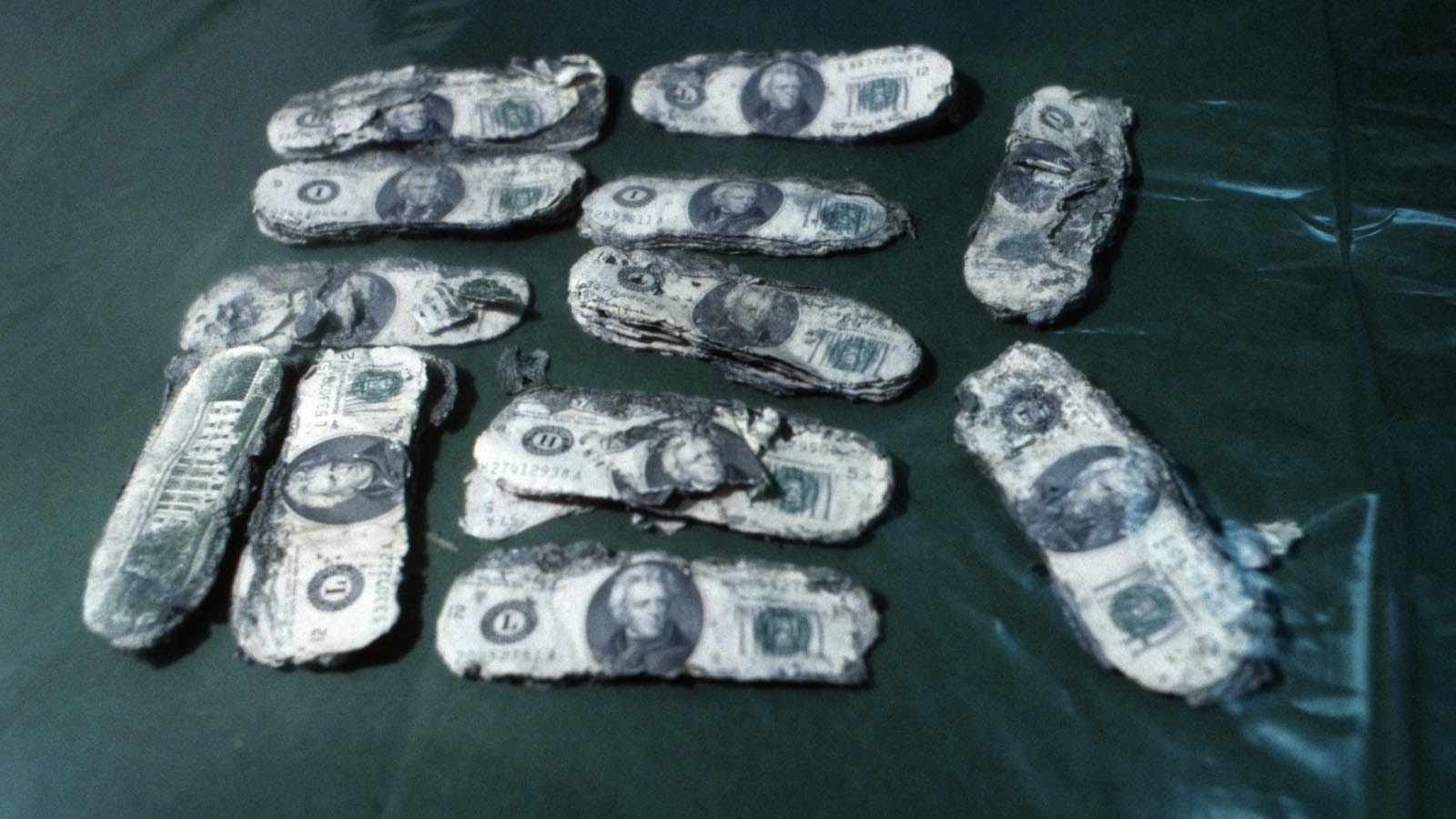
The badly decomposed $20 bills were shown to the press after a check of their serial numbers showed that they were identical to the bills given to hijacker D.B. Cooper on Nov. 24, 1971. The money was found by Brian Ingram, 8, who was searching for firewood while on a family outing with his parents, Mr. and Mrs. Harold Dwayne Ingram, in Vancouver, Washington. The money was found on the north shore of the Columbia River, partially buried in the sand. (Getty Images) 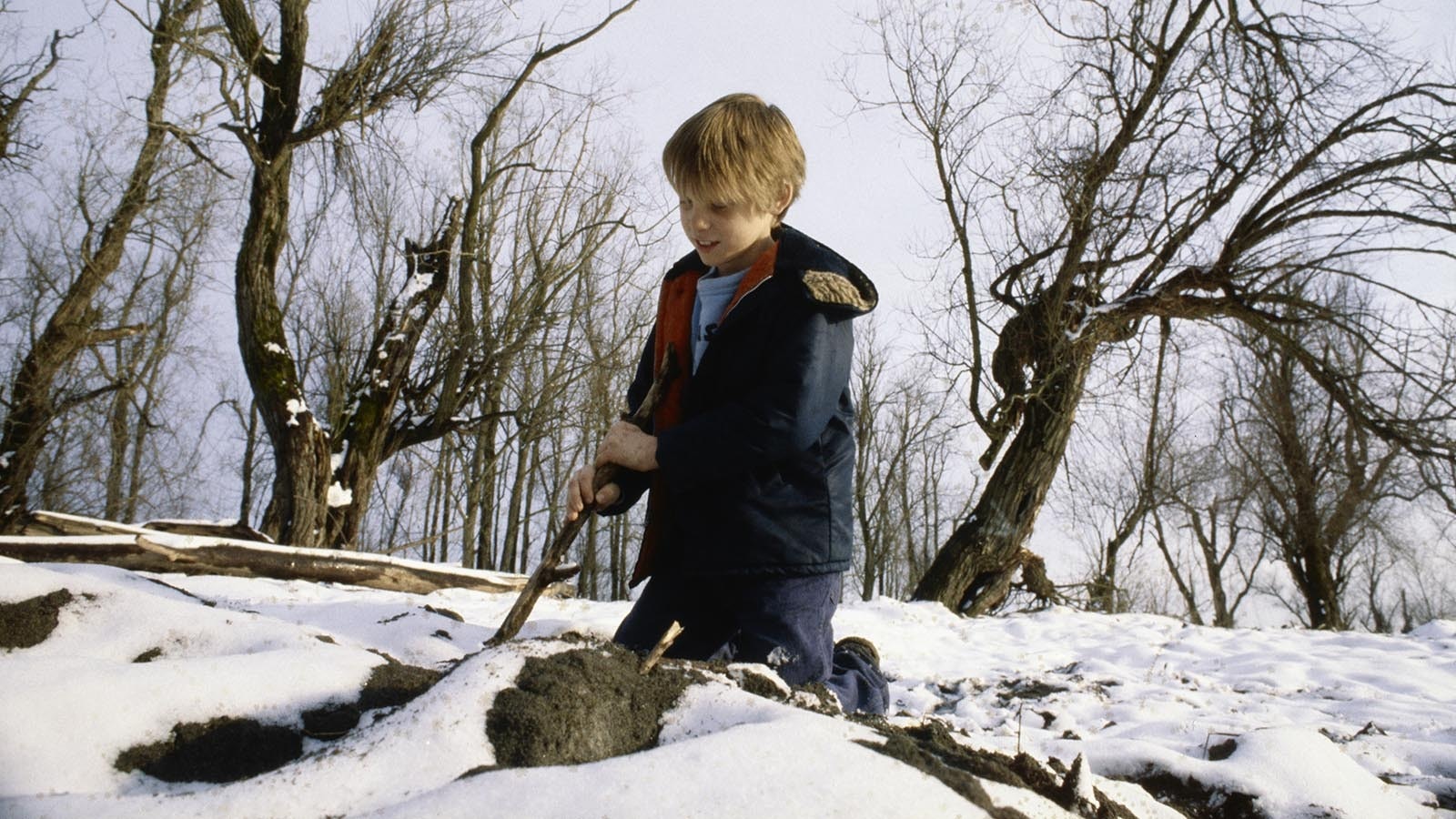
Brian Ingram, 8, demonstrates how he found ransom money from the legendary 1971 D.B. Cooper hijacking while camping with his family on the banks of the Columbia River in Washington state on Feb. 15, 1980. Ingram discovered $5,880 in deteriorating $20 bills that turned out to be part of the $200,000 ransom paid to hijacker D.B. Cooper in 1971. (Getty Images) 
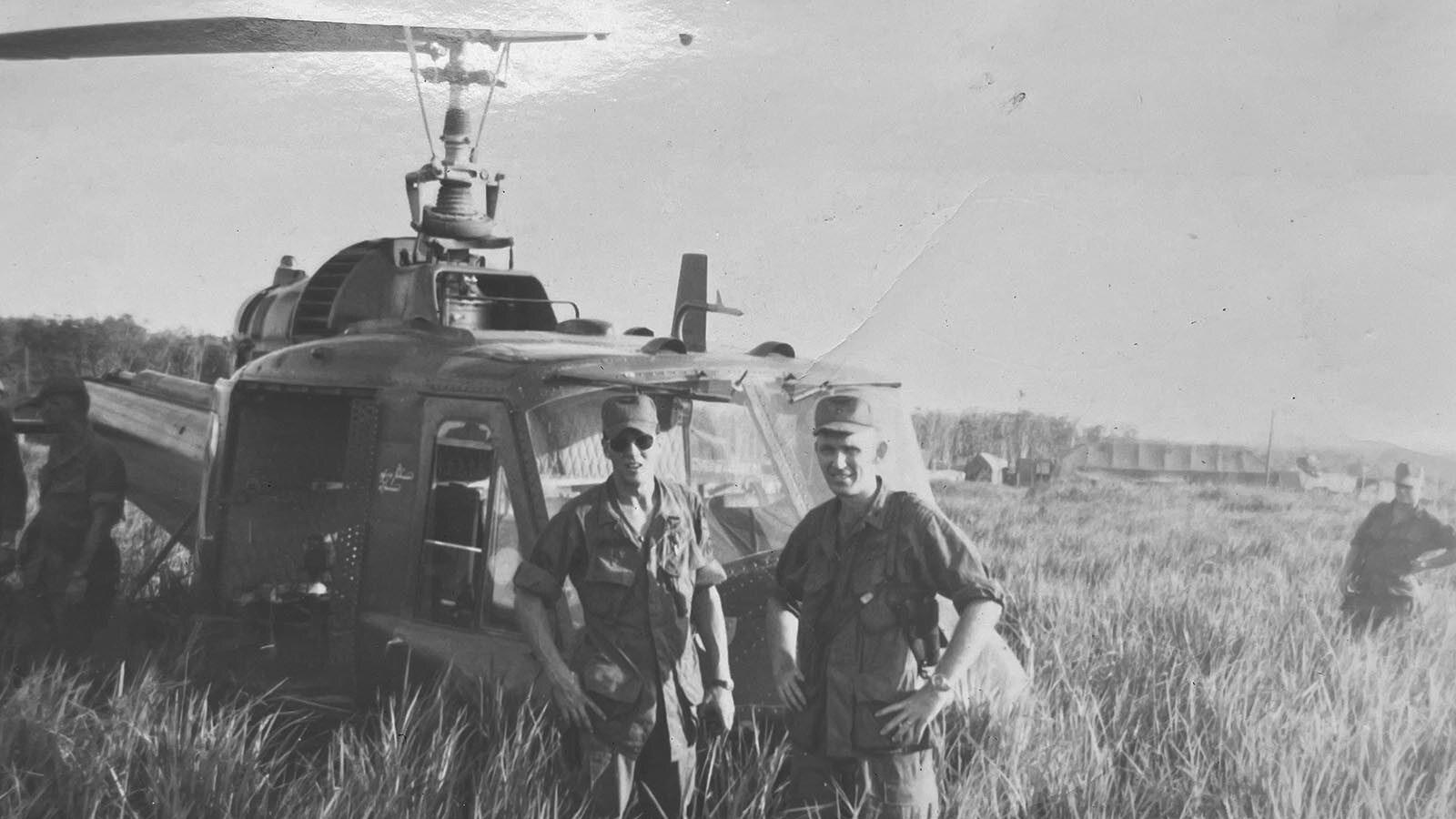
Richard McCoy II in Vietnam where he served as a helicopter pilot and demolitions expert. (Courtesy Dan Gryder) 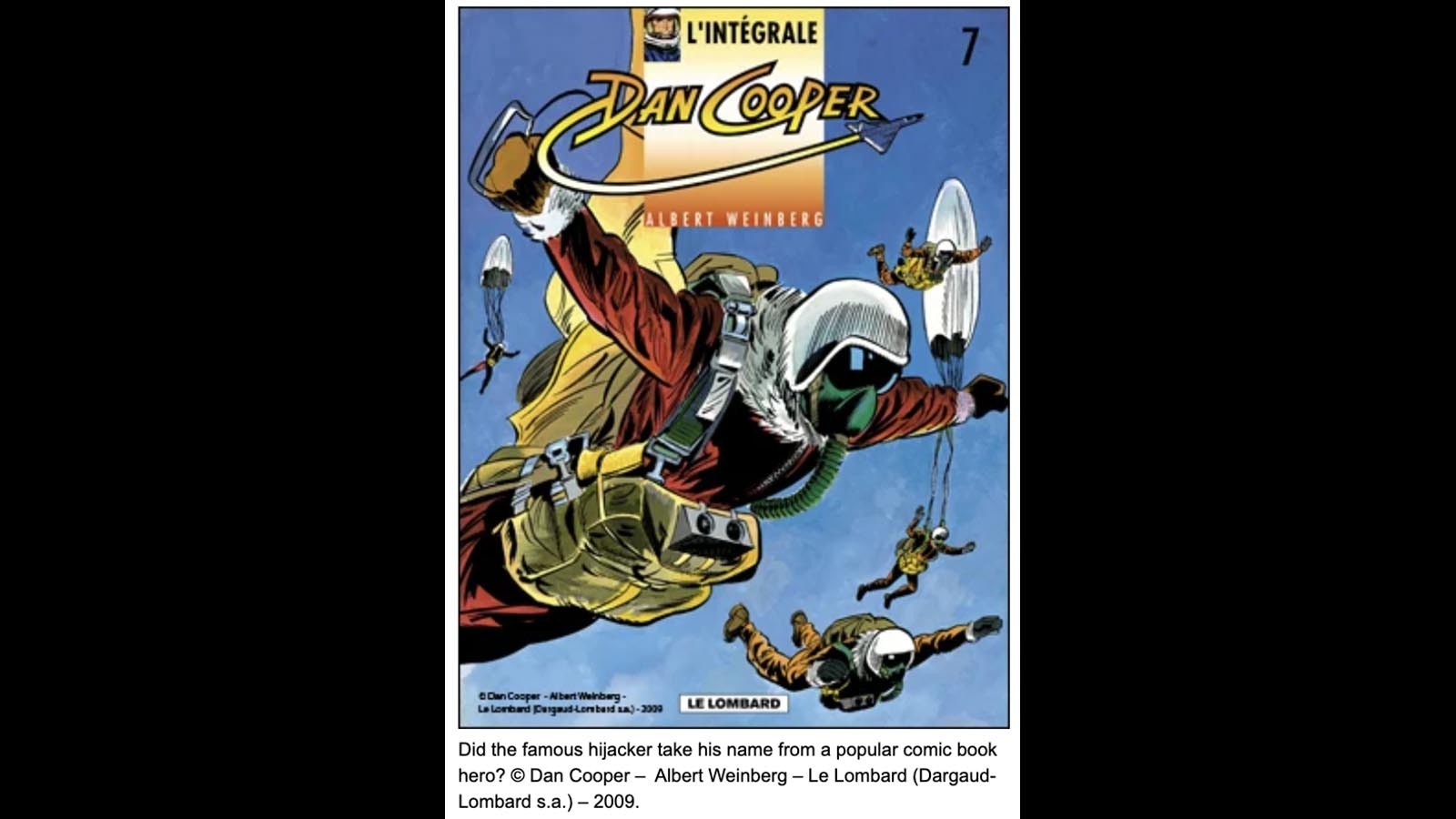
The FBI believes the alias “Dan Cooper” used in the Cooper hijacking was likely based on a French comic strip by Albert Weinberg about a fictional hero from the Royal Canadian Air Force. (Courtesy FBI)
Why Return It?
It’s not unheard of that the FBI would return a piece of property that they’ve deemed inconclusive and likely is not evidence they’d use in court, said Tom Myers, a retired FBI Special Agent and forensic investigator.
He has no inside knowledge on the D.B. Cooper investigation but said he could speak generally about his experience with the agency and how it treats evidence.
Myers surmises that the FBI likely ran all its forensic tests and deemed the results inconclusive, according to what Richard was told. The agency doesn’t have the space to store potential evidence deemed inconclusive.
“You can’t store stuff into perpetuity,” Myers said. “That’s going to be impossible.”
If agents were able to obtain viable evidence from the parachute rig, then it’s just potentially one more piece of evidence in a case where they don’t have much, he said.
“It can’t be included or excluded,” he said. “It’s just a big maybe.”
The fact that the parachute belonged to McCoy, however, would no doubt interest the agency, he speculated, given McCoy’s predilection for successfully pulling off a hijacking that put him on the FBI’s radar.
“He’s a great suspect,” Myers said. “They’re going to do their due diligence in a case of this magnitude, and there’s some gravitas to it in so much as it’s coming from McCoy himself.”
Who Is McCoy?
McCoy is not a new name in D.B. Cooper circles and had been on the FBI’s radar early on after pulling off a near-copycat — yet better executed — skyjacking six months later when he leapt out of Boeing 727 above Provo, Utah, in April 1972.
Unlike Cooper, however, McCoy landed with a hefty $500,000 in ransom.
He was caught within two days of the hijacking and sentenced to 45 years in federal prison. In 1974, McCoy and three other inmates escaped from a Pennsylvania penitentiary, but McCoy was killed three months later in a shootout with FBI agents in Virginia Beach, Virginia.
The agent who shot and killed McCoy, Nick O’Hara, also believed McCoy was the elusive skyjacker D.B. Cooper.
O’Hara wasn’t the only one.
The similarities in the two hijackings — including both jumping from the rear aft staircase mid-flight and similar demands to the pilot and staff — led many to speculate that McCoy had pulled off both capers.
This included former Utah FBI special agent on the case, Russ Calame, who documented the comparisons in the book, “D.B. Cooper: The Real McCoy,” that he co-wrote with McCoy’s parole officer, Bernie Rhodes.
The book went out of print shortly after its release in 1991 after McCoy’s widow, Karen, successfully sued the publisher for defamation for claiming she was complicit in the hijackings, as well as other details that she said were false.
Gryder was the first investigator to interview McCoy’s children, Richard and Chanté, who lives in southwestern Wyoming. They had not spoken publicly about the case until their mother’s death in 2020. Up until then, they said they felt obligated to remain silent to protect their mother, who they believe was complicit in both hijackings.
Richard and Chanté shared their family story with Gryder in his four-part video documentary series, “D.B. Cooper: Deep Family Secrets” on his “Probable Cause” YouTube channel.
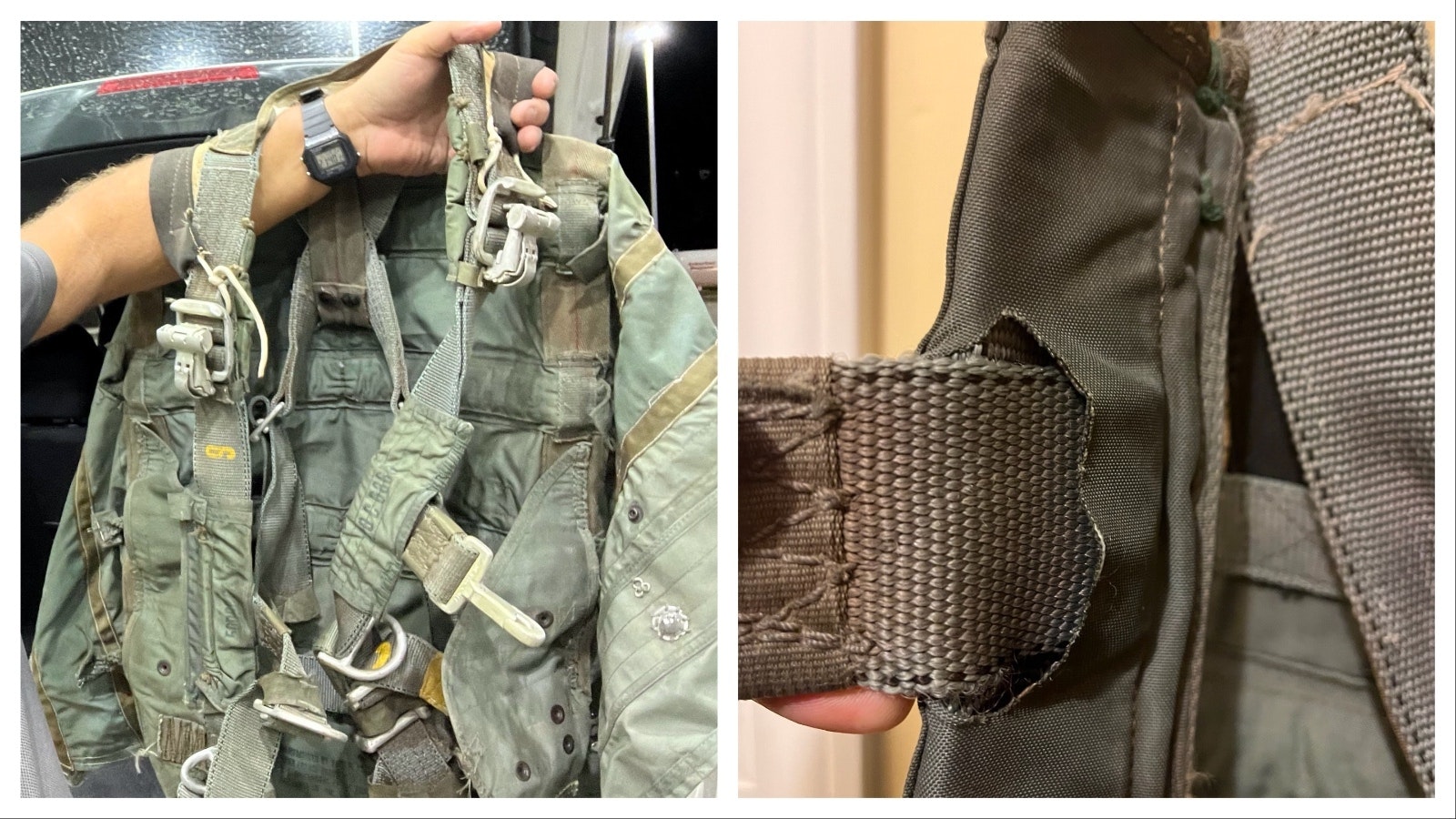
Earl Cossey told a journalist he made several alterations to the military rig he supplied to the notorious hijacker that night, which Dan Gryder said match the rig belonging to Richard McCoy II that the FBI seized as evidence to conduct two years of tests. (Courtesy Chanté McCoy) 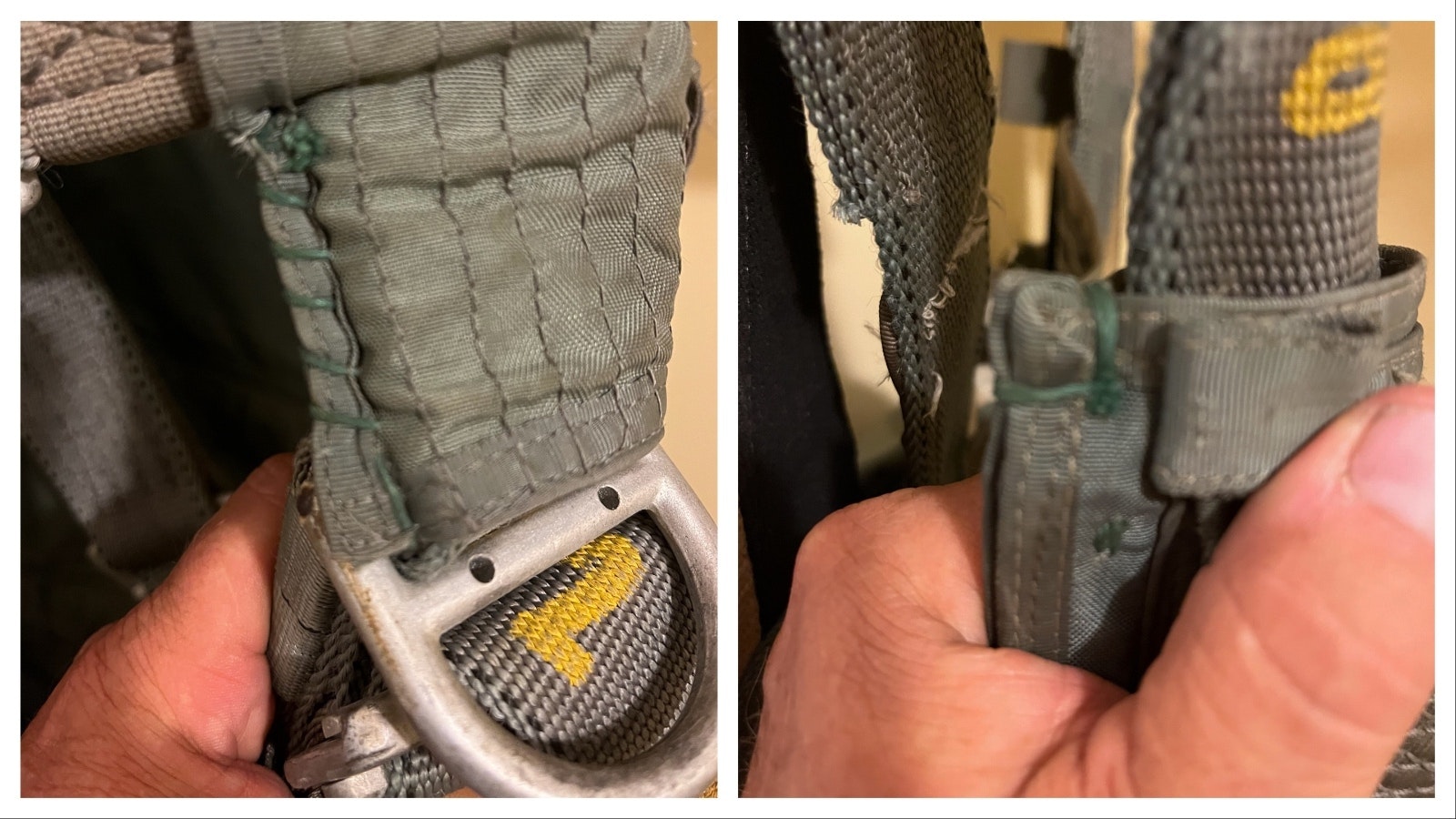
Earl Cossey told a journalist he made several alterations to the military rig he supplied to the notorious hijacker that night, which Dan Gryder said match the rig belonging to Richard McCoy II that the FBI seized as evidence to conduct two years of tests. (Courtesy Chanté McCoy) 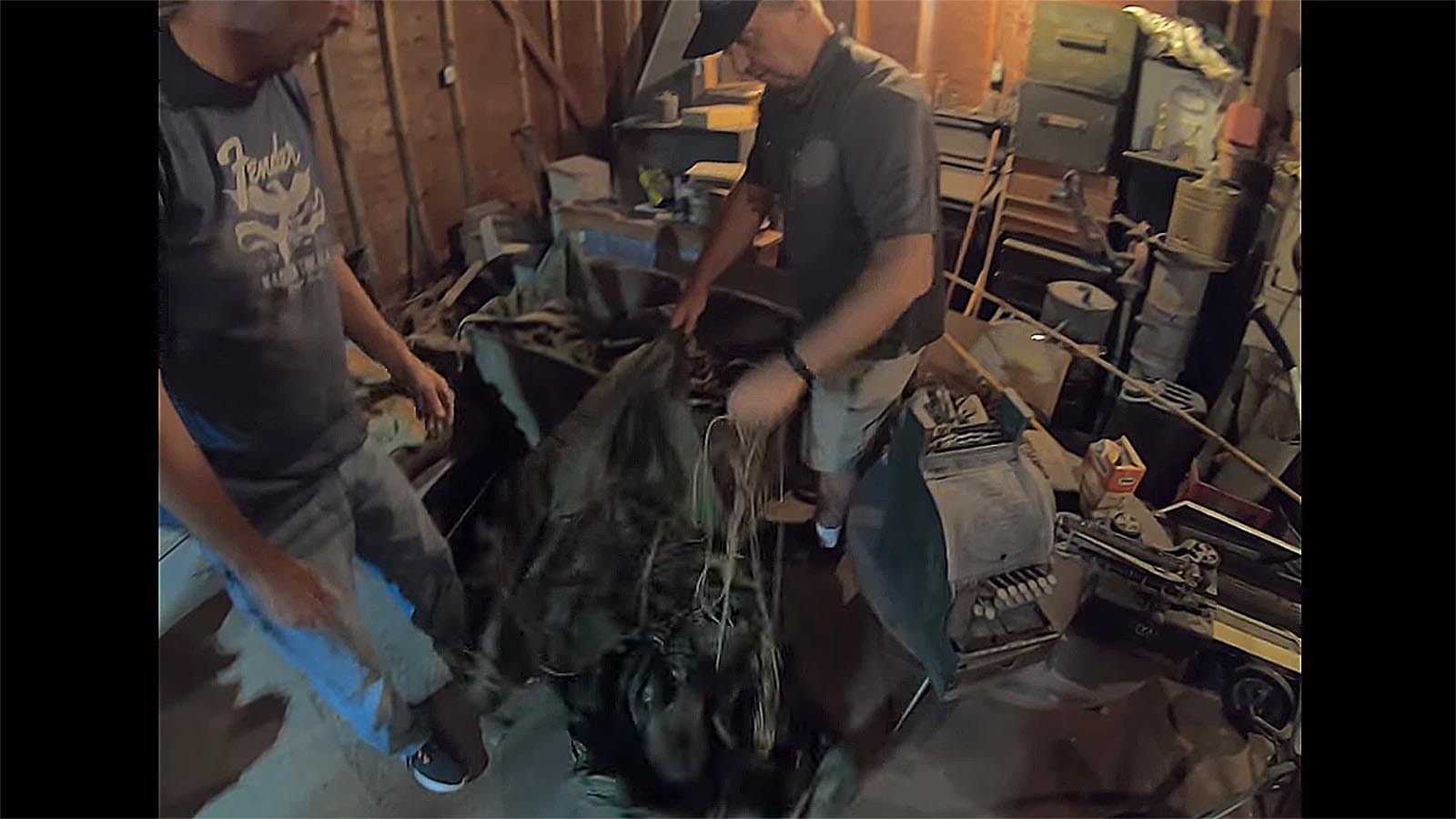
Dan Gryder and his son Dylan find a "one-in-a-million" parachute that belonged to Richard McCoy — aka "D.B. Cooper" — when he hijacked a commercial jet and jumped out with $200,000 53 years ago. (Probable Cause: Dan Gryder via YouTube) 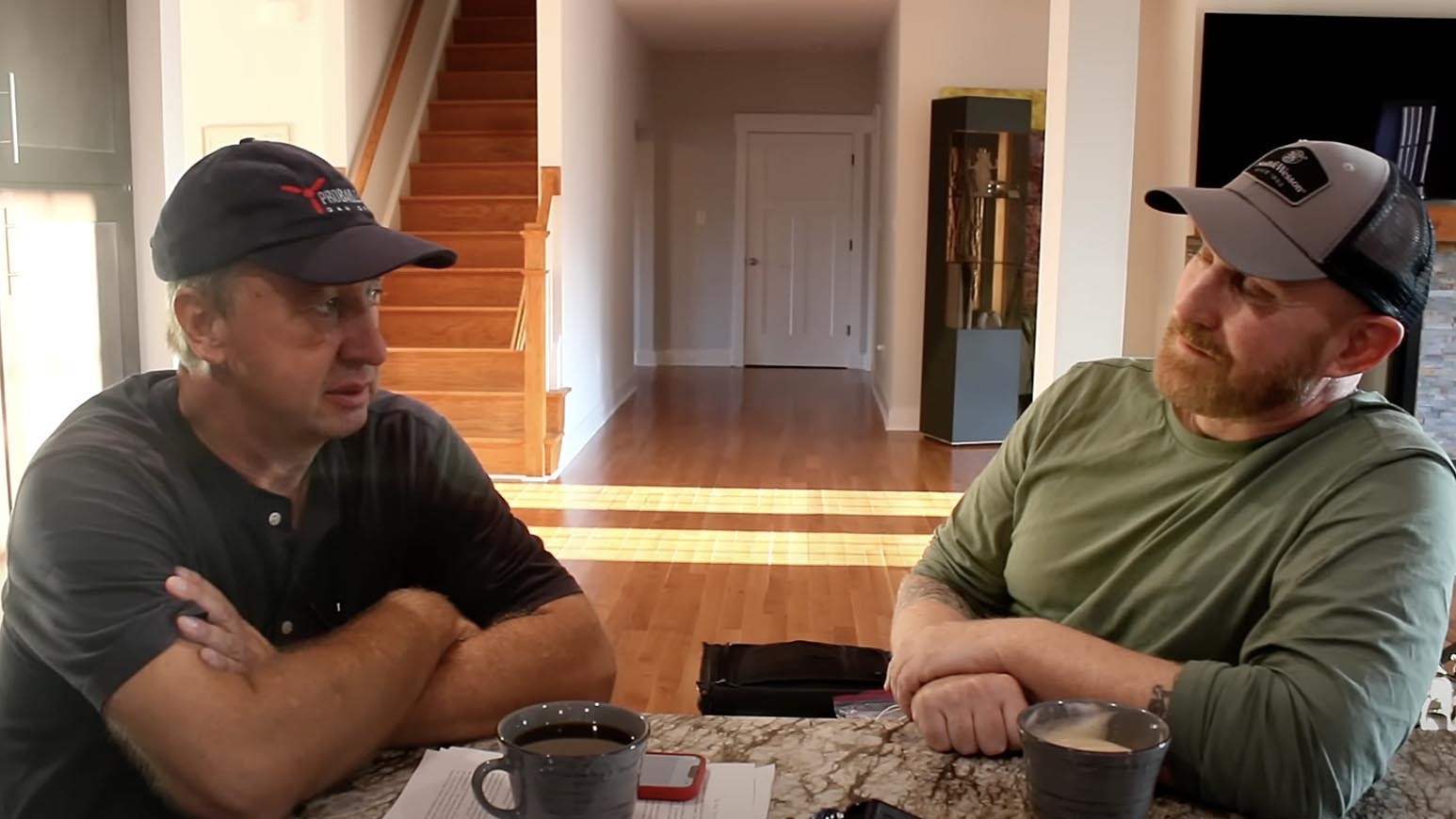
Richard “Rick” McCoy III and Dan Gryder together in Rick's house in Virginia. (Courtesy Dan Gryder)
'One-In-A-Billion Rig'
In the second video in the series, Gryder documented himself finding the rig on McCoy’s mother’s property in Cove City, North Carolina.
This was the video that caught the eye of an FBI agent, who contacted Gryder and Richard in 2024, asking to take the backpack and canopy into custody for forensic testing.
Gryder calls the parachute a “one in a billion rig,” stating it had all the earmarks of a military rig modified to be a sport parachute as described by Earl Cossey, a rigger and skydiver who provided two of the four parachutes along with acrobatic pilot Norman Hayden — to the hijacker in the Cooper heist.
Cossey described the parachutes to journalist Bruce Smith in his book, “D.B. Cooper and the FBI: A Case Study of America’s Only Unsolved Hijacking,” published in 2016.
Cossey told Smith he provided two of the back chutes that he described as either an Army green canvas NB-8 or NB-6 military-style rig and the other a civilian “sport” model. Cossey further said that he made modifications to the military-style parachute to turn it into a sport rig, including changing the placement of the ripcord and installing a pouch to conceal it among other alterations.
And though not specifically mentioned by Cossey in Smith’s book, Gryder said that other modifications would have had to be made to alter the rig for sport jumping, including cutting straps, adding D-rings — small metal rings that serve as attachment points on the harness or rigging — and enlarging the pack tray to hold the larger chute.
Cossey was inconsistent in case files about some details, including whether or not the chute he provided had those D-rings. In some accounts he explicitly said it didn’t, though in new FBI case files made public last month, he reversed course.
When called to a junior high school in 1972 to examine a military backpack in Woodinville, Washington, Cossey determined it was not an identical match to the one he provided because it lacked “a place to attach a chestpack” like “the one supplied UNSUB did” among other reasons, according to a Nov. 7, 1972, case record.
Gryder also turned over McCoy’s skydiving log provided by Chanté, which documents nine practice jumps with his skydiving instructor, Larry Patterson, in the months leading up to both skyjackings.
Despite his decorated service as a Green Beret in Vietnam and countless jumps from military aircraft, McCoy would have needed lessons in sport parachuting given sports chutes don’t automatically deploy and require different skills.
Gryder feels the timing of those practice jumps months prior to both hijackings is more than coincidental.
Not everyone in the DB Cooper Vortex agrees with Gryder’s assessment, however. Some researchers, former law enforcement officers and longtime case watchers point out that the FBI ruled McCoy out decades earlier based on evidence, including eyewitnesses who could not later identify him as Cooper.
Testing Done
The FBI is remaining mum on what, if anything, it was able to derive from the two years of forensic testing.
But the agency did extensive work. This included testing the backpack and canopy for DNA and soil analysis, Richard said, and sending it to a parachute expert.
Even if the FBI was able to extract DNA profiles from the gear, however, it’s not clear if there would be anything to compare it to given lost or misplaced evidence.
Larry Carr, who was in charge of the Cooper investigation from 2007 to 2010, told Cowboy State Daily in an earlier interview that much of the evidence has been discarded or misplaced.
This includes eight Raleigh brand cigarette butts left by the hijacker, which were thrown away after the FBI failed to get fingerprints off them.
A hair found on Cooper’s headrest, which was encased in plastic and preserved, has also been misplaced, as far as Carr knows.
Of the three partial DNA samples from the necktie left on the airplane by the hijacker the agency was able to extract, there’s no definitive way to conclusively say one belonged to the skyjacker because the necktie had been passed around by many agencies — and many hands — before the samples were taken, according to Carr.
He said the best federal investigators can likely do with any potential DNA found is to eliminate people using the partial samples.
Carr acknowledged he does not know what new DNA or advanced technologies the agency might be using, as he’s been off the case for 16 years.
An FBI sketch of D.B. Cooper. (Probably Cause: Dan Gryder via YouTube) 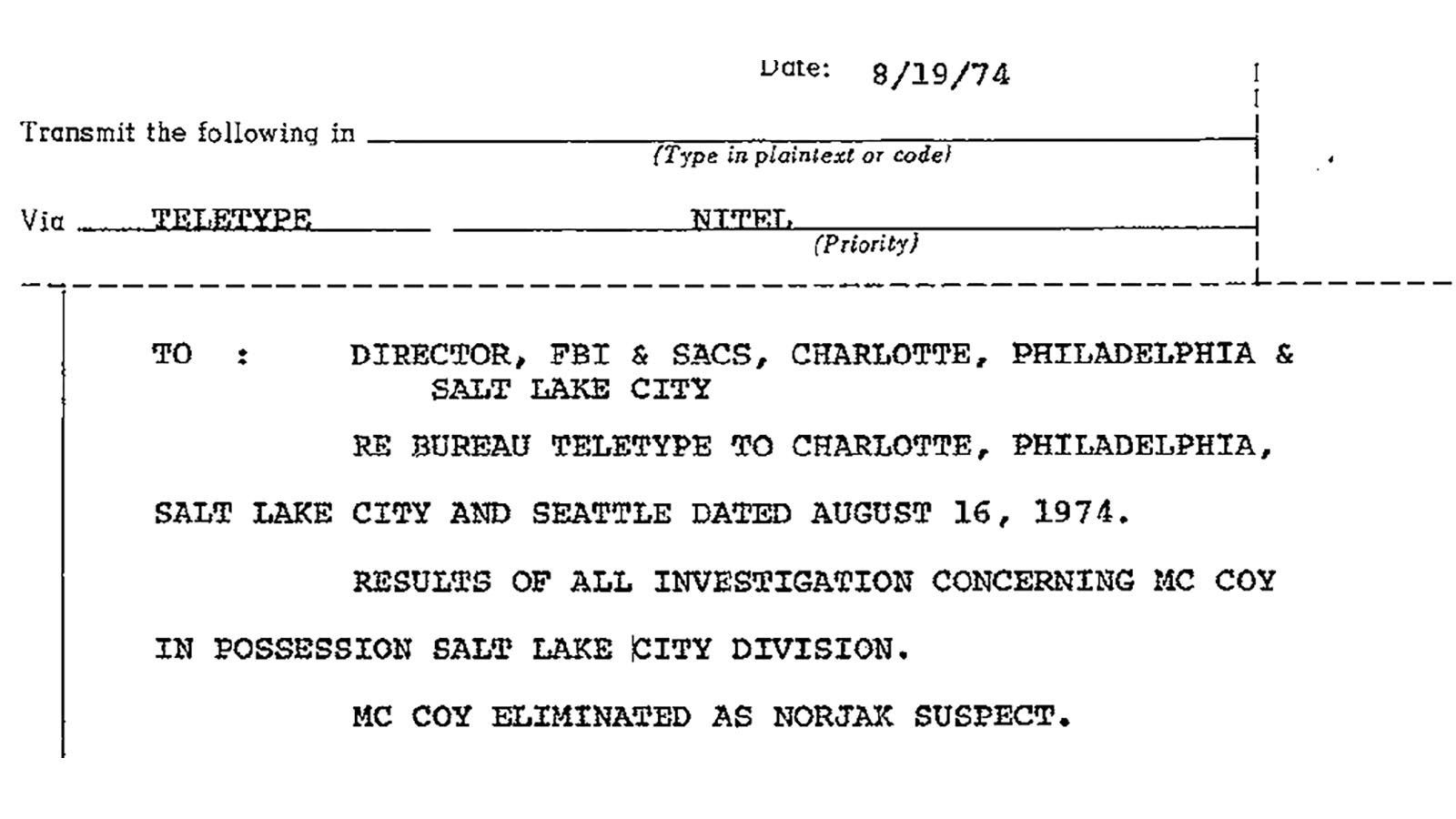
Internal FBI documentation shows the agency ruled Richard McCoy II out as a suspect in August 1974. 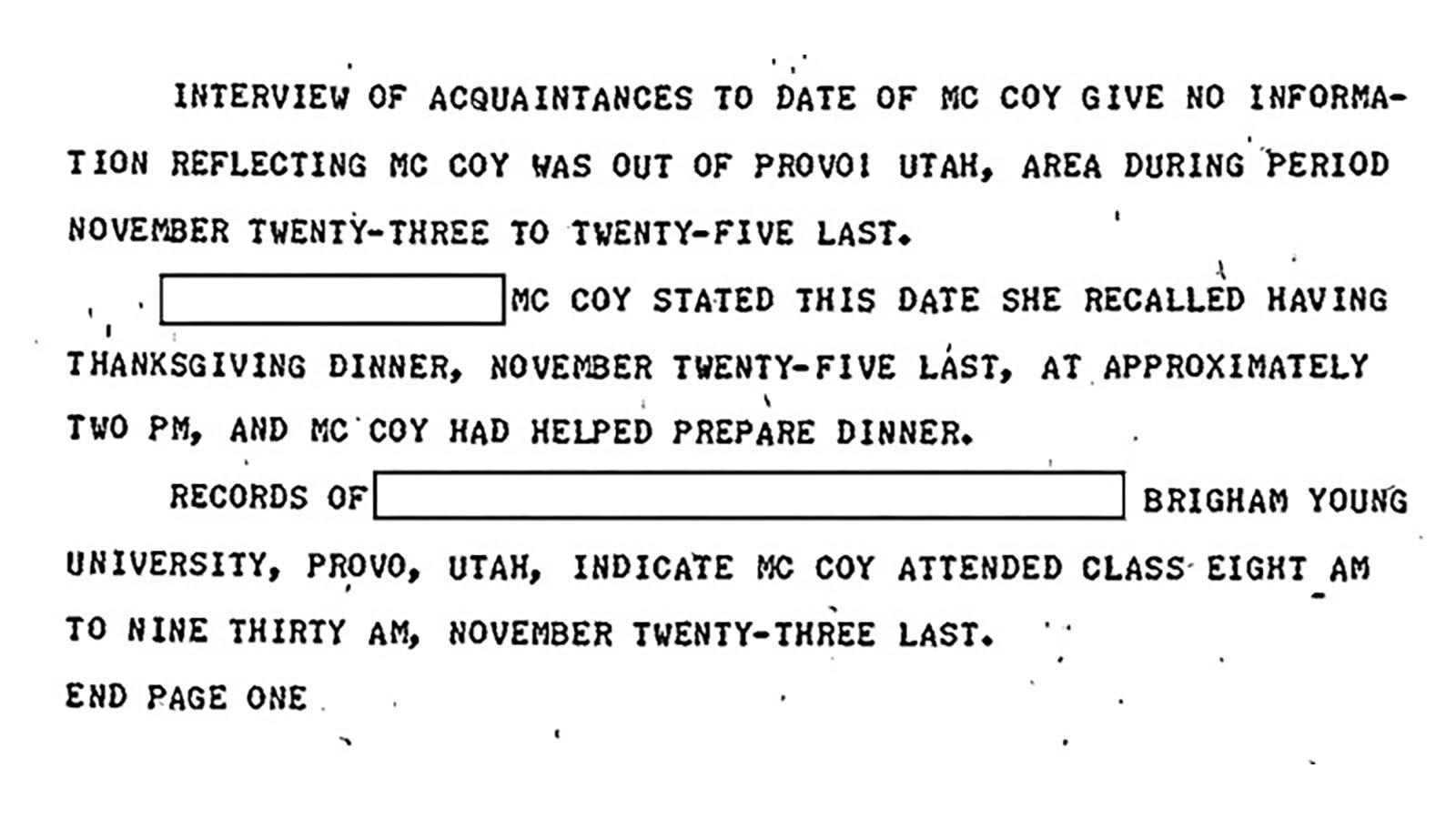
Witness statements from FBI case files that former agent Larry Carr says proves Richard McCoy II was not D.B. Cooper, including from an exchange student who claims to have been at the McCoy home in Provo, Utah, for Thanksgiving dinner. 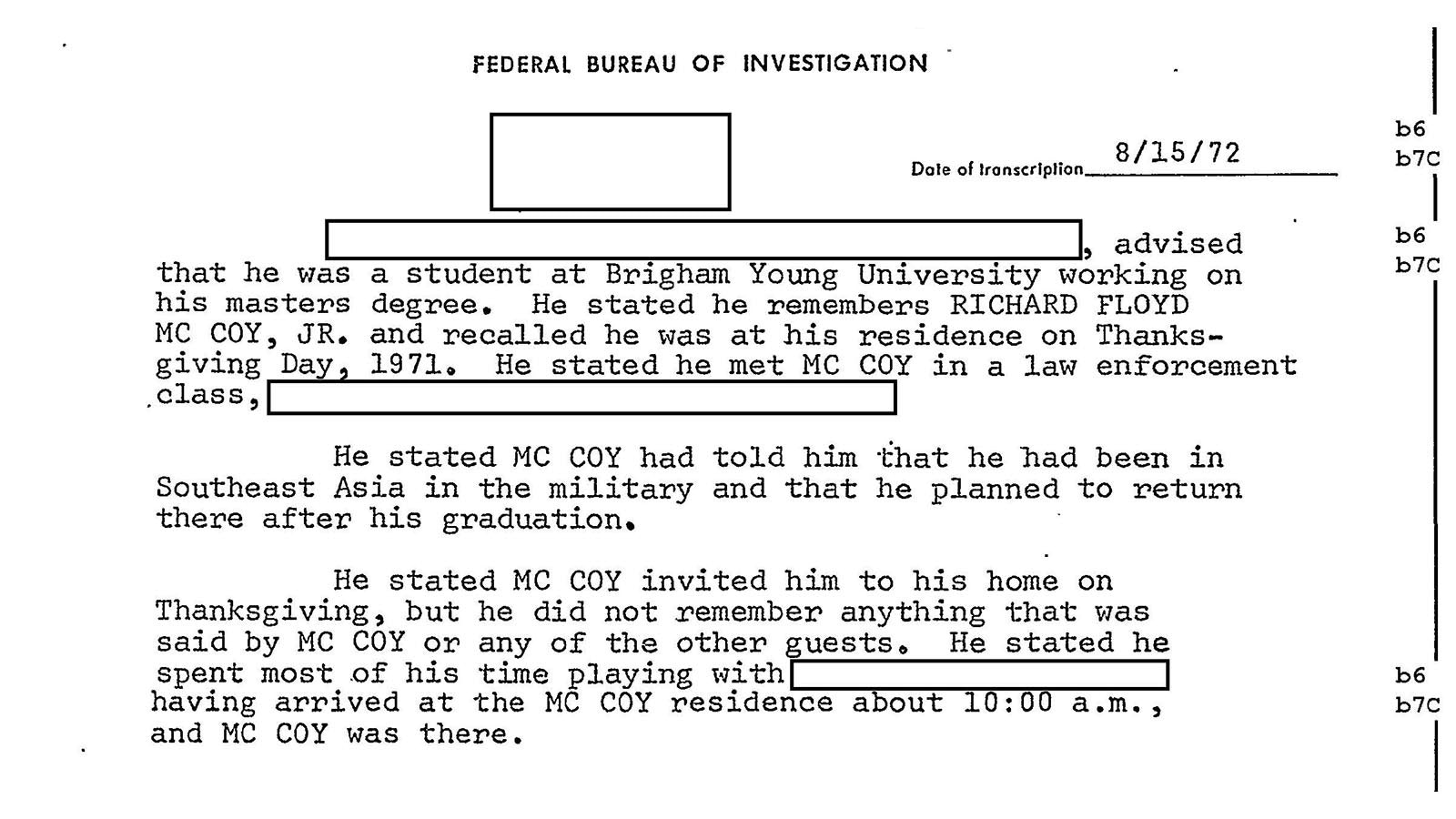
Witness statements from FBI case files that former agent Larry Carr says proves Richard McCoy II was not D.B. Cooper, including from an exchange student who claims to have been at the McCoy home in Provo, Utah, for Thanksgiving dinner. 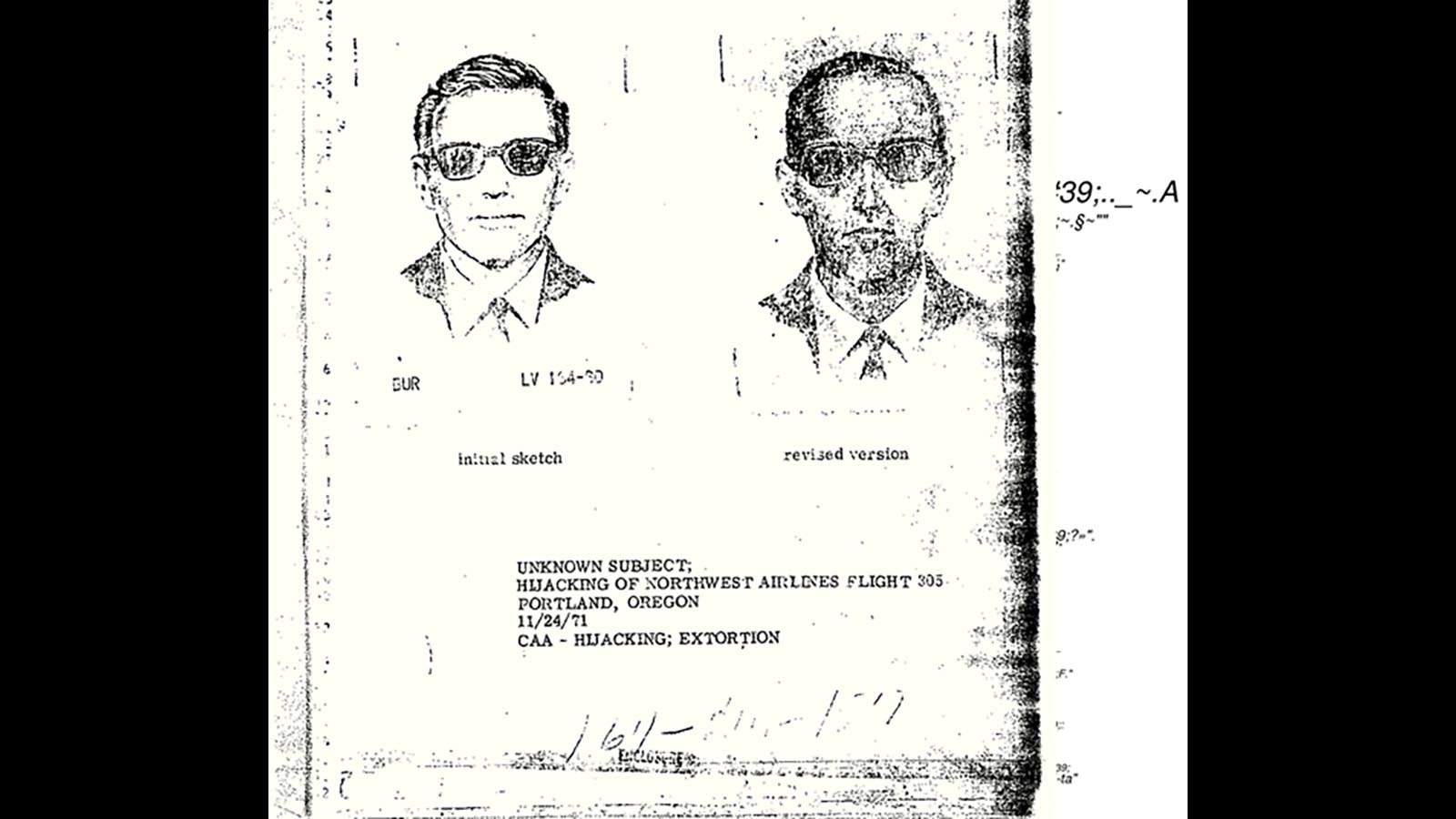
Initial and revised sketches of D.B. Cooper (Courtesy FBI) 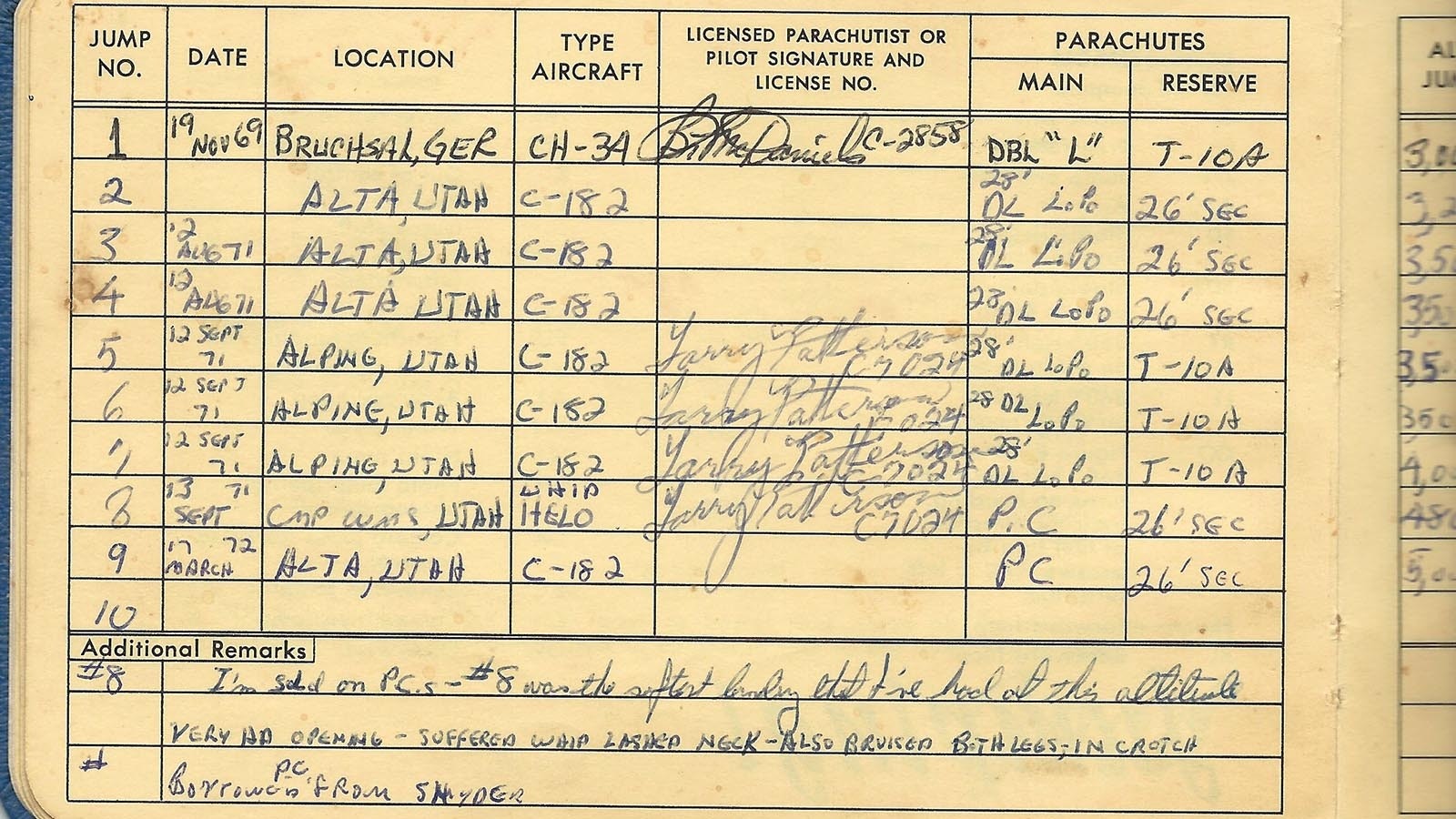
Richard McCoy II's skydiving logbook that documents his practice jumps in advance of both the hijacking in Oregon and Utah five months later in April 1972. (Courtesy Dan Gryder)
Advanced DNA Technologies
Richard McCoy III, who has since provided the FBI with his own DNA sample, was told by the agent that they are working with a degraded sample with only about seven of the 23 markers needed to confirm a match.
The bigger problem, however, according to one forensic DNA expert is whether it’s possible to extract any DNA from the rig given the years it sat in the outbuilding in warm and humid North Carolina.
Suzanna Ryan is a forensic DNA consultant, expert witness, and owner of Ryan Forensic with more than 25 years of experience in forensic serology, DNA analysis and advanced DNA techniques. She said it’s possible there may be no usable DNA on the backpack and canopy since it sat in a hot and humid barn for more than 50 years.
The age of the sample isn’t necessarily a problem, she said, noting that she’s worked with samples as old or older, but they were stored under more favorable, temperature-controlled conditions.
DNA remains unaffected by cold temperatures, but exposure to heat can damage its delicate structure, Ryan explained.
“DNA can degrade just over time, and so if you have exposure to any kind of heat, humidity, moisture, or UV light, those are things that are going impact it,” she said.
Heat breaks down the base pairs and causes little breaks in the DNA chains, which are then hard to duplicate.
That said, Ryan clarified, it also depends on what type of DNA method the FBI is using. There are newer and more proficient DNA extraction tools, Ryan said, like the M-Vac system.
The extraction tool was originally invented by microbiologist Bruce Bradley in the early 1990s for the purpose of sampling food pathogens. Following Bradley’s passing, his son Jared revamped the technology into a new forensic DNA collection tool.
Ryan said it works like a combo vacuum and steam cleaner that collects DNA by simultaneously spraying a sterile solution and applying vacuum pressure to the surface, creating what’s been described as a “mini hurricane” effect that both loosens cellular material while collecting it.
The technology has proven to be a helpful forensic tool, as acknowledged by the FBI’s own studies, which Jared highlights in his podcast, “All Things Crime.”
Ryan swears by the M-Vac technology, which she regularly uses, because of its ability to extract tens to hundreds of more molecules than swabbing alone. It’s also useful for capturing DNA in porous or rough surfaces such as the parachute rig.
There are also other genotyping methods using software like STRmix to help deconvolute mixtures and compare reference samples to partial samples, but she would need to know more about what they’re working with to comment further, Ryan said.
But, regardless of method or efficacy in gathering a usable sample from the gear, Ryan said the bigger challenge if a profile is derived from DNA may be tying it to one person given all the people who may have touched or handled the rig over the years, from the manufacturer to potentially multiple users.
Something In The Soil
The soil testing, however, may help investigators pinpoint a geographical location from which the parachute derived, according to one renowned forensic scientist.
Dame Lorna Dawson is a professor at Robert Gordon University and head of the Centre for Forensic Soil Science at the James Hutton Institute in Aberdeen, Scotland, with more than 30 years of experience developing soil science techniques to aid criminal investigations. She’s won numerous accolades and awards for her forensic soil research and has helped law enforcement solve major crimes, including the World’s End Pub murders of two teens in Edinburgh in 1977 nearly four decades later.
She, too, speaks hypothetically about the case as she has no inside information into the FBI’s tests on this case or the size and condition of the soil samples.
She is familiar with the FBI’s capabilities, however, and said its laboratories can use techniques like scanning electron microscopy and electron diffraction to magnify images of soil samples and compare them to USDA and geological survey maps to help both pinpoint — or exclude — particular geological locations.
What information can be derived from the soils depends on the amount and quality of the sample as well as methods used for analysis, she said.
Unlike DNA, extreme heat or cold will not compromise the inorganic mineral properties, even if the organic matter is degraded. If the organic matter is intact, however, then researchers might even be able to extract plant or microbe DNA, she said.
“In terms of the inorganic component, there’s no reason why they shouldn’t be able to get the mineral profile,” she said.
There are really good geology maps and related databases in the Pacific Northwest, she said, that would allow the scientists to link the mineral particles and chemical elements to a geological region — including where D.B. Cooper landed.
It also depends on the amount investigators are able to extract from the parachute rig and canopy, which would be impacted by the force of the fall and weather.
A hard fall would lead to more soil transfer, especially if the skyjacker rolled on his back or swept up dirt when gathering the canopy.
Dawson also said the weather would impact how much debris might stick to the rig with a better chance during a wet, rainy climate. Historic weather data indicates it had rained the week of the hijacking with daily precipitation under a half inch between Nov. 22-29, 1971.
This makes soil transfer more likely, Dawson said, noting that the size of the sample will make a big difference in what forensic scientists can do with it.
The process could take months to test and compare to nationally available databases and consult with other experts, she said.
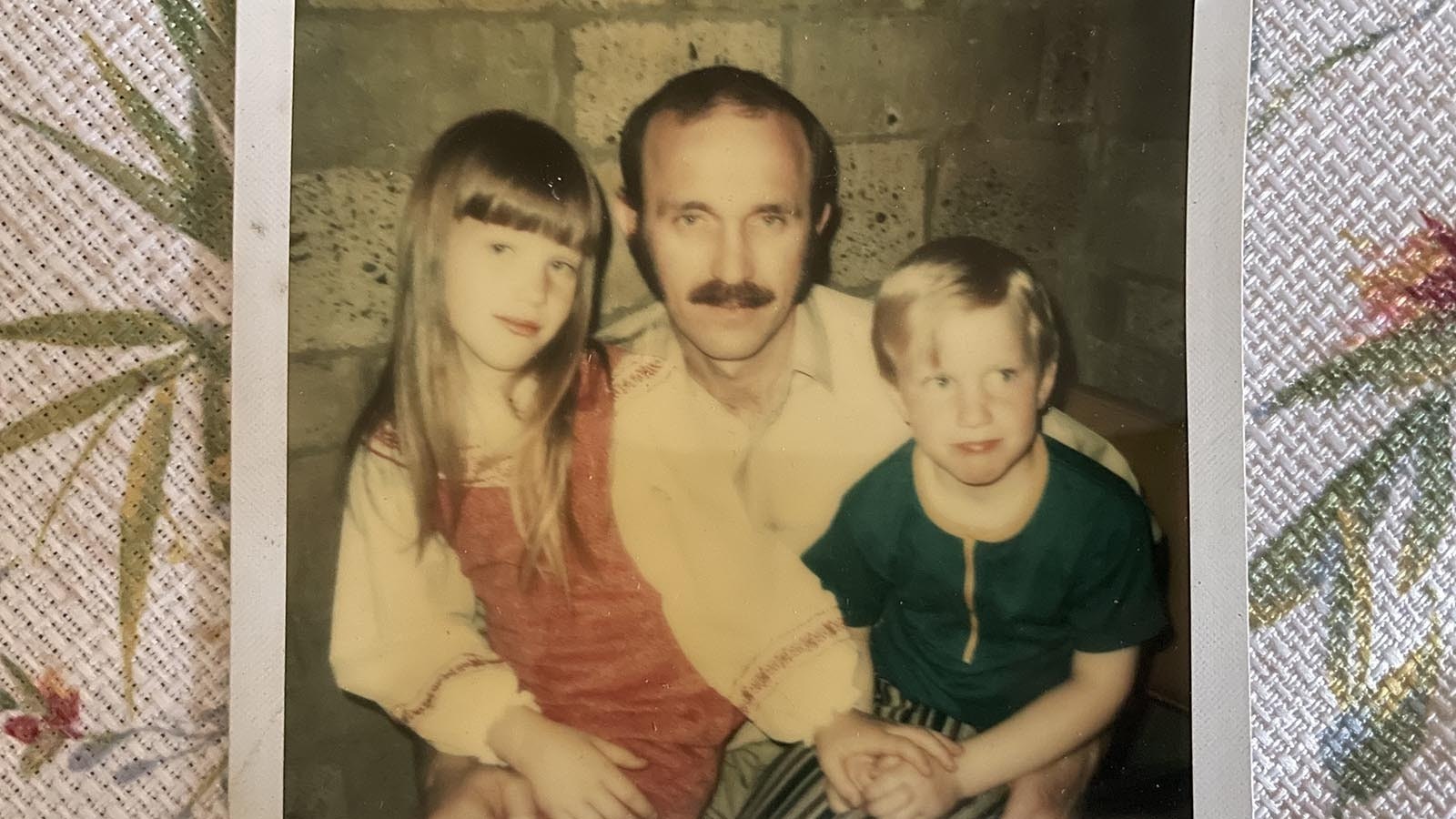
Richard McCoy II with his children, Chanté and Richard III, "Rick." (Courtesy Chanté McCoy) 
Dan Gryder took video of the seven FBI agents who searched the McCoy family property in North Carolina, where he found the parachutes. (Courtesy Dan Gryder) 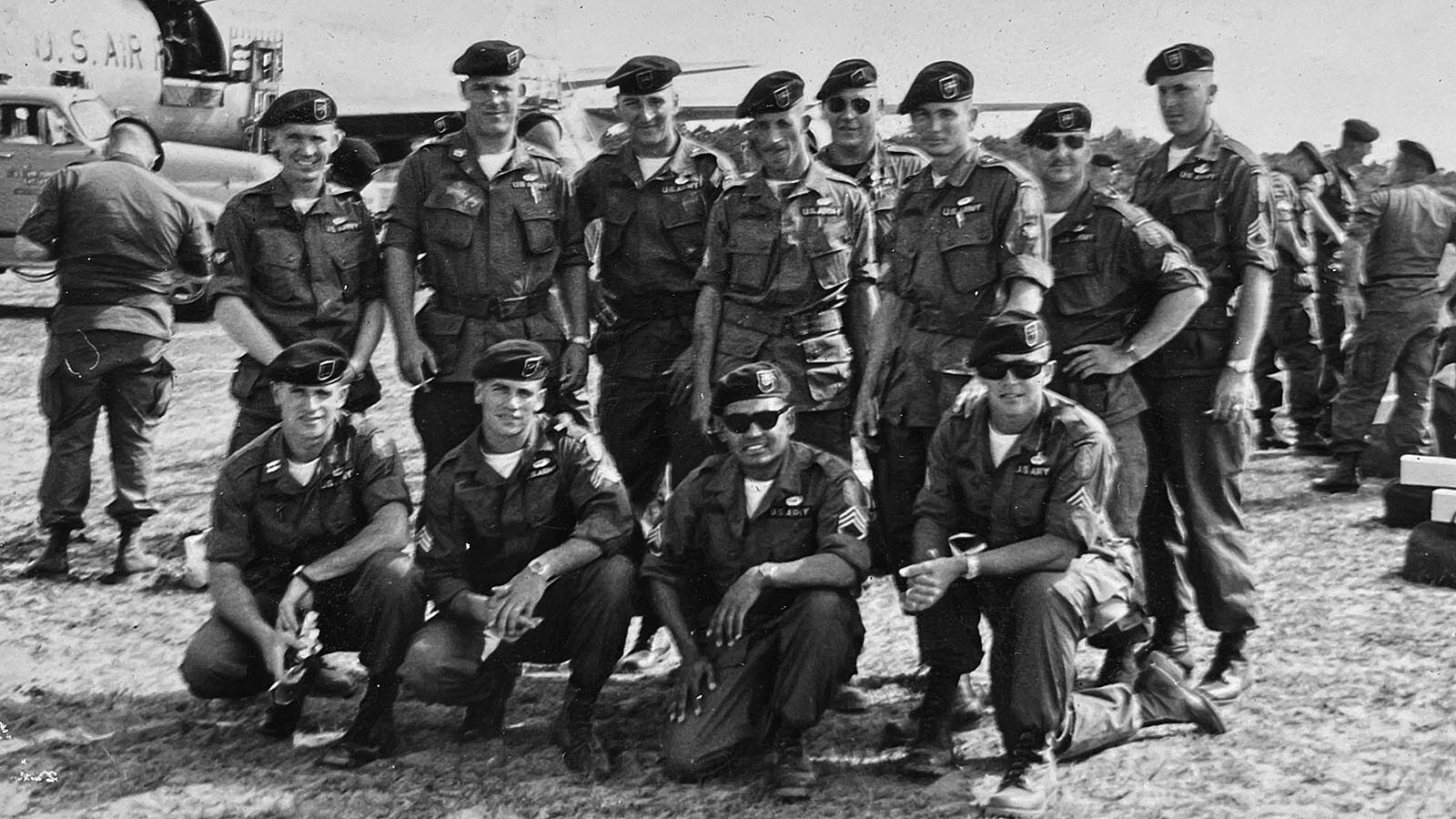
Richard McCoy II served two tours in Vietnam War as a highly decorated Green Beret and demolition expert and helicopter pilot and also served as an LDS group leader and baptized fellow soldiers in the jungle. (Courtesy Chanté McCoy)
Endless Horizon Of Possibilities
Soil and DNA analysis are just two areas that are rapidly expanding and becoming more publicly accessible as technology increases. As AI capabilities and social-media information sharing widen, citizen journalists and amateur sleuths are uncovering more and more potential evidence in cold cases.
The problem is that underfunded local, state and federal law enforcement agencies can’t keep up with the onslaught of information, Myers said.
“Now, new ways of emerging possible evidence exist,” Myers said. “It's an endless horizon of vast evidence possibilities, and the law enforcement system is neither funded for nor equipped to understand all of this.”
Lost In Chatrooms
Whether the FBI ever conclusively closes the case or identifies McCoy as the suspect is a moot point for the McCoy children.
There are many layers to their father’s story, Richard III said, that get lost and muted in chatrooms and D.B. Cooper sleuth groups where amateur detectives toss out theories and suspects.
Their father is often derided in these debates, some portraying McCoy with a clown meme, which his children find particularly offensive.
His father was not a bumbling idiot that some have purported him to be, Richard said.
“It’s like they’ve adopted an attitude of anyone but McCoy,” Chanté said, who is currently sifting through all her father’s papers that she inherited upon her mother’s death in an effort to write a book about his life.
Much of the evidence about their father that’s out there has been distorted or is wrong, she says, including that he and Karen McCoy had been home in Utah over that Thanksgiving weekend.
Karen later confessed that both she and McCoy had in fact been in Las Vegas during the weekend of the infamous skyjacking for a delayed honeymoon trip despite not being gamblers or having money to pay for a hotel room.
Richard III said there’s so much misinformation when it comes to his dad, including a report that he had a speech impediment.
“He didn’t,” he said. “I have no idea where some of this stuff comes from.”
He also feels that it’s inaccurate for the FBI to dismiss his father as Cooper based on eyewitness testimony of the crew that night when shown his mugshot six months later. He was wearing a disguise, Richard noted. None of the stewardesses on the Utah skyjacking were able to recognize him either.
Hero, To Them
Whether the case is ever closed matters less to them than preserving the truth of who their father really was — the man they knew and deeply loved.
They don’t make apologies for his actions, but they also forgive him.
At the time of the hijacking, McCoy was a criminal justice student at Brigham Young University and an active member of the Utah National Guard. He was also the husband and father of two young children who was struggling to keep the family afloat financially.
Despite serving two tours of duty in the Vietnam War as a highly decorated Green Beret, demolition expert and helicopter pilot, he came home to a country that despised veterans and spit in their face, his children say.
They understand his struggle to find work to support his family, compounded by the shadow that he may have been diagnosed with a possible brain tumor, which might have affected his thinking or made him feel more pressed fortime. These pressures had surely trapped him in an impossible situation where, in their estimation, he felt backed into a corner.
Richard views his father as a hero, whose name has never once been spoken with malice by anyone in his circle.
“Everybody tells me what a great guy he was and how well liked he was,” Richard said.
Both children believe their dad was likely D.B. Cooper, and Chante said the recent events of Gryder finding the parachute in their grandmother’s outbuilding and the FBI taking it in as evidence has influenced her belief.
“His finding that there just completely blew my mind,” she said. “All along they’ve been saying that the two pieces of evidence would either be the cash or the parachute.”
She said she had been hopeful something more declarative would come from it all, but she understands the agency's reasons for staying mum.
In the end, there’s only one truth that matters.
“At his core, my father was a good man, and one who under any other circumstances would be admired for his heroism,” she said. “That’s the father I remember and love.”
Jen Kocher can be reached at jen@cowboystatedaily.com.