CHEYENNE — Secretary of State Chuck Gray urged a House committee Friday to pass a bill that would bring new rigor and public transparency to the pre-election testing of Wyoming’s voting machines, telling lawmakers the measure addresses problems that surfaced during the 2024 election cycle and have taken a year and a half to fix.
Senate File 28 clarifies public notice requirements, opens machine testing to public observers, ensures every machine used in an election — including electronic ballot marking devices — is individually tested, and allows retesting when errors or noncompliance are discovered.
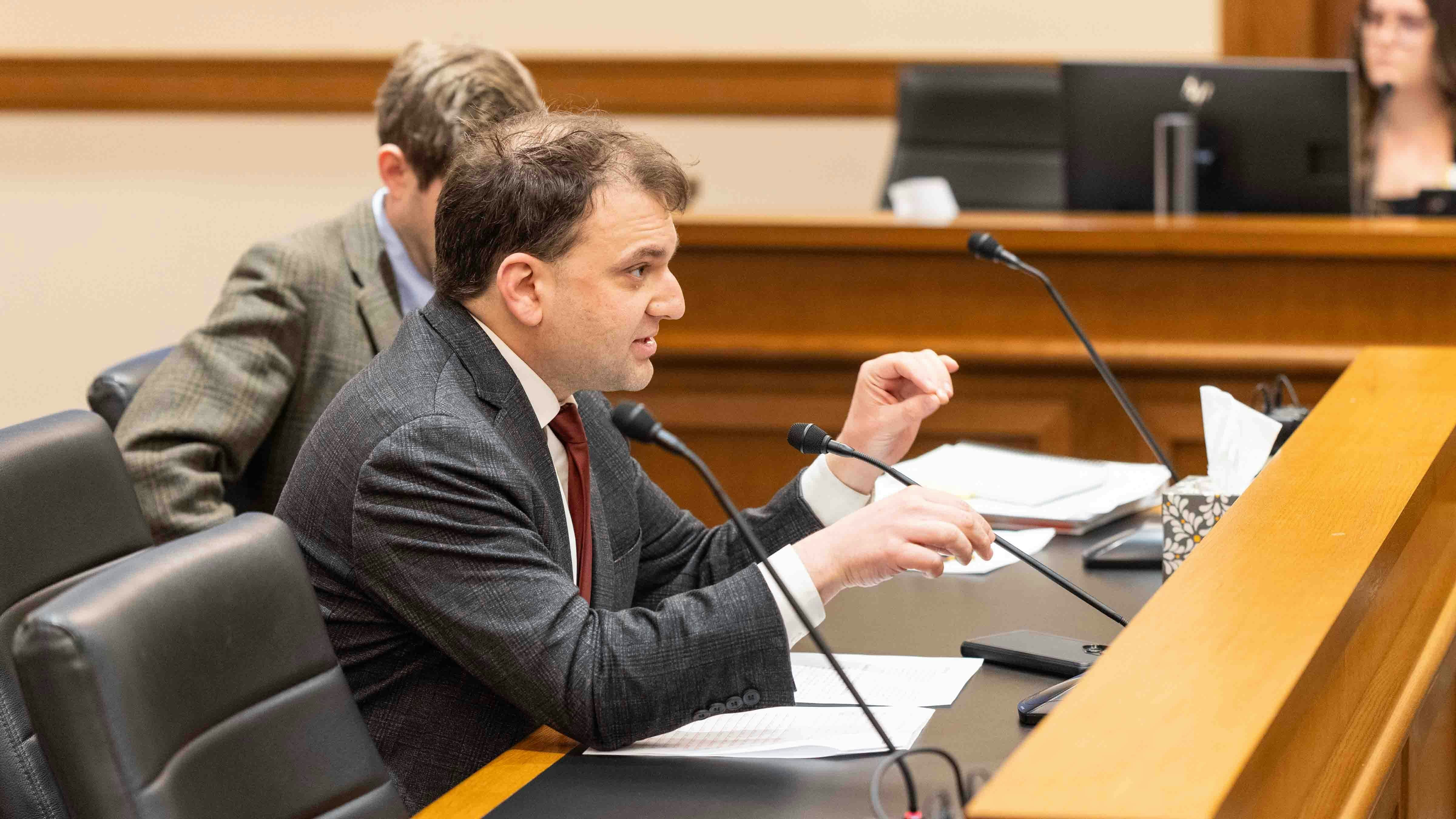
Gray told the House Corporations, Elections and Political Subdivisions Committee on Friday that SF 28 traces to issues his office identified before the 2024 primary, when some counties failed to assign a different number of votes to each candidate during pre-election logic and accuracy tests, a requirement meant to verify machines are tabulating correctly.
Gray said 18 of the 20 counties his office contacted agreed to retest, but some refused, “citing their belief that the statute did not allow them to retest and open up the seals once the test was completed.” The bill resolves that dispute by explicitly providing that seals may be broken for retesting.
Gray described the legislation as an effort to strengthen both clarity and rigor in an election code where county clerks and the Secretary of State’s office have clashed over interpretation.
“Every time it happens, the state being represented by myself at this time, the secretary of state, and 23 county clerks, oftentimes have widely variant views of what the statute says,” Gray said. “So we want to ramp up clarity, and then we also want to ramp up rigor.”
The bill also requires test results to be posted on the county clerk’s website and provided to any member of the public upon request — addressing instances in 2024 where “a few clerks said that they could not be provided to the public,” Gray said.
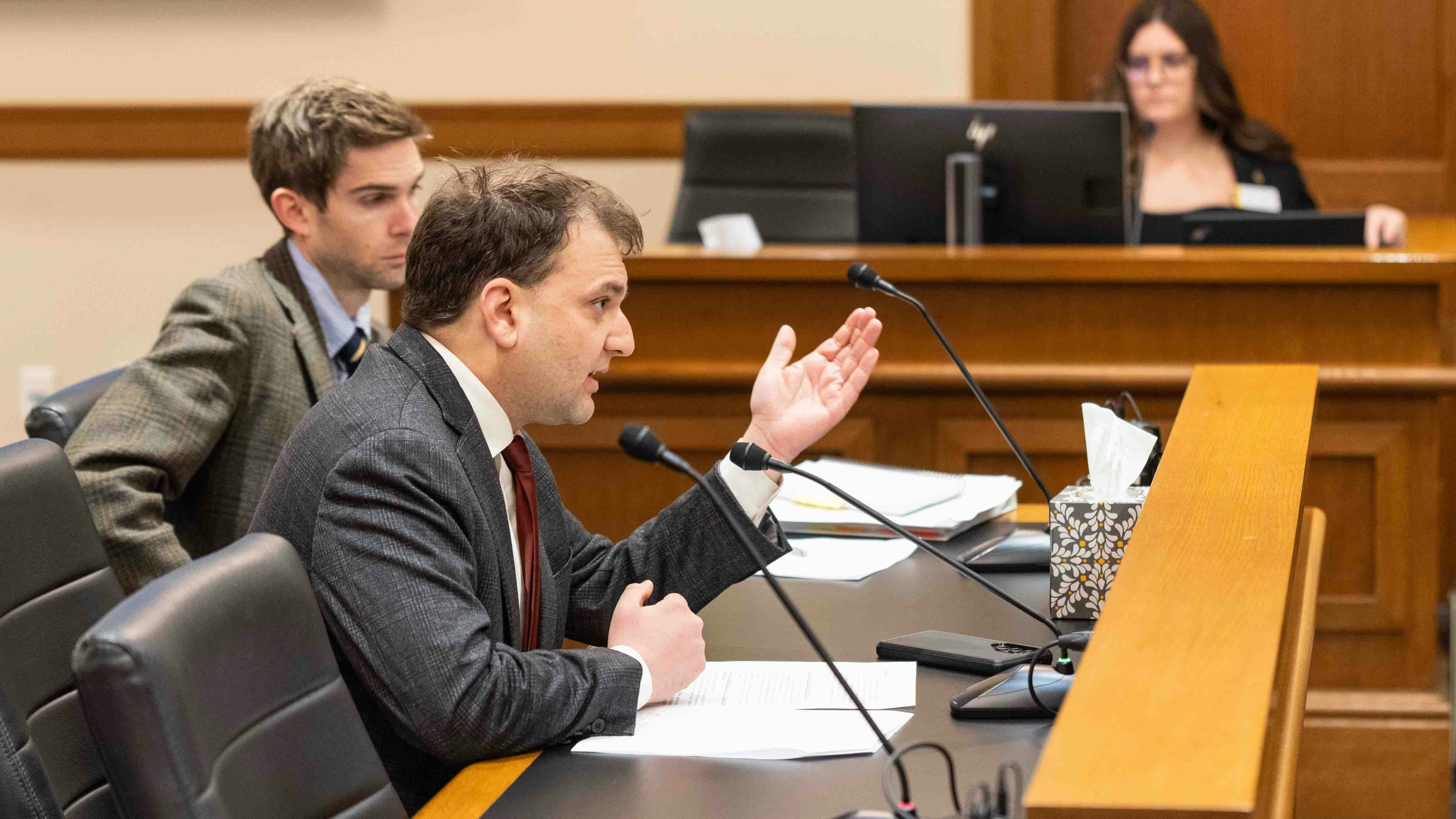
Gray asked the committee to adopt amendments reverting portions of the bill to its original committee language after Senate changes he said weakened the measure, including a five-day window to challenge a machine’s certification that he wanted extended to the day of the election.
Rep. Mike Yin, D-Jackson, pushed back on an open-ended challenge window.
“I think that if you leave it open-ended, it actually makes it dangerous where you could challenge the integrity of the machines right up to the day of, and that puts into question the entire integrity of the election,” Yin said.
Mary Lankford, representing Wyoming’s county clerks, told Cowboy State Daily the bill formalizes what clerks have long done — test equipment, seal it, and notify the parties — while requiring the process be opened to the broader public.
“It’s all pre-game,” Lankford said of SF 28. “We’ve always notified the parties and said, ‘We’re going to test the equipment.’ And nobody shows up.”
Marguerite Herman of the League of Women Voters of Wyoming added, “The more that people see this process and understand this process, the more they will trust this process,” while urging that clerks retain discretion to manage any crowds of observers.
Audit Audience
A bill requiring witnesses during Wyoming’s post-election ballot audits cleared the Senate Corporations Committee on Friday morning, advancing legislation born from lingering questions about whether the Weston County clerk ever actually conducted an audit after the troubled 2024 general election.
House Bill 85 passed 4-1 with Sen. Cale Case, R-Lander, casting the lone dissenting vote. The bill now heads to the full Senate.
Like SF 28, the bill traces to Weston County, where faulty ballot alignment caused miscounts in two uncontested races during the 2024 general election. Gray caught the anomalies on election night. But the deeper problem surfaced when Clerk Becky Hadlock submitted a post-election audit report claiming no discrepancies — even though 21 of the 75 ballots sampled contained errors.
“Twenty-one of those 75 ballots had errors that were not reported to our office. And that was the big issue in Weston County,” Gray told the committee.
He called the bill essential to strengthening a statute he described as “pretty bare bones” since it was first codified in 2023, invoking a “trust but verify notion” inspired by President Ronald Reagan.
Joe Rubino, the secretary of state’s policy director and general counsel, said a central question emerged from hours of subcommittee testimony.
“We didn’t know if it (an audit) was done at all,” Rubino told the committee. “Weston County defied the legislative subpoena. That is still an outstanding question.”
Lankford told the committee the bill formalizes practices some counties already follow voluntarily.
“The public now knows when this audit is done and they are able to attend,” she said. “The canvassing board is a public meeting.”
But she raised concerns about logistics in smaller counties. “Basements,” she said, describing some of the facilities where audits would need to accommodate observers.
Gail Symons, representing the nonpartisan nonprofit Civics 307, argued that filling a room with observers during a process requiring concentration would be counterproductive.
“We keep flogging this dead horse without looking at the underlying cause,” Symons said. “People who are tired make mistakes.”
She said what’s really required is “quiet, people who are not tired. The whole atmosphere is set up for accuracy.”
Case questioned why the bill was necessary given that the errors in Weston County were caught on election night.
“I’m not so sure about what’s magic about having all these people in a room,” he said. “I really don’t think this bill does anything.”
Sen. Brian Boner, R-Douglas, disagreed. He noted that his 2023 bill creating the post-election audit requirement had provided the legal foundation for holding the Weston County clerk accountable. He described Hadlock’s handling of the audit as “extraordinary negligence” and called HB 85 a worthwhile “preventative measure.”
The committee adopted amendments giving clerks discretion to limit the number of observers and explicitly allowing members of the public to attend alongside representatives from different political affiliations.
David Madison can be reached at david@cowboystatedaily.com.