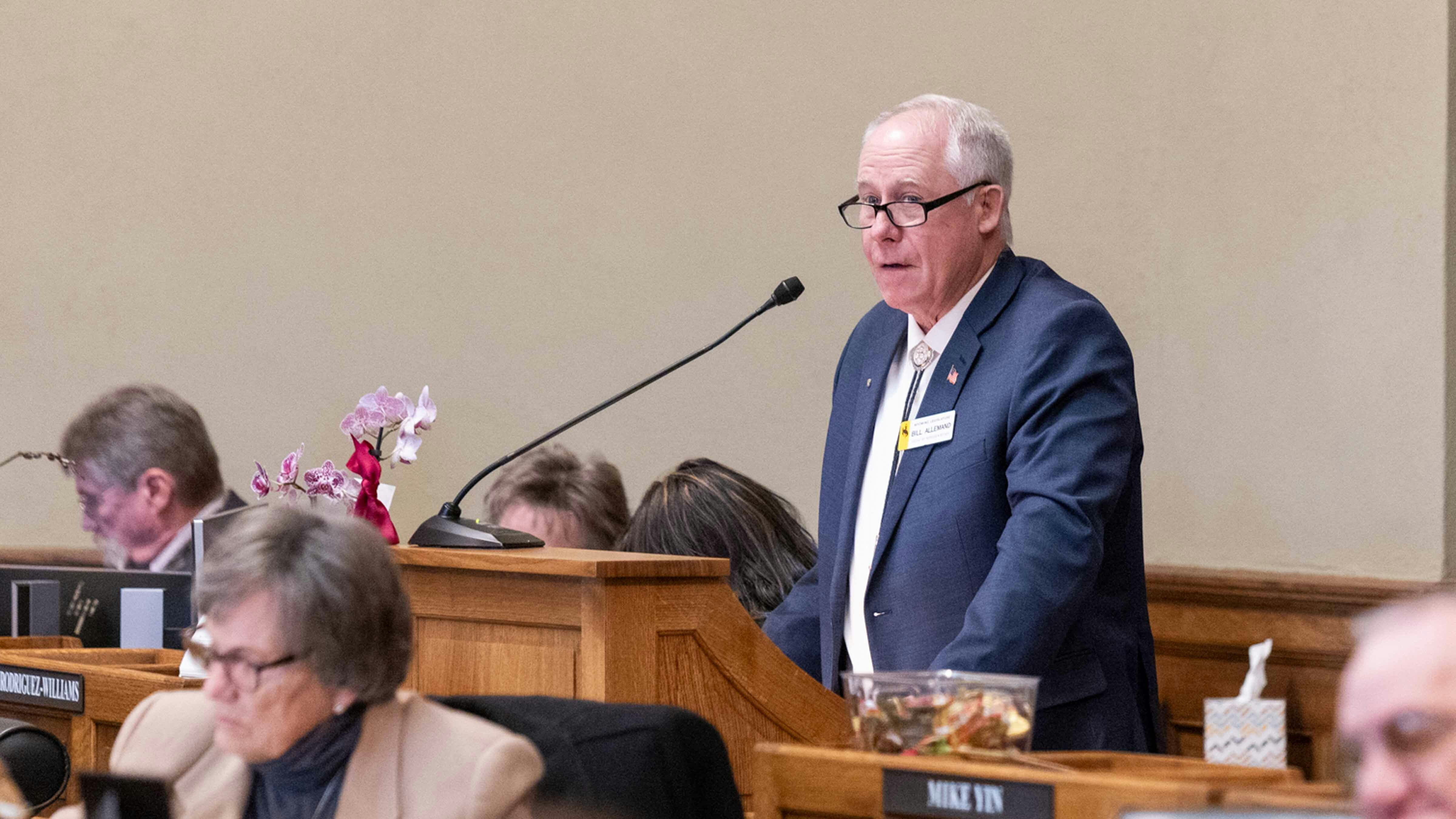
CHEYENNE — Rep. Bill Allemand, R-Midwest, made an impassioned pitch Tuesday for House Joint Resolution 3, a proposed constitutional amendment that would have required an affirmative vote of the people before any high-level radioactive waste or spent nuclear fuel could be stored in Wyoming.
"This simple little bill is what our constituents have been yelling for all summer and this fall," Allemand told the House. "It gives them a voice in the future."
Allemand said he had heard from angry constituents from across the state who felt their town councils and county commissions weren't listening to them.
"All this bill does is what 75 to 80% of the people want — a chance to determine their future and the future of their children, their grandchildren," Allemand said.
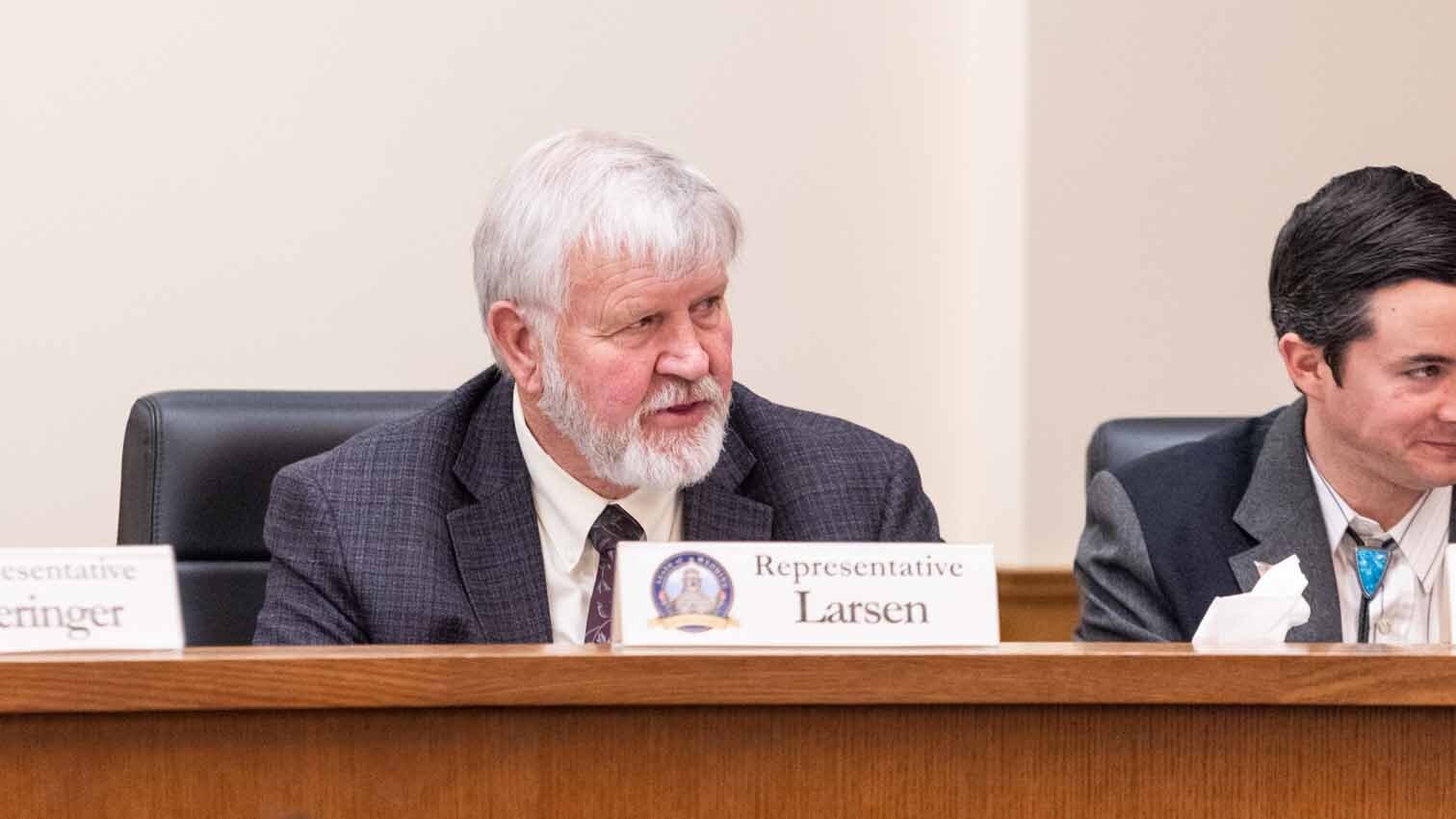
Rep. Lloyd Larsen, R-Lander, rose in opposition. He warned the resolution would cripple the nuclear industry Wyoming has been trying to attract.
Under current state statute, Larsen explained, electrical generation facilities in Wyoming are allowed to store spent nuclear fuel on site. Under the resolution, every nuclear site would need a public vote before it could store its own spent fuel.
"That becomes very problematic if your industry is trying to come into the state," Larsen said.
Allemand was undeterred in his closing remarks.
"I'm not here for industries. I'm not here for the state. I'm here for the people of House District 58," Allemand said. "And they say, we want to vote."
The resolution failed 32-30, short of the two-thirds majority required for introduction during the current budget session.
Federal Deference
The House vote came one day after the Wyoming Senate unanimously killed Senate File 3, a bill to protect nuclear facilities that had been developed by the Joint Minerals, Business and Economic Development Interim Committee.
The bill, which Cowboy State Daily previously reported on, would have created legal protections for armed security guards at commercial nuclear plants, including the authority to use defensive force — up to and including deadly force — against threats such as radiological sabotage.
TerraPower Nuclear Security Manager Melissa Darlington had told the interim committee that "federal law provides no legal protection for security personnel when they act in defense of a commercial nuclear power plant."
But on Monday, Sen. Tara Nethercott, R-Cheyenne, asked that the bill be pulled from the consent calendar so she could urge a no vote.
"The Joint Minerals Committee worked this topic in an interim. We think we have a good little bill, but due to new regulations coming down from the federal administration, they will address all of the concerns that this bill is attempting to," Nethercott told the Senate. "The nuclear facilities in our state have asked us to pull this bill back so we don't have conflicting state legislation with what will be new federal law and guidelines coming forward."
Sen. Jim Anderson, the Minerals Committee chairman, seconded the opposition.
"We did good work in getting this done in the committee, but then the federal group came out with new guidelines that we haven't seen yet," Anderson said. "So, we want to wait until we see the new guidelines."
The bill failed introduction with 31 no votes and zero ayes.
New Rules
A spokesperson for the Nuclear Regulatory Commission pointed Cowboy State Daily to the federal rulemaking process now underway.
"Consistent with Executive Order 14300, 'Ordering the Reform of the Nuclear Regulatory Commission,' the NRC is conducting a review and wholesale revision of its regulations," according to an NRC webpage. "This initiative aims to modernize security requirements to enhance efficiency."
It was the second time in two days that Wyoming lawmakers deferred to federal regulators overseeing the nuclear industry.
On Monday, Rep. John Bear, R-Gillette, addressed the question of nuclear waste, saying the Wyoming Freedom Caucus has "big questions" and is waiting on the federal government to issue disposal requirements that were expected in early January.
"We're going to still wait on the federal government before Wyoming takes the waste from other states," Bear said.
Stalled Out
After Tuesday's vote, Larsen told Cowboy State Daily the resolution's language was too broad. It didn't distinguish between spent fuel generated at a power plant built in Wyoming and waste shipped in from other states for storage.
"If we wanted to have this administration's desire to see the expansion of nuclear, have additional nuclear generation in the state, they wouldn't be able to store that spent fuel on site without" a vote of the people, Larsen said.
Larsen noted the state's nuclear ambitions extend well beyond the TerraPower Natrium project in Kemmerer.
"You've got BWXT that is also interested in developing a small reactor that can be used in remote locations," Larsen said, raising the question of where spent fuel from such a reactor would be stored — or whether that, too, would trigger another public fight like the opposition that greeted Radiant Industries in Bar Nunn.
Larsen said energy industry leaders, the Wyoming Energy Authority and the Wyoming Business Council had worked hard after the Natrium project was announced to position Wyoming as a hub for the full spectrum of nuclear industry, from fuel enrichment to manufacturing.
"We really got a jump start on the neighboring states," Larsen said. But he added dryly: "We've stalled out."
Utah, Texas and Tennessee, he said, have all raced ahead. He pointed to Oak Ridge, Tennessee, where the mayor welcomed Radiant Industries — the same company that faced fierce opposition in Wyoming.
"This is exactly the industry we've been wanting," Larsen said of Radiant’s scuttled plans for Bar Nunn.
Asked whether Wyoming is a welcoming state for the nuclear industry, Larsen did not hesitate.
"No," he said. "I think it's a very regulatory, difficult state to do business if you're in a nuclear industry."
He acknowledged the state invested $100 million in the TRISO fuel program and the BWXT fuel manufacturing facility, but said that is also drawing opposition.
"We're not a business-friendly state right now," Larsen said. "There are multiple conversations going on that confuse the issues, and the issues all of a sudden all become one, and they're just not."
Here’s the roll call vote for House Joint Resolution 3:
Ayes: Allemand, Andrew, Angelos, Bear, Brady, Bratten, Brown, G, Campbell, K, Guggenmos, Haroldson, Heiner, Hoeft, Johnson, Locke, Lien, Lucas, McCann, Ottman, Pendergraft, Provenza, Posey, Rodriguez-Williams, Riggins, Schmid, Smith, Strock, Styvar, Webb, Webber, Wharff, Winter, Neiman.
Nays: Banks, Brown, L, Byron, Campbell, E, Chestek, Clouston, Connolly, Davis, Erickson, Filer, Geringer, Fornstrom, Harshman, Jarvis, Kelly, Knapp, Larsen, L, Larson, JT, Lawley, Nicholas, Sherwood, Singh, Storer, Tarver, Thayer, Washut, Wasserburger, Williams, Wylie, Yin.